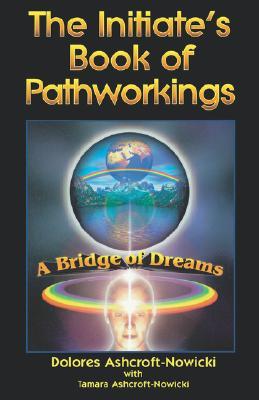
Initiate’s Book of Pathworking: A Bridge of Dreams by Dolores Ashcroft-Nowicki

Initiate’s Book of Pathworking: A Bridge of Dreams by Dolores Ashcroft-Nowicki
initiate's book

Dolores Ashcroft-Nowicki shares meditations which she calls pathworkings as a method of self actualization.

I understand that directed pathworkings are an actual technique that has been used by mystery schools for centuries to explore consciousness. I just don’t see its usefulness beyond a sort of tourist trip through what “may” be in your mind rather than what “is”.

Let’s compare it to riding a bike. Directed pathworkings are like watching a video of someone riding a bike. Passive pathworkings are like hopping on that bike and riding it all over your neighborhood. You get the visceral experience of being there.

If you’ve never ridden a bike before, watching the video might be safer, but it certainly isn’t more fun.

If we look at the Initiate’s Book of Pathworking as a journal of an adept’s inner work, it feels rather rehearsed and stilted as opposed to the out of body work that was chronicled in Multidimensional Man by Jurgen Ziewe.

Photo by Rahul Pandit on Pexels.com

If we consider the different approaches between Ashcroft-Nowicki and Ziewe, it also makes more sense that these pathworkings have a clear beginning, middle, and end as opposed to Ziewe’s offerings which are more like real life: random and, at times, nonsensical.

Because (I’m assuming) an adept from The Servants of Light School created these pathworkings through actual experiences on the inner planes, it has the curious side effect of unfolding like a structured lesson plan.

In Nick Ferrell’s book, Magical Pathworking, he discusses the importance of writing pathworkings like a story with a beginning, middle, and end for its consciousness shaping potential, but he never talks about how naturally occurring pathworkings or passive pathworkings, present themselves in that manner, organically. At least, that has been my experience.

I suspect that mystery schools experienced some pathworkings through their consciousness research, recorded the patterns that occur, and then sought to imitate that inner perfection by scripting pathworkings like the ones found in this book.

Photo by Pixabay on Pexels.com

There is value to be found in this book as it provides a nice introduction to pathworking in general: “What is a pathworking? It is similar to a virtual reality trip. Pathworkings are perfectly natural and can occur spontaneously in the form of daydreams. Used as a structured series of visualizations, they hold many possibilities for the student.” Introduction, pg x

I found some of this book silly like the Healing Spring (Women only) pathworking on page 61. Women only? We’re dealing with consciousness here which is neither male or female, but pure being. If a guy wants to run the Healing Spring pathworking, I’m not going to be the one to say no.

Some of the poetry in the pathworkings is very beautiful and felt authentic, which again made me wonder who wrote these for the SOL. W.E. Butler? Dion Fortune? So curious:

“Forest Lord, with twelve-tined crown,
Now we come to bed thee down.
Rest content when sleeping deep,
Leave the Summer Queen to weep.

Rest thee well till comes the Spring
When harebells in the wood do ring;
Then rouse thee up the maid to wed
And seek the joy of the greenwood bed.

Hunter, blessed be thy sleep;
Choose a maid thy bed to keep.
Dreams of silver, dreams of gold
Will guard against the winter’s cold.” pg 190

To give you a comparison, here is a chant from some pixies in a passive pathworking that I experienced a couple of months ago:

“Awake the trees, awake the night, awake the shining moon.
Feed the plants, free the life that dwells within the bloom.
To keep the forest growing tall, the pixie people sing,
We bring the song and dance the call to wake the Forest King.

Awake the night, awake the moon, awake the powers old,
We’re the ones that call upon the Spirit of the fold.
Dance the dance, sing the songs, make the forest wake,
In our stead, these plants have fed the thirst that never slakes.

Feels very similar, yes? That’s the fascinating thing about consciousness research to me. It feels so familiar but, at the same time, infinitely unknown.

Photo by Luca Dross on Pexels.com

It’s just my opinion but, I think, in addition to space, our own minds are the next frontier of human exploration.

“These “serial” workings will grow with you as you explore them, and can bring about many strange events, both in your astral life and in your physical existence. They are more potent than they seem, so take them slowly.” pg 214. One a week has worked pretty well for me. I feel like I’m learning and growing but not being overwhelmed by the changes.

A dated portion of this book that I found rather amusing, especially since the recent kerfluffle over the year 2012: “As the year 2000 comes ever closer, speculation as to the future of the world gets wilder. Exactly the same kind of hysteria hit the known world in the year 1000… The year 2000 will usher in a time of adventure, opportunity, and yes, a lot of changes. But we will survive. Things may be very different a hundred years from now, but we have survived big changes before and will do so again.” pg 231 Amen.

“One of the things an initiate learns is that every man and woman is essentially a “multi-versal” being. That is, we exist simultaneously in many dimensions and parallel universes. We have a consciousness in each one, a life in each one, a purpose and destiny in each one. But each is minutely different. With every passing moment in time, we change our future in each universe by constantly making decisions that affect the course of that future.” pg 240. I don’t know that I agree with everything in that passage, but isn’t it a beautiful view of reality? Layers within layers of truth, all interacting and changing each other, eternally.

If you liked the guided pathworkings in this book, you may want to read: Magical Pathworking: Techniques of Active Imagination by Nick Farrell, Pathworking and the Tree of Life: A Qabala Guide to Empowerment & Initiation by Ted Andrews, or the second half of A Garden of Pomegranates: Skrying on the Tree of Life by Israel Regardie. If you want examples of (mostly) passive, out of body experiences, read: Multidimensional Man by Jurgen Ziewe or Psychic Warrior: The True Story of America’s Foremost Psychic Spy and the Cover-Up of the CIA’s Top-Secret Stargate Program by David Morehouse.

Thanks for reading!

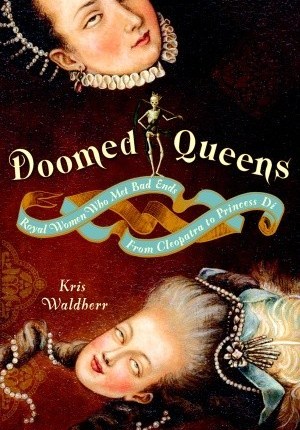
Doomed Queens: Royal Women Who Met Bad Ends, From Cleopatra to Princess Di by Kris Waldherr

Doomed Queens: Royal Women Who Met Bad Ends, From Cleopatra to Princess Di by Kris Waldherr

doomedqueensA quirky yet educational list of Doomed Queens that is organized by time period. I learned a lot and was entertained- everything that I look for in a non-fiction book.
“While kings were also vulnerable to political upheaval… for the most part men pulled the strings at court. Therefore any woman blocking the way to power was a threat to be eliminated. Common ways to bump off an inconvenient consort included beheading, burning, drowning, poison, stabbing, strangling, starving, and forcing suicide.” pg 8, ebook. Shocking, isn’t it. One would think that a queen’s power would afford her a measure of protection, but it didn’t.

Here’s one of the facts I learned: “Arsinoe’s story has been overlooked in the face of her more successful older sister, Cleopatra… But in death, Arsinoe was buried with the queenly honors that had been denied her in life. Her remains were interred in a tomb in the Temple of Artemis, one of the seven wonders of the ancient world.” pg 31, ebook. If you’d like a historical fiction book about Arsinoe, may I suggest The Drowning King.

I also learned the Roman viewpoint of the fury of Boudicca, queen of the Iceni: “Dio Cassius later wrote, “All this ruin was brought upon the Romans by a woman, a fact which in itself caused them the greatest shame.”pg 37, ebook. Silly Romans. Here’s a historical fiction about Boudicca if you’re interested: The Eagle and the Raven.

Doomed Queens includes plenty of puns and amusing witticisms. Take this passage from the chapter about Brunhilde: “… the queen of Austrasia incited a forty-year war between her realm and Neustria that made the Hatfields and the McCoys seem downright Merchant-Ivory. “ pg 44-45, ebook.

Or in Sibyl of Jerusalem’s entry: “Sibyl’s marital history took on Liv Taylor proportions as she became engaged, married, widowed, and annulled in varying combinations. pg 53, book. Burn.

Recommended for readers interested in royal stories and unfortunate yet powerful females. Reluctant readers may enjoy Doomed Queens because of the short chapters and light-hearted delivery of some seriously sad history.

Thanks for reading!

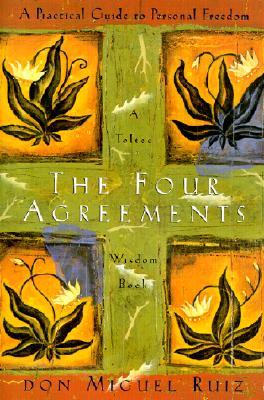
The Four Agreements: A Practical Guide to Personal Freedom by Miguel Ruiz

The Four Agreements: A Practical Guide to Personal Freedom by Miguel Ruiz

fouragreementsThe Four Agreements is a simple and short presentation of some very deep wisdom. In a world filled with spiritual reading material, this one’s a goodie. It just made a lot of sense to me.

These lessons come from the shaman culture of Central America. “Toltec knowledge arises from the same essential unity of truth as all the sacred esoteric traditions found around the world. Though it is not a religion, it honors all the spiritual masters who have taught on the earth. While it does embrace spirit, it is most accurately described as a way of life, distinguished by the ready accessibility of happiness and love. introduction pg x. Happiness and love! Sign up the Hippie Librarian, pronto.

The book goes on to talk about how everyone has unconscious beliefs that we pick up as children. We view and experience our world through these beliefs. Most folks aren’t even aware that they have them and this causes a myriad of misunderstandings and problems: “We keep searching and searching, when everything is already within us. There is no truth to find. Wherever we turn our heads, all we see is the truth, but with the agreements and beliefs we have stored in our mind, we have no eyes for this truth. We don’t see the truth because we are blind. What blinds us are all those false beliefs we have in our mind.” pg 17.

So, how do you cut through the fog of these beliefs to see clearly? Ruiz suggests using The Four Agreements.

The first is: “be impeccable with your word… you begin to see all the changes that can happen in your life. Changes first in the way you deal with yourself, and later in the way you deal with other people, especially those you love the most.” pg 46. This includes your inner voice, the way you talk to yourself and how you narrate your reality.

Ruiz mentions that some people talk to themselves in a manner that they would find unacceptable to use with the people they care about. Change the way you speak and, Ruiz claims, your life will follow.

The second agreement is: “Whatever people do, feel, think, or say, don’t take it personally. If they tell you how wonderful you are, they are not saying that because of you.” pg 59 This helps you because: “When we really see other people as they are without taking it personally, we can never be hurt by what they say or do. Even if others lie to you, it is okay. They are lying to you because they are afraid. They are afraid you will discover that they are not perfect.” pg 63.

The third agreement is ‘don’t make assumptions’: “If others tell us something, we make assumptions, and if they don’t tell us something we make assumptions to fulfill our need to know and to replace the need to communicate.” pg 74. Now that I’ve been looking for this, I’ve caught myself assuming things all the time.

It’s funny how quick hurt feelings evaporate when I just put an “assumption” label over any stories I’ve concocted. It has actually been world-changing for me: to realize how many stories I make up because I’m bored or confused or simply don’t know what someone else is thinking. And to realize that they’re not real is such a relief. Really.

Finally: “Just do your best – in any circumstance in your life. It doesn’t matter if you are sick or tired, if you always do your best there is no way you can judge yourself. And if you don’t judge yourself there is no way you are going to suffer from guilt, blame, and self-punishment. By always doing your best, you will break a big spell that you have been under.” pg 85.

This was another big one for me. I used to get down on myself about how circumstances played out even if I had nothing to do with it. Now, I just pause and give it a quick think over, “Did I try my best?” Generally, yeah, I was trying my guts out.

And that’s all I can ask of myself, really. I can’t control the uncontrollable, I can only do the best I can with what I’ve got in front of me.

The Four Agreements may help readers live in the now and experience life as it is rather than as they’ve imagined it to be. At least, that’s what it has done for me. Also recommended for readers who may be interested in spirituality but want a easy place to start. This one is simple and packs a big punch in a very few pages.

Thanks for reading!

Stronger by Jeff Bauman, Bret Witter

Stronger by Jeff Bauman, Bret Witter

strongerI am not a big news watcher. I try to keep up on current events, so I knew about the bombing at the Boston Marathon, but I didn’t watch the news broadcasts as they occurred nor did I see the (now famous) picture of Jeff Bauman being wheeled away from the bomb site. So, this whole book was a revelation and learning experience for me.
In a straight forward and honest manner, Jeff describes his life, what happened to him that tragic afternoon, and then how he and his family picked up the pieces of their lives and began to move on.

He also describes what happened at the shootout between Tsarnaev and the police from the officers’ point of view (he heard multiple first hand accounts from the men who were there). He details the trauma to his body and mind- some of it is very graphic, but that’s how he experienced it.

I think this was a very intimate memoir.

In addition to sharing his inner most thoughts and emotions, he doesn’t try to make the people in his life look better than they really are. For example, the portrait he paints of his mother is very unflattering. She tends to drink to excess and then vent her emotions while under the influence.

Apparently she has behaved this way Jeff’s entire life, so he doesn’t think much of it. It’s very dysfunctional, at best, and alcoholic, at worst. But, it’s real and not something that he had to share with the world.

Jeff chose to share it.

At multiple points in the book, Jeff denies that he’s a hero, but he is. He’s demonstrated the resiliency of the human spirit and sheer determination to move on with his life by learning to walk with his new legs a mere six months after the bombing.

I sincerely hope that his life continues to move forward and that he finds more peace than is detailed in his memoir. He deserves that, at least.

I received a free copy of this book through Goodreads First Reads. Thanks for reading!

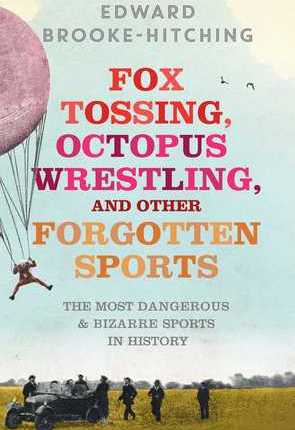
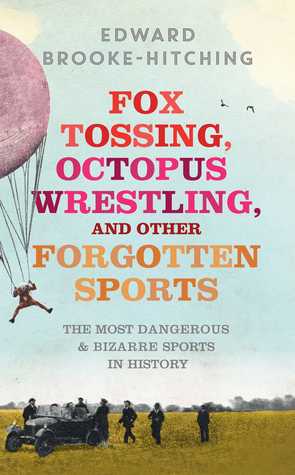
Fox Tossing, Octopus Wrestling and Other Forgotten Sports by Edward Brooke-Hitching

Fox Tossing, Octopus Wrestling and Other Forgotten Sports by Edward Brooke-Hitching

foxtossingThe moral of today’s story is that people used to do terrible things to animals in the name of “sport.” Interspersed with fascinating tidbits about dueling with rubber bullets and auto polo, Fox Tossing, Octopus Wrestling and Other Forgotten Sports documents the nauseating practices of bear, dog and monkey baiting and more- so much more.
It describes mass hunts conducted in arenas by royalty and nobles were hundreds, if not thousands, of animals were slaughtered as entertainment. From shooting arrows at roosters to breaking apart a barrel with a cat inside, I could not believe the brutality.

If you can make it through the animal abuse sports, and I confess that I skimmed most of those, what’s left is amazing. “… from learning about how our ancestors entertained themselves we gain a unique insight into broader contemporary attitudes towards morality, humor, and the trials of daily existence.” pg 3. “The reasons why these forgotten sports fell out of favor are, of course, many and varied, but broadly speaking can be divided into three categories: cruelty, danger, and ridiculousness.” pg 5.

Ah, balloon jumping. This is a sport where a dude would attach a huge balloon to himself and leap across the landscape like a superhero. Why did we quit balloon jumping? “He did nearly clear the electrified cables, but unfortunately his feet became entangled, and when he tried to extract himself by grabbing one of the wires he was blown to the ground in a hail of sparks, dying instantly. Alas, balloon jumpers never quite managed to refine the sport to a level of safety below “frequently lethal”…” pg 24.

Then there was dwile flonking: “In mid-1960’s Norfolk, it became a favorite activity of locals to gather in a large group, dance to an accordion, and hit each other in the face with beer-soaked rags.” pg 87. What fun.

I would say that the practice of “flyting” is alive and well in some online forums: “Flytings were extemporary swearing matches that placed a value on the imagination and verbal dexterity of the participants, who would exchange insults with impressive wordplay in a sense similar to modern rap battles, but with an intensity of vitriol and florid vocabulary that is hard to fully comprehend by modern standards.” pg 101. But not on Goodreads, where civil discourse rules the day. 🙂

Recommended for trivia hounds and those interested in obscure history, Fox Tossing is full of hilarious and heart-breaking facts about some of mankind’s forgotten pastimes. Those who are triggered by animal cruelty would be best served by picking a different book.

Thanks for reading!

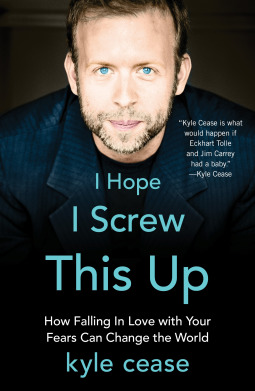
I Hope I Screw This Up: How Falling in Love with Your Fears Can Change the World by Kyle Cease

I Hope I Screw This Up: How Falling in Love with Your Fears Can Change the World by Kyle Cease

ihopeiI Hope I Screw This Up is a part-diary, part-spiritual evolution manual and 100 percent the Hippie Librarian’s type of read. Kyle Cease shares his thoughts and personal path towards becoming his best self. I didn’t find it to be as funny as promised in the blurb, but I do think it has worth as, “another finger pointing towards the moon,” as Eckhart Tolle would say.


The beginning of this book is hard to get through- for the writer and the reader. Kyle explores his fears and inability to get started. But, he slowly gets into his groove and, boy, does he begin flowing. Here’s the start of the turn-around: “You would have sensed my inauthenticity immediately if I was feeling fear in every ounce of my body and I just overlooked it in order to write the “right” thing. Instead, by baring my soul and telling you what I’m actually experiencing, I’m freeing myself from the pain I would otherwise be hiding and holding on to. Something I’ve learned is that sharing my deepest truth, no matter how scary it is in the moment, is freedom.” loc 48, ebook. And he’s off to the races.

“Just because I haven’t done this before doesn’t mean that I can’t access the ability to write the most amazing book that has ever been written. We all have the exact same level of ability to access the unlimited creativity available in every moment.” loc 158, ebook. I believe that too-
humanity’s ability to access unlimited creativity every moment. I suppose I believe that Kyle could write the most amazing book that has ever been written. Does he do it in this tome? I guess that depends upon how well you’re able to connect with what he’s done.

I enjoyed this discussion about the limitations of the mind: “Your mind is constantly putting you in survival mode all day so it can protect itself from what it thinks will be death, and unfortunately, your mind thinks almost everything is death.” loc 224, ebook. Isn’t that the truth.

And he touches on some of the problems with the New Age movement: “I know it sounds weird to say that sadness is actually a good thing, but the societal lie is that it’s better to be happy than to be sad. That’s just a belief that our mind created. … one of the strongest things you can do is to actually feel the emotions that you’re experiencing.” loc 510. Every emotion has a time and place. The insistence upon positivity at any cost, doesn’t work. Serenity now, insanity later… yes?

He also goes into the life-changing benefits of meditation, which I also agree with. By slowing down and taking the time to go within, your inner being speaks to you and gives you guidance: “Every single one of us has this calling within us, but most people are so locked into the habits and distractions they’ve created in their life that they can’t hear it. It doesn’t take anything special to discover what that calling is or what it wants you to do; all you have to do is turn down the volume of your distractions and listen.” loc 706. It may sound weird if you haven’t experienced it yet but it’s true.

For the most part, Kyle keeps his book in this dimension of reality and doesn’t dip into the far-out. But, there is a part where he briefly jokes about a picture of himself and how, at the universal energy level, we’re all the same. So, technically, you’re looking at a picture of yourself in the book that you wrote, even though it seems that you’re looking at a picture of him in a book that he wrote. That could be a bridge too far for some readers, but the Hippie Librarian took it all in stride.

Enthusiasts of Eckhart Tolle and Abraham Hicks will probably enjoy Kyle Cease. He’s authentic in the way that spiritual teachers are, understandable and amusing. He also makes a good case for falling in love with your fears. Now, the hard part, to practice it.

Thank you to Netgalley and North Star Way publishing for a free digital copy of this book. Reminder: the brief quotations that I pulled from the advance reader’s text may differ slightly in the final printed version.

Thanks for reading!

Mother Teresa: In My Own Words by Mother Teresa

Mother Teresa: In My Own Words by Mother Teresa
motherteresa

This book is a powerful testament to Mother Teresa’s humanity, humbleness and faith. I do not share all of her views, but I found it impossible not to be swayed by her unwavering belief in the unseen.

“Not given to much talking, Mother Teresa spoke only when necessary. Thus her words, never labored nor many, were convincing.” pg vii, introduction.

“I have the feeling that we are in such a hurry that we do not even have time to look at one another and smile.” pg 23. I believe that too.

What does a smile cost? Nothing.

“Sometimes people can hunger for more than bread. It is possible that our children, our husband, our wife, do not hunger for bread, do not need clothes, do not lack a house. But are we equally sure that none of them feels alone, abandoned, neglected, needing some affection? That, too, is poverty.” pg 27.

I was most moved by Mother Teresa’s thoughts about poverty in the first-world. We do suffer from a plague of unkindness, loneliness and greed. I believe that the soul needs more than food to thrive.

“Peace and war begin at home. If we truly want peace in the world, let us begin by loving one another in our own families. If we want to spread joy, we need for every family to have joy.” pg 47. Yes.

Photo by Artem Podrez on Pexels.com

Finally: “As far as I am concerned, the greatest suffering is to feel alone, unwanted, unloved. The greatest suffering is also having no one, forgetting what an intimate, truly human relationship is, not knowing what it means to be loved, not having a family or friends.” pg 91.

Wisdom from a woman who worked with some of the poorest people on the planet.

A beautiful collection of quotations from a beautiful soul- recommended for everyone but especially those in need of loving words and some peace.

Thanks for reading!

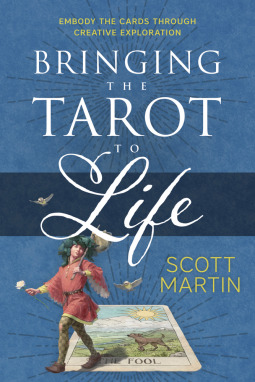
Bringing the Tarot to Life: Embody the Cards Through Creative Exploration by Scott Martin

Bringing the Tarot to Life: Embody the Cards Through Creative Exploration  by Scott Martin
bringingthetarot

Bringing the Tarot to Life is a unique tarot manual that invites the reader to use her own imagination in assimilating and interpreting the cards. I’ve never read anything quite like it.

Scott Martin was an actor and theater teacher for many years. “It struck me that just as an actor delves into his character, so a student of the tarot can explore the archetypes that are represented in the seventy-eight cards in the tarot. He can develop his intuitive abilities by participating in the written and performance exercises an actor uses to hone his talent and to create his role in a play.” loc 112-128, ebook.

He based the first two sections of the book on that idea and created a series of theater-inspired games and exploratory exercises to be played in groups or alone.

The last portion of the book consists of Martin’s interpretations of the cards. I found that section to be the least interesting, but there could be descriptions in those pages that others may not have heard. So, don’t let me deter you.

There was also some trivia included for tarot enthusiasts. Something that I didn’t know was that before Paul Foster Case helped to form The Golden Dawn, he was in theater.

Paul Foster Case became interested in tarot in 1900 when someone asked him where he thought playing cards came from. … Prior to that, he was actively involved in the theater. He was the musical director on a showboat and later worked in musical theater and vaudeville.” loc 128, ebook. But old man river, he just keeps rolling along…

Photo by Mikhail Nilov on Pexels.com

I agreed with Martin’s thoughts on improving your intuition: “How does one develop his intuition? One obvious answer is to expose the mind to more creative and imaginative ways to thinking and looking at the world. Creativity and intuition are inextricably linked.” loc 164. Indeed.

My favorite of the exercises presented in this book is “I Am What I Do” loc 231, ebook. It encourages readers to assign jobs to the different cards.

“Many people in life, as well as characters in plays, define themselves to a great extent in terms of what they do. … the possibilities are virtually limitless: The Ten of Pentacles- a family counselor. The Five of Swords- a crooked hedge fund manager. The Knight of Cups- a poet.” loc 231.

I thought that was hilarious. And, I was looking at the cards in ways that I never had before. Talk about ‘Bringing the Tarot to Life’!

Recommended for beginners or advanced practitioners of tarot cards. Every reader will most likely find an exercise or two to their liking because of the huge variety Martin offers.

Thank you to NetGalley and Llewellyn publishing for a free digital advance reader’s copy of this book. Reminder: the brief quotations that I cited in this review may change slightly in the final published version.

And, thanks for reading!

Nerd Do Well by Simon Pegg

Nerd Do Well by Simon Pegg
nerddowell

Nerd Do Well is Simon Pegg’s life story interspersed with the tale of a fictional alter ego, Pegg, a James Bond figure with a robotic sidekick. His coming of age stories and fictional bits are hilarious but once Pegg gets into his movie making period, the book loses it’s momentum.

I preferred the nostalgia of the first time he saw Star Wars to the actuality of meeting his hero, George Lucas and finding him stand-offish. There’s something heart breaking about seeing childhood hero worship crumble in the face of cold hard reality.

Pegg’s education in film appreciation and critique make for truly fascinating observations about pop culture films. I took his thoughts about how the Anakin/Frankenstein scene in the third Star Wars movie could have been made into a memorable and fitting theatrical moment instead of the joke that it was (pg 328-329) to my husband, who is the most ardent Star Wars fan that I know. Husband said in response, “His way would have made it much better.” You’ll have to trust me when I say that that’s very high praise.

Another of my favorite parts in Nerd Do Well was Pegg’s explanation for American readers about why the pub occupies a prominent place at the center of British social life. I’d never really understood what the attraction was until he painted the scene.

Photo by Kelly L on Pexels.com

I mean, in my hometown, we have all sorts of dive-bars lining main street where, any night of the week, I could roll in there and meet up with the prematurely aged classmates of mine who will never get out of that place. But, who wants to do that. The bar is the epitome of failure rather than community.

With his homemade quizzes, neighborhood regulars, and music, Pegg’s pub seems to be somewhere warm and inviting where I would actually enjoy hanging out. It makes much more sense to me now why Shaun of the Dead was based around a pub and also why most DnD campaigns begin in taverns.

If you enjoyed Nerd Do Well, you may want to read My Booky Wook (less Star Wars, more drugs, fairly funny) or Just a Geek: Unflinchingly honest tales of the search for life, love, and fulfillment beyond the Starship Enterprise (more Star Trek, more angst-filled than funny).

Thanks for reading!