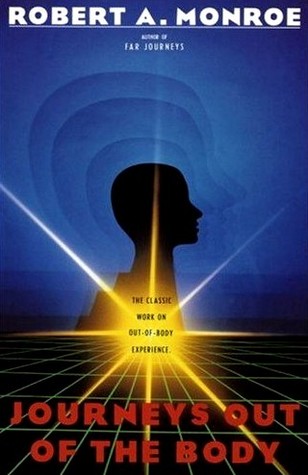
Journeys Out of the Body: The Classic Work on Out-of-Body Experience by Robert A. Monroe

Journeys Out of the Body: The Classic Work on Out-of-Body Experience by Robert A. Monroe
journeys out of the body

A ground breaking work into the mystery that is the out-of-body experience by a leading researcher in the field.

Ultimately, Journeys Out of the Body left me with more questions than answers, but, for the most part, I enjoyed the ride.

Charles Tart’s introduction is excellent: “… OOBE’s are a universal human experience, not in the sense that they happen to large numbers of people, but in that they have happened all through recorded history, and there are marked similarities in the experience among people who are otherwise extremely different in terms of cultural background. One can find reports of OOBEs by housewives in Kansas which closely resemble accounts of OOBEs from ancient Egyptian or oriental sources.” pg 8.

That statement reminded me of the near death experiences described in Wisdom of Near-Death Experiences: How Understanding NDEs Can Help Us Live More Fully by Penny Sartori. OOBEs like NDEs are a human experience rather than a cultural one.

Munroe points out a curious habit of society that I’ve noticed:“Many (in spiritual and occult circles) have deep professional jealousy for each other, and often are inclined to be suspicious of techniques and theories propounded outside their particular activity. They may even subtly deride or look with tolerant, superior amusement at results unrelated to their specialty. pg 37.

Why can’t we all just get along? I bet we’d learn more that way.

Photo by Min An on Pexels.com

Munroe’s thoughts on the “natural” home for what he calls the “second body”, astral body, or body of light: “The Second Body is basically not of this physical world. To apply it to visits to George’s house or other physical destinations is like asking a diver to swim down to the ocean bed without scuba gear or pressure suit. He can do it, but not for long, and not too many times.” pg 75-76.

That was why Munroe believes that out of body experiences are so hard to substantiate. When explorers are looking for evidence from the physical world, it isn’t the natural place for that consciousness to be.

Munroe talks about going to an alternate dimension in his explorations. He quotes a college professor about the possibility of this: “Dr. Leon M. Lederman, professor of physics at Columbia University, has stated: “Basic physics is completely consistent with the cosmological conception of a literal antiworld of stars and planets composed of atoms of antimatter, which is to say negative nuclei surrounded by positive electrons. We can now entertain the intriguing idea that these antiworlds are populated by antipeople, who antiscientists are perhaps even now excited by the discovery of matter.” pg 100

I think that would make a great science fiction novel. Has anybody written anything like that?

Photo by Yan Krukov on Pexels.com

I had imagined that learning about out of body experiences would be empowering and uplifting but parts of Munroe’s account didn’t really leave me feeling that way.

Take this journal entry in which he describes aliens and the loss of his belief system: “Then they seemed to soar up into the sky, while I called after them, pleading… By this time, it was getting light, and I sat down and cried, great deep sobs as I have never cried before, because then I knew without any qualification or future hope of change that the God of my childhood, of the churches, of religion throughout the world was not as we worshiped him to be- that for the rest of my life, I would “suffer” the loss of this illusion. Are we, then, just leftover laboratory animals? Or perhaps the experiment is still “in process.” pg 262.

Very, very bleak and, it just didn’t feel right to me. However, Munroe believes this is true and I felt very sad for him.

If you are interested in more information about OBEs, you may want to read Soul Traveler: A Guide to Out-of-Body Experiences and the Wonders Beyond by Albert Taylor or Multidimensional Man by Jurgen Ziewe.

If you want more one-on-one experiences with aliens, try The Key: A True Encounter by Whitley Shrieber.

Thanks for reading!

Wisdom of Near-Death Experiences: How Understanding NDEs Can Help Us Live More Fully by Penny Sartori

Wisdom of Near-Death Experiences: How Understanding NDEs Can Help Us Live More Fully by Penny Sartori
wisdomofneardeath

An extraordinary book by Penny Sartori who was a nurse, now doctor, and worked for years in the NHS.

She realized that with end life issues, there are many categories of experiences that are not discussed in medical educations but that happen often enough to be tacitly understood by practicing medical staff. Dr. Sartori compiled this book with the aim of helping other medical professionals understand near-death experiences and their potential effects on recovering patients.

Refreshingly, Dr. Sartori writes simply enough for a lay-person (like me) to completely understand the text and I found first-hand account after account fascinating, uplifting, and educational.

I’ve read about many near-death experiences and I’ve always gotten the feeling that there was something more there. As if, in reading the account, I was viewing a light behind a veil. Dr. Sartori calls this, “Ineffability.” “Ineffability: When people try to make sense of the (near-death) experience or try to verbalize it they find that words fail them. They have experienced something with which they have nothing to compare, and to try to find words to describe it is impossible.” pg 9

It’s nice to be able to put a word to that feeling.

At the end of the chapter about international near-death experiences, she has this to say: “It is evident that NDEs are worldwide phenomena and it has therefore been suggested that they are merely the effects of a dying brain. However, some cultures report components that are not present in other cultures, which would rule out materialist explanations. As some components are interpreted according to culture then it is reasonable to construe that the components may be interpreted symbolically through each individual’s cultural filter. This could suggest an underlying collective consciousness, as discussed by Carl Jung.” pg 83.

Photo by Timo A. on Pexels.com

Most of the books I’ve read on this topic have had little to say about the commonality of NDEs among the world’s population. This is a good introduction to it.

About the power of love: “Hospice and palliative-care consultant Dr. John Lerma has reported that 70 to 80 percent of his patients waited for loved ones to leave the room before dying. He also remarked that he had witnessed patients who had been certified dead return to life as the pain of their loved ones had pulled them back from a place of peace and love.” pg 103 Mind blown.

Love literally brought people back from the dead.

About the science of spirituality and how that relates to religious texts: “Texts such as the Books of the Dead have many similarities to NDEs. For many thousands of years these have been reduced to myths but now they appear to be ‘maps of the inner territories of the psyche encountered in profound non-ordinary states of consciousness’. Maybe this is what is needed to reintegrate our spiritual roots with our huge advances in technology.“pg 191 I think that this may be true too.

And finally: “One thing I’ve come to realize over the past few years is that heaven is not a location – it is a state of mind and is within us all. We just have to go within and find it.” pg 191 Absolutely, Dr. Sartori.

If you enjoyed The Wisdom of Near-Death Experiences, I would suggest reading, The Map of Heaven by Eben Alexander. You may also enjoy Journey of Souls: Case Studies of Life Between Lives by Michael Newton- a hypnotherapist explores between life/past life consciousness with his patients to heal current issues.

Also, if you want to explore the idea that heaven is inside of us, you may want to check out What if This is Heaven by Anita Moorjani.

Thanks for reading!

Trials of the Earth: The True Story of a Pioneer Woman by Mary Mann Hamilton

Trials of the Earth: The True Story of a Pioneer Woman by Mary Mann Hamilton
trials of the earth

Trials of the Earth is Mary Mann Hamilton’s memoir about her hardscrabble life in America during the late 1800’s.

She uses period speech to illuminate a life of struggle and hard work. If certain anachronistic and racially insensitive terms bother you, especially the casual use of the N-word, you may want to chose another memoir. It was shocking but I kept reminding myself that Mary was a product of her times.

On top of the constant struggle of putting food on the table and keeping a roof over her head, it seems like she was perpetually pregnant and her husband was an alcoholic.

But Mary lived up to the challenges, raised and buried children, nursed her husband through his hangovers and illnesses- she was a survivor. That is mainly what Trials of the Earth was to me- a survival story.

“Nevertheless, this is not a book of repining; it is a tale simply told of what one woman has lived through in the Mississippi Delta. I say ‘lived through’ because at times this history reads like a record of the extreme limits of human endurance.” loc 75, introduction

So many of the modern conveniences that we take for granted didn’t exist. Mary moved around a lot and notes with relief every time her husband manages to install a pump in her new house so that she didn’t have to haul water from the river.

Mary’s relationship with her husband, Frank, isn’t a fair deal. She is a very young woman when she gets married and from the start he’s controlling- telling her what they will eat and what friends they will have. He even tells her what books she can read.

Photo by Gaspar Zaldo on Pexels.com

That would have been the last straw for me. But again, she was a woman of her times.

“To me he seemed like a man that had taken a silly child to raise rather than a wife. … As time went on I found there were plenty other things I didn’t know, too. The first thing I found out was that he drank.” loc 226, ebook.

In addition to the inequality in their relationship, Frank is from England and has a secret past. He won’t tell Mary, his own wife, his real name or talk about his circumstances or the family he left behind. But, Mary doesn’t let it bother her too much. I suppose she was too busy with everything else they had going on. That lack of trust would have driven me bonkers.

Not that she felt like anything was wrong with their relationship. “Women can stand more work, more trouble, and more religion than men.” loc 528, ebook. She accepted the hardships because she knew that she could. I admire her gumption but I also felt sad for her too. I felt sad because she didn’t have the option to live any other sort of life.

Frank is always talking about the sin of Eve and all the baggage that comes with it to Mary. There is a lot of mansplaining that goes on too. Parts of this book were infuriating to me.

Recommended for readers who enjoy memoirs that read like historical fiction. Ability to tolerate the bleak role that women occupied in society in the late 1800’s is a must.

Thank you to NetGalley and Little, Brown and Company for a free advance reader’s copy of this book. Reminder: some of the quotations in this review may change in the final printed copy.

Thanks for reading!

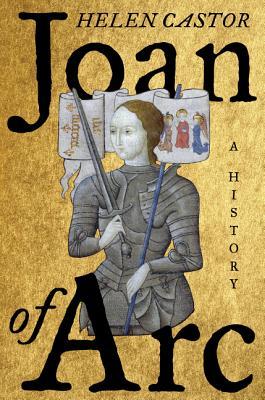
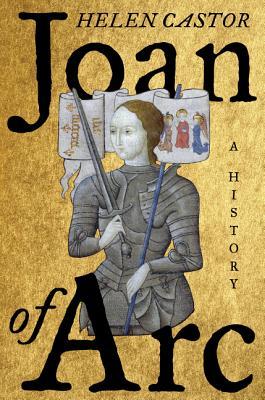
Joan of Arc: A History by Helen Castor

Joan of Arc: A History by Helen Castor
joanofarc

The review that I’m about to give Joan of Arc: A History has nothing to do with the historical accuracy of the book. On the contrary, I found this to be an extraordinarily well researched and cited biography.

Unfortunately, that mega-effort did not lend itself to a readable or enjoyable book.

The general idea behind Joan of Arc is sound. Helen Castor wanted to present Joan’s story in context with an extended history of France for years before and after her appearance on the world stage.

In that way, she thought that the legend of the woman could be separated away from the reality. The reader could appreciate the main players, the attitude towards spiritual visions, the belief of divine will in war and the monarchy, and capture the overall general flavor of the time period.

It was a good premise, but it just didn’t work. Maybe this was a doctoral thesis that Castor tweaked a bit and published? It reads like that.

Why is it that experts on topics are rarely able to translate that interest and depth of knowledge into stories that the general public would enjoy? I love medieval history, especially the backgrounds of the handful of female figures who made it into print during that period. This should have been right up my alley.

Photo by Pixabay on Pexels.com

Joan of Arc: A History read like a school textbook- the dull kind.

Actually, it reminded me of translating Livy’s History of Rome from Latin into English during college. It should have been fascinating stuff as he was writing about a particularly exciting period in Roman history when Hannibal was crossing the Alps to invade. But, sadly, Livy got caught up in listing endless details, particularly the size and shape of the elephants. Through description after description, the pace of Hannibal’s army slowed to a trickle and then it turned into a snooze-fest.

That also happened in this book.

If you enjoy scholarly research to the point that you just have to have it and nothing else will do, read this book. If you want history to come alive and punch you in the face, pick up something (anything really) by Margaret George or Bernard Cornwell.

I particularly liked The Memoirs of Cleopatra or The Autobiography of Henry VIII: With Notes by His Fool, Will Somers. George may not have the exacting research standards of this biography, but her historical fictions are informative in addition to a delight to read.

I received a free copy of this book through Goodreads First Reads. Thanks for reading!

Video guest post: George Washington’s Wooden Teeth by The History Guy

Another entry in the guest series collaboration between The Help Desk and The History Guy.

Watch this fascinating video to learn about George Washington’s teeth. I didn’t know most of this! And, as always, thanks for reading.

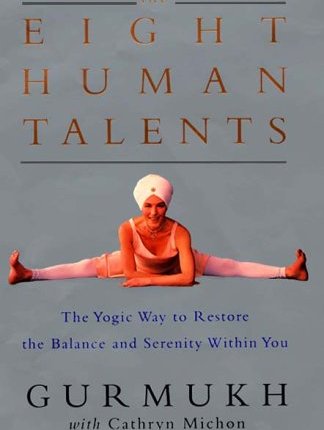
The Eight Human Talents: The Yogic Way to Restore the Balance and Serenity Within You by Gurmukh Kaur Khalsa

The Eight Human Talents: The Yogic Way to Restore the Balance and Serenity Within You by Gurmukh Kaur Khalsa

The Eight Human Talents is part-story and part-instruction manual for the practice of Kundalini yoga. I’ve only ever practiced hatha yoga and this is very different from what I’ve learned. I’ve tried a couple poses and this is definitely going to take some practice.

Photo by Elly Fairytale on Pexels.com

If I learned anything from this book, it is to breathe deeply. One of Gurmukh’s main points is that by connecting with the breath, we reconnect with ourselves.

Also, don’t be afraid to try, even if you fail. “If we can make one step towards happiness, towards healing, towards change, miracles begin to happen. The Kundalini Yoga and Meditation in this book are a way of making those small steps towards happiness. If you will try even one thing from this book-one breathing exercise, one stretch, one meditation- know that somewhere I am cheering right out loud for you, because I know that making that first step is the hardest thing to do…” introduction, xxii.

Some of Gurmukh’s stories were saccharine sweet, but I enjoyed most of them. “We are powerless over every other person on the planet, and we only have power over our own lives. No matter how problematic the people in your life are, you are always the solution.” pg 125.

I’ll have to get back to you on if these exercises deliver on the myriad of promises that Gurmukh makes. So far, I’ve discovered that my lower back needs to be strengthened and I should work on my neck flexibility.

Photo by Chermiti Mohamed on Pexels.com

She ties all of her suggested poses to different chakras and energies found within the body. If that concept is too far out for you, you may be better served with a different introduction to Kundalini yoga.

Recommended for beginners to moderately experienced practitioners.

Thanks for reading!

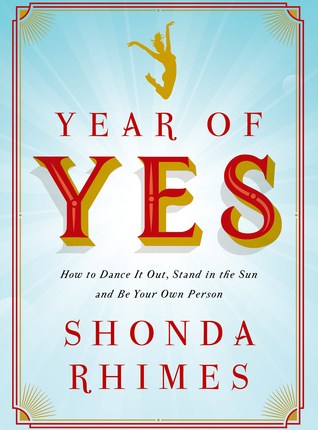
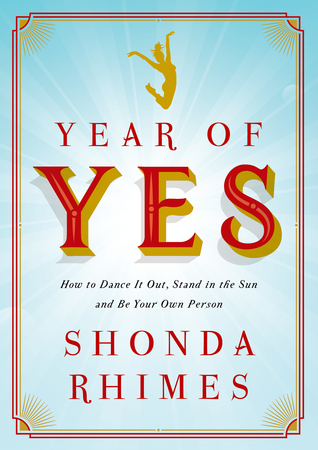
Year of Yes: How to Dance It Out, Stand In the Sun and Be Your Own Person by Shonda Rhimes

Year of Yes: How to Dance It Out, Stand In the Sun and Be Your Own Person by Shonda Rhimes
yearofyes

Shonda Rhimes’ heartfelt memoir about the power of embracing who you are and having the courage to set aside what you are not.

Though outwardly successful, Shonda was miserable. Between over-working and her introverted tendencies, she turned down every invitation and social event. The ones that she was forced to accept were anxiety inducing trials or complete blanks because of panic attacks.

Shonda didn’t even realize she was unhappy until, one Thanksgiving, her sister tells her that she doesn’t say yes to anything. Something clicks and Shonda embarks on a Year of Yes. Her results are astonishing and so is this memoir.

I have never watched a single episode of Grey’s Anatomy. I didn’t even realize that that was her show. You don’t need to be an aficionado to appreciate this book.

Shonda begins with some crushingly honest passages about her discomfort at sharing her life and her passion for writing. “Making stuff up is responsible for everything-everything I’ve done, everything I am, everything i have. Without the tales, the fiction, the stories I’ve spun, it is highly likely that right now, today, I’d be a very quiet librarian in Ohio.” pg 6, ebook. Not that there’s anything wrong with that. 🙂

Photo by Suzy Hazelwood on Pexels.com

The first part of this book was actually hard for me to get through because she was so obviously uncomfortable at creating a window into her heart and mind. She gets over it and so did I. “When it was first suggested to me that I write about this year, my first instinct was to say no. Writing about myself feels a lot like I have just decided to stand up on a table in a very proper restaurant, raise my dress and show everyone that I’m not wearing panties. That is to say, it feels shocking.” pg 12, ebook.

Shonda is just so relatable. Take this confession about motherhood: “I don’t know about you, but the mistakes and missteps I have made since becoming a mother… before kids, my confidence could not be dented. Now it’s shattered on a daily basis. I don’t know what I am doing.” pg 63, ebook. I know, right! Nobody knows what they’re doing. I take comfort in that.

Photo by Pixabay on Pexels.com

Throughout her year of challenging herself, Shonda discovers that she’s uncomfortable in her own skin because of her weight. This next passage is for anyone out there who has body image issues: “I believe everyone’s body is theirs and everyone has a right to love their body in whatever size and shape and package it comes in. I will fight for anyone’s right to do so. I will kick ass and take names if I have to. Your body is yours. My body is mine. No one’s body is up for comment. No matter how small, how large, how curvy, how flat. If you love you, then I love you.” pg 85, ebook. End of story.

I also liked how she came to a new understanding about how life works: “I’ve started to think we are like mirrors. What you are gets reflected back to you. What you see in yourself, you may see in others, and what others see in you, they may see in themselves.” pg 120, ebook. I’ve started to think that too.

The Year of Yes is recommended for readers who enjoy memoirs or for those folks out there whose lives are in need of an awakening- a shaking of the snow globe of your reality, if you will. Shonda said yes to things that scared her and discovered, on the other side of fear, a life truly worth living. I hope that we can all be as fortunate and as brave on our journeys.

Thanks for reading!

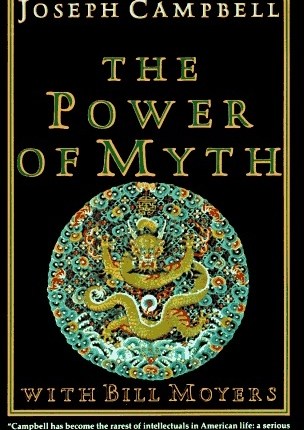
The Power of Myth by Joseph Campbell

The Power of Myth by Joseph Campbell

Though a bit rambling at times, The Power of Myth is a great introductory text on archetypes found within all world mythologies from almost every time period.

Photo by Plato Terentev on Pexels.com

In it, Joseph Campbell explains why the underlying stories are the same from all over the world and what they mean in both cultural, personal, and world contexts.

He breaks down some of the major archetypes like the sacrificed god and resurrection, virgin births, goddesses, trees, snakes, and more. As someone who has studied tarot and The Tree of Life extensively, I found it to be an illumination.

Photo by Alex Conchillos on Pexels.com

I particularly liked learning about the mythology of Star Wars. With the release of the new film, that particular series is back in the top of the pop culture charts. I think that The Power of Myth explains why it has such enduring appeal.

If you liked The Power of Myth, you may want to try Hero with a Thousand Faces or Pathways to Bliss: Mythology and Personal Transformation, both of which are also by Joseph Campbell.

Or pick up any of the many books about mythology from any country you’d like. If you immerse yourself in enough of the stories, you will pick up on the reoccurring patterns yourself.

I believe that one of the many purposes of mythology, beyond its entertainment value, is to teach us about what we have in common with each other, and also, the hidden dimensions of ourselves.

As the doorway to the Delphic Oracle said, “Know Thyself.” And, really, that is the greatest power there is. Mythology helps you do that.

Thanks for reading!

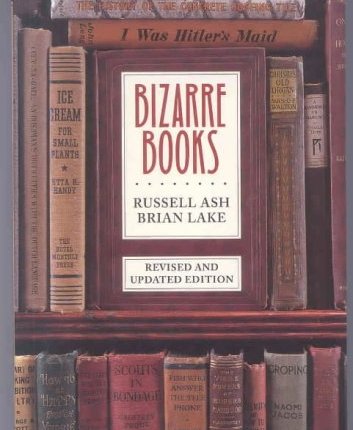
Bizarre Books: a Compendium of Classic Oddities by Russell Ash

Bizarre Books: a Compendium of Classic Oddities by Russell Ash
bizarrebooks

Though it relies too heavily on puns and doubles ententes, Bizarre Books is a humorous look at titles, subjects and author names in published materials. It is a must-read for any book lover or professional who deals with the printed word on a daily basis. *cough* Librarians. *cough*

“All the books recorded are real titles, with real authors. All of them were published with the serious intention of informing, not amusing. In this, they have signally failed.” introduction, pg 7.

I don’t think that ALL of them were meant to be informative. Take this entry from one of my favorite genres, science fiction: Planet of the Knob Heads. Stanton A. Coblentz. Science Fiction, Atlas Publishing, 1939. “Jack and Marjorie are brought to the distant world of their captors. In far Andromeda, they struggle against “favors” of the knob-heads – but hope fades as they face the High Knobule!” pg 40. Almost irresistible, isn’t it?

If science fiction isn’t your thing, how about this (I’m guessing) thriller: What Farrar Saw. James Hanley. Nicholson & Watson, 1946. “No story by Mr. Hanley is without its moral implications; here we have a glimpse of nightmare horror and chaos in a monstrous machine ridden world. It starts simply enough as chaos does. A young couple set off for a holiday in Scotland.” pg 44. Sounds at least as promising as The Girl on the Train, wouldn’t you say?

Photo by Suzy Hazelwood on Pexels.com

Those were some of the fictional books that caught my eye. On to the non-fiction. If it was on a shelf in front of me, I’d pick up Carnivorous Butterflies by Austin Hobart Clark, pg 62.

In the most ineffective category, the prize goes to: Atomic Bombing: How to Protect Yourself. Watson Davis, et al. New York: William H. Wise & Co. 1950. One of its suggestions was: “Curl up in a ball as you hit the ground.” pg 166.

By far, my most favorite selection is: The New Guide of the Conversation in Portuguese and English in Two Parts. Pedro Carolino.

Familiar phrases: Let us go on ours feet. At what o’clock is to get up? At which is this hat. Have him some children? pg 54. And so on. The authors dedicated another three pages to this gem alone.

Highly recommended from this bookworm. It made me laugh a lot and that is not easy to do.

Thanks for reading!