Leaving Tinkertown by Tanya Ward Goodman

Leaving Tinkertown by Tanya Ward Goodman

This is Tanya Ward Goodman‘s memoir about how she loses her father and grandmother- first through Alzheimer’s and then to death. Leaving Tinkertown is a powerful look at end-of-life issues and family love.

It is an incredibly raw and straight forward account of a period of unimaginable change in the author’s life.

Photo by Matthias Zomer on Pexels.com

Tanya handles the deterioration of her father very well. I suspect that this ability to quickly and seamlessly accustom herself to change probably evolved from her childhood experiences with her father at carnivals and on road trips. With the background changing continuously, she had to change too but hold on to some essential part of herself. This characteristic served her well during her adult years.

Tanya’s father was a prolific artist. Because of his extreme creativity, I think that she was exposed to his mercurial moods long before he began losing his battle with Alzheimer’s. Artistic types seem to walk a fine line between logical thinking and madness. Their families get to walk that journey with them. That doesn’t mean that his descent into darkness didn’t hurt Tanya, but that she was more able to cope with his moment to moment shifts in behavior because she had experienced them before.

Photo by Shelagh Murphy on Pexels.com

Through this adversity, she grows closer to her brother, step-mom, and mother as they work together to care for her dad.

Tanya doesn’t gloss over her family’s shortcomings but comes to accept everything that each person brings to the table: “… I am starting to understand that doing all you can do, even if it doesn’t seem like very much, is enough.” pg 193.

When a strong, vital person in your life is no longer able to care for themselves, it’s heartbreaking.

My own grandfather, a force of nature, lost some of his heart when the family had to take the keys to the car away because he didn’t have the strength to drive safely anymore. This book was hard for me to read because Tanya knows what it feels like to cause that type of pain too.

Photo by Pixabay on Pexels.com

It brought back so many small moments when I was in a care-taking position for him. You want to provide the best quality of life that you can, but when the person can no longer clean, feed, or clothe themselves, then the really difficult decision making begins. Tanya and her relatives seem to make the process relatively simple even though I know that it is anything but that.

We all know that we’re not going to live forever but when you’re dealing with loss of physical strength or mental capacity in your own life or the lives of those you love, you get very close to that idea. It’s like the difference between looking through a window and having your face smashed up against the glass. When it’s right there, you can’t look away.

I’d recommend this for anyone who is caring for an aging or ill family member and needs a reminder that it’s all going to turn out alright. As Tanya reminds us, we just need to do all that we can do even if it doesn’t seem like it is very much.

I received a free copy of this book through Goodreads First Reads program. Thanks for reading!

Pigs Can’t Swim: A Memoir by Helen Peppe

Pigs Can’t Swim: A Memoir by Helen Peppe

Pigs Can’t Swim is a collection of essays based on Helen Peppe‘s childhood memories. Frankly, it is amazing that she managed to live to adulthood.

The youngest of nine children, she was by turns ignored or over-directed. Her family lived on a farm in Maine on a dead end road in the middle of nowhere.

Photo by Pixabay on Pexels.com

Helen tells her tale, all of it, without flinching from what she perceives the truth to be: her family’s wild behavior, prejudices, poverty, dysfunction, and an episode with a child predator that was truly horrific.

I had to keep reminding myself that she made it out alive and, at least, managed to write a book because this memoir had some truly terrifying bits in it.

I think Pigs Can’t Swim is an amazing piece of non-fiction writing not only for its content but also for its execution.

Photo by Eva Elijas on Pexels.com

Helen’s parents weren’t perfect but she doesn’t seem to blame or justify their behavior. In Pigs Can’t Swim, she just tells what happened and leaves a majority of the interpretation in the hands of the reader.

I couldn’t put this book down.

Its flowing narration reminded me of a much grittier version of Life Among the Savages.

Its personal and tell-all style reminded me of She Got Up Off the Couch: And Other Heroic Acts from Mooreland, Indiana. Similar to She Got Up Off the Couch, this book talks about overcoming poverty and adversity to become something more.

If you enjoyed either of these books, you’ll probably love Pigs Can’t Swim.

I received a free copy of this book through Goodreads First Reads program. Thanks for reading!

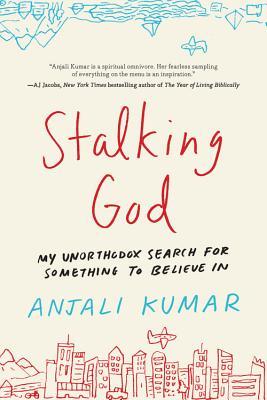
Stalking God: My Unorthodox Search for Something to Believe In by Anjali Kumar

Stalking God: My Unorthodox Search for Something to Believe In by Anjali Kumar

Anjali Kumar is a lawyer who is used to having all the answers. After she had a daughter, Anjali realized she knew very little about the big questions: why are we here? What is it all about? Is there a God?

“In 2010, when my daughter Zia was born, I decided that I needed to find God.” loc 24, ebook.

Anjali went on a quest to find out the answers, not only for the sake of her daughter, but also herself. She touches all the bases – from meditation to faith healing to Burning Man to yoni worship – Anjali leaves no stone unturned in her search to find what is real.

Photo by Artem Beliaikin on Pexels.com

“Along the way, I learned to chant, to meditate, and to marvel. I wrestled with my own identity, from my ethnic and cultural roots in India, to my femininity, to my role as a woman, daughter, mother, and wife. … I fancied myself an explorer, no different really than Magellan or Columbus. I was looking for a new world.” locs 148-163.

It’s a fascinating memoir.

Before each experience, Anjali puts in her research in an effort to find the science behind the beliefs. It’s not always as concrete as she would like it to be, but Anjali tries to engage her brain and her heart in her quest.

This is before she goes to her first “para-tan sounding”: “According to string theory, the entire universe is basically humming – all of it and all of us. Add that to the fact that the chanting of mantras has a long, compelling spiritual history, that cancer researchers are using sound- high-intensity focused ultrasound- to successfully destroy prostate cancer cells … and this whole Paramji thing starts to look like it might be grounded in a bit of hard science…” loc 500

Photo by Nataliya Vaitkevich on Pexels.com

Anjali tries to keep an open mind, even when things sound very strange: “One thing I had to be cognizant of… was how difficult it is as an outsider to come to terms with what are easy to perceive as the odd behaviors and strange beliefs of ‘other people.’ … as outsiders we have no idea what those behaviors and traditions stand for or mean.” loc 904.

She finds layers of meaning, even when particular experiences weren’t all that she hoped they would be. Anjali also experiences a few surprises along the way.

“I was looking for a theory of everything spiritual for Anjali and Zia. And yet, so far, just like those physicists had failed to find a theory of everything in the entire universe, I had failed to find a theory of everything for my own spirituality.” loc 1343.

Photo by Pixabay on Pexels.com

And she never gives up because: “A spiritual home is something that we all have to find for ourselves.” loc 2853.

Recommended for seekers everywhere. Anjali’s discoveries may not be earth-shattering, but they’re real and worth the read.

Thank you to NetGalley and Seal Press for a free advance reader copy of this book. Reminder: the short quotations in this review may change or be omitted in the final printed version.

Thanks for reading!

Dear Girls Above Me: Inspired by a True Story by Charlie McDowell

Dear Girls Above Me: Inspired by a True Story by Charlie McDowell

Dear Girls Above Me is about Charlie McDowell’s time living beneath a loud group of gossiping young women (names have been changed to protect the innocent). He claims to have learned much about love, life and himself through his eavesdropping.

From the description, I thought this book was going to be cute. Instead, I found it very creepy.

“I most definitely did not expect to be the unwilling audience of a twenty-four-hour slumber party between the Winston Churchill and Benjamin Franklin of the 90210 generation.” pg 6, ebook.

Photo by Max Vakhtbovych on Pexels.com

But, shortly after professing his irritation for the girls, he spends an inordinate amount of time wandering around his apartment, looking for the location with the best “reception” of their voices.

“…I’m living underneath a couple of Kardashian wannabes who spend their time gossiping, starving themselves, and throwing noisy parties.” pg 21, ebook.

Instead of ignoring them or moving to a new apartment, Charlie creates a Twitter account where he mercilessly mocks the snippets of conversation he overhears. It seemed very passive-aggressive to me.

“As my Dear Girls Above Me Twitter following grew, so did my guilt and anxiety. Each day, more and more people were discovering my ‘letters’ to the girls, and I felt as if it was only a matter of time before they stumbled across it.” pg 113, ebook.

Photo by Tracy Le Blanc on Pexels.com

But not guilty enough to stop tweeting about it.

Charlie does try to build reader sympathy by sharing some fairly embarrassing stories about his own personal life, but it didn’t really work. I found myself feeling embarrassed for everyone in this book rather than amused.

The low point of this tale was this: Dear Girls Above Me, ‘The psychic said I have a serious stalker in my life!’ I much prefer ‘a friend who always listens,’ thank you very much. pg 194, ebook.

No, stalker is more appropriate. Sorry.

I don’t recommend this book.

Thanks for reading!

Heidi’s 2017 Year-end Review

It’s the last day of 2017! As usual, this year I’ve enjoyed an eclectic mix of fiction and non-fiction.

I had a lot less time to read this year because of my full-time job, but I surprised myself with how many I was able to get through.

I’d like to take a moment to say thank you to all of my friends here on WordPress and Goodreads. Reading and reviewing wouldn’t be nearly as fun without all of you.

And without further ado, here’s my end-of-the-year book recommendations:

Total books read: 165

Overall favorite: Annihilation by Jeff VanderMeer

Non-Fiction: Inspired!: True Stories Behind Famous Art, Literature, Music, and Film by Maria Bukhonina or When Bad Things Happen to Good People by Harold S. Kushner.

Favorite Book Club Pick: Dark Matter by Blake Crouch (Good work, Kathy!)

Best Fantasy: Life After Life by Kate Atkinson (I did not like the sequel, but this book was excellent.)

Funniest Self Help: How to Be Ultra Spiritual: 12 1/2 Steps to Spiritual Superiority by J.P. Sears or How to Be Happy, Dammit: A Cynic’s Guide to Spiritual Happiness by Karen Salmansohn.

Book I Thought I Wouldn’t Like but Did: Heartless by Marissa Meyer

Book I Thought I Would Like but Didn’t: The Shadow of the Wind by Carlos Ruiz Zafón

Most Overrated: Paper Princess by Erin Watt

Most Disturbing: Gather the Daughters by Jennie Melamed (fiction) or The Only Girl in the World: A Memoir by Maude Julien (non-fiction).

Most Inspirational: The Four Agreements: A Practical Guide to Personal Freedom by Miguel Ruiz or Year of Yes: How to Dance It Out, Stand In the Sun and Be Your Own Person by Shonda Rhimes (memoir).

Most Far-Out: Surviving Death: Evidence of the Afterlife by Leslie Kean or A Field Guide to Lucid Dreaming: Mastering the Art of Oneironautics by Dylan Tuccillo.

Nerdiest Read: Level Up Your Life: How to Unlock Adventure and Happiness by Becoming the Hero of Your Own Story by Steve Kamb.

Most Depressing but Worth It: Night by Elie Wiesel (non-fiction) or Year of Wonders by Geraldine Brooks (fiction).

Book about books: Bizarre Books by Russell Ash, Brian Lake.

Classic I Should Have Read Before but Hadn’t: Animal Farm by George Orwell and Fahrenheit 451 by Ray Bradbury (read a bunch of classics this year, these were my top two).

Best Graphic Novel: Lumberjanes, Vol. 1: Beware the Kitten Holy by Noelle Stevenson (This whole series is a lot of fun.)

Strong Female Role Model: #GIRLBOSS by Sophia Amoruso (non-fiction) or Mistress of the Art of Death by Ariana Franklin (fiction).

Best Book about Music: Vivaldi’s Virgins by Barbara Quick (fiction) or Instrumental: A Memoir of Madness, Medication and Music by James Rhodes (non-fiction, very dark).

Best Book about Trivia: Fox Tossing, Octopus Wrestling and Other Forgotten Sports by Edward Brooke-Hitching.

Best Memoir: What I Talk About When I Talk About Running by Haruki Murakami.

Best Book about a Foodie: Born Round: The Secret History of a Full-time Eater by Frank Bruni

Best Historical Fiction: The Confessions of Young Nero by Margaret George or Wolf Hall by Hilary Mantel.

Best political: Gnarr: How I Became the Mayor of a Large City in Iceland and Changed the World by Jón Gnarr

Work-related: Linchpin: Are You Indispensable? by Seth Godin.

Family-related: How Not to Hate Your Husband After Kids by Jancee Dunn.

Happy New Year, my friends. And, happy reading, to all of you.

Gnarr: How I Became the Mayor of a Large City in Iceland and Changed the World by Jón Gnarr

Gnarr: How I Became the Mayor of a Large City in Iceland and Changed the World by Jón Gnarr
gnarr

Jon Gnarr ran for mayor of the largest city in Iceland not because he had experience as a politician, but because he was a comic and was, at first, poking fun at the system. But then, he realized that politics as usual was getting his country no where. So, he took the election seriously. Imagine his surprise when he won.

“Leo Tolstoy once said, ‘Everyone wants to change the world, but no one wants to change himself.’ But I feel that I have changed myself. I’ve done my homework. And next I want to try- just try, mind you!- to change the world. pg 6-7, ebook.

Iceland is unique in that it has a very small population of around 330,000 people. That’s about the equivalent of Santa Ana, California, or Corpus Christi, Texas. In other words, it’s not that big of a place.

Photo by S Migaj on Pexels.com

“The most famous Icelander is Bjork. … Abroad, she constantly has to flee from fans and journalists who pursue her into every little corner, while in Iceland you run into her in the pool, on the bus, or in the shops. In general, she’s left alone. In Iceland I was famous by the time I was fourteen. I was a fourteen-year-old with a Mohawk and a ring through his nose, and this too was news.” pg 13-14, ebook.

Here’s the scene: Iceland is quite small, the entire country was in an uproar because of the banking collapse, and the people were more than ready for change. But, Jon Gnarr was not ready for politics.

“Thanks to Dad, the newspapers, and the constant discussions broadcast on radio and television, I developed an aversion to politics. Politics was dumb, irritating, and boring. pg 23, ebook.

Photo by Dmitry Demidov on Pexels.com

A self-described ‘peaceful anarchist’, Gnarr was a comic and showman. He created The Best Party as a joke. But, somewhere along the line, the joke became a reality.

“Do you have to understand something down to the last detail before you can contribute to it? Do you have to be a scientist to become interested in science? … No. And it’s no different with politics. You don’t need to be a politician to have the right to participate in political life.” pg 41, ebook.

Even though he started to take the race seriously, Gnarr never took himself too seriously. And it worked.

“Every time another party made any election promises, we sat down together and discussed how we could top them. The Left-Green Alliance promised children and teens free access to swimming pools- our response was to offer free admission for all- with free towels included.” pg 54, ebook.

By not playing politics as usual, Gnarr and The Best Party won. I think he shows what’s possible when people bring a sense of humor and a desire to do good to the table. I think we can accomplish great things.

It just takes someone with a smidgen of imagination and a willingness to try.

Recommended for anyone who’s tired with politics as usual and for all the peaceful anarchists of the world.

Thanks for reading!

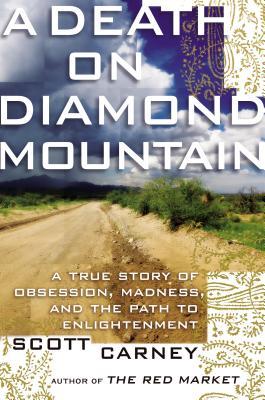
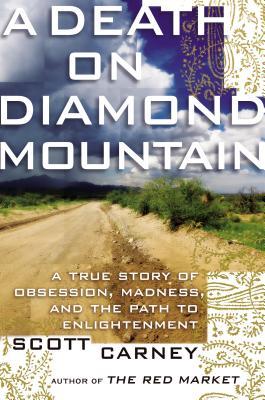
A Death on Diamond Mountain: A True Story of Obsession, Madness, and the Path to Enlightenment by Scott Carney

A Death on Diamond Mountain: A True Story of Obsession, Madness, and the Path to Enlightenment by Scott Carney
diamond mountain

In A Death on Diamond Mountain, Scott Carney has crafted an excellent examination of an untimely death, cult-like Buddhist practices, madness along the spiritual journey, and the dangers of extreme religious practices like multi-year, silent meditation retreats and fasting.

He also provides not only extensive backgrounds for all of the main actors in this tragedy, but also a dissection of the birth of Eastern philosophy in the West, including many different religions and belief systems.

This is the first non-fiction book that I’ve ever read that discusses potential negative effects of meditation.

Photo by Pixabay on Pexels.com

In this eye-opening analysis, Carney talks about potential research bias in meditation studies. He mentions researchers habitually attributing consistently positive results to meditation and reporting any negative results as pre-existing conditions in the practitioners rather than a side effect of the practice itself.

I think that this is an indication that moderation in all things, including meditation, may be the best way forward. I was unaware of the potential, catastrophic consequences of abusing traditional spiritual methods.

The sad thing is that the tragedy detailed in this book could have been prevented.

The death of Ian Thornson reads like a soap opera.

Photo by Shiva Smyth on Pexels.com

Carney has written these dysfunctional yet charismatic people with such skill that their personalities almost leap off the page.

I pitied Ian’s mother while reading about her struggles to extract her son from what she felt sure was a cult. Then, when his spiritual search eventually killed him, I can’t imagine the pain that she went through.

I’m certain that any mother would be proud for her child to exhibit the sort of spiritual drive that Ian had, however, the extremes that he took it too were obviously unhealthy. Again, it appears that moderation is the key to success.

Readers who enjoy non-fictional survival stories like Into the Wild may enjoy A Death on Diamond Mountain.

This book could also appeal to readers who enjoy learning about Buddhist philosophy or meditation methods. It is a shining example of how not to proceed on the spiritual path.

Thanks for reading! I received a free copy of this book through Goodreads First Reads.

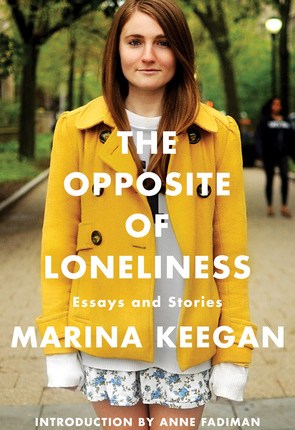
The Opposite of Loneliness: Essays and Stories by Marina Keegan

The Opposite of Loneliness: Essays and Stories by Marina Keegan

The Opposite of Loneliness is an excellent collection of fiction and non-fiction essays by Marina Keegan, a Yale student who died in a car wreck a couple days after she graduated from college.

Photo by Pixabay on Pexels.com

My favorite essay out of the bunch is “Against the Grain” pg 157 where she discusses her Celiac disease and the negative effect that that had on her mother.

She expresses frustration with how ridiculously protective her mother became when they were finally able to figure out what was wrong. She talks about being embarrassed at holidays as her mom cooked separate pies just for her or at field trips when her mother brought along special snacks.

But then, she reveals how she saw an internet article about how having Celiac disease could negatively effect the fetus when the sufferer becomes pregnant… and it’s a light bulb moment for Marina. She suddenly understands that feeling, how she would do anything to protect that other person, her baby, and suddenly her mom’s behavior doesn’t seem all that crazy after all.

Photo by Pixabay on Pexels.com

Of course, the absolutely heartbreaking moment for the reader is realizing that this particular dream will never come to fruition for Marina, but the fact that she even had that “ah-ha” moment is so powerful.

Marina’s writing highlights the sometimes indescribable feelings of daily life in such a powerful way.

For example: “My dog let out a small howl, twigs cracked in the woods, and something about the stillness or my state of mind reminded me of the world’s remarkable capacity to carry on in every place at once.”pg 34 I always had that feeling towards the end of the semester during college.

You’d work at this frantic pace, not giving a thought about your family or friends at home, then somehow in the lull between the final and actually going home, it would occur to me to wonder how my sisters had been for the last ten weeks or what my high school buddies had been up to.

I’d also forgotten that the world “carr(ies) on in every place at once.” Loved that sentiment.

Photo by Andrea Piacquadio on Pexels.com

“I worry sometimes that humans are afraid of helping humans.”pg 153 I worry about that too.

In that essay, Marina is talking about helping to save whales that were beached near her home. She talks about the time, effort, and money that is spent without consideration for the fact that only so many of the whales will actually be saved.

Then, when these whale rescuers go home, they do so without a backward glance towards the homeless on the streets, who are just as “beached” as the whales that they’ve been caring for all day.

“You feel like so many people are doing it and talking about it all the time like it’s interesting, so you start to wonder if maybe it really is.” pg 190.

Photo by Tomas Anunziata on Pexels.com

Marine was writing about how 25 percent of Yale graduates go immediately into banking or consulting positions that have absolutely nothing to do with their long term goals, but provide a quick paycheck in the short term.

Will they ever realize their dreams? If they make enough money, will they even care?

Life is about more than a paycheck. Marine Keegan knew that and her life had barely begun.

If you enjoyed The Opposite of Loneliness, I’d suggest Cool, Calm & Contentious, an excellent and serious collection of essays about life, or Zombie Spaceship Wasteland, a comedic collection of essays about life that are surprisingly insightful.

Thanks for reading!

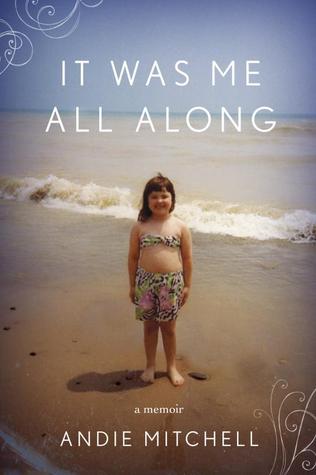
It Was Me All Along by Andie Mitchell

It Was Me All Along by Andie Mitchell
itwasme

Andie Mitchell used food to entertain and provide comfort for herself during a childhood with an artistic but alcoholic father and absent (because she was working three or four jobs) mother. This is her journey through the rocky early years and realization that if she didn’t lose the weight, she was going to suffering serious health problems for the rest of her life.

“What begins as hating the cake for all its multiple layers of luscious temptation spirals quickly into hating myself and all my fat cells. I let myself down. I lament not having more control. pg 15, ebook.

Andie’s overeating starts during her childhood. Her mother went to work on the weekends and her father drank all night and slept most of the morning, leaving Andie to her own devices, which were mainly sugared cereal and cartoons.

Photo by Tijana Drndarski on Pexels.com

I’d pull the box down and go about fetching a bow, a soup spoon, and the whole-milk carton from the fridge. I’d fill the bowl- cereal bobbing in milk to the rim- and make my way to the parlor. There I’d turn on the television and begin what would be hours of watching my favorite cartoons. One cereal bowl would empty without my noticing, and I’d replace it.” pg 27-28, ebook.

So, the loneliness was one of the reasons why she ate. The other was her father was emotionally abusive. She witnessed terrible scenes of him screaming at her mother and brother (Anthony). Andie internalized it and ate away her feelings.

If (my mother) fought back, (my father) roared louder. Or he’d throw something she loved across the room. But those were not the times my chubby body trembled. Those weren’t the times when my spirit split like the walls of our house. No, it was only when Anthony entered the room, when I heard his small voice try desperately to make itself bigger and less boyish, that the pit of my stomach twisted so violently, I couldn’t tell if I was hungry or about to be sick.” pg 36, ebook.

Photo by Engin Akyurt on Pexels.com

Andie’s mother loves her unconditionally, even when the doctor tells Andie that she needs to lose weight or things are going to get really bad for her. But, when Andie goes away to college, and her mother sees her again for the first time, she can’t hide her surprise at how large her daughter has become. And it is really painful for Andie.

“Until that day, that moment when I felt like a stranger in her eyes, she had been my sole source of comfort. She was the one who loved me unconditionally, who saw me as beautiful regardless. In the past when she noticed my weight, her worry seemed entirely empathetic, a way of loving me in my struggle. Now, it seemed grave.” pg 99, ebook.

Anyone who has struggled with their weight will find something to empathize with in Andie’s book. She wants to be fit, but she doesn’t know how to either eat or exercise in moderation.

Her journey may teach, encourage and cheer others on their way to a smaller size. Andie has been there and knows the daily struggles.

Thanks for reading!