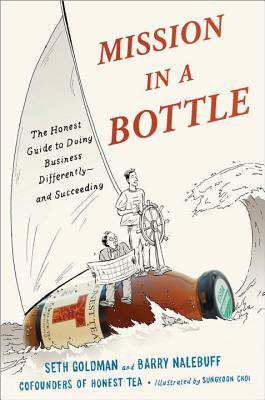
Barry Nalebuff and Seth Goldman, who are the cofounders of Honest Tea, tell how they created their bottled tea business and grew it into something more.
I understand what they were trying to accomplish with telling their business story in a graphic novel format but it didn’t work for me.
Graphic novels are great platforms to tell stories with a lot of action, colorful figures, and fantastic backgrounds. The story of founding a business, any business, seems to take place mostly in rooms with a bunch of people in business attire. The creation of a mission statement is mainly words on a page with little to show, action-wise. That doesn’t make it less important, but simply less exciting than a superhero comic.
Even the tense moments of Mission in a Bottle, like the time when a guy thought he found a piece of a male body part in one of the brands that they were renting their bottling facility out to, just didn’t translate in a meaningful way to a cartoon format.
Overall, I enjoyed the business story and found it inspiring. I wish Goldman and Nalebuff had written it as a traditional book rather than a graphic novel.
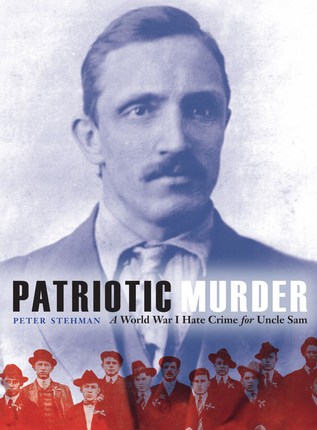
A well-researched and shocking account of the only (according to the author) German immigrant lynched on U.S. soil during World War I.
This non-fiction work is important for a number of reasons. First, it reminds readers of the time period of the Great War. Very few, unless they were just born, are even alive from that period.
We’ve forgotten the Committee of Public Information, a federal committee created by President Woodrow Wilson, and its purpose to educate but also manipulate the public in support of an unpopular war. We’ve forgotten the Liberty Bond drives, a nation-wide push that raised billions of dollars to support the war effort. And we’ve also forgotten how a nation built largely of immigrants, of which Germans were the largest group at that time, were able to demonize an entire country and population to convince ourselves that the war was not only acceptable but just.
After Congress approved war legislation, the task remained of how to convince a splintered nation that entering the conflict was necessary. More than a third of the population was either immigrant or had at least one parent who was. Germans had been the predominant immigrant group for decades, and they had mixed feelings at best about waging war against the Fatherland.pg 17
The propaganda posters, some of which Peter Stehman has included for readers, are chilling. In some, “the hun” is shown as a bloody-thirsty creature, covered in the blood of Americans. Prior to this period, the German immigrant was seen as hard working and industrious. It took image manipulation to make the public believe otherwise.
Their patriotic themes promoted such things as buying war bonds, conserving food, or fuel or vilified Germany’s leaders or its army.pg 43
Robert Paul Prager was a patriotic German immigrant who wanted to work in the mines of Southern Illinois. The miners union not only rejected him for his lack of experience, but also because of who he was, German. He spoke up against their rejection and posted notices on the mines and saloons all around town. A drunken mob formed, took umbrage to his objection, and killed him.
They untied the line and let the body fall three times before jerking the rope to try to break his neck. “One for the red, one for the white, and one for the blue,” someone said, proclaiming their patriotic work done for now. pg 9
Scholars talk a big line about remembering the past so we don’t repeat it in the future, but sometimes I feel like humanity has learned very little. We are still formed of nations and large tribes, seeking the benefit of our members and creating rules to keep others out. We still create an “us vs. them” mentality, think violence is an acceptable solution to disagreements and occasionally bow to the terrible mindless vengeance of the mob.
This book is a timely reminder, and also warning. It is a reminder of the dangers of nationalism and the mob. And, ultimately, the biggest danger of all, of convincing ourselves that others are not people like us, but something else and less valuable and sacred because of that.
I interviewed the author, Peter Stehman, for my former job at the Belleville News-Democrat. Here’s a link to the article I wrote from that hour and a half long interview, if you’re interested: https://www.bnd.com/news/local/articl…
The publisher kindly sent me a free copy of Stehman’s book. I am not being paid for this review.
He was, at least he was then, the president of the Collinsville Historical Museum and this book was a labor of love for him. Stehman was both fascinated and horrified by the fact that this event took place in his home town. For decades, no one wanted to talk about what happened on that April night. It was a matter of embarrassment and shame.
But now, that so much time has passed, people are more willing to talk about it and examine its causes as well as its cost. The tree where they hanged Prager is gone, but the memory remains. Do we learn from it or run from it? The choice is ours.
I’ll end with a quotation by Stehman from his acknowledgments section which comes at the beginning of the book: “Like so much forgotten history, the story of Robert Prager’s demise merits telling for the lessons it offers to today’s world. Patriotism is a wonderful thing, but propaganda, nationalism, and xenophobia have no place in great societies. Sadly, a reminder of that message is as relevant today as it was in 1918.”
Sadly, indeed.
Thank you for reading!
Here’s the History Guy episode I wrote about Robert Prager:
The version I listened to of The Dale Carnegie Leadership Mastery Course, published in 2001, has not necessarily aged well, but still had some applicable lessons for business leaders.
On the positive side, this audio program encouraged me to examine my own leadership style, something I’d never considered before. Are you a innovative or organizational leader? Do you bring people together or drive them apart, intentionally or unintentionally? What is your risk tolerance and why?
In addition to introspection, this program asks you to plan for the future based on your strengths and take steps towards those dreams. What are your goals, personally, professionally and for your current company? What would you like to see happen to your company after you die?
It also examines a leader’s entire life with the idea of success isn’t success if you lose your family and important relationships while building your career or vice versa. Are you capable of taking time off? Do you devote time to those who are most important to you at home and at work?
Those are just a few of the positive aspects of this program. On the other end of the spectrum, the music between sections is hilariously dated, almost like motivational elevator music. And there seemed to be what amounted to hero-worship of Dale Carnegie slipped in between the lessons or at the end of sections.
For example, in the lesson on handling disasters and poor decisions as a leader, the program was discussing a CEO’s almost universally hated idea of putting a thermometer on soda dispensers and having the price of a drink go up as the temperatures rose. The narrator closed the section with a statement like: “If Dale Carnegie had been at that meeting, he would have suggested the price of a drink go down as the temperatures went up.” (Cue motivational elevator music.)
I don’t want to dismiss Carnegie’s extensive contributions to the realm of business and leadership skills, but he was human too. To assume he would have been able to turn around some spectacularly bad corporate decisions with just his mere presence struck me as a bit ridiculous.
In that same vein, some of the fable-like stories put into the lessons for emphasis felt heavy-handed, particularly one where a father expected too much of his son. It was a lesson about empathy but it was over the top.
As I said, I did learn some valuable skills from this audiobook and continue to ponder some of the lessons it presented. At the same time, I did have a few giggles at material that, I don’t believe, was ever intended to be satirical. Recommended for those interested in building their leadership acumen, but prepare yourself for a few misses in the presentation.
If you’re interested in non-fiction, business and self improvement books, here are a few I’ve recently reviewed:
Brian Tracy gives simple and easily acted-upon suggestions for stream lining and maximizing your productivity. The title itself, Eat That Frog!, refers to completing the biggest, ugliest task you may have on your plate on any given day. If you do whatever that is first (the frog), in the morning when you’re at your most energetic and before anything else distracts you, then at least you can say you got something done today. Most everything else will seem almost easy by comparison… at least, that’s the theory.
At first, I thought all of the ideas in this book sounded almost too simple. But as the short audiobook continued, it became more clear just why Tracy is considered one of the leaders in his field of expertise.
Taken altogether, this book gives someone the tools to turn their life around (if they’re in a bad place) or take them to the next level, if they’re already on their way. It’s not just about learning tools to boost your efficiency, it’s also about discovering what you do best and then prioritizing doing THAT to the best of your ability.
The most intriguing idea in here, to me, was “practice creative procrastination”. As we couldn’t possibly get everything done that we ever have to do in one day, by doing the things that MUST get done, you can procrastinate on the things that won’t sink the ship if they’re left undone. You’re doing things, yet not doing things and feeding the inner procrastinator. It’s like having your cake and eating it too.
I’m not a big procrastinator. What I am is a collector of ideas and methods. I’m always open to improving myself or the way that I do things. In fact, I can be too gung-ho when it comes to implementing some of the ideas I read in self-help books. For example, a couple years ago I changed my life through “the magic of tidying up” and was so successful at removing the knick-knacks littering the house that my husband thought I was moving out.
But seriously, I can take things to the extreme. So, I’m encouraged that this book mainly consists of writing lists, scheduling and prioritizing tasks. That shouldn’t freak out the hubby.
And I do find myself doing other, less important things when a big, fat frog of a chore is staring me in the face. At least now, I’m aware of what I’m doing and knowledge is the first step on the road to change.
Recommended for readers looking for a few simple tips to maximize their productivity.
A non-fiction read about an extraordinary man who became the first Italian-American detective in the New York Police Department and his battle against The Black Hand.
Petrosino was “the greatest Italian detective in the world,” declared the New York Times, the “Italian Sherlock Holmes,” according to popular legend back in the old country. introduction, xiv.
Joseph Petrosino was a scrappy boy who grew into a determined man. He dropped out of school after sixth grade and began to work as a shoe shiner on the streets. Then he worked his way up to street cleaner, where he was noticed by a member of the NYPD and recruited to be a member of the police.
He was an excellent recruit, being one of only a handful who could speak multiple dialects of Italian. This was particularly useful in the heavily Irish police force. Petrosino also had a photographic memory and he would arrest suspects off the streets based on a remembered mug shot.
It’s telling that the most famous Italian American in the country in the late 1800s was the one deputized by the powerful to track down and imprison his fellow countrymen. … It was Petrosino, the “hunter of men,” who fascinated the old American stock of Knickerbockers and WASPs, and they embraced him like no other Italian American of his time. pg 19
There was an influx of Italian immigrants into the United States in the late 1800s and they were treated poorly. As a result, they didn’t trust American authorities and didn’t report crimes being committed against them. The Black Hand, a group of unorganized criminals, extorted unknown numbers of Italian immigrants through threats of violence, kidnapping and bombings. That was where Petrosino came into the picture.
He was determined to stop them. Petrosino obtained permission to create the Italian Squad, a special task force designed to stop the Black Hand.
“When murder and blackmail are in the air,” declared the Times, “and the menfolk are white-faced and the womenfolk are saying litanies to the Blessed Mother… all Little Italy looks to the Italian detective to protect it and guard it.” pgs 40-41
I read The Black Hand to discuss with my book club and found it gripping. I was enthralled by Petrosino and the dangers he faced. However, other members of the club thought the book became repetitive. “Another bombing?” one of them said. It was as if they were inured to the horrors of the situation because so many bad things were happening again and again. I thought that just added to the tension of the narrative.
Highly recommended for non-fiction readers or anybody interested in New York City or U.S. history.
This book is slated to become a film starring Leonardo Dicaprio, but the project doesn’t seem to have gone anywhere since 2017. I wonder if it will ever be made.
Thanks for reading!
Here’s The History Guy episode I wrote about Petrosino and the Black Hand:
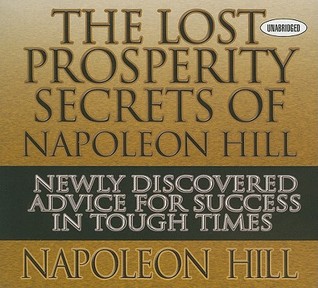
The Lost Prosperity Secrets of Napoleon Hill examines some of Hill’s lesser known newspaper essays. He writes about his life and the workings of the “unseen hand” of the universe within it. He dissects how a series of failures ultimately caused him to succeed.
And he writes about his studies of some of the most successful people of his time, what they have in common and what you can do to become one of them.
Some of these essays share powerful advice for inner transformation.
I particularly enjoyed Hill’s detailed description of the ’round table method’ that he used to change his personality. I think it is a fascinating mental exercise that can be customized for anyone.
But, at other points in this audiobook, his essays felt a bit heavy-handed in his declarations of his faith and belief in an organizing intelligence. But Hill’s faith seems to have been partially what he credited for his mammoth success… though not at first.
He freely admits that, early on in his career, he was obsessed with the accumulation of money to the cost of all else. It wasn’t until later on, that he realized money was nice, but there are other important goals that should be considered in one’s professional life. He talks about the golden rule and morality.
And Hill talks about how you should treat someone who treats you poorly. He wasn’t alone in some of his most spectacular failures, but the people who used those low moments to get ahead in business did not do well afterwards. Again, Hill credited a higher power for that balance. Some would call it karma, but he did not.
If you liked Think and Grow Rich, you will probably enjoy this audio program.
Nearly every house valued over $200,000 has a library in it. Now why do you think that is?
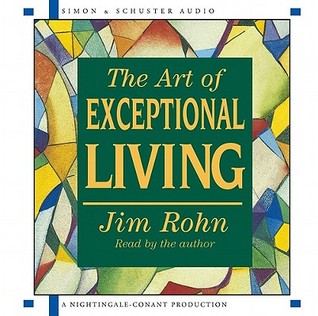
Jim Rohn, motivational speaker and business genius, was a kinder, gentler Tony Robbins. Originally from Iowa, he uses common sense and a storytelling style in an effort to encourage listeners to improve their lives. This audiobook presentation is a mix of live presentations and studio-recorded bits. Personally, I think he was better in front of a live audience, but there was plenty to take away from in both sections.
Read, learn, journal. Write down what works and what doesn’t. Write down your goals and then take a minute to look at the passing days, weeks and months and see what you’ve accomplished.
Eat healthy and take that walk around the block. If you don’t, you may seriously regret it, maybe not today or tomorrow but in the years to come, you’ll wish you took a minute to invest in yourself.
Work hard at your job and you’ll make a living. Work hard on yourself and you’ll make a fortune!
Rohn insists that anyone can be exceptional. He says success in business (and life) comes from small positive steps taken consistently over time. That type of approach really works for most any goal or dream you may have.
Read contracts all the way through, every time. It seems like a simple thing, but it can take you down some dark roads if you don’t read the fine print. He learned that the hard way.
Don’t stop reading and be a lifetime learner. Stay curious. Stay involved.
And take pictures. Part of your legacy to the next generation can be the pictures and documentation you’ve made of your life.
I can’t tell you how many times I’ve listened to this audiobook. It’s one of my go-to programs when life has me down. Jim Rohn believed you can accomplish anything that you set your mind to do. He makes listeners believe that too. Highly recommended for anyone who wants to learn “the art of exceptional living.”
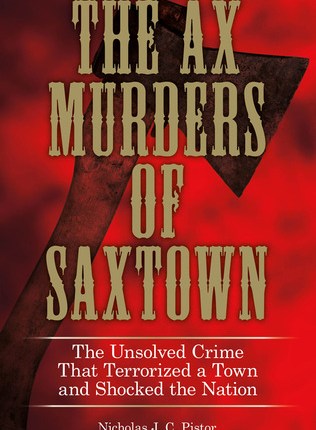
Full title: The Ax Murders of Saxtown: The Unsolved Crime That Terrorized a Town and Shocked the Nation
Imagine you’re a farmer in 1874. You live out in the middle of nowhere. There are no cars, electric lights… each night brings a blanket of silence to the world. Then, one fateful night, there’s a knock on the door. You answer it… and it’s an axe-swinging maniac!
Sound like a cheesy horror film? For one farming family in Southern Illinois, that nightmarish scenario actually happened. A family of five, including two children, one a baby in her mother’s arms, were slaughtered in their home. It was called the most shocking crime since the murder of Abraham Lincoln and garnered national attention.
Nicholas Pistor examines original sources to share the story of the ax murders of Saxtown.
The grounds of the Stelzriede farm glowed with the orange light of oil lamps and handheld torches. A few hours had passed since the Stelzriede bodies had been discovered. The tough Saxtown farmers arrived one by one, and then in groups. … Many showed up on the property with their families. They were too afraid to leave them home alone. pg 44, ebook.
I would have been the same way. There had been extensive rains around the time of the murders and the roads in and out of town were nearly impassable. The residents of Saxtown believed the killer could still be among them. Eek.
Saxtown was a farming community where people primarily spoke German. Everybody knew everybody else and their business. The closest city, sheriff and bank were located in Belleville, almost nine miles north of Saxtown. At the time, they believed the motive for the killings was money. The Stelzriedes were known to loan out cash and it was thought that they kept a stash in their home.
Pistor goes into how authorities conducted investigations during the late 1800’s. It made me wonder that they ever managed to solve anything. There were no forensics or sophisticated evidence gathering protocols.
Public awareness was important in solving crimes. An eyewitness could crack the case open before it began. Detective work relied heavily on what other people saw, a distinct challenge in the remote and lonely woods of Saxtown, where farms were spaced by miles and miles. pg 44, ebook
The saddest part of this non-fiction tale is, in my mind, how terribly this crime affected Saxtown. For decades, residents accused each other of the murders. There were lawsuits and whispers of restless ghosts on the Stelzriede property…
If you’re looking for a true crime read, this is an interesting pick, plus you get to learn about a few other shocking crimes that took place in Southern Illinois and history.
And if someone knocks on my door tonight, I don’t think I’m going to answer it.
Thanks for reading!
Here’s an episode I wrote for The History Guy about the murders:
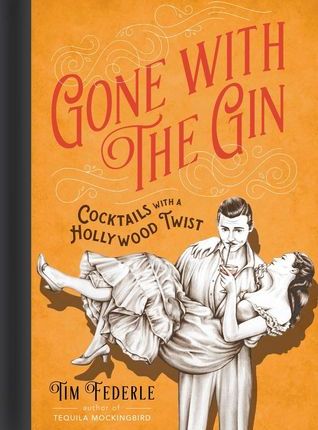
“Gone with the Gin” is an effervescent drink guide that pairs cleverly named potables with classic films. It’s a winner!
Last year (or was it the year before), I named Tequila Mockingbird: Cocktails with a Literary Twist, also by Tim Federle, as one of my favorite reads in my annual book review. It’s similar to Gone with the Gin, except that Tequila Mockingbird uses classic literary works instead of film.
Federle has a way with puns and summarizing complex plots in three sentences or less without devolving into the unbearably cheesy. My favorites from Gone with the Gininclude the “Ben-Hurricane” and “The Empire likes Jack”.
And, like Tequila Mockingbird, I think I’m going to have to purchase a copy of this book to keep at the house. Like the majority of my reading material, I borrowed it from the library. But it’s going to be a sad day when I have to give it back…
Lest you think that Federle is a one-note author, please take a moment to consider another of his books: Life Is Like a Musical: How to Live, Love, and Lead Like a Star. It gives some hard-won lessons from Federle’s days dancing and singing his way across the stage. I enjoyed it too.
I think it’s fair to say that I highly recommend most anything Federle has written, so far. Keep ’em coming, Tim!




















 The Help Desk Book Blog