Barracoon: The Story of the Last “Black Cargo” by Zora Neale Hurston

Barracoon: The Story of the Last “Black Cargo” by Zora Neale Hurston

Zora Neale Hurston interviewed Oluale Kossola before he died in the 1930’s to create this first-person narrative by one of the last people to be transported to the United States through the middle passage. It is interesting in that, among the existing records of that period in time, it is written from the perspective of someone who lived slavery rather than perpetuated it. It wasn’t written with an agenda. It is a record of a history.

It is a story of a culture and a life lived far from home and family because of human greed.

“I hailed him by his African name as I walked up the steps to his porch, and he looked up into my face as I stood in the door in surprise.” pg 17

Photo by Johannes Plenio on Pexels.com

Hurston records Kossola’s responses to her questions phonetically, which makes you feel like you’re sitting there with her, listening to the remembrances of Kossola as he says them.

In the introduction by Deborah G. Plant, she captures this feeling: “The narrative space she creates for Kossula’s unburdening is sacred. Rather than insert herself into the narrative as the learned and probing cultural anthropologist, the investigating ethnographer, or the authorial writer, Zora Neale Hurston, in her still listening, assumes the office of a priest.” pg xxv

I think, as someone looking back, it’s important to understand the transportation of slaves into the U.S. was made illegal in 1808, fifty years before Kossula was taken from his home. It’s a piece of American history that has been almost entirely forgotten.

“Of the thousands of Africans smuggled into American after 1808, only one man was held accountable and hanged, and even he died proclaiming his innocence.” pg 132

Photo by GEORGE DESIPRIS on Pexels.com

In Barracoon, not only are we given the story of Kossula’s transportation in life in the U.S., but also, he shares fascinating details of his life in Africa. There’s information about the justice system, social structure, rites of initiation and more.

In addition to his life story, Kossula shares fables he created to share his feeling of loss about his family as he outlived all of his children and wife. I enjoyed this folk lore part of the book the most.

There’s some controversy surrounding this book. Apparently, Hurston published a magazine article about Kossula early in the last century and was accused by later scholars of plagiarism.

“Of the sixty-seven paragraphs in Hurston’s essay,” Hemenway relates, “only eighteen are exclusively her own prose.” pg 120

Photo by Pixabay on Pexels.com

The text in question is Emma Langdon Roche’s Historic Sketches of the South, that was published in 1917. The full text is available from the U.S. Library of Congress and can be accessed online. That’s how I read it and was able to see some of the similarities in the writing.

However, the interview portions of this book, written in Kossola’s distinctive style of speaking, are entirely unique. As the editor of this book points out, Hurston was never accused of plagiarism in her works after writing about Kossola and it was very early in her career. We all make mistakes.

Recommended for any readers interested in history. Barracoon is a treasure.

Thanks for reading!

Here’s the History Guy episode I wrote about Oluale Kossola:

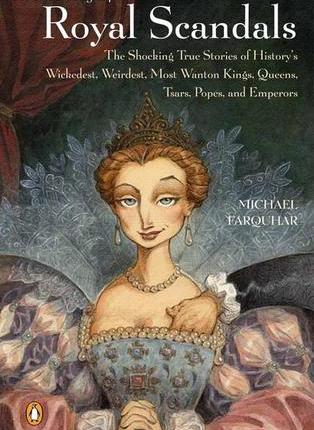
A Treasury of Royal Scandals: The Shocking True Stories of History’s Wickedest, Weirdest, Most Wanton Kings, Queens, Tsars, Popes, and Emperors by Michael Farquhar

A Treasury of Royal Scandals: The Shocking True Stories of History’s Wickedest, Weirdest, Most Wanton Kings, Queens, Tsars, Popes, and Emperors by Michael Farquhar

Michael Farquhar takes readers through different time periods and countries to remember some of the most scandalous royal persons who have ever lived.

All of the stories showcase the rich assortment of scandals that once flourished across Europe. And, thanks to the generations of royals who unwittingly created them, they remain immensely entertaining. pg 11, ebook.

Photo by Romu00e9o on Pexels.com

There is a rich assortment indeed. Almost any kind of depravity can be found in these pages. But the most shocking of the lot, in my mind, were the Roman emperors or the medieval Popes.

I guess those stuck with me the most because the emperors were stunning in how far they would go into their own personal madness, whatever that happened to be. And the Popes because, frankly, you’d think they’d know better.

For example, Tiberius, a Roman emperor, when he wasn’t raping young people on the island where he built a castle expressly for that purpose, he was torturing and killing anybody he felt like.

To Tiberius, death was a relatively light punishment. What he really enjoyed was the slow process of getting there. pg 184 Yikes.

Photo by Pixabay on Pexels.com

As for the Popes, in a cast of colorful characters, the one I remember the most was Benedict Gaetani or Pope Boniface VIII. Not necessarily because of how awful he was, but because how he was so determined to be Pope. Gaetani thought he should hold the office even when someone else was elected. He came up with a creative scheme to get that Pope to resign.

By some accounts, Gaetani installed a hidden tube in Celestine’s room. During the night as the pope slept, he would whisper into it, “Celestine, Celestine, lay down your office. It is too much for you.” Only too glad to oblige what he believed was the voice of God, Celestine V dutifully resigned and Benedict Gaetani was immediately elected Pope Boniface VIII. pg 217, ebook.

As interesting as this book was, I enjoyed Farquhar’s Bad Days in History: A Gleefully Grim Chronicle of Misfortune, Mayhem, and Misery for Every Day of the Year more because I knew fewer of the stories in that book. In fact, some of what he wrote in this book was printed nearly verbatim in the other. (Not that there’s anything against that, it is his own writing after all.) But if you only have time to read one non-fiction book full of historical trivia, I’d recommended Bad Days in History.

However, if you’re specifically interested in the misbehavior of royal people throughout history, this is the book for you.

Thanks for reading!

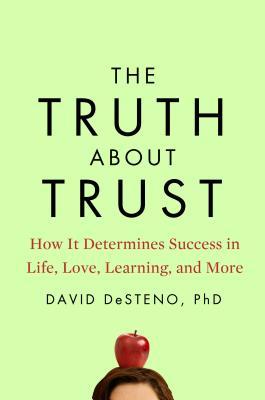
The Truth About Trust: How It Determines Success in Life, Love, Learning, and More by David DeSteno

The Truth About Trust: How It Determines Success in Life, Love, Learning, and More by David DeSteno

“Deciding to trust someone, more than almost any other decision we make, holds the keys to how resilient we, both as individuals and as a society, will be.” pg 241

Trust is one of the things that makes society work. We trust that our taxes will go towards making our society better. We trust we will be paid for the jobs we perform. We trust in contracts, news agencies and family members. Sometimes it seems this trust is misplaced. David DeSteno examines trust, what is it and how or why you decide to give someone all your trust or not.

Photo by Karolina Grabowska on Pexels.com

I held as true many of the fallacies that DeSteno deconstructs in The Truth About Trust. That was disturbing, in a way, but I also enjoyed it because I learned new ways to approach trust issues and even to define what trust is. Although it may seem like a simple concept, I realized that I didn’t know the basic definition of trust. I knew what it felt like, but not the mechanics behind it.

Tell me: what do you think trust is?

“There are two facets to trust: integrity and competence. Some of the best partners or teachers you may ever have had may not be the warmest people in the world, but they knew their stuff.” pg 33

DeSteno reminds readers that beyond examining a new business or potential romantic partner to determine their trustworthiness, you need to remember your own perceptions color your reality.

If you want to be able to trust as you should, take a moment before negotiating with someone new to allow any feelings from a previous event to dissipate. pg 60

Photo by fauxels on Pexels.com

I liked that DeSteno waded into the potentially thorny world of cyberspace and who or what to give your trust to in the technological age. It seems that is going to be the future — programs, applications and machines.

…the basic issue of whether to trust technology has in fact been around for thousands of years. What makes it feel new now, however, is that technology is beginning to encroach on what had until recently been a solely human domain — sociality. pg 183

DeSteno gave me plenty to think about including why I sometimes place great trust where it has not necessarily been earned. Recommended for readers who want to ask themselves the same types of questions.

If you enjoyed The Truth About Trust, I’d suggest also picking up Terms of Service: Social Media and the Price of Constant Connection (DeSteno deals with trust in cyberspace and the two books complement each other nicely) or The Happiness Advantage: The Seven Principles of Positive Psychology That Fuel Success and Performance at Work (which discusses the issue of trusting yourself to do the things that will benefit you most in the future and why we don’t always do those things).

Thanks for reading!

Titanic Thompson: The Man Who Bet on Everything by Kevin Cook

Titanic Thompson: The Man Who Bet on Everything by Kevin Cook

“Are you a gambling man?” he’d ask. “Because I am.” Prologue.

A non-fiction biography that reads like fiction, this is the life story of Titanic Thompson. According to author Kevin Cook, Titanic’s life was the model for the gambler Sky Masterson in the musical “Guys and Dolls.” This poker and golf-playing phenomenon bet and propositioned his way across the country. In addition to all of the fun anecdotes about bets he made, Titanic was a star witness in the trial for the murder of the man accused of “fixing” the World Series.

Seriously folks, history doesn’t get much more interesting than this.

As Alvin collected his winnings, someone asked Snow Clark the stranger’s name. “I don’t rightly know but it ought to be ‘Titanic,'” Clark said. “He sinks everybody.” pg 3

Photo by Pixabay on Pexels.com

Alvin Clarence Thomas was born in 1893 in rural Missouri near the small town of Monett. The last name, Thompson, that he would adopt for most of his adult life, came from a later newspaper misprint that he embraced as his own.

Later in life, Thompson said he couldn’t read, but numbers and odds always made sense to him. He spent hours sitting alone in his room, teaching himself to adeptly shuffle cards, practicing dealing from the bottom of the deck more quickly than the eye could follow. Thompson developed a method of marking cards that some still use today, like putting dots on the back or notching the edges to be able to tell a face cards from the lower ones.

He was quite popular with the ladies and married 5 times to women significantly younger than him. Scandalous!

Photo by Irina Iriser on Pexels.com

“He was fun,” said a woman who knew him. “He took his hat off when he spoke to you. Alvin was slim like a willow, and he didn’t walk, he sauntered.” pg 21

When he was drafted into the army, he was made a sergeant and taught the men under him how to gamble.

“Sergeant Thomas spent hours dealing demonstration stud hands, providing a running commentary on each hand, training his men to calculate the odds of an opponent’s having an ace or king or deuce in the hole, telling them when to bet harder and when to fold their tents, so they could beat all the poor dumb soldiers who trusted to luck.” pg 53

Photo by Anna Shvets on Pexels.com

There are so many interesting stories in this book. My favorite was when he swindled Al Capone. Yes, THE Al Capone.

Highly recommended for fans of history or historical fiction. As I said, this guy’s life reads like a story.

Thanks for reading!

Here’s the History Guy episode I wrote about Titanic Thompson:

inGenius: A Crash Course on Creativity by Tina Seelig

inGenius: A Crash Course on Creativity by Tina Seelig

As my mentor pointed out to me a couple years ago, creativity is one of the most important skills to master and develop throughout your career. No matter what you’re doing, in your professional or personal life, creativity provides the answers and greases your wheels to whatever goal you desire.

inGenius is Tina Seelig’s offering to those interested in learning about creativity. She is a professor at Stanford University and these chapters are like talking points from her class.

Photo by Tima Miroshnichenko on Pexels.com

Granted, some of these tips seem like common sense. But if that’s the case, then why aren’t we all creative geniuses who have solved all of our problems? In my mind, there’s plenty still to be learned from the topic or, if you’ve already heard it, reiterating the important points.

What is that saying… your thoughts become actions, become habits, become your life? Or some such. Well, it’s true.

“With enhanced creativity, instead of problems you see potential, instead of obstacles you see opportunities, and instead of challenges you see a chance to create breakthrough solutions.” pg 4

Photo by Allan Mas on Pexels.com

It’s more than a positive mind-set, it’s a way of viewing your reality. And, as Seelig points out in this book, your attitude at any given moment affects your creativity. You have to view any problem as solvable — you just haven’t found the solution yet.

Seelig says anyone can be creative: “There is a concrete set of methods and environmental factors that can be used to enhance your imagination, and by optimizing these variables your creativity naturally increases.” pg 9

I figure it’s a bit like exercise. Flex those creative muscles on a regular basis and they’ll get stronger.

Photo by nappy on Pexels.com

Seelig brought my attention to the fact that our environment affects our creativity. She cites studies with the way classrooms are set up and how those changed the results of experiments. I had no idea.

She also reminded me that one does not have to re-invent the wheel to be creative: “Building upon existing ideas and inventions is another way to foster innovation.” pg 41

inGenius offers readers a clear path to creativity. Recommended for anybody who wants to up their creative game.

Thanks for reading!

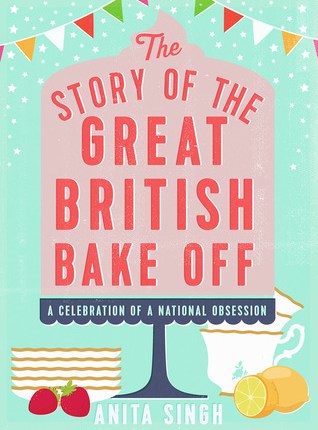
The Story of the Great British Bake Off by Anita Singh

The Story of the Great British Bake Off by Anita Singh

A sparkling and fun book for fans of the television program, The Great British Bake Off. It is my favorite show to binge watch when I have some free time. Or when I’m not reading. Which, let’s be honest, is not all that often but it does happen.

You wouldn’t think another competition-type show would be engaging, but this one is. The contestants are so kind to each other and earnest in their presentations. Not only do you cheer for all of them, but it makes you want to emulate them in your own kitchen.

Photo by Taryn Elliott on Pexels.com

Why don’t I go bang up a bread sculpture that looks like a lion? Oh, that’s right. Because it’s really hard to do, that’s why. But these guys all make it look so easy. Chocolate lava cakes, frosted buns and towers made out of spun sugar seem to magically flow out of the kitchen. We all know it’s not that simple.

Anita Singh takes readers from the creation of the show to the change in most of its hosts in the most recent episodes. We are also treated to funny anecdotes from some of the contestants and assorted behind-the-scenes gossip.

As an American reader, I enjoyed learning more about Paul and Mary’s backgrounds before they joined the show. I mean, perhaps they had enjoyed some success across the pond, but I had never heard of them. I have more context now.

Photo by cottonbro on Pexels.com

My favorite part of this fan book were Mel and Sue’s confessions about practical jokes they’ve pulled on Paul. I won’t spoil it for you, but one of them involved his Aston Martin. Le gasp.

Recommended for readers who have watched most, if not all, of the seasons of The Great British Baking Show. I suppose you could still enjoy it without doing so, but all of that viewing time helps you to enjoy this book even more.

Thanks for reading!

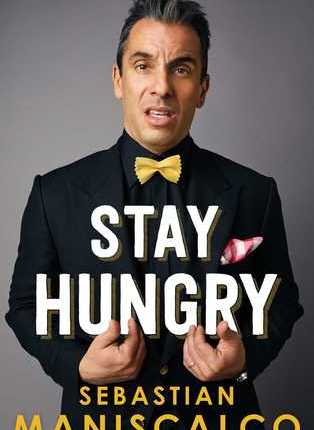
Stay Hungry by Sebastian Maniscalco

Stay Hungry by Sebastian Maniscalco

Sebastian Maniscalco (one of my favorite comics) shares his journey from just another funny guy to successful stand-up comedian.

I was so excited to see Sebastian had penned a memoir. If you’ve never had a chance to enjoy one of his specials or to see him live, I highly recommend it. He has a very physical style of comedy. You can see his emotions on his face while he runs all around the stage, mimicking other people and ridiculous situations for laughs. Sebastian is an observational comic who skewers the every day nonsense that others might miss because it’s so mundane. It’s a gift.

Photo by Pixabay on Pexels.com

Unfortunately, it doesn’t translate as well into a book. However, I was notified by Netflix that he has a special coming out this week with the same name as this book, Stay Hungry. You better believe I’m going to watch it to see if any of what was in here makes it on the screen. I think it might have a chance to shine that way.

As it is, the material just doesn’t have the same flavor as the comedy I’m accustomed to from Sebastian.

For starters, I think Jim Gaffigan has the food angle of comedy pretty well sewn up. Sebastian apparently enjoys food too, but it didn’t feel like his introduction was particularly strong because I associate food so heavily with Gaffigan.

Another thing about me: I’m constantly starving. My entire day is planning around food. What’s for breakfast? Should I scramble a couple eggs like a normal human, or wolf down the dozen my appetite is telling me to do? pg 9, ebook.

Photo by Daniela Constantini on Pexels.com

See what I mean?

On the other hand, Sebastian quickly moves away from the “food” type of hungry into the real meaning of this work, which is to always keep looking and moving towards the next step of your career. This is more about “being hungry” for success, not resting on your laurels.

He’s been a mover and a shaker almost his entire life, having worked multiple jobs from a very young age. Sebastian was kicked into the workforce by his father and supported by his large Italian family. This cocoon of family meant more to him than he realized, but its importance became clear when he moved to Los Angeles and his family was back in Chicago.

So I went from that environment, a welcoming, warm home with tons of people coming and going, to my one-bedroom in Hollywood with a naked man outside the only window. pg 20, ebook.

Success didn’t come either quickly or easily to Sebastian, but he never gave up. He always kept reaching for it. And he relied on his friends and family back home to never let him forget where he came from.

Photo by Paul Deetman on Pexels.com

I love to share what I’m doing with my family and old friends. That’s where I get my enjoyment. No matter what, I can count on these guys to keep me grounded and rip me to shreds. pg 159, ebook.

In that way, this memoir is totally relatable. In other ways, Sebastian mingles with celebrities and lives an upper class lifestyle with his bride. He describes the first weeks of being a new parent and learning the ins-and-outs from a night nurse, who stayed with his baby so they could get some sleep. Not so relatable…

Recommended for readers who like memoirs about someone climbing the ladder to their dreams. Fans of Sebastian may want to stick to watching his stand up routines, many of which are available on Netflix.

Thanks for reading!

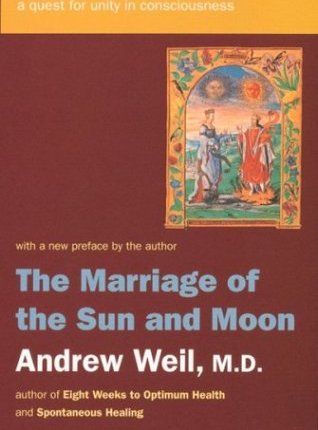
The Marriage of the Sun and Moon: A Quest for Unity in Consciousness by Andrew Weil

The Marriage of the Sun and Moon: A Quest for Unity in Consciousness by Andrew Weil

Andrew Weil travels around the world taking conscious-altering drugs or participating in mind-altering experiences (like a solar eclipse) to see what happens.

And to think, I assumed this book would be about meditation. 🙂

I recently read Weil’s Breathing: The Master Key to Self Healing and I really liked the way he presented Eastern teachings and techniques for a Western audience. I also like his mind-set, that practical knowledge is better than mere theory.

“I must emphasize at the outset my prejudice that the experience of an altered state of consciousness is intrinsically more valuable than any amount of theorizing about it, unless the theory helps individuals to make more and better use of the states available to them.” pg 241

Andrew Weil
Photo by Pixabay on Pexels.com

Similar to Tim Ferriss (the self help/improvement guru who brought us such works as The 4-Hour Body: An Uncommon Guide to Rapid Fat-Loss, Incredible Sex, and Becoming Superhuman), Weil is focused on collecting actual experiences and he uses his own body and mind as a test subject.

This book is a collection of newsletters that Weil wrote for the Institute of Current World Affairs. They offered him a fellowship after the publication of his book The Natural Mind: A Revolutionary Approach to the Drug Problem, to further test his theories about consciousness in the real world. I think his results are fascinating.

All of the chapters converge toward the idea of unifying consciousness. pg 5

Photo by Jonas Ferlin on Pexels.com

The dual consciousness Weil is talking about is the active mind, represented in ancient alchemy by the sun, and the subconscious mind, represented by the moon. Within each of us, both minds operate more or less in balance. Though many of his studies involve the conscious use of drugs to achieve that balance, Weil promotes natural methods above all else. He believes that though drugs may be used ritualistically and responsibly, that any state they reveal was already a latent potential in the mind.

Basically, you can get there without the drug.

The highs of altered states of consciousness such as those of trance and meditation are similarly related to the focusing of awareness. When we learn to bring about this kind of concentration at will, we can be independent of external triggers for highs, whether drugs, sex or mangoes. pg 26

Yes, according to Weil, mangoes, the fruit, have been used by mystics for millennia to unify the conscious and subconscious minds through a type of ecstasy of the mouth. Who knew?

Weil exposes himself some far out stuff. He has three different chapters about his experiences with mushrooms.

“In other words, there is no line between poisonous and psychedelic mushrooms. Mushrooms are a pharmacological continuum, from the white cultivated variety that has no action as a drug to species like the Death Cup that can easily kill. If one likes to get high by eating mushrooms, he can choose species over a wide range of toxicity.” pg 47

Photo by Pixabay on Pexels.com

In addition to all kinds of drugs, there’s consciousness altering through purposeful vomiting in Mexico, chili eating, personally observing Uri Geller doing his metal-bending thing and more.

This book is perfect for readers who are interested in varying states of consciousness but, for whatever reason, aren’t able to make the trips or take the risks themselves. And there are risks because not everything that Weil tries is safe. At one point, he’s riding waves of nausea in the rain in the middle of the jungle while his friend vomits again and again an arm’s length away and there’s nothing he can do about it. Certainly doesn’t sound like something I’d want to attempt.

Though these newsletters were written in the ’70s and this book was published in 1980, I feel that it still has applicable uses for today. Just look at all of the states that are legalizing marijuana (and our Canadian friends!). Questions about altered states of consciousness and addiction are going to crop up that society, after decades of avoidance, is going to have to answer.

“Sooner or later we will learn that plants with effects on the body and mind, such as marijuana, are what we make of them. Used intelligently and carefully they can help us. Used irresponsibly they can harm us.” pg 98

Good thing we have trailblazers like Weil showing us a middle way.

Thanks for reading!

This Is Why You’re Sick and Tired: (And How to Look and Feel Amazing) by Jackie Warner

This Is Why You’re Sick and Tired: (And How to Look and Feel Amazing) by Jackie Warner

Jackie Warner sets the gold standard for diet and exercise books with This is Why You’re Sick and Tired. She starts out with the science of nutrition, exercise, and rest then goes into custom diet and weekly exercise suggestions. It’s easy to see why she’s so sought after by Hollywood stars — this lady knows her stuff.

Photo by Karl Solano on Pexels.com

I first saw Jackie in action on her, now ended, Bravo show, Work Out. At the time, I had just had a baby and was awake at all hours of the night doing the infant-feeding dance. Work Out was a nice escape from the spit up, exhaustion-filled reality that I was living at the time.

Jackie looked pretty serious about her business, but Work Out mainly focused on the drama between Jackie, her trainers, and the folks who came to her for help. It’s nice to see that she actually knows what she’s doing as a trainer and she’s not just another reality show poser.

The exercises that Jackie suggests are intense. They can be executed with hand weights, but by the fourth set, I’m so wobbly that it’s comical. We’ll see if I ever reach the heights of fitness put forth in This is Why You’re Sick and Tired. At this point, I’d be happy to finish her workout strong rather than falling apart in the last few reps.

Photo by Karolina Grabowska on Pexels.com

Recently, I saw on Jackie’s Facebook page that she intends to lose 30 pounds in the coming weeks. She has shared that her fitness and nutrition has spun a bit off the rails in the last year. But, using what she knows about the body, Jackie intends to get herself back on track and fast.

I think it was brave of her to share that struggle in such a public manner. She’s as human as the rest of us and I think I like her even more since she’s admitted that. Here’s hoping Jackie accomplishes everything she sets out to do.

And you do too, dear readers. I’m not big into New Year’s resolutions, but this book may be a help to you if you’re looking to jump start your fitness and diet plans in the new year.

Photo by Mikhail Nilov on Pexels.com

If you enjoy This is Why You’re Sick and Tired, I also suggest reading Reboot with Joe: Fully Charged: 7 Keys to Losing Weight, Staying Healthy and Thriving by Joe Cross (instructions on how to add juicing to your daily diet) and Down Size: 12 Truths for Turning Pants-Splitting Frustration into Pants-Fitting Success by Ted Spiker (to keep you laughing through any ups and downs of your new diet and exercise routine).

I received a free copy of this book through Goodreads First Reads.

Thanks for reading!