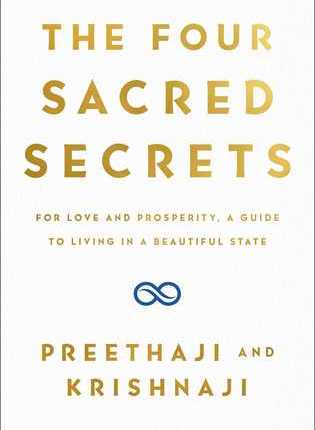
The Four Sacred Secrets: For Love and Prosperity, A Guide to Living in a Beautiful State by Krishnaji, Preethaji

The Four Sacred Secrets: For Love and Prosperity, A Guide to Living in a Beautiful State by Krishnaji, Preethaji

In The Four Sacred Secrets, Krishanaji and Preethaji, a husband and wife team, help readers understand four principles for spiritual living. Each section of the book is divided into an explanation of the principle or secret and then details corresponding transformational journeys the readers can undertake to help them internalize and live each one.

“Our goal is to help you awaken to a power that is much greater than any technique you can master — a power that is available to each and every one of us. We need only unlock it. It is the power of a transformed consciousness.” pg 2

Photo by Karan Shah on Pexels.com

The secrets aren’t really “secret” in that they’ve been discussed in spiritual texts throughout human history. But each speaks to how someone’s consciousness can move away from one’s primal state of beauty. The authors believe there are two states in life — this beautiful state of oneness or not being in this state.

The simplicity of this method of teaching is that it is easy to tell if you are in a beautiful state or not. You can feel it. You simply know. It is the state that children walk in. They are themselves, unconditioned by worldly expectations or concerns. It is a state that points to oneness with life itself.

“I want us to be free from the idea that we are separate from one another. Free from the war we feel within ourselves and the world around us. Free from the suffering that makes our lives feel small and meaningless. I knew a beautiful life lived in a beautiful state of being was everyone’s destiny.” pg 12

Photo by Jonathan Petersson on Pexels.com

The secrets include living your spiritual vision, discovering your inner truth, awakening universal intelligence and practicing right action. The journeys to these secrets are all different, but I think a similar thread runs throughout — observation of current conditions without judgment. If you can figure out where you are and then you can see clearly what’s holding you back.

“Our society places a premium on doing, with very little care to our inner state of being. Few of us truly make creating a beautiful inner experience a priority in our lives, choosing instead to live as though our career, performance, appearance, status, or financial security is all that matters.” pg 23

This book contains all of the tools one would need to completely transform their inner world, including meditation instructions and mythological allegories.

The authors also share the real-life stories of many of their students, some of whom didn’t even realize they were in a state of suffering until they stopped a minute and observed themselves. The type of freedom from suffering that seems to follow these students’ transformations is astonishing. If only we could all feel that way, what a different world this would be.

Photo by Alex Green on Pexels.com

“So many of us have been taught that we must solve our problems if we want to be free of suffering. But the truth is the inverse: If you want to become free of your problems, start by allowing your suffering to dissolve.” pg 62

Recommended for spiritual seekers who aren’t sure where to start. The Four Sacred Secrets is a good place to start looking.

Thank you to the publisher for a free advance reader’s copy of this book. The brief quotations I cited may change in the final version of the book. Expected publication date is August 2019.

Thanks for reading!

Powers of Two: Finding the Essence of Innovation in Creative Pairs by Joshua Wolf Shenk

Powers of Two: Finding the Essence of Innovation in Creative Pairs by Joshua Wolf Shenk

Joshua Wolf Shenk examines creatives pairs throughout history in an effort to see why and how they work, and also why they end.

“The dyad is also the most fluid and flexible of relationships. Two people can basically make their own society on the go. When even one more person is added to the mix, the situation becomes more stable, but this stability may stifle creativity, as roles and power positions harden.” Introduction, pg xxii

Photo by Gratisography on Pexels.com

Shenk believes pairs move through six stages: Meeting, confluence, dialetics, distance, the infinite game and interruption. The stages show the development of the relationship, assumption of roles and eventual fall out of creative pairings.

“This book is written in the faith, underscored by experience, that more is possible — more intimacy, more creativity, more knowledge about this primary truth: that we make our best work, and live our best lives, by charging into the vast space between ourselves and others.” Introduction, pg xxv

I picked up this book because I’m involved in a creative partnership with my spouse (The History Guy, YouTube channel) and I was curious to see how other pairings have worked in the past. It was interesting to see how similarly we function when compared to other creative partners. I mean, everyone is different, but there are patterns that can be observed if you look closely.

“The irony is that, while our eyes naturally follow the star, a pair’s center of gravity is often with the one we see less.” pg 66

Photo by Victoria Borodinova on Pexels.com

Shenk’s chapters were interesting not only in their obscure history about some of the most famous partners in history, but also their implications for people who are looking to share their creative endeavors, and lives, with others.

“High-functioning couples commonly say that one key to a good relationship is giving each other plenty of space. But a big reason there are so many dysfunctional couples, romantic and creative, is that it’s hard for a lot of us to know what that really means or what it would look like in our lives.” pg 128

What works, what doesn’t work, and why?

“Creativity has become a broad, vague term, a kind of stand-in for universal good, even a synonym for happiness (or, as innovation, for profits). But making new, beautiful, useful things is as much about discord as it is about union.” pg 21

Photo by Tim Samuel on Pexels.com

The path isn’t always smooth, but good partners shore each other up. They may be strong where the other is weak. They challenge each other to be better than they ever would have been by themselves.

“Highly creative people have high standards and distinct sensibilities; they see the world in an unusual way (or they wouldn’t be able to make something new out of the materials of that world). Their partners must be a match — and the discovery of a shared sensibility is itself often an impetus to share work.” pg 31

I learned a lot about the Beatles, scientists, dancers, artists, screen writers, authors and more in Powers of Two. This is a book about creativity, yes, but it also looks at relationships themselves. It takes apart power dynamics, personal satisfaction and creative instincts. It is more of a rumination on creative pairs than a scientific thesis.

Recommended for readers who enjoy quirky non-fiction books. You’ll probably learn something new if you pick this one up. I did.

Thanks for reading!

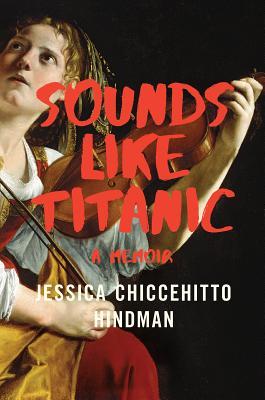
Sounds Like Titanic by Jessica Chiccehitto Hindman

Sounds Like Titanic by Jessica Chiccehitto Hindman

Jessica Chiccehitto Hindman is a violinist and Eastern Studies major who is struggling to pay her way through Columbia gets a job that seems to be more than she ever hoped for. She is going to be playing professionally for audiences across the U.S. It turns out to be fake — the music is played through speakers, never live.

“While this is a memoir about being a fake, this is not a fake memoir. This is a memoir in earnest, written by a person striving to get at the truth of things that happened in her past.” From the introduction.

Photo by Pixabay on Pexels.com

Jessica Hindman grew up in Appalachia among some of the most impoverished residents in the country. It’s interesting though, the gripping poverty seemed normal to her until she considered it later, through more mature eyes. Children are so flexible. Almost anything can be made to seem “normal”.

“And as you listen to the other kids talk about their life goals, you realize something else: You are someone whose upbringing was upper class enough to make you believe you could make music for a living, but lower class enough to provide no knowledge of how to do it.” pg 10

After some serious struggles through puberty with her body and self image, Jessica ends up following her boyfriend to Columbia University, where they almost immediately break up. But her troubles to pay the astronomical tuition bills are just beginning.

“The Composer,” the man behind the music and the tours Jessica eventually goes on, seems to know very little about music himself.

Photo by Nathan Martins on Pexels.com

“And then, The Composer asks me a question that — had it come from any other musician, let alone a Billboard-topping classical composer who has performed with the New York Philharmonic — I would have taken as a joke. … “I like this music,” he says of the opening to Beethoven’s Fifth Symphony. “What is it?” pg 20

Despite any concerns she may have, Jessica perseveres in the job anyway, because her tuition requirements leave her little choice. It nearly ruins her mind and body before she finds a way out of her predicament. Along the way, you can’t help but hope for her to succeed.

“After several more customers mention ‘Titanic,’ you begin to realize that most of The Composer’s compositions sound very ‘Titanic-esque’. And you notice that the more the songs sound like ‘Titanic,’ the more customers want to buy them.” pg 47

I enjoyed this memoir so much not just because of Jessica’s life, which is fascinating, but also because we have so many things in common. I am the same age she is, lived through the events of 9/11 in a collegiate setting (as she did), started out as a music major but changed to something else, and the similarities go on. I’ve also experienced crushing anxiety with the same physical symptoms she describes. It was eerie, really.

“A million times more than any other emotion or experience, fear has the strength and ability to mangle her into something different from what she truly is, something phony and fake and cowardly. And now, surprised and twisted and disoriented and broken as she is by fear’s sudden arrival, she realizes that she needs to fight it, fight for her life.” pg 223

Photo by Pixabay on Pexels.com

But you don’t need to be anything like Jessica to appreciate what it means to be made to feel like an impostor in your own life. To know that you can be doing better, but you’re just inching along. To dream big but live small.

Recommended for readers who enjoy memoirs about a life filled with difficulties, but also hope. If you have a background in music, you may like this book even more, but it’s not required to understand it.

Thanks for reading!

This Is Me: Loving the Person You Are Today by Chrissy Metz

This Is Me: Loving the Person You Are Today by Chrissy Metz

Chrissy Metz relates her abusive and underprivileged childhood and how hard work and perseverance made her into the inspirational figure and television superstar she is today.

“Honeybees are meaningful to me because technically they’re not supposed to be able to fly. We know they do, but in the 1930s French scientists ‘proved’ they couldn’t. Their reasoning was that it was aerodynamically impossible because honeybees’ wings are too small to support the weight of their bodies. … I get that. I’m not supposed to be able to fly either.” pg 6, ebook

Photo by Pixabay on Pexels.com

Chrissy’s parents divorced when she was young and her mother worked multiple jobs to support her children. They lived in a trailer park for a time in Florida.

“I know now that when families are in crisis, kids blame themselves, and kids also take on adult burdens. Which is why it is important that I say something else: Arredondo Farms is still there and I won’t say a single bad thing about it. People look down on people who grow up in trailer parks.” pg 25

Things became a bit easier when her mother married Chrissy’s stepfather (she calls him ‘Trigger’), but then he began systematically abusing Chrissy.

“I don’t remember why Trigger hit me the first time. I know he thought I’d had it coming for a while. I bet I was too loud putting away the dishes. Or I didn’t put his Coca-Cola in the fridge and he wanted a cold Coke. That would usually do it.” pg 28, ebook

Photo by Karolina Grabowska on Pexels.com

Somehow, she survives to not only succeed in the business of her dreams, but to thrive. It wasn’t easy. She honestly documents her struggles, both mentally and physically. She continues to have relationship troubles. But Chrissy never lets it dim her optimism that things can get better and that she can improve, no matter where she finds herself.

Throughout the memoir, she gives tips and life advice that she calls “Bee Mindful” lessons — referring back to her metaphor of how the honeybee can fly even though it seems aerodynamically impossible.

“So many people, including myself, talk at each other but don’t listen. To ourselves or to other people. Believe in actively listening to yourself. Take time to have a conversation with yourself every now and again. … So often we’re on autopilot and we slip into addictive behaviors to avoid listening to ourselves. We eat, or drink, or, yes, check our phones — anything to avoid hearing what we truly need to say.” pg 57, ebook

Photo by Ono Kosuki on Pexels.com

The astonishing part of this memoir, to me, is simply how often Chrissy is judged and found wanting because of her appearance. How long are we, as a society, going to accept the objectification of women’s bodies and believe that it’s ok? I thought we addressed that issue in the last century, but, from the way this beautiful and strong woman has been treated her entire life, it is obvious that we haven’t gotten very far.

I found Chrissy Metz to be inspiring before I read her memoir. Now, I feel like she’s a literal hero for anyone who simply wants to live life as they are and not accept anyone else’s standards for what beautiful, strong and successful is. And she manages to be kind and humble while doing it.

Highly recommended for any readers who like inspiring memoirs — this one gets all the stars.

Thanks for reading!

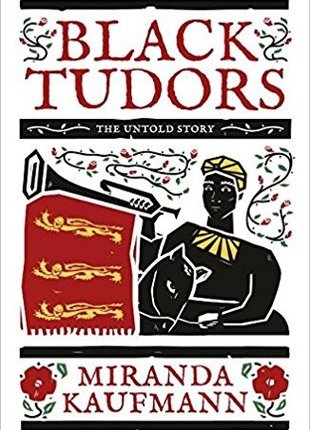
Black Tudors: The Untold Story by Miranda Kaufmann

Black Tudors: The Untold Story by Miranda Kaufmann

Scholar and historian Miranda Kaufmann has written vignettes of half a dozen or so Africans who lived and worked in England during the Tudor Era.

The trouble with this collection is that so little information exists, Kaufmann has to parcel it out among other more well-known history. I still found it interesting, but for readers looking for Black History only, it feels rather disappointing.

The answers are complex, but the questions that most commonly spring to mind about the Black Tudors are simple: why and how did they come to England? How were they treated? What were their lives like?” pg 3

Photo by Chris Carter on Pexels.com

The answers, in addition to complex, are brief. But this book did clear up some misconceptions I held about the time period.

For example: “Tudors were far more likely to judge a new acquaintance by his or her religion and social class than by where they were born or the colour of their skin, though these categories did on occasion intersect.” pg 4

Many of the records Kaufmann produces were held by the church — baptisms, marriages and so forth.

As an American, it is a different perspective to learn about a country’s history that was affected so little by slavery. People could move in and out of England with their slaves, but these unfortunate persons could also be freed or claim their freedom.

Henry VII set a precedent when he freed an African man named Pero Alvarez who was from Portugal, a country with slavery at that time. And it was backed up by the courts.

Photo by Mike on Pexels.com

In author William Harrison’s “Description of England”, he wrote: “As for slaves and bondmen, we have none; nay such is the privilege of our country by the especial grace of God and bounty of our princes, that if any come hither from other realms, so soon as they set food on land they become as free in condition as their masters, whereby all note of servile bondage is utterly removed from them.” pg 16

I wish America had been more like that.

Readers get to learn about musicians, African princes, ship wreck divers, explorers and more in this book. Recommended for fans of history and non-fiction.

Thanks for reading!

Here’s the History Guy episode that I wrote after reading some of the historical happenings in this book:

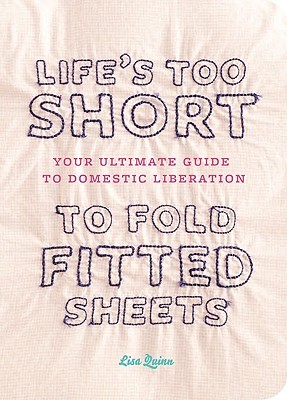
Life’s Too Short to Fold Fitted Sheets by Lisa Quinn

Life’s Too Short to Fold Fitted Sheets by Lisa Quinn

“Hello, my name is Lisa Quinn, and I am a recovering Martha Stewart junkie.” pg 7, ebook

Do you have a job, children, spouse, house, or none of those things and just want everything to look perfect all the time? Want to be the consummate host or hostess without working and stressing throughout the event? Are you wondering how they get it to look so perfect in the magazines?

Lisa Quinn, the author of this book, confesses to wanting it all. But she came to the realization that it is an impossible goal and she was losing her mind in the chase. This humorous self-help book is about embracing reality and understanding that it’s ok, really, to not be perfect.

Photo by cottonbro on Pexels.com

“It’s my assertion that the real key to happiness is getting rid of your inner control freak, redefining what’s real and important in your life, and then lowering your standards for everything else.”

I think that’s solid advice. I, like many, used to demand more of myself than I could give in my housework, from my family, from everybody really. It made me a little bit crazy for a time. But then, I realized, it wasn’t worth it. The effort, the cost — both in time and emotions — and everything else, led to these moments that were forgettable once they were done.

I realized I would much rather dwell in the imperfect moment than forever be chasing the unattainable gem of a perfect moment. Because it never really comes, does it.

This book embraces the idea that no one is perfect. And it’s a lot kinder to realize that your life doesn’t have to look perfect to be incredibly enjoyable.

Photo by medium photoclub on Pexels.com

Quinn gives easy-to-follow tips on how to decorate, host parties, clean, cook and more. My favorite tip being to spray a good smelling cleaner near the door of your home before an event. You may not have hit every surface in the house but it will smell like you have. Genius really.

“House Keeping Myths Debunked… Myth #1: You must fold your fitted sheets. The real definition of insanity is folding a fitted sheet the same way over and over again and expecting it to result in anything other than a migraine and a huge turban. Quit stressing about it. Just wad it up the best you can, and shove it in the closet.pg 39, ebook

She keeps it real with the mega-popular topic of decluttering, pointing out that the easiest way to control the mess is to think about everything you bring into your home.

“Resist the temptation to buy little knickknacks, pillows, throws, and paintings just because you like them. That is not reason enough. Each item you bring into your home should be special. It should have a purpose and a specific place in your home.” pg 64, ebook

Photo by Rachel Claire on Pexels.com

I also enjoyed her variations of recipes that can be done with a deli-cooked chicken. Talk about easy…

“Listen, if I’m able to convince just one other mom out there to take herself a little less seriously a little more often, then I’ve succeeded at what I set out to do.” pg 108, ebook

This book isn’t just for moms. It’s for everyone who needs to cut themselves some slack and just shove those dumb sheets in the closet. I won’t tell.

Thanks for reading!

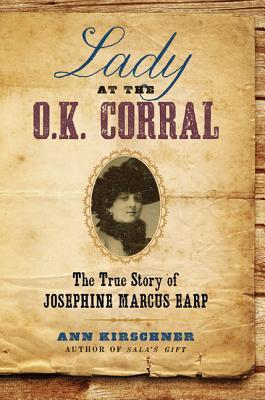
Lady at the O.K. Corral: The True Story of Josephine Marcus Earp by Ann Kirschner

Lady at the O.K. Corral: The True Story of Josephine Marcus Earp by Ann Kirschner

Josephine Marcus Earp made it difficult for biographers to accurately portray her life. Later, she would tell her history how she wished it had been or cover up the parts she didn’t want people to remember. It makes it hard for historians to paint an accurate picture of who this complicated woman actually was.

But I think Ann Kirschner, in this biography, does as good of a job as anyone could be expected to considering how convoluted the history is surrounding Josephine.

“The gunfight at the O.K. Corral was a love story, fought over Josephine Marcus, a woman of beauty and spunk barely out of her teens, escaping the restrictions of birth and seeking adventure, independence, and romance.” pg 3

Photo by Laura Stanley on Pexels.com

It’s a shame really. We know so much about Wyatt Earp and his friends. But the women around them have been almost swept into obscurity.

“A sizable group of authenticated photographs testified to Wyatt Earp’s undeniable good looks at any age, while there was not a single undisputed photograph of young Josephine, only ones in which she looked more like Sophie Tucker than Penelope Cruz.” pg 5

The fragments that are left reveal a woman who was brave and craved adventure. She seemed to have loved deeply and enjoyed gambling. Through extraordinary highs and lows, multiple states, and even the unbelievable gold rush of Nome, Alaska, Josephine lived life to the fullest.

“There was far too much excitement in the air for one to remain long a child,” Josephine recalled.” pg 22

Photo by NaMaKuKi on Pexels.com

Josephine’s Jewish family seemed rather conservative when compared to her wandering existence. She had siblings who married and raised families, like ordinary folk. One imagines that holiday gatherings were rather interesting.

“The most common occupation for a woman in Tombstone was prostitute or performer. Or both: many of the more attractive prostitutes also performed at the theaters and dance halls in town.” pg 47

The end of Josephine’s life was devastating compared to the decades of adventure that proceeded it. Penniless and perhaps suffering from dementia, one of the writers she worked with trying to create a definitive history of her life wouldn’t answer the door when she came calling. Instead, he’d record the abuse she wrote on notes that she slid under the door.

Her aggressiveness frightened him, and he began to keep track of her visits with handwritten notations on the back of calendar pages, with quotes from her: “I’ll get back at you — good and hard.” … Once she stuck her arm through the screen door to reach the doorknob.” pgs 217-218

Photo by Pixabay on Pexels.com

How could that happen? A woman who had once captivated two of the most legendary men in the West reduced to delivering threats when an acquaintance wouldn’t let her in the door. Lady at the O.K. Corral helps the reader understand some of the complicated twists and turns in the life of Josephine Marcus Earp, but I’m not sure that historians will ever be able to completely untangle the mixed-up threads of this woman’s life.

“As Wyatt’s biographer Stuart Lake put it: ‘In back of all the fighting, the killing and even Wyatt’s duty as a peace officer, the impelling force of his destiny was the nature and acquisition and association in the case of Johnny Behan’s girl. That relationship is the key to the whole yarn of Tombstone.’ pg 49

I wish there were more historical records to remember this extraordinary woman. It’s just sad.

Also, it makes me consider the type of documentation and oral record I’m leaving behind. How history will remember me? Will I be someone with a legacy to remember or just another shadow clinging to the arm of a more successful man? Stay tuned.

Thanks for reading!

Here’s the History Guy episode I wrote about Josephine Sarah Marcus Earp:

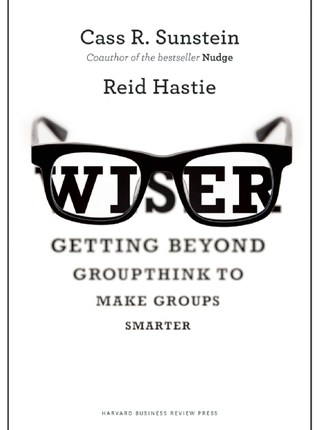
Wiser: Getting Beyond Groupthink to Make Groups Smarter by Cass R. Sunstein

Wiser: Getting Beyond Groupthink to Make Groups Smarter by Cass R. Sunstein

Authors Cass Sunstein and Reid Hastie examine many of the problems that beset groups and how to best address them for optimal group performance.

Written in a style that is more academic than approachable, Wiser uses the findings of multiple researchers to come to its conclusions. This book may be useful to managers who are desiring to set up a group at their own place of employment and want to start on the best foot.

“Do groups usually correct individual mistakes? Our simple answer is that they do not. … We also ask a second question: Can groups correct individual mistakes? Our simple answer is that they can. We aim to explain how.” pg 2

Photo by Canva Studio on Pexels.com

I picked this book up because, frankly, I wanted to know why anybody would utilize groups in a work setting. Every one that I have ever sat on has been either a disaster or inefficient. I was hoping Wiser would help me see the appeal that group-thinking seems to have for some.

And it did. But it also opened up my eyes to the myriad reasons why my experiences had been so bad. I had just assumed groups didn’t work. As it turns out, things are more complicated than that.

“The basic lesson is that people pay a lot of attention to what other group members say and do — and that they do not end up converging on the truth. In fact, they often ignore their own beliefs and say that they believe what other people believe.” pg 28

There can also be problems with authority figures in a group setting: “If the group contains one or more people who are known to be authorities or who otherwise command a lot of respect, then other group members are likely to silence themselves out of deference to the perceived or real authority.” pg 35.

I’ve seen that happen multiple times. The whole purpose of the group is thrown off. It has often frustrated me, leading me to think we may as well have saved our meeting time and had the boss issue a directive.

Photo by Andrea Piacquadio on Pexels.com

Groups also have to keep in mind the idea of “cascades” or ideas taking a hold early in the process and then taking over the rest of the group’s time: “For their part, many groups end up with a feeling of inevitability, thinking that they were bound to converge on what ultimately became their shared view. Beware of that feeling too, because it is often an illusion. The group’s conclusion might well be an accident of who spoke first…” pg 60

Groups can polarize themselves, driving their members to extremes they wouldn’t otherwise reach without members that think like them. To combat this, leaders should make sure groups are diverse.

In a perfect world, groups are equivalent to their best members, aggregate all of the information each individual brings to the table, utilizes experts properly and creates an almost mystical “synergy” where, as the authors say, “the whole is more than the sum of its parts.”

Photo by fauxels on Pexels.com

The trick is getting the group to work like that. As I said, I’ve never seen it. This book brings me hope that perhaps one day I will.

The failures of groups often have disastrous consequences — not just for group members, but for all those who are affected by those failures. The good news is that decades of empirical work, alongside recent innovations, offer a toolbox of practical safeguards, correctives, and enhancements. With a few identifiable steps, groups can get a lot wiser.” pg 214

Thanks for reading!

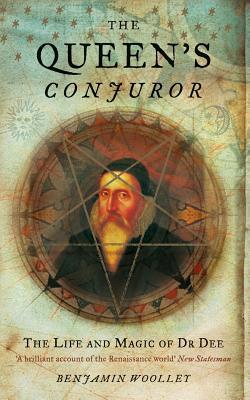
The Queen’s Conjuror: The Science and Magic of Dr. John Dee by Benjamin Woolley

The Queen’s Conjuror: The Science and Magic of Dr. John Dee by Benjamin Woolley

The Queen’s Conjuror is a biography of Dr. John Dee, a fascinating and much-maligned Renaissance man who was, among other things, Queen Elizabeth I’s personal astrologer.

“And for these and such like marvellous acts and feats, naturally, mathematically, and mechanically wrought and contrived: ought any honest student and modest Christian philosopher be counted and called a conjuror?” pg 15

He had interests in astrology, science, mathematics and the occult, which, to modern eyes, may seem strange. But Dee viewed the inner workings of nature and the universe as a type of magic and his studies of it, through the use of science, was another way that Dee worshiped God.

Photo by Tima Miroshnichenko on Pexels.com

“Queen Elizabeth, a symbol of Protestant sovereignty, told the French Ambassador Andre Hurault: ‘There is only one Jesus Christ… the rest is dispute over trifles.’ This, it seems, was Dee’s view as well.” pg 45

Part of Dee’s study of nature was an attempt to find a “universal language.” This universal language, Dee believed, was told to the Biblical Adam by God in the fabled Garden of Eden before the fall from grace. Dee hypothesized if a scientist could find this universal language, giving the secret name of beasts, plants and everything in creation, that it would unlock the secrets of the universe itself.

“In other words, Dee thought that the ‘astronomical’ symbols appeared to be the relics of a long lost universal language that transcended national and, by implication, religious barriers.” pg 75

Photo by cottonbro on Pexels.com

In addition to his legacy of mysticism and the Enochian alphabet, Dee is credited as the first man to formulate the idea of a ‘British Empire’ and he suggested that England develop its navy as a key to upholding that empire.

“The navy would become the ‘master key’ of English military strength, England would challenge the Spanish — to spectacular effect in its defeat of the Armada in 1588 — North America would be colonized, a British Empire would emerge, and the expeditions that Dee had in the last few years been helping to plan would lay its foundations.” pg 123

Another reason I admire Dee — he amassed one of the largest libraries in Europe. Unfortunately, his home was looted during a long sojourn on the Continent.

Photo by Ekrulila on Pexels.com

“In short, Dee’s house had been ransacked not by an ignorant peasant mob, but by pupils and associates. Their motives remain unclear. They may have seized the books to settle outstanding debts, or to discover the secrets they contained, or to hide them from others.” pg 278

Although he died in poverty and obscurity, he affected society then and today, and represented an era where science, religion, and mysticism were intimately entwined.

Highly recommended for readers who enjoy history, mysticism, and a curious combination of the two.

Here’s the History Guy episode I wrote about Dr. John Dee:

The History Guy remembers Dr. John Dee