For Small Creatures Such as We: Rituals for Finding Meaning in Our Unlikely World by Sasha Sagan

For Small Creatures Such as We: Rituals for Finding Meaning in Our Unlikely World by Sasha Sagan

My parents taught me that the universe is enormous and we humans are tiny beings who get to live on an out-of-the-way planet for the blink of an eye. And they taught me that, as they once wrote, “for small creatures such as we, the vastness is bearable only through love.” pg 12, ebook.

Sasha Sagan, the daughter of celebrated scientist Carl Sagan, was raised to believe only what could be proven. Her father told her: “It’s dangerous to believe things just because you want them to be true.” pg 11, ebook.

Photo by Yuting Gao on Pexels.com

But they also instilled a sense of wonder in Sasha about existence and humanity’s place in it. For Small Creatures Such as We is an examination of religious and secular celebrations and rituals from around the world. I learned a great deal about the similarities of humanity’s need to celebrate and recognize the seasons, rites of passage, and other universal milestones in life.

I wouldn’t describe myself as religious, rather I’m very spiritual. In my opinion, Sagan’s book could appeal to even those who may describe themselves as religious. She has a welcoming voice for every kind of reader.

Photo by Dominika Greguu0161ovu00e1 on Pexels.com

“If you are devoutly religious, firstly, I’m delighted you’re reading this. Thank you. … This book is not intended to dissuade you, only to increase what there is to be joyful about.” pg 14

I think she succeeds in drawing a clear picture of what rituals mean to humanity. And that brought me so much hope for the future.

Some live lives of little meaning and less depth because there is no framework in place to support the creation of personal rituals outside of certain groups who may not share your vision of reality.
Photo by Karolina Grabowska on Pexels.com

This book could be helpful for spiritual people who want to use rituals to instill a sense of wonder into their daily existence.

It is also fascinating to learn about so many different cultures from around the world. Highly recommended.

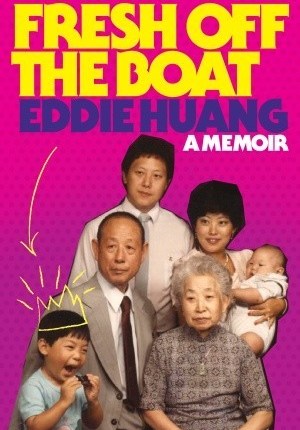
Fresh Off the Boat: A Memoir by Eddie Huang

Fresh Off the Boat: A Memoir by Eddie Huang

Fresh Off the Boat is the life story of Eddie Huang.

After learning about his various exploits, some of which were extremely dangerous, I was amazed that he’s still around to recount them.

I picked up this memoir because I’ve seen almost every episode of the network family comedy, “Fresh Off the Boat,” and wanted to read the source material behind it.

As sweet as the show is, I think it does Huang a disservice.

Photo by Prince Photos on Pexels.com

I guess because it’s on network television, writers have essentially edited Huang’s life story. In the television show, the character of Eddie loves rap music, basketball and eating, (like he did in real life) but it leaves out the more real portions of Huang’s history.

His classmates called him racial slurs on an almost daily basis. He was subjected to physical abuse from his parents. He got mixed up in drugs and selling name brand shoes. He was arrested for fighting.

Photo by king Siberia on Pexels.com

The reason why his grandmother is in a wheelchair, which is depicted on the show though the reason is never given, is because her feet were bound as a child.

All of that realness is completely missing from the television show. But it is so important to creating the man Huang is today.

Photo by Pixabay on Pexels.com

The differences between the book and the tv series aside, Huang has a fascinating voice. He’s, at turns, funny and real. He explains his more obscure slang references at the end of each chapter in footnotes.

“I think my mom is manic, but Chinese people don’t believe in psychologists. We just drink more tea when things go bad.” pg 12, ebook

The window Huang opens into his culture is an enlightening one. He’s the first generation of his family to be born in the United States, but he doesn’t ever really embrace being American. He exists in a realm in between because he is never truly accepted by his European peers.

Photo by Juan Pablo Serrano Arenas on Pexels.com

“Since kindergarten my parents had been sending me to Christian schools, where the teachers would feed me soap and made me use my right hand even though I’m a lefty, because we supposedly got a better education at parochial schools even if we weren’t actually Christians.” pg 26, ebook

In an effort to get along better with his teachers, Huang even acts as if he embraces Christianity when in reality he was just trying to survive. I felt sad that he had to pretend to be something other than who he was to make his way in the world.

Photo by Drigo Diniz on Pexels.com

“They’ll never let someone with a face like you on television.” To this day, I wake up at times, look in the mirror, and just stare, obsessed with the idea that the person I am in my head is something entirely different than what everyone else sees. pg 41

I highly recommend this memoir for readers who want to learn about another person’s life experience. Huang has penned an engrossing memoir about someone who took some unexpected turns on the way to his destiny — creating a wildly popular eatery in New York City. I enjoyed every story and learned so much.

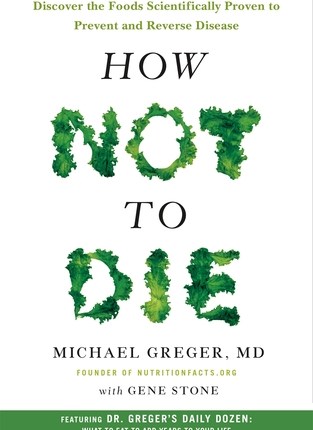
How Not to Die: Discover the Foods Scientifically Proven to Prevent and Reverse Disease by Michael Greger

How Not to Die: Discover the Foods Scientifically Proven to Prevent and Reverse Disease by Michael Greger

I think everybody is aware that your diet has an enormous impact on your health. This book is another reminder that this is true.

Photo by Trang Doan on Pexels.com

Though everyone will one day die, Michael Greger gives some tips to help you live as long and as healthily as possible.

I’m not going to debate the merits of different diets which seem to change as quickly as fads. I think everybody should try to incorporate healthy habits that are right for them as they are able.

How Not to Die is packed with ideas on that front.

Photo by Pixabay on Pexels.com

I think the most interesting part of this book are the effects that various foods have on the body. But you don’t have to take Greger’s word for it, experiment and see what works for you.

Happy eating 🙂

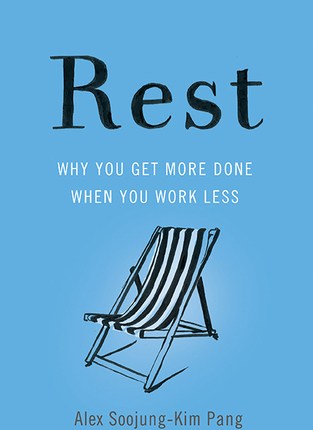
Rest: Why You Get More Done When You Work Less by Alex Soojung-Kim Pang

Rest: Why You Get More Done When You Work Less by Alex Soojung-Kim Pang

“We shouldn’t regard rest as a mere physical necessity to be satisfied grudgingly; we should see it as an opportunity. When we stop and rest properly, we’re not paying a tax on creativity. We’re investing in it.” pg 11

Photo by Tatiana Syrikova on Pexels.com

I think we’re living in a culture that generally glorifies busyness and a frantic pace of achievement. That’s not news.

Alex Soojung-Kim Pang takes a deep dive into the science of rest and shares the insight that taking breaks isn’t something we should squeeze into our schedule. Rest, he argues, is as important as the work itself.

Four of his major points are: “work and rest are partners”, “rest is active”, “rest is a skill”, and “deliberate rest stimulates and sustains creativity”.

I was particularly interested in the creativity-related point of Pang’s hypothesis.

“You need time for rest because that’s when the unconscious mind can get to work. You can’t command inspiration to appear, but you can nudge it, most notably by working steadily and regularly. The romantic image of the artist who does nothing until he’s inspired and then produces in a furious burst of work is misleading.” pg 91

Photo by Dazzle Jam on Pexels.com

Pang looked into the lives and routines of creative thinkers throughout history and came to the perhaps surprising conclusion that four concentrated hours of work per day is sufficient.

“The pattern of working four hard hours with occasional breaks isn’t just confined to scientists, writers, or other people who are already successful, well-established, and have the freedom to set their own schedules. You can also see it among students who go on to become leaders in their fields.” pg 67

The rest of the day that geniuses such as Charles Darwin or Ernest Hemingway lived were filled with activities like long walks, day dreaming, active rest, sport and other seemingly unrelated moments that fueled the subconscious mind.

“The right kinds of rest would restore their energy while allowing their muse, that mysterious part of their minds that helps drive the creative process, to keep going.”

Photo by Pixabay on Pexels.com

What these activities may be vary from person to person, but Pang’s research proves time and again that the rest portion of the day is critical.

One of my favorite parts of this book dealt with Malcolm Gladwell’s popular 10,000 hours for mastery idea that he discusses in his book, Outliers. Yes, Pang argues, 10,000 hours are necessary for exceptional performance. But we’re ignoring the rest of the equation.

“It comes after 10,000 hours of deliberate practice, 12,500 hours of deliberate rest, and 30,000 hours of sleep.” pg 74

Photo by Andrea Piacquadio on Pexels.com

From morning routines and sabbaticals to naps and carving out time for more sleep, Pang exhorts the reader to make rest a priority. It’s not lazy, it is one of the building blocks of a creative and productive life.

Sign me up. 🙂

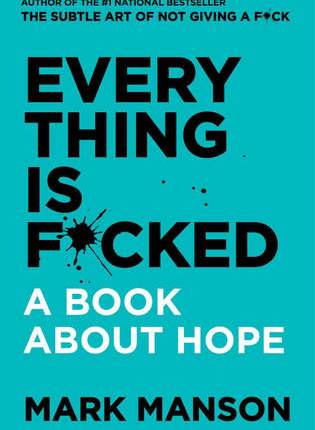
Everything is F*cked: A Book About Hope by Mark Manson

Everything is F*cked: A Book About Hope by Mark Manson

This creatively titled self-help book, Everything is F*cked, presents psychology, philosophy and the author’s view of reality.

In a series of essays, Mark Manson discusses a variety of topics including the differences between the “thinking brain” and “feeling brain.” He uses Isaac Newton’s laws to create a parallel universe’s version of emotional laws and completes a fairly scathing dissection of religion.

Throughout the various topics, he circles back to the idea of hope and how it can potentially create more problems than it solves.

Photo by meo on Pexels.com

Why did Manson write a book about hope?

“This book is my little source of hope. It gives me purpose; it gives me meaning. And the narrative that I’ve constructed around hope is that I believe this book might help some people, that it might make both my life and the world a little bit better.” pg 15

I did not read Manson’s other incredibly popular title, The Subtle Art of Not Giving a F*ck: A Counterintuitive Approach to Living a Good Life, so I went into this one not knowing what to expect. I found Manson to be particularly adept at breaking down complex topics into simple, easy-to-understand analogies.

For example, here’s his take on the psychological cause of a underlying feeling of unworthiness: “This feeling of unworthiness is usually the result of some bad sh*t happening to us at some point. We suffer through some terrible stuff, and our Feeling Brain decides that we deserved those bad experiences. Therefore, it sets out, despite the Thinking Brain’s better knowledge, to repeat and re-experience that suffering.” pg 46

Photo by Pixabay on Pexels.com

And here’s the analogy he crafts around his explanation of unworthiness: “Put another way, the problem isn’t that we don’t know how not to get punched in the face. The problem is that, at some point, likely a long time ago, we got punched in the face, and instead of punching back, we decided we deserved it.” pg 46

His writing is simple and succinct, which could be incredibly useful for readers who are looking for more information about the self help topics presented. I didn’t particularly care for Manson’s overall style, but that’s a personal preference rather than a commentary on the value of what he’s discussing.

“The stories of our future define our hopes. And our ability to step into those narratives and live them, to make them reality, is what gives our lives meaning.” pg 70

Photo by Engin Akyurt on Pexels.com

I think this author may be similar to Sarah Knight and her series of self help books about The Life-Changing Magic of Not Giving a F**k. Readers either love or hate those, I fell somewhere in between.

My favorite part of this was when Manson dived into some Buddhist philosophy in the chapter, “Pain is the Universal Constant.” He discusses the teaching of suffering being similar to a person struck by arrows. The first arrow brings physical pain and the second brings the emotional pain, which can be far worse and last longer than the physical pain because of the narratives we weave around it.

Through meditation, the second arrow, emotional pain, can be diminished or perhaps eliminated.

“That while pain is inevitable, suffering is always a choice. That there is always a separation between what we experience and how we interpret that experience. That there’s always a gap between what our Feeling Brain feels and what our Thinking Brain thinks. And in that gap, you can find the power to bear anything.” pg 186

Photo by Aleksandar Pasaric on Pexels.com

Recommended for readers who aren’t offended by strong language and have the ability to hold the book they’re reading in that gap in their minds — between the thoughts and the emotions, in the space of pure being.

I’ll meet you there. 🙂

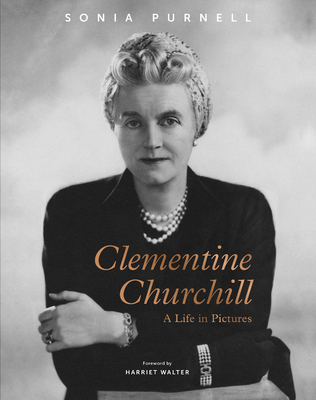
Clementine Churchill: A Life in Pictures by Sonia Purnell

Clementine Churchill: A Life in Pictures by Sonia Purnell

Clementine Churchill: A Life in Pictures is a sparkling biography about Mrs. Winston Churchill. The biographer credits Clementine with supporting and providing the confidence necessary to her famous husband so that he could live the extraordinary life of service that he did.

In the meantime, she also devoted herself to her country as well as raised a family. Her role in Churchill’s life has gone largely unnoticed, but it seems she is finally taking her place in history.

Photo by vectors icon on Pexels.com

Not only did they weather repeated public and personal humiliation together, they overcame the bitterest of personal tragedies, and survived the all but intolerable strains of being at the center of two world wars. … The question is not simply what did she do for him, but also what could he have done without her? pg 9

I knew, in a general way about Winston Churchill’s life, but this biography about Clementine fills in many of the gaps in my knowledge. And actually, it was quite interesting reading. The personal life of the Churchills was filled with a surprising amount of drama and scandal.

In addition, they worked with and knew so many powerful people from the time period. I particularly liked the chapters about Clementine’s acquaintance with Eleanor Roosevelt.

The case can be made that no other premier’s wife, in a democratic country at least, has played such a pivotal role in her husband’s government — arguably greater during the Second World War than the greatest of American First Ladies, Clementine’s direct contemporary, Eleanor Roosevelt. pg 18

Photo by Sid Ali on Pexels.com

The pictures bring this incredible woman, and the trying times she lived in, to life. Many of the photos are un-posed and Clementine is looking off camera, smiling at other people. Even in photos, one gets the sense of how much of this woman’s life was lived in the public eye.

Though her contributions were perhaps unrecognized during her lifetime, Clementine was appreciated by her husband. Take this note he wrote to her on their fortieth wedding anniversary:

“I send this token, but how little can it express my gratitude to you for making my life & any work I have done possible.”

She is certainly a woman who deserves to be remembered.

Thank you to NetGalley and the publisher for a free advance reader copy of this book. It is slated to be on sale in October 2019. Please note, the brief quotations I cited in this review may change or be omitted in the final print edition.

Aware: The Science and Practice of Presence by Daniel J. Siegel

Aware: The Science and Practice of Presence by Daniel J. Siegel

Daniel Siegel, MD, psychiatrist and author, shares his research into neuroscience and a meditation practice he has developed called the “Wheel of Awareness“.

“The Wheel practice is a way to open awareness and cultivate a larger, more expansive container of consciousness. People who participate in the practice seem to be strengthening their minds.” pg 9

Photo by Polina Tankilevitch on Pexels.com

The practice uses focused attention on the senses, bodily sensations, mental activities and interconnectedness, in order to encourage the mind to become more integrated. When this integration happens, the mind gives off certain brainwaves that Siegel and other researchers have measured coming from experienced meditation practitioners such as monks.

Basically, Siegel is using western science in an effort to measure and replicate meditation practices.

The science portions of Aware are not very accessible to the non-scientists readers and I could see that being off-putting. However, if you are interested in the intersection of neuroscience and meditation practice, this book could be incredibly useful to you.

“Where attention goes, neural firing flows, and neural connection grows.” pg 19

Photo by cottonbro on Pexels.com

I found the implications of Siegel’s research to be fascinating. He claims, through focused attention, one can change the neural patterns and behavior of the brain. Meditation affects biology in a physically measurable way.

There have been countless studies on the positive benefits of meditation practice, but, I think, fewer on the changes in the function and integration of the mind. The rewards of such can be profound.

“When our minds wander unintentionally, we are not present, we are not receptively aware, we are not mindful, and studies suggest, we inhibit being happy — even if we are daydreaming about exciting things. … Presence cultivates happiness.” pg 49

Besides the Wheel of Awareness portion, the part of Aware I found most helpful was a discussion about the proper cultivation of empathy, the ability to put yourself in another’s place to feel and share what they are feeling.

Photo by Anastasia Shuraeva on Pexels.com

Tania Singer, in a presentation to the Dalai Lama, had this advice: “… we need to place empathy in the larger space of altruistic love and compassion. This space will act like a buffer for empathic distress. Since altruism and compassion are positive mental states, they reinforce our courage and give us the resources to deal with the suffering of others in a constructive way.” pg 86

I liked the visual of that and think it will come in handy in the future.

Recommended for non-fiction readers interested in the science behind meditation and the development of presence. Spiritual seekers looking for different meditation methods may want to look for that in another, less technical, book.

Thanks for reading!

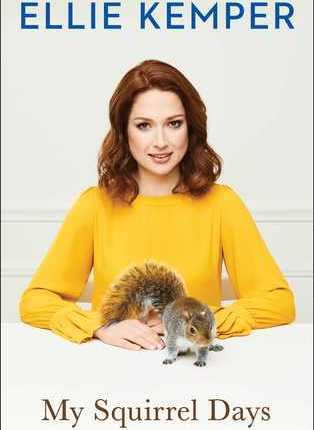
My Squirrel Days by Ellie Kemper

My Squirrel Days by Ellie Kemper

Ellie Kemper, the hilarious actress from the Netflix show “The Unbreakable Kimmy Schmidt,” shares a few essays highlighting moments from her life. I laughed out loud a few times, both in amusement and embarrassment for Kemper. She’s not afraid to make fun of herself.

The best part of the memoir is, as I read it, I could hear each word being read in Kemper’s distinctive voice. She definitely has a style of expressing herself that stays true for the whole book.

“As a reasonably talented person who is also part fraud, I cannot praise highly enough the virtues of enthusiasm and tenacity as substitutes for finely honed skills or intensive training. And in this book, Reader, I will tell you about the numerous times that I have made up in pluck what I have lacked in natural ability.” pg 4

Photo by Pixabay on Pexels.com

Unlike other readers, I didn’t fault this book for its mundane subject matter. I think, no matter our age or experience, people have valid things to say. Maybe it didn’t make for a gripping read, but I was able to relate to many of Kemper’s childhood experiences.

I too grew up near St. Louis, Missouri. I also went on an elementary school age field trip to Hannibal, Missouri, to learn about Mark Twain.

I also get scatter-brained when meeting authors I admire, like this moment between Kemper and Doris Kearns Goodwin:

“Doris Kearns Goodwin smiled brightly, and I leaned in, enthusiastically, to hug her. Unfortunately, she had begun to turn away by then, and — arms still outstretched — I lost my balance, stumbling forward and accidentally pushing the legendary biographer to the ground.” pg 24-25

Photo by Brittany Moore on Pexels.com

My experience: It was near Thanksgiving in 2005. George R.R. Martin was coming to Denver to do a book signing at the Tattered Cover because he had recently published A Feast for Crows. (And I’m still super pissed that he didn’t finish writing his series before the television show ended, but that’s neither here nor there.)

But this was long before the television show. The only people showing up for a signed copy of Martin’s new book were the nerdy bookworms like me and my then-boyfriend now-husband, Lance, who I dragged along because I didn’t want to drive downtown by myself.

We arrived late and had to sit at the back. But that was cool, because I was there! We got to listen to him chat about his vision for the series and then a couple people from the audience asked him questions. Someone asked who his favorite character was, and he said, Tyrion, which hit me as a total surprise. But I guess if I had thought about it and the extraordinary luck Tyrion enjoys in a world where every other person gets slaughtered in ever more inventive and disgusting ways, I could have guessed.

Then, we all queued up to have our new book signed! Because of my position in the nook-area, I was the second-to-last in line. I was hopping up and down in excitement for almost an hour as everyone filed past the bespectacled and hat-sporting author. We finally got to the front, I handed my book to his assistant, who pushed it in front of him.

“Hi!” I exclaimed and then just stood there, grinning like Hodor and equally as eloquent. Martin turns to Lance and says, “What’s her name?”, which Lance gamely told him and then gave him the correct spelling. Meanwhile, I’m talking a blue-streak in my head.

“Say something,” I told myself. “Now’s your chance.” And nothing came out. “This man has provided you with hours of entertainment and you’ve got nothing!” My book was signed. He handed it to me. We were walking away from the table… and I frantically turned back and blurted out, “Happy Thanksgiving!”

George R.R. Martin smiled and said, “Happy Thanksgiving to you too.” And that was that.

Photo by Craige McGonigle on Pexels.com

Here’s to people like Ellie Kemper, who lose their minds when they meet rock-star authors, get stuck in Japanese temples, and amuse themselves perhaps more than they entertain others. It may not make for the most exciting book, but it’s real and that matters. Recommended for readers who are a fan of Kemper’s work and enjoy humorous memoirs.

Thanks for reading!

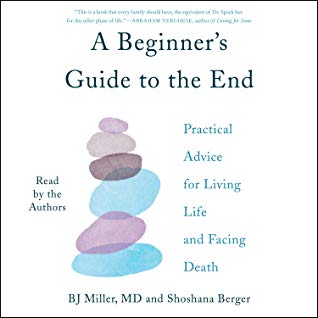
A Beginner’s Guide to the End: Practical Advice for Living Life and Facing Death by B.J. Miller, Shoshana Berger

A Beginner’s Guide to the End: Practical Advice for Living Life and Facing Death by B.J. Miller, Shoshana Berger

A Beginner’s Guide to the End is a definitive guide about death and how to handle it, both for yourself and your loved ones.

Topics range from planning your estate and dealing with life-ending illnesses all the way through to what to do in the first 24 hours after someone dies and how to liquidate an estate.

Photo by KoolShooters on Pexels.com

I could see this book being incredibly useful to anyone who has received a terminal diagnosis, their family or caregivers of all types.

I picked this book up because my father-in-law recently died and I was looking for information on how to help myself and others with grief.

“Grief is a force of nature. Though it can feel problematic as hell, bereavement is an essential piece of the human picture, whichever way it surfaces. pg 420

Photo by Alex Green on Pexels.com

I learned all about that, but also a bunch of other helpful end-of-life details. For example, I knew nothing about the legalities of transporting and spreading cremated remains. Now, I know.

“A friend snuck down to the field of the Oakland-Alameda County Coliseum at half-time and dumped some of his father’s dust at the fifteen-yard line. His pop, a doctor, had been a hard-core Raiders fan, and though his son knew he was doing something illegal, he felt a jolt of joy, knowing that part of his father would always be in that stadium.” pg 459

The text in this book is printed slightly larger than normal, which could be exactly what is needed for elderly readers.

Highly recommended for anyone who needs some guidance about death-related issues.

Thanks for reading.