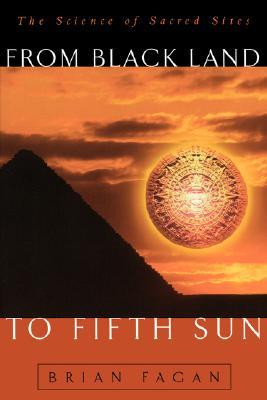
From Black Land To Fifth Sun: The Science Of Sacred Sites by Brian M. Fagan

From Black Land To Fifth Sun: The Science Of Sacred Sites by Brian M. Fagan

From Black Land to Fifth Sun is the textbook for an online course I’m taking from Oxford University about ritual and religion in prehistory.

The opening chapter to the book seems promising, offering readers a glimpse into the hidden worlds of what could be called the “archaeology of the mind.”

“The emerging ‘archaeology of mind’ is a marriage of cultural systems theory, settlement archaeology, environmental reconstruction, contextual archaeology, and the decipherment of written records.” pg 11

Photo by Samuel Wölfl on Pexels.com

Unfortunately, the text then becomes bogged down by the author’s lengthy descriptions of archaeological sites he visited during the course of his life and his interactions with some of the giants of the field, who, as he so helpfully notes, are dead now. One of my classmates described it as “perhaps the most boring travelogue ever.”

“I have not seen the Chauvet paintings: few outsiders have yet had the chance. Nor should they, for our primary concern must be to protect them from harm.” pg 50

Some of the most interesting parts of this were the author’s descriptions of rituals from modern peoples, such as the San. But there are perils galore to using any of this modern information to decipher rituals in prehistory. The culture and society is not the same. The hierarchies are not the same. The tools and materials available are not the same. The meanings assigned to the ritual movements may have changed if we even knew what those movements were, which in most cases we don’t. There may have been a charismatic figure at the center of the cult or religion, and who knows what they may have been like. I could go on and on.

“As they activated their potency, the medicine men trembled, then sweated, then bled from the nose, as the potency took hold of them – an eerie sight to behold. Many white hunters have seen dying eland, trembling with wide-open mouths, sweating profusely, with melted fat gushing like blood from their nostrils. Perhaps the San likened this phenomenon to ‘death’ in a medicine man’s trance.” pg 61
Photo by Athena on Pexels.com

The fact that I find this book so dull truly is a shame. This topic could come alive with a little updating. Perhaps if the text had a digital component, where you could digitally “walk” through the sites the author is describing as he describes it, it might hold the attention.

Also, From Black Land to Fifth Sun was published in 1998, twenty-two years ago for those keeping score. It purports to be on the cutting edge of archaeological research but I find that extremely dubious when I consider how far technology has developed since then. One need only look at the state of our handheld devices to know it couldn’t possibly be true.

In addition to the meandering yet somehow dry descriptions and outdated technology, somehow the author has managed to suck the life out of a topic I find extremely compelling. What did ritual and religion look like during prehistory? I don’t know, but I can imagine so many different scenarios. So many!

I feel like this field could use people who use their intuition and imaginations in addition to scientific techniques to bring the past to life- almost like a shamanistic version of Indiana Jones.

Photo by Navneet Shanu on Pexels.com

Instead, we have either scientists putting locks and fences around sites to maintain each dust molecule in context and then droning on for hours about when the human brain may have become capable of religious thought or arguing about whether religion developed as a societal control for hunter-gatherers or agricultural people. On the other hand, there’s the spaced-out new agers who want to camp among the ruins of Stonehenge or wherever and commune with whatever spirits they claim are living in the rock, divorced from any kind of scientific evidence whatsoever.

Can’t we have some sort of happy medium?

Only recommended for the readers who are taking the same course I am. Otherwise, seekers are advised to steer clear.

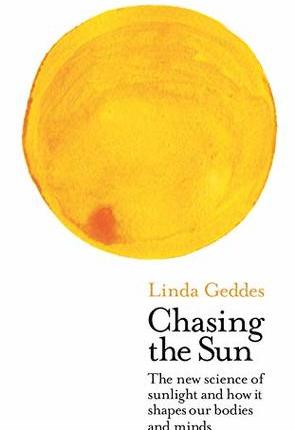
Chasing the Sun: The New Science of Sunlight and How it Shapes Our Bodies and Minds by Linda Geddes

Chasing the Sun: The New Science of Sunlight and How it Shapes Our Bodies and Minds by Linda Geddes

Chasing the Sun reminds readers of the importance of the sunlight in shaping some of the body’s processes, regulating mood, and the surprisingly deleterious effects that not enough sun, or not adhering to the body’s natural rhythms, can have.

I picked up this book because I’ve been having trouble sleeping and thought maybe this would have some helpful tips. It did, but I felt like most of this information I had heard before in some form or another. I suppose it is nice to have a reminder to get ample sunlight during my daily routine. I have experienced bouts of seasonal affective disorder in the past and know first hand how it can affect your mood.

Photo by Jill Wellington on Pexels.com

It is rather depressing how far removed modern society has made itself from nature. Linda Geddes points out this gap and how the ancients, and some members of our era, made better use of this natural resource.

I enjoyed the history lessons about the Romans and their solariums. They used “heliotherapy” to treat a variety of illnesses. I also enjoyed the studies about the potential effectiveness of “chronotherapy” for patients suffering from certain mental disorders as well as learning about efforts to increase their sunlight by towns that receive little light during the day. For example, there’s a town in Norway that put mirrors on top of the nearby mountains in order to direct more sunlight their way.

Photo by ArtHouse Studio on Pexels.com

As we know more about the importance of sunlight, I’m certain we’ll see more efforts to incorporate this information into our daily routines. And it affects things we may not even consider from school start times to a good night’s sleep.

Recommended for readers who want to learn more about how the sun affects our lives and some of the newer scientific research about the same.

Drawing Down the Moon: Witches, Druids, Goddess-Worshippers, and Other Pagans in America by Margot Adler

Drawing Down the Moon: Witches, Druids, Goddess-Worshippers, and Other Pagans in America by Margot Adler

Margot Adler talks to adherents in different traditions all across the United States, and a few in Europe, in order to banish some of the mystery and misconceptions surrounding neo-pagan groups.

“Since Pagans are a very diverse group, it is wrong to say all Pagans believe this or that, but here are some beliefs that many people in this book share: The world is holy. Nature is holy. The body is holy. Sexuality is holy. The imagination is holy. Divinity is immanent in nature; it is within you as well as without. Most spiritual paths ultimately lead people to the understanding of their own connection to the divine.” pg 11, ebook.

Photo by Gianluca Grisenti on Pexels.com

I didn’t know much of anything about pagan religions before I read this book, mainly because I am from a particularly conservative part of the country and there are very few groups of this type around. It’s hard to get to know people if there aren’t any to talk to.

In some circles, just the word “pagan” inspires fear because it’s not clear what this means or people might be threatened by how someone’s beliefs might be different from their own.

“Neo-Pagans look at religion differently; they often point out that the root of the word means “to relink” and “to connect,” and therefore refers to any philosophy that makes deep connections between human beings and the universe.” pg 24

Adler examines an extraordinary number of pagan groups, an almost bewildering amount. I liked that this book introduced me to so many different paths and ideologies, but at the same time, it began to get somewhat repetitive as she broke down all of the different groups.

Photo by Gheorghita Claudiu on Pexels.com

But as the friend who had recommended this book reminded me, Drawing Down the Moon was created in the years before the existence of the internet. It was intended not just to explain what these groups were, but also operated as a catalog of sorts, for readers who were looking for the right path for themselves.

Recommended for spiritual seekers who are looking for a tradition that fits or for anyone who is curious about the stunning variety of spiritual beliefs there are out there. I learned so much.

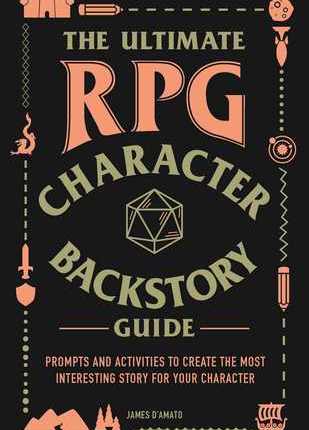
The Ultimate RPG Character Backstory Guide: Prompts and Activities to Create the Most Interesting Story for Your Character by James D’Amato

The Ultimate RPG Character Backstory Guide: Prompts and Activities to Create the Most Interesting Story for Your Character by James D’Amato

The Ultimate RPG Character Backstory Guide is an excellent resource for anyone who is looking to create or improve their role-playing character back stories.

James D’Amato utilizes his training in impromptu theater to craft questions that guide readers through story creation. Some of the prompts are funny, most are entertaining, and all touch on essential elements of a character.

Photo by Juliana Stein on Pexels.com

The book is divided into character levels, so there’s something for beginners to the more advanced gamer.

Role playing games are fun because of the interaction between players and their characters. By taking the time to create a detailed backstory, you’re giving the gift of hours of entertainment for both yourself and your gaming buddies.

Highly recommended.

The Hero With a Thousand Faces by Joseph Campbell

The Hero With a Thousand Faces by Joseph Campbell

“Throughout the inhabited world, in all times and under every circumstance, myths of man have flourished; and they have been the living inspiration of whatever else may have appeared out of the activities of the human body and mind.” pg 1

Joseph Campbell presents his, now classic, thesis of comparative mythology and psychology. By examining different myths from all around the world, he outlines the hero’s journey. The journey has many different steps and elements to it, but beneath it all, Campbell believes, through all the many stories, the journey is one.

Photo by Maria Pop on Pexels.com

“Furthermore, we have not even to risk the adventure alone; for the heroes of all time have gone before us; the labyrinth is thoroughly known; we have only to follow the thread of the hero-path.” pg 18

I think in different circumstances I may have enjoyed this book very much. The topic, comparative mythology, is one I find particularly fascinating. I also like to see how humankind incorporates the mythical not just in our stories, but in the way we set up our societies.

“… every failure to cope with a life situation must be laid, in the end, to a restriction of consciousness. Wars and temper tantrums are the makeshifts of ignorance; regrets are illuminations come too late.” pg 101

Photo by Pixabay on Pexels.com

But honestly, I had trouble focusing because of certain current events. Campbell presents the different myths in pieces organized by his heroic stages rather than in one flowing story. Between the trouble focusing and the bouncing around from myth to myth, this was a difficult read for me. Perhaps I’ll try this book again in the future, when my life doesn’t feel so off-kilter.

I think it has plenty of treasures to be discovered for spiritual seekers of every kind. It also demonstrates that though we look different and live very different lifestyles, at our soul level, there are many similarities to humanity. We find these similarities mirrored through our stories, our life stages, how we live and how we dream.

“Those who know, not only that the Everlasting lives in them but that what they, and all things, really are is the Everlasting, dwell in the groves of the wish-fulfilling trees, drink the brew of immortality, and listen everywhere to the unheard music of eternal concord. These are the immortals.” pg 142

Photo by Gabriel Peter on Pexels.com

I sincerely hope you all live and dream sweetly, immortals, wherever on the hero’s journey you may be: sheltering-in-place or braving the world, and that I will live and dream sweetly, too.

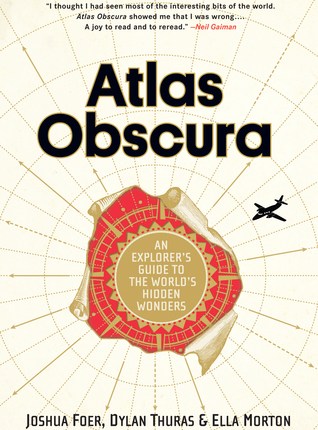
Atlas Obscura: An Explorer’s Guide to the World’s Hidden Wonders by Joshua Foer

Atlas Obscura: An Explorer’s Guide to the World’s Hidden Wonders by Joshua Foer

Atlas Obscura reminds readers that the world is a weird and wonderful place full of amazing things to see. It examines extraordinary places from across the globe and includes informational tidbits about each.

This book could be handy as a reference guide for choosing an exotic locale for a vacation or for someone who is seeking information about places of historical significance for a certain YouTube channel that covers forgotten history.

Photo by ArtHouse Studio on Pexels.com

Or, if neither of those things are your jam, it would make a lovely coffee table book. I found curious information about places I’d never heard of on almost every page.

Here’s Atlas Obscura author Joshua Foer giving a TedTalk about ways to improve your memory:

Now when you visit all of these incredible places, you’ll remember enough to share a story about it. 🙂

Highly recommended for travelers- traditional and of the armchair variety.

You’re Not Listening: What You’re Missing and Why It Matters by Kate Murphy

You’re Not Listening: What You’re Missing and Why It Matters by Kate Murphy

You’re Not Listening is a fun and enlightening non-fiction read about, you guessed it, listening. Theoretically, we all have the capability of listening, but, as author Kate Murphy points out, we kind of suck at it.

“This is a book in praise of listening and a lament that as a culture we seem to be losing our listening mojo.” pg 3

From politics to business, scientific studies to families, Murphy illustrates pitfalls on the path of active listening and highlights the fact that rhetoric and conversational skills are taught all over the world. The other half of the equation, listening to the information that’s delivered, is not.

Photo by Andrea Piacquadio on Pexels.com

“Done well and with deliberation, listening can transform your understanding of the people and the world around you, which inevitably enriches and elevates your experience and existence. It is how you develop wisdom and form meaningful relationships.” pg 4

In the modern age of social media and the ability to establish instantaneous connections all around the world, you would think people would be feeling more interconnected than ever. Not so, says Murphy.

“People get lonely for lack of listening. Psychology and sociology researchers have begun warning of an epidemic of loneliness in the United States. Experts are calling it a public health crisis, as loneliness increases the risk of death as much as obesity, alcoholism, and heart disease combined.” pg 9

All of our technology bombards us with information while at the same time diverting our attention from the people in our physical lives. It is not just a matter of deciding who to listen to; it’s also a question of shrinking attention spans and one of the many challenges faced by a technologically advanced society. Meanwhile, we’re blasting out our own thoughts and feelings as quickly as they arise… so who has time for any of that?

Photo by fauxels on Pexels.com

“It takes awareness, focus, and experience to unearth and understand what is really being communicated. Good listeners are not born that way, they become that way.” pg 69

I love books that I learn from and that help me become the type of person whom I aspire to be. You’re Not Listening ticks both those boxes in a big way. I can’t recommend it enough for readers who enjoy non-fiction, learning, and the eternal quest of self improvement.

Thank you to the publisher for a free advance reader’s copy of this book.

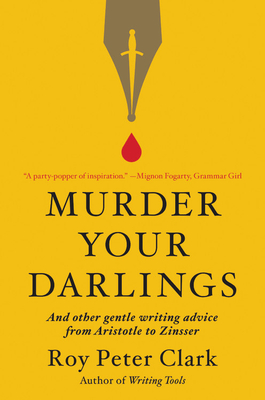
Murder Your Darlings: And Other Gentle Writing Advice from Aristotle to Zinsser by Roy Peter Clark

Murder Your Darlings: And Other Gentle Writing Advice from Aristotle to Zinsser by Roy Peter Clark

Murder Your Darlings is not just another book about writing. It shares the wisdom and creative insights of fifty or so authors, some famous, some not, and some who wrote their own books about the craft.

In his own unique manner, Roy Peter Clark distills the main lessons from each writer and presents them in curated chapters. The chapters are organized into six parts: language and craft, voice and style, confidence and identity, storytelling and character, rhetoric and audience, mission and purpose.

Photo by Andrea Piacquadio on Pexels.com

Aspiring or struggling writers can go directly to the issue she may be facing at the moment or read the whole thing to find tips and techniques that fit her emerging efforts best.

Though this may be most useful to writers who have a particular problem in mind, I believe any writer who wants to elevate their work could find something illuminating in these pages.

At the very least, Clark saves writers days of research time into locating appropriate writing resources. If you like the brief outline he gives of a writing guide, you could go invest the time to read the whole thing.

Photo by Ricardo Esquivel on Pexels.com

Highly recommended for everyone who strings words together or dreams about doing so.

Thank you to NetGalley and the publisher for a free digital copy of this book.

Tonight We Bombed the U.S. Capitol: The Explosive Story of M19, America’s First Female Terrorist Group by William Rosenau

Tonight We Bombed the U.S. Capitol: The Explosive Story of M19, America’s First Female Terrorist Group by William Rosenau

It is simple to pretend that people who perform shocking acts of violence are different than everyone else. It’s got to be something in their childhoods, we think, or maybe it’s a mental illness.

The most disturbing part of this book, and it admittedly has many, was that these women seemed so normal, just like you or me.

Photo by Andrea Piacquadio on Pexels.com

William Rosenau has combed through court files, newspaper articles and more to write Tonight We Bombed the U.S. Capitol, a non-fiction account of a radical leftist terrorist group. They planted multiple homemade bombs, robbed and killed people, all in the name of freeing the world from imperialism.

The majority of the group were highly educated, white women.

“They’d spent their entire adult lives embroiled in political struggles: protesting against the Vietnam War, fighting for black, Puerto Rican, and Native American liberation, and fighting against what they called U.S. ‘imperialism’ – that is, U.S. military aggression, political domination, and economic exploitation, particularly in the Third World.”

Photo by cottonbro on Pexels.com

Rosenau paints a careful picture to reveal how, step-by-step, the people involved in the group felt more and more marginalized and victimized to the point where they felt any and all actions were justified.

“Their vision of what this heaven on earth would look like was hazy, but one thing was certain: creating it would require nothing less than violent revolution. This vagueness about ultimate objectives is typical among terrorists.”

Photo by Pixabay on Pexels.com

There is so much information about a number of different people in this book that it can be overwhelming. But I think, ultimately, it is better to know what has gone on in the past because it affects the future in such a profound way.

“I discovered that during the 1970s and 1980s, the United States had waged an earlier ‘war on terror’ against violent domestic extremists, and it was during that period that the government created many of the counter-terrorism tools and approaches that continue to be used today.”

Photo by Rahul on Pexels.com

The privilege of living in a free society is that all manner of ideas can be discussed and embraced or dismissed depending upon their merits. I want equality, freedom from tyranny and opportunities for all people – no matter what you’re from, what you look like, or what your background is.

However, I won’t use violence to try and bring those ideals about. That seems to be the line in the sand for many. The people in this book didn’t have that line but they seemed to espouse higher ideals.

And what a tragedy that is. If only their brilliant minds had been directed towards methods of bringing about change that worked within society rather than against a nameless enemy, our country might have been better for all of them.

Thank you to NetGalley and the publisher for a free advance reader copy of this book. The brief quotations cited in this review may change or be omitted entirely from the final print version.