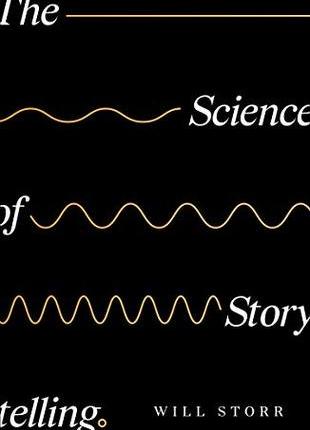
The Science of Storytelling by Will Storr

The Science of Storytelling by Will Storr

In The Science of Storytelling, Will Storr reminds readers our brains are hard-wired for stories and how best to utilize this in our own writing endeavors.

Through the use of various writing tools based on scientific research, Storr demonstrates how to appeal to an audience, keep them hooked and connected to the characters.

Photo by Suzy Hazelwood on Pexels.com

For example, Storr writes the use of change in storytelling grabs readers’ attention because human beings are always on the look out for it. Change can be good or bad- it’s life itself. Our brains look for change as a survival mechanism and this trait can be used to entice readers so they come back for more story.

“This is what storytellers do. They create moments of unexpected change that seize the attention of their protagonists and, by extension, their readers and viewers.” pg 13, ebook

Photo by Cameron Casey on Pexels.com

Change is also something that people try to control (they can’t but they try). This universal pattern is called, ‘the theory of control’. When readers see traits they share with characters in stories, they become invested in the outcome which keeps them reading. Or when readers see traits they don’t believe they have, but do, they’re hooked.

There’s a lot of hooking going on, which is a good thing when you’re writing a story. 🙂

“A character in fiction, like a character in life, inhabits their own unique hallucinated world in which everything they see and touch comes with its own unique personal meaning.” pg 41, ebook

Photo by Emre Can Acer on Pexels.com

Storr suggests creating complex characters and writes that the story almost creates itself with a properly drawn character. A complex character has flaws, a personality, misunderstandings with others in the story.

Also, going back to the ‘change’ theme, complex characters are generally passing through a ‘change of status’ of some kind. This ignites curiosity in the reader. It makes readers ask themselves, ‘What’s going to happen next?!’

“The place of maximum curiosity- the zone in which storytellers play- is when people think they have some idea but aren’t quite sure.” pg 18, ebook

Highly recommended for writers or anyone interested in how the brain works. If you’re looking for more writing advice, I recommend Murder Your Darlings: And Other Gentle Writing Advice from Aristotle to Zinsser or Nobody Wants to Read Your Sh*t: Why That Is And What You Can Do About It.

Thanks for reading!

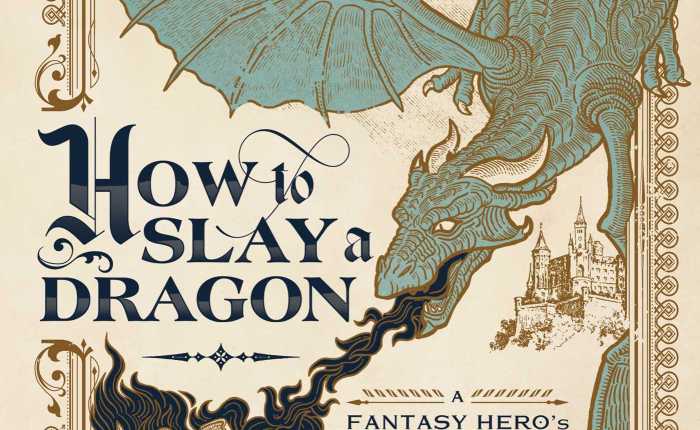
How to Slay a Dragon: A Fantasy Hero’s Guide to the Real Middle Ages by Cait Stevenson

How to Slay a Dragon: A Fantasy Hero’s Guide to the Real Middle Ages by Cait Stevenson

How to Slay a Dragon is a humorous look at medieval history with a running, stand up-esque commentary by a nameless narrator.

“…this is still a book to guide heroes who are setting off to slay a dragon, steal the throne, and defeat a few hordes of supernaturally evil creatures along the way.” pg xv, capitulum infodumpium. (Not real Latin, but amusing all the same.)

Photo by Tia Rawat on Pexels.com

Cait Stevenson divides the history into broad categories like: preparing for your quest, hazards along the way and winning the war. Then there are subcategories like: how to not marry the prince, how to win the bar fight, and how to outwit a genie.

My favorite was “How to Put Up with the Bard” because I tend to play that class of character in role-playing games. 🙂

“When William Porland recorded the names of fifty taverns in the fifteenth century, six of them were called the Swan. … There was no reason to distinguish an inn by a written-out name when literacy rates maxed out in the 30 to 40 percent range, which meant a 60 to 70 percent chance that the clientele couldn’t read… pg 27 How to Find the Inn

Photo by Pixabay on Pexels.com

Cait uses actual events and historical figures to make the past come alive. I found the whole book very entertaining and I learned so much- a hallmark of a successful history book.

She even includes fantastical beliefs and superstitions like: “The most important thing to know is that medieval dragons usually kill with venom, not fire. They breathe thick clouds of deadly smoke in all directions at once.” pg 93

In the modern era, I think we dismiss historical figures as unapproachably different from us because technology wasn’t as developed as it is now. This book makes readers realize that there is very little difference between a historical figure and a modern one. People are people- with their flaws and strengths.

Photo by Dariusz Staniszewski on Pexels.com

Now, they just happen to walk around with iPhones.

“Snowball fights in fifteenth-century Germany were apparently so common that priests classified them as a sin. Or perhaps the real problem was that priests were getting smacked in the face with snowballs.” pg 117

Highly recommended for readers who love history and humor in one convenient package. This book might fit the bill for reluctant readers as well.

Thanks for reading!

The Highly Sensitive Person in Love: Understanding and Managing Relationships When the World Overwhelms You by Elaine N. Aron

The Highly Sensitive Person in Love: Understanding and Managing Relationships When the World Overwhelms You by Elaine N. Aron

Author Elaine Aron defines “highly sensitive persons” (HSPs) and gives a plethora of coping mechanisms as well as case studies to support the definition. She also includes tests so you can discover where you are in the HSP world.

“The trait was always there, of course, just called by other names. But its essential elements were not known, so it was described by external behaviors only, such as ‘shy’ or ‘introverted.'” pg 54, ebook

Photo by Michelle Leman on Pexels.com

This was only the second book I’ve read about HSPs. Prior to this, I have heard HSPs being described as having sensory processing disorders, which exist on a spectrum like most everything else in the psychology universe, or simple shyness.

“My term for it is sensory processing sensitivity, but the same trait is also called environmental sensitivity or reactivity; biological sensitivity to context; differential susceptibility or vantage sensitivity; or identified by the names of certain genetic variations or as in animals, sometimes termed behavioral plasticity or flexibility.” pg 82, ebook

Despite my lack of background in the topic, there was very little new information in this book. A big take-away was to improve your communication style and keep in touch with the people in your life who love you. So many problems can be cleared up with clear, concise communication.

Photo by Gustavo Fring on Pexels.com

Also, attempt to address any troubles you may have from a dysfunctional childhood or relationships prior to embarking on a new relationship. Healer, heal thyself.

Another coping mechanism I use regularly, but didn’t realize I did, is handling over arousal. Whenever I find myself being overwhelmed by life, I find a backroom and take a minute or two to myself. Sometimes I just breathe. If I’m not at work, I pick up a book or get a hot drink.

“Anger is a highly stimulating emotion. HSPs are strongly affected by it, even when we just witness it. pg 77, ebook

Photo by freestocks.org on Pexels.com

Aron encourages readers to find their “optimal level of arousal” since it varies from person to person. Know yourself and your limits, and tell your loved ones. Also, give yourself permission to turn off your sensitivity. It may seem silly- but that never occurred to me.

“All HSPs, men or women, are more aware of what other people are feeling, what they want and need. Thanks to your spontaneous deep processing, you also can sense what will happen if others don’t receive what they need- they may suffer, fail at what they want to do, become angry with you, feel disappointed with you. And being more sensitive, when they feel bad, you will be bothered too… pg 56, ebook

I tried to treat everyone the same and it led to some serious problems in my personal as well as professional life.

Photo by Kat Smith on Pexels.com

One of the most helpful parts of this book was Aron’s invitation to reframe my past in light of my new self knowledge. Prior to learning about HSPs, I was barely functioning in a world that didn’t necessary make room for me. Now I know I’m not alone in this- and have more tools in my metaphorical belt to help me get through the day.

I’m not entirely convinced by the final section of The Highly Sensitive Person in Love that discusses HSPs being more spiritual or falling harder in love than non-HSPs. It’s a romantic sentiment perhaps, but I was unconvinced by the evidence. I think we’re all in this love game together.

Recommended for readers who are or have a loved one who is a highly sensitive person. I’m curious to know what others in the community think about this book. If you do have a chance to pick it up, please write a review and let me know. 🙂

Eckhart Tolle’s “The Everyday and the Transcendent”: a Podcast Review

Eckhart Tolle’s “The Everyday and the Transcendent”: a Podcast Review

While I was on my daily walk, I listened to “The Everyday and the Transcendent” a podcast on Spotify in Eckhart Tolle’s “Essential Teachings” series.

Was it worth the listen? I say yes.

I enjoy learning from Eckhart occasionally but not all the time. He has a soothing voice and his stream-of-consciousness delivery style is hypnotizing.

However, after a couple hours of his teachings, they all begin to sound exactly the same. And that’s because his core message never changes- which isn’t a bad thing.

Photo by Sebastian Voortman on Pexels.com

Beware self help or spiritual gurus who hold up a carrot of further secrets. As my hairstylist said after visiting an aura cleanser for the first time, “You can overdo stuff like that.” By which she meant, pouring piles of money into someone’s hands to “fix” something you can’t even perceive.

The cool thing about Eckhart’s teachings is you can begin practicing and perceiving what he’s talking about right this second, no matter your situation or state-of-mind.

For example, in this podcast, a practical tool he offers for spiritual insight is to simply observe what he calls your “inner body”. His focus, which he says he’s used over the years to great success, is to monitor what the energy of his hands are doing.

Photo by Meryl Merlin on Pexels.com

How do you do that? Simple- feel your hands. Act like you’re going to pick up a pencil, but don’t move. There! You can feel that can’t you.

Do this multiple times a day or just once in awhile and you’ll begin taking your focus away from what Eckhart calls “thought forms” and enter the state of “the now”.

This particular podcast deals with “the everyday” which Eckhart describes as your job, your family, your home, all of the trappings of the physical life. He says most people never move beyond the everyday. We can get lost in the world around us, which he reminds us, are simply projections that we create through our perceptions.

Photo by Ricardo Esquivel on Pexels.com

He describes the everyday as a horizontal line- a visualization that I found very helpful.

When you are lost in anxiety or fear, you’re moving either forwards or backwards on this line and not staying in the present moment, which is where the second part of his visualization comes in.

Eckhart describes “the transcendent” as a vertical line that intersects the horizontal line of daily living. He says we travel upwards and downwards on this line through our thoughts as we go about our lives.

Photo by eberhard grossgasteiger on Pexels.com

The thing is: most of humanity isn’t aware that we’re doing this. We unconsciously move about our day, responding in a kneejerk way to things we perceive as “happening to” us. And, Eckhart says, they actually are “happening to” us because we aren’t aware we are doing it.

If only we could realize our own internal processes, then, he says, we would realize that nothing really “happens to” you. It is all movement along the metaphorical everyday and the transcendent lines of our lives.

Photo by Anna Roguszczak on Pexels.com

We break the power that thoughts have over us and enter into the timeless state of the Now. The holy grail, so to speak, of spiritual experiences.

Highly recommended for spiritual seekers who are looking for practical ways to practice being present. Thanks for reading!

If you’re interested in Eckhart Tolle’s further teachings, here my book review of his “Stillness Speaks”:

And you can listen to the podcast yourself here:

The Art of True Healing: The Unlimited Power of Prayer and Visualization by Israel Regardie, Marc Allen (Editor)

The Art of True Healing: The Unlimited Power of Prayer and Visualization by Israel Regardie, Marc Allen (Editor)

Israel Regardie is a little-known thought leader of western occultism. In this book, “The Art of Healing,” Dr. Regardie explains a few meditation techniques in a way that anyone from beginners to advanced practitioners can understand.

I remember reading somewhere (not this book) about Dr. Regardie’s internship with Aleister Crowley and how he realized Crowley wasn’t teaching him anything beyond the superficial when it came to occult matters.

Photo by Luis del Ru00edo on Pexels.com

He ended up breaking away and being one of the leaders of a new approach to occultism-
which brings me back to this book.

The meditation techniques will feel quite familiar to anyone who has practiced chakra meditations or color visualizations on the body.

“By these means, the healing force is distributed to every part of the body. No single atom or cell in any organ or limb is omitted from the influence of its healing, regenerative power.”

Photo by PhotoMIX Company on Pexels.com

The curious part of this book is that Dr. Regardie uses five centers of energy down the center of the body instead of the more standard seven of eastern occultism.

Of course, as Dr. Regardie states, these exercises are in no way a substitution for competent medical care or therapy when necessary – but they are a wonderful addition to it, for they are able to aid the healing process in a great many mysterious, profound, and positive ways. intro

I’m not entirely sure why he does this though I am familiar with the Middle Pillar exercise (which is what the technique is called). Perhaps he’s basing the whole practice off of a teaching Crowley created for his occult studies.

Dr. Israel Regardie and the Middle Pillar exercise.

Whatever the reason, I think it is a noteworthy and definite change from other meditations I’ve practiced.

Highly recommended for readers looking for new meditation techniques and who are interested in western occultism. Another book you may want to pick up if you are into these topics is High Magick: A Guide to the Spiritual Practices That Saved My Life on Death Row.

Damien Echols‘s style of writing reminds me of Dr. Regardie in both its refreshing simplicity and honest assessment of the Great Work.

Thanks for reading!

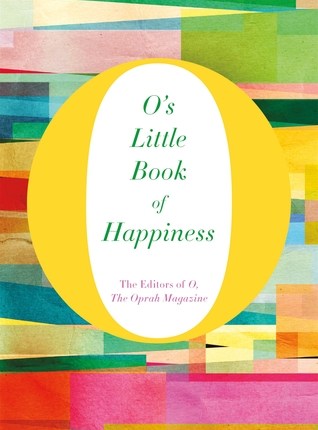
O’s Little Book of Happiness by O, The Oprah Magazine (Editor), Thelma Adams (Contributor)

O’s Little Book of Happiness by O, The Oprah Magazine (Editor), Thelma Adams (Contributor)

This collection of essays from the pages of O are wonderful. Through memories and insights, the writers of each chapter have something uplifting and inspiring to share.

My favorite was the chapter entitled “My Unplanned Adventure” by Catherine Price, pgs 88-99. It’s about an uptight traveler who planned every aspect of her trips around the world until she came to the conclusion that she was overthinking it.

Photo by Andrew Neel on Pexels.com

Once she figured this out, she walked up to a person, asked them where they would travel if they could go anywhere, and went there. I won’t ruin the essay by relating all of it here, but it resonated with me. I also have to remind myself that going with the flow is always more desirable than white-knuckling intricate plans and time tables.

I have to confess: I am not a reader of magazines. I find them to be filled to the brim with advertisements for things I neither want nor need and, after I’ve dug through the pages of stuff for sale, I find the writing to be insipid. “Six new sex positions!” “Keep your romance alive!” blah, blah, blah…

Photo by KoolShooters on Pexels.com

That being said, O’s Little Book of Happiness was totally different from my expectations of what a magazine is and introduced to me the idea of what a magazine could be. (And there were no advertisements!)

A couple of the essays felt too short- one page or one paragraph in some instances- but for the most part I enjoyed their length and the order they are arranged in.

There’s something very powerful in reading back-to-back essays about happiness and accounts of people finding their path in life. I read this through in almost one sitting but it could also be savored slowly like a-chapter-a-day devotional guide.

Photo by Andre Furtado on Pexels.com

I enjoyed this very much. And I hope you will too.

If you like O’s Little Book of Happiness, I would also recommend Happiness: A Guide to Developing Life’s Most Important Skill by Matthieu Ricard and Living Oprah: My One-Year Experiment to Live as TV’s Most Influential Guru Advises by Robyn Okrant.

I received a free copy of this book through Goodreads First Reads. FTC guidelines: check! And thank you for reading.

Work Rules!: Insights from Inside Google That Will Transform How You Live and Lead by Laszlo Bock

Work Rules!: Insights from Inside Google That Will Transform How You Live and Lead by Laszlo Bock

Work Rules!: Insights from Inside Google That Will Transform How You Live and Lead by Laszlo Bock is a behind the scenes glimpse into the “People Operations” of Google, the mammoth internet company.

Laszlo explains Google  wasn’t always a global leader. It started out like every other company- with a couple of dedicated people and a big dream.

Photo by Karolina Grabowska on Pexels.com

After some background, Laszlo gives step-by-step ways to improve your own business, whatever that may be, from the inside-out while remaining true to the mission that led to the creation of your company in the first place.

It’s clear from this book that Google is an engineer-dominated workplace. Every decision from hiring to employee perks is tested and the numbers are crunched to justify the expense, time spent, etc.

Photo by Anna Nekrashevich on Pexels.com

To be honest, psychology tests, graphs, and in-depth analysis isn’t really my thing. I enjoy a more artsy approach to the world and so the nitty-gritty of Laszlo’s work wasn’t that interesting to me.

In <i>Work Rules</i>, I was hoping for more insider stories than engineering problems, but that’s not how the book was written.

That’s not to say that there isn’t value to be had in this read. My take-away chapters were “It’s Not All Rainbows and Unicorns” and “What You Can Do Starting Tomorrow.”

Photo by Steve Johnson on Pexels.com

In ‘It’s Not All Rainbows and Unicorns,’ Laszlo gives the reader moments in Google’s history when their policies didn’t really work and how they got through the crisis. It was heavy on dramatic stories and I enjoyed it quite a lot.

In ‘What You Can Do Starting Tomorrow,’ Laszlo boils down his previous chapters into ten steps for businesses to take right now. If you don’t have time to dig through the entire book, ‘What You Can Do Starting Tomorrow’ gives you a pretty thorough overview.

If you enjoyed <i>Work Rules!</i>, you may enjoy The Happiness Advantage by Shawn Achor. Shawn explains, in an engaging manner, many of the principles that Google has adopted to improve their employees’ quality of life.

I received a free advanced reader’s copy of this book through Goodreads First Reads. FTC guidelines: check! And thank you for reading.

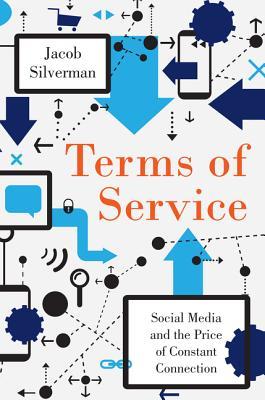
Terms of Service: Social Media and the Price of Constant Connection by Jacob Silverman

Terms of Service: Social Media and the Price of Constant Connection by Jacob Silverman

Author Jacob Silverman digs deeply into various social media platforms and uncovers not only privacy violations but also underlying attitudes adopted by the platform owners that point towards a future that is completely controlled by digital government watchdogs and technological elites.

Terms of Service is a terrifying book to me in many ways.

Photo by ThisIsEngineering on Pexels.com

I knew some of the pitfalls of the big networks like Facebook, but I didn’t know all of them. This book changed the way that I view the portable devices that everyone carries around with them. Instead of helpful tools, I now see that they can be a chilling and impersonal form of control and surveillance, if we let them.

Terms of Service isn’t all doom and gloom though. Silverman gives the reader innovative ways to buck the bland, over-sharing majority and examples of creative hackers and programmers who are doing just that.

Photo by Designecologist on Pexels.com

He also suggests some sweeping societal changes within the government like a twenty-first century Bill of Rights to address the troubles and privacy challenges of technology and a universal minimum wage to unlock the chains of digital serfdom.

It’s an exciting possible vision for the future. I wonder if we will ever manage to do any of that.

This is the part of the review where I try to list read-alikes or books with a similar theme, but I think that Terms of Service is in a class all of its own. I think parents, educators, politicians, and anyone who uses the internet should read and discuss this book.

Photo by Vanessa Garcia on Pexels.com

It is only through knowing the dangers of constant connection that we can begin to address them. Terms of Service provides an eye-opening and disturbing view of how far we have let the situation go.

But, never fear, with proper education- like reading this book- anything is possible.

I received a free advanced reader’s copy of this book through Goodreads First Reads. FTC guidelines: check! And thanks for reading.

The Master Guide to Impactful Thank You Notes by Jay D. Burgmann

The Master Guide to Impactful Thank You Notes by Jay D. Burgmann

“An effective follow-up with a prospect, client, boss, work associate, friend, or even relative accomplishes two things; first, it gives you the occasion to recap your event, and second, provides the opportunity to celebrate actions or accomplishments from it.”

Photo by cottonbro on Pexels.com

Thank You notes are a big deal for me during the month of December. At the beginning of the month, I have my birthday and at the end there’s Christmas- the mother of all holidays that require thank you notes.

For full transparency, I received a free copy of this book from the author Jay D. Burgmann after his brother conducted a lovely and gratis ‘understanding Medicare’ event at my local library. Afterwards, Jay suggested I schedule an event based off his book and I just may.

The book itself is clearly self published. The author didn’t chose a font that appeals, at least to me. Occasionally, when he wants the reader to know the text is important, he goes into the faux pas of all caps.

I don’t know about you, but I personally don’t like being shouted at- even in literature form.

Photo by Andrea Piacquadio on Pexels.com

Like this: “KEY POINT- IT DOESN’T HAVE TO BE PERFECT. SAYING THANKS IS MOST IMPORTANT. A WELL WORDED MESSAGES MAKES IT EVEN MORE POWERFUL. BEAUTIFYING IT WITH GOOD STATIONARY IS A NICE TOUCH”

Beyond the superficial, this self-described “workbook journal” is very helpful, especially for younger readers who have either never been educated about the importance of saying thank you, or don’t care.

Burgmann highlights the note as an important networking tool. He recalls a visit to the office of someone he wrote a thank you note to and says the client framed his handwritten note and had it on the wall of her office.

It was that impactful. And it’s easy to understand why.

Photo by u0158aj Vaishnaw on Pexels.com

Beyond the emotional appeal which Jay focuses on, expressing gratitude is one of the great strategies in the New Age law of attraction. What you think and speak about, so the teachers say, you bring about- perhaps in ways and means you never could imagine.

Burgmann, with this short book, joins the ranks of these educators and gurus. Saying thank you is important. Knowing how to write it is important.

Highly recommended for everyone. Don’t be put off by the format, focus on his message.

Lauren Berger the ‘Intern Queen’ shares how to write an excellent Thank You note. You can find internships and read her blog at http://Internqueen.com

And thanks for reading!