Life’s Too Short to Fold Fitted Sheets by Lisa Quinn

Life’s Too Short to Fold Fitted Sheets by Lisa Quinn

“Hello, my name is Lisa Quinn, and I am a recovering Martha Stewart junkie.” pg 7, ebook

Do you have a job, children, spouse, house, or none of those things and just want everything to look perfect all the time? Want to be the consummate host or hostess without working and stressing throughout the event? Are you wondering how they get it to look so perfect in the magazines?

Lisa Quinn, the author of this book, confesses to wanting it all. But she came to the realization that it is an impossible goal and she was losing her mind in the chase. This humorous self-help book is about embracing reality and understanding that it’s ok, really, to not be perfect.

Photo by cottonbro on Pexels.com

“It’s my assertion that the real key to happiness is getting rid of your inner control freak, redefining what’s real and important in your life, and then lowering your standards for everything else.”

I think that’s solid advice. I, like many, used to demand more of myself than I could give in my housework, from my family, from everybody really. It made me a little bit crazy for a time. But then, I realized, it wasn’t worth it. The effort, the cost — both in time and emotions — and everything else, led to these moments that were forgettable once they were done.

I realized I would much rather dwell in the imperfect moment than forever be chasing the unattainable gem of a perfect moment. Because it never really comes, does it.

This book embraces the idea that no one is perfect. And it’s a lot kinder to realize that your life doesn’t have to look perfect to be incredibly enjoyable.

Photo by medium photoclub on Pexels.com

Quinn gives easy-to-follow tips on how to decorate, host parties, clean, cook and more. My favorite tip being to spray a good smelling cleaner near the door of your home before an event. You may not have hit every surface in the house but it will smell like you have. Genius really.

“House Keeping Myths Debunked… Myth #1: You must fold your fitted sheets. The real definition of insanity is folding a fitted sheet the same way over and over again and expecting it to result in anything other than a migraine and a huge turban. Quit stressing about it. Just wad it up the best you can, and shove it in the closet.pg 39, ebook

She keeps it real with the mega-popular topic of decluttering, pointing out that the easiest way to control the mess is to think about everything you bring into your home.

“Resist the temptation to buy little knickknacks, pillows, throws, and paintings just because you like them. That is not reason enough. Each item you bring into your home should be special. It should have a purpose and a specific place in your home.” pg 64, ebook

Photo by Rachel Claire on Pexels.com

I also enjoyed her variations of recipes that can be done with a deli-cooked chicken. Talk about easy…

“Listen, if I’m able to convince just one other mom out there to take herself a little less seriously a little more often, then I’ve succeeded at what I set out to do.” pg 108, ebook

This book isn’t just for moms. It’s for everyone who needs to cut themselves some slack and just shove those dumb sheets in the closet. I won’t tell.

Thanks for reading!

Stepping Up: How Taking Responsibility Changes Everything by John Izzo

Stepping Up: How Taking Responsibility Changes Everything by John Izzo

“You know people who accept responsibility — aren’t they great to be around?” vii, from the forward.

The focus of this book is a worthy one. The author, John Izzo, provides many real life examples of people stepping up and doing the right thing and how it has helped their lives and businesses.

Photo by Matthias Zomer on Pexels.com

Unfortunately, it just reads like one cliché after another and I had a difficult time connecting with it.

Stepping up is seeing a need and deciding YOU are the right person to do something about it.” pg x.

I do agree that all of our power lies in ourselves. Blame doesn’t fix problems. Waiting for someone else to do it doesn’t do the trick either.

“The consequence of having a seismic shift towards victim thinking means more of us feel that the future is not in our hands but in the hands of forces outside ourselves. And since internal locus of control is positively correlated with happiness, success and initiative while external locus of control is related to anxiety and depression, it’s pretty clear that most organizations and society as a whole would be better off if more of us believed we could change things.” pg 21

Photo by Aleksandar Pasaric on Pexels.com

What it comes down to is understanding that at the end of the day, the only person you can entirely control is yourself.

“Beginning where you are and doing what you can with your unique set of skills is critical.” pg 80

What are some of the methods Izzo suggests for “stepping up”? He counsels focusing on what matters, challenging your internal assumptions and find one thing, anything, that you can do immediately to address how you may have contributed to the problem.

“Think about this for a moment: everything that has EVER been accomplished began with someone taking a single step.” pg 71

It’s common sense stuff. Which is fine, but not exactly what I was expecting from this one. I suppose I’ll take responsibility for my internal assumptions about what I would learn from Stepping Up. It’s not YOU, book, it’s me.

“But here is the truth. There is a 100 percent guarantee that nothing will change if you don’t step up.” pg 33

Photo by Andrea Piacquadio on Pexels.com

What is my solution to this problem? On to the next book, my friends.

“Once you step up, somehow that act of taking initiative drives you to find the resources you need inside and outside yourself.” pg 119

To the library! 🙂

Thanks for reading!

Cadillac, Knight Errant of the Wilderness by Agnes C. Laut

Cadillac, Knight Errant of the Wilderness by Agnes C. Laut

A highly detailed, but dated, biography of Antoine de la Mothe Cadillac, the founder of Detroit.

“Antoine had so many Spanish characteristics, the laughing irony, the quenchless ardor, the chivalry; he was so much the fierce fighter, the devout Catholic yet independent of priestly control, that we suspect he must have had Spanish blood of the Pyrenees from his mother’s side of the house.” pg 45

Photo by Chris Smith on Pexels.com

You would not believe how difficult it was to find information about this man. So many sources I examined contradicted each other or cast him as a villain or hero to the point where the actual history was obscured behind opinion.

Agnes Laut falls more into the hero-worship category, but I found her citations of historical documents to be more of use than most of the online articles I could find, which didn’t cite any.

That being said, like every other human in history, Cadillac was a complicated figure and I don’t think Laut does readers any favors by painting him as an unassailable hero. He would engage in illegal trade because everyone else was doing it. He believed Europeans were superior to the Native American population.

He was a man of his times and yet, he was the visionary and founder of Detroit and, for a time, the governor of the Louisiana Territory. He did great things and not-so-great things.

“The stockades of the new fort at Detroit enclosed sixty square yards. The post lay about forty steps back from the water-front. Such was the germ of a city that in little more than two centuries was to number with its suburbs nearly a million and a half in population. pg 140

Photo by Anon on Pexels.com

Goodness of the man aside, I had much to learn about Cadillac.

“Cadillac would never tolerate a man in his company not dressed spick and span as a naval man in spotless white. He, himself, set the example in costume faultless from hat to high boots.” pg 63

The history of Cadillac also shows a curious side of the court of Louis XIV of France, otherwise known as the Sun King. The politics of the court caused Cadillac to be imprisoned for a time, but the king kept releasing him and giving him more authority. He was thrown in the Bastille for six months and then given the Order of St. Louis.

“(Louis XIV) would grant favors only with the condescending generosity and pomp of a Grand Monarch; so the Court was duly assembled to witness the presentation of the commission at a morning audience. Cadillac had to kiss His Majesty’s hand and back away as from the presence of a god.” pg 121

Photo by Pixabay on Pexels.com

As an outsider looking in, it’s confusing how quickly a man’s stars can change. But at the same time, the shifting sands of court favor and intrigue emerge in the ups and downs of Cadillac’s life as well. All in all, it makes for a fascinating history.

“Let his (Cadillac’s) name stand and take its place as time goes on.” pg 286

Recommended for history readers with some reservations. Keep in mind this was published in 1931.

Thanks for reading!

Here’s the History Guy episode I wrote about Antoine de la Mothe Cadillac:

Lady at the O.K. Corral: The True Story of Josephine Marcus Earp by Ann Kirschner

Lady at the O.K. Corral: The True Story of Josephine Marcus Earp by Ann Kirschner

Josephine Marcus Earp made it difficult for biographers to accurately portray her life. Later, she would tell her history how she wished it had been or cover up the parts she didn’t want people to remember. It makes it hard for historians to paint an accurate picture of who this complicated woman actually was.

But I think Ann Kirschner, in this biography, does as good of a job as anyone could be expected to considering how convoluted the history is surrounding Josephine.

“The gunfight at the O.K. Corral was a love story, fought over Josephine Marcus, a woman of beauty and spunk barely out of her teens, escaping the restrictions of birth and seeking adventure, independence, and romance.” pg 3

Photo by Laura Stanley on Pexels.com

It’s a shame really. We know so much about Wyatt Earp and his friends. But the women around them have been almost swept into obscurity.

“A sizable group of authenticated photographs testified to Wyatt Earp’s undeniable good looks at any age, while there was not a single undisputed photograph of young Josephine, only ones in which she looked more like Sophie Tucker than Penelope Cruz.” pg 5

The fragments that are left reveal a woman who was brave and craved adventure. She seemed to have loved deeply and enjoyed gambling. Through extraordinary highs and lows, multiple states, and even the unbelievable gold rush of Nome, Alaska, Josephine lived life to the fullest.

“There was far too much excitement in the air for one to remain long a child,” Josephine recalled.” pg 22

Photo by NaMaKuKi on Pexels.com

Josephine’s Jewish family seemed rather conservative when compared to her wandering existence. She had siblings who married and raised families, like ordinary folk. One imagines that holiday gatherings were rather interesting.

“The most common occupation for a woman in Tombstone was prostitute or performer. Or both: many of the more attractive prostitutes also performed at the theaters and dance halls in town.” pg 47

The end of Josephine’s life was devastating compared to the decades of adventure that proceeded it. Penniless and perhaps suffering from dementia, one of the writers she worked with trying to create a definitive history of her life wouldn’t answer the door when she came calling. Instead, he’d record the abuse she wrote on notes that she slid under the door.

Her aggressiveness frightened him, and he began to keep track of her visits with handwritten notations on the back of calendar pages, with quotes from her: “I’ll get back at you — good and hard.” … Once she stuck her arm through the screen door to reach the doorknob.” pgs 217-218

Photo by Pixabay on Pexels.com

How could that happen? A woman who had once captivated two of the most legendary men in the West reduced to delivering threats when an acquaintance wouldn’t let her in the door. Lady at the O.K. Corral helps the reader understand some of the complicated twists and turns in the life of Josephine Marcus Earp, but I’m not sure that historians will ever be able to completely untangle the mixed-up threads of this woman’s life.

“As Wyatt’s biographer Stuart Lake put it: ‘In back of all the fighting, the killing and even Wyatt’s duty as a peace officer, the impelling force of his destiny was the nature and acquisition and association in the case of Johnny Behan’s girl. That relationship is the key to the whole yarn of Tombstone.’ pg 49

I wish there were more historical records to remember this extraordinary woman. It’s just sad.

Also, it makes me consider the type of documentation and oral record I’m leaving behind. How history will remember me? Will I be someone with a legacy to remember or just another shadow clinging to the arm of a more successful man? Stay tuned.

Thanks for reading!

Here’s the History Guy episode I wrote about Josephine Sarah Marcus Earp:

Wiser: Getting Beyond Groupthink to Make Groups Smarter by Cass R. Sunstein

Wiser: Getting Beyond Groupthink to Make Groups Smarter by Cass R. Sunstein

Authors Cass Sunstein and Reid Hastie examine many of the problems that beset groups and how to best address them for optimal group performance.

Written in a style that is more academic than approachable, Wiser uses the findings of multiple researchers to come to its conclusions. This book may be useful to managers who are desiring to set up a group at their own place of employment and want to start on the best foot.

“Do groups usually correct individual mistakes? Our simple answer is that they do not. … We also ask a second question: Can groups correct individual mistakes? Our simple answer is that they can. We aim to explain how.” pg 2

Photo by Canva Studio on Pexels.com

I picked this book up because, frankly, I wanted to know why anybody would utilize groups in a work setting. Every one that I have ever sat on has been either a disaster or inefficient. I was hoping Wiser would help me see the appeal that group-thinking seems to have for some.

And it did. But it also opened up my eyes to the myriad reasons why my experiences had been so bad. I had just assumed groups didn’t work. As it turns out, things are more complicated than that.

“The basic lesson is that people pay a lot of attention to what other group members say and do — and that they do not end up converging on the truth. In fact, they often ignore their own beliefs and say that they believe what other people believe.” pg 28

There can also be problems with authority figures in a group setting: “If the group contains one or more people who are known to be authorities or who otherwise command a lot of respect, then other group members are likely to silence themselves out of deference to the perceived or real authority.” pg 35.

I’ve seen that happen multiple times. The whole purpose of the group is thrown off. It has often frustrated me, leading me to think we may as well have saved our meeting time and had the boss issue a directive.

Photo by Andrea Piacquadio on Pexels.com

Groups also have to keep in mind the idea of “cascades” or ideas taking a hold early in the process and then taking over the rest of the group’s time: “For their part, many groups end up with a feeling of inevitability, thinking that they were bound to converge on what ultimately became their shared view. Beware of that feeling too, because it is often an illusion. The group’s conclusion might well be an accident of who spoke first…” pg 60

Groups can polarize themselves, driving their members to extremes they wouldn’t otherwise reach without members that think like them. To combat this, leaders should make sure groups are diverse.

In a perfect world, groups are equivalent to their best members, aggregate all of the information each individual brings to the table, utilizes experts properly and creates an almost mystical “synergy” where, as the authors say, “the whole is more than the sum of its parts.”

Photo by fauxels on Pexels.com

The trick is getting the group to work like that. As I said, I’ve never seen it. This book brings me hope that perhaps one day I will.

The failures of groups often have disastrous consequences — not just for group members, but for all those who are affected by those failures. The good news is that decades of empirical work, alongside recent innovations, offer a toolbox of practical safeguards, correctives, and enhancements. With a few identifiable steps, groups can get a lot wiser.” pg 214

Thanks for reading!

The Queen’s Conjuror: The Science and Magic of Dr. John Dee by Benjamin Woolley

The Queen’s Conjuror: The Science and Magic of Dr. John Dee by Benjamin Woolley

The Queen’s Conjuror is a biography of Dr. John Dee, a fascinating and much-maligned Renaissance man who was, among other things, Queen Elizabeth I’s personal astrologer.

“And for these and such like marvellous acts and feats, naturally, mathematically, and mechanically wrought and contrived: ought any honest student and modest Christian philosopher be counted and called a conjuror?” pg 15

He had interests in astrology, science, mathematics and the occult, which, to modern eyes, may seem strange. But Dee viewed the inner workings of nature and the universe as a type of magic and his studies of it, through the use of science, was another way that Dee worshiped God.

Photo by Tima Miroshnichenko on Pexels.com

“Queen Elizabeth, a symbol of Protestant sovereignty, told the French Ambassador Andre Hurault: ‘There is only one Jesus Christ… the rest is dispute over trifles.’ This, it seems, was Dee’s view as well.” pg 45

Part of Dee’s study of nature was an attempt to find a “universal language.” This universal language, Dee believed, was told to the Biblical Adam by God in the fabled Garden of Eden before the fall from grace. Dee hypothesized if a scientist could find this universal language, giving the secret name of beasts, plants and everything in creation, that it would unlock the secrets of the universe itself.

“In other words, Dee thought that the ‘astronomical’ symbols appeared to be the relics of a long lost universal language that transcended national and, by implication, religious barriers.” pg 75

Photo by cottonbro on Pexels.com

In addition to his legacy of mysticism and the Enochian alphabet, Dee is credited as the first man to formulate the idea of a ‘British Empire’ and he suggested that England develop its navy as a key to upholding that empire.

“The navy would become the ‘master key’ of English military strength, England would challenge the Spanish — to spectacular effect in its defeat of the Armada in 1588 — North America would be colonized, a British Empire would emerge, and the expeditions that Dee had in the last few years been helping to plan would lay its foundations.” pg 123

Another reason I admire Dee — he amassed one of the largest libraries in Europe. Unfortunately, his home was looted during a long sojourn on the Continent.

Photo by Ekrulila on Pexels.com

“In short, Dee’s house had been ransacked not by an ignorant peasant mob, but by pupils and associates. Their motives remain unclear. They may have seized the books to settle outstanding debts, or to discover the secrets they contained, or to hide them from others.” pg 278

Although he died in poverty and obscurity, he affected society then and today, and represented an era where science, religion, and mysticism were intimately entwined.

Highly recommended for readers who enjoy history, mysticism, and a curious combination of the two.

Here’s the History Guy episode I wrote about Dr. John Dee:

The History Guy remembers Dr. John Dee

The Speed Reading Book by Tony Buzan

The Speed Reading Book by Tony Buzan

I did not speed read Tony Buzan’s The Speed Reading Book because I found it to be rather a slog. There is useful information in here about the physical capabilities of your eyes and brain, methods for training your eyes how to move, the benefits of improving your vocabulary, how to recognize patterns in the way paragraphs are structured, and the basics of logic.

However, it’s interspersed with information that I felt was better presented in Use Your Head.

“Quite apart from important improvements in the technique of learning how to read fast which are set forth in this book, what I wish to emphasize in my system is that understanding and remembering factual material is not nearly as important as knowing how to relate new material to what you already know. This is the all-important ‘integrative factor’, or if you will, learning how to learn.” pgs 12-13

Photo by fotografierende on Pexels.com

He re-hashes the proper way to make a mind-map and the importance of previewing all reading material, even mystery novels, which I felt was silly. I can’t speak for the whole world, but I read mysteries to be entertained, not create a template into which I fit important details as I go along.

“The purpose of the preview is to develop a structure into which the mind can more easily fit the smaller details of that structure. … Previewing should be applied whatever kind of material you are going to read, which it be letters, reports, novels or articles.” pg 115

Though he did backpedal on his “preview everything” stance somewhat in a chapter about reading poetry: “When reading literature and poetry, bring to bear all your knowledge and judgment, and if you feel that it is the kind of writing you wish to treasure forever, forget about speed reading through it and reserve it for those occasions when time is not so pressing.” pgs 167-168

Thank you, I will.

Photo by Mark Cruzat on Pexels.com

Perhaps part of my problem with this book is that it revealed to me just how slowly I read and assimilate non-fiction, because Buzan offers the reader information about the absolute limitlessness of human capability.

“Theoretically, the human visual system can photograph an entire page of print in one-twentieth of a second, and thus a standard length book in between six and twenty-five seconds, and the entire Encyclopaedia Britannica in less than an hour. Advanced skinning and scanning skills take you on the first step of that incredible and inevitable journey.” pg 70

Let’s say I have much room for improvement.

The book also showed its age somewhat during a chapter on the importance of organizing how you take in information from newspapers: “Newspapers are so much a part of our everyday life that we seldom stop to think that they are a very recent development.” pg 148

But are they still? I’m not so sure.

Photo by Masha Raymers on Pexels.com

The book ends on a high note and, of course, I plan to continue practicing and improving my skills: “Your continuing success in all fields of speed reading depends on your personal decision to continue the course you have begun, and on the capacity of your brain to read, assimilate, comprehend, recall, communicate and create, abilities which we know approach the infinite. Your success is therefore guaranteed.” pg 177

But if you’re only going to read one book by Tony Buzan, I recommend Use Your Head.

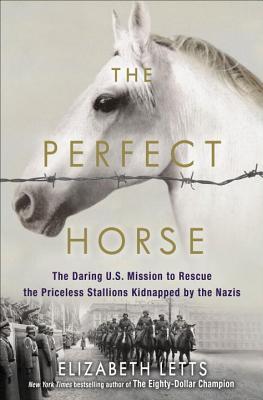
The Perfect Horse: the Daring U.S. Mission to Rescue the Priceless Stallions Kidnapped by the Nazis by Elizabeth Letts

The Perfect Horse: the Daring U.S. Mission to Rescue the Priceless Stallions Kidnapped by the Nazis by Elizabeth Letts

Author Elizabeth Letts‘ non-fiction book is about Operation Cowboy, the American protection of the Spanish Riding School and the plight of the Lipizzaner horses during World War II.

As priceless as any of the masterpieces that hung in Vienna’s museum, from their snow-white coats to their large aristocratic heads and deep brown eyes, the horses were unlike any others in the world.” prologue xvii

There was a precedent for saving irreplaceable works of art during the war, but Colonel Hank Reed‘s effort to save horses was something different. Reed, the most decorated American cavalry officer during WWII, recognized that there was something special about the horses at the Nazi stud farm at Hostau.

Photo by Helena Lopes on Pexels.com

Gustave Rau, the Nazi’s master of horse, was attempting to apply eugenics to his horse breeding program to create “the best warhorse”. He focused on gathering Lipizzaners from all over Europe.

Rau, in his next official report to Berlin, would declare, “There are no high-legged Lipizzaner, there are no flat-ribbed Lipizzaner, there are no bad-tempered Lipizzaner…” Clearly, he was impressed with what he had witnessed in Vienna. pg 87

But it wasn’t just about the breeding program, the Germans needed horses to feed the engines of war.

“The Germans were churning through horses at an astonishing rate — the army demanded six thousand fresh ones per month to replace those killed or lost to disease.” pg 37

I didn’t realize horses had such a large role in WWII. I assumed machines had taken over most of the vital functions horses used to perform like transportation and moving men into battle. I was wrong.

The Perfect Horse doesn’t cover the technical aspects of WWII or talk about the American defense of Hostau. It focuses on the horses though Letts does provide some context and information about the backgrounds of the men involved on both sides of the conflict.

Photo by Dids on Pexels.com

“Politics, prejudice, avarice, and intolerance had riven a brutal divide between the countries of these men; the grace of these horses had already started to knit them back together. The former enemies parted as friends.” pg 149

She follows the horses from their eventual relocation from the war front to the United States and what happened next.

The Perfect Horse is a difficult book to read in that it contains a lot of information and not as much “story,” but for readers interested in history, it may be a good fit.

Thanks for reading!

Here’s the History Guy episode I wrote about Operation Cowboy:

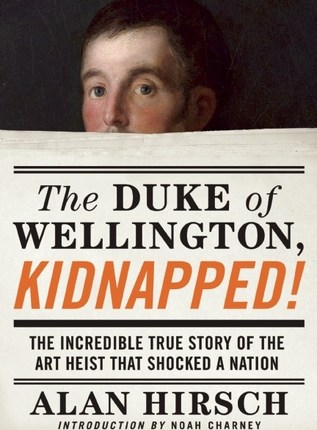
The Duke of Wellington, Kidnapped!: The Incredible True Story of the Art Heist That Shocked a Nation by Alan Hirsch

The Duke of Wellington, Kidnapped!: The Incredible True Story of the Art Heist That Shocked a Nation by Alan Hirsch

“The only successful theft from London’s National Gallery took place on August 21, 1961, when a brazen thief stole Goya’s Portrait of the Duke of Wellington.” Introduction

Alan Hirsch discusses an extraordinary art heist that took place in the 1960s, how it affected criminal law thereafter and even made an appearance in a James Bond movie. The thief sent authorities a series of ransom notes, demanding money for the return of the painting. This went on for years.

Photo by Pixabay on Pexels.com

“All the publicity led to a spike in visitors (from the usual August average of five thousand daily to more than seven thousand in the weeks following the theft), and reportedly even more people came to see the empty space where The Duke had hung than had come to see the painting itself.” pg 19

This potentially fascinating story becomes bogged down during the chapters discussing the trial and minutiae of the law. But, Hirsch is thorough, I’ll give him that.

“Where necessary, lawyers argued in the alternative: “My client did not take the painting, and if he did take it he intended to return it.”pg 125

I loved the information about the thief himself, which the world may not have seen before this book. Hirsch was given the man’s unpublished memoirs to add details to his side of the story.

“I understand you have information to give to police respecting the theft of the Goya portrait from the National Gallery in London.” “You don’t have to look any further, I am the man who took it,” the man calmly replied.” pg 107

Photo by Steve Johnson on Pexels.com

I also enjoyed the information about the ransom notes sent after the heist. That part of this book read almost like a movie. Who does that!

“In handwritten block letters, it began: “Query not that I have the Goya,” and it sought to prove the point by identifying marks and labels on the back of the canvas.” pg 52

Admittedly, I know very little about art history and had never heard of this event before reading The Duke of Wellington, Kidnapped!. But I think this would be a great read for anyone interested in history, especially art history. It may appeal even more if you’re interested in the development of criminal law in Great Britain.

Thanks for reading!

Here’s the History Guy episode I wrote about the theft of the Wellington portrait: