The Big Red Fez: How To Make Any Web Site Better by Seth Godin

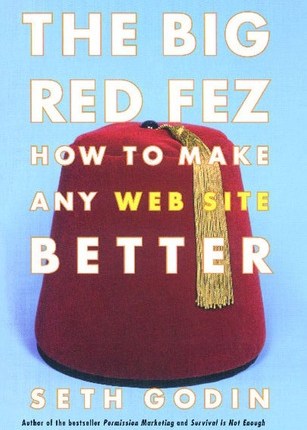
The Big Red Fez: How To Make Any Web Site Better by Seth Godin

The premise of Seth Godin’s non-fiction book about how to improve business websites is this: imagine consumers as a monkey in a big red fez looking for a banana, i.e., whatever it is you’re selling or promoting. You want whatever the “banana” is to be as big and bright as possible because if the consumer can’t find it, like right now, they’re going to go somewhere else.

“Some people might object to the characterization of web surfers as monkeys. After all, they say, we’re smarter than that. No, actually, we’re not. We’re not smart because we’re busy, or we’re distracted, or we’ve never been to a particular site before and and we’re not mind readers.” pg 8

Photo by Junior Teixeira on Pexels.com

Yes, the specific information about how to lay out your website is outdated. (The examples he uses for newsletters are too.) But, if you take his general business advice and apply it in broad strokes to your blog or social media accounts, it is still incredibly useful.

For example, I don’t answer all of the messages my business account receives on its Facebook page because we get too many. I had a generic robot response set up that said something like “thank you for your interest, we can’t get back to you right now”. Godin pointed out that most websites lose an opportunity to further connect with the consumer by not utilizing the “thank you” portion of the interaction. The consumer has already reached out to you through a sale, or in this case, a message. Why not direct them back to other items or services your business sells when replying?

As I said, he was applying this idea to the sales portion of a website, but I started thinking about other potential applications and realized that I was missing a golden opportunity to share further information about our business.

I now use the automated message response to thank the person for contacting us AND providing the links to our YouTube page and Patreon account. I may have never come to the realization — that the person reaching out to the business wants more than just a thank you note — if Godin hadn’t pointed it out. Thanks Seth!

He also had some interesting ideas about what kinds of things to post on your website/social media accounts. Sometimes, he asserts, you just need to strike up a conversation.

“The biggest win you can create when you interact with a customer is actually not closing a sale. The biggest win is getting someone to tell ten friends, who then come do business with you.” pg 75

Photo by Negative Space on Pexels.com

Good business is about how valued you make the consumers feel. Make the interactions about them and their needs.

Don’t read this book if you’re actually interested in website design. I’m afraid you’ll be sorely disappointed.

Do read this book if you’re interested in general business principles that you can apply to your digital interactions. I’ve generated a half dozen different ideas on how to improve my online business presence, all thanks to The Big Red Fez.

Thanks for reading!

The Alchemist’s Kitchen: Extraordinary Potions & Curious Notions by Guy Ogilvy

The Alchemist’s Kitchen: Extraordinary Potions & Curious Notions by Guy Ogilvy

The Alchemist’s Kitchen is an examination of alchemy — what it is, what symbols it uses and includes a cookbook of various recipes to use and practice the art on your own.

For as confusing a topic as alchemy is for me, Guy Ogilvy has put together the most succinct explanation of it I have ever read. I still don’t completely get it, but for the first time I was able to follow the general idea of it from beginning to end rather becoming completely lost and giving up in the middle.

Photo by Rodolfo Clix on Pexels.com

“The story of alchemy, at least in the West, is, in a nutshell, the story of gold and our relationship with it.” pg 2

Let’s not forget spiritual gold. The search for the Philosopher’s Stone seems to entail something of both the physical and the mystical, a curious mixture of both.

Ogilvy uses each section, which consists of one page, to completely explain a concept and then, on the opposite page, provides alchemical artwork to illustrate the concept. It is clear, concise, and it makes me crazy that I still don’t get most of it.

The most fascinating part to me was the author’s description of colors, planetary correspondences, and their purposeful arrangement in famous works of art like Raphael’s “The Crucifixion”. You can see it here: 
https://www.nationalgallery.org.uk/paintings/raphael-the-mond-crucifixion

Who knew Raphael was an alchemist? I didn’t.

Photo by Steve Johnson on Pexels.com

“There is a way of manipulating matter and energy so as to create what modern science calls a force-field. This force-field acts upon the observer and puts him in a privileged position in relation to the universe. From this privileged position, he has access to realities which are normally concealed from us by time and space, matter and energy. This is what we call the Great Work.” pg 38

Some of this book sounds like nonsense. But then I wonder why so many people have been obsessed with these practices for so long if there’s nothing to them? Oh right, probably because of the creating gold from dross part of it.

Photo by NaMaKuKi on Pexels.com

I’m still not one hundred percent convinced that alchemy isn’t anything other than a misunderstood metaphor for purely spiritual practices. But I’m still willing to dream and explore and entertain the idea that the magical might be concretely possible.

Recommended for readers who are dreamers, like me.

Thanks for reading!

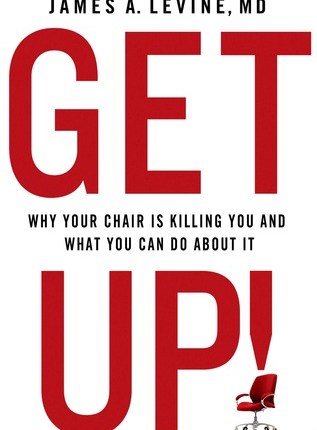
Get Up!: The Dire Health Consequences of Sitting and What We Can Do About It by James A. Levine

Get Up!: The Dire Health Consequences of Sitting and What We Can Do About It by James A. Levine

James Levine shares the disastrous consequences of a sedentary lifestyle and has created a clarion call for the modern world.

“When you first contemplate a book about the harm of sitting, you may view it as absurd. How can chairs possibly kill anyone? … However, this book summarizes 40 years of science — the work of scores of scientists and physicians from around the world. The scientific conclusion is clear: Humans are not designed to sit all day long, from a physiological, medical, creative or psychological perspective.” pg 4

Photo by Andrew Neel on Pexels.com

This book scared me. Levine provides study after study proving his hypothesis and the results are shocking.

“From birth through death there is a predictable, programmed timetable of movement. We transition from the frenetic nature of childhood, to the organized movement of adulthood, through the stillness of aging.” pg 13

But don’t worry. The body and mind are more flexible than people realize.

“Because the brain is constantly adapting, it takes about three weeks for brain change to occur. A chairaholic can become a walker in three weeks. But watch out! A walker who begins to sit can just as easily become a chairaholic.” pg 46

Photo by Daniel Reche on Pexels.com

There are concrete steps you can take to incorporate more movement into your life. The first step is to realize there’s a problem.

Next, look for ways to increase your “NEAT” energy. NEAT stands for “non exercise activity thermogenesis”. Basically, it means, make an effort to move more during your every day routine — cleaning the house, running after the kids, walking the dog, etc.

That seems to be a key for kicking the sitting problem to the curb. In Levine’s studies of urban life compared to agriculture living, that was the difference he noted between the two populations. People living the agriculture lifestyle move all the time. The urban lifestyle… not so much.

“The differences were so large that it staggered us — when you live in an urban setting, even if you are lean, you move half as much as people living in agricultural regions. The decline in calorie burn with urbanization could entirely explain the obesity epidemic worldwide.” pg 60

Photo by Maria Orlova on Pexels.com

Fear not, urban dwellers. There are solutions to upping your NEAT energy, even if you are required to be at a desk for the majority of the day. One of these, that I invested in the moment I finished reading this book, is the desk treadmill. Another option is the standing desk.

Both of these tools help you move while still getting your job done.

This book contains more helpful suggestions than simply buying new lifestyle equipment. For example, Levine also suggests a leisurely walk after every meal.

“If people sit after a meal, their blood sugar peaks like a mountain for about two hours. If, however, people take a 15-minute walk at 1 mph after a meal, the mountains become safe, gentle, rolling hills. With a 1-mph walk after a meal, blood sugar peaks are halved.” pg 68

Photo by Daria Shevtsova on Pexels.com

I think I can manage that.

The line that firmly established Levine’s hypothesis in my mind is: “If you see a saber-toothed tiger charging toward you, you don’t fire off an email, you get up and run!” pg 81

It’s that simple. Humans did not evolve to live the way that we’re living. I’m taking steps to change that now. Who’s with me?

Thanks for reading!

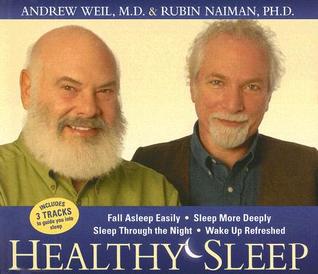
Healthy Sleep by Andrew Weil, Rubin R. Naiman

Healthy Sleep by Andrew Weil, Rubin R. Naiman

Doctors Andrew Weil and Rubin Naiman have created an audiobook to help cure the various troubles one may have while falling to sleep.

I liked their multimodality approach to a problem that everybody seems to have. They start with an exercise to help you figure out what type of sleep problem you may be facing. They discuss the differences between “rest” and “sleep”, which I had never considered. They also talk about how to structure your bedroom to give yourself the best opportunity for sleep.

Photo by Ketut Subiyanto on Pexels.com

Dr. Weil gives some natural suggestions for sleep like maintaining a consistent diet and exercise routine, going to sleep the same time every night, realigning your body with the natural rhythms of the outdoors, and more. He also discusses holistic remedies and the doses he recommends to his patients with potential side effects.

There are also multiple meditations to assist with relaxation and then sleep. As Dr. Naiman points out in the program, one does not truly “go to” sleep as it’s not a location or something you can “catch”. Sleep is more about stepping back and allowing your body to naturally do its thing.

The doctors also go into the importance of dreaming for the health of the psyche. If you’re not sleeping, there’s some underlying issues that your consciousness may not have time to deal with during the waking day. Managing your sleep is more than a benefit for your health, it is also vitally important for your mental health too.

Photo by Vecislavas Popa on Pexels.com

In addition to sleep for individuals, they talk about sleeping with a partner and the special challenges that can bring. I could see this being particularly helpful for sleep-challenged couples and is another aspect of the sleep environment that I hadn’t necessarily considered before.

Highly recommended for people who are looking to increase or improve the quality or quantity of their zzz’s.

Thanks for reading!

The Four Sacred Secrets: For Love and Prosperity, A Guide to Living in a Beautiful State by Krishnaji, Preethaji

The Four Sacred Secrets: For Love and Prosperity, A Guide to Living in a Beautiful State by Krishnaji, Preethaji

In The Four Sacred Secrets, Krishanaji and Preethaji, a husband and wife team, help readers understand four principles for spiritual living. Each section of the book is divided into an explanation of the principle or secret and then details corresponding transformational journeys the readers can undertake to help them internalize and live each one.

“Our goal is to help you awaken to a power that is much greater than any technique you can master — a power that is available to each and every one of us. We need only unlock it. It is the power of a transformed consciousness.” pg 2

Photo by Karan Shah on Pexels.com

The secrets aren’t really “secret” in that they’ve been discussed in spiritual texts throughout human history. But each speaks to how someone’s consciousness can move away from one’s primal state of beauty. The authors believe there are two states in life — this beautiful state of oneness or not being in this state.

The simplicity of this method of teaching is that it is easy to tell if you are in a beautiful state or not. You can feel it. You simply know. It is the state that children walk in. They are themselves, unconditioned by worldly expectations or concerns. It is a state that points to oneness with life itself.

“I want us to be free from the idea that we are separate from one another. Free from the war we feel within ourselves and the world around us. Free from the suffering that makes our lives feel small and meaningless. I knew a beautiful life lived in a beautiful state of being was everyone’s destiny.” pg 12

Photo by Jonathan Petersson on Pexels.com

The secrets include living your spiritual vision, discovering your inner truth, awakening universal intelligence and practicing right action. The journeys to these secrets are all different, but I think a similar thread runs throughout — observation of current conditions without judgment. If you can figure out where you are and then you can see clearly what’s holding you back.

“Our society places a premium on doing, with very little care to our inner state of being. Few of us truly make creating a beautiful inner experience a priority in our lives, choosing instead to live as though our career, performance, appearance, status, or financial security is all that matters.” pg 23

This book contains all of the tools one would need to completely transform their inner world, including meditation instructions and mythological allegories.

The authors also share the real-life stories of many of their students, some of whom didn’t even realize they were in a state of suffering until they stopped a minute and observed themselves. The type of freedom from suffering that seems to follow these students’ transformations is astonishing. If only we could all feel that way, what a different world this would be.

Photo by Alex Green on Pexels.com

“So many of us have been taught that we must solve our problems if we want to be free of suffering. But the truth is the inverse: If you want to become free of your problems, start by allowing your suffering to dissolve.” pg 62

Recommended for spiritual seekers who aren’t sure where to start. The Four Sacred Secrets is a good place to start looking.

Thank you to the publisher for a free advance reader’s copy of this book. The brief quotations I cited may change in the final version of the book. Expected publication date is August 2019.

Thanks for reading!

Powers of Two: Finding the Essence of Innovation in Creative Pairs by Joshua Wolf Shenk

Powers of Two: Finding the Essence of Innovation in Creative Pairs by Joshua Wolf Shenk

Joshua Wolf Shenk examines creatives pairs throughout history in an effort to see why and how they work, and also why they end.

“The dyad is also the most fluid and flexible of relationships. Two people can basically make their own society on the go. When even one more person is added to the mix, the situation becomes more stable, but this stability may stifle creativity, as roles and power positions harden.” Introduction, pg xxii

Photo by Gratisography on Pexels.com

Shenk believes pairs move through six stages: Meeting, confluence, dialetics, distance, the infinite game and interruption. The stages show the development of the relationship, assumption of roles and eventual fall out of creative pairings.

“This book is written in the faith, underscored by experience, that more is possible — more intimacy, more creativity, more knowledge about this primary truth: that we make our best work, and live our best lives, by charging into the vast space between ourselves and others.” Introduction, pg xxv

I picked up this book because I’m involved in a creative partnership with my spouse (The History Guy, YouTube channel) and I was curious to see how other pairings have worked in the past. It was interesting to see how similarly we function when compared to other creative partners. I mean, everyone is different, but there are patterns that can be observed if you look closely.

“The irony is that, while our eyes naturally follow the star, a pair’s center of gravity is often with the one we see less.” pg 66

Photo by Victoria Borodinova on Pexels.com

Shenk’s chapters were interesting not only in their obscure history about some of the most famous partners in history, but also their implications for people who are looking to share their creative endeavors, and lives, with others.

“High-functioning couples commonly say that one key to a good relationship is giving each other plenty of space. But a big reason there are so many dysfunctional couples, romantic and creative, is that it’s hard for a lot of us to know what that really means or what it would look like in our lives.” pg 128

What works, what doesn’t work, and why?

“Creativity has become a broad, vague term, a kind of stand-in for universal good, even a synonym for happiness (or, as innovation, for profits). But making new, beautiful, useful things is as much about discord as it is about union.” pg 21

Photo by Tim Samuel on Pexels.com

The path isn’t always smooth, but good partners shore each other up. They may be strong where the other is weak. They challenge each other to be better than they ever would have been by themselves.

“Highly creative people have high standards and distinct sensibilities; they see the world in an unusual way (or they wouldn’t be able to make something new out of the materials of that world). Their partners must be a match — and the discovery of a shared sensibility is itself often an impetus to share work.” pg 31

I learned a lot about the Beatles, scientists, dancers, artists, screen writers, authors and more in Powers of Two. This is a book about creativity, yes, but it also looks at relationships themselves. It takes apart power dynamics, personal satisfaction and creative instincts. It is more of a rumination on creative pairs than a scientific thesis.

Recommended for readers who enjoy quirky non-fiction books. You’ll probably learn something new if you pick this one up. I did.

Thanks for reading!

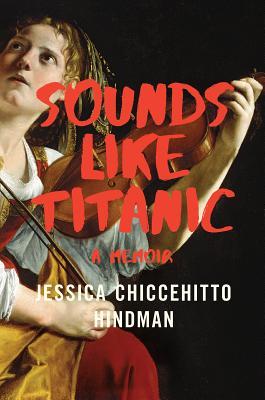
Sounds Like Titanic by Jessica Chiccehitto Hindman

Sounds Like Titanic by Jessica Chiccehitto Hindman

Jessica Chiccehitto Hindman is a violinist and Eastern Studies major who is struggling to pay her way through Columbia gets a job that seems to be more than she ever hoped for. She is going to be playing professionally for audiences across the U.S. It turns out to be fake — the music is played through speakers, never live.

“While this is a memoir about being a fake, this is not a fake memoir. This is a memoir in earnest, written by a person striving to get at the truth of things that happened in her past.” From the introduction.

Photo by Pixabay on Pexels.com

Jessica Hindman grew up in Appalachia among some of the most impoverished residents in the country. It’s interesting though, the gripping poverty seemed normal to her until she considered it later, through more mature eyes. Children are so flexible. Almost anything can be made to seem “normal”.

“And as you listen to the other kids talk about their life goals, you realize something else: You are someone whose upbringing was upper class enough to make you believe you could make music for a living, but lower class enough to provide no knowledge of how to do it.” pg 10

After some serious struggles through puberty with her body and self image, Jessica ends up following her boyfriend to Columbia University, where they almost immediately break up. But her troubles to pay the astronomical tuition bills are just beginning.

“The Composer,” the man behind the music and the tours Jessica eventually goes on, seems to know very little about music himself.

Photo by Nathan Martins on Pexels.com

“And then, The Composer asks me a question that — had it come from any other musician, let alone a Billboard-topping classical composer who has performed with the New York Philharmonic — I would have taken as a joke. … “I like this music,” he says of the opening to Beethoven’s Fifth Symphony. “What is it?” pg 20

Despite any concerns she may have, Jessica perseveres in the job anyway, because her tuition requirements leave her little choice. It nearly ruins her mind and body before she finds a way out of her predicament. Along the way, you can’t help but hope for her to succeed.

“After several more customers mention ‘Titanic,’ you begin to realize that most of The Composer’s compositions sound very ‘Titanic-esque’. And you notice that the more the songs sound like ‘Titanic,’ the more customers want to buy them.” pg 47

I enjoyed this memoir so much not just because of Jessica’s life, which is fascinating, but also because we have so many things in common. I am the same age she is, lived through the events of 9/11 in a collegiate setting (as she did), started out as a music major but changed to something else, and the similarities go on. I’ve also experienced crushing anxiety with the same physical symptoms she describes. It was eerie, really.

“A million times more than any other emotion or experience, fear has the strength and ability to mangle her into something different from what she truly is, something phony and fake and cowardly. And now, surprised and twisted and disoriented and broken as she is by fear’s sudden arrival, she realizes that she needs to fight it, fight for her life.” pg 223

Photo by Pixabay on Pexels.com

But you don’t need to be anything like Jessica to appreciate what it means to be made to feel like an impostor in your own life. To know that you can be doing better, but you’re just inching along. To dream big but live small.

Recommended for readers who enjoy memoirs about a life filled with difficulties, but also hope. If you have a background in music, you may like this book even more, but it’s not required to understand it.

Thanks for reading!

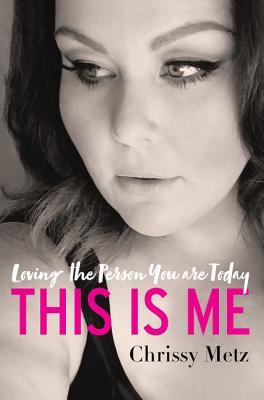
This Is Me: Loving the Person You Are Today by Chrissy Metz

This Is Me: Loving the Person You Are Today by Chrissy Metz

Chrissy Metz relates her abusive and underprivileged childhood and how hard work and perseverance made her into the inspirational figure and television superstar she is today.

“Honeybees are meaningful to me because technically they’re not supposed to be able to fly. We know they do, but in the 1930s French scientists ‘proved’ they couldn’t. Their reasoning was that it was aerodynamically impossible because honeybees’ wings are too small to support the weight of their bodies. … I get that. I’m not supposed to be able to fly either.” pg 6, ebook

Photo by Pixabay on Pexels.com

Chrissy’s parents divorced when she was young and her mother worked multiple jobs to support her children. They lived in a trailer park for a time in Florida.

“I know now that when families are in crisis, kids blame themselves, and kids also take on adult burdens. Which is why it is important that I say something else: Arredondo Farms is still there and I won’t say a single bad thing about it. People look down on people who grow up in trailer parks.” pg 25

Things became a bit easier when her mother married Chrissy’s stepfather (she calls him ‘Trigger’), but then he began systematically abusing Chrissy.

“I don’t remember why Trigger hit me the first time. I know he thought I’d had it coming for a while. I bet I was too loud putting away the dishes. Or I didn’t put his Coca-Cola in the fridge and he wanted a cold Coke. That would usually do it.” pg 28, ebook

Photo by Karolina Grabowska on Pexels.com

Somehow, she survives to not only succeed in the business of her dreams, but to thrive. It wasn’t easy. She honestly documents her struggles, both mentally and physically. She continues to have relationship troubles. But Chrissy never lets it dim her optimism that things can get better and that she can improve, no matter where she finds herself.

Throughout the memoir, she gives tips and life advice that she calls “Bee Mindful” lessons — referring back to her metaphor of how the honeybee can fly even though it seems aerodynamically impossible.

“So many people, including myself, talk at each other but don’t listen. To ourselves or to other people. Believe in actively listening to yourself. Take time to have a conversation with yourself every now and again. … So often we’re on autopilot and we slip into addictive behaviors to avoid listening to ourselves. We eat, or drink, or, yes, check our phones — anything to avoid hearing what we truly need to say.” pg 57, ebook

Photo by Ono Kosuki on Pexels.com

The astonishing part of this memoir, to me, is simply how often Chrissy is judged and found wanting because of her appearance. How long are we, as a society, going to accept the objectification of women’s bodies and believe that it’s ok? I thought we addressed that issue in the last century, but, from the way this beautiful and strong woman has been treated her entire life, it is obvious that we haven’t gotten very far.

I found Chrissy Metz to be inspiring before I read her memoir. Now, I feel like she’s a literal hero for anyone who simply wants to live life as they are and not accept anyone else’s standards for what beautiful, strong and successful is. And she manages to be kind and humble while doing it.

Highly recommended for any readers who like inspiring memoirs — this one gets all the stars.

Thanks for reading!

Black Tudors: The Untold Story by Miranda Kaufmann

Black Tudors: The Untold Story by Miranda Kaufmann

Scholar and historian Miranda Kaufmann has written vignettes of half a dozen or so Africans who lived and worked in England during the Tudor Era.

The trouble with this collection is that so little information exists, Kaufmann has to parcel it out among other more well-known history. I still found it interesting, but for readers looking for Black History only, it feels rather disappointing.

The answers are complex, but the questions that most commonly spring to mind about the Black Tudors are simple: why and how did they come to England? How were they treated? What were their lives like?” pg 3

Photo by Chris Carter on Pexels.com

The answers, in addition to complex, are brief. But this book did clear up some misconceptions I held about the time period.

For example: “Tudors were far more likely to judge a new acquaintance by his or her religion and social class than by where they were born or the colour of their skin, though these categories did on occasion intersect.” pg 4

Many of the records Kaufmann produces were held by the church — baptisms, marriages and so forth.

As an American, it is a different perspective to learn about a country’s history that was affected so little by slavery. People could move in and out of England with their slaves, but these unfortunate persons could also be freed or claim their freedom.

Henry VII set a precedent when he freed an African man named Pero Alvarez who was from Portugal, a country with slavery at that time. And it was backed up by the courts.

Photo by Mike on Pexels.com

In author William Harrison’s “Description of England”, he wrote: “As for slaves and bondmen, we have none; nay such is the privilege of our country by the especial grace of God and bounty of our princes, that if any come hither from other realms, so soon as they set food on land they become as free in condition as their masters, whereby all note of servile bondage is utterly removed from them.” pg 16

I wish America had been more like that.

Readers get to learn about musicians, African princes, ship wreck divers, explorers and more in this book. Recommended for fans of history and non-fiction.

Thanks for reading!

Here’s the History Guy episode that I wrote after reading some of the historical happenings in this book: