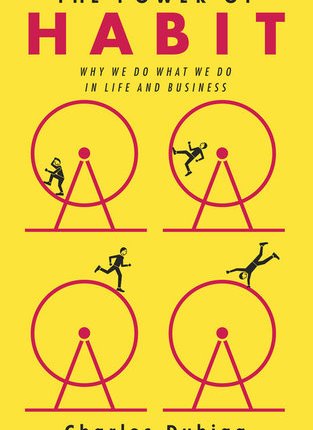
The Power of Habit: Why We Do What We Do in Life and Business by Charles Duhigg

The Power of Habit: Why We Do What We Do in Life and Business by Charles Duhigg

The Power of Habit examines behaviors you may not even know you have and hands you the tools to make lasting change at home, at work and in your community… if you want it.

“Each chapter revolves around a central argument: Habits can be changed, if we understand how they work.” prologue xvii

Photo by Sora Shimazaki on Pexels.com

First, author Charles Duhigg goes into what makes a habit at the biological level.

“Habits, scientists say, emerge because the brain is constantly looking for ways to save effort. Left to its own devices, the brain will try to make almost any routine into a habit, because habits allow our minds to ramp down more often.” pgs 17-18

Duhigg describes how the brain creates a “habit loop” through cues, routines and rewards. These three elements feed on themselves until an ingrained habit is made. And, once it is there, it takes very little to upkeep.

That’s good news and bad news, because it works the same way for healthy and unhealthy habits.

“But the reason the discovery of the habit loop is so important is that it reveals a basic truth: When a habit emerges, the brain stops fully participating in decision making.” pg 20

Photo by Anna Shvets on Pexels.com

The “golden rule” for changing a habit, Duhigg says, is to keep the same cues and rewards, but change the routine that leads to them. It sounds simple, but everyone is different with different motivations. So, it takes a bit of self awareness to discover what those unique cues and rewards are for you. But, once you know your triggers and motivations, that’s when the fun begins of crafting a new routine.

I found this book to be absolutely fascinating. It’s also making me question the habits I’ve picked up in my own life. Am I certain that they are ones I want to continue? I can think of a few that could use a bit of tweaking. And now I know how.

Photo by Petar Staru010deviu0107 on Pexels.com

“This is the real power of habit: the insight that your habits are what you choose them to be.” pg 271

Let’s cultivate the good ones then.

Thanks for reading!

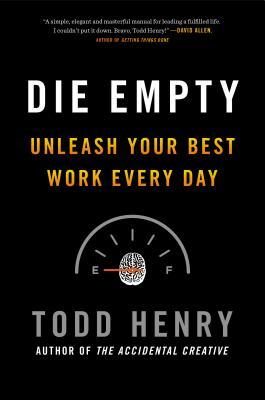
Die Empty: Unleash Your Best Work Every Day by Todd Henry

Die Empty: Unleash Your Best Work Every Day by Todd Henry

Your days are finite. One day, they will run out. As a friend of mine likes to say, “You know, the death rate is hovering right around one hundred percent.” pg 3

Todd Henry has given the world a call-to-action with Die Empty. The book is one big reminder that one day you (yes, you!) will die and he imparts some useful tools to help you discover what you’re meant to do and then to do it to the best of your ability.

Photo by Ketut Subiyanto on Pexels.com

“If there is one overriding goal of this book it is this: to bring a new found clarity and sense of urgency to how you approach your work on a daily basis, and over your lifetime.” pgs 5-6

Henry is into catchy acronyms and veers very close to empty motivational jargon. But, I feel, he pulls himself back in time.

“No one charts a course for mediocrity, yet it’s still a destination of choice. It’s chosen in small ways over time, and those tiny, seemingly inconsequential decisions accumulate until they result in a state of crisis. pg 35

I learned a great deal from his abc’s of mediocrity that include “comfort zone” as the letter C. If I am guilty of anything, it is finding my comfort zone boundaries and then staying carefully inside of them. Henry believes you do the world a disservice when you don’t push yourself. Who knows how much you can do if you don’t try?

Photo by Ketut Subiyanto on Pexels.com

“Growth is about daily, measured, and disciplined action. It’s about embracing purposeful skill development and pursuing new opportunities that stretch you a step beyond your comfort zone, even when it means venturing boldly into the unknown.” pg 89

You escape your comfort zone, Henry says, by creating goals in steps, sprints and stretches. Steps are goals that can be accomplished in one day. Sprints are completed in one or two weeks. Stretches are a big goal that takes longer than that.

Throughout much of the book, the lesson seems to be act, observe, and act again. It touches on everything from fear of failure and delusions to inflated egos and effective communication. Die Empty could be described as a one-stop-shop for almost anything that holds you back from “unleashing your best work every day”.

Photo by Prateek Katyal on Pexels.com

Henry even addresses the fact that no self help book is the complete answer for anyone. The final ingredient in any lasting change or improvement in your life is you.

You can have the map, and there can be gas in the tank, but unless you’re willing to fire up the engine and put your foot on the gas, you’ll never get anywhere. Intention and theory don’t change the world; decisive action does.” pg 201

Recommended for readers who are unwilling to settle for less than their very best work every day.

Thanks for reading!

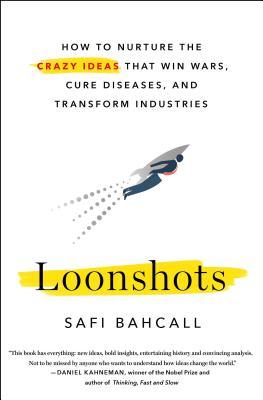
Loonshots: How to Nurture the Crazy Ideas That Win Wars, Cure Diseases, and Transform Industries by Safi Bahcall

Loonshots: How to Nurture the Crazy Ideas That Win Wars, Cure Diseases, and Transform Industries by Safi Bahcall

“New frontiers of the mind are before us, and if they are pioneered with the same vision, boldness, and drive with which we have waged this war we can create fuller and more fruitful employment and a fuller and more fruitful life.” — Franklin Delano Rooseveltpg 257

Safi Bahcall has applied a physics-based approach to understanding innovations and creativity in group settings. Through the careful study of a bunch of historical examples, he has discovered ways leaders can structure their businesses to best encourage the growth of “loonshots.”

Photo by Pixabay on Pexels.com

The author has defined a “loonshot” as “a neglected project, widely dismissed, its champion written off as unhinged.” It is through these, Bahcall believes, that world-changing ideas are produced that can be applied from arenas as diverse as business to war.

“The twisted paths leading to great discoveries are the rule rather than the exception. And so are their revisionist histories: victors don’t just write history; they rewrite history.” pg 56

He suggests these breakthroughs are generally created by large groups of people, rather than solitary geniuses. And he thinks that “applying the science of phase transitions to the behavior of teams, companies, or any group with a mission provides practical rules for nurturing loonshots faster and better.”pg 2

Photo by Andrea Piacquadio on Pexels.com

For example: By examining Theodore Vail and the way he structured AT&T’s “fundamental research” department to Vannevar Bush’s non-military leadership for the Office for Scientific Research and Development for the military, Bahcall has come to some actionable conclusions.

He believes that, in a business, you need to separate the creative-types in the innovation departments from what he called the “soldiers” or people who run the rest of the business. Both are absolutely imperative to the success of the business, but if the two are working too closely together, “loonshots” can be strangled in their infancy.

The same risk of failure is faced by leaders who try to micromanage “loonshots”. Trust your people to do what they do best, whether that’s development or running the business, so that you don’t drive a business into the ground because you’re too attached to your own pet project.

Photo by Pixabay on Pexels.com

Bahcall reminds us that structure is important but culture is as well. He makes a biological comparison to drive the point home: “Both genes and lifestyle matter. And so with teams and groups: both structure and culture matter. The aim of this book is not to replace the idea that certain patterns of behavior are helpful (celebrating victories, for example) and others are less so (screaming), but to complement it.” pg 227

I can’t say I completely understand what a “phase transition” is but Bahcall’s storytelling manner of imparting information is easy to understand. His writing is reminiscent, in some ways, of The Black Swan: The Impact of the Highly Improbable but with more emphasis on structure and culture instead of probability.

Readers who enjoyed one book, may like the other. Recommended for readers seeking more information about how to help businesses succeed, innovate and thrive.

Thanks for reading!

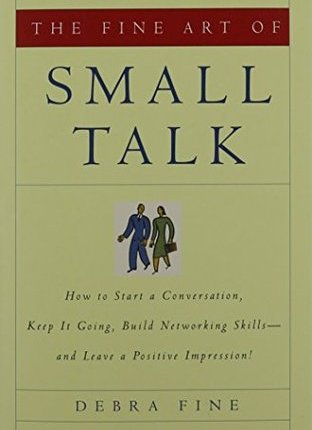
The Fine Art of Small Talk: How to Start a Conversation, Keep It Going, Build Networking Skills and Leave a Positive Impression! by Debra Fine

The Fine Art of Small Talk: How to Start a Conversation, Keep It Going, Build Networking Skills and Leave a Positive Impression! by Debra Fine

Hello, my name is Heidi and I am bad at small talk. It’s not that I don’t have things to say — I can think of plenty of things to say. The things just don’t make it out of my mouth.

Enter Debra Fine, self-help author and speaking coach. She believes small talk is a skill that can be taught and mastered by even the most hopeless conversationalist. Fine begins by detailing her own life experience as a poor conversationalist and how she remade herself into a conversational dynamo.

Photo by Armin Rimoldi on Pexels.com

And she hopes to do the same for her readers.

Most of the advice in The Fine Art of Small Talk is common sense stuff, but I can still see it being useful to me in the future.

For example, she encourages readers to be brave and initiate conversations in public situations. Look for the people sitting by themselves. They might appreciate your attempts to chat. Also, if you don’t start a conversation, he or she may believe you’re being stand-offish. That’s not a belief you’d want to encourage.

Actually, I have a very shy friend, one of the librarians I worked with, who swore by this technique of finding a person sitting by themselves. She did extremely well at parties by finding the quietest person in the room and starting a conversation with them.

Photo by cottonbro on Pexels.com

Next, once you’re talking to someone, learn his or her name and how to appropriately pronounce it. Ask open-ended questions to foster the conversations and reduce any potentially awkward pauses. Fine recommends using the acronym “FORM” to help you create these questions. FORM stands for family, occupation, recreation and miscellaneous.

Don’t be rude and press into topics that people seem reluctant to talk about. Just gently steer the conversation around the recommended general topics and let the person you’re conversing with lead. Make sure to pay attention to any verbal cues or body language the other person gives you. Obviously, this can be more difficult over the phone, so just actively listen.

And finally, exit the conversation gracefully by going back to the topic you started talking about in the first place or offering to follow up with the person by giving a phone number or email.

Now that you have all the tools of small talk, your assignment is to practice it. Yikes.

Photo by cottonbro on Pexels.com

As I said, nothing earth-shattering in here, but in an age of increasing social disconnection because of technology, perhaps these tips could be useful to anyone who is seeking to improve their relationships through small talk.

Recommended for all the tongue-tied bibliophiles out there, like me.

Thanks for reading!

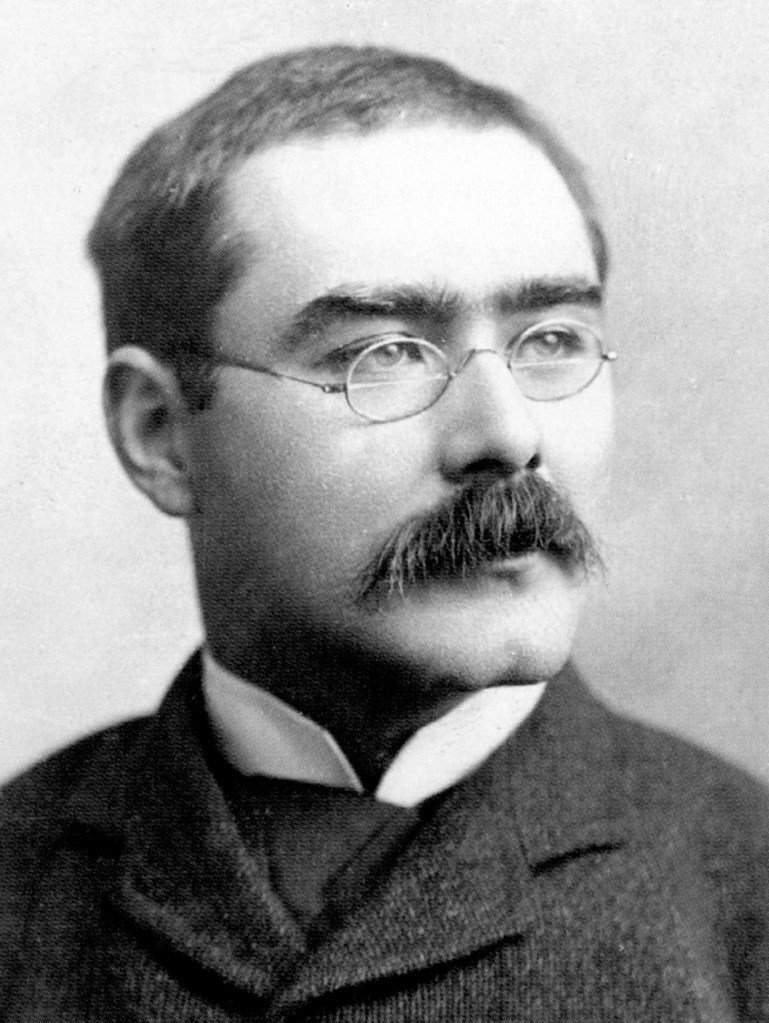
If: The Untold Story of Kipling’s American Years by Christopher Benfey

If: The Untold Story of Kipling’s American Years by Christopher Benfey

Christopher Benfey has written a masterful biography of Rudyard Kipling’s years in the United States. It is a little-remembered period from the life of the youngest ever Nobel Prize winner for literature.

“At this remove, it is difficult to recover the sheer depth of reverence once accorded Kipling. “He’s more of a Shakespeare than anyone yet in this generation of ours,” wrote the great American psychologist William James.”

Photo by Ylanite Koppens on Pexels.com

He was friends with Mark Twain. One of Kipling’s books, The Jungle Book, was in Sigmund Freud’s top picks for important books in his life. He has inspired generations of authors and readers with his Just So Stories and poetry.

My husband used to quote some of his poetry to me from memory when we were first dating. Rudyard Kipling is a giant of literature.

Yet he’s also a complex historical figure. “With the rise of postcolonial theory — a view of literature that assesses the human cost of colonial arrangements —Kipling is often treated with unease or hostility in university literature departments, as the jingoist Bard of Empire, a man on the wrong side of history.”

And there’s reasons for this distrust. Kipling penned “The White Man’s Burden”, asking the United States to take up Great Britain’s colonial interests.

So when Benfey examines the life of Kipling, it’s not all hero worship. He is aware of and acknowledges Kipling’s failings, but doesn’t take it out of the context of Kipling’s life and times. 

If brings to light previously unknown portions of Kipling’s life and legacy. Some new poetry and personal papers have recently been discovered that Benfey uses to paint a more complete picture of Kipling than perhaps ever before.

Readers learn of the friendships Kipling had with some of the political giants in the United States. We also get to peek into Kipling’s private life and share some of the intense sorrows he experienced in his own childhood and with his children.

There’s an examination of how opium use affected Kipling’s writings. We travel with Kipling to Japan on his honeymoon. And we learn about the great writer’s obsession with, of all things, beavers.

This most interesting part of all of it is, though he lived in the Gilded Age, how similar Kipling’s times were to today.

“It was an era, like our own, of vast disparities between rich and poor, of corruption on an appalling scale, of large-scale immigration and rampant racism, of disruptive new technologies and new media, of mushrooming factories and abandoned farms, of vanishing wildlife and the depredation of public lands.”

Photo by Pixabay on Pexels.com

So, despite his astonishing literary genius, Kipling was just a man. He had his flaws and his dark side. And after his death, he left behind a treasury of written works that carry his legacy into the unknowable future. A future that, if we try, perhaps we can make more than one man’s limited imagination could contain.

Recommended for readers who enjoy forgotten history in all its imperfections and glory. 

Thank you to NetGalley and the publisher for a free digital advance reader’s copy of this book. The brief quotations I cited in this review may change or even be omitted in the final version.

Here’s the History Guy’s take on Rudyard Kipling that I wrote the script for and thanks for reading!:

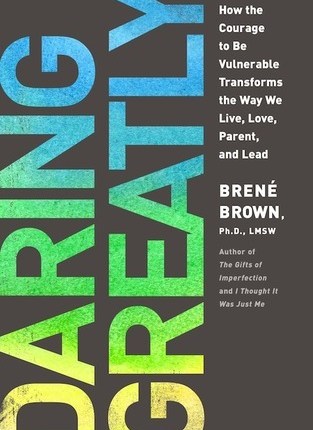
Daring Greatly: How the Courage to Be Vulnerable Transforms the Way We Live, Love, Parent, and Lead by Brené Brown

Daring Greatly: How the Courage to Be Vulnerable Transforms the Way We Live, Love, Parent, and Lead by Brené Brown

Brené Brown shares her twelve years of research into shame and gives tools on how to increase one’s vulnerability. In this way, she believes each individual can help change the culture of scarcity and pull the world back from a continual cycle of shaming.

We’ll build stronger and deeper relationships, strengthen families and have more productive work places. And, by doing this, we will each, in our own way, live in a manner that “dares greatly” every day.

“I also learned that the people who love me, the people I really depend on, were never the critics who were pointing at me while I stumbled. They weren’t in the bleachers at all. They were with me in the arena. Fighting for me and with me.” pg 56

Photo by RF._.studio on Pexels.com

I’m going to use the information in this book the most in my work life. As a writer, I attach far too much significance to my work product on the audience’s response to it rather than my own feelings about it. As Brown so clearly points out in this book, an outside response will never be good enough or big enough to fill the need that I am looking to fill with their words or their views. Or, if it is wildly praised, perhaps the next work won’t be, and then I’m right back to where I started.

“You still want folks to like, respect, and even admire what you’ve created, but your self-worth is not on the table. You know that you are far more than a painting, an innovative idea, an effective pitch, a good sermon, or a high Amazon.com ranking.” pg 64

This desire for connection and a feeling of worthiness, Brown says, comes from the need to survive by belonging to a group. Our brains have evolved to encourage us to belong and form connections. And when we don’t by not believing in our own self worth or experiencing shame, it is a physically painful emotion. People do all sorts of things to avoid feeling shame including pulling away or striking out. But, in the end, these connections are life itself.

“Buber wrote, “When two people relate to each other authentically and humanly, God is the electricity that surges between them.” pg 150

Photo by Pixabay on Pexels.com

As interesting as I found Brown’s research to be, she lost me when she began a discussion about how much vulnerability is enough or too much and walking the tightrope between extremes. So, be authentic, but don’t use it to manipulate people. A few sentences covers what Brown uses 50 pages to unpack.

“When we stop caring about what people think, we lose our capacity for connection. When we become defined by what people think, we lose our willingness to be vulnerable.” pg 169

Her message becomes a bit undefined and more general the further the book goes. That’s not to say it couldn’t be useful for readers who are looking for that type of information. I didn’t find it particularly engaging.

Like any self help book, I think sometimes authors and researchers can get lost in the weeds of the problem. I far more prefer to focus on the solution. In this case, that’s being brave enough to show up and be seen, demonstrating vulnerability and willingness to care about whatever is going on wherever we find ourselves throughout the day. As Brown reminds readers, it’s not about winning or losing, it’s about being there. And that’s a message worth spreading.

Photo by fauxels on Pexels.com

“To love ourselves and support each other in the process of becoming real is perhaps the greatest single act of daring greatly.” pg 110

I’m game. Are you?

Thanks for reading!

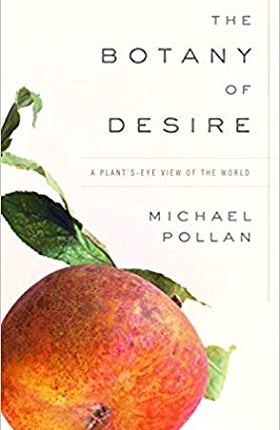
The Botany of Desire: A Plant’s-Eye View of the World by Michael Pollan

The Botany of Desire: A Plant’s-Eye View of the World  by Michael Pollan

Packed with food-related history, trivia and stories, Michael Pollan attempts to explain how four types of plants have had such a large effect on humanity.

“We automatically think of domestication as something we do to other species, but it makes just as much sense to think of it as something certain plants and animals have done to us, a clever evolutionary strategy for advancing their own interests.”

Photo by John Finkelstein on Pexels.com

I believe that our lives are intimately intertwined with our environment, even if we can’t quite see how. Pollan removes the veil between apples, tulips, marijuana, potatoes, and mankind in order to illustrate how the plants evolved and what kinds of shenanigans they’ve brought on civilization in the process.

“Our grammar might teach us to divide the world into active subjects and passive objects, but in a coevolutionary relationship every subject is also an object, every object a subject. That’s why it makes just as much sense to think of agriculture as something the grasses did to people as a way to conquer the trees.”

My favorite chapter was about the tulips. Did you know at one point in the Dutch Republic a tulip bulb cost as much as a house? It was called “tulipmania” and it caused enormous havoc in the local economy when the tulip bubble burst.

I also learned about the evolution of flowers, which I didn’t know anything about before reading this. I had only ever considered them from a spiritual perspective — I think it was Eckhart Tolle who talked about flowers being the “spiritual evolution of plants”. It’s rather interesting actually if you’re into that kind of thing.

“But I do wonder if it isn’t significant that our experience of flowers is so deeply drenched in our sense of time. Maybe there’s a good reason we find their fleetingness so piercing, can scarcely look at a flower in bloom without thinking ahead, whether in hope or regret.

Photo by James Wheeler on Pexels.com

Pollan’s writing style wanders no where quickly, so readers who have little patience for storytelling non-fiction may want to choose a different book. I rather liked it.

I think he may have oversimplified the plants and humanity relationship by picking only one motivating desire per plant. Let’s be real, things are never as simple as that. But for the premise of this book, it worked well enough.

Basically, The Botany of Desire encourages readers to consider what plants get from us as much as what we get from them. It’s a different perspective, like looking at your home from the level of a toddler rather than your usual height. There’s things to learn and puzzle out and discover that you may have never even imagined.

Recommended for readers interested in botany and different worldviews. Thanks for reading!

Zen Cat by Judith Adler

Zen Cat by Judith Adler

Judith Adler matches peaceful pictures of cats with various quotations from throughout history to create “Zen Cat”.

It’s funny, even though I consider myself a “cat person”, I liked Adler’s Zen Dog more than this feline version.

Photo by Amir Ghoorchiani on Pexels.com

Cats are so contained. When you’re looking at the photos of the dogs, there’s an exuberance or bottled energy there that just doesn’t seem to show up for the cats. 

However, the book does have beautiful photos and quotations. Take this one from Rumi that is arranged next to a photo of a black cat viewing itself in a mirror: “We are the mirror as well as the face in it. We are tasting the taste this minute of eternity.

Or this one by Buddha which is paired with a cat on an urban street: “There are only two mistakes one can make along the road to truth: not going all the way, and not starting.”

Photo by Miguel u00c1. Padriu00f1u00e1n on Pexels.com

And finally, a simple photo of a grey cat looking directly at the camera: “I love all solitary places, where we taste the pleasure of believing what we see is boundless, as we wish our souls to be.” by Percy Bysshe Shelley.

Even though I found the dog version more compelling, cat lovers may still feel the need to have this as a coffee table book. For everybody else, I recommend borrowing it from the library.

Thanks for reading!

The 4-Hour Workweek by Timothy Ferriss

The 4-Hour Workweek by Timothy Ferriss

“I’ve spent the last three years traveling among those who live in worlds currently beyond your imagination. Rather than hating reality, I’ll show you how to bend it to your will. It’s easier than it sounds.”

Photo by Ronu00ea Ferreira on Pexels.com

Timothy Ferriss promises the stars in the sky in his new-classic business/self help book, The 4-Hour Workweek. Though he gives some good productivity tips, he fails to provide a true road map to freeing yourself from the 9-to-5 grind. Partially, this is because there is no real road map to doing this.

But he does detail how he found his way into a life of his dreams. Readers can take whatever lessons and information from that as they will.

After Ferriss relates a timeline of his life story, he begins by detailing his “DEAL” plan to a four hour work week which consists of “definition, elimination, automation and liberation”. Each step of this process, he says, helps guide the reader to a new world of free time. Though, he admits, traditional bosses may have serious problems with your new program and, perhaps, you should go more “DELA”. Yes, understatement.

“Resolve now to test the concepts as an exercise in lateral thinking. If you try it, you’ll see just how deep the rabbit hole goes, and you won’t ever go back.”

Photo by Anna Shvets on Pexels.com

He examines the concepts of “busy work” and suggests boiling your workload down to the most important tasks you complete. Then, just do those as fast as possible. Don’t allow yourself to be derailed by the internet or chatty coworkers. (Not a friendly method, but Ferriss seems to have his eyes on the prize rather than concerning himself with making friends.)

Out of everything he suggests in the first part of this book, I was most taken with the idea of only checking your email once a day or week. There is a definite time-suck there that maybe I have been blinding myself to.

After that, Ferriss enters more conceptual territory with an idea about creating a business for yourself that essentially runs itself or can be run by someone else, cheaply. For example, a website that sells something awesome. But, what exactly that something or muse is, that’s for you, the reader, to discover on your own.

It reminded me of Godin’s Purple Cow: Transform Your Business by Being Remarkable. You know an awesome product or “purple cow” when you see it, but how exactly to make one isn’t a clear thing. Interesting idea, but necessarily helpful for those looking for actionable items to improve their work life.

The most useful part of the book, in my opinion, is his encouragement to create a dream plan by “dreamlining”. Write down what you want to do. Create a timeline. Crunch the numbers. It may cost less than you thought and, with it on paper, it takes on a bit of reality already. If you don’t get started, how do you know what you might accomplish.

Photo by Negative Space on Pexels.com

“It’s lonely at the top. Ninety-nine percent of people in the world are convinced they are incapable of achieving great things, so they aim for the mediocre. The level of competition is thus fiercest for ‘realistic’ goals, paradoxically making them the most time-and energy-consuming. It is easier to raise $1,000,000 than it is $100,000.”

Ferriss’ tone in this book has been criticized by readers and I see what they mean. Some of his ideas are alienating. Sometimes he seems to say: I’ve done this-this-this and this, and it’s so easy that if you can’t figure it out too, especially with the book I’ve put in your hands, then you must be either complacent or dumb.

But I took this book to be written by someone who dared, a nod to Brené Brown, greatly. Ferriss believed his life could be something other than a slog and yours could too. He’s written down some tips to help you along the way that he discovered through real life trial and error. Read it or not. He’ll be over there, living the life of his dreams.

Photo by Alex Fu on Pexels.com

Recommended, with reservations, to folks interested in life-hacking their work/life balance. I think we can achieve whatever dreams we set our minds to while still being friendly.

Thanks for reading!