Aware: The Science and Practice of Presence by Daniel J. Siegel

Aware: The Science and Practice of Presence by Daniel J. Siegel

Daniel Siegel, MD, psychiatrist and author, shares his research into neuroscience and a meditation practice he has developed called the “Wheel of Awareness“.

“The Wheel practice is a way to open awareness and cultivate a larger, more expansive container of consciousness. People who participate in the practice seem to be strengthening their minds.” pg 9
Photo by Polina Tankilevitch on Pexels.com

The practice uses focused attention on the senses, bodily sensations, mental activities and interconnectedness, in order to encourage the mind to become more integrated. When this integration happens, the mind gives off certain brainwaves that Siegel and other researchers have measured coming from experienced meditation practitioners such as monks.

Basically, Siegel is using western science in an effort to measure and replicate meditation practices.

The science portions of Aware are not very accessible to the non-scientists readers and I could see that being off-putting. However, if you are interested in the intersection of neuroscience and meditation practice, this book could be incredibly useful to you.

“Where attention goes, neural firing flows, and neural connection grows.” pg 19

Photo by cottonbro on Pexels.com

I found the implications of Siegel’s research to be fascinating. He claims, through focused attention, one can change the neural patterns and behavior of the brain. Meditation affects biology in a physically measurable way.

There have been countless studies on the positive benefits of meditation practice, but, I think, fewer on the changes in the function and integration of the mind. The rewards of such can be profound.

“When our minds wander unintentionally, we are not present, we are not receptively aware, we are not mindful, and studies suggest, we inhibit being happy — even if we are daydreaming about exciting things. … Presence cultivates happiness.” pg 49

Besides the Wheel of Awareness portion, the part of Aware I found most helpful was a discussion about the proper cultivation of empathy, the ability to put yourself in another’s place to feel and share what they are feeling.

Photo by Anastasia Shuraeva on Pexels.com

Tania Singer, in a presentation to the Dalai Lama, had this advice: “… we need to place empathy in the larger space of altruistic love and compassion. This space will act like a buffer for empathic distress. Since altruism and compassion are positive mental states, they reinforce our courage and give us the resources to deal with the suffering of others in a constructive way.” pg 86

I liked the visual of that and think it will come in handy in the future.

Recommended for non-fiction readers interested in the science behind meditation and the development of presence. Spiritual seekers looking for different meditation methods may want to look for that in another, less technical, book.

Thanks for reading!

My Squirrel Days by Ellie Kemper

My Squirrel Days by Ellie Kemper

Ellie Kemper, the hilarious actress from the Netflix show “The Unbreakable Kimmy Schmidt,” shares a few essays highlighting moments from her life. I laughed out loud a few times, both in amusement and embarrassment for Kemper. She’s not afraid to make fun of herself.

The best part of the memoir is, as I read it, I could hear each word being read in Kemper’s distinctive voice. She definitely has a style of expressing herself that stays true for the whole book.

“As a reasonably talented person who is also part fraud, I cannot praise highly enough the virtues of enthusiasm and tenacity as substitutes for finely honed skills or intensive training. And in this book, Reader, I will tell you about the numerous times that I have made up in pluck what I have lacked in natural ability.” pg 4

Photo by Pixabay on Pexels.com

Unlike other readers, I didn’t fault this book for its mundane subject matter. I think, no matter our age or experience, people have valid things to say. Maybe it didn’t make for a gripping read, but I was able to relate to many of Kemper’s childhood experiences.

I too grew up near St. Louis, Missouri. I also went on an elementary school age field trip to Hannibal, Missouri, to learn about Mark Twain.

I also get scatter-brained when meeting authors I admire, like this moment between Kemper and Doris Kearns Goodwin:

“Doris Kearns Goodwin smiled brightly, and I leaned in, enthusiastically, to hug her. Unfortunately, she had begun to turn away by then, and — arms still outstretched — I lost my balance, stumbling forward and accidentally pushing the legendary biographer to the ground.” pg 24-25

Photo by Brittany Moore on Pexels.com

My experience: It was near Thanksgiving in 2005. George R.R. Martin was coming to Denver to do a book signing at the Tattered Cover because he had recently published A Feast for Crows. (And I’m still super pissed that he didn’t finish writing his series before the television show ended, but that’s neither here nor there.)

But this was long before the television show. The only people showing up for a signed copy of Martin’s new book were the nerdy bookworms like me and my then-boyfriend now-husband, Lance, who I dragged along because I didn’t want to drive downtown by myself.

We arrived late and had to sit at the back. But that was cool, because I was there! We got to listen to him chat about his vision for the series and then a couple people from the audience asked him questions. Someone asked who his favorite character was, and he said, Tyrion, which hit me as a total surprise. But I guess if I had thought about it and the extraordinary luck Tyrion enjoys in a world where every other person gets slaughtered in ever more inventive and disgusting ways, I could have guessed.

Then, we all queued up to have our new book signed! Because of my position in the nook-area, I was the second-to-last in line. I was hopping up and down in excitement for almost an hour as everyone filed past the bespectacled and hat-sporting author. We finally got to the front, I handed my book to his assistant, who pushed it in front of him.

“Hi!” I exclaimed and then just stood there, grinning like Hodor and equally as eloquent. Martin turns to Lance and says, “What’s her name?”, which Lance gamely told him and then gave him the correct spelling. Meanwhile, I’m talking a blue-streak in my head.

“Say something,” I told myself. “Now’s your chance.” And nothing came out. “This man has provided you with hours of entertainment and you’ve got nothing!” My book was signed. He handed it to me. We were walking away from the table… and I frantically turned back and blurted out, “Happy Thanksgiving!”

George R.R. Martin smiled and said, “Happy Thanksgiving to you too.” And that was that.

Photo by Craige McGonigle on Pexels.com

Here’s to people like Ellie Kemper, who lose their minds when they meet rock-star authors, get stuck in Japanese temples, and amuse themselves perhaps more than they entertain others. It may not make for the most exciting book, but it’s real and that matters. Recommended for readers who are a fan of Kemper’s work and enjoy humorous memoirs.

Thanks for reading!

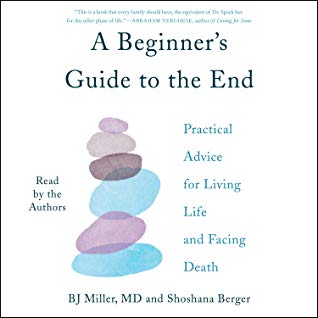
A Beginner’s Guide to the End: Practical Advice for Living Life and Facing Death by B.J. Miller, Shoshana Berger

A Beginner’s Guide to the End: Practical Advice for Living Life and Facing Death by B.J. Miller, Shoshana Berger

A Beginner’s Guide to the End is a definitive guide about death and how to handle it, both for yourself and your loved ones.

Topics range from planning your estate and dealing with life-ending illnesses all the way through to what to do in the first 24 hours after someone dies and how to liquidate an estate.

Photo by KoolShooters on Pexels.com

I could see this book being incredibly useful to anyone who has received a terminal diagnosis, their family or caregivers of all types.

I picked this book up because my father-in-law recently died and I was looking for information on how to help myself and others with grief.

“Grief is a force of nature. Though it can feel problematic as hell, bereavement is an essential piece of the human picture, whichever way it surfaces. pg 420

Photo by Alex Green on Pexels.com

I learned all about that, but also a bunch of other helpful end-of-life details. For example, I knew nothing about the legalities of transporting and spreading cremated remains. Now, I know.

“A friend snuck down to the field of the Oakland-Alameda County Coliseum at half-time and dumped some of his father’s dust at the fifteen-yard line. His pop, a doctor, had been a hard-core Raiders fan, and though his son knew he was doing something illegal, he felt a jolt of joy, knowing that part of his father would always be in that stadium.” pg 459

The text in this book is printed slightly larger than normal, which could be exactly what is needed for elderly readers.

Highly recommended for anyone who needs some guidance about death-related issues.

Thanks for reading.

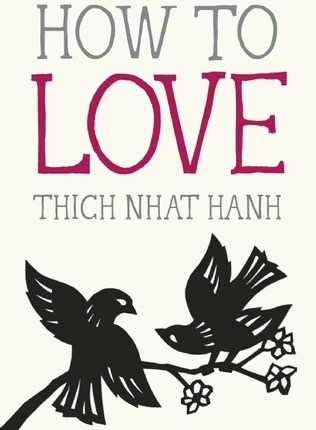
How to Love (Mindfulness Essentials, #3) by Thich Nhat Hanh

How to Love (Mindfulness Essentials, #3) by Thich Nhat Hanh

Thich Nhat Hanh, monk and spiritual leader, has written a short series of books he calls “Mindfulness Essentials.” This entry is all about love. You might ask yourself, what could a monk possibly know about love? Turns out, plenty.

Hanh applies the mindfulness techniques he’s learned over his lifetime of spiritual practice to the potentially thorny pathways of love, and the result is a gem of a read.

Photo by Asad Photo Maldives on Pexels.com

He counsels lovers to bring happiness to each other through being present in the moment and sharing your appreciation with each other. For example, if someone is distracted or worried, Hanh says you should draw their attention to the physical beauty of the world around them. In this way, you anchor the other in the present moment and ease the suffering of their busy mind.

This type of presence is a gift that you can give to anyone at anytime. And it doesn’t cost anything.

Hahn describes four defining traits of love as loving-kindness, joy, compassion, and equanimity. Then he examines these traits in detail so readers can ponder the mystery of love and see where, potentially, we may be falling short of these ideals.

Photo by Jasmine Carter on Pexels.com

He teaches all love begins with self love and walks hand-in-hand with spiritual practice. Through deep listening and the establishment of intimacy, Hahn believes love heals through empathy and “karuna,” a term that describes suffering with another and then doing what you can to end that suffering.

In addition, don’t take the other person for granted or make assumptions about what they may need. It is only through open communication that, Hahn believes, love lives.

He makes it sound so easy. I wish it was.

Photo by Pixabay on Pexels.com

Recommended for readers looking to learn about the spiritual side of love in a quick and easy read. Hanh doesn’t waste words and I am always in awe of what teachings he has to impart.

Thanks for reading!

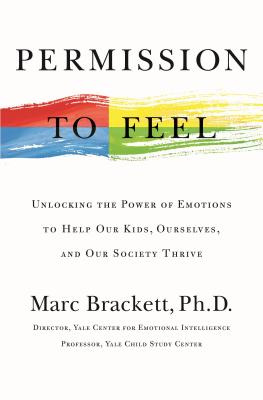
Permission to Feel: Unlocking the Power of Emotions to Help Our Kids, Ourselves, and Our Society Thrive by Marc Brackett

Permission to Feel: Unlocking the Power of Emotions to Help Our Kids, Ourselves, and Our Society Thrive by Marc Brackett

“And when we can’t recognize, understand, or put into words what we feel, it’s impossible for us to do anything about it: to master our feelings — not to deny them but to accept them all, even embrace them — and learn to make our emotions work for us, not against us.” pg 2

Marc Brackett, Ph.D., is the director of the Yale Center for Emotional Intelligence. In this book, Permission to Feel, he has given the world a new set of tools to learn more about ourselves through our emotions, to facilitate communication, and to teach the next generation how to do the same.

Photo by Andrea Piacquadio on Pexels.com

I really appreciated this book as I am someone who has trouble sharing emotions.

I am probably like this because, as Brackett explains, we learn our communication styles from our parents. My mother had a lot of kids and, though I know she cares, never had much time for one-on-one interaction.

My father is so introverted he barely speaks to his family. I have spent entire car rides with my dad while sitting in absolute silence, which sounds like it could be desperately uncomfortable, but with him it’s not. That’s just the way he is.

And what I have become. It can take time to coax anything like an intimate conversation out of me and few have ever bothered to try.

But I want to be better at sharing what’s going on in my inner world. This book has shown me a way I can move towards making that happen.

Photo by August de Richelieu on Pexels.com

“Feelings are a form of information. They’re like news reports from inside our psyches, sending messages about what’s going on inside the unique person that is each of us in response to whatever internal or external events we’re experiencing. We need to access that information and then figure out what it’s telling us.”

Brackett first outlines why emotions are important as they affect everything from “where we direction our attention” to decision making, relationships, creativity and our physical health.

He then explains how to become “emotion scientists,” which he says are more desirable than “emotion judges.” The scientist listens and seeks clues to tease out what is going on in order to help. The judge does the same, but then, rather than helping, he strangles any potential improvement by putting the smack down on what they discover.

“We all want our lives, and the lives of the people we love, to be free of hardship and troubling events. We can never make that happen. We all want our lives to be filled with healthy relationships, compassion, and a sense of purpose. That we can make happen.” pg 21

Photo by Daria Shevtsova on Pexels.com

Then, he gives the tool kit he has spent years honing in workshops and studies, and shares how to apply it in various areas of your life.

I could see this book being useful to parents, educators, leaders or people like me. I knew I had room for improvement in accessing my emotions, but no idea how to go about it. Now, I know.

Thank you to the publisher for a free advance reader copy of this book. The short quotations I cited in my review may change or be omitted in the final print copy. Permission to Feel should be published in early September 2019.

Thanks for reading!

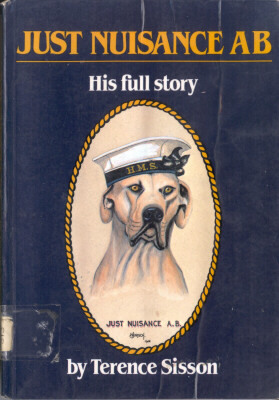
Just Nuisance A.B.: His Full Story by Terence Sisson

Just Nuisance A.B.: His Full Story by Terence Sisson

This is a biography about a very special dog, Just Nuisance, the only dog in history to be enlisted in the Royal Navy.

He was a great dane who befriended the sailors around the port of Simon’s Town, South Africa, in the days before the outbreak of the Second World War. The sailors fed the enormous dog and even gave him portions of their lager. In turn, he guided drunken sailors home and protected them from any ruffians on the street.

Just Nuisance received his name because he loved to fall asleep on the gangplanks leading to the decks and so the sailors would have to choose another way to board the ship, because they couldn’t move the enormous animal. So, they called him, “Nuisance,” as well as a variety of other colorful adjectives.

Photo by Laura Stanley on Pexels.com

He was enlisted in the navy because Just Nuisance was causing an issue on the train. He liked the ride the train to and fro with the sailors, but the officials running the line said the great dane was taking up a space that could be filled by paying passengers. They threatened to put Just Nuisance down if the sailors couldn’t keep him off the train.

However, sailors in the Royal Navy were allowed to ride the train for free. So, they came up with a creative solution to their problem. Just Nuisance would join their ranks and be issued a pass. Then he too could ride the train for free.

And so he was.

“The first problem arose when it came to filling in the heading listed as Christian Name. … “No dog has a Christian name, what the hell should I put here?” … “Well I can’t see any other way out than to leave it blank and give the name as just Nuisance.” The petty officer looked at the lieutenant with a broad smile on his face: “That’s it, sir, his Christian name, write ‘Just’ in that column.”pg 26

Photo by David Jakab on Pexels.com

This is a very sweet book. It is composed of the reminiscences of sailors who served with the great dane and shares how he affected each of their lives. He had a prodigious appetite, multiple “wives,” and took his service in the navy seriously, showing up at fundraisers and participating in parades.

But his broader legacy, how he raised the spirits of the men of the Royal Navy prior to one of humankind’s darkest sagas, deserves to be remembered.

I recommend this biography for readers who like small, forgotten moments of history and enjoy reading about the extraordinary way our canine companions can make our lives so much better.

Thanks for reading!

Here’s The History Guy’s video about Just Nuisance (I didn’t write the script for this one, Lance did.):

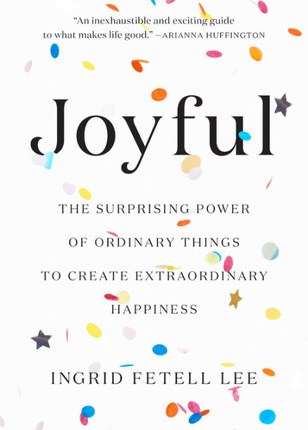
Joyful: The Surprising Power of Ordinary Things to Create Extraordinary Happiness by Ingrid Fetell Lee

Joyful: The Surprising Power of Ordinary Things to Create Extraordinary Happiness by Ingrid Fetell Lee

Ingrid Fetell Lee shares how to bring more joy into your life through the appreciation of ordinary things. Using tools like color selection, feng shui, gardening and room design, you can utilize your environment to foster an inner sense of joy and well being.

I think anything that increases joy and appreciation in my life is a good thing. I found it interesting almost every other book I’ve read on this subject focuses on the inner aspects of joy, the ones that won’t fade. But Lee convinced me there is something to appreciate and cultivate in the outer world as well. We may all be spiritual beings but we’re living very physical lives.

Photo by Rodrigo Feksa on Pexels.com

I knew little to nothing about interior design or some of the more troubling aspects of minimalism. But I do like to move through spaces that feel warm and lived in.

I can see the appeal of simplifying a space down to just a few items, but I wouldn’t want to stay there very long. Lee helped me understand some of my intuitive feelings about minimalism and why maximalism has the opposite effect, at least on me.

Lee also talks about the joy one can find in quirkiness versus convention. The caveat being that you have to be in a space or group of people who allow such things to exist rather than quashing them at the start. Different colors, unexpected materials, strangely-shaped furniture — if introduced to your every day environment can bring joy and a sense of relief from staid normalcy.

Photo by Pixabay on Pexels.com

This book really got me thinking about what joy I take in my surroundings and why or why not. Recommended for readers interested in interior design, gardening, or those looking for small ways in which to introduce a little more joy into their every day lives.

Thanks for reading!

Anxiety and Avoidance: A Universal Treatment for Anxiety, Panic, and Fear by Michael A. Tompkins

Anxiety and Avoidance: A Universal Treatment for Anxiety, Panic, and Fear by Michael A. Tompkins

Everyone experiences anxiety in some form or another in their lives. The trouble comes when you find yourself altering your behavior to avoid triggering yourself, painting your life into smaller and smaller boxes in order to attempt to control the anxiety.

Photo by Eternal Happiness on Pexels.com

This self help workbook hands you the keys to your anxiety response. By unlocking that, you give yourself back the freedom that you may have lost to uncontrollable anxiety.

Emotional flexibility, then, is the key to recovery from your anxiety disorder.”

Michael Tompkins uses cognitive behavioral therapy, mindfulness and acceptance therapies to tackle most major anxiety issues.

I liked his approach because mindfulness is a practice that I enjoy incorporating into my life anyway. By applying it to my anxiety responses, I learned a lot about myself in a very short period of time.

Photo by Karolina Grabowska on Pexels.com

“The purpose of both our primary and secondary anxious responses is to protect us from the threats and challenges of life. For some people, however, the natural and normal secondary anxious response creates problems. These people are stuck in their secondary anxious responses and because they’re unable to move out of it, they have an anxiety disorder.” pg 22

But no matter what coping mechanisms therapists may bring to the table, we have to be willing to put them into action. Tompkins reminds readers to be gentle with themselves and that “true motivation is an invitation, not a push.”

“True motivation is a willingness to try because you recognize and accept that it makes sense for you to change.” pg 43

Once you know your triggers and responses, Tompkins guides the reader through exposure therapy to continue releasing any further anxiety responses.

Photo by Kaboompics .com on Pexels.com

I know no method or book will be a breakthrough for everyone, but I found this particular book to be incredibly helpful and informative. I highly recommend it for anyone suffering from anxiety, panic or fear.

It could be the jump start you need to discover true healing and freedom from the fears that may be holding you back from living the life you’ve visualized for yourself.

Thanks for reading!

Agrippina: The Most Extraordinary Woman of the Roman World by Emma Southon

Agrippina: The Most Extraordinary Woman of the Roman World by Emma Southon

Emma Southon gives us a fascinating look at a complex woman whom history has perhaps treated unfairly.

She starts by giving the reader reasons why the study of historical women is so difficult.

… we have just three major literary sources that mention Agrippina with any detail, and a total of seven literary sources from the entire corpus of Latin literature that think she was interesting or significant enough to deserve a single line; one of which is a play.”

Photo by Octoptimist on Pexels.com

Like most women from history, Agrippina was mainly written about when she orbited important men. There’s also the difficulty of potential bias in the few sources we have.

“She can be seen only through the distorting lens of her relationship to other people and how well or badly she performed the ideal form of that relationship. It’s mostly badly, which is why we get to see so much of her.”

But what’s left when you take all of that into consideration is extraordinary. As the author points out, Agrippina was “the sister, niece, wife, and mother of emperors.” There are few from history who can claim the same.

Photo by Francesco Ungaro on Pexels.com

Southon uses an informal style and words like “stabby” and “murdery”. I found her delivery rather hilarious and enjoyed it. If you’re turned off by this type of writing, you may want to choose another, more serious author.

She doesn’t neglect to remind readers of the context of every bit of Agrippina’s history or point out when the record is missing or falls silent. Sometimes, the gaps in the record speak even louder than what was written.

“The next year, however, Agrippina came roaring back into historical narratives in the most confusing possible way.”

I liked how Southon took complex concepts from Roman history and gave them to the reader in digestible chunks. For example, we get a glimpse of what portions of Agrippina’s wedding ceremony may have been like:

“First, Agrippina the Younger anointed the doorway with fat and wool. Basically, she smeared some kind of animal fat onto the door frame and then strung wool between the door posts, sticking the ends to the fat. Obviously that sounds both disgusting and bizarre, which it is, but this is very symbolic and serious. Probably as these things were brought out, the party atmosphere would die down and everyone would watch reverently as this little girl covered the door in goo.”

Photo by Mathias P.R. Reding on Pexels.com

She goes on to examine the superstition of carrying the bride across the threshold of her new home which was another important part of the ceremony and nothing like the laughing, fun time it is today. It was interesting to me to juxtapose the modern viewpoint on these ancient traditions and see the glaring differences between the two.

Highly recommended for readers who like their non-fiction to sound like a conversation between friends. Southon makes the past come alive in a delightful read filled with scandals, power struggles and, of course, Rome.

Thank you to NetGalley and the publisher for an advance reader copy of this book, which is slated to go on sale tomorrow, August 6, 2019. The brief quotations I cited in this review may change or be omitted in the final copy.