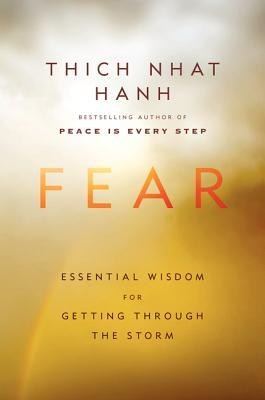
Fear: Essential Wisdom for Getting Through the Storm by Thich Nhat Hanh

Fear: Essential Wisdom for Getting Through the Storm by Thich Nhat Hanh

In Fear: Essential Wisdom for Getting Through the Storm, Thich Nhat Hanh simply and succinctly illuminates the Buddhist path beyond fear into an existence of freedom and joy.

“Nobody can give you fearlessness. Even if the Buddha were sitting right here next to you, he couldn’t give it to you. You have to practice and realize it yourself.” pg 6

Photo by Aleksandar Pasaric on Pexels.com

This book is more than theory, parables and anecdotal stories. Hanh also includes various meditations to assist in the effort.

“When the Buddha was very old, just before he died, he said, ‘My dear friends, my dear disciples, don’t take refuge in anything outside of you. In every one of us there is a very safe island we can go to. … That is a place where you can take refuge whenever you feel fearful, uncertain or confused.'” pg 71

He dissects the various forms fear can take in our lives- from fear of death, grief, anxiety about the future to reconciling with painful emotions from the past.

Photo by David Bartus on Pexels.com

My main takeaway from the book was, to deal with any kind of fear, we need only to approach it with mindfulness and compassion for ourselves and the suffering of others.

“We don’t try to grab on to the pleasant sensation, and we don’t try to push it away. We just acknowledge its existence. When a painful feeling comes, we do the same thing. … A feeling is just a feeling. And you are much more than that feeling.” pg 135

Hanh reminds readers that we are more than the temporary thoughts and feelings that cause so much havoc on their way through our minds and hearts. Our true nature is something else.

My favorite metaphor that Hanh employs to remind readers of this true nature is his comparison of a life to a wave.

“The wave is always water; it doesn’t ‘come from’ water, and it doesn’t go anywhere. It is always water; coming and going are just mental constructions. … Birth and death, coming and going, are just concepts. When we are in touch with our no-birth, no-death nature, we have no fear.” pg 50

Photo by Emiliano Arano on Pexels.com

I appreciated the reminders and found a lot of comfort in these pages. I hope other readers find the same.

Recommended for readers who are interested in learning and utilizing Buddhist philosophy and techniques to overcome any fear or other unpleasant emotion that may be in their lives.

Embrace Your Weird: Face Your Fears and Unleash Creativity by Felicia Day

Embrace Your Weird: Face Your Fears and Unleash Creativity by Felicia Day

Embrace Your Weird is a non-fiction and self help manifesto encouraging creativity and told in Felicia Day’s unmistakably humorous way.

I say “unmistakable” for any of her myriad fans who have watched her ground-breaking web series, “The Guild,” or read another of her books like You’re Never Weird on the Internet. Her tone and sense of humor remains the same.

Photo by Prateek Katyal on Pexels.com

And if you haven’t had the chance to enjoy any of Day’s other creations, I encourage you to give them a try. They’re light-hearted and fun.

“Aside from (over)sharing a lot of my opinions, I have filled this book with exercises designed to uncover the joy of creativity. To help people beat back the fear that keeps them from trying new things.” pg xi

On almost every other page, Day encourages readers to stop a moment and draw a picture, fill out a list, or write empowering messages over and over so that they’ll sink in. The act of reading this book is nearly a creative act in and of itself. (Sadly, I couldn’t do this because I was reading a library book. Suggestion for future readers: buy yourself a copy.)

“No, I don’t think creativity is a cure-all. But I do believe it could be a cure-most.” pg 29

Photo by Pixabay on Pexels.com

Besides reminding readers that we have unique voices and viewpoints that the world needs to hear, Day loosely structures the rest of the book off of life viewed as a game. She asks us to remember our “hero-self,” identify “enemies” and “allies” of our creativity, and to view the steps we take towards creation as “quests.”

Day also shares moments in her life when she’s completed or failed attempting various pieces of this philosophy in her own life.

“I constantly hand my heart over to strangers to batter however they wish, and I wonder why I’m constantly wounded all the time, and this makes me reluctant to create. Good way to operate? NOT REALLY!” pg 143

As I said, the whole book has a definite Felicia Day vibe. And it’s fun!

“Playfulness is the root of all creation. All invention. All discovery. There is no reason NOT to feel joyous when we make things.” pg 206

Photo by Sharon McCutcheon on Pexels.com

She wasn’t afraid to tackle all sorts of hang-ups people might have in their creative process. Day nailed my biggest issue: finishing projects once they’re started.

“But we will never get anywhere if we don’t focus on one thing at a time. And then see that thing through before moving on!” pg 239

Message received. Now to put it into action…

Recommended for anyone looking to start or jump start their creativity. This book is an excellent place to begin. Thanks for reading!

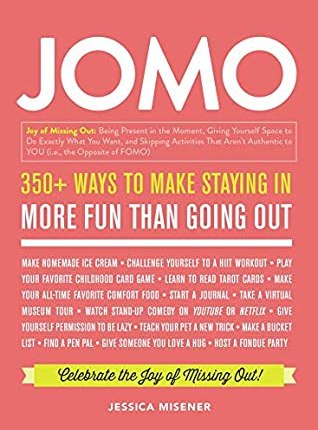
JOMO: Celebrate the Joy of Missing Out! by Jessica Misener

JOMO: Celebrate the Joy of Missing Out! by Jessica Misener

JOMO or “the joy of missing out” lists “350 plus ways to make staying in more fun than going out.” Unfortunately, a large number of these suggestions included books to read or programs to watch. In my mind, all of those fit into one of two categories, reading or watching television.

“Because skipping a night on the town doesn’t mean you’re missing out on life – you’re just missing out on someone else’s idea of what your life should look like.” pg 7

Photo by Alex Qian on Pexels.com

That being said, there were a few solid suggestions in this book for alleviating boredom. I particularly liked “shower with the lights off” pg 24, “listen to autonomous sensory meridian response videos” pg 47, and “do The New York Times’s 36 questions” pg 127.

The rest of these seemed repetitive, as I mentioned, or uninteresting.

Perhaps this book would have been more enjoyable in the pre-COVID world, when I hadn’t been quarantining at home for months, disappointed with the state of the world and feeling stymied. Maybe I could have gotten into “make a homemade pizza” or “rearrange your furniture.” But things have moved beyond expecting the completion of simplistic tasks to hold the answers to life’s problems, at least for me.

“Host a fondue party,” that appears on the cover of this book, seems like something that happened in another world. Will we ever get back there?

Photo by Laurel Natale on Pexels.com

Thanks for reading!

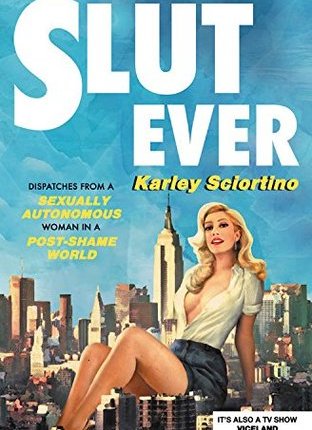
Slutever: Dispatches from a Sexually Autonomous Woman in a Post-Shame World by Karley Sciortino

Slutever: Dispatches from a Sexually Autonomous Woman in a Post-Shame World by Karley Sciortino

“Without question, if I weren’t a slutty as I am, my life thus far would have been far less interesting. … But my sluttiness has also been the cause of many existential bathroom-mirror moments.” pg 8, ebook

Photo by cottonbro on Pexels.com

Karley Sciortino, sex blogger and author, has led a self-described colorful life. It certainly comes through in this tell-all memoir.

Through her experiences, Sciortino has proudly embraced her sexuality and her place in society as a woman who knows what she wants in the bedroom, and takes it. This hasn’t been a simple path.

Part of her struggles are society’s views and programming about “slutty” women.

“It’s a no-brainer that we’re influenced by the people and stories that make up the culture around us. And it’s difficult to cite an example, either real or fictional, of a happy, healthy, promiscuous person – let alone a woman.” pg 8, ebook

The rest of her difficulties seem to stem from a lack of self knowledge or awareness. Sciortino isn’t afraid to tackle any and all issues head on in her own unique way.

“…my goal isn’t to be good or normal or accepted. My goal is to be free. (And maybe also to troll society a bit in the process, for good measure.)” pg 12, ebook

Photo by Nina Uhlu00edkovu00e1 on Pexels.com

It took me a couple chapters to get into this memoir. Sciortino’s writing style is frank to the point it sometimes feels abrasive, but it maintains an honest delivery throughout.

“My biggest revelation of the saga was that group sex is amazing for when you’re drunk, because you can just take a time-out whenever you’re bored or tired and someone else will literally take over for you. Genius.” pg 24, ebook

The early part of the book is fixated on sexual experiences and experimentation. As she delves deeper into her underlying motivations and psychology, Sciortino begins to get to the heart of matters. That’s when I felt this book became worth the read.

She had me asking myself some difficult questions: Why is sexuality such a complex issue? Why should people, in the privacy of their own homes and with proper consent, care what others think?

Photo by cottonbro on Pexels.com

Why are there different standards for men and women?

And why is sexuality, which can play such a large part of the happiness in our lives, so difficult to talk about? (For some, not Sciortino, obviously.)

Recommended for mature readers who don’t mind a nearly stream-of-consciousness style of writing as well as a thick skin to push through Sciortino’s delivery to get to the meaning behind the words – because there is meaning to be found.

Thanks for reading!

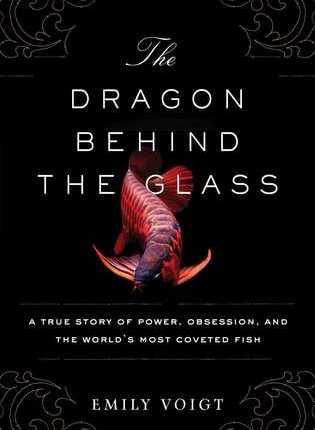
The Dragon Behind the Glass: A True Story of Power, Obsession, and the World’s Most Coveted Fish by Emily Voigt

The Dragon Behind the Glass: A True Story of Power, Obsession, and the World’s Most Coveted Fish by Emily Voigt

The Dragon Behind the Glass documents journalist Emily Voigt‘s descent down the rabbit hole of fish collecting, money, power, and scientific exploration in some of the most remote locations in the world.

“A pair of whiskers juts from its lower lip, and two gauzy pectoral fins extend from its sides, suggesting a dragon in flight. This resemblance has led to the belief that the fish brings prosperity and good fortune, acting as a protective talisman to ward off evil and harm.”

(Fish pictured below is not an arowana.)

Photo by Chevanon Photography on Pexels.com

Though it starts off with a major hook, Voigt takes the reader to a crime scene where a pet store owner appears to have been killed for his shelf of rare fish, the book begins to meander after that and never gets back to the compelling pace of the opening.

That is not to say there aren’t some fascinating history and fish-related trivia tidbits. In fact, the majority of the book consists of that.

“… the keeping of pets reflects our hunger for status symbols, for what the philosopher Jean-Paul Sartre called the ‘carnal, clinging, humble, organic, milky taste of the creature,’ which underlies all luxury goods. The modern pet shop first appeared in American cities in the 1890s; and with it began the mass importation of exotic animals from Asia and South America.” pg 21, ebook.

Photo by La Miko on Pexels.com

Voigt explores the history of aquariums, pet-crazes throughout history, and the ascendance of the arowana as the pet fish of choice in the East. Complicating matters, the arowana has become incredibly rare in the wild, partially due to its desirability among collectors, but also because of the destruction of its native habitat.

“The most highly coveted – or at least the traditional favorite – is the legendary Super Red, native to a single remote lake system in the heart of Borneo. … As late as 2008, researchers with Conservation International reported that rural Cambodians were still eating greens, even as wild populations plummeted due to over-harvesting for the aquarium trade.” pg 30, ebook

Like other rare and precious commodities, the interest and money surrounding the arowana has led to some shady dealings. I wasn’t too surprised by the alleged criminal activity Voigt describes among collectors. But I was flabbergasted by the fierce competition among some scientists in the rush to catalog and name the increasingly rare fish.

Perhaps that’s naive of me. Scholars jockey for prestige as much as anyone else. I suppose I’ve never stopped to think about it.

Photo by Andrea Piacquadio on Pexels.com

I was also surprised by how many species are out there that science has not studied yet.

“When I first set out to report on the Asian arowana, I figured I would start by finding the researcher studying the species in the wild- only to realize no such person exists. The popular illusion that modern science has the entire living world covered, that there is an expert analyzing every crevice, is far from true.” pg 205, ebook

Recommended for readers who are interested in a detailed study of fish, travel and history. It’s a slow-paced adventure, and not for everyone, but there are some treasures to be found if you stick with it.

Thanks for reading!

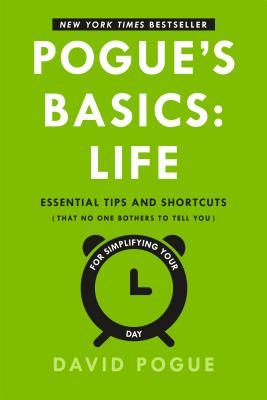
Pogue’s Basics: Life: Essential Tips and Shortcuts (That No One Bothers to Tell You) for Simplifying Your Day by David Pogue

Pogue’s Basics: Life: Essential Tips and Shortcuts (That No One Bothers to Tell You) for Simplifying Your Day by David Pogue

David Pogue and his team tested every suggestion in this book to verify that each works the way it is supposed to.

The result is a gem.

“… the morsels in this book describe features hidden right under our noses, features that lots of people don’t know about. As well as ‘Everyone’s been using it wrong’ insights. Plus tips that are clever, unexpected, and useful.” pgs 5-6

Photo by Kaboompics .com on Pexels.com

I knew some of the tips in these pages, but certainly not all of them.

When I’m done with this book, I’m going to gift it to my pre-teen, who thinks she knows everything but obviously doesn’t. I think she’ll find this incredibly handy in a few years.

A pot of water doesn’t boil over if you lay a wooden spoon across the top of the pot.” pg 81

Who knew? I didn’t. That’s one of the tips I’ve already used to make my life easier.

I’ve also utilized the tip for how to get ketchup out of the bottom of the bottle. And no, it’s not leaving it upside down and leaning against something for two hours though that does work. It is a much more immediate solution.

Photo by Vova Krasilnikov on Pexels.com

Some of the technology tips may be outdated, only because this book was printed in 2015. But I haven’t tested them all yet, so don’t hold me to it. It’s one small section in a stellar lineup of life “basics” that cover topics including the car, travel, food, clothes, your body, animals, house and home, and more.

Highly recommended for anybody who’s looking to make their lives a little bit simpler. Let’s be honest then, that’s everybody.

Thanks for reading!

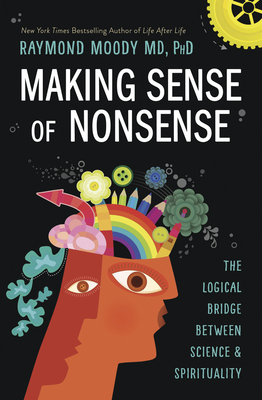
Making Sense of Nonsense: The Logical Bridge Between Science & Spirituality by Raymond Moody

Making Sense of Nonsense: The Logical Bridge Between Science & Spirituality by Raymond Moody

“A little nonsense now and then, is relished by the wisest men.” ― Anonymous

Raymond Moody, renown researcher of near death experiences (NDEs), has spent decades codifying and categorizing nonsense, proving it has a structure. Through his endeavors, Moody hopes nonsense, spoken by those who experience NDEs or upon their death beds, may be analyzed in order to provide another avenue of exploration into humanity’s experience after death.

It may sound like a load of nonsense, but I promise it is anything but. 🙂

Photo by Produtora Midtrack on Pexels.com

“Nonsense itself affects people positively, but the word ‘nonsense’ affects people negatively. That is, people like nonsense itself, but they dislike the word ‘nonsense.’ … they associate the word ‘nonsense’ with one common negative effect of involuntary nonsense: specifically, errors.” pg 13

It is not the accuracy of the utterance that researchers are examining, instead, it is the structure of the language itself.

In a class on this topic, Moody says his students learned to identify and write seventy different types of nonsense. (Who knew there were so many!) Once you know the forms, you’ll be able to do the same.

Why is this useful if you’re not a NDE researcher? Not only is nonsense regularly utilized in poetry, plays, television shows and other forms of entertainment, Moody shows examples of nonsense in religious texts, alchemical writings, advertising and more.

“My sense of nonsense has been an indispensable asset during my career as a medical doctor and psychiatrist, for it often helps me make sense of someone’s unique inner experience.” pg 105

Photo by Andrea Piacquadio on Pexels.com

And he’s right. Since finishing this book, I’ve become aware of how often nonsense is bandied about in both daily conversations I have with friends and family as well as in the Netflix shows I watch.

It’s not only used for communication and art. Moody claims nonsense goes a step further, providing a link to other mystical states of mind.

“Talking nonsense to people makes them experience a curious, hard-to-describe alternate state of consciousness. In sum, nonsense is an alternate state of language that can induce an alternate state of consciousness.” pg 125

Photo by Vinícius Vieira ft on Pexels.com

So, babble away, my friends. If anybody says anything negative about it, tell them you’re conducting a science experiment and you won’t just be talking nonsense. 🙂

“It takes a heap of sense to write good nonsense.” ― Mark Twain

Thanks for reading!

The Spiritual Gift of Madness: The Failure of Psychiatry and the Rise of the Mad Pride Movement by Seth Farber

The Spiritual Gift of Madness: The Failure of Psychiatry and the Rise of the Mad Pride Movement by Seth Farber

In The Spiritual Gift of Madness, Seth Farber interviews half a dozen people who have had negative experiences with western psychology as well as experts in mental health. His thesis is the mental health system as it is values medication over other types of therapy and, because of this misguided focus, harms the very people it is attempting to help.

He is a champion of the Mad Pride movement, a group that seeks to celebrate and assist those suffering from mental health issues to embrace who they are rather than medicating it away.

Photo by Engin Akyurt on Pexels.com

“… helping the mad does not mean drugging or coaxing them into a state of “adjustment,” but rather appreciating the state of madness for what it is: an existential clearing in the jungle of our insane modern society that potentially leads into the realm of true sanity, which, in the world today, means a state of creative maladjustment.” pg 124

I should mention that Farber doesn’t use “mad” in a negative way, rather he uses it to highlight how individuals with different viewpoints from the rest of society are marginalized and sedated into silence. He puts forward the idea that insanity is believing everyone must view the world in the same manner or be ostracized for it. He holds up society’s repeated failures to handle issues like global warming to racial and gender equality as evidence of the insanity of the world.

“Now one of the things that’s so detrimental about the hospitalization is the power impact of being treated like a patient – people end up believing they’re chronically mentally ill.” pg 44

Farber believes mental illness is a transition to a new, potentially powerful state of being that, as a modern society, we quash before it’s completed. He points out that many of the great prophets and visionaries from history had, what we would now call, complete breakdowns before their epic breakthroughs.

Photo by Ryan Millier on Pexels.com

“… a few weeks of mania could give one access to a sense of understanding that it could take ‘years of meditation’ to achieve, access to visions of ‘the wholeness’ of the universe and ‘the interconnected nature of love, access to a sense of time and space that allows one to discern what is and what is not important.'” pg 21

Instead of medication and psychiatric facilities, Farber would like to see the creation of safe havens for people going through this process so they could assimilate whatever is going on in their minds before going back to the rest of society. That would be for the experiencer’s protection as well as the public.

I think Farber brings up important issues in this book. As someone who has struggled with mental illness, I’ve viewed the system from the inside and recognize some of the problems he points out. There’s the stigma of the diagnosis and the embarrassment of feeling separated from “normal”. There’s the expectation you will take your meds from the day you’re labeled until you die, no matter the side effects.

But, worst of all, is feeling like you can’t trust what’s going on in your head because it went so spectacularly wrong before and what’s to prevent it from going sideways again.

I agree some changes need to be made to the system and, as a society, perhaps we can do a better job minimizing stigma, maximizing communication, and helping people live in a happy and healthy manner that they choose.

However, I feel like Farber goes too far in his insistence that the “mad” are the future. That somehow they hold the keys to a paradise on earth if only we’d let them share their messages unfettered.

Photo by Oliver Sjöström on Pexels.com

In the midst of my psychosis in 2009, I wouldn’t have wanted any of the nightmares in my head to permanently affect my future or my family. If there are lessons to be learned from it, maybe it’s an individual message for the people undergoing the change rather than expecting it to be universal lessons, applicable for everyone.

But, that’s my two cents. I certainly don’t have all the answers, but The Spiritual Gift of Madness asks some interesting questions.

Recommended for seekers who are interested in a different way to both approach and treat those with mental illnesses or for those who have gone “through the looking glass” and are now viewing the world from the other side, like me and the people in this book and many, many others.

Thanks for reading!

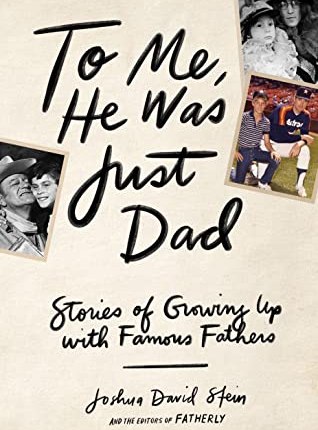
To Me, He Was Just Dad: Stories of Growing Up with Famous Fathers by Joshua David Stein

To Me, He Was Just Dad: Stories of Growing Up with Famous Fathers by Joshua David Stein

To Me, He Was Just Dad is a collection of essays written by the grown children of famous or otherwise notable men. From scientists to musicians, actors to drug lords, the vocations of the featured fathers runs the gamut. There’s even one Catholic priest.

“How wide, we wondered, is the gap between what the public thinks of notable men and what the sons or daughters of those men experience? Do great men make for great fathers?” pg 6

Photo by Ketut Subiyanto on Pexels.com

The essays themselves are intimate portraits into the private lives of all of these people who, because of their success at whatever they chose to do, the world acts like we already “know.” The fascinating part of this book is how little we know them at all.

We venerate famous people. This book is a great reminder that, at the end of the day, they’re just people and put their pants on one leg at a time like the rest of us.

Though, admittedly, some are much more talented at cooking eggs, like Claudine Pepin’s dad, the famed chef, Jacques Pepin“I feel like Papa taught half of America how to make an omelet. He taught me how to make an omelet, too, and also how to walk, ski, and drive (that one was a touch stressful). But one of the most important things he taught me was how to be part of a deep and enduring friendship.” pg 35

Photo by ROMAN ODINTSOV on Pexels.com

Fame is such a strange lens. Through it, some qualities are magnified while others are lost in the glare.

The same is true for infamy. The two who stuck out to me in that particular category were “My Father the Cult Leader, Saul B. Newton” and “My Father the Drug Lord, Pablo Escobar“.

Here’s Newton’s daughter, Esther: “My dad was an amazing, complicated, brilliant individual. It was important to me that he wasn’t remembered only as a nutjob with a cult.” pg 52

Escobar’s son remembers how his father, the drug lord, implored him not to do drugs. He also recalled living much of his early life on the run.

I think the small details add such dimension to these famous lives.

Take, for example, the fact that Evel Knievel, of daredevil fame, didn’t want any of his children to follow in his footsteps because he thought it was going to get them killed. It was fine for him to risk his life, but not ok for his beloved children.

Photo by Mridul Pradeep on Pexels.com

Makes you view him just a little bit differently, doesn’t it? He seems like a multi-dimensional individual to me now and not just a fearless dude on a motorcycle.

Highly recommended for non-fiction readers. This book is a treat.

Thanks for reading!