Fresh Off the Boat: A Memoir by Eddie Huang

Fresh Off the Boat: A Memoir by Eddie Huang

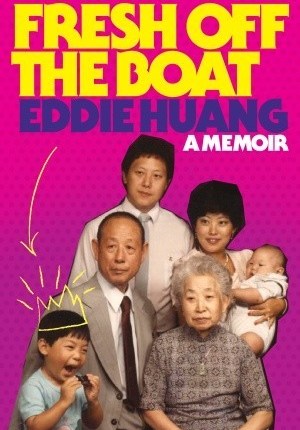
Fresh Off the Boat is the life story of Eddie Huang.

After learning about his various exploits, some of which were extremely dangerous, I was amazed that he’s still around to recount them.

I picked up this memoir because I’ve seen almost every episode of the network family comedy, “Fresh Off the Boat,” and wanted to read the source material behind it.

As sweet as the show is, I think it does Huang a disservice.
Photo by Prince Photos on Pexels.com

I guess because it’s on network television, writers have essentially edited Huang’s life story. In the television show, the character of Eddie loves rap music, basketball and eating, (like he did in real life) but it leaves out the more real portions of Huang’s history.

His classmates called him racial slurs on an almost daily basis. He was subjected to physical abuse from his parents. He got mixed up in drugs and selling name brand shoes. He was arrested for fighting.

Photo by king Siberia on Pexels.com

The reason why his grandmother is in a wheelchair, which is depicted on the show though the reason is never given, is because her feet were bound as a child.

All of that realness is completely missing from the television show. But it is so important to creating the man Huang is today.

Photo by Pixabay on Pexels.com

The differences between the book and the tv series aside, Huang has a fascinating voice. He’s, at turns, funny and real. He explains his more obscure slang references at the end of each chapter in footnotes.

“I think my mom is manic, but Chinese people don’t believe in psychologists. We just drink more tea when things go bad.” pg 12, ebook

The window Huang opens into his culture is an enlightening one. He’s the first generation of his family to be born in the United States, but he doesn’t ever really embrace being American. He exists in a realm in between because he is never truly accepted by his European peers.

Photo by Juan Pablo Serrano Arenas on Pexels.com

“Since kindergarten my parents had been sending me to Christian schools, where the teachers would feed me soap and made me use my right hand even though I’m a lefty, because we supposedly got a better education at parochial schools even if we weren’t actually Christians.” pg 26, ebook

In an effort to get along better with his teachers, Huang even acts as if he embraces Christianity when in reality he was just trying to survive. I felt sad that he had to pretend to be something other than who he was to make his way in the world.

Photo by Drigo Diniz on Pexels.com

“They’ll never let someone with a face like you on television.” To this day, I wake up at times, look in the mirror, and just stare, obsessed with the idea that the person I am in my head is something entirely different than what everyone else sees. pg 41

I highly recommend this memoir for readers who want to learn about another person’s life experience. Huang has penned an engrossing memoir about someone who took some unexpected turns on the way to his destiny — creating a wildly popular eatery in New York City. I enjoyed every story and learned so much.

Mrs. Sherlock Holmes by Brad Ricca

Mrs. Sherlock Holmes by Brad Ricca

In the era before women could vote, an extraordinary detective and lawyer was solving crimes the police couldn’t and defending those who couldn’t afford it. Her name was Grace Humiston and this is her story.

Grace was admitted to the bar in the state of New York in 1905, becoming one of only a thousand female lawyers in the whole United States. pg 29

Photo by Taryn Elliott on Pexels.com

Readers, this lady was incredible. Though she fell out of public favor later in her career, Grace accomplished so much. She was the first woman to become a consulting detective for the New York Police Department. They formed a missing persons bureau because of her work to reform how they searched for victims of crimes.

Grace was even the first woman to serve as a Special Assistant U.S. District Attorney. She brought down businesses that were abusing immigrants through peonage practices. I’m telling you, this lady was hardcore.

The case that catapulted her into the limelight was the disappearance of Ruth Cruger, a teenager who went to get her ice skates sharpened in New York City and never returned. Her family insisted Ruth wouldn’t have run away, as the authorities suggested when they reported her disappearance.

“My girl has been kidnapped,” Henry said to the reporters. “This talk about her having gone away voluntarily is an unwarranted insult to her and to us. It is nothing more than a screen for police shirking.” pg 47

So who did he call? Grace Humiston.

Photo by Wallace Chuck on Pexels.com

When a reporter asked about how she had solved the case so quickly after the police had given up, Grace did not couch her words. “To begin with, the police are no good,” Grace told the reporter. “They had all the facts to start on that I had and did nothing.” pg 71

Savage.

The facts of this story merit a five-star rating but how they are organized brought down my rating of this book. Brad Ricca opens with the Ruth Cruger case and puts chapters inbetween detailing Grace’s history. It disturbs the flow of the story. I think if he had gone from an opening, gripping chapter about Ruth into a chronologically organized history, I may have enjoyed it more.

Another gripe some readers had with Mrs. Sherlock Holmes is that it had an unsatisfying conclusion. I’m not of that opinion. Often, life doesn’t end stories with a bowtie or an ending worthy of their beginning. In non-fiction, especially when careers rise and then fall as in this book, there isn’t a satisfying ending to be had.

I enjoyed learning about this extraordinary lady and I appreciate the level of research Ricca put into these pages. One can feel, especially in the conclusion, how this was a labor of love for him. Not just to bring Grace back into the public’s mind and heart, but also to remind readers about how people still go missing today and, sometimes, they’re never found.

Photo by Ylanite Koppens on Pexels.com

I wanted to reprint all the people gone missing in the last year here, at the end, but it would not have been ‘cost effective’, they told me, even in the smallest type. So think of one name for me. Maybe it is someone you know. Or someone you saw on a show or a flier once. Or maybe it is your name, or a name you once had. Whoever it is, write that name here…. pgs 362-363

We are solving more and more cold cases with the advent of DNA databases. Perhaps some day this issue will be a thing of the past. Until then, we’ll rely on the Graces of today to lead us, clue by clue, to wherever the trail ends.

Thanks for reading!

Here’s the History Guy episode I wrote about Grace Humiston:

Primates of Park Avenue: a memoir by Wednesday Martin

Primates of Park Avenue: a memoir by Wednesday Martin

Primates of Park Avenue is a glimpse into the life of the privileged mothers of the Upper East Side of Manhattan. It’s weird, otherworldly, and off-putting, at first, but then as Wednesday struggled more and more to fit in and, ultimately, thrive, I found myself cheering for her. I can see how this book isn’t for everyone though. If you don’t like reality television or the details of petty power plays between ridiculously rich socialites, you may want to read another memoir.

As a mother myself, I was thanking my lucky stars as I turned every page that I didn’t happen to end up in New York City. I wouldn’t want that type of pressure on me: to look a certain way, act a certain way, or make my family act a certain way. I can’t imagine that it would ever make me happy and I’m surprised that Wednesday managed as well as she did and emerge, for the most part, unscathed.

The author’s reason for writing: “This book is the stranger-than-fiction story of what I discovered when i made an academic experiment of studying Manhattan motherhood as I lived it. It is the story of a world within a world, a description I do not use lightly.” pg 18, ebook

The “world in a bubble” that is Manhattan: “…many of us live unconstrained by our environment in unprecedented ways. But nowhere, I considered as I walked from here to there every day, foraging for crisp Frette sheets and shiny All-Clad pots and pans and the perfect sconces, are we as radically and comprehensively released as on the Upper East Side of Manhattan. It was the land of gigantic, lusciously red strawberries at Dean & Deluca and snug, tidy Barbour jackets and precious, pristine pastries in exquisite little pastry shops on spotless, sedate side streets. Everything was so honeyed and moneyed and immaculate that it made me dizzy sometimes.” pgs 77-78, ebook

Wednesday forgets to register her child for nursery school and has to scramble and beg to even get applications to the Upper East Side Schools because, if she doesn’t, she isn’t living up to the expectations of her peers: “Thus began my disorienting slide from bystander to total buy-in: with fear. I had been seized by the culturally specific and culturally universal anxiety of not being a good enough mommy, of being a mommy who does less than enough for her children.” pg 90, ebook.

The thing is, in my experience, all mothers deal with that fear. Most of us are just fortunate enough to be in a place that doesn’t put a social magnifying glass on it.

My favorite part- Wednesday decides to get a Hermes Birkin bag to stop women from “charging” (crowding) her on the Manhattan sidewalks: “Like a totem object, I believed, it might protect me from them, these ladies who were everywhere in my adopted habitat and who said so much without a word, using only their eyes and their faces and, always, their handbags. Perhaps, I thought, a nice purse like the ones they had might trick them, mesmerize them into believing that they oughtn’t challenge me to sidewalk duels and all the rest.” pg 132, ebook. Never underestimate the power of a really nice bag…

The most disturbing part, for me, was the reliance of all of these women on their husbands: “…with resources under their control, with wives who are dependent on them caring for their even more dependent offspring, privileged men of the Upper East Side can do as they please. Men may speak the language of partnership in the absence of true economic parity in a marriage, and they may act like true partners. But this arrangement is fragile and contingent and women are still dependent, in this instance, on their men- a husband may simply ignore his commitment at any time.” pg 241, ebook

That really bothered me.

Wednesday ties up the memoir with a heartbreaking chapter from her own life. I won’t spoil it for readers, other than to say, that I found it very difficult to get through. Primates of Park Avenue seems like a frothy and frivolous bit of writing about women who already have so much privilege that their lives didn’t need the examination, but then I realized, that universal problems like gender inequality and becoming a part of the group transcend culture, time, and place.

If you’re looking for more books on these sorts of social questions, you may want to read Lean In: Women, Work, and the Will to Lead by Sheryl Sandberg or Spinster: Making a Life of One’s Own by Kate Bolick.

Thanks for reading!