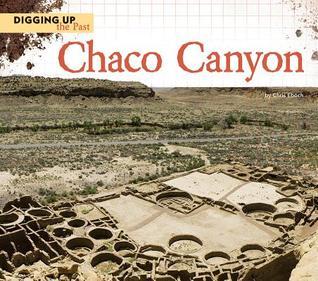
Chaco Canyon is among the most important archaeological sites in North America. pg 7
This non-fiction book for middle graders, part of the “Digging Up the Past” series, gives information about Chaco Canyon, a site that still holds mysteries to be discovered.
It was home to many people but at some point, it’s not clear exactly when, the population wandered away, leaving ruins behind.
According to one descendant, “They didn’t abandon this place. It is still occupied. We can still pray to the spirits living in these places from as far away as our pueblo.” pg 84
The book gives information about the history of digs at the site, which were not conducted with the care and documentation that such things require today. I found that part of the book quite sad. Imagine all of the history that has been lost.
It touches on the challenges researchers face today in their efforts to study Chaco Canyon. These include damage from the weather, large numbers of visitors, and looters.
Recommended for children interested in non-fiction.
This is Tanya Ward Goodman‘s memoir about how she loses her father and grandmother- first through Alzheimer’s and then to death. Leaving Tinkertown is a powerful look at end-of-life issues and family love.
It is an incredibly raw and straight forward account of a period of unimaginable change in the author’s life.
Tanya handles the deterioration of her father very well. I suspect that this ability to quickly and seamlessly accustom herself to change probably evolved from her childhood experiences with her father at carnivals and on road trips. With the background changing continuously, she had to change too but hold on to some essential part of herself. This characteristic served her well during her adult years.
Tanya’s father was a prolific artist. Because of his extreme creativity, I think that she was exposed to his mercurial moods long before he began losing his battle with Alzheimer’s. Artistic types seem to walk a fine line between logical thinking and madness. Their families get to walk that journey with them. That doesn’t mean that his descent into darkness didn’t hurt Tanya, but that she was more able to cope with his moment to moment shifts in behavior because she had experienced them before.
Through this adversity, she grows closer to her brother, step-mom, and mother as they work together to care for her dad.
Tanya doesn’t gloss over her family’s shortcomings but comes to accept everything that each person brings to the table: “… I am starting to understand that doing all you can do, even if it doesn’t seem like very much, is enough.” pg 193.
When a strong, vital person in your life is no longer able to care for themselves, it’s heartbreaking.
My own grandfather, a force of nature, lost some of his heart when the family had to take the keys to the car away because he didn’t have the strength to drive safely anymore. This book was hard for me to read because Tanya knows what it feels like to cause that type of pain too.
It brought back so many small moments when I was in a care-taking position for him. You want to provide the best quality of life that you can, but when the person can no longer clean, feed, or clothe themselves, then the really difficult decision making begins. Tanya and her relatives seem to make the process relatively simple even though I know that it is anything but that.
We all know that we’re not going to live forever but when you’re dealing with loss of physical strength or mental capacity in your own life or the lives of those you love, you get very close to that idea. It’s like the difference between looking through a window and having your face smashed up against the glass. When it’s right there, you can’t look away.
I’d recommend this for anyone who is caring for an aging or ill family member and needs a reminder that it’s all going to turn out alright. As Tanya reminds us, we just need to do all that we can do even if it doesn’t seem like it is very much.
I received a free copy of this book through Goodreads First Reads program. Thanks for reading!



 The Help Desk Book Blog