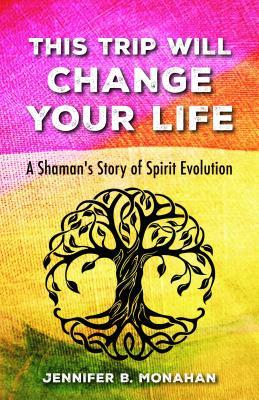
This Trip Will Change Your Life: A Shaman’s Story of Spirit Evolution by Jennifer Monahan

This Trip Will Change Your Life: A Shaman’s Story of Spirit Evolution by Jennifer Monahan
tripwillchangeyourlife

This is a firsthand account of Jennifer Monahan’s discovery of her spiritual path and budding abilities as she becomes a modern day shaman.

From the introduction: “Let me start off by saying that I’m nobody special- or at least not any more special than every other person on the planet. But I do believe in magic. And the power of the universe in our lives. This is a story about magic- everyday magic that exists in everyone’s life but that for many goes unnoticed and unappreciated.” loc 26, ebook.

I think that everyone has potential, but sometimes they don’t tap into it because they can’t see how or don’t realize that they can. Jennifer Monahan empowers the reader through her example.

Shamanism, though ancient, feels New Age.

Take this teaching about the mind: “The purpose of the mind, Antonio said, is to train it so that it focuses on those things that make the spirit sing and bring it joy- and to let everything else just slip on by without letting it get caught in the mind… Doing this enables people to live in a state of happiness, peace, and self-love.” loc 153, ebook.

That’s the message of Thank & Grow Rich: A 30-Day Experiment in Shameless Gratitude and Unabashed Joy, Ask and It Is Given: Learning to Manifest Your Desires, The Secret… I could go on. Perhaps the New Age teachers are on to something :).

My favorite parts of This Trip Will Change Your Life were the messages that Jennifer received during meditation and what she experienced during her vision walks. It is always positive, loving, supportive or healing wisdom that is shared.

Photo by Tobi on Pexels.com

Here’s the universe speaking to her while she breathes: “You don’t have to do anything. Just be. Radiate love out from your core. Focus on that and on being present. Be accepting of people- that is the first step. You’re doing that now; keep it up. Share your joy- find it! Tap into your life.” loc 503, ebook.

I can see this book not appealing to everyone: Jennifer has a few moments of “far out” behavior like talking to her crystals and receiving their wisdom, but if you believe that everything contains a spirit (the philosophy in The Life-Changing Magic of Tidying Up: The Japanese Art of Decluttering and Organizing comes to mind) then it is not such a stretch to entertain the idea that one could communicate with inanimate objects.

Western Qabalists have taught for centuries that everything has a guiding intelligence and that to tap into it, you just have to clear your thoughts, ask, and be ready for the response. But, if you don’t have a fairly open mind about such things, this might not be the book for you.

Overall, I loved the message of this book and the approachable way that Jennifer explains shamanism. “The realization that I’ve come to is that the basic human need is to be loved. And that love needs to come from within. When we feel love for ourselves, we are happy and feel good. We can then send our love unconditionally out into the world.” loc 751.

Highly recommended for those who are curious about shamanism or finding one’s spiritual calling- whatever that may be.

Recommended read alikes: the books I linked above as well as The Flying Witches of Veracruz: A Shaman’s True Story of Indigenous Witchcraft, Devil’s Weed, and Trance Healing in Aztec Brujeria by James Endredy (another modern shaman), The Way of the Shaman by Michael Harner(classic text, gives plenty of general knowledge and practices) or Active Dreaming: Journeying Beyond Self-Limitation to a Life of Wild Freedom by Robert Moss (incorporates the shamanistic practices of the Aborigines for a modern audience).

Thank you to NetGalley and She Writes Press for a free digital copy of this book! And, thank you for reading.

Uncharted: The Journey through Uncertainty to Infinite Possibility by Colette Baron-Reid

Uncharted: The Journey through Uncertainty to Infinite Possibility by Colette Baron-Reid
uncharted

In Uncharted, Colette Baron-Reid guides the reader with journaling, visualization, personal stories, and meditation exercises through unexplored realms of the spirit as a method for greater self knowing and actualization.

I enjoyed this book, but it felt a bit all over the place. Let me explain what I mean by examining some of the many subjects discussed:

In the introduction, Colette begins by giving some background information into what’s been going on with her for the past couple of years.

One of those big changes is that she is now channeling an group of beings, whereas, prior to this, she wasn’t.

In this passage, she’s talking about the entity helping her to write Uncharted: “It’s like “they” had the puzzle pieces, and when I was ready for them, they dropped them down on the page for me to discover. I’m not realizing that this is, in essence, what channeling an “entity” is. It’s something I never quite understood, and I’m afraid I didn’t respect its power as I should have. So I hereby surrender my inner critical cynic who doubted others when they shared their channeling stories. I get it now.” loc 55, ebook.

She calls this/these entities, Fred. Throughout the book, Fred pops up and shares a message or clarifies something. I felt as if the channeled messages could have composed a whole other book in addition to this one.

Plus, it’s clear that she’s still honing her ability to talk and understand to this inner knowing. Anyway, it “muddied the waters,” so to speak, of Uncharted from nearly the first page.

Colette doesn’t think much of the ego or what she calls the “small self”:“When you view the world through the limits of your small self, you see only the separated parts of the material world. You are guided by your personal narratives that tell you who you are based on your past experience, ambitions, and goals that were set within the Realm of Form. You’re oblivious to being part of one big matrix of interconnectedness. You forget where home is, and you feel lost.” loc 634, ebook.

Photo by Sachin C Nair on Pexels.com

I’ve read all sorts of different teachings about the ego, but I’ve started to lean towards Abraham Hick’s thoughts on the matter. They teach that the ego is the lens through which the divine within you perceives reality and that our desires are breadcrumbs along the path to eternal joy if we allow ourselves to realize them.

Hicks also says that (paraphrasing): “If you only remembered how much you wanted to be in these bodies, you wouldn’t be so quick to fault yourself and your desires. You are the leading edge of thought- you take spirit beyond which it has ever been before.”

In my mind, that is the function of ego: to express our unique personality. Isn’t the desire to be free of ego also a desire driven by the ego?

I did like Colette’s definition of co-creation, which is one I’d never heard before: “Here’s how it works between you and Spirit. You, as an individual, are always cocreating. The divine creative force is always there with you, along with spirits and allies who enthusiastically join in as you co-create reality. And you are never alone.” loc 712, ebook. Encouraging, I think.

Photo by Mayu on Pexels.com

I also liked the lesson on fate, our internal “stories” and the subconscious mind: “Listen, it’s not fun to admit that while your story about yourself has been influenced by other people and things that just seemed to happen “to” you, it was also co-written by you personally to a large degree. Fate played a role, to be sure, but you can take much greater control over your “fate.” As Carl Jung is supposed to have said, “Whatever is not brought from the unconscious into the awareness seemingly comes to us as fate.” loc 1568, ebook.

The fact that shadow dwells hand in hand with light is something that I’ve learned through my own meditation practice.

Here’s what Colette has to say about it: “In the Realm of Light, we recognize that light always exists in duality with a shadow- there’s no avoiding it. There is always a dark side to everything, a contrast between what is nourishing and loving and what is draining and entangled in fear, anger, or hatred. Those emotions will always exist, but they don’t have to overwhelm you or scare you away from the process of co-creation and transformation.” loc 1892, ebook. I believe that is true.

As for the movement through Colette’s “realms”, it reminded me of shamanistic work by Robert Moss. I’m not sure about the order in which she explores things (seems like every teacher has a different way to do it), but I think that, if your intention is greater self knowledge and if you practice what Colette teaches, you will find it.

In fact, if you try just a fraction of what she suggests in Uncharted, you will learn something about yourself. She gives plenty of exercises to attempt in here if one particular method doesn’t speak to you.

Recommended mainly for the New Age enthusiasts because of the subject matter, methods, and channeled material, but also for anyone who is curious about finding and embodying one’s authentic power.

Some similar reads: Thank & Grow Rich: A 30-Day Experiment in Shameless Gratitude and Unabashed Joy by Pam Grout, Ask and It Is Given: Learning to Manifest Your Desires by Esther Hicks, and Active Dreaming: Journeying Beyond Self-Limitation to a Life of Wild Freedom by Robert Moss.

A big thank you to Hay House and NetGalley for a free digital copy of this book!  And thank you for reading.

A Brief Tour of High Consciousness: A Cosmic Book on the Mechanics of Creation by Itzhak Bentov

A Brief Tour of High Consciousness: A Cosmic Book on the Mechanics of Creation by Itzhak Bentov

If you’ve been following this blog for awhile, you know now that I really enjoy “fringe” non-fiction that chronicles out of body experiences and remote reviewing.  This is another of those books.

If you’re not into those topics, my apologies in advance. 🙂

A lighthearted yet profound guide to the realms of higher consciousness and the ultimate nature of reality.

Goodreads
Photo by Pixabay on Pexels.com

My research into consciousness exploration continues with A Brief Tour of Higher Consciousness by Itzhak Bentov.

Having predominantly read books like this by artists (Jurgen Ziewe and Kurt Leland come to mind), it was refreshing to have a first person narrative by an engineer. Itzhak’s lens of perception is so different than my own- I loved it.

There is a part towards the end, What is a Hologram, and a chapter by another author, Essay on Cosmology by Edward Apgar, that I didn’t resonate with at all. But, perhaps for the most scientifically-minded, those parts will be your favorite.

hologram

Hologram image from nationaldefensemagazine.org

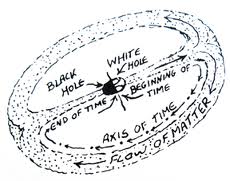
Itzhak has simplistic doodles scattered throughout the text which brings a “Randall Munroe” feel to the book- the use of simple pictures to illustrate complex and abstract ideas. This author definitely feels to me as if he was a bit ahead of his time in both his presentation and materials.

bentovdoodle

Bentov doodle from ritamarrpositivechange.wordpress.com

Itzhak’s explanation of “lens of consciousness”: “As consciousness evolves and information starts pouring in, the information is couched in a language best understandable to the person involved. For instance, a poet will be shown the nature of Creation in poetic images, an artist in visual symbols, and a mathematician in abstract equations; a nuts-and-bolts fellow like myself will have it shown to him as structure.” pg 5

I was reminded of Robert Monroe’s Journeys Out of the Body in which he puts emphasis on recording and comparing out-of-body experiences for consistency and real world applications to bring legitimacy to the practice.

I’ve heard that we’re all made of star dust and I really liked Itzhak’s description of it in this passage: “Stars collect into clusters or galaxies, and as they die, they explode and create cosmic dust, which again condenses into new stars and planets. Everything in the entire universe, including our bodies, is made of one cosmic substance. We contain atoms from the most distant galaxies and are thus connected to the whole universe.” pg 13

starsinthesky

Stars in the sky from wikipedia.org

Everything is vibration: “In short, consciousness in a vibratory state manifests itself as our familiar matter, from which the different forms that we see around us are made. The table, the flowers, the scent of the flowers, and our bodies are all made of rapidly vibrating consciousness.” pg 20 Wild!

A discussion of how to interact with devas (an ant deva to be precise, which is kind of silly, I realize), which Itzhak describes as “The name given to a being that is the rudimentary consciousness of any structure”: “To negotiate with her, the currency of exchange is love. Just send the ant deva a lot of love, which will stimulate her evolution. Even ant devas need love, in order eventually to know their Creator.” pg 33

Photo by Jimmy Chan on Pexels.com

In my meditations, I’ve frequently experienced what Itzhak describes in this next passage. It was nice to finally have a reason why: (While in a meditative state) “Wiggle your body. This causes a disturbance, a vibration, to spread … (This is similar to a fly falling into a spider web. The vibration of the web signals the spider and it shows up to investigate its dinner.) The deva .. appears immediately, looking worried and saying something like “What do you want?” or “Who are you?” pg 35

I’ll close with this excerpt of Itzhak’s philosophy: “There is nothing absolute and final. If everything were iron-clad, all the rules absolute and everything structured so no paradox or irony existed, you couldn’t move. One could say that man sneaks through the crack where paradox exists.” pg 78

If you enjoyed this book, you may want to take a look at Otherwhere by Kurt Leland or Multidimensional Man by Jurgen Ziewe. If you liked the doodles of complex concepts and want more of that, try Thing Explainer: Complicated Stuff in Simple Words by Randall Munroe.

Thanks for reading!

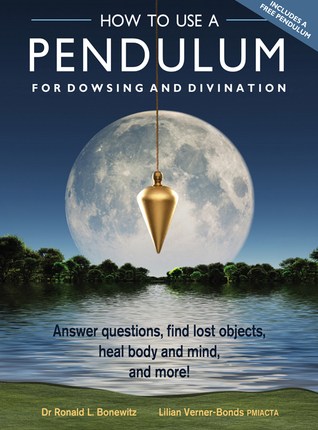
How to Use a Pendulum for Dowsing and Divination by Ronald L. Bonewitz

How to Use a Pendulum for Dowsing and Divination by Ronald L. Bonewitz
pendulum

I read a book a couple of years ago called Extraordinary Knowing: Science, Skepticism, and the Inexplicable Powers of the Human Mind by Elizabeth Lloyd Mayer. She opens the book with a chapter about how her daughter’s instrument was stolen and she called a professional dowser, though she didn’t believe in such things, to help her find it.

And guess what happens. 🙂

Pendulums work along the same kind of lines as dowsing and, after reading that, I thought maybe there is something to this.

You can watch Elizabeth Mayer talking about her experience on YouTube by clicking this sentence.

There used to be holistic shop (it has since closed) in my town that I liked to pop in for “fringe” books that libraries don’t purchase (but I love!) and, one day, the owner had a huge collection of pendulums for sale. I picked one up, not knowing anything about it beyond what I had read in that book, and it has sat on my meditation table for months, just looking mysterious and interesting.

Then, last week, I saw this book and was so excited to finally have some instructions!

pendulum-brass-gemstone

Photo from shamanschool.com

First of all, some background info: (Divination practices) most directly related to pendulum use fall under the general category of sortilege- the casting of lots. The word ‘sortilege’ comes from the Latin word sors, which means lots, and the title Sortilegus was given to the person who was the reader or the diviner via means of this process. Broadly, the practice involved (and still involves) holding an object or group of objects in the hand or hands while imbuing them with the question for which an answer is sought, then casting them through the air. It was believed that the answers were ‘in the air’, and that, as the lots moved through it, they became impregnated with the answer, causing them to fall in a certain pattern. The answer is then divined from the pattern made by the objects in their landing positions. The movements of the pendulum are derived from the same source.” pg 11

herkimon

Image from http://www.harmony000.org

What is divination anyway?: “Divination lifts up and beyond the normal. Divination is all a question of moving the self into a deeper consciousness, a totality of awareness, of discovering messages and information as we seek, passing between the mind of the great architect of the universe and the mind of man. Divination is a state; it is not a technique. But, you can use techniques to develop your ability to be in that state.” pg 15

I’ve always used meditation for that.

I thought that the authors took the use of pendulums a bit too far in this part where they advised bringing your pendulum with you wherever you go ‘just in case’: “Carrying your answers with you- Pendulum work is extremely useful in your everyday life, whether at home or abroad. For instance, at the local market or the supermarket, if you can’t decide which grocery to put in your basket, use your pendulum. You can also use it for yourself, for those times when you’re wondering ‘Is this product good for me?’ Maybe, maybe not. It’s helpful to be informed. Before purchasing anything, you can check.” pg 56. Intriguing idea, but I just can’t see myself doing that. Should I recommend THIS book to that patron or THAT book?

pendulumatlibrary

Image from consortiumlibrary.org

How the human body connects to the spirit like a pendulum: “Just as the pendulum connects into this (spirit) flow, so we, too, connect in physically. In past times, there was a consciousness of the fluid flow from the brain. Initially, it was equated with palmistry. Napoleon, for example, always had his palmist with him. He- among many others at that time- was convinced of the belief that the brain directed fluid (spirit) flow down through the top of the head, along the arm, and over the top of the wrist, hand and fingertips, and that it even created the lines on the palms of the newborn child. This was revered as a map of the child’s future. It has also been shown that a hand that is paralysed becomes void of any lines.” pg 68 I didn’t know any of that.

I was disappointed to discover that there are some minor binding errors in this book. It has half a dozen or so blank pages in the middle.

I’m not entirely convinced about this pendulum thing, but, for total novices like me, How to Use a Pendulum for Dowsing and Divination is a good place to start.

Thanks for reading!

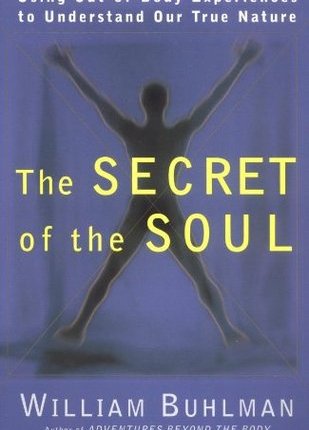
The Secret of the Soul: Using Out-of-Body Experiences to Understand Our True Nature by William Buhlman

The Secret of the Soul: Using Out-of-Body Experiences to Understand Our True Nature by William Buhlman

The Secret of the Soul is a great title for beginners who are looking to understand this, sometimes confusing, other times frightening, skill that we all seem to possess — the ability to exit our bodies in a kind of vision or trance.

Some call this the “out of body experience” or OBE.

Photo by Joshua Abner on Pexels.com

The first half of the book, Buhlman discusses OBEs, why they are important, and gives countless examples of actual OBEs that folks have had. The second part of the book gives concrete techniques and problem solving tips to assist readers in having their own OBEs.

One of my friends is a long distance runner who has had some OBEs during his ultra marathons. I thought of him in the section entitled “Combat and Trauma-Induced Experiences”: “It was while I was running in a marathon last year that I had a very strange experience. I was at about the eighteen-mile marker when I looked beside me and saw myself running. At first I thought it was someone who was my build and wearing the same shoes, but then I realized it was me!” pg 55

Buhlman has story after story like that.

Photo by anouar olh on Pexels.com

If you’ve never had an out of body experience of your own, the sheer variety and number of people who have fills you with confidence that you can.

I also liked Chapter 4, “Transformational Experiences”: For thousands of years spiritual masters have taught that the act of withdrawing from the senses is essential in order to consciously experience our spiritual self. pg 61

And the testimony from that chapter: “This is bigger then anything I can imagine; how can I tell people without sounding like a nutcase? This changes everything I ever thought I knew or thought was true.” pg 68

That’s the thing about powerful transformational experiences. Until someone has one him or herself, there’s not really anyway to explain it.

Chapter 6, “Extraterrestrial Contact and Abduction,” was the first time that I’ve read about aliens alongside traditional OBEs. Buhlman writes: “After reading more than two hundred such letters (from his OBE survey), I noticed a startling similarity: The letters describing extraterrestrial contacts and abductions were almost identical to the thousands of letters I have received describing out of body experiences. In fact, I often could not distinguish between letters.” pg 89

Photo by Francesco Ungaro on Pexels.com

In Chapter 7, A Brief History of Out-of-Body Experiences, the reader is given cultures from different time periods, all over the planet, that support and confirm the existence of out of body experiences.

These seem to suggest that OBEs are a “human” experience rather than a culturally specific one.

Take Emanuel Swedenborg’s words: “It has pleased the Lord to… open the interiors of my mind or spirit, whereby I have been permitted to be in the spiritual world with angels, and at the same time in the natural world with people, and this now (has happened for) twenty-seven years.” pg 113

I was surprised at how many of the historical figures presented here as having OBEs were scientists… I guess in my mind I’ve always drawn a line between the artsy/mystic types and the scientists. Line erased. 🙂

I’ll conclude with a few statements from the Appendix of the book, which was compiled from Buhlman’s extensive survey of people who had had OBE’s: “Self-initiated out-of-body exploration is a direct and powerful method to experience our true spiritual essence. It is an effective method to accelerate our personal growth and evolution. … This is achieved by personal spiritual experience and exploration beyond the physical limits.” Appendix pg 253.

Photo by Enrique Hoyos on Pexels.com

Couldn’t have said it better myself.

If you’re looking for more books on the topic of out-of-body experiences, check out Otherwhere by Kurt Leland, Journeys Out of the Body by Robert Monroe, or Multidimensional Man by Jurgen Ziewe.

Thank you for reading!

The Afterlife of Billy Fingers: How My Bad-Boy Brother Proved to Me There’s Life After Death by Annie Kagan

The Afterlife of Billy Fingers: How My Bad-Boy Brother Proved to Me There’s Life After Death by Annie Kagan

I think anyone who has lost a loved one wishes to talk to them again. Annie Kagan was granted that wish. She wasn’t a practicing channeler, so it came as a huge surprise to her when she heard her dead brother’s voice speaking to her from a spot above her head.

At the time that this happened, Annie was living a hermit’s life in New England only venturing out to kick ideas around at her writer’s group. So, that gave her the space and time to explore these communications rather than running to the doctor to have the voice medicated away.

Photo by William Alexander on Pexels.com

At first, she was reluctant to share what she was hearing, afraid that Billy’s voice was her mind’s way of holding the grief away or that other people would think she was going insane, but the information imparted became more and more specific until she couldn’t explain it away.

Through the experience and sharing it, Annie came to believe without a doubt that the spirit continues on after death. She took comfort from it and hopes, with this book, to share that comfort with others who may be grieving or afraid of death itself.

The Afterlife of Billy Fingers isn’t going to appeal to everyone. If you don’t believe that communications from beyond the grave are possible, I’d suggest passing on this book. And, towards the end of Billy’s travels into the afterlife, things get really far out as he lets go of his previous self and becomes the universe, embodying the entirety of reality.

Photo by Designecologist on Pexels.com

It reminded me of Be Here Now by Ram Dass, hippie to the extreme. But, that’s the type of spirituality I’m into, so I loved it.

The introduction by Raymond Moody describes Billy as a modern psychopomp, someone who guides the spirits of others through the afterlife: “The experiences Dr. Kagan relates are completely consistent with the kind of role walkers between the worlds played in antiquity. And that is no surprise to me. I think that such experiences are part of the collective psychological heritage of humankind- not artifacts of any one culture.” pg 11, ebook.

Billy was a drug addict and led a very hard life.

This is what he had to say about it: “How do I know my life wasn’t some punishment for my past transgressions? Well, because there’s no such thing. You’re not on earth to be punished. … That’s a human concept. Something man made up. Humans make up stuff and then they believe it”. pg 24, ebook.

A continuation along that line of thinking later in the book: “Beliefs are big on earth. People collect them. Some of these beliefs are helpful, but others just keep you running around trying to follow rules that others have laid down. They don’t have a lot of personal meaning. It’s a good idea to sort through your beliefs now and then and throw out the ones that don’t serve you.” pg 85, ebook

Photo by Pixabay on Pexels.com

Annie dealt with a bunch of her own issues in this book, like the fact that by writing this book, people were going to think she was “flaky”. At one point in the narrative, she has a toothache and starts to believe that she’s being punished for revealing universal truths that should be kept secret.

She eventually gets past that attitude, but, when it comes to the unknown, I think fear can be a major hurdle: “After my toothache and the painful root canal and awful infection that followed, I was scared. … who was I to be the one to prove there’s life after death? Maybe some secrets shouldn’t be revealed. Maybe I was breaking a sacred taboo, dabbling in a cosmic Pandora’s box.” pg 41, ebook.

Another of the Be Here Now moments: “In your world, as the earth moves around the sun, there’s nothing but shadow for a good part of the time. The mystery of life on earth cannot exist without the shadow element. You cannot have the sea without storms, the earth without quakes, the wind without tornados. … And sometimes- sometimes darkness is okay too. Don’t overlook the riches contained in the darkness. Life’s very temporary, so don’t let time just pass. Let the moments fill you- the ones you judge to be good as well as bad.” pg 77, ebook. Solid advice.

Let’s end with one more bit of wisdom: “People spend lots of time on things that make them unhappy- too much focus on the sand in the oyster. To cultivate joy, pay attention to what you like.” pg 116

Recommended for spiritual seekers and people who enjoy reading about near death experiences/channeled wisdom.

Some read alikes: Conversations with God: An Uncommon Dialogue, Vol. 1 by Neale Donald Walsch, My Son and the Afterlife: Conversations from the Other Side byElisa Medhus, Ask and It Is Given: Learning to Manifest Your Desires byEsther Hicks or, if you’re looking to introduce more joy into your life:Thank & Grow Rich: A 30-Day Experiment in Shameless Gratitude and Unabashed Joy by Pam Grout.

Thanks for reading!

Thank & Grow Rich: A 30-Day Experiment in Shameless Gratitude and Unabashed Joy by Pam Grout

Thank & Grow Rich: A 30-Day Experiment in Shameless Gratitude and Unabashed Joy by Pam Grout

There is a disclaimer written in the description of this book on Goodreads that states it is not for everyone, but it was awesome in my opinion. I am going to admit that I am incredibly biased.

Photo by cottonbro on Pexels.com

I absolutely adored Pam’s other books on New Age thought and had some unbelievable experiences with the experiments recommended in them: E-Squared: Nine Do-It-Yourself Energy Experiments That Prove Your Thoughts Create Your Reality and E-Cubed: Nine More Energy Experiments That Prove Manifesting Magic and Miracles Is Your Full-Time Gig.

However, I couldn’t convince my public library to buy them because, I was told, they are “too fringe”.

Perhaps this book, which focuses on adopting an attitude of gratitude to improve your life, will be mainstream enough to make the cut.

Pam addresses the metaphorical elephant contained in her title early in the book: “No offense to Napoleon Hill, the author of the self help classic on which my title riffs, but the real power is in not thinking. If you want to override your brain’s unfortunate habit of leafing through your past and creating a present hologram to match, forget thinking. And start thanking.” Loc 108, ebook.

I read Think and Grow Rich last year and I could see how other people have beef with the classic. Napoleon Hill focuses on money, making connections, and doing the internal work to shoot yourself into the stratosphere of life success.

There’s very little in there about feeling your way to the same place.

Photo by fauxels on Pexels.com

Pam takes a different approach: “I should get this out on the table right now. This book won’t do a thing for your 401(k) or help you secure the McMansion you pasted onto your vision board. It’s not about getting rich in the traditional sense. … There’s nothing wrong with financial capital, but let me be very clear. It’s incapable of bringing any measure of real happiness.” Locs 324-337 ebook.

She gets to the heart of why seekers chase anything- because we believe that it will bring happiness. Pam suggests getting happy and then the success will come.

And, how does she say that we should “get happy”? By being thankful for what we already have.

“Be astonished by useless things. It’s easy to be thankful for the obvious- healthy kids, public libraries, strong marriages. But in this game we’re going to take it a step further. We’re going to build our gratitude muscle by also appreciating the insignificant and impractical…” Loc 856 ebook.

I had to include that passage for the library mention. Yay libraries!

Photo by Janko Ferlic on Pexels.com

Pam backs up her claims with scientific studies such as: “According to Richard Wiseman, psychology professor at the University of Hertfordshire in England and creator of Luck School, people who think they’re lucky actually are. After eight years of studying hundreds of self-identified exceptionally lucky and exceptionally unlucky people, he concluded that getting good breaks has nothing to do with karma or kismet and everything to do with how we see ourselves.” Loc 991 ebook.

I would like to state for the record that I am one of the luckiest people that I know. 🙂

She also includes a bunch of information from happiness researchers: “When it comes to success, research shows that while IQ, education, and training play cameo roles, the starring role, the headliner on the success stage, is “Do you have a vision? Do you believe it’s possible?” Shawn Achor, author of The Happiness Advantage: The Seven Principles of Positive Psychology That Fuel Success and Performance at Work… claims that predicting success using any other factor (say, your IQ or number of degrees) is about as effective as flipping a coin. What is effective, Achor and Frederickson and other happiness researchers have proven, is creating a happy brain that anticipates accomplishment, that knows success is just a matter of time.” Loc 1876 ebook.

I know that I have a pretty open mind when it comes to these types of books, but my thought is, what’s the harm in it? If it works for you, great! You’ve just discovered a new tool to use for living the best life for you.

If it doesn’t work, no harm done. At the very least, you would know for yourself.

Photo by Belle Co on Pexels.com

I recommend this book for readers of the Abraham Hicks materials because there are quite a few similarities in the philosophies contained within.

Some additional read-alikes for seekers like me who can’t get enough information about the law of attraction: The Power of the Heart: Finding Your True Purpose in Life, Happiness: A Guide to Developing Life’s Most Important Skill, or Dr. Quantum Presents: Meet the Real Creator–You!.

The opinions contained within this review are entirely my own. Thank you to NetGalley and Hay House for a free advance reader’s copy of this book for review purposes!  And, thank you for reading.

Following Your Path by Alexandra Collins Dickerman

Following Your Path by Alexandra Collins Dickerman

Following Your Path is about using tarot cards and meditation in order to communicate with your psyche. I was particularly excited about this book because that’s the method that I use for my own meditations and writings. This book is a treasure trove of mythological symbolism and fairy tales. I enjoyed much of it. But, I felt as if Alexandra guides the reader almost too well.

She breaks down the cards into their various pieces and encourages reflection on each piece of the Tarot artwork in a sort of automatic writing process (write down the first thing that comes to mind when you look at “blank”).

I felt like she was depriving the reader of the richer experience of pathwalking into the cards themselves.

If I were to write a manual, perhaps someday, I would leave the meditations themselves as completely open ended with plenty of blank pages for writing. So, more like: “Here is the card. Walk through it as if it is a doorway. What do you see?”

It may be difficult to believe, but the mind fills the space with “something”. The endless writing prompts for the small details really aren’t needed. But, I could see this book being very useful for true beginners who are unsure of the way or don’t yet trust or know their own inner worlds.

Another small criticism, Alexandra has the reader starting their journey into the major Trumps (the minor cards aren’t even presented) and she starts her study with the Fool rather than the Universe. But, I suppose it doesn’t really matter the order in which you explore the cards. The fact that you’re doing it at all is what is important.

I loved this explanation of the psyche in the introduction by Jean Houston: “The psyche is not unlike an archaeological dig in which different civilizations, stories, and interpretations may be revealed at each level. Unlike the field archaeologist, however, we have living access to the cultures and knowings of the various strata within ourselves and therefore can learn on site how to tap our hidden dimensions for the benefit of our existential lives. It is also possible, with the help of those primordial patterns of meaning and relationship known as archetypes, to build sustaining bridges to, and networks among, these strata, thereby encouraging an ongoing communication and exchange of content- a kind of commerce of the psyche.” introduction, pg vii

There are quotations scattered throughout the text that I found very enlightening, such as: “Myth is the secret opening through which the inexhaustible energies of the cosmos pour into human cultural manifestation. Religions, philosophies, arts, the social forms of primitive and historic man, prime discoveries in science and technology, the very dreams that blister sleep, boil up from the basic, magic ring of myth.” -Joseph Campbell, pg 17 Makes you want to start meditating right now!

This book is extremely positive and affirming. I liked that in addition to the meditation prompts, Alexandra provides further exercises and questions to help heal and creatively examine the mind. She says: “It is only when we learn to evaluate ourselves in terms of our own inner values that we can exist in a positive emotional state, aware of the continual opportunities for growth and for feelings of satisfaction.” pg 138

She also provides hope for those who may be going through the darkness of depression or despair:“Often when we find ourselves in a state of stupor, hopelessness, pain, loneliness, depression, and even madness, we may be on the verge of great vision and inspiration. Our condition of desperation is often only a stopping place on the road to greater self-development. By looking inward, we can find a way past destruction, to salvation and to a new life.” pg 244 So, if you’re going through hell, keep going.

If you enjoyed this book, you may want to look at The Creative Tarot: A Modern Guide to an Inspired Life by Jessa Crispin. If you want numerous examples of tarot card pathwalkings, take a look at my book, The Light Congress: thelightcongress.com

Happy meditating and thanks for reading!

The New Science of the Paranormal: From the Research Lab to Real Life by Carl Llewellyn Weschcke & Joe H Slate, PhD.

The New Science of the Paranormal: From the Research Lab to Real Life by Carl Llewellyn Weschcke & Joe H Slate, PhD.

Carl Llewellyn Weschcke died last year- may he rest in peace. I eagerly looked forward to reading The New Science of the Paranormal, one of his last (I’m guessing) books that we will ever see from him.

The primary message in here is one of self empowerment and the potential for anyone to develop powers that could be considered “paranormal”. What an appropriate departing lesson from a man who ran a publishing firm dedicated to bringing the occult and mysterious to light.

Photo by Rafael Guajardo on Pexels.com

The New Science of the Paranormal isn’t an “easy” read in that it includes a lot of tables and metaphysical philosophizing about the new age and levels of spiritual evolution.

To me, the most engaging bits were the accounts of students and researchers trying to swing a pendulum with their minds or use dowsing rods to predict the gender of unborn babies.  The scientific experiments that were included are fascinating in their implications.

Also, many of the techniques like water gazing and hand prints in the sand are not ones that I had been exposed to. I’ll definitely be trying some of this out on my own.

“The objective study of paranormal power can dispel many of the myths and “stories” surrounding the topic, including the belief that very few individuals possess paranormal powers. Although certain individuals, often called “advanced beings” or “gifted psychics”, may appear to be extraordinarily empowered, everyone to some degree possesses paranormal potential. Not unlike intelligence, the distribution of paranormal potential within the general population seems to occur in a so-called “normal curve”…

Photo by Lucas Pezeta on Pexels.com

Empowerment: “We are more than we think we are, but we don’t know we are until we develop that level of awareness and related sense of perception. We must grow to become more than we are and all we can be.”

Water gazing, who knew? : “Validated in the lab setting and successfully applied beyond the lab, water gazing is among the most effective self-empowerment techniques known. Whether to increase creativity in writing and art, activate telepathic sending and receiving, facilitating clairvoyance, improve memory, promote successful goal attainment, or generate a state of mental, physical, and spiritual attunement, the powers of water gazing appear to be without limits.”

Photo by Anastasia Shuraeva on Pexels.com

The Crumpled Paper technique was also surprising in its incredible amount of potential uses. Actually, this whole book kind of blew my mind. Perhaps I was dreaming too small.

A bit reminiscent of Abraham Hicks: “…one simple self-administered procedure is: Pay Attention to Your ‘Feelings.’ By that, we don’t mean to get all emotional when ‘feeling’ an idea, concept, event, situation, person, etc., but rather to analyze: what your feelings are telling you, what is it you are sensing, what is the basis for your emotional reaction, etc. And then let yourself explore the ‘answers’ to those questions.”

Know thyself. A message as old as the Delphic oracles.

I’ll close with a quotation included in Chapter Twelve: “Not in the clamor of the crowded street, Not in the shouts and plaudits of the throng, But in ourselves are triumph and defeat.” Henry Wadsworth Longfellow, “The Poets” (1876)

Thank you to NetGalley and Llewellyn Publishing for a free digital ARC of this book!  And, thank you for reading!