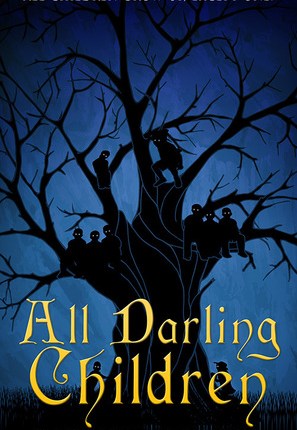
All Darling Children by Katrina Monroe

All Darling Children by Katrina Monroe

All Darling Children asks the question: what if something corrupted the ‘boy-who-never-grew-up’?

Peter Pan is one of my favorite fairy tales and it has featured in quite a few beautiful re-tellings. (Tiger Lily is one.)

All Darling Children is a masterful, twisted take on a literary classic. I loved this for its horror filled examination of the spiritual cost of eternal youth and the strong female lead.
Photo by luizclas on Pexels.com

From her first moments in Neverland, Madge, the grandaughter of Wendy, can tell that something isn’t right: “Neverland. It seemed a hodgepodge of landscape ripped from a dream. Or maybe a nightmare. On one side, lush forest grew dense with heat and energy. Flowers bloomed in a rainbow of colors. They shuddered as Madge gazed at them, and then, as Pan looked in their direction, shriveled to pale, dry nothings.” loc 525, ebook.

This is not Disney’s version of Neverland.

Peter and his Lost Boys are dangerous in this world. Immature and wild, they try to force the traditional gender role of ‘mother’ on Madge (because they don’t know how to handle girls otherwise) and she resists: “Outsiders aren’t supposed to know how to find the tree house until they’ve been initiated.” “Initiated?” Madge’s stomach fell. “What’s that mean?” “It means you’re in the club, not that you’d ever get in, being a girl and all.” loc 692.

I never questioned the ‘Father’/’Mother’ roles of Peter and Wendy from the original book but, if the authority of the position was abused… it gets so creepy very quickly.

Madge’s story is told in-between entries from Wendy’s old diary. Here’s one of the passages: “I’ve learned much about (Peter), and while he is erratic and inconsistent in most ways, in one he is steadfast. Predictable. Peter must always be forced to try harder. If one gives in, he loses interest. I will never give in.”loc 921.

The back and forth from the story that the reader thinks she knows that is presented in Wendy’s diary, to the new story that Monroe is weaving with Madge, is awesome. There are enough similar elements drawn in from the original that the whole thing feels chillingly familiar- a mirror version of the classic.

Photo by luizclas on Pexels.com

Peter’s bragging about his exploits is presented as charming in Barrie’s version- Monroe takes a far more modern view: “Who wants to hear the story of how I cut off Captain Hook’s hand?” The boys whooped and smacked the table. Madge paled. He’d cut off someone’s hand? What was worse, he was bragging about it? Psycho.” loc 973

If you like twisted fairy tale re-tellings, you may love All Darling Children. I did. Another one that you’ve got to pick up if you liked this is Alice by Christina Henry. It’s an incredible, dark re-imagining of Alice in Wonderland and it’s also amazing.

Thank you to NetGalley and Red Adept Publishing for a free, digital ARC.

Also thank you to my Goodreads friend, Rosemarie Short, for writing a fantastic review that convinced me that I just had to read All Darling Children. You can see her review here: https://www.goodreads.com/review/show…

And, thank you for reading!

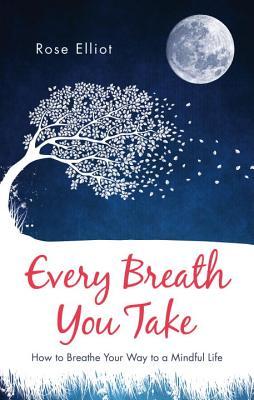
Every Breath You Take: How to Breathe Your Way to a Mindful Life by Rose Elliot

Every Breath You Take: How to Breathe Your Way to a Mindful Life by Rose Elliot
everybreath

Every Breath You Take is one of the finest mindfulness manuals that I’ve ever had the pleasure to pick up.

Practice by practice, Elliot takes the reader from the simple and concrete observation of the breath to the complex and abstract juggling of mind stuff. Along the way, she provides stories and anecdotes of those who have walked these paths before us and shows that, no matter where you are in your life, you can become more aware and grounded in the present moment and how beneficial that can be for you.

She began her journey like most of us- convinced that mindfulness was too difficult: “I struggled with the practice. I found it dreary, dull and boring- all that ‘notice-what-you’re-doing-while-you-clean-your-teeth’- I just couldn’t get to grips with it at all. … when I was on the point of giving up altogether, I met a monk… and he quietly suggested that it is helpful to link mindfulness practice to breathing. This really helped.” loc 16.

Elliot is so relatable that she made me feel like, if she could do this, I could do it too.

A reminder that mindfulness isn’t just a ‘Buddhist’ thing: “…it is to the Buddha that we owe mindfulness, but that does not mean you have to ‘be a Buddhist’ (whatever that may mean), or indeed of any religion at all to practise it. The breath is universal, as is spirit, so we can all benefit.” loc 46. If we can breathe, we can watch the breath. We just need to remember to do it.

Photo by Pixabay on Pexels.com

I loved Elliot’s gentle humor which was evident throughout: “You can use the irritations of daily life as reminders to take a mindfulness breath- and this way you’ll certainly get plenty of practice! For instance, such reminders might be: Being held up in traffic or a red light when you are driving. Waiting for the kettle to boil or for a bus or a train that’s late- waiting for almost anything. Lining up at the bank or at the grocery store checkout, or anywhere, for that matter. When someone is being really irritating, how great to know you have your own inner source of peace so they can’t bother you.” loc 237.

It is as if life is chock full of opportunities to take mindful breaths 🙂

My favorite part of the book was the many teachings about attachment. “When we can accept things as they are now, but recognize that they will change, and accept that too, we will know peace.” loc 793. I feel more peaceful already!

The Epilogue where Elliot talks about grieving for her husband and using these breathing exercises to make it through is especially touching. This is not just someone who talks the talk- she’s out there walking the walk. Highly recommended for anybody at any level of ability who wants to learn more about mindfulness.

Some further reading: How to Relax, The Wisdom of the Breath: Three Guided Meditations for Calming the Mind and Cultivating Insight, or Being Peace.

Thank you to NetGalley and Watkins Publishing for a free digital copy of this book!  And, thank you for reading.

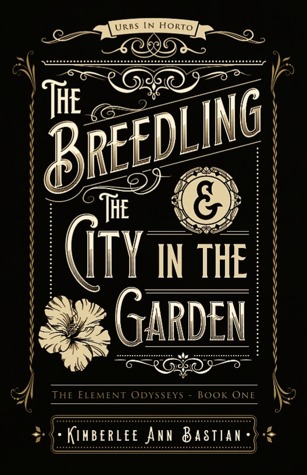
The Breedling and the City in the Garden by Kimberlee Bastian

The Breedling and the City in the Garden by Kimberlee Bastian

thebreedlingBartholomew is a Breedling- an immortal spirit that guides the souls of the mortal dead to their eternal homes. He is tasked by his masters, the Fates, to find the Creators of the world, who have gone missing. Bartholomew finds the ones he’s seeking, but then refuses to reveal their location and as punishment, he is sealed in a prison until he changes his mind or the end of time, whichever comes first. But, magically, Bartholomew escapes and finds himself in 19th century Chicago in the company of two boys who are named Charlie and Jimmy. Bartholomew must find a certain mortal to bind his spirit to this world or he will end up back in his timeless prison. He also must complete his original quest- to find the Eden Wanderer. But, he must accomplish all of this without the mortals knowing who he really is or what he is really seeking. Will he succeed?
I have some serious reservations about this book. First of all, the plot isn’t nearly as straight forward as my description. The mythology of Bastian’s world is very complex and I felt like I wasn’t given enough background before I was thrown into the thick of it. Multiple characters are mentioned, but never make an appearance and, there was so much implied but not stated, that at times I felt as if I was reading the second book in the series instead of the first. Fantasy is a tricky genre because there’s a fine line between mysteriousness and utter confusion and, unfortunately, I spent much of my time in The Breedling and the City in the Garden trying to understand how everyone was connected.

On the other hand, there is much to enjoy in this debut novel beyond the complex/confusing world building. The young man, Charlie, has a big heart and spends much of his time trying to keep his cousin, Jimmy, safe from the gangs that rove the streets. He was my favorite character: “Are you prepared for the meeting tomorrow?”he asked, referring to the gang dispute Charlie had been asked to mediate, which was a nicer way of saying he was forced. “As ready as I can be, I suppose,” said Charlie. “It’s not as though they gave me a say in the matter.” loc 159, ebook.

Bastian paints a pretty picture of Chicago: “For miles, rooftops stretched in every direction. Smokestacks stood proudly as a testament to the modern age of industry. The calls of trains answered each other from east to west. To the north, the distant shrills of tugboats and barges floating along the river thundered through the air. The dark sky above blanketed every inch as far as the eye could see, the city lights hiding the stars.” loc 476, ebook

There is certainly a feeling of danger throughout the story- both for the success of the Breedling’s quest but also for the souls of the mortals who travel with him:“If Charlie were to uncover his secret, it would lift the veil of ignorance that blinded him to the truth about the supernatural elements in Eden (Earth). And for enlightened mortals, it never ended well. Their souls earmarked in the afterlife by the Mistress of Heaven or the Master of Hell.” loc 1321, ebook. “The Mistress of Heaven” is a tantalizing name for a character but Bastian never really gives the backstory for her- I wish she had.

I also liked the personal responsibility theme that cropped up again and again in this story: “…a man who runs has no life at all. He merely survives on the fringes and finds only regret. You leave here, now, like this, I swear to you there will be nowhere far enough for you to run. You will become miserable and reckless and in the end you’ll die alone, a world away, wishing you could take this moment back.” loc 3069. I’m a big believer in taking responsibility for one’s life rather than blaming it on fate or destiny. It seems like Bastian is too.

Recommended for readers who can tolerate a lot of unknown elements in the story and for people who enjoy urban fantasy. I think that Bastian shows a lot of promise and this series is only going to improve as she reveals more of the complex world she has created. Other fantasy debut recommendations: The Interminables, Funeral Games, or Chasing Embers.

Thank you to NetGalley and Wise Ink Creative Publishing for a free digital copy of this book. And, thank you for reading!

Robota by Doug Chiang

Robota by Doug Chiang

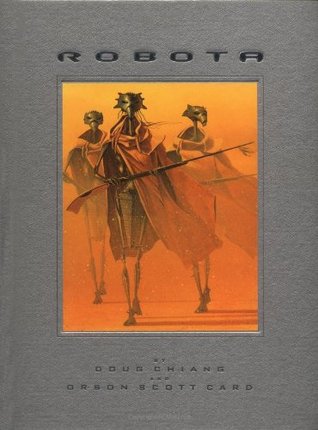
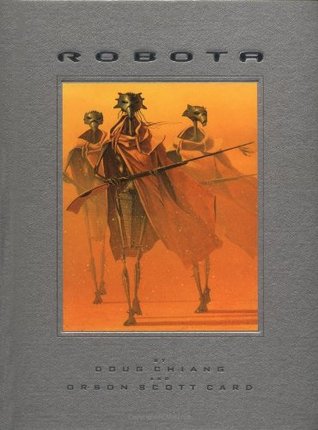
robotaRobota, like The Sleeper and the Spindle, is a story with extraordinary artwork accompanying the narrative. The prologue introduces the reader to a world that has been conquered by robots from the stars. Humankind had developed tools and machines, but nothing that equaled the alien invaders. Subdued and forced into hiding, humans fight a losing battle against an unstoppable robotic force. In the first chapter, a man awakens in an alien ship- he can’t remember his name or his past. He is encouraged out of the ship and deeper into the forest by a talking monkey named Rend. Together, they go to recover not only his memory but also his forgotten past, which may be more extraordinary than he ever imagined.

The story by Orson Scott Card is good but the artwork by Doug Chiang is astonishing. This book was originally published in 2003, but the edition I read is a 2016 re-print with a new foreword and additional concept art wasn’t released the first time around. Doug Chiang worked at LucasFilm on Star Wars: Episodes 1 & 2 and, more recently, The Force Awakens. You can really see those efforts in his art- the robot army from Episode 1 is all over this book.

My one (kind of silly) beef with Robota is the title. The story says that the robots took over Earth and renamed it “Robota” but what sort of robots would do that? I think they’d be far more likely to call it 1010010011111 or something in binary code. But, maybe I’m just biased against robots.

There was also an interesting side plot about magical jewels that gave animals on Earth the ability to talk and reason: “Once it changes an animal, it breeds true- all its offspring have speech as well. It brought a golden age to the world. It made the robots jealous, and the king of the robots, Font Prime, sent out Kaantur-Set and his hunters to destroy all the jewels. They think when the jewels are gone, we’ll all become dumb beasts again.” pg 45, ebook. The over-arching plot is nature vs machine, but Robota also asks the question: what makes life worth living?

Or what really makes a machine live?: “When there’s a living mind telling the machine what to do, it’s not a robot,” said Juomes. “Where there’s life, then the machine remains a tool.” “So a fungus with a stick is better than Font Prime,” asked Elyseo. “Probably not better at mathematics,” said Caps. No one was amused.” pg 68

Recommended for ages 14+: Robota is a feast for the eyes and may be a science fiction/fantasy that appeals to more reluctant readers. Some further reading: The Sleeper and the Spindle, Peter & Max, or Descender, Volume 1: Tin Stars (for 16+ for some disturbing images).

Thank you to NetGalley and Dover Publications for a free digital copy of this book! And, thank you for reading.

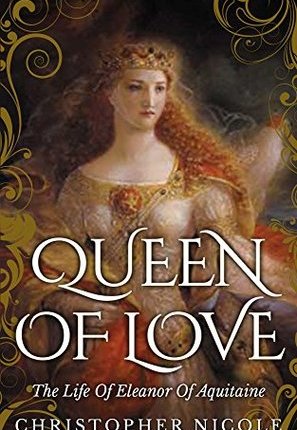
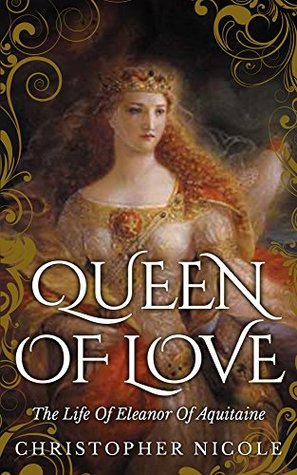
Queen of Love: The Life of Eleanor of Aquitaine by Christopher Nicole

Queen of Love: The Life of Eleanor of Aquitaine by Christopher Nicole
queenoflove

Eleanor of Aquitaine blows my mind.

So, this lovely lady lived in the 1100’s, when women were property, but somehow, she managed to become one of the most powerful people of her time.

Granted, she was born into a privileged position, was one of the largest landholders in France, and, by all accounts, was absolutely gorgeous. I’m sure that helped.

But, imagine the social and political acumen she had to possess to make it all work.

This historical fiction is written as a first-person memoir of the time period after her marriage to the King of France was annulled and she was forced into marriage with Henry, the soon to be, King of England and the narrative continues until her death.

I understand that the first person point-of-view doesn’t work for everyone, but I loved it. Then again, there are few historical fictions that I don’t enjoy, so take my review with a grain of salt.

Historical fiction is literary candy for me. When I need to escape reality, I jump into the past, usually with royalty because, let’s face it, the life of a peasant was probably nothing to write home about.

The manner in which Henry acquired the most eligible woman in Europe for his bride was rather questionable. In essence, he kidnapped her, raped her, and then insisted on the match.

She forgave him because, frankly, she could have made worse matches and wasn’t really in a position to bargain.

Photo by Pixabay on Pexels.com

Here are her thoughts about the man: “… the aspect of Henry which most strikes one is his energy. It was such as almost to make one believe the tales of a devilish ancestor. From the moment my new husband rose in the morning until the moment he collapsed exhausted in bed at night, he never rested either his body or his brain for a moment.” loc 81, ebook.

Henry was known for his energy and fiery temper. I didn’t mark the passage, but Eleanor relates how, when the King became angry, he would throw himself to the floor and eat the rushes.

For modern folks who may not know what rushes are- these are essentially plants that were used to keep the floor clean, sort of like throw away rugs. Remember, floors were pretty disgusting back then as transportation was done mainly by horse and certain things were tracked in on people’s boots.

The King of England would get so mad that he ate poop-covered rushes! In the modern age, that would so not fly. I can just see the covers of the tabloid mags.

Photo by OVAN on Pexels.com

I completely forgot that it was Eleanor’s husband who had the infamous disagreement with Thomas Becket. “The quarrel thus commenced dragged on for some time. It was fairly well known, and i do not propose to go into details about it- during this period I had a fair number of problems of my own, and while I felt sorry for Thomas, placed in such a dilemma as having to choose between King and Church, I am bound to admit that he made life unnecessarily difficult for himself.” loc 880, ebook.

That seemed to be Eleanor’s way- go with the flow of what happens, but don’t forget what happened and strike back when you’re in a place of power.

In this passage, Eleanor is fretting over turning 40, which, had she only known it, wasn’t even halfway through her life: “I should point out that in the summer of 1162 I reached my fortieth birthday. This is a most depressing milestone, for anyone, but more I think for a woman than a man, and most of all for a woman once accounted the most beautiful of her time. At forty there could be no disguising the fact that I was growing old, and that even my beauty was fading. In addition, forty brings with it the approach of the dreaded end of fertility, and what has a woman got left?” pg 915.

She had ten kids, how many more does a woman need? And, although much of her power was based in her beauty and fertility, she was still a formidable spirit. I mean, the lady was locked up by her husband for over a decade and yet, she manages to come back from it! Talk about aging gracefully…

Photo by Pixabay on Pexels.com

Here, Eleanor is holding her own after being defeated in battle with the King of England, her husband. (She went to war against him for her sons- how hardcore is that!): “I would say that it is fairly well established that you have recently been in arms against your king.” “I acted as Duchess of Aquitaine,” I pointed out. “As we are now in Aquitaine, you are an invader, and I am a prisoner-of-war.” “I am the ruler of Aquitaine,” he argued. “In my name,” I riposted. “I have now withdrawn that privilege from you.” “Madame, your effrontery is startling.” “I am Eleanor of Aquitaine.” loc 1988. Boom.

If you like historical fiction about strong women, The Queen of Love may be something that you really enjoy. Some other suggestions: Margaret the First, Isabella: Braveheart of France, The Dream Lover: A Novel of George Sand, or Pope Joan.

Thank you to NetGalley and Endeavour Press for a free digital copy of this book! And, thank you for reading.

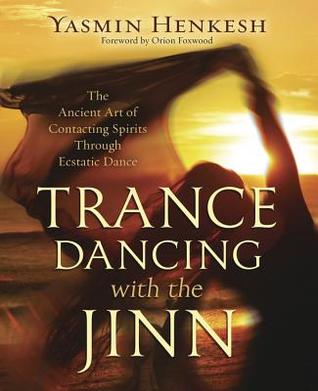
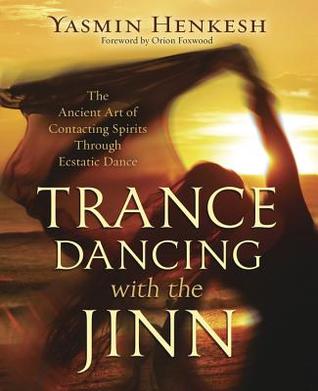
Trance Dancing with the Jinn: The Ancient Art of Contacting Spirits Through Ecstatic Dance by Yasmin Henkesh

Trance Dancing with the Jinn: The Ancient Art of Contacting Spirits Through Ecstatic Dance by Yasmin Henkesh
trancedancing

I read The Golem and the Jinni a few months ago and realized that I knew next to nothing about the mythology of the Jinn. Not that I’m an expert on golems either, but I had at least been exposed to the idea.

Trance Dancing with the Jinn is a book about kinetic meditation (trance dancing) but it also documents the history of the Jinn as written in the Quran and other sources as well as the biological and historical reasons that humans go into trance.

In addition to the mythology and biology, I learned about how trance dancing at meetings called “zars” is an outlet for women who have very little control over any other aspect their lives in Northern Africa.

The author is clearly a believer in the existence of “the Invisibles” but, if you don’t share the same beliefs, this book still has plenty of fascinating information for those interested in cultural, religious, or feminist studies and ritual dance.

The author asks the reader to have an open mind: “Do you believe in Invisibles or do you consider them an outdated tradition from an ignorant past? What if you had a safe, drug-free way to see for yourself? Would you be curious enough to try it- even though the method takes practice and you probably won’t succeed on your first attempt?” loc 200.

Yeah, I’m down for that.

I don’t think it is that difficult to entertain the idea that there may be intelligences that exist that can’t be perceived in normal states of consciousness.

As Henkesh reminds us: “According to NASA’s website, “Everything on Earth, everything ever observed by all our instruments, all normal matter- adds up to less than 5% of the Universe… The rest is a complete mystery, but an important one. Roughly 68% of the Universe is dark energy, while dark matter makes up about 27%.” This energy and matter are called “dark” because they do not reflect light… or interact with electromagnetic forces. We only know they are there by their effects on gravity…” loc 233, ebook.

Photo by Pixabay on Pexels.com

Only 5% has been observed- that leaves a whole lot that we haven’t even looked at yet.

Western researchers are still discovering how and why trance works, but they at least acknowledge that it exists: “Neurologist Oliver Sacks once wrote, “Normal waking consciousness, rational consciousness as we call it, is but one special type of consciousness, whilst all about it, parted from it by the flimsiest of screens, live entirely different potential forms of consciousness.” loc 267.

The most fascinating part of this book was the emotional outlet that trance dancing has allowed women for hundreds of years: “… thousands of women in Egypt still turn to the zar when modern medicine fails them. If doctors cannot find the cause of their physical or mental ailments, they assume supernatural forces are involved. … Diagnostic zars can last anywhere from a day in Egypt to a week in Sudan and Ethiopia.” loc 2530-2548

I had never heard of this and looked up some examples of zar/trance dancing on YouTube. Go ahead, take a look:

I can see how such flowing, uninhibited movements would feel therapeutic now, so I can’t imagine the relief I’d feel if I was not allowed to have a job or leave the house without a male by my side. I’d probably be trance dancing non-stop.

Some further reading/listening for those interested in trance: Ecstatic Body Postures: An Alternate Reality Workbook, Seeking Heaven, or Brainwave Journey.

Thank you to NetGalley and Llewellyn Publications for a free digital copy of this book! And, thank you for reading.

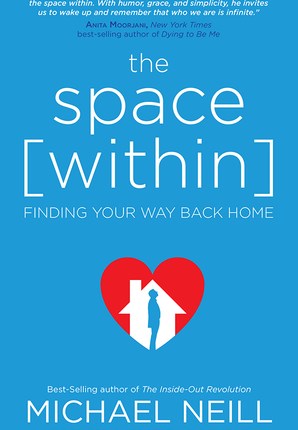
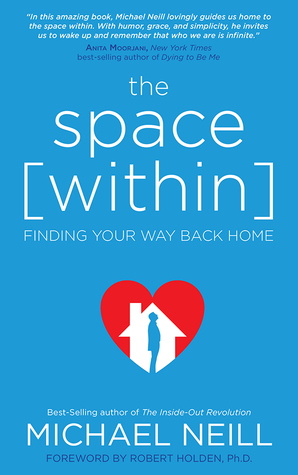
The Space Within: Finding Your Way Back Home by Michael Neill

The Space Within: Finding Your Way Back Home by Michael Neill
thespacewithin

No matter how many books I read on meditation, I always seem to learn something new when I pick another one up.

The Space Within is one of the more excellent books that I’ve discovered- not pushing any particular way of being, just quietly encouraging the reader to go within and embrace what’s there.

On separating our consciousness from the universal energy that surrounds it, Neill compares the mind to a book and I’m sure most Goodreads users, like me, could easily connect with the metaphor:“Think of ‘quiet’ not as an absence of thought but as the space inside which the noise of your thinking arises. What makes this tricky, at least to begin with, is that at first glimpse the noise is more interesting than the quiet …look at the white background of this page. Chances are you can still see the words, and even read them, but without noticing it, at some point you will once again become absorbed in the words and stop seeing the white of the page.” loc 192, ebook.

Why bother to meditate? : “There is a space within you where you are already perfect, whole, and complete. It is a space of pure Consciousness- the space inside which all thoughts come and go. When you rest in the feeling of this space, the warmth of it heals your mind and body. When you operate from the infinite creative potential of this space, you produce high levels of performance and creative flow.” loc 207

And more, promises Neill. I’ve meditated for many years and I’ve experienced some extraordinary things. It wasn’t always easy and it didn’t happen all at once, but I can say, from personal experience, that this particular claim is absolutely true.

Photo by Samuel Theo Manat Silitonga on Pexels.com

Thoughts are incredibly powerful things. I think we forget just how life changing your personal perspective can be: “… we live in a world of unrecognized thought. Thought is the architect of both hope and despair, the source of every color in the emotional rainbow. … But unrecognized thought demands our attention and fills our consciousness. And when we get caught up in thought, we lose our way.” loc 324, ebook.

And also: “We live in a world of thought, but we think we live in a world of external experience. The mind is not a camera, it’s a projector. We can’t tell the difference between an imagined experience ‘in here’ and what’s going on ‘out there’- and that confusion creates a lot of confusion.” loc 375, ebook.

You create your own reality- but it’s easy to forget that and blame other people for your circumstances.

When I read this next passage, I thought of How The Secret Changed My Life and the incredible importance that people placed on feeling good.

Neill points out that it isn’t anything to get wound up about: “There’s no such thing as a solution to a feeling. Because we don’t recognize this fact, we spend huge chunks of our time and energy trying to ‘solve’ our feelings by changing them to ‘better’ ones or eliminating them altogether. … When it’s okay to feel good when you feel good and bad when you feel bad, recognizing that as thoughts change, the feelings change with them, there’s no need to prefer one feeling over another, let alone attempt to fix it. And when you really see that for yourself, you being to experience more of the deeper feelings that make life worth living.” loc 457, ebook.

This is a great place to start if you’re just learning about meditation/mindfulness but it’s also appropriate for more experienced practitioners- if you breathe or think, you could probably learn something from this book. Some suggestions for further reading: Buddha’s Brain: The Practical Neuroscience of Happiness, Love, and Wisdom, Meditations for Breaking the Habit of Being Yourself, or Happiness: A Guide to Developing Life’s Most Important Skill.

Thank you to NetGalley and Hay House Publishing for a digital copy of this book! And, thank you for reading.

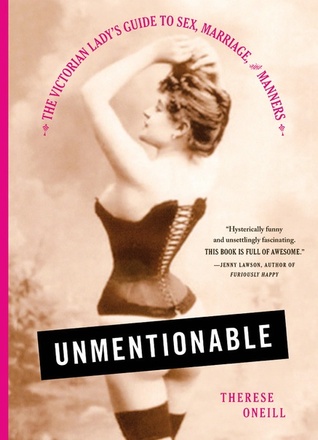
Unmentionable: The Victorian Lady’s Guide to Sex, Marriage, and Manners by Therese Oneill

Unmentionable: The Victorian Lady’s Guide to Sex, Marriage, and Manners by Therese Oneill
unmentionable

Unmentionable made me truly appreciate how good I have it compared to my female ancestors.

This clever little book examines the gross, disturbing, and, at times, hilarious “unmentionable” facets of a Victorian woman’s life and also, their powerlessness in society when compared to their male counterparts.

The women’s rights portion sounds grim, but Oneill’s writing keeps it light. I learned so much and was entertained too.

For example, I don’t consider modern cities to be very clean, but Oneill explains in her book, that they are shining examples of cleanliness compared to what came before: Some would argue that the nineteenth century was one of the filthiest times in all of Western history, particularly in any urban, developed area. … Ankle deep in filth, I said, but forgive me, I was inaccurate. You will wish the filth terminated at your ankles. Foulness is everywhere. Grime and rot cling to the very air, the buildings, the people; even the soap is made out of lard and poison.” pg 20, ebook.

All that dirt, but bathing was considered bad for your health and even, depending upon your religious upbringing, immoral! I’ve never read a historical fiction that describes the foul stench of the streets or the crowd upon it… now, I know better. Thanks Unmentionable!

Make up and other personal care products used to be either oily goop or filled with poisonous substances that could kill you or permanently wreck your face.

Photo by Rita Rebeca on Pexels.com

With this in mind, Oneill gives us a new take on the story of Jezebel: “She painted her face, and tired her head [fixed her hair], and looked out at a window.” “Some think this means Jezebel planned to seduce her way out of this problem; others think she was facing death with composure and dignity. At any rate, her eunuchs saw that they were on the wrong team and shoved her out the aforementioned window, and dogs ate her face. Which reinforces the assumption that her face was coated in sinfully delicious animal fat.” pgs 67-68, ebook.

Because women really had no other choice, being the ideal wife and mother was no laughing matter: “Your only job now that you are a nineteenth-century wife is to do everything within your power during every waking moment to make his life so sweet and full that he will literally dread the glory of Christ’s return, if only because it will mean parting from your secret strudel recipe and the unmatched craftsmanship of your trouser hemstitch.” pg 130, ebook.

So, unreasonable expectations of perfection abounded at home.

Photo by Pixabay on Pexels.com

Women, especially single, unmarried ones, weren’t supposed to go anywhere alone: “Etiquette for Ladies reminds us that no woman has any business being alone in a museum, a library, or any other such den of unwholesomeness. Wherever you are going, your behavior once you arrive should remain every bit as self-aware-but-pretending-not-to-be as when you were in transit.”pg 165, ebook.

The library is a “den of unwholesomeness”… ha!

But the worst of the era, in my opinion, was the medical community’s attitude towards women. At that time, we hadn’t figured out how the female body worked and didn’t connect the idea that people need intellectual stimulation and purpose for a life well lived.

That lead to the lumping of every female complaint under the title, “Hysteria”: “First I would like to tell you what hysteria actually was. Which is incredibly difficult. Because the only honest definition I can give you is “a misdiagnosis.” Epilepsy, diabetic shock, neural disorders, post-traumatic stress disorder, postpartum depression, and bipolar disorders do not necessarily cause similar symptoms, but they were all commonly diagnosed as hysteria.” pg 173, ebook. So, pretty much, everything then.

Photo by Vie Studio on Pexels.com

Oneill reminds the reader that many of the rights, and indoor plumbing, and personal care products that we enjoy today are because of the demands for a better life by women who lived during the Victorian era.

I am so very grateful and humbled for their contributions to society and the sufferings that they endured so that their children’s children’s children would have it better. Some further (non-humorous) reading: Spinster: Making a Life of One’s Own or Artemis: The Indomitable Spirit in Everywoman.

Thank you to Netgalley and Little, Brown and Company for a digital copy of this book & thanks for reading!

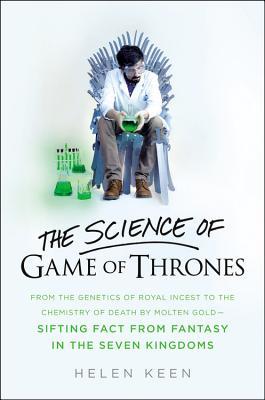
The Science of Game of Thrones: From the genetics of royal incest to the chemistry of death by molten gold – sifting fact from fantasy in the Seven Kingdoms by Helen Keen

The Science of Game of Thrones: From the genetics of royal incest to the chemistry of death by molten gold – sifting fact from fantasy in the Seven Kingdoms by Helen Keen
thescienceofgameofthrones

Readers beware: there are major spoilers contained within the pages of The Science of Game of Thrones. Do not read it (or this review) unless you’ve read all of the books that are currently out or have watched all of the seasons of the HBO show!

That being said: if you are a fan of the Game of Thrones, in any format, you simply must read this book.

From dragons to the effectiveness of female body armor, poisoning to the real possibilities of our world ending in ice or fire, Keen takes us on a scientific examination of all things related to George R.R. Martin’s epic series and what a trip it is.

My favorite part was a discussion about how dragons would breathe fire in real life and how that relates to the explosive capabilities of cows: “A cow can produce between 250 and 500 litres of highly flammable methane a day… In 2013 it was reported that a build-up of methane from a particularly afflicted dairy herd, coupled with an accidental spark of static electricity, ‘nearly blew the roof off [the] barn’ in Rasdorf, Germany… After a lot of genetic tinkering, a Danearys Targaryen in our world will be able to ride valiantly into battle to claim what’s hers on the back of a genetically modified fire-breathing heifer.” loc 235, ebook.

Can you picture it? I can!

Photo by Pixabay on Pexels.com

The potential positive effects of inbreeding: “… there’s evidence that, over time, inbreeding can actually purge a population of the effects of harmful recessive gene variants. These ‘bad’ genes are way more likely to show their effects, so, ultimately, the lines of the carriers are more likely to die off. Thus while the results of successive generations inbreeding is generally bad for the particular individual, it’s often good for the population as a whole.” loc 328, ebook.

So, the Lannisters can continue paying their debts as long as they’re not carrying harmful recessive gene variants. Good to know.

The Hodor question: “For a long time we were wondering what happened to Wyllis to cause his ‘hodoring’ behaviour. Perhaps he suffered a stroke or a tumour, or even a blow to the head. … Extensive damage to Broca’s area is also sometimes caused by malnutrition, but that seems unlikely in Wyllis’s case, given his enormous girth. Whatever the story, one thing is clear: Wyllis is clearly exhibiting a severe type of ‘expressive aphasia’. He can understand what other people are saying and respond, but he struggles to produce more than a single word.” loc 882-895, ebook. Hodor, hodor… hodor! Hodor.

Prior to a wonderful examination of the actual existence of dire wolves, Keen has this to say about the Starks and their pets: “The Stark children.. find a litter of orphaned dire wolf puppies and are desperate to keep them- like all children everywhere when confronted with the cute, mewling faces of slavering ferocious death beasts in their juvenile form. Their father Ned gives them a lecture worthy of any parent in Pets R Us along the lines of ‘Ok then but you’ll have to walk them yourselves even if it’s raining’.” loc 1160, ebook. Ha!

Photo by Brenda Timmermans on Pexels.com

And, finally, I enjoyed learning about crows. Apparently, they’re actually extremely smart and have very good memories: “Previous research has shown that crows not only remember a threatening face, they share that knowledge within their community, so that the individual is remembered and scolded by the crows, even after a gap of several years. Young crows, it seems, are even taught to recognise and scold the ‘villain’ by their parents.” loc 1357, ebook. Yikes. Don’t bully crows, friends.

There’s a bit of language in The Science of Game of Thrones and some juvenile humor, but, overall, it is much tamer than the source material. Recommended for ages 14+. Some further reading: What If?: Serious Scientific Answers to Absurd Hypothetical Questions by Randall Munroe or Loch Ness Monsters and Raining Frogs: The World’s Most Puzzling Mysteries Solved by Albert Jack.

Thank you to NetGalley and Little, Brown and Company for a free digital copy of this book! And, thank you for reading.