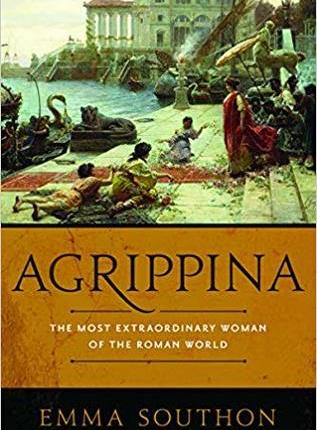
Agrippina: The Most Extraordinary Woman of the Roman World by Emma Southon

Agrippina: The Most Extraordinary Woman of the Roman World by Emma Southon

Emma Southon gives us a fascinating look at a complex woman whom history has perhaps treated unfairly.

She starts by giving the reader reasons why the study of historical women is so difficult.

… we have just three major literary sources that mention Agrippina with any detail, and a total of seven literary sources from the entire corpus of Latin literature that think she was interesting or significant enough to deserve a single line; one of which is a play.”

Photo by Octoptimist on Pexels.com

Like most women from history, Agrippina was mainly written about when she orbited important men. There’s also the difficulty of potential bias in the few sources we have.

“She can be seen only through the distorting lens of her relationship to other people and how well or badly she performed the ideal form of that relationship. It’s mostly badly, which is why we get to see so much of her.”

But what’s left when you take all of that into consideration is extraordinary. As the author points out, Agrippina was “the sister, niece, wife, and mother of emperors.” There are few from history who can claim the same.
Photo by Francesco Ungaro on Pexels.com

Southon uses an informal style and words like “stabby” and “murdery”. I found her delivery rather hilarious and enjoyed it. If you’re turned off by this type of writing, you may want to choose another, more serious author.

She doesn’t neglect to remind readers of the context of every bit of Agrippina’s history or point out when the record is missing or falls silent. Sometimes, the gaps in the record speak even louder than what was written.

“The next year, however, Agrippina came roaring back into historical narratives in the most confusing possible way.”

I liked how Southon took complex concepts from Roman history and gave them to the reader in digestible chunks. For example, we get a glimpse of what portions of Agrippina’s wedding ceremony may have been like:

“First, Agrippina the Younger anointed the doorway with fat and wool. Basically, she smeared some kind of animal fat onto the door frame and then strung wool between the door posts, sticking the ends to the fat. Obviously that sounds both disgusting and bizarre, which it is, but this is very symbolic and serious. Probably as these things were brought out, the party atmosphere would die down and everyone would watch reverently as this little girl covered the door in goo.”
Photo by Mathias P.R. Reding on Pexels.com

She goes on to examine the superstition of carrying the bride across the threshold of her new home which was another important part of the ceremony and nothing like the laughing, fun time it is today. It was interesting to me to juxtapose the modern viewpoint on these ancient traditions and see the glaring differences between the two.

Highly recommended for readers who like their non-fiction to sound like a conversation between friends. Southon makes the past come alive in a delightful read filled with scandals, power struggles and, of course, Rome.

Thank you to NetGalley and the publisher for an advance reader copy of this book, which is slated to go on sale tomorrow, August 6, 2019. The brief quotations I cited in this review may change or be omitted in the final copy.

If: The Untold Story of Kipling’s American Years by Christopher Benfey

If: The Untold Story of Kipling’s American Years by Christopher Benfey

Christopher Benfey has written a masterful biography of Rudyard Kipling’s years in the United States. It is a little-remembered period from the life of the youngest ever Nobel Prize winner for literature.

“At this remove, it is difficult to recover the sheer depth of reverence once accorded Kipling. “He’s more of a Shakespeare than anyone yet in this generation of ours,” wrote the great American psychologist William James.”

Photo by Ylanite Koppens on Pexels.com

He was friends with Mark Twain. One of Kipling’s books, The Jungle Book, was in Sigmund Freud’s top picks for important books in his life. He has inspired generations of authors and readers with his Just So Stories and poetry.

My husband used to quote some of his poetry to me from memory when we were first dating. Rudyard Kipling is a giant of literature.

Yet he’s also a complex historical figure. “With the rise of postcolonial theory — a view of literature that assesses the human cost of colonial arrangements —Kipling is often treated with unease or hostility in university literature departments, as the jingoist Bard of Empire, a man on the wrong side of history.”

And there’s reasons for this distrust. Kipling penned “The White Man’s Burden”, asking the United States to take up Great Britain’s colonial interests.

So when Benfey examines the life of Kipling, it’s not all hero worship. He is aware of and acknowledges Kipling’s failings, but doesn’t take it out of the context of Kipling’s life and times. 

If brings to light previously unknown portions of Kipling’s life and legacy. Some new poetry and personal papers have recently been discovered that Benfey uses to paint a more complete picture of Kipling than perhaps ever before.

Readers learn of the friendships Kipling had with some of the political giants in the United States. We also get to peek into Kipling’s private life and share some of the intense sorrows he experienced in his own childhood and with his children.

There’s an examination of how opium use affected Kipling’s writings. We travel with Kipling to Japan on his honeymoon. And we learn about the great writer’s obsession with, of all things, beavers.

This most interesting part of all of it is, though he lived in the Gilded Age, how similar Kipling’s times were to today.

“It was an era, like our own, of vast disparities between rich and poor, of corruption on an appalling scale, of large-scale immigration and rampant racism, of disruptive new technologies and new media, of mushrooming factories and abandoned farms, of vanishing wildlife and the depredation of public lands.”

Photo by Pixabay on Pexels.com

So, despite his astonishing literary genius, Kipling was just a man. He had his flaws and his dark side. And after his death, he left behind a treasury of written works that carry his legacy into the unknowable future. A future that, if we try, perhaps we can make more than one man’s limited imagination could contain.

Recommended for readers who enjoy forgotten history in all its imperfections and glory. 

Thank you to NetGalley and the publisher for a free digital advance reader’s copy of this book. The brief quotations I cited in this review may change or even be omitted in the final version.

Here’s the History Guy’s take on Rudyard Kipling that I wrote the script for and thanks for reading!:

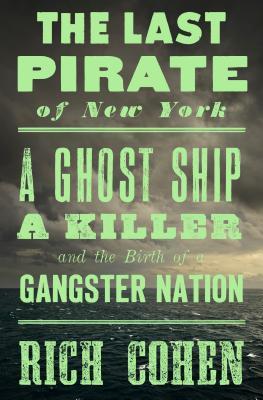
The Last Pirate of New York: A Ghost Ship, a Killer, and the Birth of a Gangster Nation by Rich Cohen

The Last Pirate of New York: A Ghost Ship, a Killer, and the Birth of a Gangster Nation by Rich Cohen

A fantastic and non-fiction account of Albert Hicks, the last man to be publicly executed in New York City and also one of the last to be tried and convicted for piracy. For fans of history, this is a must-read.

“Albert Hicks is the closest thing the New York underworld has to a Cain, the first killer and the first banished man, carrying that dread mark: MURDER. He operated so long ago, in a city so similar to and yet so different from our own, the word gangster had not yet been coined. He was called a pirate.”

Photo by Pixabay on Pexels.com

Beyond the fascinating true crime story about Hicks, Rich Cohen, the author, has brought New York City, mere years before the Civil War, to life. You get to learn about the streets, the notable people, the attitudes, the newspapers and more. It is a fun and, occasionally serious, romp through the past.

“New York Harbor is a network of islands and coves, seabirds and arsenical green marshland, the sort that looks solid until you step on it. … In the old days, every road on the island ended at the water, the sun rose at the foot of every street. Even now, when the fog rolls in, the waterfront is a sailor’s dream.”

Cohen doesn’t tell his story through the dry recitation of facts and figures. He has a storyteller’s way of weaving the details into the larger narrative. This is history as it was meant to be told.

“An 1850 police report estimated the presence of between four hundred and five hundred pirates in New York City. To the police, a pirate was any criminal who made his living on the water, attacking and robbing ships beyond the jurisdiction of the landlocked coppers…”

Photo by Chris Schippers on Pexels.com

Four and five hundred pirates! In New York City! This book changed my view of “The City So Nice They Named It Twice.” I suppose everybody and everything comes from somewhere. The early years of the city had more story to it than I imagined it could.

“Why had he killed everyone on the ship if money was his object? Because, he later explained, “Dead men tell no tales.”

Part of the reason why Albert Hicks may have been so forgotten is because of the extraordinary events that occurred just a short time later, the Civil War. It overshadowed everything that came before it, and, also, time moves on. I think about what was in the news last week and how our attention will already have moved on by next week.

As much as Cohen was able to discover about Hicks, his trial and what came next, I wish more had existed in the historical record about Hicks’ wife. I get that, beyond a few details, she basically disappeared from the record and that’s such a shame.

It made me wonder if Hicks has any descendants out there and if they know the story of one of their most notorious ancestors… I have relatives a few generations back who were adopted in New York City. Hicks’ history could belong to any of us who have question marks in our family tree.

As Cohen points out in his book, Hicks’ history, as shocking as it is, is also the early history of our country. Any shining point of light casts a shadow. This is one of those stories that took place in the shadows — a nightmarish memory from early New York City.

Photo by TheUknownPhotographer on Pexels.com

Recommended for readers of history and true crime. The Last Pirate of New York is brilliant.

Thank you to NetGalley and the publisher for a free digital, advance reader copy of this book. Please note that the brief quotations I cited in this review may change in the final printed version. The estimated date for publication is June 2019.

Thanks for reading! #TheLastPirateOfNewYork #NetGalley

Update June 21, 2019: The Last Pirate of New York is on sale now. The History Guy made an episode about Albert Hicks, the subject of this book. You can see the short documentary-style YouTube video here:

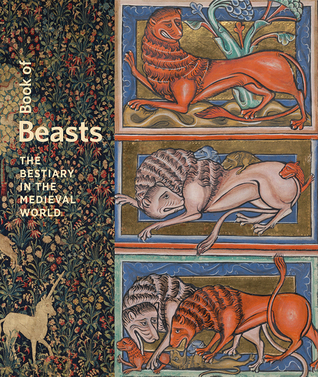
Book of Beasts: The Bestiary in the Medieval World by Elizabeth Morrison

Book of Beasts: The Bestiary in the Medieval World by Elizabeth Morrison

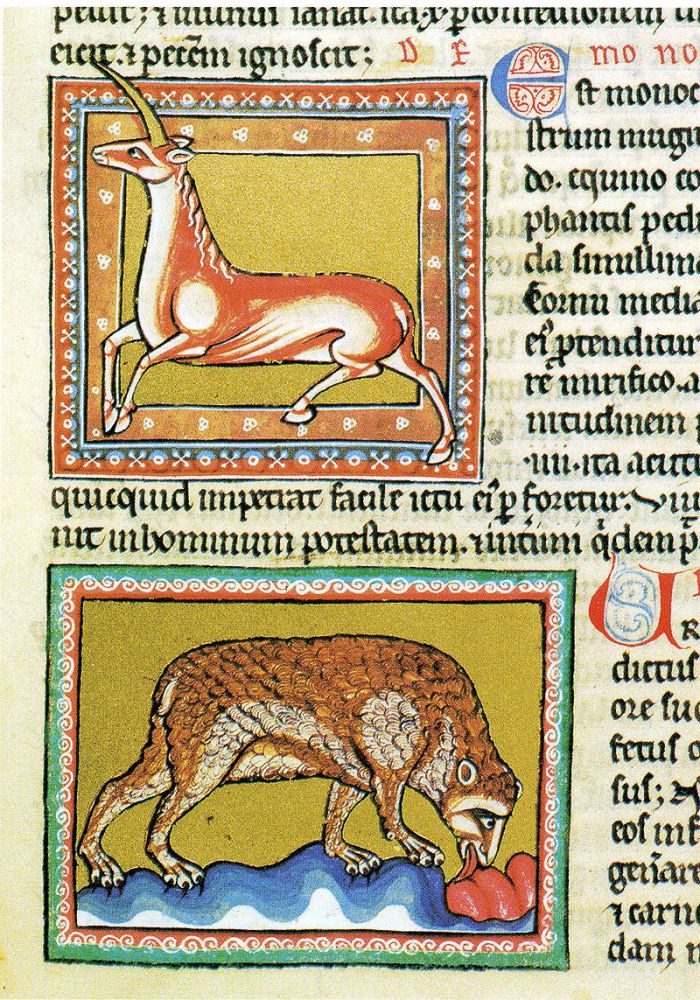
Books of Beasts is a scholarly examination of medieval texts called “bestiaries”. These curious works consisted of lists of animals with accompanying pictures and traditional stories. Sometimes they were printed alongside other works, like the Bible, sometimes not.

Elizabeth Morrison and twenty six other medieval scholars assert that these were the second most popular texts in the medieval world. They weren’t concerned with accuracy or science, part of the purpose of the books were to use creation as a window to contemplate the mysteries of God.

This particular book, Books of Beasts, was made to accompany a ground-breaking exhibition at The J. Paul Getty Museum. You can learn more about the exhibition here: http://www.getty.edu/art/exhibitions/…

I also used the information in this book to write a script for The History Guy YouTube Channel.

“Book of Beasts: The Bestiary in the Medieval World” presents the largest number of medieval bestiaries ever gathered together, representing one third of the known surviving illuminated bestiaries, including some that have never before left their countries of origin.”

The stunning portion of this book are the bestiaries themselves. The colors and the animals in their various tableau are simply beautiful. When you consider how old the artwork is, it’s staggering that something that fragile has survived so long.

“Animals both real and fantastic parade by the dozens, and sometimes hundreds, across the pages of these remarkable works. Their stories were among the most familiar and beloved of the time, and many survive today, though their origins in medieval and earlier times have, sadly, been largely forgotten.”

My favorite part of this book were the stories attached to the animals. Everyone in the medieval world knew them and so, when that animal appeared somewhere else say, for example, on a tapestry or dish, it was a hidden code of sorts, imparting meaning that the modern reader has never learned.

Consider the lion: “The natural philosophers say that the lion has three principal natures. His first nature is that he likes to walk on the mountain heights. And if it should happen that he is sought by hunters, the odor of the hunters reaches to him and with his tail he covers the trail of foot prints he left behind…. And thus our Savior… covered over the foot prints of his love in Heaven, until sent by the Father, he might descend into the womb of the Virgin Mary, and save the human race that was lost.”

The lion was always presented first in the bestiaries and was given the name “the King of Beasts” not only for its position on the food chain but also for its association with Jesus Christ. These associations have bled over to today, and I had no idea that’s where they came from.

Fascinating, isn’t it?

But as interesting as the stories and images were, this book suffers from some serious academia-itis. The various scholars, the only experts on the topic in the world I’m sure, have different writing styles and some are far more palatable than others.

By the time I got to my fifth or sixth explanation why this text was related to that text and may or may not have come first, my brain was glazing over a little bit. Other sections read more like dissertations than material that someone would pick up for fun.

That criticism aside, the topic itself is absolutely worthy of investigation, if for nothing else than these stories that were, as one of the authors said, as popular as a “viral meme” that some of their meanings are still in use today. Isn’t it cool how history haunts us in ways that we may be unaware of?

Thank you to NetGalley and the publisher for a free digital advance reader copy of this book. The projected publication date is in June 2019. The short quotations I cited in my review may change in the final version. 

Thanks for reading! #BookOfBeasts #NetGalley

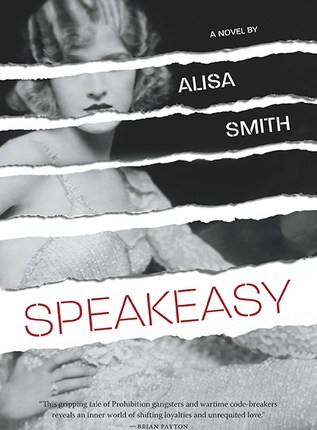
Speakeasy by Alisa Smith

Speakeasy by Alisa Smith

Lena Stillman is a codebreaker during World War II. But she hasn’t always been a hero.

During the depression, she robbed banks with Bill Bagley and the Clockwork Gang.

What is she going to do now that the past seems to have caught up with her?

Photo by Karolina Grabowska on Pexels.com

Speakeasy had some interesting elements, but the story suffered from a back and forth narrative and flat characters.

“I spread my papers out in front of me, and at first they all looked the same: a random mix of roman letters divided always into five characters with a space between each set, so no word lengths were revealed. I was searching for any repetitions.” loc 15, ebook.

The story is told from Lena’s perspective and diary entries of one of the members of her old gang.

“Bill Bagley was being punished because he had failed at something for which he possessed genius.” loc 80, ebook.

Photo by Deepak Verma on Pexels.com

The back-and-forth storytelling was jarring. I liked the stories separately, but together, it didn’t really work.

They interrupted the flow of each other. I think it might have fit together more smoothly in a Part I/Part II presentation rather than interspersed.

I think Bill Bagley, one of the central characters, didn’t have the depth required to pull off this story.

He’s supposed to be this charismatic, brilliant criminal who inspires the men to risk their lives again and again, and also captures Lena’s heart.

Bagley has some failings, but, initially, there must have been something to him to draw the gang together.

Instead, from the start, he comes off as a volatile jerk.

We meet Bagley as he’s denying the parentage of a child who looks just like him: “This un ain’t mine and don’t tell me again that it is,” he said, thrusting the baby back to a lady with burning red cheeks.” loc 80, ebook.

He doesn’t improve from there.

Photo by John-Mark Smith on Pexels.com

“I returned from a visit with Bill, received a threatening note from him, and now this. He must have a copy of it and wanted to hold it over my head.” loc 741, ebook.

I guess I just never understood what Lena saw in him.

Also, for a genius code breaker, she doesn’t seem to be able to puzzle out the people around her very well.

“My morals were just not like other people’s, because unlike the somnolent majority I saw society’s problems. In my youth I had been misguided, and picked the wrong way of lashing out against an unfair system. But I had left the gang behind, and found a greater ease in my soul.” loc 1781, ebook.

Photo by RODNAE Productions on Pexels.com

There’s a twist that occurs during Lena’s code breaking era that I saw coming from miles away. And I’m not particularly good at calling plot twists.

My favorite part of this book were the gang-era years. My heart was in my throat during most of those chapters.

Unfortunately, it couldn’t carry the rest of this novel.

Thank you to NetGalley and the publisher for a free digital copy of this book.

Thanks for reading!

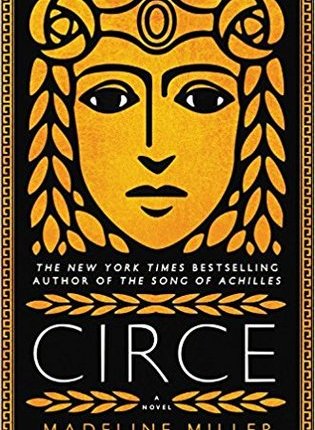
Circe by Madeline Miller

Circe by Madeline Miller

Circe is an epic fantasy that reads like a historical fiction novel, based on the Greek mythology of the witch of Aiaia, the daugher of a Titan- Circe.

I minored in the classics at university and one of my favorite classes was mythology. I love taking apart stories that mirror humanity’s foibles and try to explain the origin of some of life’s harder truths.

Photo by jimmy teoh on Pexels.com

In the war between the Titans and the Olympians, a creation story that could be interpreted to mean the ascension of modern culture over more ancient superstitions, the Olympians triumph. But the Titans are not wiped off the face of the earth.

“Beneath the smooth, familiar face of things is another that waits to tear the world in two.” loc 272, ebook.

Some of the Titans’ powerful and mysterious children play central roles in the great mythological stories. Circe is one of those.

“They called me nymph, assuming I would be like my mother and aunts and cousins. Least of the lesser goddesses, our powers were so modest they could scarcely ensure our eternities. We spoke to fish and nurtured flowers, coaxed drops from the clouds or salt from the waves.” loc 102, ebook.

Photo by ArtHouse Studio on Pexels.com

She began her life in the halls of Helios, a Titanic deity who was a god of the sun, much like Apollo.

“At my father’s feet, the whole world was made of gold. The light came from everywhere at once, his yellow skin, his lambent eyes, the bronze flashing of his hair. His flesh was as hot as a brazier, and I pressed as close as he would let me, like a lizard to noonday rocks.” loc 158, ebook.

Compared to her great father and gorgeous, manipulative mother, Circe was nothing- one of the many faceless children of the greater gods, whose future was destined to be a wife and then mother to more godlings.

Circe’s future is not as simple as all that.

She, and her brothers and sister, have a unique power that no other gods possess. They have the ability to harness the plants and power of the earth, to create potions and salves with miraculous effects. They call it: pharmakeia.

Photo by Daria Shevtsova on Pexels.com

Modern readers can recognize the roots of the word “pharmacy” in the name.

“Pharmakeia, such arts are called, for they deal in pharmaka, those herbs with the power to work changes upon the world, both those sprung from the blood of gods, as well as those which grow common upon the earth.” loc 909.

It is a power no one understands and, because of its mysteriousness, it makes even the gods afraid.

There is more to Circe’s story than pharmakeia. She also interacts with Hermes, Daedalus and Odysseus. She creates a god and a monster. She shakes the foundation of the oceans.

Photo by Kevin Menajang on Pexels.com

Highly recommended for those who enjoy mythology or historical fiction. It will transport you to a world where gods and goddesses walk the earth and humanity can do nothing but tremble in their shadows.

Thank you to NetGalley and Little, Brown and Company for an advance, digital copy of this book.

Thanks for reading!

You Do You: How to Be Who You Are and Use What You’ve Got to Get What You Want by Sarah Knight

You Do You: How to Be Who You Are and Use What You’ve Got to Get What You Want by Sarah Knight

The self-styled “anti-guru” Sarah Knight adds another volume to her quirky, profanity-laden self-help series with You Do You.

The focus, as you can guess from the title, is the art of allowing your authentic self to shine through without feeling guilt or being so far out of the social norms that you border on “psychopath.”

You Do You is about accepting your strengths and your flaws, whether those flaws are self-identified, or just things that you’re perfectly happy about but that other people seem to have a problem with. Or, should I say, that you WOULD be happy about, if you felt a little more confident in yourself…” loc 146, ebook.

Photo by Kat Jayne on Pexels.com

And, like the previous books, Knight doesn’t stint on the bad words. She admits she kept the title clean so a certain publication *cough* New York Times *cough* would print the all the words of the title in their sought after Best Seller list.

Which Knight has made before… but had her titles censored for their content.

“The advice in this book boils down to one simple mantra: Stand up for who you are and what you want. How do you do that? Stop letting other people tell you what to do, how to do it, or why it can’t be done.” loc 188, ebook.

I enjoyed You Do You, but I felt it wasn’t as strong as Knight’s other titles because she spends so much time rehashing material she has already covered elsewhere.

That being said, I like Knight’s style, her famous diagrams and her illuminating stories. This is an author who has been there, done that and cussed about it.

Photo by Anna Nekrashevich on Pexels.com

My favorite diagram in You Do You is Knight’s “ouroboros” or symbolic, conjoined serpent of wisdom picture. The text with the cute doodle says: “Is it right or wrong? You won’t know unless you have the confidence to take a risk and find out. If you regret your decision, then accept the consequences, swallow the lesson, and start over. With confidence.” loc 1995, ebook.

Verges on mystic Eastern wisdom, doesn’t it?

She encourages all readers everywhere to let the strange sides of yourself out- within certain boundaries. Don’t hurt anybody. Don’t take advantage of people. Be reasonable within your freakishness.

“Now, with those ground rules established, I do declare that we, as a society, should celebrate weirdness in all its forms- and that the right to be weird should be inalienable- just like the right to life, liberty, and the pursuit of happiness.” loc 2130, ebook.

Photo by Gratisography on Pexels.com

“You do you” and let everybody else do them. It’s that simple. It’s that hard.

Sarah Knight may be a bit of an acquired taste. Please don’t read unless you have a high tolerance for bad words and, dare I say, mild snark.

But, if you are someone in need of encouragement to let your freak flag fly, look no further.

Thank you to NetGalley and Little Brown and Company for a free digital copy of this book. And thank you for reading!

Read my reviews of Sarah Knight’s other titles:

The Life Changing Magic of Not Giving a F*ck by Sarah Knight

Get Your Sh*t Together by Sarah Knight

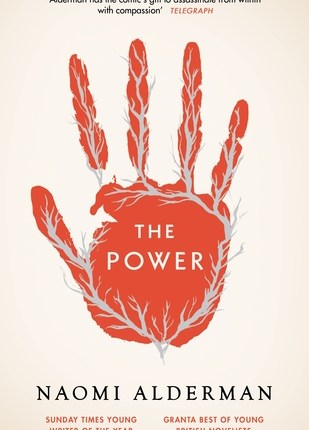
The Power by Naomi Alderman

The Power by Naomi Alderman

In The Power, young women have developed the ability to control electricity. It shifts the balance of power between the sexes and the world begins to come apart at the seams.

It is told from the point of view of a few women and a man. They each have different stories and experiences that Naomi Alderman blends together to create a powerful statement about how we live.

Photo by Sora Shimazaki on Pexels.com

This is one of the most disturbing books I’ve ever read, but also, most brilliant. It made me think about all of the internal biases I have when it comes to gender, cultural expectations and roles.

Who was it who said: “Absolute power corrupts absolutely.” This book is an examination of power and how it has shaped the world, not always for the better.

The monumental societal shift starts out small enough. A man named Tunde captures a moment between a young woman and a man who was hitting on her at the grocery store: “Tunde is recording when she turns around. … There she is, bringing her hand to his arm when he smiles and thinks she is performing mock-fury for his amusement. If you pause the video for a moment at this point, you can see the charge jump.” loc 261, ebook.

Those who have been abused are more likely to become abusers. And there are many, many abused women in the world.

“A strange new kind of fighting which leaves boys- mostly boys, sometimes girls- breathless and twitching, with scars like unfurling leaves winding up their arms or legs or across the soft flesh of their middles. Their first thought after disease is a new weapon, something these kids are bringing into school, but as the first week trickles into the second they know that’s not it.” loc 316, ebook.

Photo by Pixabay on Pexels.com

Entire governments crumble to powerful women. Women who have been locked up their entire lives roam the streets, free. Soon enough, they’re locking up and abusing the men, because they can.

Religions change. Sexual predilections change. New politicians are elected. New soldiers are trained.

“Allie thinks, God is telling the world that there is to be a new order. That the old way is overturned. The old centuries are done.”loc 681, ebook.

The new scourge of third world countries are powerful, uncontrolled women.

“He wounds three of the women in the leg or arm and the others are on him like a tide. There is a sound like eggs frying. When Tunde gets close enough to show what has been done, he is perfectly still, the twisted-vine marks across his face and neck so thick that his features are barely discernible.” loc 884, ebook.

Photo by tugay aydu0131n on Pexels.com

I think book clubs may find plenty to talk about in this book- if they can make it through. There are some very disturbing scenes.

“Gender is a shell game. What is a man? Whatever a woman isn’t. What is a woman? Whatever a man is not. Tap on it and it’s hollow. Look under the shells: it’s not there.” loc 4780, ebook.

In a time when so many women may feel powerless or voiceless, The Power may speak directly to them. It is, as I’ve said, a disturbing book, but also a conversation starter.

To quote Victor Hugo: Nothing is as powerful as an idea whose time has come. And, in my mind, it was the perfect time for this book to be written.

Thank you to NetGalley for a free digital copy of this book and thanks for reading.

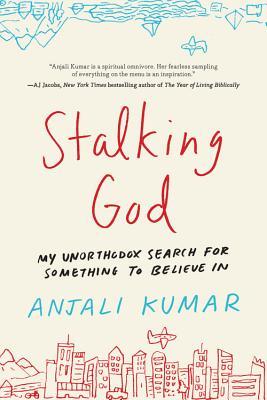
Stalking God: My Unorthodox Search for Something to Believe In by Anjali Kumar

Stalking God: My Unorthodox Search for Something to Believe In by Anjali Kumar

Anjali Kumar is a lawyer who is used to having all the answers. After she had a daughter, Anjali realized she knew very little about the big questions: why are we here? What is it all about? Is there a God?

“In 2010, when my daughter Zia was born, I decided that I needed to find God.” loc 24, ebook.

Anjali went on a quest to find out the answers, not only for the sake of her daughter, but also herself. She touches all the bases – from meditation to faith healing to Burning Man to yoni worship – Anjali leaves no stone unturned in her search to find what is real.

Photo by Artem Beliaikin on Pexels.com

“Along the way, I learned to chant, to meditate, and to marvel. I wrestled with my own identity, from my ethnic and cultural roots in India, to my femininity, to my role as a woman, daughter, mother, and wife. … I fancied myself an explorer, no different really than Magellan or Columbus. I was looking for a new world.” locs 148-163.

It’s a fascinating memoir.

Before each experience, Anjali puts in her research in an effort to find the science behind the beliefs. It’s not always as concrete as she would like it to be, but Anjali tries to engage her brain and her heart in her quest.

This is before she goes to her first “para-tan sounding”: “According to string theory, the entire universe is basically humming – all of it and all of us. Add that to the fact that the chanting of mantras has a long, compelling spiritual history, that cancer researchers are using sound- high-intensity focused ultrasound- to successfully destroy prostate cancer cells … and this whole Paramji thing starts to look like it might be grounded in a bit of hard science…” loc 500

Photo by Nataliya Vaitkevich on Pexels.com

Anjali tries to keep an open mind, even when things sound very strange: “One thing I had to be cognizant of… was how difficult it is as an outsider to come to terms with what are easy to perceive as the odd behaviors and strange beliefs of ‘other people.’ … as outsiders we have no idea what those behaviors and traditions stand for or mean.” loc 904.

She finds layers of meaning, even when particular experiences weren’t all that she hoped they would be. Anjali also experiences a few surprises along the way.

“I was looking for a theory of everything spiritual for Anjali and Zia. And yet, so far, just like those physicists had failed to find a theory of everything in the entire universe, I had failed to find a theory of everything for my own spirituality.” loc 1343.

Photo by Pixabay on Pexels.com

And she never gives up because: “A spiritual home is something that we all have to find for ourselves.” loc 2853.

Recommended for seekers everywhere. Anjali’s discoveries may not be earth-shattering, but they’re real and worth the read.

Thank you to NetGalley and Seal Press for a free advance reader copy of this book. Reminder: the short quotations in this review may change or be omitted in the final printed version.

Thanks for reading!