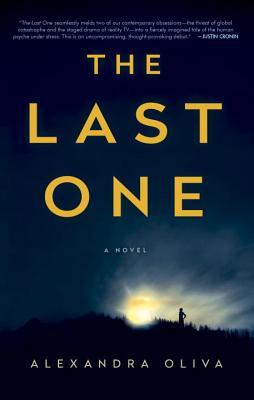
The Last One by Alexandra Oliva

The Last One by Alexandra Oliva

Twelve contestants go on a survival reality show.  It’s a brutal competition and the only way off the show is to say the safe word.  While the filming is taking place, something terrible happens in the real world… and no one tells the contestants.  Will any of them survive?  And, if they somehow survive, will they have a home to go back to?

In the book blurb, The Last One is compared to Station Eleven and The Passage neither of which I liked very much. I thought Station Eleven was boring and The Passage is the Game of Thrones of dystopian literature, it goes on and on and on… Unlike the other two titles, I think that The Last One got the mix of action to number of characters just right. If I had to pick the book that I think it’s most like, I would compare it to Oryx and Crake by Margaret Atwood but with far more like-able characters and a much more optimistic world view.

The Last One is told through a first person, present narrative and a third person flashback, alternating viewpoints between chapters. I was a bit frustrated with that set up until the timelines began to converge towards the end of the book, because Oliva kept putting in foreshadowing, but then not delivering on it until a couple chapters later- just long enough for me to completely forget about it. I’m much more of an instant gratification kind of reader, but I managed to push through it and really started to enjoy the novel despite the style of storytelling.

Mixing reality television with the end of the world was brilliant because the mind set of the people in the reality shows is already in survival of the fittest/game mode. I completely believed the mental breakdown that Zoo suffered when she tried to figure out where the game ended and reality began. She was put in a situation where she wasn’t supposed to know what was going on and then, she didn’t even know when exactly, no one knew what was going on. This type of world ending felt much more believable than the descent into chaos in World War Z or Station Eleven because of that slow transition to a different world provided by the reality tv show setting.

Also, anyone who’s ever watched reality tv will immediately grasp the archtypical roles that Oliva uses to label her characters and it makes it simple to keep a rather large group of people straight in your mind. Fans of Big Brother, Top Chef, The Jersey Shore, and any of the countless other offerings of that genre will eat this up.

What I loved most about this book is that it was so easy to put myself in Zoo’s shoes. In this passage, she’s talking about her reluctance to go on the show: “It didn’t used to be so difficult to leave, but it was different before I met my husband. Before- leaving Stowe for college, that summer hiking hostel to hostel across western Europe, six months in Australia after graduating from Columbia- my fear was always tempered by excitement enough to tip the scales. Leaving was always scary, but it was never hard. But this time I not only left familiarity behind, I left happiness. There’s a difference, the magnitude of which I didn’t anticipate.”advance reader, pg 24-25

Cooper, aka Tracker, was also so relatable. He reminded me of various people that I have known in my real life: “Cooper was kind of like that at first. Standoffish. I don’t know what drew me to him so strongly from the start. No- I do. His air of almost freakish competence. The way he scanned each of us, assessing without looking for allies, because from the moment he leapt into that tree it was clear he didn’t need anyone but himself. I bet his entire adult life has been like that: needing no one, being needed by no one- existing without apology and accomplishing wonders. I’d never been around someone so supremely independent before and was fascinated.” advance reader, pg 38

The reality show mentality begins: “Waitress’s animosity doesn’t surprise Exorcist, but Rancher’s agreement does, as do the many nodding heads around the campfire. Briefly, he looks into a camera lens, as though accusing the device of having put the others up to this. Indeed, that’s exactly what he’s doing; he thinks they’re performing- like he is. But the truth is most of the contestants have in this moment forgotten that they’re being recorded. An ancient instinct is kicking in, not so much a survival-of-the-fittest mentality as an unwillingness to carry an able but lazy individual.” advance reader, pg 174

Zoo’s confusion between reality and reality television makes for some really intense, introspective moments: “I wonder how I’m being portrayed now. I know what my role was when we started. I was the earnest animal lover, always cheerful and up for a Challenge. But now? Will they cast me as off my rocker? Probably not; that’s Randy’s role, with his stupid gold cross and his tales of possessed toddlers. But whoever I am now, I’m no longer who I was. I wonder if I can even do that anymore, be that person grinning until her cheeks ache. It was exhausting, as exhausting as this endless trekking, in its own way.” advance reader, pg 185 After awhile, I started to wonder if Zoo would ever accept what was really happening to her or choose to keep soldiering on and never come back from the world that she was building in her head. I liked her enough though, that I was cheering for her sanity, every step of the way. That’s the sign of a good book, I think.

Finally, I loved this moment, when Zoo’s happy mask begins to crack on the television show and how she’s received: “Waitress is shocked, as are Rancher and the camerman. The producers will be shocked too, and the editor, who will work so hard to explain away this moment. But there is at least one viewer who won’t be shocked: Zoo’s husband. He knows this secret competitive side of her, her impatience for wallowing and delay. He also knows how fear can turn her mean.” advance reader, pg 221. Ah marriage, the ultimate reality show.

There’s a lot more to The Last One that I’m not going to talk about here because I don’t want to spoil anything for anyone. It’s a great book. I recommend it for readers who enjoy dystopians, for television watchers who enjoy reality shows, and for anyone who has ever wondered about their capacity to survive the end of the world. Could you be as strong as Zoo? Could I? I wonder…

Thank you to the Goodreads First Reads and NetGalley for advance reading copies of this book.  And, thank you for reading! The full text of this review has also appeared on my public library’s blog : ofplblog.info

Awakening from the Daydream: Reimagining the Buddha’s Wheel of Life by David Nichtern

Awakening from the Daydream: Reimagining the Buddha’s Wheel of Life by David Nichtern

Awakening from the Daydream: Reimagining the Buddha’s Wheel of Life is an accessible and modern reworking of the Buddhist Wheel of Life.

I took a course on Buddhism in college (seems like a million years ago now) and I remember being deeply affected by the Wheel of Life then- the original version.

For thousands of years, Buddhist practitioners have been studying the mind, how it perceives the world, and how it creates a perpetual cycle of suffering. The original Wheel captures this in extraordinary detail. David Nichtern’s re-imagining of it is brilliant.

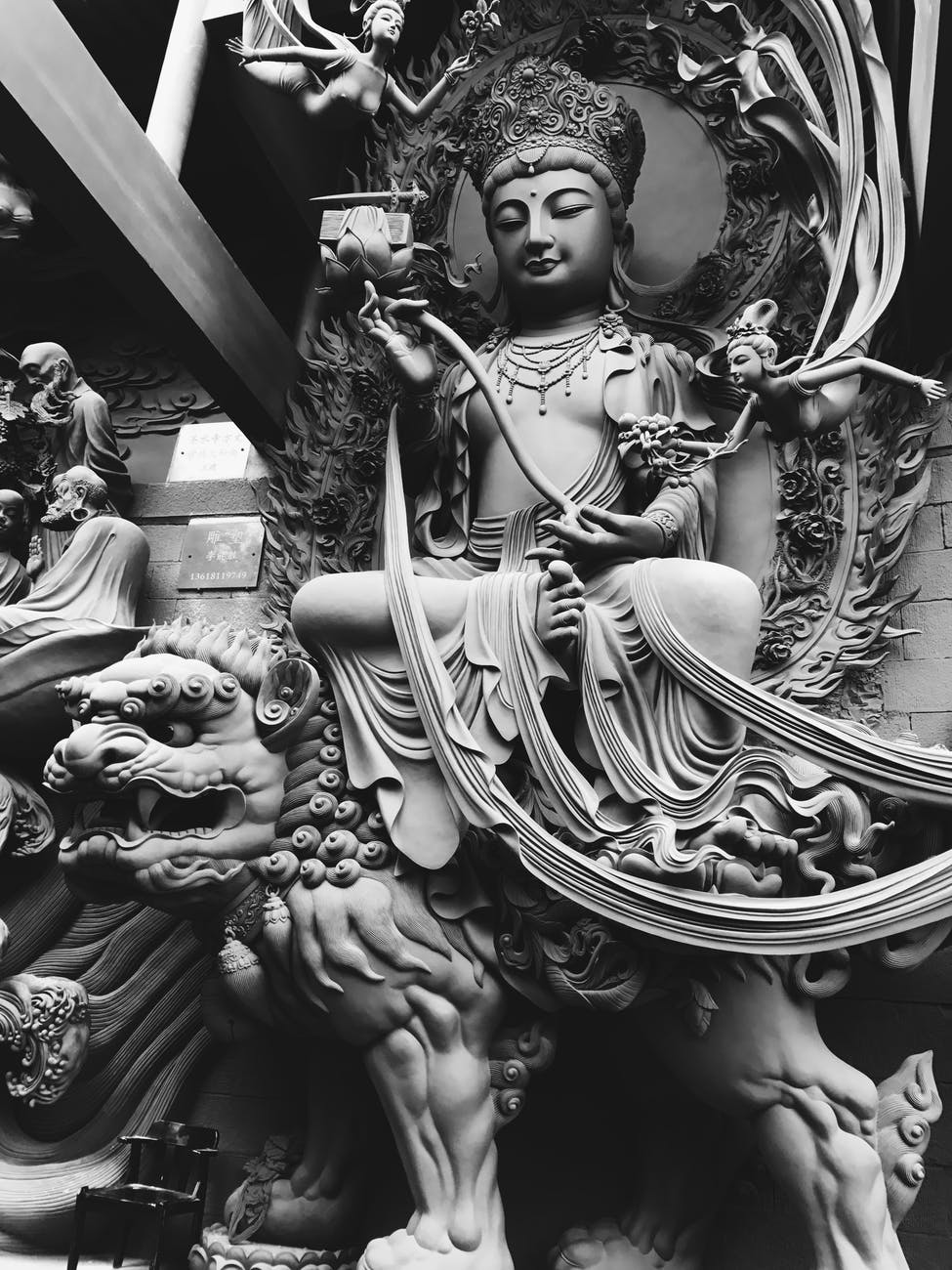
Photo by carol wd on Pexels.com

I think that this could be very helpful for many people. It’s similar to artists updating and customizing Tarot decks. Sometimes, new images spark new ways of looking at situations and new solutions arise.

Nichtern is clearly an expert on this topic but he never ventures beyond the basics of the teaching into spaces that beginners can’t grasp. His philosophic writing is understandable and relatable. I appreciated that because not all Buddhists texts are simple reads- Stages of Meditation by the Dalai Lama comes to mind.

“Tradition says that the Buddha directed the creation of the original Wheel painting, which he commissioned as a gift to teach Dharma to an Indian king. When the king who received the painting contemplated it and fully understood its meaning, he attained enlightenment- he brought the suffering caused by unconscious habitual patterns to an end… The image of the Wheel survives not just because it sustains tradition, but because the message it conveys is powerful and timelessly relevant.”

Nichtern reminds us in this book that Buddha gave the painting to a king not a monk. This shows that we can live in the world and also transcend it. These teachings are for everyone.

Photo by RODNAE Productions on Pexels.com

Nichtern discusses the Buddhas contained in each part of the picture- in the suffering areas and outside of it: “There is also usually a Buddha standing outside of the Wheel, representing transcending the six realms altogether. Such people are said to be free from imprisonment in the six realms- free of karma- and only appear in the six realms in order to teach and liberate the beings within the realms out of compassion. Sometimes we are fortunate enough to meet people who remind us of this kind of possibility.” People, I would say, like Nichtern himself.

How to find opportunity in the midst of suffering: “The abject misery that we experience in the hell realm mindset offers us the opportunity to relate to the suffering of others… This isn’t to say that we simply forgive the harmful behavior of others. Instead, we can use our own intense experiences of hatred or depression to realize a deeper truth about all of us living beings in general: none of us are immune from this.” None of us.

Nichtern offers meditation practices for beginners or more experienced folks. Here is a snippet of his advice: “…it is good to help manage people’s expectations. Meditation can include boredom, irritation, discomfort, frustration, grasping, aggression, a discursive waterfall of thoughts and emotions coming and going, and perhaps occasionally a sense of peace and acceptance of things as they are. In a nutshell, it can and will include all the aspects of who we are and of what our lives are actually made.” He also offers concrete suggestions on how to find instructors.

I recommend Awakening from the Daydream for anyone interested in Buddhism, at all levels of knowledge, but this would probably be most helpful for beginners to intermediate practitioners.

Some books that cover similar topics that you may want to check out: You Are Here: Discovering the Magic of the Present Moment by Thích Nhất Hạnh, Happiness: A Guide to Developing Life’s Most Important Skill by Matthieu Ricardo, or The Buddha Walks into the Office: A Guide to Livelihood for a New Generation by Lodro Rinzler.

Thank you to NetGalley and Wisdom Publications for a free digital copy of this book and thank you for reading!

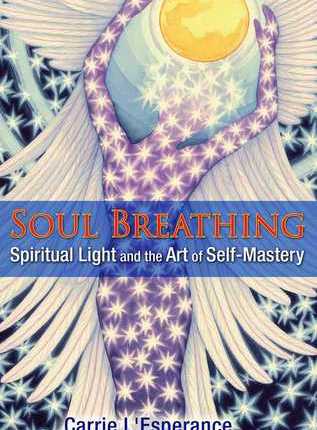
Soul Breathing: Spiritual Light and the Art of Self-Mastery by Carrie L’Esperance

Soul Breathing: Spiritual Light and the Art of Self-Mastery by Carrie L’Esperance

An incredibly ambitious book, Soul Breathing: Spiritual Light and the Art of Self-Mastery covers most major spiritual topics- from chakras to meditations and the evolution of the soul to aliens.

With this very diverse amount of material, readers are certain to find at least one chapter or section that resonates with them.

Photo by Egor Kamelev on Pexels.com

Unfortunately, he or she will probably also discover something that doesn’t, which is just fine, because as Carrie points out in this book, everyone experiences the “Universal Mind” in a different way.

What is enlightenment? In the author’s own words: “Enlightenment is a way of freeing oneself from ignorance in order to act, operate, and contribute as a Light in the world. It is through the balanced integration of body, mind, and spirit that a deeper and more profound Intelligence is expressed.”

The vocabulary in Soul Breathing is definitely New Age, but the reader doesn’t have to have any background in that to understand what Carrie is talking about. She starts out with a bit of her personal history and then jumps into general teachings about the soul and transcendence, which I found to be very reminiscent of Eckhart Tolle’s A New Earth.

After that, Soul Breathing goes in a bunch of different directions, which I didn’t enjoy nearly as much as the opening few chapters.

Photo by Jill Wellington on Pexels.com

What is Soul Breathing anyway? “Soul Breathing is the ability to create a balanced life on Earth through a conscious connection to Spirit. It is a state of grace achieved through action and experience.”

Carrie L’Esperance is at her strongest when she’s relating personal stories or giving concrete instructions- like specific affirmations or methods of meditating to support positive spiritual change.

I felt that Soul Breathing stumbled in the parts where Carrie talks about what is wrong with the world or how things have gone so badly. (The rampant energy pollution and government-alien conspiracy sections come to mind.)

All personal stories of spiritual or the otherworldly have value as Carrie reminds us: “There have always been the unbelievers and the hyperrational scientific intellectuals who attempt to devalue what for some people are the most powerful, transformative, and sacred experiences of their lives. In truth, there is really no one who can denigrate the authentic spiritual experiences of the individual.” I would add, except his or herself.

I thought that this book with its myriad of suggestions and prohibitions would be impossible for anyone to ever implement in their lives in a manageable way.

Photo by Chermiti Mohamed on Pexels.com

Carrie says: “We don’t have to dissect every aspect of how and why we exist in order to appreciate the miracle of life. We can experience all that is needed in the natural stages and steps that we take along the way. Ultimately we are to choose what capacities we will develop within the laws of existence.”

Despite that passage, Carrie seems to be a very demanding teacher.

It is clear that Carrie is passionate about spiritual, physical, earthly, and even galactic health and well-being.

Don’t read this book if you are unwilling to have an open mind about all manner of spiritual topics. Do read this book if you’re looking for more information about sensing, managing, and healing with subtle energy in the body, mind, and soul.

Photo by Magicbowls on Pexels.com

Her beliefs about aliens and a grand government conspiracy to control and manipulate the population were a bridge too far for me, but I’m certain that there are some readers out there who will resonate with her teachings.

Perhaps fans of Whitley Strieber or John Keel will enjoy Soul Breathing.

A big thank you to Netgalley and Bear & Company for a free digital Advance Reader copy of this book for review purposes!  And, thank you for reading.

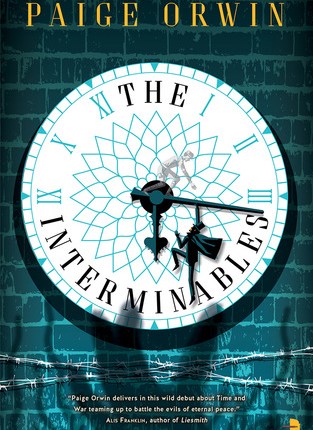
The Interminables by Paige Orwen

The Interminables by Paige Orwen

Interminable adjective. 1. Incapable of being terminated; unending  2. Monotonously or annoying protracted or continued; unceasing; incessant  3.  Having no limits.  (dictionary.com Unabridged.  Retrieved May 22, 2016 from dictionary.com website http://www.dictionary.com/browse/interminable)

The Interminables takes place in a world where magic is real and so are nightmares.  Prior to the events in this tale, an immortal being attacked all the cities on Earth and essentially destroyed civilization as we know it.  She was killed but for an extreme, unspecified magical cost.  Now, the scars left by this insane immortal dot the world and leak magic like radiation, producing strange items and twisted, dangerous creatures.  The Hour Thief, Edmund, and his best friend, an archtypical ghost of World War I named Istvan, struggle to bring order and heal those injured by the remains of this struggle.  Behind the scenes, an even greater evil begins to stir…

The Interminables is a type of science fiction/fantasy that I love.  It doesn’t dwell too much on the how’s of the situation, but jumps head first to the what’s, who’s, and why’s of the story.  And, this is an incredibly ambitious world in the sense that not only are the characters dealing with untamed and uncontrollable magic, but also the dimensions of alternate worlds have collided and merged with our own.  So, there are beings and powers in this place that are far beyond anything that exists in the real world.  It’s an exciting premise and the reader can almost feel the storytelling potential exploding from the very first page.

The Hour Thief is not only immortal, capable of teleportation, and able to move with super human speed through time- he’s also a librarian! : “…the Hour Thief was finally returning to real field duty, after fourteen months missing and then years of sticking to nothing more than librarian work and his usual mysterious excursions by night.”  My favorite kind of super hero.

Who is the Hour Thief? :  “He was, for all intents and purposes, a conman who dealt in stolen moments.  The hours that slipped away when no one was watching.  Lives, plain and simple.  He’d been thirty-five for seventy years and he could say that only because none of the time he’d lived since 1954 was originally his.”

I loved how Orwin described two beings, who are essentially immortal, dealing with technology. : “Edmund… fished the device responsible out of his other jacket pocket.  It was roughly the same size and shape as a pack of cards and combined the services of a clock, a calculator, a telephone, a radio, a camera, a film projector, a phonograph, a library, a dedicated staff of field researchers, an electric facsimile of the Delphic oracle, and a flashlight, but it was easier to call it a telephone.” When put that way, our devices really do seem to be magical.

Istvan, sends a text message, and it comes out more like a telegraph: “Istvan fiddled with the phone a moment longer… “I’ve sent a message to the Magister, I think, but I’m not certain it went through.”… Edmund glanced at it.  Recovered, it said, on our way presently stop.”

My favorite moment in the whole book, an interchange between Edmund and Istvan :  Edmund set the ritual knife down.  “Are we always this interesting?”  Istvan knelt and retrieved his own blade, wiping it on the hem of his uniform before handing it to him.  He was a doctor.  It would be all right.  “Oh yes.”

In the acknowledgments, Orwin says, “The original project grew out of a desire to preserve some of the characters developed by myself and my friends in the MMORPG City of Heroes…”  I also played that game!  The ability to customize and create your hero was so much fun, but the game itself became repetitive very quickly.  Orwin did such a great job taking a one dimensional idea and giving it a time piece, wings, and a limitless world to explore.  The Interminables is a lot of fun and not interminable to read, at all.

If you’re looking for read alikes, I’d recommend Triumff: Her Majesty’s Hero by Dan Abnett, The League of Extraordinary Gentlemen by Alan Moore (graphic novel), or Miss Peregrine’s Home for Peculiar Children by Ransom Riggs (young adult title).

Expected publication date: July 5, 2016.  A big thank you to NetGalley & Angry Robot Publishing for the opportunity to read and review a digital copy of this book.  And, thank you, for reading!

When Crocs Fly by Stephan Pastis

When Crocs Fly by Stephan Pastis

My search for reading material that my daughter will enjoy continues.  I happened to stumble across When Crocs Fly by Stephan Pastis in the ‘Read Now’ section of NetGalley and gave it a read through.

When Crocs Fly combines the sarcastic put downs and delivery of Garfield with the physical humor of Looney Toons. The jokes are mainly puns, misunderstandings, or a combination of both. The longest scenes are only two pages, so Pastis never really writes a story- it is more a collection of vignettes, which could be perfect for readers with shorter attention spans.

But, if your child is reading this, make sure that they have strong language skills. Whenever the crocs speak, their voice is written phonetically, which could be problematic for beginner readers. I think it’s the equivalent of trying to read cursive handwriting… just different enough to cause a problem.

Some beloved characters from other comics make very brief cameos in this. I won’t say which ones because that would ruin the fun!

Though I didn’t have any laugh out loud moments in this one, my favorite page was ‘The Trophy from the Ping Pong League’ (pg 85) where it’s labeled as ‘Best Participation by Someone in our League who can Breathe and has Participated.’ When Crocs Fly has clever ways of skewering reality, but I’m afraid that the more subtle jokes will go over the kiddie’s heads and I don’t think that adults would really enjoy this one. It’s clearly aiming for a younger set.

I’d recommend it for ages 10+, personally, but it really depends on the maturity level of the child reading it. Big thanks to Netgalley for the free digital copy and thank you for reading!

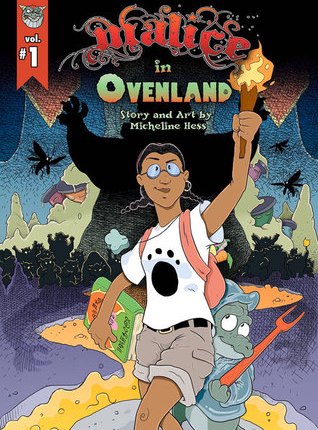
Malice in Ovenland: Volume 1 by Micheline Hess

Malice in Ovenland: Volume 1 by Micheline Hess

Malice in Ovenland by Micheline Hess is a graphic novel for children. Lily Brown’s mom tells her to clean the kitchen- and her adventure begins.

An excellent pick for reluctant readers, this story is a cute, gross, and, endearing romp through a fantastical world hidden behind an oven.

Lily’s heroic journey reminded me of the comic series, Princeless by Jeremy Whitley. In Princeless, the heroine tires of waiting for a prince to come save her, so, she sets about saving herself.

Lily is no wilting flower either, despite her name. 🙂

With art and a storyline appropriate for the pre-teen crowd and an empowered female protagonist, I could see this being a great addition to any juvenile’s graphic art collection.

What I enjoyed most about Malice in Ovenland were the homages to other great works of children’s literature.

The obvious one, of course, is to Alice in Wonderland but I also caught shades of the Lord of the Rings in the poem included at the end of Chapter 1.

The moment that Crumb comes to visit Lily in the dungeon reminded me of when Taran met Gurgi in the Black Cauldron.

The Queen’s advisor, named Crispodemus, reminded me of Nicodemus the rat from the classic children’s story, Mrs. Frisby and the Rats of NIMH by Robert O’Brien. (One of my all-time favorites, by the way)

And finally, The Royal Rangers reminded me of the Beagle Boys from Duck Tales– bumbling, minimally intelligent thugs, who would be harmless if they weren’t so determined to be bad.

Malice in Ovenland would be a great title for a reluctant reader or a reluctant eater. The story, in addition to the adventure, teaches kids to not be afraid to try new things- either food or life related.

It’s a message that can’t be repeated enough.

The humor is mainly gross-out or potty-related but, as a mother of a soon-to-be-10 year old, that’s exactly where her humor is at right now. It’s perfect for the audience that it is seeking.

Big thanks to NetGalley for providing me with a free digital edition of this title for review purposes and thanks for reading!

The Many Selves of Katherine North by Emma Geen

The Many Selves of Katherine North by Emma Geen

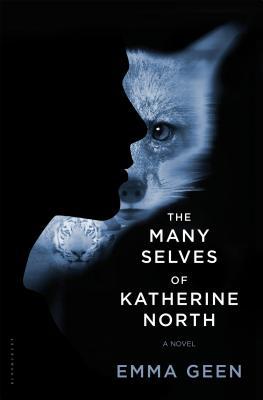
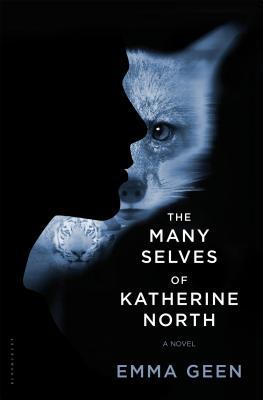
katherinenorthIn The Many Selves of Katherine North by Emma Geen, humanity has harnessed the power of consciousness and mechanized the ability to place that consciousness in different bodies at will.

Katherine is a teenager who works for a large research company. She’s the longest lasting “phenomenaut” (person who’s consciousness is put into the body of an animal) because she seems to be special.

The process of consciousness transfer seems to stop working when the brain ages and loses its plasticity. Despite her age, Katherine’s brain seems to be fine.

But then, one day, Katherine sees something strange when she’s out of her body… and perhaps she’s not as well as she imagined.

The Many Selves of Katherine North asks some pretty powerful questions like: What is consciousness? How does our physical body change how we perceive the world? What is reality?

I think that this story has the potential to open up a dialogue about these questions between readers who may not have considered them before. In that way, this is a very powerful book.

I did not like how the story flips back and forth between the present and the past. I think Geen was using the shifting timeline to build the mystery, but, because of the nature of Katherine’s many consciousness experiences, it made things rather confusing.

This is a complicated book. At times, maybe too complicated.

The richness and variety of Katherine’s experiences drives a wedge between her reality and the rest of humanity’s reality.

The reader really sees difference in this moment, when Katherine is preparing to go into work: “Later, I lie in bed quivering… because it’s only hours until I’m out of here. Here- not just a room but skin. How can other people call this their totality? There is so much more.” pg 19

Katherine captures the impossibility of explaining out-of-body experiences very succinctly here: “Because how do you cram the lived experience on to a page? The words available to me were never enough. Something would always slip the sentences. Human language developed around human bodies, it never quite fits other ways of being. pg 66

I loved all of the chapters when Katherine was in the body of an animal. In this one, she was a snake: “Old scents have imprinted upon the world like spoor into soft mud, the past blundering prey. I wonder if this is one reason many animals have a poor memory compared to humans. What’s the use in remembering when the world does it for you? pg 146 Fascinating.

Emma Geen included a disclaimer at the back of her book and it contained some of my favorite lines: “…what if there are other valid ways of knowing? What is the world is not one, but multitude, with as many ways of being as there are beings? What if literature were the opportunity to glimpse such refractions, thrown by the world as though from a diamond?” pgs 349-350 Loved that.

If you enjoyed The Many Selves of Katherine North, you may want to pick up The Night Circus by Erin Morgenstern or Mythago Wood by Robert Holdstock for more glimpses of worlds hidden within worlds.

Big thanks to Goodreads First Reads program, NetGalley, and Bloomsbury USA for providing me with an advance reading copy of this novel.

Thanks for reading!