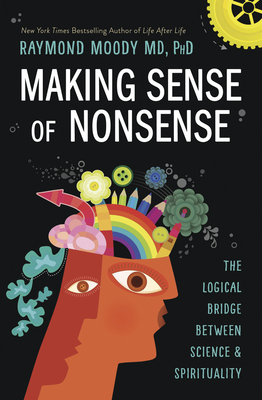
Making Sense of Nonsense: The Logical Bridge Between Science & Spirituality by Raymond Moody

Making Sense of Nonsense: The Logical Bridge Between Science & Spirituality by Raymond Moody

“A little nonsense now and then, is relished by the wisest men.” ― Anonymous

Raymond Moody, renown researcher of near death experiences (NDEs), has spent decades codifying and categorizing nonsense, proving it has a structure. Through his endeavors, Moody hopes nonsense, spoken by those who experience NDEs or upon their death beds, may be analyzed in order to provide another avenue of exploration into humanity’s experience after death.

It may sound like a load of nonsense, but I promise it is anything but. 🙂

Photo by Produtora Midtrack on Pexels.com

“Nonsense itself affects people positively, but the word ‘nonsense’ affects people negatively. That is, people like nonsense itself, but they dislike the word ‘nonsense.’ … they associate the word ‘nonsense’ with one common negative effect of involuntary nonsense: specifically, errors.” pg 13

It is not the accuracy of the utterance that researchers are examining, instead, it is the structure of the language itself.

In a class on this topic, Moody says his students learned to identify and write seventy different types of nonsense. (Who knew there were so many!) Once you know the forms, you’ll be able to do the same.

Why is this useful if you’re not a NDE researcher? Not only is nonsense regularly utilized in poetry, plays, television shows and other forms of entertainment, Moody shows examples of nonsense in religious texts, alchemical writings, advertising and more.

“My sense of nonsense has been an indispensable asset during my career as a medical doctor and psychiatrist, for it often helps me make sense of someone’s unique inner experience.” pg 105

Photo by Andrea Piacquadio on Pexels.com

And he’s right. Since finishing this book, I’ve become aware of how often nonsense is bandied about in both daily conversations I have with friends and family as well as in the Netflix shows I watch.

It’s not only used for communication and art. Moody claims nonsense goes a step further, providing a link to other mystical states of mind.

“Talking nonsense to people makes them experience a curious, hard-to-describe alternate state of consciousness. In sum, nonsense is an alternate state of language that can induce an alternate state of consciousness.” pg 125
Photo by Vinícius Vieira ft on Pexels.com

So, babble away, my friends. If anybody says anything negative about it, tell them you’re conducting a science experiment and you won’t just be talking nonsense. 🙂

“It takes a heap of sense to write good nonsense.” ― Mark Twain

Thanks for reading!

Wisdom of Near-Death Experiences: How Understanding NDEs Can Help Us Live More Fully by Penny Sartori

Wisdom of Near-Death Experiences: How Understanding NDEs Can Help Us Live More Fully by Penny Sartori
wisdomofneardeath

An extraordinary book by Penny Sartori who was a nurse, now doctor, and worked for years in the NHS.

She realized that with end life issues, there are many categories of experiences that are not discussed in medical educations but that happen often enough to be tacitly understood by practicing medical staff. Dr. Sartori compiled this book with the aim of helping other medical professionals understand near-death experiences and their potential effects on recovering patients.

Refreshingly, Dr. Sartori writes simply enough for a lay-person (like me) to completely understand the text and I found first-hand account after account fascinating, uplifting, and educational.

I’ve read about many near-death experiences and I’ve always gotten the feeling that there was something more there. As if, in reading the account, I was viewing a light behind a veil. Dr. Sartori calls this, “Ineffability.” “Ineffability: When people try to make sense of the (near-death) experience or try to verbalize it they find that words fail them. They have experienced something with which they have nothing to compare, and to try to find words to describe it is impossible.” pg 9

It’s nice to be able to put a word to that feeling.

At the end of the chapter about international near-death experiences, she has this to say: “It is evident that NDEs are worldwide phenomena and it has therefore been suggested that they are merely the effects of a dying brain. However, some cultures report components that are not present in other cultures, which would rule out materialist explanations. As some components are interpreted according to culture then it is reasonable to construe that the components may be interpreted symbolically through each individual’s cultural filter. This could suggest an underlying collective consciousness, as discussed by Carl Jung.” pg 83.

Photo by Timo A. on Pexels.com

Most of the books I’ve read on this topic have had little to say about the commonality of NDEs among the world’s population. This is a good introduction to it.

About the power of love: “Hospice and palliative-care consultant Dr. John Lerma has reported that 70 to 80 percent of his patients waited for loved ones to leave the room before dying. He also remarked that he had witnessed patients who had been certified dead return to life as the pain of their loved ones had pulled them back from a place of peace and love.” pg 103 Mind blown.

Love literally brought people back from the dead.

About the science of spirituality and how that relates to religious texts: “Texts such as the Books of the Dead have many similarities to NDEs. For many thousands of years these have been reduced to myths but now they appear to be ‘maps of the inner territories of the psyche encountered in profound non-ordinary states of consciousness’. Maybe this is what is needed to reintegrate our spiritual roots with our huge advances in technology.“pg 191 I think that this may be true too.

And finally: “One thing I’ve come to realize over the past few years is that heaven is not a location – it is a state of mind and is within us all. We just have to go within and find it.” pg 191 Absolutely, Dr. Sartori.

If you enjoyed The Wisdom of Near-Death Experiences, I would suggest reading, The Map of Heaven by Eben Alexander. You may also enjoy Journey of Souls: Case Studies of Life Between Lives by Michael Newton- a hypnotherapist explores between life/past life consciousness with his patients to heal current issues.

Also, if you want to explore the idea that heaven is inside of us, you may want to check out What if This is Heaven by Anita Moorjani.

Thanks for reading!

Surviving Death: Evidence of the Afterlife by Leslie Kean

Surviving Death: Evidence of the Afterlife  by Leslie Kean
surviving-death

Investigative journalist Leslie Kean takes a close look at a wide variety of unexplained phenomena in order to answer the age old question — does human consciousness survive death intact with the memories, personality, and uniqueness that was exhibited in life?

I found her evidence astonishing.

Much of her research into near-death experiences (NDEs), I had been exposed to in other books. But, the chapters about children remembering past lives, psychic mediums and physical mediums was entirely new to me.

As I read, I kept getting goose bumps up and down my arms. The stories are that powerful.

(Reminder, the following quotes were taken from an advance reader’s copy and may change or be edited in the final printed version.)

Why did Kean write this book? “My intention is to present some of the most interesting evidence from diverse sources and show how it interconnects, making it accessible for the intelligent and curious reader encountering the material for the first time. Strict journalistic protocols can be applied to any topic for which there is data, no matter how unusual or even indeterminate.” loc 51, ebook.

I think she succeeded admirably. Most of Surviving Death is easy to understand, no matter how far-out the material may be.

I’ll admit to losing interest in the passages where she tries to distinguish between intelligence coming from the living human psyche or dead ones, the psi theory vs the survival theory. But, since that was the point of the book, that may be some people’s favorite part so don’t let me put you off.

Photo by Daniel Torobekov on Pexels.com

Take these death bed descriptions of the other side by those about to leave this world: “The great inventor Edison, just hours before his death, emerged from a coma, opened his eyes, looked up, and said: “It’s very beautiful over there.” And more recently, the sister of Steve Jobs reported that just before he died, Jobs looked over the shoulders of his family members, right past them, and said, “Oh wow. Oh Wow. OH WOW!!” loc 2176, ebook.

I was not present when my grandpa passed, but Grandma told me later that at the moment he took his last breath, that a light came into his eyes and his face became so completely peaceful that he looked thirty years younger. I can’t say that I know for sure what waits for us beyond this life, but I can say that I’m not afraid. If you happen to have any fears in that regard, Surviving Death could be of great help to you.

Kean doesn’t answer the question she poses definitively because, of course, she hasn’t died and come back to tell us about it, but the stories and evidence that she presents is compelling. Throughout the chapters, Kean writes about personal, first-hand experiences that she has had. I believe that they are genuine. The hardcore skeptics may disagree.

The most extraordinary part of this book were the physical manifestations that Kean observed in the medium seances. Apparently, these seances have been going on for hundreds of years in certain areas of the world.

Did you know that in the 1920s in Warsaw, Poland, bowls of wax were placed in the seance chapter and apparitions were able to make molds of their hands? “In the Warsaw experiments, gloves were produced with interlocking fingers, with two hands clasping one another, and with the five fingers spread wide apart. Needless to say, the removal of a human hand from such formations would be impossible. Dematerialization was the only method that would leave the molds intact.” loc 4504, ebook. How had I never heard of this!

Recommended for readers who are prepared to have their minds blown. Surviving Death is incredible and almost indescribable. If you are interested in such studies, it is an absolute must-read. You may also want to look into Wisdom of Near Death Experiences: How Understanding NDEs Can Help Us Live More Fully and The Map of Heaven: How Science, Religion, and Ordinary People Are Proving the Afterlife.

Thank you to NetGalley and Crown Publishing for a free digital copy of this book. And, thank you for reading!

Dying to Wake Up: A Doctor’s Voyage into the Afterlife and the Wisdom He Brought Back by Rajiv Parti

Dying to Wake Up: A Doctor’s Voyage into the Afterlife and the Wisdom He Brought Back by Rajiv Parti

Rajiv Parti was living a materialistic dream with the house, car, and beautiful wife to prove it. But, the many things in his life didn’t bring him comfort when he developed prostate cancer and a bunch of unfortunate side effects from the surgery to remove it.

Photo by PixaSquare on Pexels.com

Addicted to pain pills and disconnected from the people around him, Dr. Parti underwent emergency surgery and experienced something so incredible, that when he woke up, he completely changed his life, developed a new form of holistic health treatment, and gave up many of the possessions that were weighing him down.

This is the memoir about that experience and Dr. Parti shares it in the hopes that it will change the reader’s life or at least bring comfort to those who are struggling in their current life experience.

Like many of the other memoirs I’ve read by medical professionals, Dr. Parti talks about the completely scientific view he had of the soul, which is to say, if you couldn’t see it and measure it, then it doesn’t exist.

Also, working on the technological edge of medical breakthroughs in the treatment of various diseases, had given him an invincible feeling.

This experience blew that attitude away: “Feeling like a master of the universe is easy in the world of modern medicine. … Maybe it’s a sense of cheating death for others that gives us cardiac surgical teams the vague feeling that we can overcome our own death. Of course that isn’t true. … Reality popped that myth for me.” pg 10

Photo by Kevin Menajang on Pexels.com

In his near death experience, Dr. Parti not only encountered his father, but also a huge crowd of his ancestors.

They shared messages of forgiveness and love: “Love is the most important thing there is, my grandfather communicated to me. I am glad to let you know that simple truth while you can still make change in your earthly life.” pg 44

But his time on the other side wasn’t all light and love, Dr. Parti also had the (fairly rare) experience of seeing hell and the suffering souls within it.

This is entirely my opinion, but I think that the detached manner in which Dr. Parti was living his life brought forth a major wake-up call from the spirit world. He saw hell first and then heaven and, in a way, that could be a metaphor for his life experience.

Photo by Skitterphoto on Pexels.com

I don’t believe in “hell” myself other than the nightmare that people can create in their own minds and lives, but, I didn’t experience it like Dr. Parti did. This memoir does not focus on the hell portion of the narrative, but, with the rarity of that experience, it could have. That, in itself, says something.

When Dr. Parti “comes back”, he knows that he wants to start a new life and a new focus, but he doesn’t know how.

The information for developing a new type of medicine comes to him slowly during meditation: “What is (the new mode of healing) anyway?” “…It is how nonpharmacological treatments in combination with drugs can heal things like depression and addiction and other diseases. It’s about searching one’s own soul to fight back against the hollowness that pharmaceuticals alone or alcohol and illegal drugs create or don’t really fill.”pg 91.

He eventually develops meditations and lifestyle changes as well as a manifesto for treatment.

To me, the most fascinating part of this memoir was the communication between himself and the spirit world once he was back.

For readers who are unfamiliar with near death experiences, Dr. Parti provides a broad background with some of the major historical figures who went through it.

Like Jung: “(Carl) Jung’s NDE led to a split with Sigmund Freud, who believed that spiritual experiences were fantasies. Jung, however, considered spirituality an important part of our well-being saying that life has purpose beyond material goals and that our main task, the path we should all be on, is the one that leads to our own connection with the universe.” pg 124

Photo by Cliford Mervil on Pexels.com

Ultimately uplifting and empowering, Dying to Wake Up is another excellent entry into the literature about near death experiences.

Recommended for anyone who questions why we are here or what comes after. Some further reading: Into the Magic Shop: A Neurosurgeon’s Quest to Discover the Mysteries of the Brain and the Secrets of the Heart, Dying to Be Me: My Journey from Cancer, to Near Death, to True Healing, or Wisdom of Near-Death Experiences

Thanks for reading!

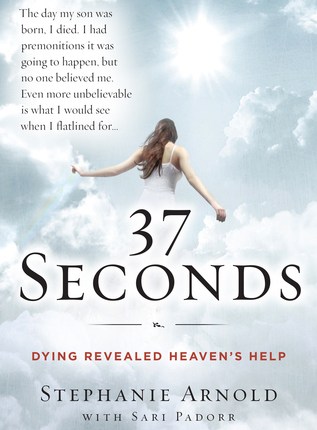
37 Seconds: Dying Revealed Heaven’s Help—A Mother’s Journey by Stephanie Arnold

37 Seconds: Dying Revealed Heaven’s Help—A Mother’s Journey by Stephanie Arnold

37 Seconds is a fascinating account of Stephanie Arnold’s near death experience. She had a premonition that she was going to die having her second child.

Photo by Pixabay on Pexels.com

Stephanie did die for 37 seconds and had an amazing spiritual experience.  Her religious upbringing is in Judaism which makes for a totally different lens of perception than other NDEs (near death experiences) that I have studied.

I like reading books about near death experiences and examinations of consciousness.  So far, I’ve read twenty one books by folks from different religions and parts of the world about their NDE and what they’ve brought back with them to their normal, every day lives.

I found it interesting that the focus of Stephanie’s consciousness during the event was on her deceased relatives and their support of the physical world rather than on a location on a higher level where people go to hang out around their G-d for the rest of eternity.

Photo by Pixabay on Pexels.com

Another portion of the account that made it different than others that I’ve read on the topic is that Stephanie accessed her memories of the time during her 37 second death through hypnosis.

Other NDE writers (Piper, Moorjani, Burpo, et al) came out of their NDEs with memories of what went down. Stephanie, because of the extreme trauma and the premonitions about her death that haunted her for months before the actual event, repressed her NDE.

Isn’t it fascinating?  The study of consciousness never ceases to surprise me. It seems that not only do our lenses of perception create what we see in other modes of existence, but we can choose whether to access those perceptions or not.

I also liked Stephanie’s repeated message through 37 Seconds of trusting your own intuitions and believing in that inner voice. I feel that in modern society, we’ve advanced in so many ways both scientifically and technologically, that we discount simpler modes of understanding and knowledge.

Why try learning about why your body is presenting symptoms of anxiety and stress when we can just medicate it away? Why believe in your dreams and intuitions when educated doctors and scans show that nothing is wrong?

Photo by alleksana on Pexels.com

If Stephanie had listened to the experts, she would be dead. She is a great role model for a return to trusting ourselves. Doctors, medicine, and therapy have their place but so do dreams, intuitions, and the inner voice.

If you enjoyed 37 Seconds, try Wisdom of Near-Death Experiences: How Understanding NDEs Can Help Us Live More Fully by Penny Satori or Journey of Souls: Case Studies of Life Between Lives by Michael Newton.

Thank you for reading!