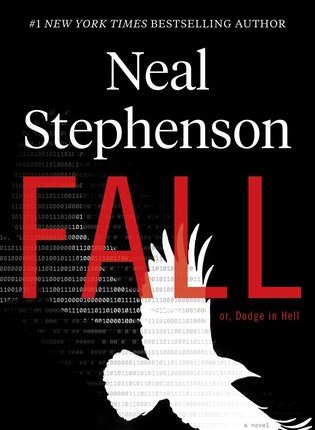
Fall, or Dodge in Hell by Neal Stephenson

Fall, or Dodge in Hell by Neal Stephenson

“Not only can we defeat entropy, but the universe, in a way, wants us to use our powers as conscious beings to make things better. And part of that is defeating death.” pg 50

I finally finished Neal Stephenson’s latest book, an opus about the nature of reality that uses mythology, archetypes and technology as the instruments of that examination. Coming in at a hefty 896 pages, it will most likely be the longest book I read this year.

“Far from being a source of frustration, this comforted him, and made him happy — perhaps even a little smug — that he lived in a universe whose complexity defied algorithmic simulation.” pg 19

Photo by Markus Spiske on Pexels.com

Richard “Dodge” Forthrast, one of the many protagonists from Reamde, suffers an unexpected injury and dies — to the horror of his loving family. Immediate complexities reveal themselves in his will, which contains very specific instructions on what is to be done with his corpse and living brain.

These instructions will lead to a technological coalition of companies and big money in an effort to create another reality for the “recently diseased”. And, what happens in that new world is beyond anyone’s (among the living) control… isn’t it?

Stephenson, as usual, has created a complex science fiction novel that not only makes you think again about where technology is headed, but also compels you to ask yourself what that exponential development means.

“It’s really only since wireless networks got fast enough to stream pictures to portable devices that everything changed,” Enoch said, “and enabled each individual person to live twenty-four/seven in their own personalized hallucination stream.” pg 236

Photo by C Technical on Pexels.com

And lest one think such changes are so far off, you only need to take a look at someone else’s Facebook newsfeed. The difference between what I see on that platform and what my husband sees is shocking. Our “own personalized hallucination stream” is already a reality.

Stephenson is at his best when he’s mixing science fiction and fantasy in Bitworld. He’s at his worst when he’s clocking the changes going on in the real world or “meatworld”, as his characters call it. One likes to think that he had reasons for including the myriad of details that he includes, but readers could also suspect that he needed a good editor.

The first portion of this book moves agonizingly slowly, which prevented it from being a five-star read for me. But that was its only downside in my view.

“So he went into the room where the disciples of Greyhame and Pestle scratched out words on paper, and told them to go through all of their documents and make him aware of any mention they might find of angels, or the One Who Comes, or Daisy, or death.”pg 482

Photo by Pixabay on Pexels.com

I can’t say I completely understand the ending of the story, but it is epic. I find myself still thinking about it and taking pieces apart in my mind. And, for me, that’s one of the hallmarks of a good read.

Recommended for science fiction readers who can tolerate a very slow build-up for a potentially puzzling end.

Thanks for reading!


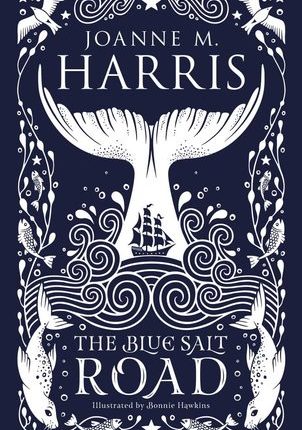
The Blue Salt Road by Joanne M. Harris

The Blue Salt Road by Joanne M. Harris

The Blue Salt Road is where the selkies dwell as kings and queens of the deep. When a young woman named Flora needs to find a husband, she despairs of choosing any of the men on the small island where she lives. They’re hardened by work on the whaling ships and unrefined.

Photo by Andre Estevez on Pexels.com

But when Flora’s grandmother teaches her a secret about mysterious beings called the selkies, she knows her search will soon be over.

“In tears he was summoned, salt as the sea,
In silver was his binding. In blood and betrayal, his calling he found.
In cedar, his salvation.”
 pg 87

Unlike other selkie stories I’ve read, like Sealskin, the person summoned from the waves is male, not female. I’m sure the fairytale has been told both ways, but it’s a nice change from other versions.

Joanne Harris writes interesting and nuanced fantasy in which she takes a look at older stories and puts her own spin on them. If you haven’t had a chance, you may want to read her duology about the Norse god, Loki. (The Gospel of Loki and The Testament of Loki)

“This is my story. The story of the land-folk and the seal-folk, and of treachery, and of the call of the ocean.” pgs 4-5

Photo by Skitterphoto on Pexels.com

There’s quite a lot to unpack in the symbols of The Blue Salt Road and the selkie myth. (Warning, spoilers ahead for those unfamiliar with the selkie myth.) In Jungian psychology and dream interpretation, water is a common symbol for the subconscious mind. What floats or comes to the surface is what you’re aware of. Swimming about in the depths of the ocean, are the feelings or situations you’re perhaps unwilling to confront.

In the sad fairytale of the selkie, the fairytale creature emerges from the ocean as a free being, but then is prevented from returning to the depths where it belongs. He or she forced to live a life on land unless she can find the magical item, her sealskin, that allows her to return to the waves.

The added twist to the tale, sometimes, is the selkie has a child that either gets abandoned when he eventually returns to his home or he takes the child with him and the land-bound parent never gets to see the child again.

Photo by Simon Clayton on Pexels.com

So, we have a fairytale examining the complex relationship between men, women, and how people handle having a child together. In addition, it looks at the loss of freedom some experience when a single person adopts a life with a family and how some people can’t deal with it.

It also speaks to the individual ways that people deal with growing up and choosing a trade or growing old and growing apart from the people and things they used to cherish.

In Joanne Harris’ version, there’s a family component with the secret passed between mothers and daughters, grandmothers and grandchildren.

“I told you that within the year I should catch myself a prince, and bear him a pretty princeling,” she said. “Now I shall be the envy of all the maids on the island, and all the young men who missed their chance will curse their evil fortune.” pg 44

Photo by Ruvim Miksanskiy on Pexels.com

These secrets that we carry are unique as well and help create cultures among family groups. Sometimes, the spouses we choose to add to the mix don’t adapt well to these cultures and eventually leave, not because there’s a loss of love, but because they are never truly accepted into the family group.

All of this is symbolic goodness is packed into a story that is appropriate for young adults to read. There is nothing overly graphic in here, just layers of complexity that a tween might not be able to grasp.

Highly recommended for young adult and adult readers of fantasy fiction and mythology.

Thanks for reading!

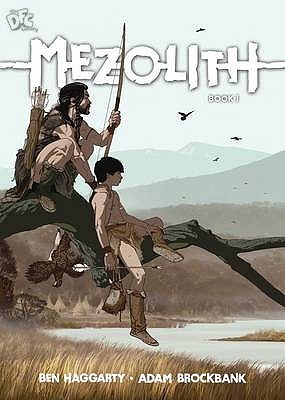
Mezolith by Ben Haggarty, Adam Brockbank

Mezolith by Ben Haggarty, Adam Brockbank

A beautifully illustrated coming-of-age tale about a boy who lives with his stone age tribe. Reality and mythology are mixed in his life to create something else, something that feels true though it couldn’t possibly be.

“Poika, at the heart of the world there is a cave and in that cave there are countless urgas, all sleeping… all dreaming… and when one dreams that a brother has been destroyed he wakes. Crawls into the world. Finds some humans and cries pitifully near them… until someone comes to care for him…”

Photo by Rozemarijn van Kampen on Pexels.com

How do you imagine that Stone Age peoples explained phenomena that scientists today have only begun to unravel? Where does love come from? What brings a fever or trouble? They explained these things by telling stories.

There’s the story of a man who fell in love with a woman who was actually a swan, so he travels to the end of the world to convince her father, the Swan King, to let her live with him.

There’s a demon who conceals itself as a baby and then in the night, if you take it into your tribe, it wakes and consumes everything in its path.

There’s a woman who should have died, but survived, and now has an uncanny relationship with crows and can see through their eyes… and more.

Photo by Pixabay on Pexels.com

It’s magical and strange, and Adam Brockbank has illustrated Ben Haggarty’s stories beautifully. It is easy to see why this was a Times pick for Best Graphic Novel.

Despite this excellence, only one library in my enormous, interconnected library system owned this book. I was surprised. It has appeal for both young adults and the young-at-heart. The violence in it isn’t overly graphic. The themes are appropriate and intriguing for reluctant readers.

If any librarians read this review, please consider buying a copy of Mezolith for your shelves. I think your patrons would enjoy it. I certainly did.

Thanks for reading!

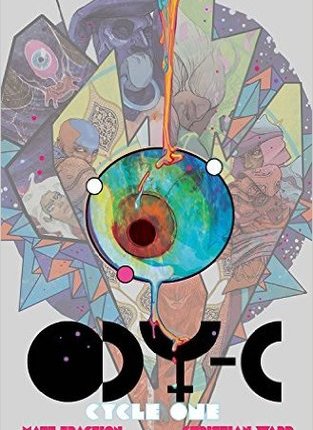
ODY-C: Cycle One by Matt Fraction

ODY-C: Cycle One by Matt Fraction

ODY-C is an incredibly strange, but beautiful graphic novel that takes the classic story line of Homer’s The Odyssey and flips it on its head.

“Here where so many great women died. Three ships leave Troiian space. Three adventures now start. Three great heroes begin their last odyssey.”

Photo by Edvin Richardson on Pexels.com

The book begins with the warriors returning home from an epic war in space. Instead of Helen of Troy, the war was fought over one of the only males in the galaxy, a latex-covered man named “He.”

Like in the old tale, the goddesses, children of Titans, overthrew their father, Kronos. In a twist in this world, they decided that all children grow up to throw down their parents and kill several generations of their own children. In order to ultimately control humanity, Zeus, a curvaceous, powerful woman, in an extraordinary display of power, destroys every male in existence. Eventually leading to the events I just described…

“Sing in us, Muse of Odyssia, witchjack and wanderer. Homeward bound. Warless at last.

Honestly, this book is hard to explain. I think “acid trip” might do it justice. The colors are vivid and the characters can be nightmarish, vulgar or gorgeous. The universe within this book is a science fiction-themed romp with monsters, goddesses, and all sorts of unbelievable settings — a world of bones wherein the child of a goddess forever seeks its prey, a type of space station fueled by a star in which a rare male child of a goddess endlessly mates with women and then kills them when they inevitably give birth to another female… and more.

“Down in the ruinous piles of viscera once her command and her crew, Odyssia recalibrates. Watching the Cyclops of Kylos make feast of the ODY-C’s girls, they know for the first time since Troiia did fall just what fear really feels like inside.”

Photo by Cosmopolitano Model on Pexels.com

It helps to be familiar with classic mythology because the authors don’t take the time to explain how the two are related. Or, I suppose, you could just jump into it blind. I felt like I enjoyed it more knowing both sets of stories.

I was fortunate that the library’s copy of this book included creator interviews in the back to give more context to this incredible work they’ve created.

“Between bearded-lady gods, gender-flipped heroines, gender-uncertain sebex and the odd character who keeps the same gender as their source, the ODY-C is less a gender-bent Odyssey than it is an Odyssey-flavored gender pretzel. Rather, ODY-C is an early next step into what comes after the gender flip: the unfurling of the gender spectrum both to comment on and to dismiss outright what we understand as gender roles and norms in classic literature.”

There is certainly a lot to unpack in here. And it is such a good story.

“The act of telling a story — especially of telling one well — turns your audience’s brain into a photocopy of your own, overriding any other stimuli that the listener is experiencing independently. When a story is so good you feel like you were actually there in the middle of it, it’s because, at least as far as your brain is concerned, you actually were.”

Photo by Engin Akyurt on Pexels.com

In addition to the Greek and Roman mythology, there’s shades of Scheherazade in the unfolding of the fate of He. Readers are also treated to a new twist on the foundation of Rome myth. At least, I think that’s what it is. With the level of creativity in here, it’s honestly hard to tell.

Recommended for readers who are looking for a graphic novel that is completely different from anything you’ve ever seen before. This is that book.

Thanks for reading!

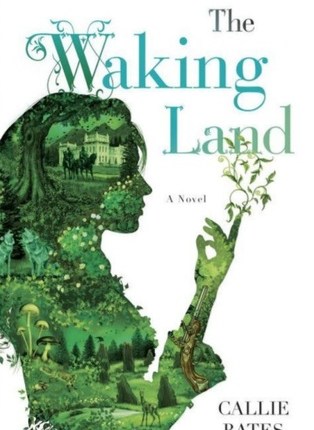
The Waking Land by Callie Bates

The Waking Land by Callie Bates

A fantasy novel about a young woman who was raised away from her home who is destined to become something greater than anyone ever imagined she could be.

There were shades of Irish mythology in this story with magic surrounding standing stones and a midnight ritual about “marrying the land”.

Overall, I just felt like I had read this book before in some form or another. It stuck to so many forms — heroine who doesn’t know her own strength, falls in love with a man who may help her or betray her, trusts everyone she shouldn’t and doesn’t trust everyone she should.

Photo by WARREN BLAKE on Pexels.com

There were so few unexpected moments. Even the big stuff is heavily foreshadowed. Take this passage:

“I can do nothing. I am a botanist, not a sorcerer. Botanists have a place in this world — a respectable place. As the emperor of Paladis likes to remind us, sorcerers are worse than nothing — their impious actions are a mockery of the gods, and their historical conviction that they could rule kingdoms presented a threat to civilization itself, a danger that had to be exterminated.” pg 22

Ok, now guess what is going to happen in this book… you’re probably right. And that blurb is from the first chapter.

I’m on to the next book… and thanks for reading!

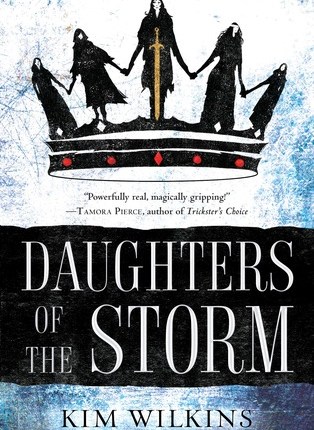
Daughters of the Storm (Blood and Gold, #1) by Kim Wilkins

Daughters of the Storm (Blood and Gold, #1) by Kim Wilkins

Something is wrong with the king. His five daughters rush home from various parts of the world to try to figure out what is going on. No one likes a power vacuum.

Meanwhile, there’s problems in the marriage of one of the sisters, whose alliance with the kingdom next door helps keep war to a minimum. Also, there’s raiders who have a mysterious crow-shaped tattoo accosting people on the roads. So, there’s a lot going on.

And that doesn’t even take into account everything that is happening to the twins, the sister whose magic is awakening and the eldest, who stands to inherit the throne if her father dies.

Photo by willsantt on Pexels.com

“Bluebell wasn’t a child. She knew one day her father would die and she would take his place. She had prepared her whole life for the moment, but it had always been abstract, like a story.” pgs 17-18 ebook

The number of characters in this book may seem daunting at first, but Kim Wilkins introduces them slowly. It makes it easy to keep track of who is who.

“Her father was dying — and her father was the king of Almissia, the largest and most powerful kingdom in Thyrsland. And when he was dead… Well, what would they say? They could not caution her if she was grieving. A counselor’s first law was that compassion comes before all else.” pg 34, ebook.

That being said, the characters are rather flat. As for the sisters, we have the violent one, amorous one, magical one, religious one and promiscuous one. The “bad guys” feel rather the same too — fixated on achieving their goals at any cost, killing indiscriminately. There is very little gray area or layered meaning in this tale. (With one notable exception, but no spoilers!)

Photo by Dan Galvani Sommavilla on Pexels.com

“Now everything had been twisted out of shape, the threads of his destiny balled in a hopeless knot. It would be a measure of the kind of man he was if he could smooth things out, take charge of his future, shape the world to his will.” pg 191

Despite the simplistic characters, I would not classify this read as young adult. There’s some violent and sexual situations that younger readers may find confusing. Also, one of the characters, when she can’t think of anything else to say, just uses the f-word, which was disappointing. There are so many different ways to express frustration…

Honestly, I wanted more action in this story and better dialogue. I wanted more magic and less brooding angst. I wanted the sisters to band together and rage across the land like avenging Valkyries. I guess we don’t always get what we want.

Photo by Anete Lusina on Pexels.com

“Rose was silent, sulking. Bluebell responded by pretending she didn’t notice. Ash lost herself in thoughts about her power, her Becoming, and how she was to try to make a future for herself.” pg 203

The description of Daughters of the Storm says this book is “Norse-like” but I felt like it was more generic fantasy. I think the author was leaning towards a tale of warriors and gods, but we never quite got there. It was more of a promise unfulfilled.

For what it is though, it is engaging. Readers who like fantasy, large casts of characters and broad story lines may enjoy this book. As an added bonus, the second entry in the series, Sisters of the Fire came out this month, so you don’t have to wait to read what happens next.

Thanks for reading!

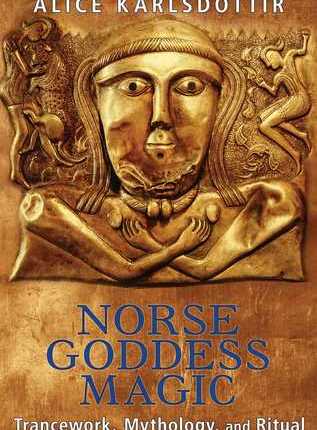
Norse Goddess Magic: Trancework, Mythology, and Ritual by Alice Karlsdóttir

Norse Goddess Magic: Trancework, Mythology, and Ritual by Alice Karlsdóttir

This is a new age, non-fiction book about trance work, which can loosely be described as deep meditation. I practice a type of meditation called “pathwalking” which is basically just another word for the same kind of practice. This book is about someone who focuses on the Norse religion exclusively.

I read Norse Goddess Magic not for the details about the Norse pantheon (which admittedly I know very little about, so it was very interesting and educational) but mainly for the author’s experience in trance work. To my disappointment, she spends pages and pages explaining what going into trance is, how she does it, and then only a few paragraphs in each chapter detailing an actual trance.

Photo by Lucian Potlog on Pexels.com

I wanted the book to be mainly trance work. That is what made it unique and original- her personal sojourns into “another world” and what she brought back. The rehashing of all of the old mythologies were, as I said, interesting, but if I wanted to read them, I could have picked up any book about Norse mythology.

I also felt like Alice spent a lot of time explaining why trance work is a valid method of information gathering and defending her opinion on why she believes that. I agreed with her completely so I just read through the pages thinking- preaching to choir, get to the trances! So, that was a frustration.

A part of the book that I disagreed with was Alice’s assertion that it is “difficult” to go into trance. In my experience, if you believe something is difficult to do be that hypnosis, meditation, whatever- you’re putting stumbling blocks on your path that don’t need to be there. Going into trance is as simple as watching your breath flow in and out. If you breathe, you can go into trance. I felt like she did a disservice to beginners with that particular teaching.

Photo by Daisa TJ on Pexels.com

I felt like Alice’s trances were so closely focused on one goddess or aspect of the goddess, that she didn’t really get all that she could out of her trance work or interactions in the other worlds. She read all of this information to prime her subconscious mind and then… it felt like not much happened.

To be fair, she did see the person she was looking for, describe their physical characteristics, express the emotion that they evoked in her, and then, maybe, have a brief interlude with them. In my personal trance work, there’s more interaction in the world itself but that could be the difference of our focus.

Alice said from the start that she wanted to know more about these different goddesses and form a working relationship with them whereas I’m just curious to see what’s out there. I’ve run into Roman gods and goddesses, Native American figures, Tibetian locations, some Egyptian and Hindu gods… but again, I’m not focused on one or another of the world religions. With an open mind, it’s incredible the types of things that you see.

Photo by carol wd on Pexels.com

So, I don’t believe in priming your mind with symbols before you do your work. Pick where you’re going or who you want to see, and just go. Personally, I use the symbols on the Tree of Life or tarot cards. Believe that you can do it. Figure out what works for you. And do it.

Then write it down so that I can read it. 🙂 Because I will.

Thanks for reading!

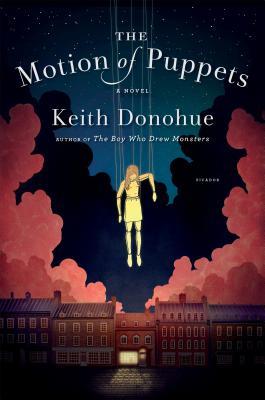
The Motion of Puppets by Keith Donohue

The Motion of Puppets by Keith Donohue

The Motion of Puppets is a clever play on an ancient Roman myth.

Orpheus was a musician who was so talented he could charm the birds from the sky and make the forest spirits weep. He madly loved a woman named Eurydice.

One day, she stepped on a serpent and died. Orpheus nearly lost his mind out of grief for her. So, he made his way to the underworld to beg Lord Hades for his bride.

Photo by Ekaterina on Pexels.com

Orpheus plays such sweet music that Persephone weeps and Hades allows the bard to take the shade of his dead wife back to the living world. There’s one condition, he can’t look back to see if she’s following.

I think we all know what happened then. This book takes that tragedy and places it in the modern world.

Everything is fine until Theo’s wife, Kay, goes missing. “She should be more responsible, should know that he would worry, but he could hear her laughing it off when she came home. You’ll give yourself ulcers, she’d say. You fret too much. I just went out for croissants.” pg 18

Photo by Daria Shevtsova on Pexels.com

He assumes she stumbled into the bed of one of her coworkers and is sleeping off a hangover. But the truth is much worse.

Kay has been transformed into something else, something magical and monstrous. “We lucky few can move about as long as the people are not watching. Midnight to first light, we are free.”pg 41

She is trapped in a metaphorical “underworld,” ruled over by an ancient power and his minions. “You cannot go home,” he said. “You cannot ever leave the Back Room.” pg 76

Even if Theo can figure out where she’s gone, how on earth will Kay go back to the shape she had before?

Keith Donohue has crafted a clever and haunting novel, putting a horror-tinged lens on the myth.

Photo by Irene Lasus on Pexels.com

“And, besides, let me tell you a secret: all art needs a little sadness in it, a small tragedy to balance the human comedy.” pg 111

Like Moulin Rouge, Baz Luhrmann’s musical take on Orpheus and Eurydice, the elements of the original story are in both works of art. I think The Motion of Puppets is more weird and other-worldly.

To truly enjoy this tale, you have to be willing to believe in magic.

Highly recommended for readers who like twists on mythology or not-too-terrifying horror stories.

If you like mythological re-tellings, you may also enjoy The Snow Child or Circe.

Thanks for reading!

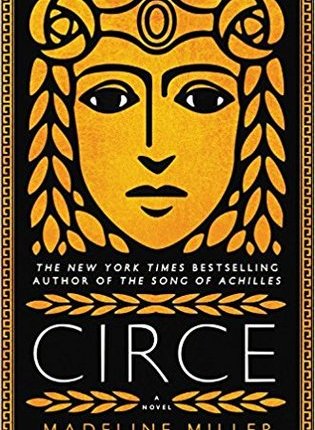
Circe by Madeline Miller

Circe by Madeline Miller

Circe is an epic fantasy that reads like a historical fiction novel, based on the Greek mythology of the witch of Aiaia, the daugher of a Titan- Circe.

I minored in the classics at university and one of my favorite classes was mythology. I love taking apart stories that mirror humanity’s foibles and try to explain the origin of some of life’s harder truths.

Photo by jimmy teoh on Pexels.com

In the war between the Titans and the Olympians, a creation story that could be interpreted to mean the ascension of modern culture over more ancient superstitions, the Olympians triumph. But the Titans are not wiped off the face of the earth.

“Beneath the smooth, familiar face of things is another that waits to tear the world in two.” loc 272, ebook.

Some of the Titans’ powerful and mysterious children play central roles in the great mythological stories. Circe is one of those.

“They called me nymph, assuming I would be like my mother and aunts and cousins. Least of the lesser goddesses, our powers were so modest they could scarcely ensure our eternities. We spoke to fish and nurtured flowers, coaxed drops from the clouds or salt from the waves.” loc 102, ebook.

Photo by ArtHouse Studio on Pexels.com

She began her life in the halls of Helios, a Titanic deity who was a god of the sun, much like Apollo.

“At my father’s feet, the whole world was made of gold. The light came from everywhere at once, his yellow skin, his lambent eyes, the bronze flashing of his hair. His flesh was as hot as a brazier, and I pressed as close as he would let me, like a lizard to noonday rocks.” loc 158, ebook.

Compared to her great father and gorgeous, manipulative mother, Circe was nothing- one of the many faceless children of the greater gods, whose future was destined to be a wife and then mother to more godlings.

Circe’s future is not as simple as all that.

She, and her brothers and sister, have a unique power that no other gods possess. They have the ability to harness the plants and power of the earth, to create potions and salves with miraculous effects. They call it: pharmakeia.

Photo by Daria Shevtsova on Pexels.com

Modern readers can recognize the roots of the word “pharmacy” in the name.

“Pharmakeia, such arts are called, for they deal in pharmaka, those herbs with the power to work changes upon the world, both those sprung from the blood of gods, as well as those which grow common upon the earth.” loc 909.

It is a power no one understands and, because of its mysteriousness, it makes even the gods afraid.

There is more to Circe’s story than pharmakeia. She also interacts with Hermes, Daedalus and Odysseus. She creates a god and a monster. She shakes the foundation of the oceans.

Photo by Kevin Menajang on Pexels.com

Highly recommended for those who enjoy mythology or historical fiction. It will transport you to a world where gods and goddesses walk the earth and humanity can do nothing but tremble in their shadows.

Thank you to NetGalley and Little, Brown and Company for an advance, digital copy of this book.

Thanks for reading!