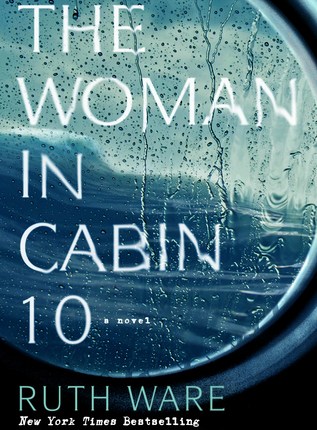
The Woman in Cabin 10 by Ruth Ware

The Woman in Cabin 10 by Ruth Ware
cabin10

A so-so mystery with an unreliable narrator that takes place, for the most part, on a boat. It was ok thriller, but I would never have read it without the encouragement of my book club.

In the desperate search for “the next Gone Girl“, The Woman in Cabin 10was put forward as an option. I think that’s unfair. The next Gone Girlor Hunger Games will be so clearly original and ground-breaking that it couldn’t be titled the next fill-in-the-blank.

And, with that sort of hype, it put an expectation on this story that it didn’t live up to. But, that’s not The Woman in Cabin 10‘s fault.

It was clear to me that Ruth Ware had experience as a journalist. Her character, Lo Blacklock, is completely believable in that regard. But, I found that I didn’t like her much. She puts too much pressure on herself to succeed.

“I had to get myself together before I left for this trip. It was an unmissable, unrepeatable opportunity to prove myself after ten years at the coalface of boring cut-and-paste journalism. This was my chance to show I could hack it…” pg 20.

But, if she had taken the time to stay home and recover from her PTSD, what sort of thriller would that be? So, off she goes, onto a billionaire’s exclusive boat.

“…it was pretty nice. I guess you had to get something for the eight grand or whatever it was they were charging for this place. The amount was slightly obscene, in comparison to my salary- or even Rowan’s salary.” pg 47.

Then, in classic thriller fashion, she hears a scream in the night, sees something that no one, even she, believes and is now stuck in an enclosed space with a potential killer.

Even with that set-up, I didn’t get into the story. Lo is overly-dramatic and doesn’t take the time to think things through. I found myself wishing that she would slow down and start keeping a complete written record rather than running from one disastrous encounter to the next.

“I lay there, cudgeling my battered brain to try to work it out, but the more I tried to ram the bits of information together, the more it felt like a jigsaw with too many pieces to fit the frame.” pg 242.

She jumps to conclusions and accuses or dismisses people nearly on a whim. I’d read a passage and then say to myself, “Come on, is that really the best you could do?” Now, that’s hardly fair as she’s exhausted, terrified and traumatized. But still. That’s what I thought.

Plus, the “unreliable narrator” thing has been done. In this story, Lo’s unreliable because she has anxiety and drinks a lot to forget that fact. That sounds like almost everyone I know.

Recommended for fans of mystery. It is enjoyable, but don’t make my mistake and expect too much complexity from The Woman in Cabin 10.

Thanks for reading!

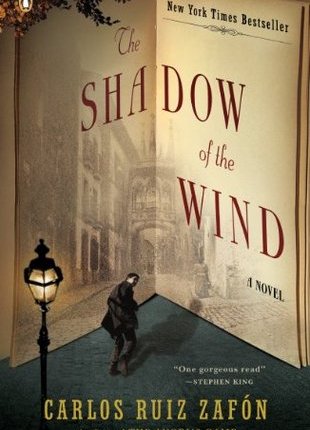
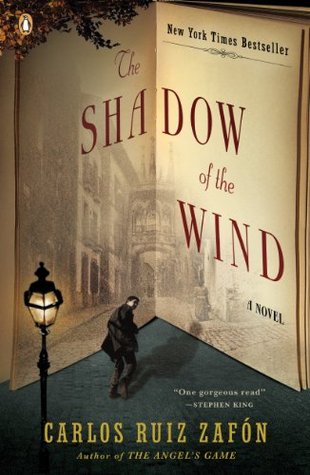
The Shadow of the Wind (The Cemetery of Forgotten Books, #1) by Carlos Ruiz Zafón

The Shadow of the Wind (The Cemetery of Forgotten Books, #1)  by Carlos Ruiz Zafón
shadowofthewind

I’m incredibly embarrassed that I didn’t enjoy The Shadow of the Wind. So many of my Goodreads friends gave this five stars, I feel like I’m missing something. Perhaps my taste in books is all in my head. 🙂

I thought this was going to be a fantastical story about protecting books and defeating an evil that was trying to destroy them- sort of a magic librarian/coming-of-age/historical fiction adventure. It was not that.

It is more about the character descriptions and the scene descriptions and… well… descriptions. Not much happens. If I had to meet one more character and absorb one more backstory, I was going to freak out.

The Shadow of the Wind has been called “gothic” and “lyrical” and “beautiful.” I can think of a few different descriptions, but the most pertinent one would be: “not-for-Heidi.”

I just couldn’t get into this book. My apologies to its fans. If we all enjoyed the same things, what a boring world this would be.

Thanks for reading!

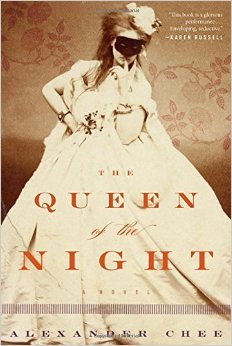
The Queen of the Night by Alexander Chee

The Queen of the Night by Alexander Chee

Lilliet Berne has secrets, many secrets hidden in her past and layered upon each other through time and circumstance. Now, she is a successful opera singer but, during a ball one night, a man brings a libretto to her attention that seems to be based on her life. Only a few people know the truth behind the secrets, which one would have made that truth public? Lilliet is going to find out and, along the way, the reader gets to experience the 18th century world from the American Midwest to the Paris Opera to Napoleon’s Imperial Court and beyond.

The Queen of the Night is a glittering, epic historical fiction, reminiscent of Margaret George’s style in that Chee weaves actual historical figures throughout his story. So, you’re learning as you’re entertaining yourself- two birds with one stone. I absolutely loved it.

Who is Lilliet? According to rumor: “I was innocent or I was the devil unleashed, I had nearly caused wars, I had kept them from happening. I was never in love, I had never loved, I was always in love. Each performance could be my last, each performance had been my last, the voice was true, the voice was a fraud. The voice, at least, was true.” pg 7, ebook.

Though true, the voice was not free from rumor either: “There’s a story told of my voice that says it was bought from a witch, the result of an occult surgery. … I never corrected this. … The real answer to where my voice came from is as ordinary as all of life. … I wanted to eat so I learned to sing.” pgs 65-66, ebook. But, as a public figure, Lilliet profited from being a spectacle on and off the stage. She encourages the stories because her notoriety brought her opera parts, connections, and money. Her true background, on the other hand, could ruin her.

The complexity of life in Paris: “Paris, which, when I looked close, was a vast 0péra-bouffe-féerie (opera with elements of comedy and magic in it)- and you did not know your role, I think, until it was too late, and the crowd was laughing at the joke you had uttered in all innocence.” pg 99, ebook. Chee explores many closed societies and the unwritten rules that are followed by them in The Queen of the Night. Among the many scenes examined are: the circus tent, the courtesan’s house, the opera, the French court, the Bohemian music culture, and the couture dressmaker. My favorite parts of this story were the glimpses into these forbidden or, in some cases, defunct cultures and learning the expected behaviors, way of dress, even the preferred perfumes. The fun is in the details.

The Queen of the Night is also a love story: “When love comes this way, the first dream of it feels like a prophecy that has come true. I had never known this feeling until now- he was my first. And so I let myself dream of him again and believe it could be the future.” pg 186, ebook. Swoon… “My theme here is love. Love and the gifts of love, love kept secret, love lost, love become hatred, war, a curse. Love become music. Love and those who died for love. Love- and, especially, first love. My first love, the one I could not keep and could never, will never, lose.” pg 215, ebook. Do you think he could have fit more “love” in there? 🙂

At one point, Lilliet says she feels like she has gotten “Fate’s attention”: “It is a peculiar thing to reach this conclusion, that a god has taken your life in hand. The sensation is not what people might imagine; it is not magic, nor is it a haunting, nor is it a miracle- there’s no storm of roses, no whistle that can put a raging ocean to sleep, no figure in the mirror besides your own.” pg 240, ebook. When I read that, I thought that Chee was going to break down the fourth wall. But, he didn’t. He kept the story flowing but I felt like he winked at me. “Where am I going to take Lilliet now?”, he seemed to say. I didn’t have any idea, but I was definitely along for the ride.

Recommended for readers who want a detailed, slightly (sometimes very) scandalous romp and mystery throughout the 18th century. If you’re into classical music, then it will be an even better fit. Some reads that you may want to explore after this one: The Dream Lover: A Novel of George Sand by Elizabeth Berg (same time period, same country), In the Company of the Courtesan by Sarah Dunant (different time period and country, some similar themes), The Night Circus by Erin Morgenstern (for the circus parts), and Before Versailles: A Novel of Louis XIV by Karleen Koen (different time period, French court).

Thanks for reading!

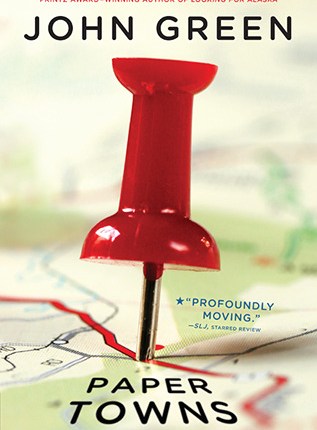
Paper Towns by John Green

Paper Towns by John Green

Warning: this is a book you either love or hate.  Consider yourself warned.

I fell more on the “hate” side of this equation but, surprisingly, enjoyed the film. This young adult, coming-of-age tale has elements of mystery to it.

Quentin has always loved Margo. One night, she wakes him up and they go on a wild tear about town, righting perceived wrongs and causing all sorts of hijinks.

Photo by David Besh on Pexels.com

The next day, Margo has disappeared. Their night out left all sorts of clues to where she went. Q decides to find her.

My negative reaction to Paper Towns surprised me because I loved John Green‘s The Fault in Our Stars so much.

Right off the bat, the reader is thrown into Margo and Quentin’s lives and we’re exposed to some of their worst traits rather than their best. Usually, people behave their best when you first get to know them and then, as they become comfortable with you, they let some of their more questionable sides out.

Photo by Alfonso Escalante on Pexels.com

The whole “rolling around the neighborhood at night and causing mayhem” takes place right at the start of Paper Towns. It isn’t fun because we don’t really know these characters yet.

It’s easier to forgive adolescent hijinks when you know and love the people who are doing them, but we’ve got almost zero time to form a connection before they’re breaking laws.

I think I would have given up on Paper Towns if I hadn’t watched John Green’s TedTalks video on the topic. If you haven’t seen it yet, here it is:https://youtu.be/NgDGlcxYrhQ

Quick summary of Green’s video: The basic idea behind a paper town (a made up town on a map) was copyright protection. The coolest part is that the mapmakers took something that wasn’t real and made it real because they presented it that way for so long.

I know that John Green can write amazing, sympathetic characters. He chose not to in this book and I’ve been rolling it around my brain, wondering why.

I think that Green wrote the characters in this story like a paper town.

At first, he presents the main characters as over-the-top clichés of what teenagers could be. The reader isn’t necessarily meant to bond with them at this point, they’re not real, they’re just “people on paper.”

Photo by Helena Lopes on Pexels.com

Then, through the second part of the book, let’s call it the “clue finding” part, Green slowly reveals more and more of the real parts of their characters just as Quentin finds more and more clues to where Margo has gone.

Through their hopes and dreams, relationships, daily struggles and hopes, they’re becoming more real.

Finally, in the last third of the book, as we join the characters on their mad rush to find Margo, they’ve become real. Real enough to have some close life-threatening moments on the road. Though they started out fake, Green built enough substance for the characters so that they have heft and dimension.

That’s my theory on why Green wrote such awful characters: he meant to. But, I still never liked any of them very much, even after they became “real.”

Photo by Buro Millennial on Pexels.com

I liked Green’s prologue: “The way I figure it, everyone gets a miracle. Like, I will probably never be struck by lightning, or win a Nobel Prize, or become the dictator of a small nation in the Pacific Islands, or contract terminal ear cancer, or spontaneously combust. … My miracle was this: out of all the houses in all the subdivisions in all of Florida, I ended up living next door to Margo Roth Spiegelman.” pg 15 ebook.

“Margo always loved mysteries. And in everything that came afterward, I could never stop thinking that maybe she loved mysteries so much that she became one.” pg 23 (ebook)

And that was the high point in this book for me. It was all downhill afterwards.

Here’s the passage that helped develop my theory about Green writing paper characters in Paper Towns: “… she looks like Margo Roth Spiegelman, this girl I have known since I was two- this girl who was an idea that I loved. And it is only now, when she closes her notebook and places it inside a backpack next to her and then stands up and walks toward us, that I realize that the idea is not only wrong but dangerous. What a treacherous thing it is to believe that a person is more than a person.” pg 406 (ebook)

Photo by Mihis Alex on Pexels.com

In conclusion, if you haven’t read any of John Green’s books, please don’t start with this one.

I highly recommend A Fault in Our Stars. It will break your heart. This one was not so good.

The film adaptation of Paper Towns was surprisingly ok. Borrow it from the library and let me know what you think.

I’m off to be more than a paper character in my own life- thanks for reading!