Instrumental: A Memoir of Madness, Medication, and Music by James Rhodes

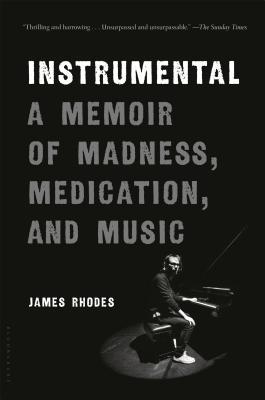
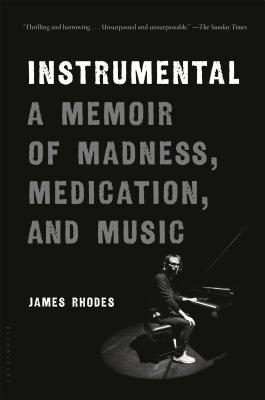
Instrumental: A Memoir of Madness, Medication, and Music by James Rhodes
instrumental

This is a shocking memoir about the horrific sexual abuse that James suffered as a child and how music saved him. It is raw, ragged and real.

The author is frank about describing what happened, how his life fell apart, and how he was able to finally begin putting it back together.

Not a book for the faint of heart, Instrumental makes the reader wonder why we’re all here and what might the purpose of suffering serve in the grand scheme of things. I don’t pretend to know the answers to these questions, but James has given us a powerhouse of a book and a place to start.

I am also a classically trained pianist but you don’t have to be one to appreciate Instrumental: “… the unassailable fact is that music has, quite literally, saved my life and, I believe, the lives of countless others. It provides company when there is none, understanding where there is confusion, comfort where there is distress, and sheer, unpolluted energy where there is a hollow shell of brokenness and fatigue.” loc 51, ebook.

James gives a poignant warning to readers: “…this book is likely to trigger you hugely if you’ve experienced sexual abuse, self-harm, psychiatric institutionalisation, getting high or suicidal ideation.” loc 112. So, friends, be aware before you pick this one up.

James has a child with his first wife and he adores the boy, only asking him to do what makes him happy.

Though James thinks he’s a poor father, he’s offering the child more than some people are able to manage, even coming from a stable and emotionally healthy place: “I want him to know the secret of happiness. It is so simple that it seems to have eluded many people. The trick is to do whatever you want to do that makes you happy, as long as you’re not hurting those around you. Not to do what you think you should be doing. Nor what you think other people believe you should be doing. But simply to act in a way that brings you immense joy.” loc 986.

Photo by uncoveredlens on Pexels.com

How wise is that.

James introduces each chapter with a suggested classical music track to listen to as you read as well as some juicy tidbits about the musicians who wrote the pieces: “Beethoven… was clumsy, badly coordinated, couldn’t dance, cut himself while shaving. … Schubert, nicknamed ‘Little Mushroom’ on account of his being 5 foot nothing and violently ugly, was spectacularly unsuccessful with girls and, on one of the very rare occasions he did manage to score, he caught syphilis. … From Schumann (who died alone and miserable in a mental asylum) to Ravel (whose experiences driving trucks and ambulances in the First World War changed him forever), the great composers were basket-case geniuses…” locs 2040-2058, ebook.

He reminds us that these men we’ve set on a pedestal because of the art they produced were nothing but human with all of the failings that people have today. James makes classical music and musicians interesting to the average person. It’s a gift and one that the genre really needed to bring a new generation into the fold. This book really made me wish that I could see James Rhodes in concert. I think I would love it.

Recommended for the music enthusiast and survivors of childhood abuse, anxiety, addictions, and cutting. Some similar reads: I’m Just a Person, My Booky Wook, or Kasher in the Rye: The True Tale of a White Boy from Oakland Who Became a Drug Addict, Criminal, Mental Patient, and Then Turned 16.

Thank you to NetGalley and Bloomsbury USA for a free digital copy of this book. Thank you for reading.

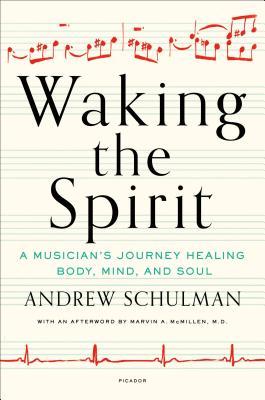
Waking the Spirit: A Musician’s Journey Healing Body, Mind, and Soul by Andrew Schulman

Waking the Spirit: A Musician’s Journey Healing Body, Mind, and Soul by Andrew Schulman
wakingspirit

Waking the Spirit is an educational and uplifting look at music therapy from a world class musician who, not only plays for a critical care unit at a hospital, but was also saved by music himself.

I’ve always known about the healing power of music for the spirit, but I didn’t realize that it had such marked effects on the body itself. When I’m having a bad day or just need to relax, I plop down in front of the piano and play the stress out.

What I did not know, and that Andrew discusses at length in this book, is that music has been used throughout history to treat sick people and the astonishingly positive effects that it has on the critically ill.

The idea behind music therapy in the ancient world is that everything is vibration.

If you play harmonious and balanced music, the human body will, in turn, put itself into harmony and alignment. Sickness was viewed as a simple imbalance: “Early records have been discovered from ancient Egyptian medicine, Babylonian medicine, Arurvedic (Indian subcontinent) medicine, and classical Chinese medicine that incorporated musical healing. The ancient Greeks valued the relationship between music and medicine in the god Apollo, whose gifts included both the musical and healing arts, and the first use of the term “musical medicine” began with Pythagoras, the fifth-century philosopher-mathematician. The Romans are said to have used musicians in their battlefield hospitals as a form of anesthesia.”

Before I read this book, I didn’t realize that music therapy was even a “thing” in hospitals.

It seems like, at least here in the U.S., and this is entirely my opinion, that medicine has moved ever so much farther away from holistic treatments. The preference is for high cost drugs and highly educated doctors to perform surgery… something concrete that people can hold in their hands and say, “Look! This is what I paid for. This thing right here.”

If something, like music therapy, works, but we can’t explain why it works, then people don’t value it as much. That’s where Waking the Spirit comes in.

Andrew provides tons of examples of beneficial music therapy treatments as well as studies to back up his real life experiences. I think this book could be helpful to doctors, nurses, or anyone who is looking to try something inexpensive to make the environment within their institution more appealing.

Take this experience: the patient was in pain and talking to herself (a side effect of the brain surgery she had just undergone). Then, Andrew shows up with his guitar: “At the sound of the first note she turned her head toward me, looking at my face and then at my right hand as it plucked the strings of the guitar. Gone was the scattered expression from her face as her eyes gained focus. She stopped talking, her mouth half-open in surprise, silent. Her face and shoulders relaxed, and she smiled. Not the plastered grin of before but a real smile of pleasure. She was here now, in this room, and not wherever she’d been for the past few hours. Something was connecting. We were just ten seconds into the music.” Powerful.

“Over the years, I’ve witnessed the most remarkable ways in which music can help the healing process, the ways it can calm a patient or lift their spirits, or reach them when they seem locked in a place that no one else can access. It can soothe a staff member’s exhaustion or anxiety and let them refocus on helping a patient, and it can provide a connection for a patient’s family, perhaps bring back old memories and open pleasant topics of conversation.”

Bringing beauty and dignity back to medicine with music.

In this passage, Schulman is talking to Dr. Richard Kogan, a professor of psychiatry, about how just the act of composing music has soothed individuals who are suffering from mental illness and then, their masterworks have gone on to help others: “While it’s important not to overromanticize mental illness- most depressed individuals are too paralyzed to write a symphony and most psychotic individuals are too disorganized to produce a work of art that is coherent- the suffering associated with mental illness can led to bursts of creative inspiration that are less likely to come from an individual that is emotionally content. For many of the greatest composers, music has been profoundly therapeutic.” In other words, artists who used their music to alleviate their own suffering composed some of the greatest music ever written, which in turn as the effect of ameliorating the suffering of others.” It’s a circle of healing.

You don’t have to be a musician to fully enjoy Waking the Spirit. I recommend it for anyone who’s interested in non-traditional treatments for pain and suffering. Thank you to NetGalley and Picador for a free digital ARC of this book.

Thanks for reading!