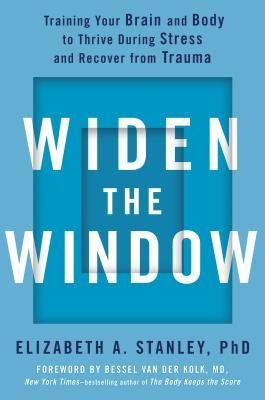
Widen the Window: Training Your Brain and Body to Thrive During Stress and Recover from Trauma by Elizabeth A. Stanley

Widen the Window: Training Your Brain and Body to Thrive During Stress and Recover from Trauma by Elizabeth A. Stanley

Managing stress and recovering from past traumas are some of the many challenges facing humanity in the modern era. Widen the Window addresses both those problems.

Elizabeth Stanley explains how individuals handle stress and trauma varies widely from person to person. It is first affected by your biology, then your unique childhood experiences making everyone’s responses different. What is incredibly stressful to one person may to a cakewalk to the next, and vise versa.

Photo by Pixabay on Pexels.com

She describes the ability to manage responses to stress as a window. Through a variety of mindfulness techniques, healthy eating, maintaining a large social network, and getting plenty of rest, Stanley guides the reader through ways to “widen the window” or increase your ability to manage stress.

I am always on the lookout for ideas on how to appropriately manage stress. If I manage my stress responses when they’re small, it prevents something more serious from building up and coming out in other, perhaps more dysfunctional, ways.

Photo by Pixabay on Pexels.com

I could see this book being useful to every reader who picks it up. Everybody has something they’re dealing with – from current work to family to friends issues or traumatic past experiences that push themselves into the present. We’re all in this together, even if your mind is telling you otherwise.

Aware: The Science and Practice of Presence by Daniel J. Siegel

Aware: The Science and Practice of Presence by Daniel J. Siegel

Daniel Siegel, MD, psychiatrist and author, shares his research into neuroscience and a meditation practice he has developed called the “Wheel of Awareness“.

“The Wheel practice is a way to open awareness and cultivate a larger, more expansive container of consciousness. People who participate in the practice seem to be strengthening their minds.” pg 9

Photo by Polina Tankilevitch on Pexels.com

The practice uses focused attention on the senses, bodily sensations, mental activities and interconnectedness, in order to encourage the mind to become more integrated. When this integration happens, the mind gives off certain brainwaves that Siegel and other researchers have measured coming from experienced meditation practitioners such as monks.

Basically, Siegel is using western science in an effort to measure and replicate meditation practices.

The science portions of Aware are not very accessible to the non-scientists readers and I could see that being off-putting. However, if you are interested in the intersection of neuroscience and meditation practice, this book could be incredibly useful to you.

“Where attention goes, neural firing flows, and neural connection grows.” pg 19

Photo by cottonbro on Pexels.com

I found the implications of Siegel’s research to be fascinating. He claims, through focused attention, one can change the neural patterns and behavior of the brain. Meditation affects biology in a physically measurable way.

There have been countless studies on the positive benefits of meditation practice, but, I think, fewer on the changes in the function and integration of the mind. The rewards of such can be profound.

“When our minds wander unintentionally, we are not present, we are not receptively aware, we are not mindful, and studies suggest, we inhibit being happy — even if we are daydreaming about exciting things. … Presence cultivates happiness.” pg 49

Besides the Wheel of Awareness portion, the part of Aware I found most helpful was a discussion about the proper cultivation of empathy, the ability to put yourself in another’s place to feel and share what they are feeling.

Photo by Anastasia Shuraeva on Pexels.com

Tania Singer, in a presentation to the Dalai Lama, had this advice: “… we need to place empathy in the larger space of altruistic love and compassion. This space will act like a buffer for empathic distress. Since altruism and compassion are positive mental states, they reinforce our courage and give us the resources to deal with the suffering of others in a constructive way.” pg 86

I liked the visual of that and think it will come in handy in the future.

Recommended for non-fiction readers interested in the science behind meditation and the development of presence. Spiritual seekers looking for different meditation methods may want to look for that in another, less technical, book.

Thanks for reading!

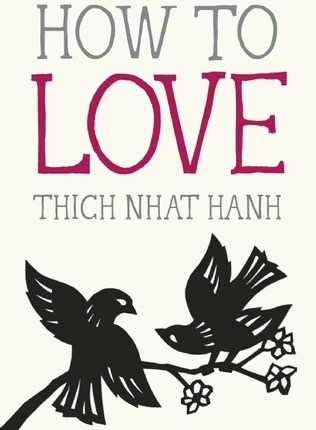
How to Love (Mindfulness Essentials, #3) by Thich Nhat Hanh

How to Love (Mindfulness Essentials, #3) by Thich Nhat Hanh

Thich Nhat Hanh, monk and spiritual leader, has written a short series of books he calls “Mindfulness Essentials.” This entry is all about love. You might ask yourself, what could a monk possibly know about love? Turns out, plenty.

Hanh applies the mindfulness techniques he’s learned over his lifetime of spiritual practice to the potentially thorny pathways of love, and the result is a gem of a read.

Photo by Asad Photo Maldives on Pexels.com

He counsels lovers to bring happiness to each other through being present in the moment and sharing your appreciation with each other. For example, if someone is distracted or worried, Hanh says you should draw their attention to the physical beauty of the world around them. In this way, you anchor the other in the present moment and ease the suffering of their busy mind.

This type of presence is a gift that you can give to anyone at anytime. And it doesn’t cost anything.

Hahn describes four defining traits of love as loving-kindness, joy, compassion, and equanimity. Then he examines these traits in detail so readers can ponder the mystery of love and see where, potentially, we may be falling short of these ideals.

Photo by Jasmine Carter on Pexels.com

He teaches all love begins with self love and walks hand-in-hand with spiritual practice. Through deep listening and the establishment of intimacy, Hahn believes love heals through empathy and “karuna,” a term that describes suffering with another and then doing what you can to end that suffering.

In addition, don’t take the other person for granted or make assumptions about what they may need. It is only through open communication that, Hahn believes, love lives.

He makes it sound so easy. I wish it was.

Photo by Pixabay on Pexels.com

Recommended for readers looking to learn about the spiritual side of love in a quick and easy read. Hanh doesn’t waste words and I am always in awe of what teachings he has to impart.

Thanks for reading!

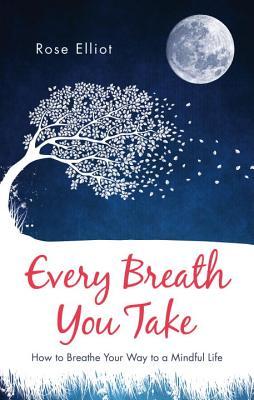
Every Breath You Take: How to Breathe Your Way to a Mindful Life by Rose Elliot

Every Breath You Take: How to Breathe Your Way to a Mindful Life by Rose Elliot
everybreath

Every Breath You Take is one of the finest mindfulness manuals that I’ve ever had the pleasure to pick up.

Practice by practice, Elliot takes the reader from the simple and concrete observation of the breath to the complex and abstract juggling of mind stuff. Along the way, she provides stories and anecdotes of those who have walked these paths before us and shows that, no matter where you are in your life, you can become more aware and grounded in the present moment and how beneficial that can be for you.

She began her journey like most of us- convinced that mindfulness was too difficult: “I struggled with the practice. I found it dreary, dull and boring- all that ‘notice-what-you’re-doing-while-you-clean-your-teeth’- I just couldn’t get to grips with it at all. … when I was on the point of giving up altogether, I met a monk… and he quietly suggested that it is helpful to link mindfulness practice to breathing. This really helped.” loc 16.

Elliot is so relatable that she made me feel like, if she could do this, I could do it too.

A reminder that mindfulness isn’t just a ‘Buddhist’ thing: “…it is to the Buddha that we owe mindfulness, but that does not mean you have to ‘be a Buddhist’ (whatever that may mean), or indeed of any religion at all to practise it. The breath is universal, as is spirit, so we can all benefit.” loc 46. If we can breathe, we can watch the breath. We just need to remember to do it.

Photo by Pixabay on Pexels.com

I loved Elliot’s gentle humor which was evident throughout: “You can use the irritations of daily life as reminders to take a mindfulness breath- and this way you’ll certainly get plenty of practice! For instance, such reminders might be: Being held up in traffic or a red light when you are driving. Waiting for the kettle to boil or for a bus or a train that’s late- waiting for almost anything. Lining up at the bank or at the grocery store checkout, or anywhere, for that matter. When someone is being really irritating, how great to know you have your own inner source of peace so they can’t bother you.” loc 237.

It is as if life is chock full of opportunities to take mindful breaths 🙂

My favorite part of the book was the many teachings about attachment. “When we can accept things as they are now, but recognize that they will change, and accept that too, we will know peace.” loc 793. I feel more peaceful already!

The Epilogue where Elliot talks about grieving for her husband and using these breathing exercises to make it through is especially touching. This is not just someone who talks the talk- she’s out there walking the walk. Highly recommended for anybody at any level of ability who wants to learn more about mindfulness.

Some further reading: How to Relax, The Wisdom of the Breath: Three Guided Meditations for Calming the Mind and Cultivating Insight, or Being Peace.

Thank you to NetGalley and Watkins Publishing for a free digital copy of this book!  And, thank you for reading.

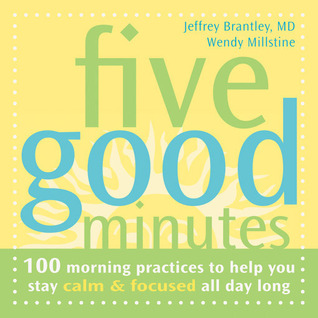
Five Good Minutes: 100 Morning Practices to Help You Stay Calm and Focused All Day Long by Jeffrey Brantley, Wendy-O Matik, Wendy Millstine

Five Good Minutes: 100 Morning Practices to Help You Stay Calm and Focused All Day Long by Jeffrey Brantley, Wendy-O Matik, Wendy Millstine
fivegoodminutes

Things have been stressful in my neck of the woods, so I picked up Five Good Minutes to help me cope.

I’m in the fourth month of having my house on the market and my husband has been looking for employment for over a year. Yeah, I’m feeling it…

Five Good Minutes is simple enough for beginners to the mindfulness/meditation practice and filled to the brim with suggestions for ways to focus in the morning and get your day off on the right foot.

The best part of this book is that there is something for everyone- it is that broad. The techniques that it uses varies from visualizations to mindfully drinking your morning cuppa.

The worst part of the book is that, because it covers so much, that it doesn’t really talk about anything in depth. If you’re looking for detailed methods of meditation and relaxation, this is not the book for you.

Why the focus on early in the day?: “The morning is the best time to break away from old habits of thinking and feeling and to set a new direction for yourself and how you will be in your day. Any exercise in this book- done in the morning- has the power to impact greatly on your experience throughout the day, if you allow it!

Photo by Felipe Borges on Pexels.com

Personally, I’ve found that I’m at my best in the mornings- well, once I blink the sleep out of my eyes. My mind is clearer and I can focus for longer periods of time.

But, if you’re more an afternoon/evening type person, don’t let the title of this book stop you. I think that these practices could be beneficial at any time of the day.

My favorites were- the Five-Fingered Peace pg 32: In which you use your hands almost as a rosary and remember awesome things that have happened to you.

Freedom from Tension pg 58: In which you scan your body and focus your relaxation on the stressed out bits.

Photo by Alexandr Podvalny on Pexels.com

Your First Sip of Tea pg 94: or coffee, for me. Take your time and mindfully drink your morning pick-me-up.

A Shot of Faith pg 186: You use visualization to picture a problem turning out perfectly.

And finally, Cultivate Gratitude pg 206: “This practice invites you to turn toward the good in your life and to express gratitude as recognition grows.”.

If none of those spoke to you, there are 95 others for you to choose from.

Recommended for stressed out people everywhere and those who are interested in bringing a bit of mindfulness or meditation to their day but don’t know where to start. Some further reading: Thank & Grow Rich: A 30-Day Experiment in Shameless Gratitude and Unabashed Joy, Meditations for Breaking the Habit of Being Yourself, or 10% Happier: How I Tamed the Voice in My Head, Reduced Stress Without Losing My Edge, and Found Self-Help That Actually Works. Peace and thanks for reading!

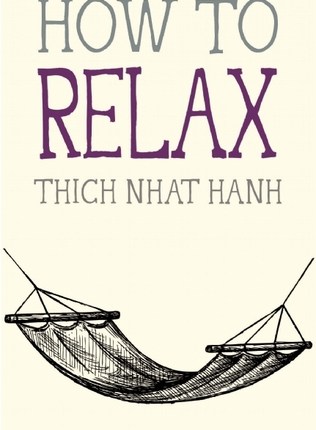
How to Relax by Thich Nhat Hanh

How to Relax by Thich Nhat Hanh

There are very few spiritual leaders who can communicate with the simplicity and succinctness of Thich Nhat Hanh.

As wise as the Dalai Lama is, I’ve only been able to really understand one of the books he’s written and I think that was because he had a co-author. It seems like he contemplates this stuff so much, you know, like it’s his job, that when he’s just trying to talk to a regular person about it, there’s a gap that can’t be crossed.

Photo by Mikhail Nilov on Pexels.com

That isn’t a problem in Thich’s Mindfulness Series.

Thich encourages the reader to find the quiet within. He says: “We already have calmness in us; we just need to know how to make it manifest.” pg 14, ebook.

How do we do this? Through focus, breathing, mindfulness, and relaxation.

One of Thich’s methods for connecting with inner peace that really resonated with me was that we should take “lazy days”: “A lazy day is a day for us to be without any scheduled activities. We just let the day unfold naturally, timelessly. … When we have unscheduled time, we tend to get bored, seek entertainment, or cast about for something to do. A lazy day is a chance to train ourselves not to be afraid of doing nothing. You might think that not doing anything is a waste of time. But that’s not true.” pg 32, ebook.

Not to brag, but I rather excel at “lazy days”.

Photo by Rachel Claire on Pexels.com

Anyone out there have a partner who snores? I do. Thich invites us to incorporate the snores into our relaxation practice.

“Sometimes you have to share a room with someone who snores. You may get irritated. But with mindfulness you can bring about compassion. You can lean on the sound of snoring in order to go to sleep. Listen and say that this brings you home to the here and now.” pg 42, ebook.

I think this could be a difficult exercise, but I’m willing to give it a try. 🙂

Ever tell yourself that relaxation/meditation is too hard? Thich addresses that concern too: “When you sit and watch television, you don’t make any effort. That’s why you can sit there for a long time. When you sit in meditation, if you struggle, you won’t be able to sit for very long. Please imitate the way you sit in your living room. Effortlessness is the key to success. pg 76 ebook.

If you can watch tv, you can meditate. It’s silly but it reminds me of that line from Dodgeball: “if you can dodge a wrench, you can dodge a ball”.

Highly recommended for anyone looking to introduce more relaxation into their lives and isn’t that everybody?

Some read alikes: Relax RX: A Self-Hypnosis Program for Health and Well-Being by Steven Gurgevich (very relaxing, all you have to do is listen), Guided Mindfulness Meditation by Jon Kabat-Zinn (simple and relaxing), or 10% Happier: How I Tamed the Voice in My Head, Reduced Stress Without Losing My Edge, and Found Self-Help That Actually Works by Dan Harris (a regular guy teaches himself to meditate- a light hearted memoir).

Thanks for reading!