Confessions of an Unlikely Runner by Dana Ayers

Confessions of an Unlikely Runner by Dana Ayers

Confessions of an Unlikely Runner filled me with hope. Hope that one day, I too with my sporadic training style and bookworm tendencies, could stumble my way through a race longer than a 10k at, if not respectable pace, then at least a step above sedate. Ayers is funny, candid, and self effacing in Confessions, her sports memoir.

She gives tips and tricks from her many years of race running as well as humorous stories to comfort and amuse struggling athletes. I liked her writing style immediately. It’s down to earth and genuine. This book is appropriate everyone but I think that the beginner to intermediate runners will enjoy her humor the most.

Ayers’ thoughts about running: “Running as helped me deal with coworkers and break-ups, has taught me what I’m capable of physically and emotionally, has introduced me to some fascinating people, and has taught me how to accept support. Of course, it’s also gotten me electrocuted…” pg 3

How she stumbled into marathon running: “I honestly don’t remember how I decided on a marathon as my weight-loss enabler. I searched through old emails and found one I’d written on November 15, 2009, to my friend Kami. The subject line just said, “Marathon,” and the email started with, “I may want to do one. Haha.” pg 17

On running at the back of the pack: “But being slow has its perks. Races are like mullets: business in the front, party in the back.” pg 28 Cracked me up.

On cross-training, here Ayers describes her first CrossFit class: “At some point during my last rep, my contact lens slipped off my eye. Even my eyeballs are working in this class. I had to walk back out past the MMA testosterone ring to get to the ladies’ room to fix it, and that’s when I realized I could no longer straighten my arms. I was walking like a T-Rex and couldn’t help it. I won’t be joining a CrossFit gym anytime soon.” pg 91

I’m seriously considering purchasing one of my sisters this book- it’s hilarious and uplifting. If you enjoyed Confessions of an Unlikely Runner, you may also like Down Size: 12 Truths for Turning Pants-Splitting Frustration into Pants-Fitting Success by Ted Spiker or Running Like a Girl by Alexandra Heminsly.  Thanks for reading!

The Light: A Modern-Day Journey for Peace by Judith Lambert

The Light: A Modern-Day Journey for Peace by Judith Lambert

In The Light, Judy, the author, chronicles her dreams and her search through various countries and cultures for their ultimate meaning. She calls this book, a memoir, with some pieces changed to protect the privacy of the people involved.

I found it to be an engaging look into the life of a spiritual seeker and a fascinating comparative study of all religions, their symbols, and common meanings.

Judy talks to a librarian named Bill about symbols: “I’ve been having some dreams with symbols that seem to be very powerful and consistent, and I’m wondering whether these symbols have a history or a larger meaning…” “Oh, yes, absolutely,” he broke in. “All symbols have a history and a commonality. There’s no question about that… Images are the means people must employ to understand ideas and feelings. Without them, we cannot reason… but, you see, we often don’t know where these symbols and images come from, do we? We forget their origin and the long history of their use, until we end by thinking that the symbol is the thing itself!”

I’ve heard it said that all symbols are mere pointers. It is like a man trying to draw our attention to the moon by pointing at it, but we mistake the moon for the finger doing the pointing.

Photo by Aron Visuals on Pexels.com

A beautiful description of the chaos at the river, Ganges: “Over the course of the day, blessed pilgrims gathered at Mother Ganga to wash away their sins. Motionless holy men sat absorbed in rumination, their faces turned toward the sun in celebration of the endless cycle of mornings like this. The striking of wet clothing against the steps was accompanied by the distant ringing of temple bells, whose pitch and resonance varied with the preciousness of the material from which they were made- bronze, brass, or iron. And over it all hung a fetid haze smelling of smoke and of- well, I didn’t want to think what else.”

I enjoyedThe Light because Lambert made me feel as if I was there beside her in her spiritual wanderings. I enjoyed the travel parts of this book very much.

The City of Light: “…The Gita,” now he looked out at the Ganges, “speaks of a radiant river of light. Westerners.. well, they often see a surface, and then they have no idea how to look beyond that surface.” He gestured as if to indicate the whole city. “This is the City of Light. Is this not what you were looking for? I do not mean any disrespect, madam,” he hurried on before I could react, “but if one cannot see the Light here, then one has not looked long enough.”

A description of inner illumination: “Nothing changed. Or everything did, for though monk, mandala, walls, cushions, and robes all seemed to remain the same, I felt at last- and only for an instant- the sense of peace that had eluded me since my dreams began.”

Photo by Pixabay on Pexels.com

The author changes immensely over the course of her journey: “I feel a reassuring contentment from all I’ve discovered and all that I’ve been privileged to learn. I am a Jew, a Christian, a Hindu, a Muslim, a Buddhist, everything else, and nothing, all at once. I am…whole… And I believe that all religions possess and have knowledge of the Light. By claiming the Light myself, I can also retain my own personal stories, my own place, and time, and history…” An empowering message and a timely one.

If you enjoyed The Light, you may want to pick up The Realization of Being by Eckhart Tolle (a lecture, any of his talks are along this subject line) or The Invisible Hand: Business, Success & Spirituality by David Green (a memoir about another spiritual seeker and how he found the “Light”).

Thank you to NetGalley and Ann Duran Productions for the opportunity to read and review a digital ARC of this book!  And, thank you for reading.

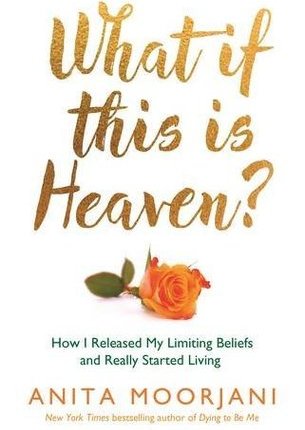
What if This is Heaven?: How I Released My Limiting Beliefs and Really Started Living by Anita Moorjani

What if This is Heaven?: How I Released My Limiting Beliefs and Really Started Living by Anita Moorjani

I was so excited to read What If This Is Heaven?: How I Released My Limiting Beliefs and Really Started Living. Moorjani’s first book, Dying to Be Me, was one of the first accounts of near death experience that I read. In it, she details how she was on her death bed, experienced the world beyond, and then came back to fulfill her life’s purpose.

When she came back, the tumors in her body disappeared and she’s been fine ever since.

It’s an astonishing and uplifting reminder of who we are as eternal beings and why we’re all here. What If This is Heaven is a continuation of this message in that, now, Moorjani is a teacher and lecturer on the topics of spirituality, healing, and self actualization. It’s wonderful.

And, it’s different enough from the first book that readers don’t feel like they’re re-reading the same messages. Moorjani has evolved and I’m very interested to see where life takes her from here.

Here are some passages that I loved:
“A major reason why I chose to return to this life during my NDE (near death experience) was because I understood that heaven is a state and not a place, and I wanted to experience, firsthand, the heaven that this life could actually be.”

“Remember, your only work is to love yourself, value yourself, and embody this truth of self-worth and self-love so that you can be love in action. That is true service, to yourself and those who surround you.”

“On the physical plane, we see love as an emotion, something we have for some people and not others. But the truth is that unconditional love is a state of being, and it’s our birthright. Once we begin to tap into that, we realize is has the power to transform all of our relationships simultaneously- including our relationship with ourselves- for the better.”

“… illness is our body’s way of communicating with us and showing us a better path. Yes, we may die from cancer- or from countless other things- and each of us will die from something at some point. But death is not the enemy. What often is the enemy is the way we view illness…”

Some fascinating teachings about the positive aspects of the ego are included in here: “The ego gives us our sense of identity, our individuality. It’s what allows us to know who we are as individuals and to express our uniqueness. If our ego weren’t necessary, we wouldn’t have been born with it.”

There’s so much more to enjoy in What if This is Heaven beyond these small bits. I highly recommend this read for spiritual seekers and those who are interested in self actualization.  If you enjoyed this book, you may want to read Moorjani’s other book, Dying to Be Me or Co-creating at Its Best: A Conversation Between Master Teachers by Wayne Dyer and Abraham Hicks.

A big thank you to NetGalley and Hay House for the opportunity to review this book!  They sent me a free digital ARC for review purposes. And thank you for reading!

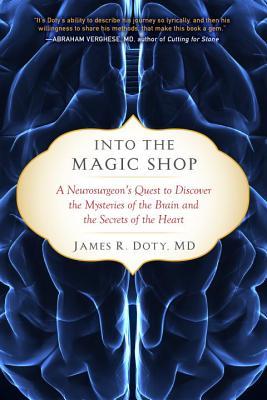
Into the Magic Shop: A Neurosurgeon’s Quest to Discover the Mysteries of the Brain and the Secrets of the Heart by James R. Doty

Into the Magic Shop: A Neurosurgeon’s Quest to Discover the Mysteries of the Brain and the Secrets of the Heart by James R. Doty

This book is James Doty’s memoir. He had a tragic childhood with parents who, for various reasons, were not present for him. Then, after an encounter with a total stranger, James was taught meditation, creative visualization, and positive thought practices that changed his life.

As he comes of age, he dismisses the compassion related portions of his childhood training and focuses instead upon the money and prestige that it brings as he pursues a career as a neurosurgeon. It’s a fascinating and educational account.

Photo by Vidal Balielo Jr. on Pexels.com

I was particularly taken with the near-death experience portion of the book. James approached that experience as an atheist so I felt that made his opinion on it rather different than other accounts I’ve read.

Some of the bits that I want to remember (advance reader’s copy cited so the final published book may contain slightly different wording):
“Some of the wisest patients and people I have ever met have been children. The heart of a child is wide-open. Children will tell you what scares them, what makes them happy, what they like about you and what they don’t. There is no hidden agenda and you never have to guess how they really feel.” pg 3

Photo by Juan Pablo Serrano Arenas on Pexels.com

“Everyone has a story, and I have learned that, at the core of it, most of our stories are more similar than not.” pg 60  But not everyone tells their story.  Thank you, Dr. Doty, for telling yours.

“When our brain changes, we change. That is a truth proven by science. But an even greater truth is that when our heart changes, everything changes. And that change is not only in how we see the world but how the world sees us. And how the world responds to us.” pg 151  I think that this is one of the great mysteries of life.

About his near death experience: “At the time I felt the warmth of a light and a sense of oneness with the universe. I was enveloped in love, and while it didn’t transform my religious beliefs, it informed my absolute belief that who we are today doesn’t have to be who we are tomorrow and that we are connected to everything and everyone.” pg 203

Photo by Pixabay on Pexels.com

“There’s a reason stock traders are using meditation techniques; these techniques help them become not only more focused but, sadly in some cases, more callous. This is what Ruth warned me about before she taught me to visualize. Yes, we can create anything we want, but it is only the intelligence of the heart that can tell us what’s worth creating.” pg 231 A powerful lesson, but one, I think, that can only be learned through personal experience.

If you enjoyed this book, try Proof of Heaven: A Neurosurgeon’s Journey into the Afterlife by Eben Alexander or The Power of the Heart: Finding Your True Purpose in Life by Baptist de Pape.

Thank you to the Goodreads First Reads program for an advance reader copy of this book.  And, thank you for reading!

Primates of Park Avenue: a memoir by Wednesday Martin

Primates of Park Avenue: a memoir by Wednesday Martin

Primates of Park Avenue is a glimpse into the life of the privileged mothers of the Upper East Side of Manhattan. It’s weird, otherworldly, and off-putting, at first, but then as Wednesday struggled more and more to fit in and, ultimately, thrive, I found myself cheering for her. I can see how this book isn’t for everyone though. If you don’t like reality television or the details of petty power plays between ridiculously rich socialites, you may want to read another memoir.

As a mother myself, I was thanking my lucky stars as I turned every page that I didn’t happen to end up in New York City. I wouldn’t want that type of pressure on me: to look a certain way, act a certain way, or make my family act a certain way. I can’t imagine that it would ever make me happy and I’m surprised that Wednesday managed as well as she did and emerge, for the most part, unscathed.

The author’s reason for writing: “This book is the stranger-than-fiction story of what I discovered when i made an academic experiment of studying Manhattan motherhood as I lived it. It is the story of a world within a world, a description I do not use lightly.” pg 18, ebook

The “world in a bubble” that is Manhattan: “…many of us live unconstrained by our environment in unprecedented ways. But nowhere, I considered as I walked from here to there every day, foraging for crisp Frette sheets and shiny All-Clad pots and pans and the perfect sconces, are we as radically and comprehensively released as on the Upper East Side of Manhattan. It was the land of gigantic, lusciously red strawberries at Dean & Deluca and snug, tidy Barbour jackets and precious, pristine pastries in exquisite little pastry shops on spotless, sedate side streets. Everything was so honeyed and moneyed and immaculate that it made me dizzy sometimes.” pgs 77-78, ebook

Wednesday forgets to register her child for nursery school and has to scramble and beg to even get applications to the Upper East Side Schools because, if she doesn’t, she isn’t living up to the expectations of her peers: “Thus began my disorienting slide from bystander to total buy-in: with fear. I had been seized by the culturally specific and culturally universal anxiety of not being a good enough mommy, of being a mommy who does less than enough for her children.” pg 90, ebook.

The thing is, in my experience, all mothers deal with that fear. Most of us are just fortunate enough to be in a place that doesn’t put a social magnifying glass on it.

My favorite part- Wednesday decides to get a Hermes Birkin bag to stop women from “charging” (crowding) her on the Manhattan sidewalks: “Like a totem object, I believed, it might protect me from them, these ladies who were everywhere in my adopted habitat and who said so much without a word, using only their eyes and their faces and, always, their handbags. Perhaps, I thought, a nice purse like the ones they had might trick them, mesmerize them into believing that they oughtn’t challenge me to sidewalk duels and all the rest.” pg 132, ebook. Never underestimate the power of a really nice bag…

The most disturbing part, for me, was the reliance of all of these women on their husbands: “…with resources under their control, with wives who are dependent on them caring for their even more dependent offspring, privileged men of the Upper East Side can do as they please. Men may speak the language of partnership in the absence of true economic parity in a marriage, and they may act like true partners. But this arrangement is fragile and contingent and women are still dependent, in this instance, on their men- a husband may simply ignore his commitment at any time.” pg 241, ebook

That really bothered me.

Wednesday ties up the memoir with a heartbreaking chapter from her own life. I won’t spoil it for readers, other than to say, that I found it very difficult to get through. Primates of Park Avenue seems like a frothy and frivolous bit of writing about women who already have so much privilege that their lives didn’t need the examination, but then I realized, that universal problems like gender inequality and becoming a part of the group transcend culture, time, and place.

If you’re looking for more books on these sorts of social questions, you may want to read Lean In: Women, Work, and the Will to Lead by Sheryl Sandberg or Spinster: Making a Life of One’s Own by Kate Bolick.

Thanks for reading!

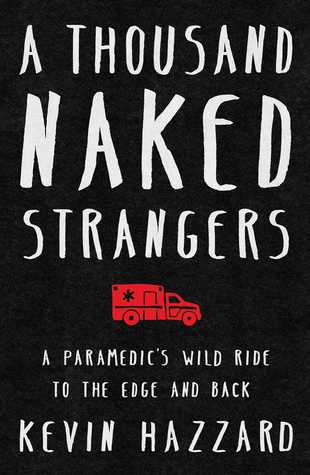
A Thousand Naked Strangers: a paramedic’s wild ride to the edge and back by Kevin Hazzard

A Thousand Naked Strangers: a paramedic’s wild ride to the edge and back by Kevin Hazzard
kevinhazzard

This is Kevin Hazzard’s memoir- he was a journalist, until 9-11, and then, he decided that he needed to work a job that gave more back to society.  So, he decided to become an EMT and, eventually, a paramedic.  This is the sometimes insane, sometimes touching, and, many times, yucky record of his ten years in that profession.

It is shocking, but I learned a lot about the physical and emotional toll the job takes on these professionals.

Frankly, I’m surprised that anyone is able to do this job. I know that I couldn’t.

A Thousand Naked Strangers invites the reader to examine their own mortality or, if not examine it, just remember it like a literary memento mori.

I, like most other people, want to pretend that I’m going to live forever when I know I’m not. A Thousand Naked Strangersdoesn’t allow room for that.

Hazzard’s stories can be ridiculous, gruesome, or uplifting. This book has a little bit of everything.

Why Kevin decides to become an EMT: (his first day of class) “…Alan (the instructor) tells us, right out of the gate, if we’re not sure we can handle this, now is the time to leave. A couple of people laugh as though the mere suggestion is ridiculous, but I’m not one of them. I didn’t grow up wanting to be an EMT, nor do I know if I’ll like it. What I do know is I want to get hip-deep in things that matter.” pg 19 ebook.

He certainly manages to do that.

Learning the ropes: “It’s all so new, so foreign, so much like that period of childhood- first or second grade, maybe- when you’re old enough to know you’re alive and one day will die, yet young enough to still believe that a thin vein of magic runs just beneath the surface.” pgs 26-27 ebook.

I still feel like that, most of the time.

Why Kevin stays: “Every word the radio breathes into the stale air of the station sets me on fire. EMS is the greatest show I’ve ever seen, except it’s not a show, it’s all real. No, it’s more than that- it’s reality distilled and boiled down to its essence.” pg 59 ebook

At times, I had trouble connecting with this memoir. He almost felt too excited to be out there… inviting disaster because he was going to be the one to pick up the pieces. I’ve never felt like that.

Why it’s so hard to read A Thousand Naked Strangers“In a job where it’s possible to scoop up a stranger’s brain, it’s important to have levity. But after a while, I lose the ability to judge which stories to tell my friends and which go beyond the limits of good taste.” pg 90 ebook. That’s it- in a nutshell.

Finally, how Kevin’s job is sort of like everyone else’s: “Like a recurring dream, every working day holds the same frustrations, and the working days never change, they just stretch out for all eternity. For months I’ve wondered how it will end. Maybe I’ll reach my limit and quit.” pg 206 ebook

I think, anyone who works a job for any amount of time, feels like this at some point or another. Kevin’s job was simply more intense and invited that type of introspection more quickly.

My book club picked this memoir as its monthly read. I’m not certain I would have ever chosen to read it otherwise. But, I’m glad I did.

Thanks for reading!

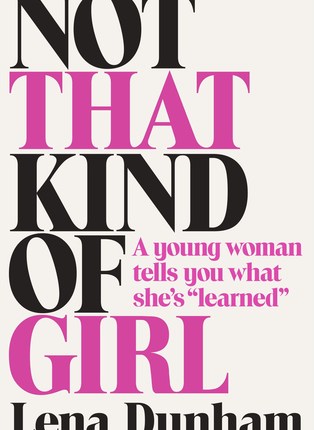
Not That Kind of Girl: A Young Woman Tells You What She’s ‘Learned’ by Lena Dunham

Not That Kind of Girl: A Young Woman Tells You What She’s ‘Learned’ by Lena Dunham
notthatkind

“Not that kind of Girl” is a non-fiction collection of essays by Lena Dunham.

In Not That Kind of Girl, Dunham has crafted a very raw and brave set of essays about growing up, her family, her success, her crushing anxiety, and what it’s like to be a woman in Hollywood.

Not That Kind of Girl and I got off to a rocky start.

I loved Dunham’s introduction but the next, seemingly endless, chapters, where she talks about her dysfunctional relationships, one after another, were awful.

She uses a stream-of-consciousness style writing so that, in the middle of telling one story, she puts in totally unrelated stuff.  Most of the time, it’s about another dude who she banged once or more, depends on the story. I was completely confused and not into it.

But then, once I was past that first part, the memoir picked up considerably.

So, if you can make it past the initial bit, I found the rest of Not That Kind of Girl to be well worth the read.

Here’s some parts I enjoyed:
For my husband, the DnD player, she’s talking about finding an eligible man on campus: “The pickings were slim, especially if, like me, you were over bisexuals. At least half the straight men on campus played Dungeons & Dragons, and another quarter eschewed footwear entirely.” pg 32 ebook. The horror! :p

How relationships end: “The end never comes when you think it will. It’s always ten steps past the worst moment, then a weird turn to the left.” pg 97 ebook. Kind of like the “Time Warp.”

I loved her reasons for writing. In this passage, she’s talking to a girl she admired, who had just asked Lena why she writes: “And in our work, we create a better or clearer universe,” I tell her breathlessly. “Or at least one that makes more sense.” pg 220 ebook.

Lena remembers a disturbing incident with a grade school teacher: “I was reminded again that there are so many things we need that can also hurt us: cars, knives, grown-ups. I was reminded how no one really listens to kids.” pg 267 ebook.

A true eccentric: “Isabel is a true eccentric- not the self-conscious kind who collects feathers and snow globes but the kind whose passions and predilections are so genuinely out of sync with the world at large that she herself becomes an object of fascination.” pg 282 ebook.

Finding her way in a “man’s world”: But the scariest thought of all is the one that pushed me to keep making contact well past the point that I became uncomfortable, to try and prove myself again and again. The reason I didn’t stop answering their calls, that I rushed to drink dates that were past my bedtime and had conversations that didn’t interest me and forced myself to sit at the table long after I’d grown uncomfortable. The thought I worked so vigilantly to ensure they would never entertain: She’s silly. She’s no threat.” pg 314 ebook.

I felt that passage, very deeply. There is the beauty of Dunham’s writing- she records her thoughts in such a way that the reader says to herself, “That’s me. I’ve been there. That’s all of us.” At least, I did.

If you enjoyed Not That Kind of Girl, you may want to read Spinster: Making a Life of One’s Own by Kate Bolick, Pigs Can’t Swim by Helen Peppe, or Furiously Happy: A Funny Book About Horrible Things by Jenny Lawson. All of those books take potentially uncomfortable topics and apply a honest and, sometimes amusing, lens to them.

Thanks for reading!