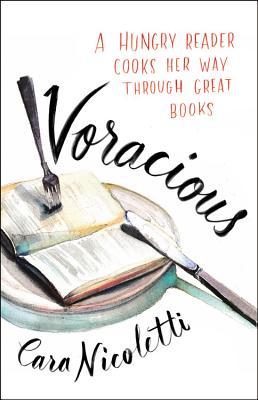
Voracious is so much fun. It is a foodie’s honest and open-hearted memoir in which she weaves literary themed recipes each chapter and gives a brief summary of the novel that included it.
The chapters from Cara’s childhood were some of my favorites because they were so relatable. “I cooked and read my way through awkward middle school years, first love, devastating heartbreaks, loss, and change. As I grew older, though, reading and cooking became the forces that broke me out of my shell, allowing me to form strong relationships and connect to the world around me.” pg 5, ebook.
Or this part, when she and her friends find Grimm’s Fairy Tales in the attic: “We were heavily into mysteries and ghost stories at the time, and when we found the book we were certain that we had discovered some dark secret that my parents had tried to keep under lock and key.” pg 13, ebook.
I know that feeling- when I was ten or eleven, I found a copy of Alfred Hitchcock’s Mystery Magazine that Grandma had loaned to my mother and I had read half of it before Mom discovered me, contently turning pages in the summer sun.
She took it away saying, “This is too old for you.” Some humbug mothers, hmph. I learned to hide when I was reading anything that I thought she wouldn’t want me to. Can’t keep a bookworm down.
In this passage, Cara talks about the culinary conundrum of gingerbread houses: “You toil and sweat, smelling good smells and touching sticky dough and mixing sweet icing for hours and your only reward is visual. It seems so wrong.” pg 15, ebook. I’ve always thought that too!
If I try any of the recipes in here, it’s going to be: If You Give a Mouse a Cookie- Brown Butter Chocolate Chip Cookies (pg 34, ebook) or To Kill a Mockingbird: Biscuits with Molasses Butter (pg 93, book).
I think that some of the huge list of offerings in this book are only for “brave” kitchen people. Cara includes recipes for homemade doughnuts, ice cream, chocolate eclairs… things that I don’t think I’ll ever gear myself up to attempt. But, she makes me want to try and I suppose that is half of the battle.
Highly recommended for anybody who likes to eat, read, or do both at the same time. I would guess that’s pretty much everybody.
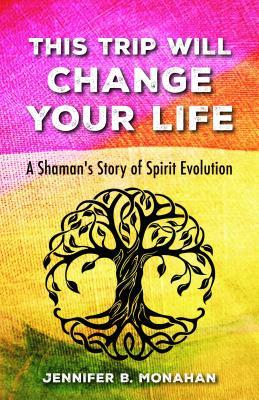
This is a firsthand account of Jennifer Monahan’s discovery of her spiritual path and budding abilities as she becomes a modern day shaman.
From the introduction: “Let me start off by saying that I’m nobody special- or at least not any more special than every other person on the planet. But I do believe in magic. And the power of the universe in our lives. This is a story about magic- everyday magic that exists in everyone’s life but that for many goes unnoticed and unappreciated.” loc 26, ebook.
I think that everyone has potential, but sometimes they don’t tap into it because they can’t see how or don’t realize that they can. Jennifer Monahan empowers the reader through her example.
Shamanism, though ancient, feels New Age.
Take this teaching about the mind: “The purpose of the mind, Antonio said, is to train it so that it focuses on those things that make the spirit sing and bring it joy- and to let everything else just slip on by without letting it get caught in the mind… Doing this enables people to live in a state of happiness, peace, and self-love.” loc 153, ebook.
My favorite parts of This Trip Will Change Your Life were the messages that Jennifer received during meditation and what she experienced during her vision walks. It is always positive, loving, supportive or healing wisdom that is shared.
Here’s the universe speaking to her while she breathes: “You don’t have to do anything. Just be. Radiate love out from your core. Focus on that and on being present. Be accepting of people- that is the first step. You’re doing that now; keep it up. Share your joy- find it! Tap into your life.” loc 503, ebook.
I can see this book not appealing to everyone: Jennifer has a few moments of “far out” behavior like talking to her crystals and receiving their wisdom, but if you believe that everything contains a spirit (the philosophy in The Life-Changing Magic of Tidying Up: The Japanese Art of Decluttering and Organizing comes to mind) then it is not such a stretch to entertain the idea that one could communicate with inanimate objects.
Western Qabalists have taught for centuries that everything has a guiding intelligence and that to tap into it, you just have to clear your thoughts, ask, and be ready for the response. But, if you don’t have a fairly open mind about such things, this might not be the book for you.
Overall, I loved the message of this book and the approachable way that Jennifer explains shamanism. “The realization that I’ve come to is that the basic human need is to be loved. And that love needs to come from within. When we feel love for ourselves, we are happy and feel good. We can then send our love unconditionally out into the world.” loc 751.
Highly recommended for those who are curious about shamanism or finding one’s spiritual calling- whatever that may be.
This is Paul Kalanithi’s life story. He relates how he got into neuroscience, his exhausting and life consuming training, his illness, and his eventual transition out of this world into the next.
At first, Paul didn’t even want to become a surgeon because his own father was one and he saw how hard it was to balance work and family: “When we did see him, late at night or on weekends, he was an amalgam of sweet affections and austere diktats, hugs and kisses mixed with stony pronouncements … He had reached some compromise in his mind that fatherhood could be distilled; short, concentrated (but sincere) bursts of high intensity could equal.. whatever it was that other fathers did. All I knew was, if that was the price of medicine, it was simply too high.” pgs 24-25, ebook.
But, even though he started out as an English major, Paul’s own interests led him towards the profession. He was passionate about medicine and making the best decisions for patients. He was interested in what makes life worth living and how the brain’s functions effect quality of life.
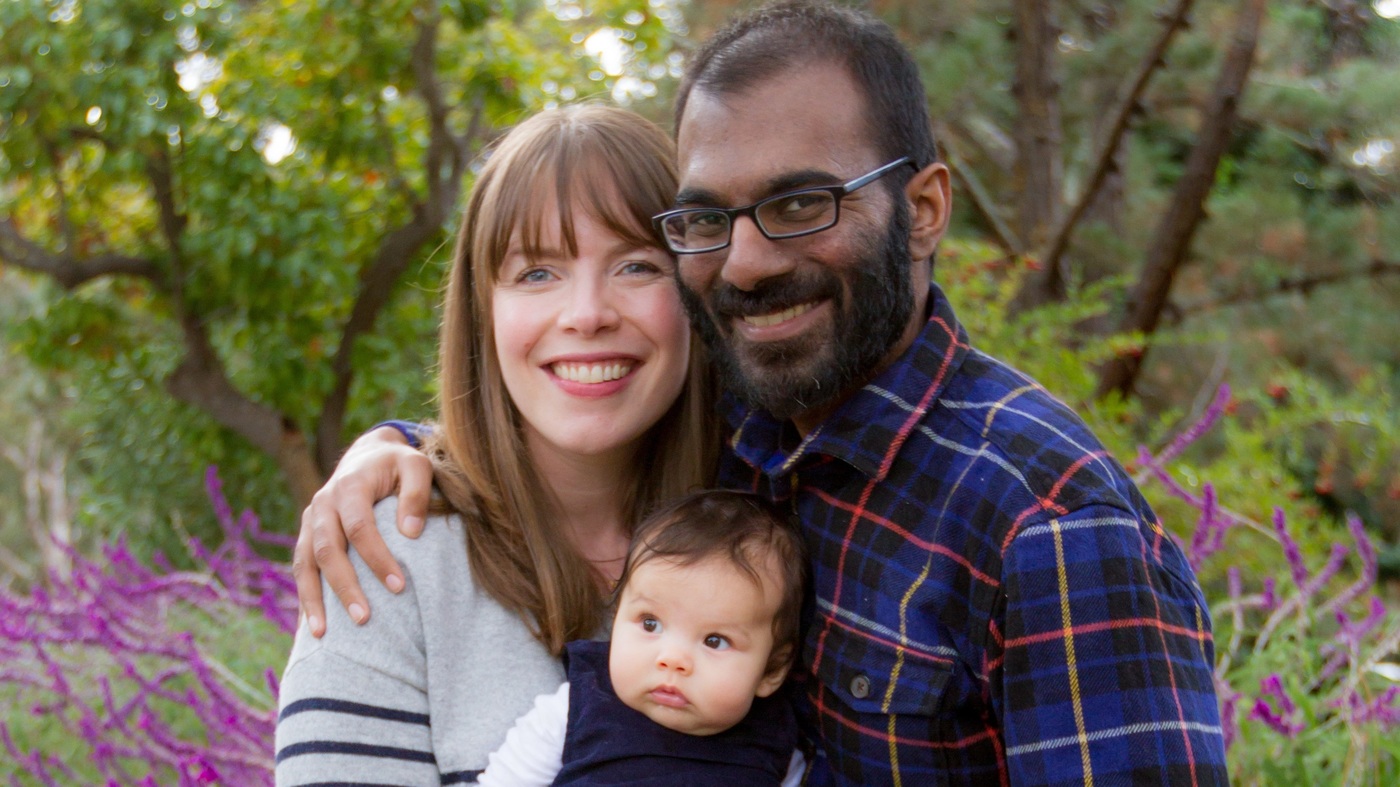
Dr. Lucy Kalanithi and Dr. Paul Kalanithi with their daughter, Elizabeth Acadia.
This is what he had to say after a sobering visit to a home for people who had suffered severe brain injuries as children: “Only later would I realize that our trip had added a new dimension to my understanding of the fact that brains give rise to our ability to form relationships and make life meaningful. Sometimes, they break.” pg 34
It was really difficult for me, personally, to read the parts of this memoir that dealt with Paul learning how to make life and death decisions for ailing patients. He talks in depth about taking people off of life support because they didn’t want their bodies to be kept alive while their brains were gone. I was reminded of how my grandfather, though he never suffered any debilitating brain injury, was kept alive through endless medicines and machines to reduce the water around his heart. He eventually refused to eat and refused a feeding tube, so he slowly withered away.. this from a man who lived for eating and described the joys of consuming a fresh peach in summer as one of his favorite memories. It was heartbreaking.
In this passage, one of Paul’s professors is talking about the same type of situation with his own grandma: “But “what was most evident,” he continued, “was the slow drawing away from life… By the time Bubbeh stopped praying, she had stopped virtually everything else as well.” pg 41 ebook. Eating was my grandpa’s form of prayer. So, you may want to avoid this memoir if you have any fresh grief that you’re dealing with, as this book brings it all bubbling to the surface.
Photo from timeshighereducation.com
Paul studies so hard to become a doctor to learn the secrets of life and death. But, he begins to realize, that as a doctor, he’ll constantly deal with these moments but never truly understand them: “I began to suspect that being so close to the fiery light of such moments only blinded me to their nature, like trying to learn astronomy by staring directly at the sun. I was not yet with patients in their pivotal moments, I was merely at those pivotal moments.” pg 56
Then, he has his own illness and realizes that, even though he’s seen death and suffering, he really knew nothing about it: “It occurred to me that my relationship with statistics changed as soon as I became one.” pg 82. The rest of the book is so very sad, but one thing is clear, Paul Kalanithi finally found the moment when breath becomes air, what he had been searching for his whole life.
Neurosurgeons write really fine memoirs. At least, that’s been the case for nearly every one I’ve come across.
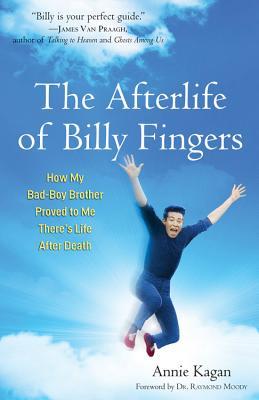
I think anyone who has lost a loved one wishes to talk to them again. Annie Kagan was granted that wish. She wasn’t a practicing channeler, so it came as a huge surprise to her when she heard her dead brother’s voice speaking to her from a spot above her head.
At the time that this happened, Annie was living a hermit’s life in New England only venturing out to kick ideas around at her writer’s group. So, that gave her the space and time to explore these communications rather than running to the doctor to have the voice medicated away.
At first, she was reluctant to share what she was hearing, afraid that Billy’s voice was her mind’s way of holding the grief away or that other people would think she was going insane, but the information imparted became more and more specific until she couldn’t explain it away.
Through the experience and sharing it, Annie came to believe without a doubt that the spirit continues on after death. She took comfort from it and hopes, with this book, to share that comfort with others who may be grieving or afraid of death itself.
The Afterlife of Billy Fingers isn’t going to appeal to everyone. If you don’t believe that communications from beyond the grave are possible, I’d suggest passing on this book. And, towards the end of Billy’s travels into the afterlife, things get really far out as he lets go of his previous self and becomes the universe, embodying the entirety of reality.
It reminded me of Be Here Now by Ram Dass, hippie to the extreme. But, that’s the type of spirituality I’m into, so I loved it.
The introduction by Raymond Moody describes Billy as a modern psychopomp, someone who guides the spirits of others through the afterlife: “The experiences Dr. Kagan relates are completely consistent with the kind of role walkers between the worlds played in antiquity. And that is no surprise to me. I think that such experiences are part of the collective psychological heritage of humankind- not artifacts of any one culture.” pg 11, ebook.
Billy was a drug addict and led a very hard life.
This is what he had to say about it: “How do I know my life wasn’t some punishment for my past transgressions? Well, because there’s no such thing. You’re not on earth to be punished. … That’s a human concept. Something man made up. Humans make up stuff and then they believe it”. pg 24, ebook.
A continuation along that line of thinking later in the book: “Beliefs are big on earth. People collect them. Some of these beliefs are helpful, but others just keep you running around trying to follow rules that others have laid down. They don’t have a lot of personal meaning. It’s a good idea to sort through your beliefs now and then and throw out the ones that don’t serve you.” pg 85, ebook
Annie dealt with a bunch of her own issues in this book, like the fact that by writing this book, people were going to think she was “flaky”. At one point in the narrative, she has a toothache and starts to believe that she’s being punished for revealing universal truths that should be kept secret.
She eventually gets past that attitude, but, when it comes to the unknown, I think fear can be a major hurdle: “After my toothache and the painful root canal and awful infection that followed, I was scared. … who was I to be the one to prove there’s life after death? Maybe some secrets shouldn’t be revealed. Maybe I was breaking a sacred taboo, dabbling in a cosmic Pandora’s box.” pg 41, ebook.
Another of the Be Here Now moments: “In your world, as the earth moves around the sun, there’s nothing but shadow for a good part of the time. The mystery of life on earth cannot exist without the shadow element. You cannot have the sea without storms, the earth without quakes, the wind without tornados. … And sometimes- sometimes darkness is okay too. Don’t overlook the riches contained in the darkness. Life’s very temporary, so don’t let time just pass. Let the moments fill you- the ones you judge to be good as well as bad.” pg 77, ebook. Solid advice.
Let’s end with one more bit of wisdom: “People spend lots of time on things that make them unhappy- too much focus on the sand in the oyster. To cultivate joy, pay attention to what you like.” pg 116
Recommended for spiritual seekers and people who enjoy reading about near death experiences/channeled wisdom.
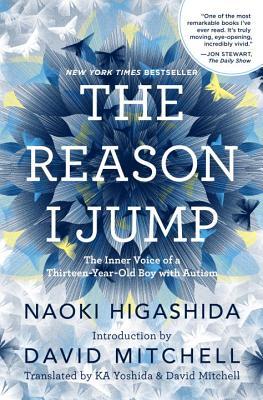
Description from Goodreads: “You’ve never read a book like The Reason I Jump. Written by Naoki Higashida, a very smart, very self-aware, and very charming thirteen-year-old boy with autism, it is a one-of-a-kind memoir that demonstrates how an autistic mind thinks, feels, perceives, and responds in ways few of us can imagine. Parents and family members who never thought they could get inside the head of their autistic loved one at last have a way to break through to the curious, subtle, and complex life within.”
The reviews on this one from my Goodreads friends are very mixed and I understand why. The Reason I Jump touches on a very emotional topic.
I’m not an expert on autism so I am completely unqualified to determine if Naoki wrote this book with or without help or the over arching truth of his experiences. However, as a reader, I thought that some of Naoki’s words were very beautiful.
Naoki talks about difficulties in communicating his feelings, the beauty of nature, the impossibility of controlling his emotions or repetitive actions- knowing that he’s not behaving “normally” but not able to do anything about it.
“Please don’t judge us from the outside only. I don’t know why we can’t talk properly. But it’s not that we won’t talk- it’s that we can’t talk and we’re suffering because of it.”pg 24, ebook.
It seems to me that everyone’s lens of perception is different and we can learn from each other if we share our own unique viewpoint. I certainly learned about Naoki’s inner world from this book.
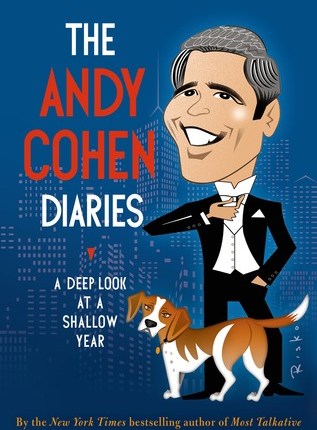
The Andy Cohen Diaries is the type of book that you have to be in the mood to read. It is basically like a book length gossip column, which can sometimes be exactly the kind of fluff that I want to read. Other times though… it is more annoying than amusing.
Andy writes it in a stream of consciousness style- event, event, feeling, event, aside, event, personal thoughts, inside joke, repeat. So, jump into this one if you want a bunch of gossip about the New York scene and Watch What Happens Live.
I thought Andy’s description of his book was spot on:“Sometimes-like life itself-these chronicles are funny, sometimes dishy, and sometimes even a little sad. And sometimes they are really, really shallow. Because sometimes life is shallow. I understand that and have accepted it. I hope you will too.” pgs 7-8 ebook
Andy’s life is filled with drama, divas, and emotion laden moments both on and off the screen. I enjoyed watching him juggle it all. He offers this advice for handling the more challenging people in your life: “…I told her I was sorry if I offended her. Sometimes, the only option is to say you’re sorry, even if you have no idea what someone is talking about.” pg 11 ebook.
I’ve never watched any of the Real Housewives of (fill in the blank city). So, those gossip bits didn’t mean all that much to me.
However, the parts about Lady Gaga were a different story! : “Then the weirdest cake arrived from Lady Gaga, red velvet cheesecake with white chocolate on top with Lady Gaga Art Pop written on it… the note said “Love, Gaga” in teeny little capitals. It looked like-I don’t know what actually-robot writing?”pg 18 ebook
Andy is from St. Louis, the closest city to my small hometown. So, we had that in common.
Any time he was taking about the weird things that people from St. Louis do, I was nodding my head in sympathy: “Everybody in St. Louis, all they talk about is how great St. Louis is. The hostess lady in the suite asked me if I lived in LA and I said no, I live in New York, and she said to me very earnestly, “Why, may I ask, would you ever leave St. Louis?” pg 38 ebook. Yeah, they do that.
I could go on and on. The Andy Cohen Diaries is just so quotable. Some read alikes: Amish Confidential by “Lebanon” Levi Stoltzfus (tell-all about the Amish Cofidential show and the Amish community) or My Horizontal Life by Chelsea Handler (hilarious recounting of Chelsea’s various escapades). Thanks for reading!
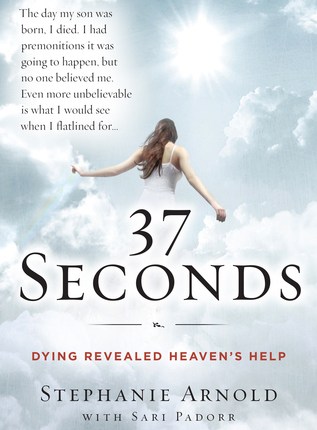
37 Seconds is a fascinating account of Stephanie Arnold’s near death experience. She had a premonition that she was going to die having her second child.
Stephanie did die for 37 seconds and had an amazing spiritual experience. Her religious upbringing is in Judaism which makes for a totally different lens of perception than other NDEs (near death experiences) that I have studied.
I like reading books about near death experiences and examinations of consciousness. So far, I’ve read twenty one books by folks from different religions and parts of the world about their NDE and what they’ve brought back with them to their normal, every day lives.
I found it interesting that the focus of Stephanie’s consciousness during the event was on her deceased relatives and their support of the physical world rather than on a location on a higher level where people go to hang out around their G-d for the rest of eternity.
Another portion of the account that made it different than others that I’ve read on the topic is that Stephanie accessed her memories of the time during her 37 second death through hypnosis.
Other NDE writers (Piper, Moorjani, Burpo, et al) came out of their NDEs with memories of what went down. Stephanie, because of the extreme trauma and the premonitions about her death that haunted her for months before the actual event, repressed her NDE.
Isn’t it fascinating? The study of consciousness never ceases to surprise me. It seems that not only do our lenses of perception create what we see in other modes of existence, but we can choose whether to access those perceptions or not.
I also liked Stephanie’s repeated message through 37 Seconds of trusting your own intuitions and believing in that inner voice. I feel that in modern society, we’ve advanced in so many ways both scientifically and technologically, that we discount simpler modes of understanding and knowledge.
Why try learning about why your body is presenting symptoms of anxiety and stress when we can just medicate it away? Why believe in your dreams and intuitions when educated doctors and scans show that nothing is wrong?
If Stephanie had listened to the experts, she would be dead. She is a great role model for a return to trusting ourselves. Doctors, medicine, and therapy have their place but so do dreams, intuitions, and the inner voice.
If you enjoyed 37 Seconds, try Wisdom of Near-Death Experiences: How Understanding NDEs Can Help Us Live More Fully by Penny Satori or Journey of Souls: Case Studies of Life Between Lives by Michael Newton.
“You’re Never Weird on the Internet (Almost)” is an excruciatingly honest memoir from Felicia Day about her quirky childhood, gaming addiction, cultural attitudes online, and life long struggle with anxiety and other mental health issues.
She reminded me a great deal of Jenny Lawson in her straight forward presentation of difficult topics and also in her exuberant storytelling style. And, in many other ways, she reminded me of myself.
Being a female gamer is hard. There, I’ve said it. Not only do your female friends not want to play video games with you, but your male friends never really accept you as a legitimate gamer. You’re kind of stuck in this twilight space of “this is what I love to do” but society doesn’t agree that it is appropriate for you to do.
Now, unlike the early days of MMORPGs, many more women play video games, and I’m sure that I’d make more female friends if I tried. But, back then in the fall of 2000, when I first got into EverQuest (one of the predecessors of WoW, the game that Felicia played), many more men played female avatars than actual women played. That’s just how it went.
I loved that Felicia addressed this female gamer white elephant, so to speak. There are few people who really talk about it, but it’s something that I’ve been dealing with for a long time.
I loved her cheerful attitude, even when things got tough: “My story demonstrates that there’s no better time in history to have a dream and be able to reach an audience with your art. Or just be as weird as you want to be and not have to be ashamed.” pg 19 ebook. That’s a pretty powerful lesson and one which artists and dreamers everywhere should know.
Felicia admits that she has very few hands-on skills, something which I also have in common with her. In this passage, she’s joking about ordering coffee: “…I’m determined to enjoy the liquid indulgences of modern life. Might as well take advantage of it all before the zombie apocalypse. I have no practical skills; I’m fully aware that I’ll be one of the first ones “turned.” Instead of learning motorcycle repair or something else disaster-scenario useful, I’ll order the drink I want until I become a shambling corpse.” pg 17 ebook.
I’ve thought about my librarianship skills and book reviewing abilities in that same light. If something catastrophic happens, I’m kind of screwed.
I mean, yes, there have been favorable depictions of librarians after the apocalypse (Station Eleven comes to mind) but really, what good could I do for people struggling to survive or myself? While we’re on the topic of librarians, I also enjoyed that Felicia’s first “job” was working for her aunt, a librarian. She said about it: “No job since has left me feeling so well rewarded.” pg 67 ebook. Aww….
Chapter Five: Quirky Addiction = Still an Addiction (How my obsessive personality steered me into a twelve-hour-a-day gaming addiction and an alt-life as a level 60 warlock named Codex) pg 85 ebook, was my favorite.
Gaming addiction is an actual thing. I’ve known multiple people who dropped out of college or lost their jobs because they couldn’t stop playing video games. I’ve also known people whose relationships started or ended because of it too. It seems silly for people who don’t have any interest in video games, but it can be as destructive an addiction and as real as anything else- drugs, sex, whatever.
Felicia nails the siren call of video games in this passage: “When we graduate from childhood into adulthood, we’re thrown into this confusing, Cthulhu-like miasma of life, filled with social and career problems, all with branching choices and no correct answers. Sometimes gaming feels like going back to that simple kid world. pg 93 ebook.
That’s it, really. Do the quest, get the reward, and repeat. Real life is never that simple or straight forward.
Though she felt like she wasted a lot of time, Felicia managed to break free of her addiction and channel her passion into the hugely successfully series: The Guild. I had never watched it, but after reading this book, I binge-watched every episode. She managed to take the culture, friendships, and craziness that is online gaming and turned it into a compulsively view-able series. I loved it.
If you haven’t had a chance to watch it yourself, I highly recommend it. One of the overarching points of this book, and the television show, is that not only can you overcome hurdles that held you back from the life of your dreams, but you can use the very thing that was the stumbling block to move onwards. Well done, Felicia, very well done.
One last little bit that I wanted to include in this review, because it rang so true for me, was Felicia’s thoughts about her struggles with mental illness. She says: “I couldn’t trust my own mind anymore, which was the scariest thing I’ve ever experienced. pg 170 ebook.
When your own internal filter, your brain, is compromised, you feel like you can’t trust yourself ever again. It’s as simple and as terrifying as that and, unless you go through it yourself, there’s not really any good way to explain what’s happened to you or why you’re so afraid.
If you’ve ever had any struggles with anxiety or mental health issues, you may really enjoy this memoir. Also, if you enjoy online gaming or want to understand one of your loved ones who does, you may like this book. Some read-alikes: Nerd Do Well by Simon Pegg, Fantasy Freaks and Gaming Geeks: An Epic Quest for Reality Among Role Players, Online Gamers, and Other Dwellers of Imaginary Realms by Ethan Gilsdorf, or Just a Geek: Unflinchingly honest tales of the search for life, love, and fulfillment beyond the Starship Enterprise by Wil Wheaton.
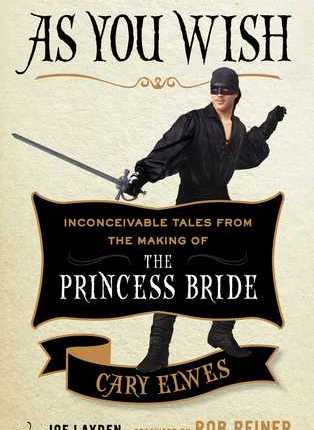
Before I start my review, I want to mention that As You Wish is the perfect audiobook for a road trip between St. Louis, Missouri and Kansas City, Kansas. I was traveling with my daughter and husband, and we were all entertained by Elwes’ memories of the making of the film.
It’s really not that easy to find a book that works for all three of us, but this was an absolute hit. I can’t recommend it enough and if you’re already a fan of the movie, I’m sure that you’ll love it even more.
Though it starts out a bit self-congratulatory in tone, throwing around words like “timeless”, “modern classic”, and “once-in-a-lifetime experience”, As You Wish is ultimately, like The Princess Bride, a very sweet and and enjoyable memoir about the events behind the making of the film.
At first, as I said, I was afraid that I was going to be bored to tears. Rob Reiner wrote and narrated the foreward and it is sugary sweet in its praise of the author, the movie, and everything to do with either. This high praise, some may argue, is well deserved, but I thought that it might have fit better in the flow of the tale as an afterword. First, the play then the applause, but, that’s just my opinion.
Some of the best parts of the memoir, not surprisingly, centered around Elwes’ interactions with his colorful co-stars. Andre the Giant figures largely into this tale, as he did in life, not only because of the enormous size of his body but also his heart.
The brightest among us always seem to burn too quickly.
Another of my favorite parts is the description of Elwes’ and Patinkin’s struggle to film the “greatest sword fight in modern times.” I had no idea of the amount of backbreaking work that went into the acquisition of the skills to run the scene. From day one of filming, Elwes and Patinkin were schooled by some of the best sword fighters in the movie business. Now that I know, I’m going to have to re-watch the film. I had always assumed that the fight was done by stuntmen. How wrong I was…
If you enjoy the film, The Princess Bride, you must listen to this audiobook. It is a real treat and you’ll appreciate some hidden gems revealed by Elwes’ narration. To borrow some descriptors from the book, it was a magical, “once-in-a-lifetime” moment when talent and story mixed together to create a “timeless, modern classic”. If you’re looking for some film related read-alikes (for movies other than the Princess Bride), try Nerd Do Well by Simon Pegg or A Funny Thing Happened on the Way to the Future…: Twists and Turns and Lessons Learned by Michael J. Fox.

















 The Help Desk Book Blog