Confections of a Closet Master Baker: One Woman’s Sweet Journey from Unhappy Hollywood Executive to Contented Country Baker by Gesine Bullock-Prado

Confections of a Closet Master Baker: One Woman’s Sweet Journey from Unhappy Hollywood Executive to Contented Country Baker by Gesine Bullock-Prado
confections

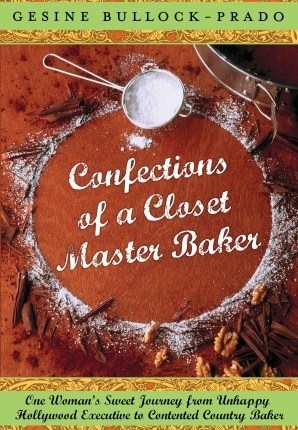
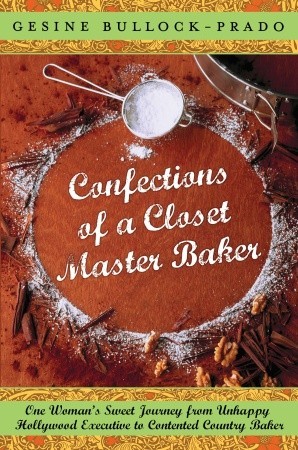
Confections of a Closet Master Baker can be an abrasive, no-holds-barred memoir about the dark and impersonal underbelly of Hollywood, at times. At others, it is a poignant reminiscence and heartfelt cookbook by a woman who still mourns her mother.

I wouldn’t call it “hilarious.” This memoir is sarcastic and unapologetic about it.

“As a matter of fact, I have only two truisms that I apply to humanity. Never trust anyone who drives an Astro van. And never trust anyone who doesn’t drink beer or coffee unless they have a doctor’s note.” pg 17, ebook.

All the same, I felt privileged to be allowed a glimpse into the highly-introverted life of a woman who described herself as so socially adverse that she believes she’s “pathologically shy with severe misanthropic tendencies.” pg 24, ebook.

I saw the title of this ebook and checked it out of the online library without noticing the name of the author. She kept mentioning, “my famous sister” and “Sandy.” I thought, did Sandy Duncan have a sister? and then felt like an idiot when I enlarged the cover and saw the hyphenated last name. Duh, Heidi.

“Each year, I wrestled with the knowledge that no matter how well I did my job, no one looked at me as anything but “her sister” with nothing to offer but a fancy job title born of nepotism and access to a movie star.” pg 100, ebook.

Photo by Lisa Fotios on Pexels.com

Gesine carries some serious angst about her Hollywood experience. She needed a life change, so she moved to Vermont and opened a bakery.

“No road rage, no cell phones, no fake tits or tans, no prestige handbags, no billboards, no stoplights, no braking, no traffic, no nothing. Welcome to Vermont. Just heaven.” pg 13, ebook.

Serious bakers may find a lot to love as Gesine includes many of her customer favorite recipes after each chapter.

Personally, I loved learning about what it’s like to have an A-list sibling. Gesine’s story about baking Sandra’s wedding cake was my favorite.

Photo by Brent Keane on Pexels.com

She also includes personal details about her childhood and relationship with her mother. “I saw the devil at age three and he gave me chocolate. It changed my life forever.” pg 5, ebook.

A large part of the complicated relationship Gesine had with her mother was about food. Her mother was a German opera singer and a strict vegan. She adhered to a restrictive diet and ate foods that Gesine thought were disgusting.

Sadly, she died of colon cancer. Gesine is still devastated by that. Her mother did everything she could to exercise and eat right, and it didn’t seem to matter.

Gesine seemed to swing the other direction and celebrate sugar, butter and all manner of naughty baked goods. Part of that is because she was raised on such a strict diet as a child. The other part is, baking is what she loves to do and how she shows love to others.

Confections of a Closet Master Baker is not for the faint of heart. Don’t read it if you’re easily offended because she doesn’t hold back. I think Gesine would approve of this sentiment: if you can’t stand the heat, then get out of the kitchen.

Thanks for reading!

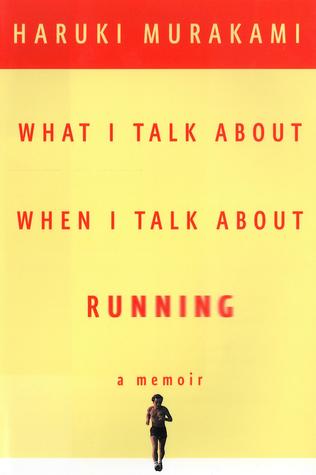
What I Talk About When I Talk About Running by Haruki Murakami, Philip Gabriel (Translator)

What I Talk About When I Talk About Running by Haruki Murakami, Philip Gabriel (Translator)
whatitalkabout

In What I Talk About When I Talk About Running, Haruki Murakami doesn’t try to convince others that we should all become long distance runners/triathletes like him. He does talk about why he took up running, how it has helped him with his creativity and why he will continue to run as long as he feels the need to do so.

I’ve never read a book by Murakami, other than this one. But, the interesting way in which he views the world makes me think that I’d probably enjoy his stuff.

I listened to this, rather short, audiobook on my daily commute. Murakami shares a lot of intimate details about his life that fans of his writing may really enjoy.

Before he took up running, Murakami said he was overweight and smoked around 60 cigarettes a day. 60 per day!

He wasn’t just looking for a way to become fit. He wanted a exercise where he was left alone with his thoughts and challenged to focus for long periods of time.

Murakami says that, when he writes a novel, it is a matter of focus and endurance. He finds it difficult to “drill down through the rock of the mind to hit veins of creativity.” (Quoting from memory, please forgive the inaccuracies.)

Photo by Pixabay on Pexels.com

The focus that runners use to finish a long race is similar, he believes, to the focus needed to write page after page until the end of a novel. I think that type of mental ability is something that could be used in any creative endeavor, not just writing. For Murakami, writing is how he makes his art.

I liked that, even though Murakami loves running and extols its virtues, he says that he never tells other people that they should take it up. He thinks that our life paths reveal themselves to us in a unique way that only we know.

He runs because he loves it. If you love it too, run. If you don’t, do what you love- walk, skip, jump, swim, whatever.

I can get behind that philosophy. Do what makes you happy because that happiness is a clue to what you were born to do.

Recommended for writers, runners, Murakami’s fans and anyone who enjoys memoirs. What I Talk About When I Talk About Running made me wish that I loved running more. Because I don’t.

Thanks for reading!

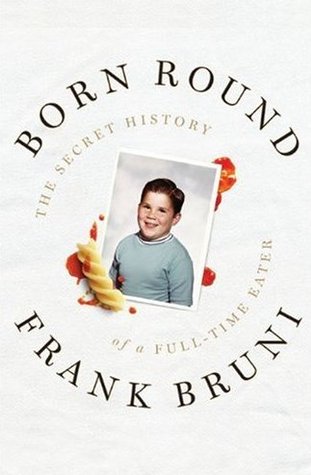
Born Round: The Secret History of a Full-time Eater by Frank Bruni

Born Round: The Secret History of a Full-time Eater by Frank Bruni
frankbruni

Born Round by Frank Bruni is satisfying memoir about a life-long struggle with food, a loving family and a journalist’s journey to find the beat he was born to eat… I mean, write.

I enjoyed all of Frank Bruni’s wandering memories. Like him, I grew up in a family where most of our gatherings center around food, eating, drinking and holidays. They still do.

Unlike Frank, I never tried “Mexican speed” or bulimia to try to manage my weight. Learning about some of the behaviors he used to maintain a weight he found acceptable was scary.

I can’t help but think that if we didn’t expect so much of each other, what a happier world this would be. Idolizing impossible body standards in the mass media does no one any favors.

When Frank goes on to become the food critic for the New York Times, I loved hearing about the subterfuges he used to hide his identity. I didn’t even know he was a food critic when I picked this book out of the digital audiobook pile.

Photo by Pixabay on Pexels.com

But, of course, that is what the boy, who loved to eat, became. Isn’t it funny how our life’s paths find us?

There are some extraordinarily vulnerable moments in Born Round. Frank is honest and doesn’t sugarcoat some of his tougher times, especially with his mother.

This memoir could potentially be a trigger for someone who suffers from an eating disorder, but, it is mainly a story about overcoming all that and adopting healthier behaviors.

Recommended for people who enjoy honest and open memoirs about families, food and how one man became the food critic he was literally born to be.

Thanks for reading!

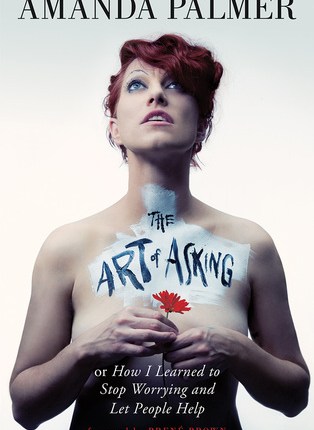
The Art of Asking; or, How I Learned to Stop Worrying and Let People Help by Amanda Palmer

The Art of Asking; or, How I Learned to Stop Worrying and Let People Help by Amanda Palmer

Amanda Palmer is an extremely talented artist who has done it all- from performing in a punk rock band to posing as a statue on the streets.

I can see why readers are passionate about this book and the author. She just didn’t strike a spark for me.

Photo by Jeffrey Czum on Pexels.com

Memoirs can drag on and become self-indulgent and ridiculous. I feel like that was a problem with The Art of Asking.

The tipping point for me was when she formed The Dresden Dolls with her friend and said (I’m quoting from memory here since I was listening to the audiobook): “I finally had the strongly emoting band I’d always dreamed of” or something like that.

I realized, I was strongly emoting on this book, but not in a good way.

I understand her internal struggles in forming a relationship with Neil Gaiman must have been difficult for her, but her “should I date him, he’s older and richer and more famous than me” just came off as silly and very first-world problems.

I get that she loves her fans, her art, her lifestyle- but it just come together to make a read that I enjoyed.

My apologies to her fans. If it helps, my favorite parts of the audiobook were the songs she put between some of the tracks. Those were actually pretty awesome.

Photo by Inga Seliverstova on Pexels.com

And the over-arching theme of The Art of Asking was good too.

Society isn’t comfortable with asking. We don’t know how to do it, don’t feel comfortable with it and it prevents people from making the art that they were born to make.

You can get that part of this book by watching Palmer’s TED talk. Maybe you should do that instead of reading this.

Here ’tis: 

https://www.ted.com/talks/amanda_palmer_the_art_of_asking

Thanks for reading.

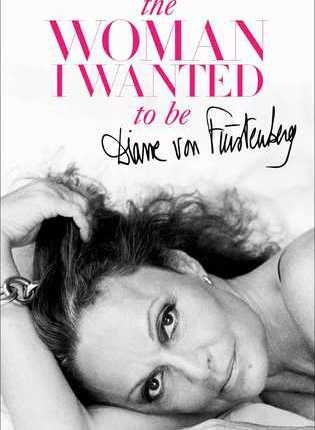
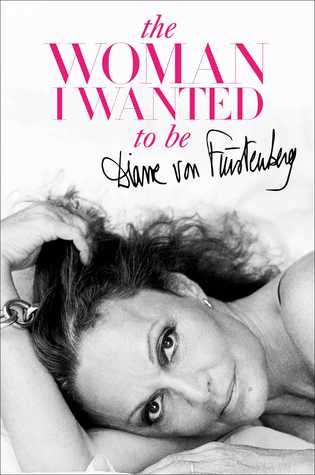
The Woman I Wanted to Be by Diane Von Furstenberg

The Woman I Wanted to Be by Diane Von Furstenberg
thewomaniwantedtobe

The Woman I Wanted to Be is the life story of the incomparable Diane Von Furstenberg.

She starts with her parents’ harrowing early life in war-torn Europe and continues through her own tumultuous love affairs and child-rearing years.

After a personal first half, the second half of her book is dedicated to how she entered and eventually became a living icon in the world of fashion.

I really enjoyed this book.

In an era where the media glorifies women who show off their bodies, cling to powerful men, and descend into drug addictions, Diane personifies the empowered woman who shows what she can do and build rather than living on how she looks or scandal.

That’s not to say that Diane hasn’t had a wild life, she has, but she owns it, has evolved from it and built it into an empire.

There are many moments in The Woman I Wanted to Be where Diane failed to be that woman. But instead of becoming mired in failure (she had to sell her business two separate times to avoid bankruptcy), she persevered to become a household name.

At another point, she gave up her identity and her business to spend time with a man who wanted her to be a blank slate. He ended up leaving her for someone else.

Photo by Karolina Grabowska on Pexels.com

Diane didn’t crawl into a hole and wilt then either. With grace and dignity, she re-entered life and the fashion world. Diane went on to experience an even greater level of success than she had before her exit.

Diane provides some great general advice for life such as: when bad things happen, they can actually be good things.

Also, never play the victim- take responsibility for your life.

Embrace your age, whatever it may be.

Photo by Pavel Danilyuk on Pexels.com

These philosophies have enabled Diane to rise above any obstacles that have appeared in her path. She is an excellent role model and it was such fun to read about her incredibly exciting and almost unbelievably successful life.

Readers who enjoyed Wild: From Lost to Found on the Pacific Crest Trail and She Got Up Off the Couch: And Other Heroic Acts from Mooreland, Indiana may enjoy this memoir.

It’s far more glamorous than either of those two selections, but the underlying themes of female empowerment and reaching for the life of your dreams despite all the odds, are the same.

I received a free copy of this book through Goodreads First Reads. FTC guidelines: check! Thanks for reading!

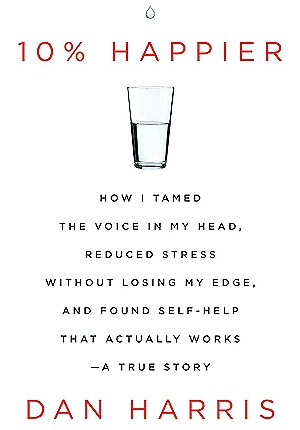
10% Happier: How I Tamed the Voice in My Head, Reduced Stress Without Losing My Edge, and Found Self-Help That Actually Works by Dan Harris

10% Happier: How I Tamed the Voice in My Head, Reduced Stress Without Losing My Edge, and Found Self-Help That Actually Works  by Dan Harris
10 happier

Dan Harris had problems, like all of us, but unlike all of us, he was beginning to experience some of the messier symptoms of his dysfunctional inner world in front of millions of people.

He sought help and jumped into the meditation world with both feet. I think its why most people find their way into spiritual practices- something isn’t working quite right in their life and they need to change from the inside out. So, they look for a process of inner change and run smack into meditation.

However, Dan isn’t drinking the kool-aid of the new age movement. He questions every practice for its practical benefits and searches for scientific experimentation to back up those benefits.

In essence, he brings the investigative skills that he applies to his job as a news anchor to the practice of meditation and it’s a delight to read.

I loved this. Dan had the same initial reaction to Eckhart Tolle and Deepak Chopra that I did. One of them seems too mellow to be real and the other seems to market himself too well to be that spiritual.

Over time, I’ve come to love both of those authors/gurus for their wisdom, but they are both just out of this world. Harris isn’t afraid to point that out.

In conclusion, I’d recommend 10% Happier to anyone who wants to become 10% happier- isn’t that all of us?

Also, anyone who has read Eckhart Tolle or Deepak Chopra may also enjoy this, if only for the surprisingly accurate descriptions of their foibles. Anyone who wants to try meditation but feels like they don’t have time, couldn’t do it if they tried, or doesn’t know where to start may find some inspiration from this book.

And, finally, anyone who is fed up with the hippie-dippie-trippie feeling that most spiritual memoirs give them, will find a kindred soul in Dan Harris.

Thanks for reading!

Night by Elie Wiesel

Night by Elie Wiesel

Night is Elie Wiesel’s memoir about his experiences during the Holocaust. It is shocking and sad, but worth reading because of the power of Wiesel’s witnessing one of humanity’s darkest chapters and his confession on how it changed him.

Photo by Pixabay on Pexels.com

In the new introduction to the ebook version I read, Wiesel talked about the difficulty he had putting words to his experience. “Convinced that this period in history would be judged one day, I knew that I must bear witness. I also knew that, while I had many things to say, I did not have the words to say them.” pg. 7, introduction

The original version of Night was written in Yiddish. I wish I knew enough Yiddish to read it. There’s something powerful about reading books in their original form.

Wiesel closes his introduction with his reasons for writing this book:“For the survivor who chooses to testify, it is clear: his duty is to bear witness for the dead and for the living. … To forget would be not only dangerous but offensive; to forget the dead would be akin to killing them a second time.” pg 12, introduction.

Even though a member of his community warned Wiesel’s village about the horrors that awaited them, they didn’t believe him.

Photo by Engin Akyurt on Pexels.com

After they were placed in a ghetto, the Jewish population of Sighet thought that the worst was behind them. “Most people thought that we would remain in the ghetto until the end of the war, until the arrival of the Red Army. Afterward everything would be as before. The ghetto was ruled by neither German nor Jew; it was ruled by delusion.” pg 26, ebook.

If I had been in their place, I don’t think that I would have acted any differently. How could one possibly imagine the horrors that they were going to face?

Wiesel is starved, overworked and beaten in the concentration camps. He loses more than his family and faith: “One day when I was able to get up, I decided to look at myself in the mirror on the opposite wall. I had not seen myself since the ghetto. From the depths of the mirror, a corpse was contemplating me. The look in his eyes as he gazed at me has never left me.”pgs 110-111 ebook.

Another Holocaust survivor’s memoir that I highly recommend is Man’s Search for Meaning by Viktor Frankl. Never forget.

Thank you for reading.

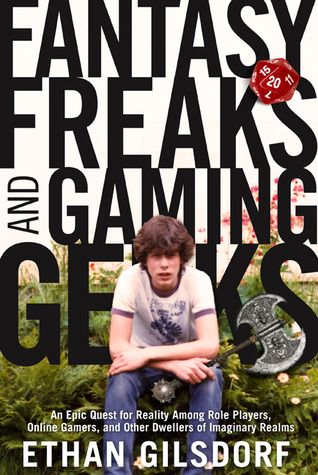
Fantasy Freaks and Gaming Geeks: An Epic Quest for Reality Among Role Players, Online Gamers, and Other Dwellers of Imaginary Realms by Ethan Gilsdorf

Fantasy Freaks and Gaming Geeks: An Epic Quest for Reality Among Role Players, Online Gamers, and Other Dwellers of Imaginary Realms  by Ethan Gilsdorf
fantasyfreaks

Ethan Gilsdorf carried angst about his gaming habits for various reasons for years. This book could have been a healing for him, but he doesn’t seem to take that leap.

It made me sad. Yes, perhaps the start of his DnD experience coincided with his mother’s illness, but I think that was not the only reason why he entered the world of fantasy.

Some people are born wanting to see worlds beyond this one. Why that is, I don’t know. I just know that it is so. Ethan suggests, in Fantasy Freaks and Gaming Geeks, that it takes trauma to send a person in that direction, I disagree. I think some of us were born that way. 🙂

The content of the book is excellent. He travels from the UK to New Zealand and everywhere inbetween to find people who are engaging in LARPS, SCA, Tolkien, gamer conventions, Worlds of Warcraft, EverQuest, and more.

I loved his interviews with the man/woman on the street. He’d ask why they were doing whatever it was they were doing and they’d answer with conviction. There’s something very satisfying in reading personal statements by passionate people.

The enthusiasm nearly drips from the pages. I loved that.

I was hoping that Ethan would learn from all of these people who absolutely loved what they were doing with no regrets. But, he seemed to go to his default mode of judging and self-pity rather than expansion.

Ethan made some steps towards self realization at the end of the book, but I wish he had gone further.

If you enjoy this book or topic, may I suggest Of Dice and Men: The Story of Dungeons & Dragons and the People Who Play It. It’s a non-fiction read about Dungeons and Dragons. It lacks the comprehensive nature of Fantasy Freaks and Gaming Geeks, but David Ewalt carries none of the emotional baggage of Ethan Gilsdorf so it feels more light-hearted.

Thanks for reading!

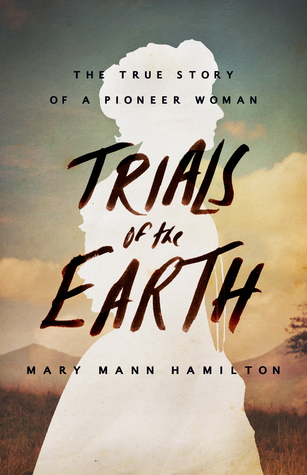
Trials of the Earth: The True Story of a Pioneer Woman by Mary Mann Hamilton

Trials of the Earth: The True Story of a Pioneer Woman by Mary Mann Hamilton
trials of the earth

Trials of the Earth is Mary Mann Hamilton’s memoir about her hardscrabble life in America during the late 1800’s.

She uses period speech to illuminate a life of struggle and hard work. If certain anachronistic and racially insensitive terms bother you, especially the casual use of the N-word, you may want to chose another memoir. It was shocking but I kept reminding myself that Mary was a product of her times.

On top of the constant struggle of putting food on the table and keeping a roof over her head, it seems like she was perpetually pregnant and her husband was an alcoholic.

But Mary lived up to the challenges, raised and buried children, nursed her husband through his hangovers and illnesses- she was a survivor. That is mainly what Trials of the Earth was to me- a survival story.

“Nevertheless, this is not a book of repining; it is a tale simply told of what one woman has lived through in the Mississippi Delta. I say ‘lived through’ because at times this history reads like a record of the extreme limits of human endurance.” loc 75, introduction

So many of the modern conveniences that we take for granted didn’t exist. Mary moved around a lot and notes with relief every time her husband manages to install a pump in her new house so that she didn’t have to haul water from the river.

Mary’s relationship with her husband, Frank, isn’t a fair deal. She is a very young woman when she gets married and from the start he’s controlling- telling her what they will eat and what friends they will have. He even tells her what books she can read.

Photo by Gaspar Zaldo on Pexels.com

That would have been the last straw for me. But again, she was a woman of her times.

“To me he seemed like a man that had taken a silly child to raise rather than a wife. … As time went on I found there were plenty other things I didn’t know, too. The first thing I found out was that he drank.” loc 226, ebook.

In addition to the inequality in their relationship, Frank is from England and has a secret past. He won’t tell Mary, his own wife, his real name or talk about his circumstances or the family he left behind. But, Mary doesn’t let it bother her too much. I suppose she was too busy with everything else they had going on. That lack of trust would have driven me bonkers.

Not that she felt like anything was wrong with their relationship. “Women can stand more work, more trouble, and more religion than men.” loc 528, ebook. She accepted the hardships because she knew that she could. I admire her gumption but I also felt sad for her too. I felt sad because she didn’t have the option to live any other sort of life.

Frank is always talking about the sin of Eve and all the baggage that comes with it to Mary. There is a lot of mansplaining that goes on too. Parts of this book were infuriating to me.

Recommended for readers who enjoy memoirs that read like historical fiction. Ability to tolerate the bleak role that women occupied in society in the late 1800’s is a must.

Thank you to NetGalley and Little, Brown and Company for a free advance reader’s copy of this book. Reminder: some of the quotations in this review may change in the final printed copy.

Thanks for reading!