Heidi’s 2017 Year-end Review

It’s the last day of 2017! As usual, this year I’ve enjoyed an eclectic mix of fiction and non-fiction.

I had a lot less time to read this year because of my full-time job, but I surprised myself with how many I was able to get through.

I’d like to take a moment to say thank you to all of my friends here on WordPress and Goodreads. Reading and reviewing wouldn’t be nearly as fun without all of you.

And without further ado, here’s my end-of-the-year book recommendations:

Total books read: 165

Overall favorite: Annihilation by Jeff VanderMeer

Non-Fiction: Inspired!: True Stories Behind Famous Art, Literature, Music, and Film by Maria Bukhonina or When Bad Things Happen to Good People by Harold S. Kushner.

Favorite Book Club Pick: Dark Matter by Blake Crouch (Good work, Kathy!)

Best Fantasy: Life After Life by Kate Atkinson (I did not like the sequel, but this book was excellent.)

Funniest Self Help: How to Be Ultra Spiritual: 12 1/2 Steps to Spiritual Superiority by J.P. Sears or How to Be Happy, Dammit: A Cynic’s Guide to Spiritual Happiness by Karen Salmansohn.

Book I Thought I Wouldn’t Like but Did: Heartless by Marissa Meyer

Book I Thought I Would Like but Didn’t: The Shadow of the Wind by Carlos Ruiz Zafón

Most Overrated: Paper Princess by Erin Watt

Most Disturbing: Gather the Daughters by Jennie Melamed (fiction) or The Only Girl in the World: A Memoir by Maude Julien (non-fiction).

Most Inspirational: The Four Agreements: A Practical Guide to Personal Freedom by Miguel Ruiz or Year of Yes: How to Dance It Out, Stand In the Sun and Be Your Own Person by Shonda Rhimes (memoir).

Most Far-Out: Surviving Death: Evidence of the Afterlife by Leslie Kean or A Field Guide to Lucid Dreaming: Mastering the Art of Oneironautics by Dylan Tuccillo.

Nerdiest Read: Level Up Your Life: How to Unlock Adventure and Happiness by Becoming the Hero of Your Own Story by Steve Kamb.

Most Depressing but Worth It: Night by Elie Wiesel (non-fiction) or Year of Wonders by Geraldine Brooks (fiction).

Book about books: Bizarre Books by Russell Ash, Brian Lake.

Classic I Should Have Read Before but Hadn’t: Animal Farm by George Orwell and Fahrenheit 451 by Ray Bradbury (read a bunch of classics this year, these were my top two).

Best Graphic Novel: Lumberjanes, Vol. 1: Beware the Kitten Holy by Noelle Stevenson (This whole series is a lot of fun.)

Strong Female Role Model: #GIRLBOSS by Sophia Amoruso (non-fiction) or Mistress of the Art of Death by Ariana Franklin (fiction).

Best Book about Music: Vivaldi’s Virgins by Barbara Quick (fiction) or Instrumental: A Memoir of Madness, Medication and Music by James Rhodes (non-fiction, very dark).

Best Book about Trivia: Fox Tossing, Octopus Wrestling and Other Forgotten Sports by Edward Brooke-Hitching.

Best Memoir: What I Talk About When I Talk About Running by Haruki Murakami.

Best Book about a Foodie: Born Round: The Secret History of a Full-time Eater by Frank Bruni

Best Historical Fiction: The Confessions of Young Nero by Margaret George or Wolf Hall by Hilary Mantel.

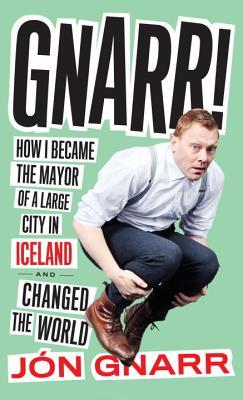
Best political: Gnarr: How I Became the Mayor of a Large City in Iceland and Changed the World by Jón Gnarr

Work-related: Linchpin: Are You Indispensable? by Seth Godin.

Family-related: How Not to Hate Your Husband After Kids by Jancee Dunn.

Happy New Year, my friends. And, happy reading, to all of you.
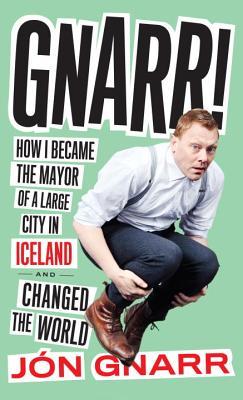
Gnarr: How I Became the Mayor of a Large City in Iceland and Changed the World by Jón Gnarr

Gnarr: How I Became the Mayor of a Large City in Iceland and Changed the World by Jón Gnarr
gnarr

Jon Gnarr ran for mayor of the largest city in Iceland not because he had experience as a politician, but because he was a comic and was, at first, poking fun at the system. But then, he realized that politics as usual was getting his country no where. So, he took the election seriously. Imagine his surprise when he won.

“Leo Tolstoy once said, ‘Everyone wants to change the world, but no one wants to change himself.’ But I feel that I have changed myself. I’ve done my homework. And next I want to try- just try, mind you!- to change the world. pg 6-7, ebook.

Iceland is unique in that it has a very small population of around 330,000 people. That’s about the equivalent of Santa Ana, California, or Corpus Christi, Texas. In other words, it’s not that big of a place.

Photo by S Migaj on Pexels.com

“The most famous Icelander is Bjork. … Abroad, she constantly has to flee from fans and journalists who pursue her into every little corner, while in Iceland you run into her in the pool, on the bus, or in the shops. In general, she’s left alone. In Iceland I was famous by the time I was fourteen. I was a fourteen-year-old with a Mohawk and a ring through his nose, and this too was news.” pg 13-14, ebook.

Here’s the scene: Iceland is quite small, the entire country was in an uproar because of the banking collapse, and the people were more than ready for change. But, Jon Gnarr was not ready for politics.

“Thanks to Dad, the newspapers, and the constant discussions broadcast on radio and television, I developed an aversion to politics. Politics was dumb, irritating, and boring. pg 23, ebook.

Photo by Dmitry Demidov on Pexels.com

A self-described ‘peaceful anarchist’, Gnarr was a comic and showman. He created The Best Party as a joke. But, somewhere along the line, the joke became a reality.

“Do you have to understand something down to the last detail before you can contribute to it? Do you have to be a scientist to become interested in science? … No. And it’s no different with politics. You don’t need to be a politician to have the right to participate in political life.” pg 41, ebook.

Even though he started to take the race seriously, Gnarr never took himself too seriously. And it worked.

“Every time another party made any election promises, we sat down together and discussed how we could top them. The Left-Green Alliance promised children and teens free access to swimming pools- our response was to offer free admission for all- with free towels included.” pg 54, ebook.

By not playing politics as usual, Gnarr and The Best Party won. I think he shows what’s possible when people bring a sense of humor and a desire to do good to the table. I think we can accomplish great things.

It just takes someone with a smidgen of imagination and a willingness to try.

Recommended for anyone who’s tired with politics as usual and for all the peaceful anarchists of the world.

Thanks for reading!

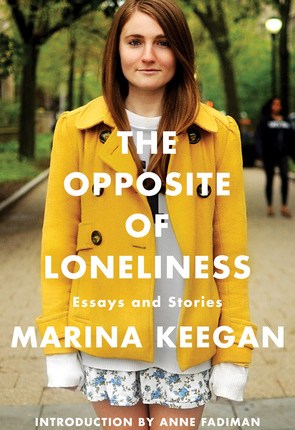
The Opposite of Loneliness: Essays and Stories by Marina Keegan

The Opposite of Loneliness: Essays and Stories by Marina Keegan

The Opposite of Loneliness is an excellent collection of fiction and non-fiction essays by Marina Keegan, a Yale student who died in a car wreck a couple days after she graduated from college.

Photo by Pixabay on Pexels.com

My favorite essay out of the bunch is “Against the Grain” pg 157 where she discusses her Celiac disease and the negative effect that that had on her mother.

She expresses frustration with how ridiculously protective her mother became when they were finally able to figure out what was wrong. She talks about being embarrassed at holidays as her mom cooked separate pies just for her or at field trips when her mother brought along special snacks.

But then, she reveals how she saw an internet article about how having Celiac disease could negatively effect the fetus when the sufferer becomes pregnant… and it’s a light bulb moment for Marina. She suddenly understands that feeling, how she would do anything to protect that other person, her baby, and suddenly her mom’s behavior doesn’t seem all that crazy after all.

Photo by Pixabay on Pexels.com

Of course, the absolutely heartbreaking moment for the reader is realizing that this particular dream will never come to fruition for Marina, but the fact that she even had that “ah-ha” moment is so powerful.

Marina’s writing highlights the sometimes indescribable feelings of daily life in such a powerful way.

For example: “My dog let out a small howl, twigs cracked in the woods, and something about the stillness or my state of mind reminded me of the world’s remarkable capacity to carry on in every place at once.”pg 34 I always had that feeling towards the end of the semester during college.

You’d work at this frantic pace, not giving a thought about your family or friends at home, then somehow in the lull between the final and actually going home, it would occur to me to wonder how my sisters had been for the last ten weeks or what my high school buddies had been up to.

I’d also forgotten that the world “carr(ies) on in every place at once.” Loved that sentiment.

Photo by Andrea Piacquadio on Pexels.com

“I worry sometimes that humans are afraid of helping humans.”pg 153 I worry about that too.

In that essay, Marina is talking about helping to save whales that were beached near her home. She talks about the time, effort, and money that is spent without consideration for the fact that only so many of the whales will actually be saved.

Then, when these whale rescuers go home, they do so without a backward glance towards the homeless on the streets, who are just as “beached” as the whales that they’ve been caring for all day.

“You feel like so many people are doing it and talking about it all the time like it’s interesting, so you start to wonder if maybe it really is.” pg 190.

Photo by Tomas Anunziata on Pexels.com

Marine was writing about how 25 percent of Yale graduates go immediately into banking or consulting positions that have absolutely nothing to do with their long term goals, but provide a quick paycheck in the short term.

Will they ever realize their dreams? If they make enough money, will they even care?

Life is about more than a paycheck. Marine Keegan knew that and her life had barely begun.

If you enjoyed The Opposite of Loneliness, I’d suggest Cool, Calm & Contentious, an excellent and serious collection of essays about life, or Zombie Spaceship Wasteland, a comedic collection of essays about life that are surprisingly insightful.

Thanks for reading!

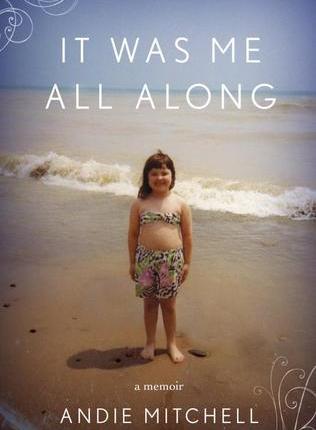
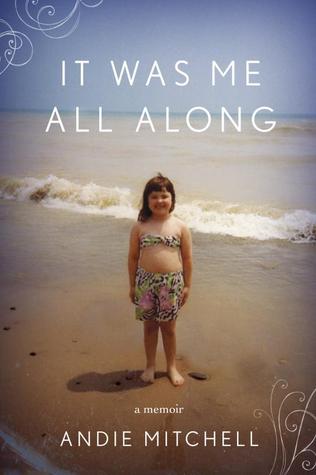
It Was Me All Along by Andie Mitchell

It Was Me All Along by Andie Mitchell
itwasme

Andie Mitchell used food to entertain and provide comfort for herself during a childhood with an artistic but alcoholic father and absent (because she was working three or four jobs) mother. This is her journey through the rocky early years and realization that if she didn’t lose the weight, she was going to suffering serious health problems for the rest of her life.

“What begins as hating the cake for all its multiple layers of luscious temptation spirals quickly into hating myself and all my fat cells. I let myself down. I lament not having more control. pg 15, ebook.

Andie’s overeating starts during her childhood. Her mother went to work on the weekends and her father drank all night and slept most of the morning, leaving Andie to her own devices, which were mainly sugared cereal and cartoons.

Photo by Tijana Drndarski on Pexels.com

I’d pull the box down and go about fetching a bow, a soup spoon, and the whole-milk carton from the fridge. I’d fill the bowl- cereal bobbing in milk to the rim- and make my way to the parlor. There I’d turn on the television and begin what would be hours of watching my favorite cartoons. One cereal bowl would empty without my noticing, and I’d replace it.” pg 27-28, ebook.

So, the loneliness was one of the reasons why she ate. The other was her father was emotionally abusive. She witnessed terrible scenes of him screaming at her mother and brother (Anthony). Andie internalized it and ate away her feelings.

If (my mother) fought back, (my father) roared louder. Or he’d throw something she loved across the room. But those were not the times my chubby body trembled. Those weren’t the times when my spirit split like the walls of our house. No, it was only when Anthony entered the room, when I heard his small voice try desperately to make itself bigger and less boyish, that the pit of my stomach twisted so violently, I couldn’t tell if I was hungry or about to be sick.” pg 36, ebook.

Photo by Engin Akyurt on Pexels.com

Andie’s mother loves her unconditionally, even when the doctor tells Andie that she needs to lose weight or things are going to get really bad for her. But, when Andie goes away to college, and her mother sees her again for the first time, she can’t hide her surprise at how large her daughter has become. And it is really painful for Andie.

“Until that day, that moment when I felt like a stranger in her eyes, she had been my sole source of comfort. She was the one who loved me unconditionally, who saw me as beautiful regardless. In the past when she noticed my weight, her worry seemed entirely empathetic, a way of loving me in my struggle. Now, it seemed grave.” pg 99, ebook.

Anyone who has struggled with their weight will find something to empathize with in Andie’s book. She wants to be fit, but she doesn’t know how to either eat or exercise in moderation.

Her journey may teach, encourage and cheer others on their way to a smaller size. Andie has been there and knows the daily struggles.

Thanks for reading!

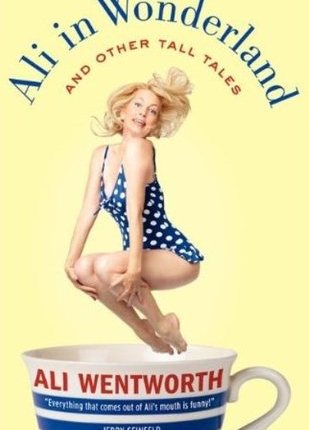
Ali in Wonderland: And Other Tall Tales by Ali Wentworth

Ali in Wonderland: And Other Tall Tales  by Ali Wentworth
aliinwonderland

Ali in Wonderland is Ali Wentworth‘s collection of stories from her childhood in Washington D.C. with her mother and stepfather all the way to her marriage and becoming a mother herself.

Ali is at her best when she’s remembering teenage hi-jinks. Some of her memories with her sister and boarding school pals are hysterical.

Other stories are terrifying. Ali recounts walking to her car one night and being accosted by a gang. Or there was the time she hitched a ride with a man who was apparently very drunk.

But, once Ali moves from her childhood into adulthood, this memoir loses some of its luster.

The chapters about meeting her husband for the first time, barfing continuously during pregnancy and why her children are special don’t have the same draw as the rest of the tales.

Maybe she started to run out of ideas? I don’t know. But the last few chapters felt tacked on to me.

Only recommended for big fans of Ali Wentworth. Side note: the author reads the audiobook herself.

Thanks for reading!

#GIRLBOSS by Sophia Amoruso

#GIRLBOSS by Sophia Amoruso

#GIRLBOSS is Sophia Amoruso’s story about her wild childhood, unlikely and extraordinarily successful business venture and her treatise on how to be yourself and bring what is unique to you to your professional life.

I googled Sophia after I finished this book and was dismayed to discover she has declared bankruptcy.

It seems she still has a successful motivational speaker program going on, but, for whatever reason, her business hasn’t worked out.

I suspect, she will land on her feet and start again. That is a large part of the philosophy contained in #GIRLBOSS.

Photo by Sam Lion from Pexels

“In about eight years, I went from a broke, anarchist ‘freegan’ dead set on smashing the system to a millionaire businesswoman who today is as at home in the boardroom as she is in the dressing room. I never intended to be a role model, but there are parts of my story, and the lessons I’ve learned from it, that I want to share.” pg 23, ebook.

Sophia believes in being yourself. Let your freak flag fly. Embrace your weirdness- because that is what ultimately makes you great.

“#GIRLBOSS is a feminist book, and Nasty Gal is a feminist brand in the sense that I encourage you, as a girl, to be who you are and do what you want. Being a Girlboss is as much about being the boss of your career as it is of your home.” pg 29, ebook.

Photo by Skylar Kang from Pexels

Between Sophia’s business tips and memoir, she includes quotations. Such as: “It was the straying that found the path direct – Austin Osman Spare.” pg 56

In her case, that was absolutely true. Sophia wanted a job where she didn’t have to work and could get paid for doing, essentially, nothing.

She found that job and surfed the internet most of the time. In doing so, she studied online communities like MySpace and eBay and concluded that she could network and sell items with the best of them.

And she did.

Photo by cottonbro from Pexels

Sophia is a believer in creating your own reality: “… there’s also the everyday kind of magic that we make for ourselves. And that’s really not magic at all. It’s just recognizing the fact that we control our thoughts and our thoughts control our lives. This is an extremely simple, totally straightforward concept, but for a lot of people, it’s so alien that it might as well be magic.” ebook, pg 109.

Sophia, like Obi Wan Kenobi, does not believe in luck. She believes in hard work, action and selective focus.

“Focus on the positive things in your life and you’ll be shocked at how many more positive things start happening. But before you start to think you just got lucky, remember that it’s magic, and you made it yourself.” ebook, pg 115.

Come bankruptcies and whatever else, I believe Sophia Amoruso will be just fine. Don’t you? 🙂

And have you watched the #GIRLBOSS series on Netflix? I did and it didn’t appeal to me as much as this book did. Not recommended.

Thanks for reading!

The Only Girl in the World: A Memoir by Maude Julien

The Only Girl in the World: A Memoir by Maude Julien
onlygirl

The Only Girl in the World is an extraordinary memoir about madness, control and the survival of horrific childhood abuse.

Maude Julien’s father Louis chose his future wife and mother of his child, Jeannine, when she was only six and he was 34. He became Jeannine’s guardian by promising her family that he would provide her with a quality education.

Then: “Twenty-two years after he took possession of Jeannine, Louis Didier decided the time had come for her to bring his daughter into the world… Louis Didier liquidated his assets, bought a house near Cassel, between Lille and Dunkirk, and withdrew to live there… to devote himself entirely to carrying out the project he had devised back in 1936: to make his child a superhuman being. That child was me.” loc 73, ebook.

Unfortunately, to “make his child a superhuman” involved leaving her alone in a dark, rat-infested basement, sleeping in a room without heat, eating stale bread, practicing music for 12 or more hours a day and being entirely separated from any other children her age.

That’s where Maude got the title of this memoir: The Only Girl in the World

I have not read a childhood account this disturbing since A Child Called It by Dave Pelzer.

Maude’s father was unhinged. “My father is convinced that the mind can achieve anything. Absolutely anything: it can overcome every danger and conquer every obstacle. But to do this requires long, rigorous training away from the impurities of this dirty world.” loc 247, ebook.

Photo by Marcelo Jaboo on Pexels.com

He asks Maude to do things he cannot do like perform somersaults or swim in freezing water. He shows no affection to either his child or his wife.

Louis makes the females of the house wait on him as if he is an invalid. He makes his child hold a chamber pot each morning while he empties his bladder.

He’s a controlling monster.

Louis has strange beliefs about water and soap removing the body’s immunities so he insists that Maude only bathes once a week or less. And, when she is finally given the opportunity to bathe, she must use his dirty bathwater to “take strength from him.”

Photo by Sora Shimazaki on Pexels.com

And she can’t count on protection from her mother, who was groomed by Louis to do anything he asks of her. Jeannine actually blames Maude for Louis taking them to live in the middle of nowhere. It is very sad.

Maude’s only friends are her pets, whom her father abuses as much as he hurts Maude. “Can an animal teach a person about happiness? In the depth of my despair, I am fortunate to have this incredible source of joy.” loc 685, ebook.

Even worse, Maude is abused by the few adults Louis allows in their lives. (Trigger warnings for those who were sexually or physically abused as children.)

Though incredibly disturbing, The Only Girl in the World is ultimately a story of survival against all odds. The human spirit is incredibly resilient as Maude’s tale illustrates.

Photo by Pixabay on Pexels.com

Perhaps she is more superhuman than even she realizes. Highly recommended.

Thank you to NetGalley for a free digital copy of this book.

Thank you for reading!

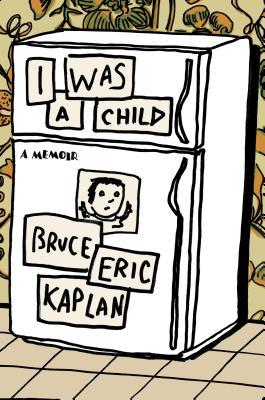
I Was a Child by Bruce Eric Kaplan

I Was a Child by Bruce Eric Kaplan
iwasachild

I Was a Child is Bruce Eric Kaplan’s (BEK) memoir and is written in a stream-of-consciousness style with small, hand-drawn cartoons interspersed throughout the text. Each blurb is a recollection of an event, time, television show, piece of furniture in the house, anything and everything from BEK’s childhood.

I’m not familiar with BEK’s work but his bio talks about his cartoons appearing in The New Yorker. I can see why he’s so popular.

The drawings are simple but somehow manage to convey a great depth of emotion and meaning.

They reminded me of the small drawings in Roald Dahl‘s books. I looked up the illustrator for those and Google tells me it’s Quentin Blake.

Both share a sparse, black-line look with no color to bright up the design. However, there’s something very powerful about the pictures… it’s hard to describe.

I Was A Child may be a book that one has to read to really experience what it’s all about.

I’m not as old as the author, but I connected with many of his memories because, despite what other people may tell you, we were all children once.

This memoir is quite unique but if you like it, you may want to try Today is the Last Day of the Rest of Your Life. It is more of a graphic novel than this, but it is also a memoir about growing up and change that is drawn with simplistic black and white panels.

I received a free advanced reader’s copy of this book through Goodreads First Reads. FTC guidelines: check!

Thanks for reading!

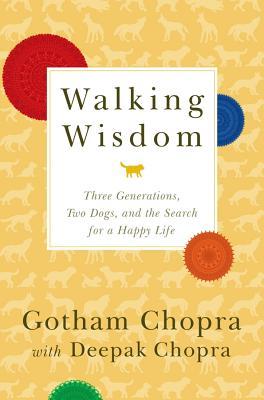
Walking Wisdom: Three Generations, Two Dogs, and the Search for a Happy Life by Gotham Chopra

Walking Wisdom: Three Generations, Two Dogs, and the Search for a Happy Life by Gotham Chopra

Gotham Chopra, the son of Deepak Chopra, shares what he has learned through the ownership of his crazy dog, Cleo, and becoming a father for the first time. He also deepens his relationship with his own father when his mother has to spend an extended time away in India.

It’s a hodgepodge of a book with the themes differing from chapter to chapter. I generally enjoyed it but felt like it was a bit scattered.

Photo by Spoortesh Honey on Pexels.com

I remembered Gotham from all of the Channel One news I watched during junior high and high school. I thought it was a waste of time (even then, I would have rather been reading), but I remembered him.

A few years ago, I watched the documentary he made about when his father joined a monastery- he mentions this at the end of Walking Wisdom. I was intrigued by the dynamic between them in the documentary.

Gotham seemed to focus on his father’s foibles, like his addiction to his phone and his frequent trips to Starbucks. I thought those parts were unfair, but the window into his strange, spiritual/rock star world was one I couldn’t forget.

Photo by Maksim Goncharenok on Pexels.com

My favorite parts of this book were similar to that documentary. I loved learning about Gotham and Deepak’s close friendship with Michael Jackson. The best part was when Gotham brought his pup, Cleo, to meet the mega-star. It’s very surreal.

I also liked learning about how Deepak’s family handles his active mind and constant spiritual seeking. Gotham describes being his father’s “guinea pig” for different experiments from meditation to yoga to spoon-bending.

Gotham’s non-traditional upbringing gave him a quirky lens through which he views the world. It also has made him a master meditator.

Recommended for dog lovers and those curious about what goes on behind the scenes of Deepak Chopra’s life. If you can’t stand books that skip from one topic to another, you may want to choose a different read.

Thanks for reading!