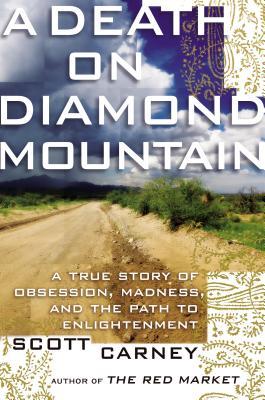
In A Death on Diamond Mountain, Scott Carney has crafted an excellent examination of an untimely death, cult-like Buddhist practices, madness along the spiritual journey, and the dangers of extreme religious practices like multi-year, silent meditation retreats and fasting.
He also provides not only extensive backgrounds for all of the main actors in this tragedy, but also a dissection of the birth of Eastern philosophy in the West, including many different religions and belief systems.
This is the first non-fiction book that I’ve ever read that discusses potential negative effects of meditation.
In this eye-opening analysis, Carney talks about potential research bias in meditation studies. He mentions researchers habitually attributing consistently positive results to meditation and reporting any negative results as pre-existing conditions in the practitioners rather than a side effect of the practice itself.
I think that this is an indication that moderation in all things, including meditation, may be the best way forward. I was unaware of the potential, catastrophic consequences of abusing traditional spiritual methods.
The sad thing is that the tragedy detailed in this book could have been prevented.
The death of Ian Thornson reads like a soap opera.
Carney has written these dysfunctional yet charismatic people with such skill that their personalities almost leap off the page.
I pitied Ian’s mother while reading about her struggles to extract her son from what she felt sure was a cult. Then, when his spiritual search eventually killed him, I can’t imagine the pain that she went through.
I’m certain that any mother would be proud for her child to exhibit the sort of spiritual drive that Ian had, however, the extremes that he took it too were obviously unhealthy. Again, it appears that moderation is the key to success.
Readers who enjoy non-fictional survival stories like Into the Wild may enjoy A Death on Diamond Mountain.
This book could also appeal to readers who enjoy learning about Buddhist philosophy or meditation methods. It is a shining example of how not to proceed on the spiritual path.
Thanks for reading! I received a free copy of this book through Goodreads First Reads.
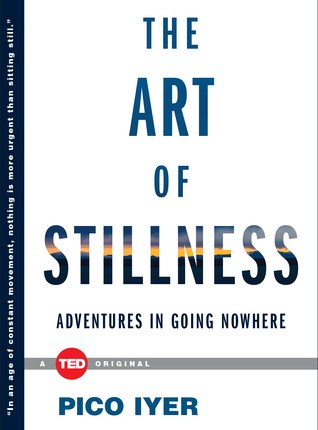
Pico Iyer approaches stillness from a Buddhist perspective in “The Art of Stillness.”
“And it’s only by going nowhere- by sitting still or letting my mind relax- that I find that the thoughts that come to me unbidden are far fresher and more imaginative than the ones I consciously seek out.” pg 62.
It’s not a world that most people are accustomed to experiencing, a space of being rather than an active doing. But, as Iyer so succinctly illustrates, it’s a realm that our fast-paced and technology addicted world desperately needs.
To venture into this emptiness is a restful and required experience for the health of the mind as much as inspired action is necessary for the experience of a fulfilling life.
I think that our culture has forgotten the power of stillness and the beauty of balancing our male and female energies. This book is an excellent reminder to appreciate both.
For those folks out there who haven’t heard Pico Iyer’s TED talk on this topic, I would recommend that you watch it first, then read this.
I read this and then I listened to the talk. Almost all 18 minutes of it were taken verbatim from The Art of Stillness. So, you’ll enjoy it more, I believe, if you do the opposite of what I did.
My big takeaway from this was the idea of air travel as “a retreat in the sky” pg 56. I dislike flying to the point where I tend to reach my destination exhausted and ready to return home the moment I land.
I think if I could successfully adopt the process that Iyer describes of treating the flight as a “meditative retreat” that I could change my experience of air travel from a nightmare into a restful pause.
There are many large ideas like that contained within this small book.
For the right person at the right time, The Art of Stillness could change her life. As Iyer says, The Art of Stillness doesn’t contain any “new” ideas but they are powerful and much needed ones.
Readers who are short on time, but big on stress may really love this book.
I received a free copy of this book through Goodreads First Reads. FTC guidelines: check!
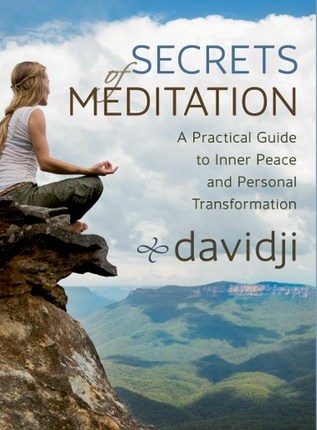
Secrets of Meditation is one of the clearest and beginner friendly meditation manuals that I’ve ever read.
Davidji breaks practices down not only into type and step-by-step instructions with examples, but also by lineage and development over time and place.
Davidji provides enough background on himself to establish his bona fides but not so much as to overpower the instruction with meaningless chatter about himself.
He intersperses the text with helpful advice, additional authors to explore, and a myriad of ways to connect with him online for some meditation freebies.
Though it’s clear that he’s immersed himself in Eastern culture and practices (having traveled extensively in the East and studied under various gurus), Davidji hasn’t adopted an insider’s way of talking about meditation.
Sometimes, and maybe this is just me, it feels like meditation instructors go so far out into the “oneness” that they never come back fully into the real world. That’s not Davidji at all. I loved this text mainly because of how he could keep one foot “over there” and the other firmly planted “back here”.
Admittedly, my daily meditation practice has lately fallen somewhat on my priority list. This book makes me want to head back to the mat.
And also, Seeking Heaven. Eben Alexander is a neurosurgeon who had a near death experience turned it into guided meditations. I think they’re easy enough for beginners to use.
Dan Harris had problems, like all of us, but unlike all of us, he was beginning to experience some of the messier symptoms of his dysfunctional inner world in front of millions of people.
He sought help and jumped into the meditation world with both feet. I think its why most people find their way into spiritual practices- something isn’t working quite right in their life and they need to change from the inside out. So, they look for a process of inner change and run smack into meditation.
However, Dan isn’t drinking the kool-aid of the new age movement. He questions every practice for its practical benefits and searches for scientific experimentation to back up those benefits.
In essence, he brings the investigative skills that he applies to his job as a news anchor to the practice of meditation and it’s a delight to read.
I loved this. Dan had the same initial reaction to Eckhart Tolle and Deepak Chopra that I did. One of them seems too mellow to be real and the other seems to market himself too well to be that spiritual.
Over time, I’ve come to love both of those authors/gurus for their wisdom, but they are both just out of this world. Harris isn’t afraid to point that out.
In conclusion, I’d recommend 10% Happier to anyone who wants to become 10% happier- isn’t that all of us?
Also, anyone who has read Eckhart Tolle or Deepak Chopra may also enjoy this, if only for the surprisingly accurate descriptions of their foibles. Anyone who wants to try meditation but feels like they don’t have time, couldn’t do it if they tried, or doesn’t know where to start may find some inspiration from this book.
And, finally, anyone who is fed up with the hippie-dippie-trippie feeling that most spiritual memoirs give them, will find a kindred soul in Dan Harris.
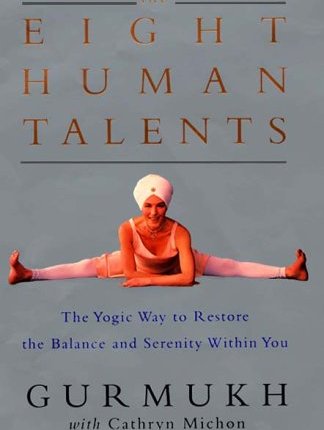
The Eight Human Talents is part-story and part-instruction manual for the practice of Kundalini yoga. I’ve only ever practiced hatha yoga and this is very different from what I’ve learned. I’ve tried a couple poses and this is definitely going to take some practice.
If I learned anything from this book, it is to breathe deeply. One of Gurmukh’s main points is that by connecting with the breath, we reconnect with ourselves.
Also, don’t be afraid to try, even if you fail. “If we can make one step towards happiness, towards healing, towards change, miracles begin to happen. The Kundalini Yoga and Meditation in this book are a way of making those small steps towards happiness. If you will try even one thing from this book-one breathing exercise, one stretch, one meditation- know that somewhere I am cheering right out loud for you, because I know that making that first step is the hardest thing to do…” introduction, xxii.
Some of Gurmukh’s stories were saccharine sweet, but I enjoyed most of them. “We are powerless over every other person on the planet, and we only have power over our own lives. No matter how problematic the people in your life are, you are always the solution.” pg 125.
I’ll have to get back to you on if these exercises deliver on the myriad of promises that Gurmukh makes. So far, I’ve discovered that my lower back needs to be strengthened and I should work on my neck flexibility.
She ties all of her suggested poses to different chakras and energies found within the body. If that concept is too far out for you, you may be better served with a different introduction to Kundalini yoga.
Recommended for beginners to moderately experienced practitioners.
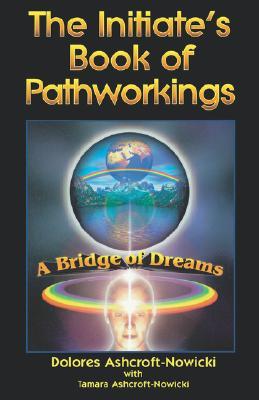
Dolores Ashcroft-Nowicki shares meditations which she calls pathworkings as a method of self actualization.
I understand that directed pathworkings are an actual technique that has been used by mystery schools for centuries to explore consciousness. I just don’t see its usefulness beyond a sort of tourist trip through what “may” be in your mind rather than what “is”.
Let’s compare it to riding a bike. Directed pathworkings are like watching a video of someone riding a bike. Passive pathworkings are like hopping on that bike and riding it all over your neighborhood. You get the visceral experience of being there.
If you’ve never ridden a bike before, watching the video might be safer, but it certainly isn’t more fun.
If we look at the Initiate’s Book of Pathworking as a journal of an adept’s inner work, it feels rather rehearsed and stilted as opposed to the out of body work that was chronicled in Multidimensional Man by Jurgen Ziewe.
If we consider the different approaches between Ashcroft-Nowicki and Ziewe, it also makes more sense that these pathworkings have a clear beginning, middle, and end as opposed to Ziewe’s offerings which are more like real life: random and, at times, nonsensical.
Because (I’m assuming) an adept from The Servants of Light School created these pathworkings through actual experiences on the inner planes, it has the curious side effect of unfolding like a structured lesson plan.
In Nick Ferrell’s book, Magical Pathworking, he discusses the importance of writing pathworkings like a story with a beginning, middle, and end for its consciousness shaping potential, but he never talks about how naturally occurring pathworkings or passive pathworkings, present themselves in that manner, organically. At least, that has been my experience.
I suspect that mystery schools experienced some pathworkings through their consciousness research, recorded the patterns that occur, and then sought to imitate that inner perfection by scripting pathworkings like the ones found in this book.
There is value to be found in this book as it provides a nice introduction to pathworking in general: “What is a pathworking? It is similar to a virtual reality trip. Pathworkings are perfectly natural and can occur spontaneously in the form of daydreams. Used as a structured series of visualizations, they hold many possibilities for the student.” Introduction, pg x
I found some of this book silly like the Healing Spring (Women only) pathworking on page 61. Women only? We’re dealing with consciousness here which is neither male or female, but pure being. If a guy wants to run the Healing Spring pathworking, I’m not going to be the one to say no.
Some of the poetry in the pathworkings is very beautiful and felt authentic, which again made me wonder who wrote these for the SOL. W.E. Butler? Dion Fortune? So curious:
“Forest Lord, with twelve-tined crown, Now we come to bed thee down. Rest content when sleeping deep, Leave the Summer Queen to weep.
Rest thee well till comes the Spring When harebells in the wood do ring; Then rouse thee up the maid to wed And seek the joy of the greenwood bed.
Hunter, blessed be thy sleep; Choose a maid thy bed to keep. Dreams of silver, dreams of gold Will guard against the winter’s cold.” pg 190
To give you a comparison, here is a chant from some pixies in a passive pathworking that I experienced a couple of months ago:
“Awake the trees, awake the night, awake the shining moon. Feed the plants, free the life that dwells within the bloom. To keep the forest growing tall, the pixie people sing, We bring the song and dance the call to wake the Forest King.
Awake the night, awake the moon, awake the powers old, We’re the ones that call upon the Spirit of the fold. Dance the dance, sing the songs, make the forest wake, In our stead, these plants have fed the thirst that never slakes.
Feels very similar, yes? That’s the fascinating thing about consciousness research to me. It feels so familiar but, at the same time, infinitely unknown.
It’s just my opinion but, I think, in addition to space, our own minds are the next frontier of human exploration.
“These “serial” workings will grow with you as you explore them, and can bring about many strange events, both in your astral life and in your physical existence. They are more potent than they seem, so take them slowly.” pg 214. One a week has worked pretty well for me. I feel like I’m learning and growing but not being overwhelmed by the changes.
A dated portion of this book that I found rather amusing, especially since the recent kerfluffle over the year 2012: “As the year 2000 comes ever closer, speculation as to the future of the world gets wilder. Exactly the same kind of hysteria hit the known world in the year 1000… The year 2000 will usher in a time of adventure, opportunity, and yes, a lot of changes. But we will survive. Things may be very different a hundred years from now, but we have survived big changes before and will do so again.” pg 231 Amen.
“One of the things an initiate learns is that every man and woman is essentially a “multi-versal” being. That is, we exist simultaneously in many dimensions and parallel universes. We have a consciousness in each one, a life in each one, a purpose and destiny in each one. But each is minutely different. With every passing moment in time, we change our future in each universe by constantly making decisions that affect the course of that future.” pg 240. I don’t know that I agree with everything in that passage, but isn’t it a beautiful view of reality? Layers within layers of truth, all interacting and changing each other, eternally.
If you liked the guided pathworkings in this book, you may want to read: Magical Pathworking: Techniques of Active Imagination by Nick Farrell, Pathworking and the Tree of Life: A Qabala Guide to Empowerment & Initiation by Ted Andrews, or the second half of A Garden of Pomegranates: Skrying on the Tree of Life by Israel Regardie. If you want examples of (mostly) passive, out of body experiences, read: Multidimensional Man by Jurgen Ziewe or Psychic Warrior: The True Story of America’s Foremost Psychic Spy and the Cover-Up of the CIA’s Top-Secret Stargate Program by David Morehouse.
I Hope I Screw This Up is a part-diary, part-spiritual evolution manual and 100 percent the Hippie Librarian’s type of read. Kyle Cease shares his thoughts and personal path towards becoming his best self. I didn’t find it to be as funny as promised in the blurb, but I do think it has worth as, “another finger pointing towards the moon,” as Eckhart Tolle would say.
The beginning of this book is hard to get through- for the writer and the reader. Kyle explores his fears and inability to get started. But, he slowly gets into his groove and, boy, does he begin flowing. Here’s the start of the turn-around: “You would have sensed my inauthenticity immediately if I was feeling fear in every ounce of my body and I just overlooked it in order to write the “right” thing. Instead, by baring my soul and telling you what I’m actually experiencing, I’m freeing myself from the pain I would otherwise be hiding and holding on to. Something I’ve learned is that sharing my deepest truth, no matter how scary it is in the moment, is freedom.” loc 48, ebook. And he’s off to the races.
“Just because I haven’t done this before doesn’t mean that I can’t access the ability to write the most amazing book that has ever been written. We all have the exact same level of ability to access the unlimited creativity available in every moment.” loc 158, ebook. I believe that too-
humanity’s ability to access unlimited creativity every moment. I suppose I believe that Kyle could write the most amazing book that has ever been written. Does he do it in this tome? I guess that depends upon how well you’re able to connect with what he’s done.
I enjoyed this discussion about the limitations of the mind: “Your mind is constantly putting you in survival mode all day so it can protect itself from what it thinks will be death, and unfortunately, your mind thinks almost everything is death.” loc 224, ebook. Isn’t that the truth.
And he touches on some of the problems with the New Age movement: “I know it sounds weird to say that sadness is actually a good thing, but the societal lie is that it’s better to be happy than to be sad. That’s just a belief that our mind created. … one of the strongest things you can do is to actually feel the emotions that you’re experiencing.” loc 510. Every emotion has a time and place. The insistence upon positivity at any cost, doesn’t work. Serenity now, insanity later… yes?
He also goes into the life-changing benefits of meditation, which I also agree with. By slowing down and taking the time to go within, your inner being speaks to you and gives you guidance: “Every single one of us has this calling within us, but most people are so locked into the habits and distractions they’ve created in their life that they can’t hear it. It doesn’t take anything special to discover what that calling is or what it wants you to do; all you have to do is turn down the volume of your distractions and listen.” loc 706. It may sound weird if you haven’t experienced it yet but it’s true.
For the most part, Kyle keeps his book in this dimension of reality and doesn’t dip into the far-out. But, there is a part where he briefly jokes about a picture of himself and how, at the universal energy level, we’re all the same. So, technically, you’re looking at a picture of yourself in the book that you wrote, even though it seems that you’re looking at a picture of him in a book that he wrote. That could be a bridge too far for some readers, but the Hippie Librarian took it all in stride.
Enthusiasts of Eckhart Tolle and Abraham Hicks will probably enjoy Kyle Cease. He’s authentic in the way that spiritual teachers are, understandable and amusing. He also makes a good case for falling in love with your fears. Now, the hard part, to practice it.
Thank you to Netgalley and North Star Way publishing for a free digital copy of this book. Reminder: the brief quotations that I pulled from the advance reader’s text may differ slightly in the final printed version.
Shorter and simpler than his other books, Stillness Speaks is the essence of Eckhart Tolle. If you’re interested in his teaching, but don’t feel up to some of his more far-out ideas, this would be a good place to start.
Waking up to who you really are: “When you recognize that there is a voice in your head that pretends to be you and never stops speaking, you are awakening out of your unconscious identification with the stream of thinking. When you notice that voice, you realize that who you are is not the voice- the thinker- but the one who is aware of it. Knowing yourself as the awareness behind the voice is freedom.” pg 29.
If you feel like things are out of your control, Eckhart Tolle hands the reins of power back to you: “Your thoughts make you unhappy. Your interpretations, the stories you tell yourself make you unhappy. “The thoughts I am thinking right now are making me unhappy.” This realization breaks your unconscious identification with those thoughts.” pg 120.
This book is filled with mind-blowing moments. Take this one (I underlined it in my copy): “Death is not the opposite of life. Life has no opposite. The opposite of death is birth. Life is eternal.” pg 103. Eckhart Tolle mic drop.
I’ve always loved his thoughts about the relationship between nature and man: “Nature can bring you to stillness. That is its gift to you. When you perceive and join with nature in the field of stillness, that field becomes permeated with your awareness. That is your gift to nature. Through you nature becomes aware of itself. Nature has been waiting for you, as it were, for millions of years.” pgs 85-86. So, go hug a tree today. 🙂
This book is an experience which is hard to describe. Read it and let me know what you think.
Dr. Gail Brenner, from a completely Western point of view, presents a method of self realization that feels quite Eastern in its premise. To escape from troubling thoughts or life situations, go within and stay in awareness of your own consciousness.
From this new way of existence, external problems will either change or cease to exist in your new perspective of non-being. In fact, this book read a lot like Eckhart Tolle but was, I felt, a lot more understandable with some easy exercises thrown in.
I think sometimes it helps to read the same type of material from different people because maybe something that they say will finally penetrate the fog in your mind. It can be a frustrating slog through buzz words and generalities. Or, perhaps, this author’s life experience is closer to yours and you are more able to figure out what the heck they’re saying- the finger pointing at the moon and all that.
I try to have an open and empathetic mind when I read self-help because you run into a lot of authors who want you to jump through the exact same hoops that they did even though your life experiences or difficulties aren’t the same. Yes, you may find some techniques that work for you but it’s never quite the extraordinary break through that they’re claiming.
I run into the same messages again and again in self-help, but, I’m always thinking, maybe THIS time it’ll stick and I won’t have to try, yet another, author. Dr. Brenner has written a message that resonated with me even though it wasn’t the first time I’d run into it and it’s almost universally applicable in its technique.
She wrote this book so that, theoretically, the reader would never have to delve into self help again out of feelings of lack, loneliness, fear, etc. I’m certain that I will go there again, the self help shelf, out of a sense of curiosity which Dr. Brenner doesn’t discourage. She doesn’t ask readers to check out of their lives, but she wants to make sure that you’re going into self help for the right reasons.










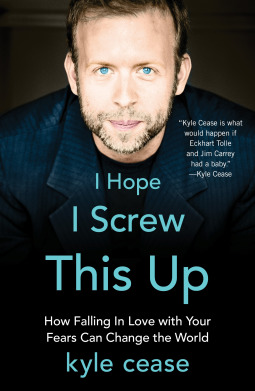
 I Hope I Screw This Up is a part-diary, part-spiritual evolution manual and 100 percent the Hippie Librarian’s type of read. Kyle Cease shares his thoughts and personal path towards becoming his best self. I didn’t find it to be as funny as promised in the blurb, but I do think it has worth as, “another finger pointing towards the moon,” as Eckhart Tolle would say.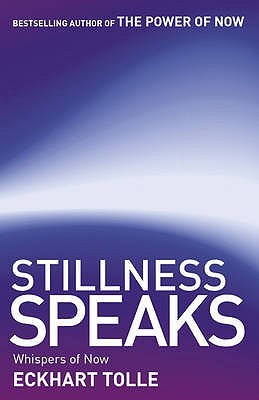


 The Help Desk Book Blog