Otherwhere: A Field Guide to Nonphysical Reality for the Out-Of-Body Traveler by Kurt Leland

Otherwhere: A Field Guide to Nonphysical Reality for the Out-Of-Body Traveler by Kurt Leland

Kurt Leland’s Otherwhere is the first out-of-body memoir/guide (that I’ve read, so far) that discusses the importance of the individual’s consciousness in how the inner worlds are perceived.

It’s not a new idea, being repackaged and sold throughout time, lately in the New Age/New Thought movement, that one’s beliefs shape one’s reality. But, as Kurt Leland points out in other dimensions where thoughts literally are that reality, this individual viewpoint takes creation to a whole different level.

He suggests that what Robert Munroe, Jurgen Ziewe, and so many other consciousness explorers experience when they are in their various out-of-body states is archetypical energy, though he doesn’t use that terminology. Leland calls the perception of this energy: one’s own personal translation tables.

Rather than taking the figures that one encounters at face value or judging them based on ingrained religious beliefs, Leland encourages the Otherwhere visitors to examine what the figure does. It’s very similar to what dream interpreters teach about how to understand your dreams.

Like me, Leland believes that anyone can have out-of-body experiences. He has this to say about why more people don’t: “It’s my firm belief that what prevents people from having out-of-body experiences and exploring nonphysical reality on their own is fear of the unknown. In my experience, the best way to overcome fear of the unknown is to familiarize oneself with the personal accounts of people who have overcome that fear themselves. I believe that personal accounts of out-of-body experiences are far superior to how-to manuals in stimulating people to venture into the unknown.” Preface, xii

He goes on to say: “In my opinion, our fear of the unknown is really just anxiety about becoming unlovable as a result of having had unfamiliar experiences and being changed by them. If we attempt to explore nonphysical reality and succeed, we’re afraid that we’ll be rejected, disbelieved, or thought to be crazy.” pg 27. Time to get over that. Don’t you think? 🙂

Lelend uses lucid dreaming as his method of exploring other worlds (Otherwhere). I’ve explored a few books about lucid dreaming one of which you can read here. If you are interested in my explorations into nonphysical reality, you can read those here.

I found this episode of a woman that he encountered there to be very illuminating. In this passage, he is talking to his Otherwhere instructors about her: (the Instructor saying) “As you can see, my colleague and I intended every image in the dream to contribute in some way to the lesson we wanted you to learn.” (Leland asks) “What about the woman reading the book?” “As you recall, she was facing the door into Otherwhere. There are many people in the world who have an interest in exploring psychic phenomena. They love to read about other people’s adventures in altered states of consciousness. But if a door that would allow them to undertake such explorations on their own were to open, they would make up excuses not to go through. The most common one is that they don’t have time.” pg 99

Let’s not be that woman.

The importance of physical life- in this excerpt, Leland is listening to an instructor in Otherwhere: “While it’s true that I no longer feel regret about anything I’ve experienced during previous lifetimes on Earth, I wouldn’t say that I’m grateful to be among the dead. That would imply that life over here, in Otherwhere, has a greater value than life on Earth. From our perspective, that isn’t true. There are things that can be learned only here and not there. But there are also things that can be learned only on Earth. Learning is all that matters, and no lesson is more or less valuable than any other. pg 152

Keep on learning, check.

In this passage, Leland examines the availability of teachings on other dimensions: “There are many maps of nonphysical reality… scattered throughout the history of your art and literature. These can provide useful translation tables for orientation within nonphysical reality. Why should every individual who explores nonphysical reality start from scratch?” pg 158

Why indeed… with the modern age and the easy availability of formerly difficult-to-discover information through the internet and public libraries, one can stand on the shoulders of giants to begin your own personal studies.

Everyone is an artist: “Every human being is immensely creative. But unless that creativity is channeled into some art or craft, it will be used instead to generate illusion. It could be said, therefore, that every human being is an artist, at least in potential. Developing this creativity is an essential part of every person’s life purpose, even if it isn’t the main focus of one’s career.” pg 238.

I believe that too. I’ve read a bunch of books about creativity, one of which you can explore here.

“How you choose to represent to yourself the ways of gaining access to any zone of Otherwhere is up to you. The validity of such images lies in their usefulness, not in some kind of absolute truth. The only important thing is that you give yourself some way of identifying the zone into which you’ve traveled, so that you can return on future occasions. Whether this manner of identification is the name of a subway line or station, or the number on a gate in an alley, is your choice. The identifying function of such names or numbers is all that matters.” pg 262

Or, like in my own personal explorations, tarot cards.

Leland finishes his account with a modern version of Dante’s Paradiso in which, he traveled to Otherwhere and discovered different areas within that place where the dead came to terms with the life they had just completed. Absolutely fascinating stuff.

Then he talks about ways to remove your consciousness from the ordinary to experience what he and others (and me!) have experienced- whether that be through meditation, lucid dreaming, shamanic drumming, etc, and, the librarian in me loved this part, gives book lists for learning each type of technique. He saves consciousness explorers a lot of time, which is a kind thing to do.

I highly recommend Otherwhere for folks beginning their consciousness exploration or the experienced traveler. It is a how-to guide, a journal, and an encouraging, exploratory ramble through Otherwhere, a place where anyone can go, if they only set their mind and heart on doing so.

Thanks for reading!

The Art of True Healing: The Unlimited Power of Prayer and Visualization by Israel Regardie, Marc Allen (Editor)

The Art of True Healing: The Unlimited Power of Prayer and Visualization by Israel Regardie, Marc Allen (Editor)

Israel Regardie is a little-known thought leader of western occultism. In this book, “The Art of Healing,” Dr. Regardie explains a few meditation techniques in a way that anyone from beginners to advanced practitioners can understand.

I remember reading somewhere (not this book) about Dr. Regardie’s internship with Aleister Crowley and how he realized Crowley wasn’t teaching him anything beyond the superficial when it came to occult matters.

Photo by Luis del Ru00edo on Pexels.com

He ended up breaking away and being one of the leaders of a new approach to occultism-
which brings me back to this book.

The meditation techniques will feel quite familiar to anyone who has practiced chakra meditations or color visualizations on the body.

“By these means, the healing force is distributed to every part of the body. No single atom or cell in any organ or limb is omitted from the influence of its healing, regenerative power.”

Photo by PhotoMIX Company on Pexels.com

The curious part of this book is that Dr. Regardie uses five centers of energy down the center of the body instead of the more standard seven of eastern occultism.

Of course, as Dr. Regardie states, these exercises are in no way a substitution for competent medical care or therapy when necessary – but they are a wonderful addition to it, for they are able to aid the healing process in a great many mysterious, profound, and positive ways. intro

I’m not entirely sure why he does this though I am familiar with the Middle Pillar exercise (which is what the technique is called). Perhaps he’s basing the whole practice off of a teaching Crowley created for his occult studies.

Dr. Israel Regardie and the Middle Pillar exercise.

Whatever the reason, I think it is a noteworthy and definite change from other meditations I’ve practiced.

Highly recommended for readers looking for new meditation techniques and who are interested in western occultism. Another book you may want to pick up if you are into these topics is High Magick: A Guide to the Spiritual Practices That Saved My Life on Death Row.

Damien Echols‘s style of writing reminds me of Dr. Regardie in both its refreshing simplicity and honest assessment of the Great Work.

Thanks for reading!

The Sidhe: Wisdom from the Celtic Otherworldby John Matthews

The Sidhe: Wisdom from the Celtic Otherworldby John Matthews

“I knew then that something was going to happen in Ireland. I had no idea then just what an enormous and irrevocable change it was going to make to my life.” pg 5, ebook

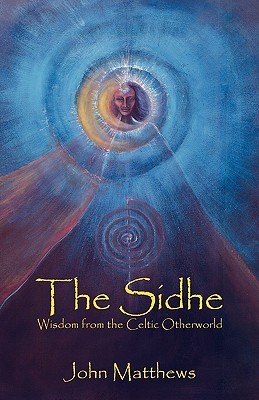
John Matthews received a call from a friend whose occupation is archaeology. The friend showed John into a barrow where he first saw the glyph that is on the cover of this book.

John claims that through meditation upon the glyph, he communicated with other beings whom he believes are ‘the Sidhe.’

“To truly know a thing is to become one with it. Just as to become one with it is to truly know it.” pg 27, ebook

Photo by cottonbro on Pexels.com

He shares the communications that he had through the glyph throughout the text. At the end, he includes six exercises that the beings gave him and encourages readers to try the practices for themselves.

Readers could potentially experience the connection John felt.

“Drawn by this feeling, I lay down beneath the branches of the old oak, and, as I had done countless times before, stared up through the branches at the patches of blue sky that showed through. As I did so a sense of stillness and peace descended upon me.” pg 36, ebook

Photo by Magda Ehlers on Pexels.com

The Sidhe: Wisdom from the Celtic Otherworld reminded me of the multiple works of Abraham Hicks or Seth Speaks: The Eternal Validity of the Soul. There’s probably a reason for that.

It could be that the channelers are tapping into a similar place. In this book, John calls it the “great net” of creation. I’ve heard it called, “Indra’s net,” among other names in other sources.

Whatever it may be, I find it interesting that the communications received are similar enough to draw comparisons.

“Among the greatest gifts we have observed in your race is the desire to know and to explore. This hunger has propelled you far along the path of the day and the path of the night. Hence, your journey is indeed one of exploration, not only in time and space, but in the dimensions of Spirit.”

Photo by Stefan Stefancik on Pexels.com

Of course, I had to try John’s method for myself. I’m always so curious about these kind of things.

Unfortunately, I fell asleep rather than having a memorable experience. I expect the fault was on my side, but perhaps I experienced something in my sleep- I just failed to remember it.

I do plan to give the meditation a try again in the future, when I’m not so sleepy.

I was fascinated with the way the glyph looks like a treble clef with multiple circles. When John began to describe the Sidhe’s connection to music, I felt that comparison made sense.

“Much of our time is spent in the making of music- though for us it is more serious than a pleasant pastime, since it is part of our creative process in more than an abstract fashion.” pg 69

Playing music is one of the few activities that put me into a flow state. Perhaps I should try meditating that way.

Anyway, I recommend this book for the curious or spiritual seekers. If you try the exercises within, please do share your results. Maybe some day, the world will have more answers than questions about these ineffable things.

Or, maybe, we’ll open yet another door for endless discoveries. Either way, I’ll be interested to see what comes next.

Thanks for reading!

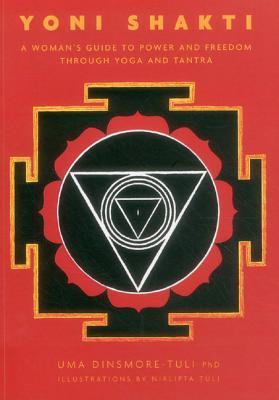
Yoni Shakti: A Woman’s Guide to Power and Freedom Through Yoga and Tantra by Uma Dinsmore-Tuli

Yoni Shakti: A Woman’s Guide to Power and Freedom Through Yoga and Tantra by Uma Dinsmore-Tuli

“When we unlock our sakti we re-connect with our capacity for inner joy and peace with ourselves: all our experiences begin to join up and make sense. Freeing our sakti in this way gives us the key back to our sexual selves, so that we may inhabit our whole being with authenticity and joy.” pg 508 ebook.

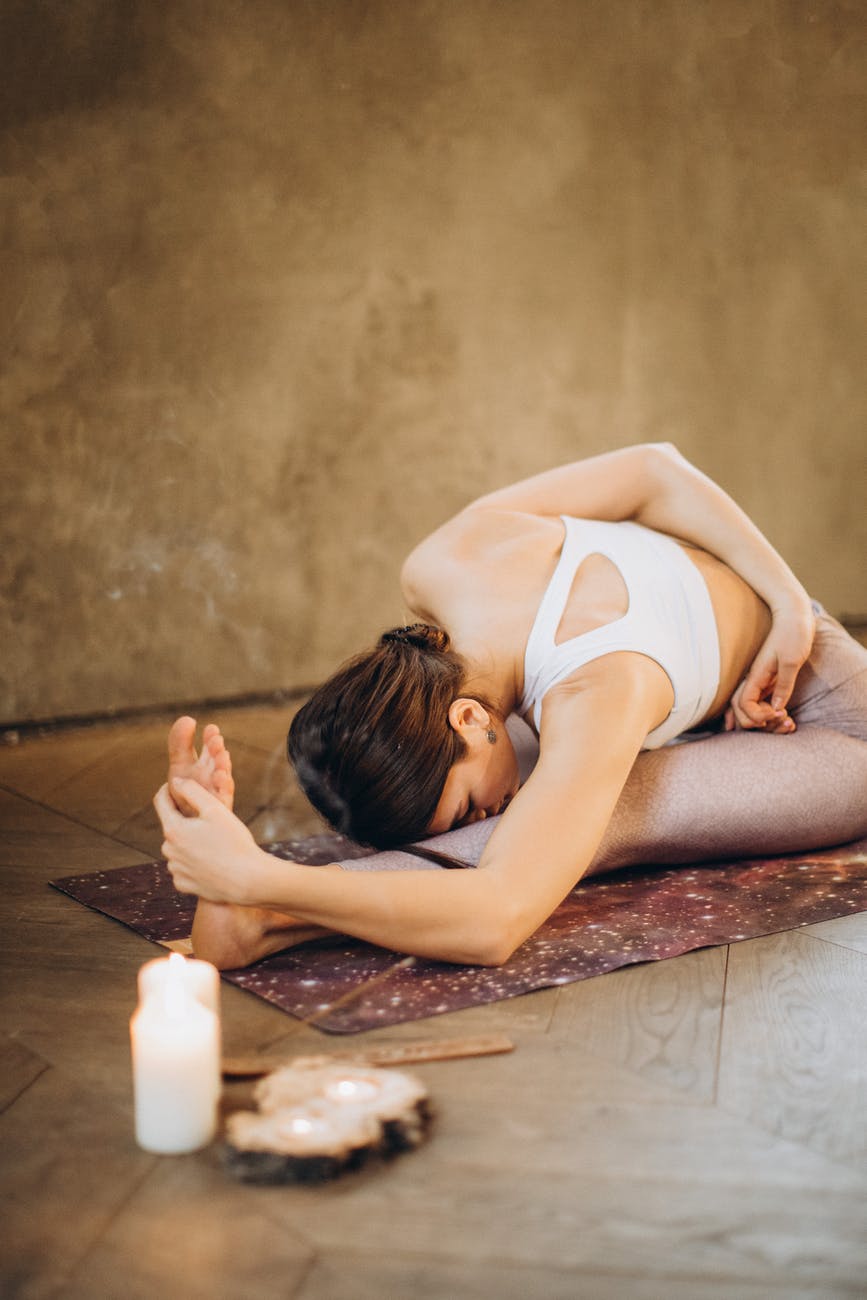
Author, yogini and tantrika, Uma Dinsmore-Tuli, shares yoga sequences, mantras, mudras and meditations to assist readers in becoming more aware of their inner selves.

Photo by Elina Fairytale on Pexels.com

What does this accomplish, you may be asking yourself. According to Dinsmore-Tuli, it’s the foundation of a mindful existence.

“All of the poses to unblock the life force energy are also very practical means to keep the creative and sexual energies in circulation so that they are available to nurture and enrich our creative, family, social and professional encounters.” pg 518, ebook

That sounds pretty good to me.

So, I tried some of the suggestions from this book which I had to cherry pick because there are dozens to try. And my results were unexpected and stunning.

Photo by Diego Madrigal on Pexels.com

After the first practice, I experienced an almost immediate increase in my sensitivity to my body’s energy and overall energy level. After the first week, this improved awareness led to some fascinating experiences during my meditations.

Apparently, practitioners of yoni shakti routinely encounter visions or spontaneous energy body knowledge. The goal is not to seek these experiences, but to be aware when they arise and dissipate, and then utilize them for greater self knowledge.

Using these teachings, I feel like I’m learning a whole new dimension to life- one that arises from practices of mindful awareness. Yoni Shakti is a good reference book for that journey.

Photo by Daniel Torobekov on Pexels.com

That being said, a majority of this book is repetitive to the point of unreadable. I realize Dinsmore-Tuli is passionate about the women’s movement in yoga, but she goes on so much about past abuses by gurus and organizations that it detracts from the delivery of the wisdom of the book.

I found myself skimming entire sections because they read the same in the previous chapter and the ones before it.

On the other hand, this book shines in its accounts of the women who were suffering and then rediscovered their power and ability to heal themselves through their yoga practice.

“There is a deep relief in knowing that other women have experienced the same losses, and a comfort in hearing others speak about what is so often unspoken. The sharing is healing.” pg 597

Recommended, with a few reservations, to spiritual seekers interested in yoga and tantra- particularly women.

Thanks for reading and namaste!

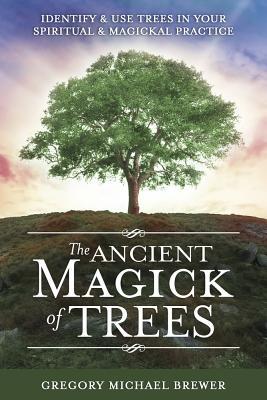
The Ancient Magick of Trees: Identify & Use Trees in Your Spiritual & Magickal Practice by Gregory Brewer

The Ancient Magick of Trees: Identify & Use Trees in Your Spiritual & Magickal Practice by Gregory Brewer

“Since the dawn of humanity, in all cultures and religions across the globe, trees have been revered not only as a life-sustaining source of food and medicine but also as a place where spirits dwelt, awaiting to reveal great mysteries to those who sought their wisdom, knowledge, and magick.” pg 2

Author Gregory Brewer examines the wonder and mystery that are trees from the pagan perspective in this book which is part informational, tree-related ritual/meditation suggestions, and reference.

Photo by Pixabay on Pexels.com

Understanding the symbolism of trees throughout countless cultures of human history is an enlightening study, but equally important is learning to form a personal connection with them in order to better comprehend the interaction of how the divine reveals itself to us through nature.” pg 243

The majority of the book is dedicated to descriptions and occult associations for different types of trees.

I read The Ancient Magick of Trees in order to learn more ways to invite nature into my life. The book has that but I found Forest Bathing: How Trees Can Help You Find Health and Happiness to be more immediately practical. I also connected more with the information in the forest bathing book.

Thanks for reading!

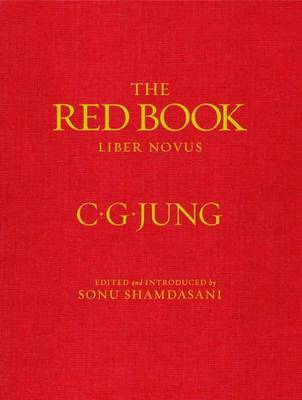
The Red Book: Liber Novus by C.G. Jung

The Red Book: Liber Novus by C.G. Jung

“The years, of which I have spoken to you, when I pursued the inner images, were the most important time of my life. Everything else is to be derived from this.” preface

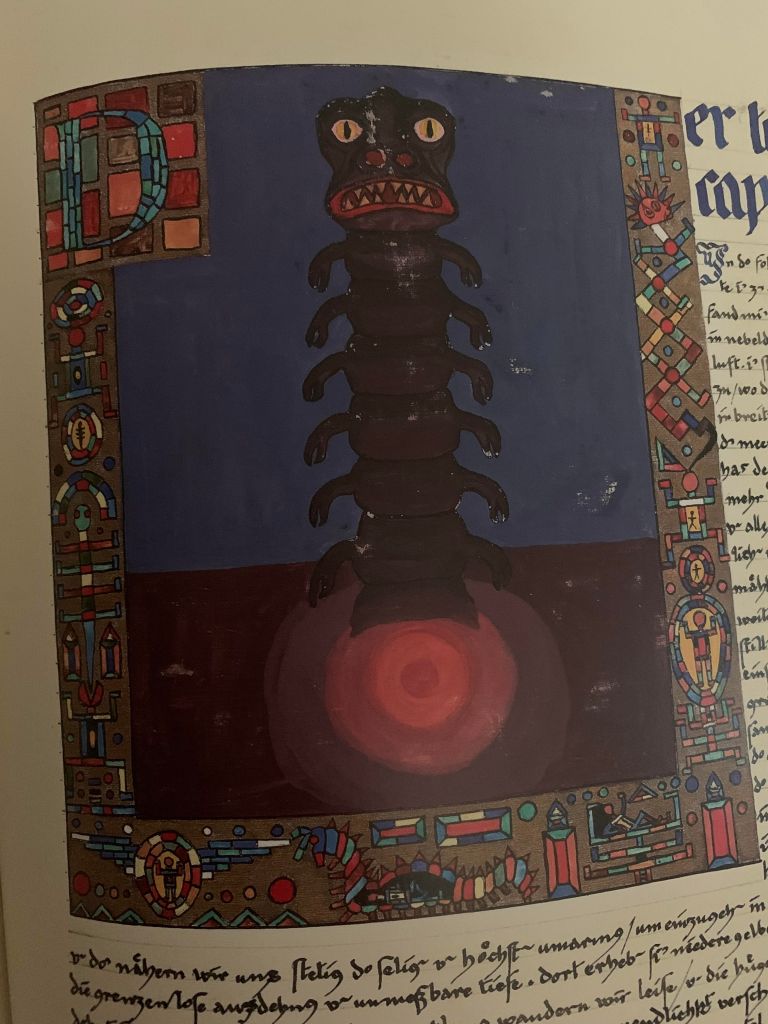
The Red Book is a stunning publication. It is a physically large book which mimics Jung’s own handwritten copy which measured 11.57 inches by 15.35 inches.

Carl Jung’s calligraphy

The contents are just as impressive. The first part is a brief history of Jung and his publications. The second contains pages of calligraphy in both German and Latin of his “active imagination” visualizations as well as sketches and paintings created by Jung to accompany the text.

The last section of the book is the English translation of the second part.

“Jung described his technique for inducing such spontaneous fantasies: ‘The training consists first of all in systematic exercises to eliminating critical attention, thus producing a vacuum in consciousness.'” pg 209

Painting from Carl Jung’s The Red Book

The visions themselves are interactions between Jung and voices or figures that he named his soul, gods and other archetypical figures.

“To this my soul spoke a word that roused my anger: ‘My light is not of this world.’ I cried, “I know of no other world.” The soul answered, “Should it not exist because you know nothing of it?” pg 240

As he stated in the preface, Jung felt as if his ‘confrontations with his subconscious’ affected his work for the rest of his life. It is a fascinating, little-examined side of a man who has had a huge effect on psychology and is credited, by some, as being one of the leading figures of the New Age movement.

The road to publication for this book is a story in itself. At first, Jung’s family carefully kept The Red Book in a safe deposit box to protect it as they recognized its value as a one-of-a-kind creation. They also believed that Jung wouldn’t have wanted its contents made public as he hadn’t left any specific instructions in his will about it.

Painting from Carl Jung’s The Red Book

However, researchers and scholars have since examined the text and found parts where Jung addresses, “my dear friends,” leading to the opinion that he did intend to share it with a wider audience. They also point to its importance to Jung’s following works as another reason why it should be published.

Whatever their reasoning, I’m so very glad his family and foundation made the decision to publish. This book is a treasure.

Curiously, The Red Book ends in an incomplete sentence.

Here it is:“I knew of nothing better than to write them down in a ‘precious,’ that is to say, costly book and to paint the images that emerged through reliving it all- as well as I could. I knew how frightfully inadequate this undertaking was, but despite much work and many distractions I remained true to it, even if another/possibility never…” epilogue

Painting from Carl Jung’s The Red Book

I wonder what he was going to write next.

Though I didn’t use Jung’s method of active imagination, I too have undertaken lengthy ‘confrontations’ of my subconscious and have come back with pages of material that read, in some ways, quite similar to this book.

Perhaps, one day, I will also find the courage to publish it.

Highly recommended for any readers interested in Carl Jung’s methods, archetypes or dream interpretation.

Thanks for reading!

The Untethered Soul: The Journey Beyond Yourself by Michael A. Singer

The Untethered Soul: The Journey Beyond Yourself by Michael A. Singer

Michael Singer reminds readers that we are not the thoughts that we habitually think or the bodies that we walk around in. He gives multiple tips on how to access the spiritual strength inside ourselves and how to view life through the wide lens of this non-attached perspective.

Singer writes that it is through this new way of looking at life that one can find enlightenment.

Photo by Supriyo Ghoshal on Pexels.com

The ideas that are shared in Untethered Soul can be found in countless other books on spiritual studies. This isn’t new information. But, I think, there is always room on my bookshelf for a book that reminds me of spiritual truths.

It is all too easy to get caught up in the day-to-day trivialities of life with its stresses and constant demands on our attention. If you take a breath and a step back, it’s surprising what you can see.

Photo by Engin Akyurt on Pexels.com

Perhaps the mammoth success of The Untethered Soul over other books in its genre is the exposure it received on The Oprah Winfrey show. Whatever the case, it is quite accessible to readers who haven’t considered these concepts before.

Recommended for spiritual seekers both seasoned and not.

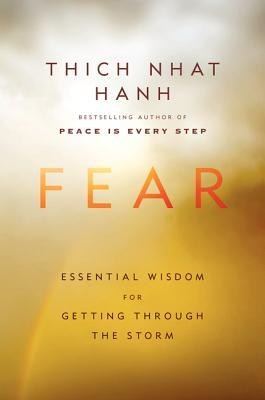
Fear: Essential Wisdom for Getting Through the Storm by Thich Nhat Hanh

Fear: Essential Wisdom for Getting Through the Storm by Thich Nhat Hanh

In Fear: Essential Wisdom for Getting Through the Storm, Thich Nhat Hanh simply and succinctly illuminates the Buddhist path beyond fear into an existence of freedom and joy.

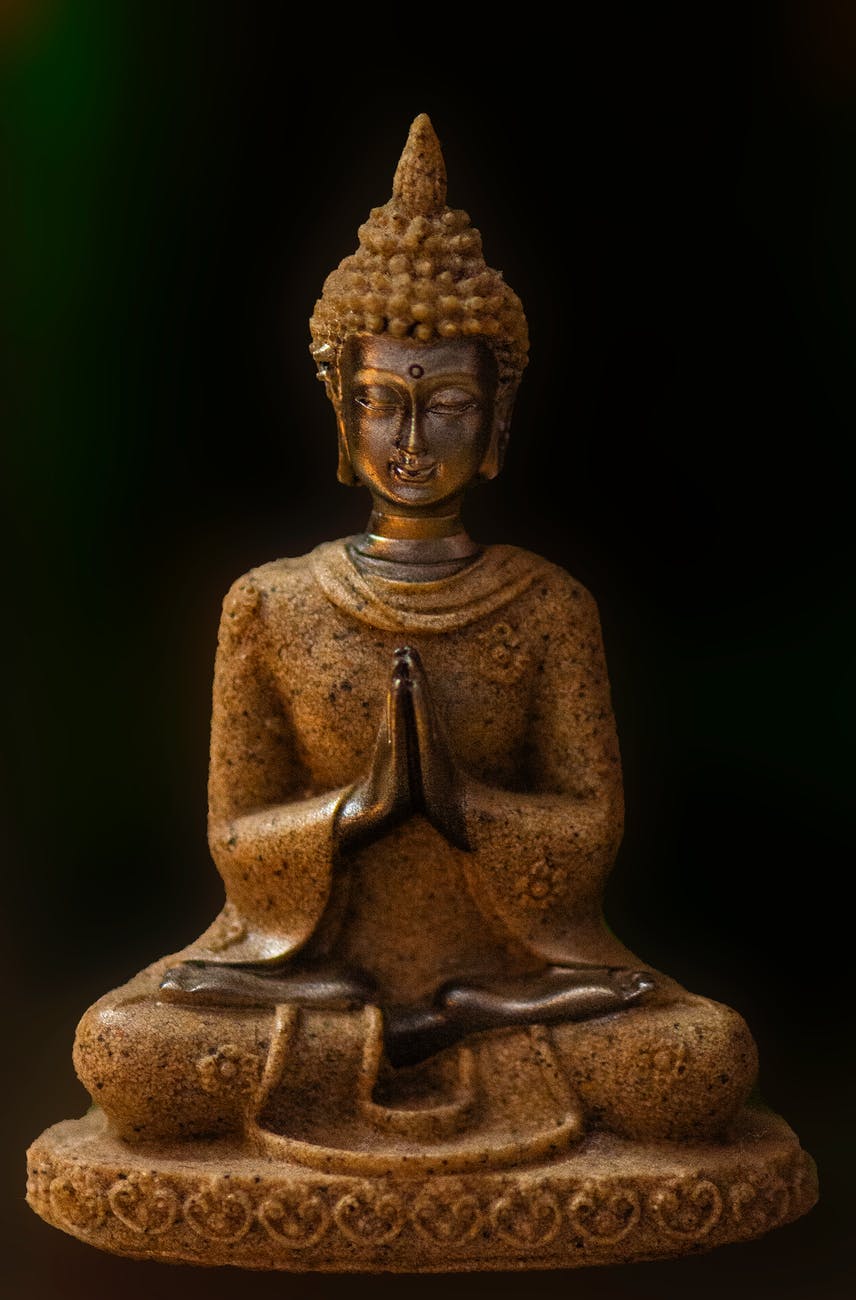
“Nobody can give you fearlessness. Even if the Buddha were sitting right here next to you, he couldn’t give it to you. You have to practice and realize it yourself.” pg 6

Photo by Aleksandar Pasaric on Pexels.com

This book is more than theory, parables and anecdotal stories. Hanh also includes various meditations to assist in the effort.

“When the Buddha was very old, just before he died, he said, ‘My dear friends, my dear disciples, don’t take refuge in anything outside of you. In every one of us there is a very safe island we can go to. … That is a place where you can take refuge whenever you feel fearful, uncertain or confused.'” pg 71

He dissects the various forms fear can take in our lives- from fear of death, grief, anxiety about the future to reconciling with painful emotions from the past.

Photo by David Bartus on Pexels.com

My main takeaway from the book was, to deal with any kind of fear, we need only to approach it with mindfulness and compassion for ourselves and the suffering of others.

“We don’t try to grab on to the pleasant sensation, and we don’t try to push it away. We just acknowledge its existence. When a painful feeling comes, we do the same thing. … A feeling is just a feeling. And you are much more than that feeling.” pg 135

Hanh reminds readers that we are more than the temporary thoughts and feelings that cause so much havoc on their way through our minds and hearts. Our true nature is something else.

My favorite metaphor that Hanh employs to remind readers of this true nature is his comparison of a life to a wave.

“The wave is always water; it doesn’t ‘come from’ water, and it doesn’t go anywhere. It is always water; coming and going are just mental constructions. … Birth and death, coming and going, are just concepts. When we are in touch with our no-birth, no-death nature, we have no fear.” pg 50

Photo by Emiliano Arano on Pexels.com

I appreciated the reminders and found a lot of comfort in these pages. I hope other readers find the same.

Recommended for readers who are interested in learning and utilizing Buddhist philosophy and techniques to overcome any fear or other unpleasant emotion that may be in their lives.

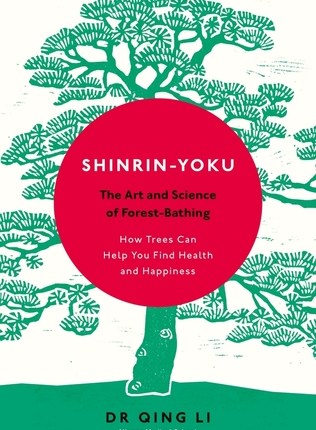
Shinrin-Yoku: The Art and Science of Forest Bathing by Qing Li

Shinrin-Yoku: The Art and Science of Forest Bathing by Qing Li

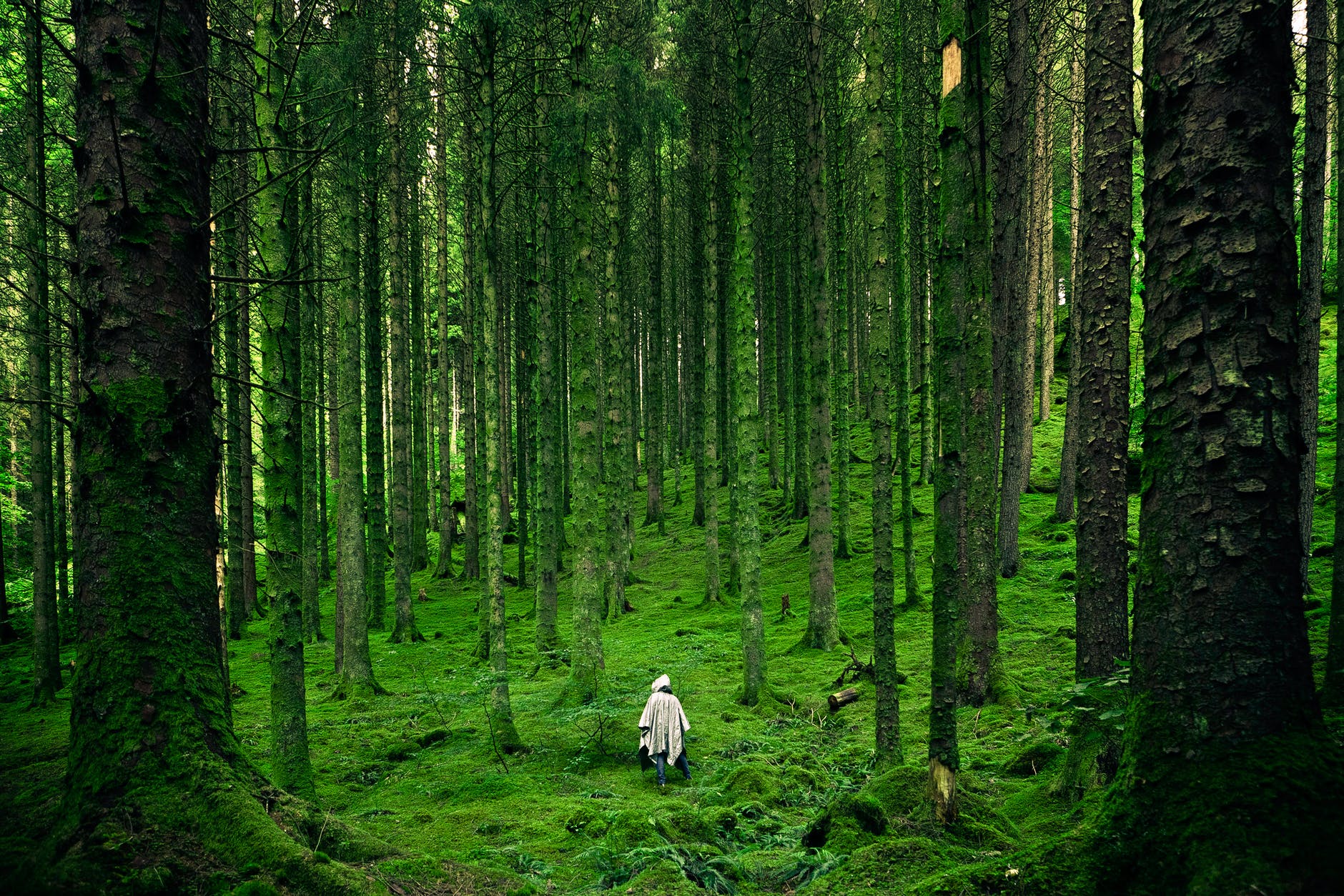
“Shinrin-yoku means bathing in the forest atmosphere, or taking in the forest through our senses. This is not exercise, or hiking, or jogging. It is simply being in nature, connecting with it through our sense of sight, hearing, taste, smell and touch.” pg 12

Nature lovers or those aspiring to be nature lovers will find much to enjoy in Shinrin-Yoku: The Art and Science of Forest Bathing.

Photo by Jose Vega on Pexels.com

Qing Li reminds readers that the human race is a part of this world even if we have walled ourselves up in cities and covered the ground in concrete. Through various scientific studies, he proves again and again that by taking a time out and forest bathing people can sleep more deeply, experience less stress and think more clearly.

“We may not travel very far on our forest walk but, in connecting us with nature, shinrin-yoku takes us all the way home to our true selves.” pg 15

Not convinced? He provides evidence that patients at hospitals heal faster if the view outside their window includes a tree rather than a wall. People who exercise outside report the exertion they need to complete the workout is less and they enjoy the time more than those who churn out the miles on a treadmill.

“The average sleep time of participants after a two-hour forest walk increased by 15 percent, or fifty-four minutes. Participants were significantly less anxious after a two-hour walk in the forest.”

Photo by WARREN BLAKE on Pexels.com

Forest bathers have reported higher levels of creativity, writers find relief from the dreaded block, and the sense of connection caused by the practice has been known to increase feelings of gratitude.

“The researchers concluded that there ‘is a real, measurable cognitive advantage to be realized if we spend time truly immersed in a natural setting’, and found that spending time in nature can boost problem-solving ability and creativity by 50 per cent. Is it any wonder that Buddha found enlightenment sitting under a tree?” pg 106

Is there anything that forest bathing doesn’t help? How about your health or physical age?

“A group of Canadian, American and Australian researchers studying tree density and health in Toronto found that… having eleven more trees on a block lowered cardio-metabolic illnesses, like high blood pressure, diabetes and obesity, comparable to the effects on well-being conferred by being given a $20,000 a year pay rise or being 1.4 years younger.” pg 116

Photo by Johannes Plenio on Pexels.com

In addition to the information about forest bathing, this book contains beautiful photos of forests every couple of pages. Qing Li gives readers the instructions so, if they desired, they could hold their own traditional tea ceremony in the woods. He includes anecdotal information about aromatherapy, tips on how to bring the forest into your home, advice on how to incorporate beneficial natural sounds into your daily life and more.

I enjoyed this book very much. Highly recommended.