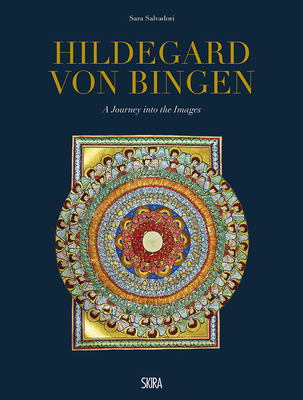
Hildegard von Bingen: A Journey into the Images by Sara Salvadori

Hildegard von Bingen: A Journey into the Images by Sara Salvadori

“What I do not see I do not know,” an elderly Hildegard wrote to the Cistercian monk Guibert of Gembloux, describing the visions from which she gained her knowledge of the cosmic, human and divine dimension, from childhood until the end of her life.” From the preface.
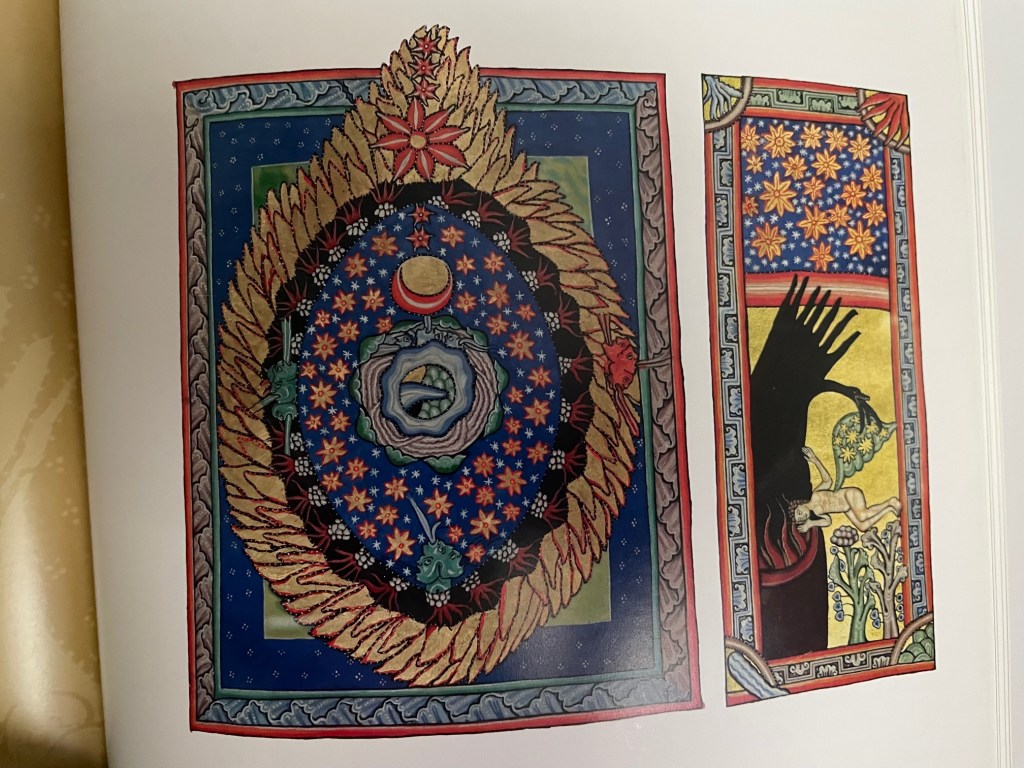
Hildegard von Bingen, born 1098-died 1179, was a female mystic of the Christian tradition. She had extraordinary visions, which she recorded, and in her later years, she shared with others.

“The ‘Sybil of the Rhine‘ appears to us in the 21st century as a real woman who developed the many aspects of her femininity: worldly and joyous, learned and visionary, profoundly human yet open to the divine, inclined to dance, friendship and leadership.” pg 6

But this is not all Hildegard accomplished. She also composed the music she heard in these visions. She traveled extensively at a time when travel was not a simple task in order to bring together communities of believers.

All in all, Hildegard was a pretty cool lady who experienced fairly trippy visions.
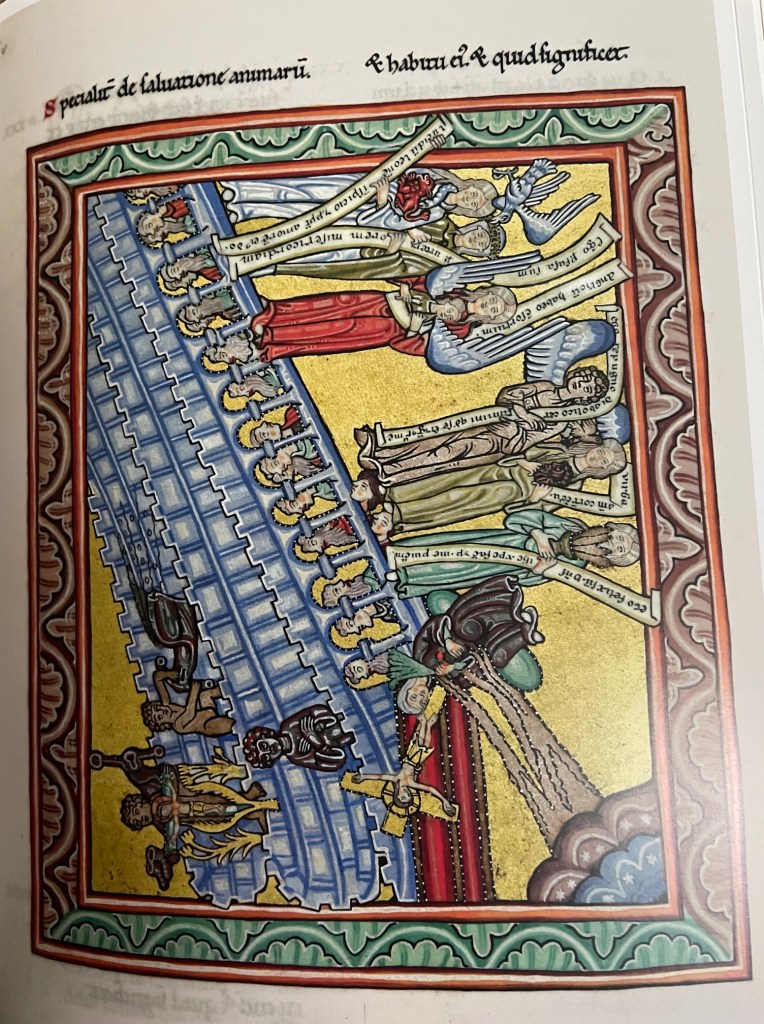
“Our historical human condition enables us to appreciate her fascinating, layered personality, which made her equally at home with plants and flowers, angelic powers and the virtues that courted them; and capable of dialoging with the powerful of the Earth both inside and outside the Church, without feeling in any way intimidated or inferior.” pg 7

The visions themselves are organized into sections. Hildegard gave each a title, summarized list of chapters, description, explanation and Biblical passages to go along with each. In a time when very few were literate, Hildegard’s illustrated visions were used as teaching tools, similar to medieval bestiaries. (Which I learned about here: Book of Beasts: The Bestiary in the Medieval World)

The colorful visions of Hildegard are meant to be experienced rather than enjoyed second-hand, so I won’t bore you with extensive descriptions about them. But I will share my impression of her work.
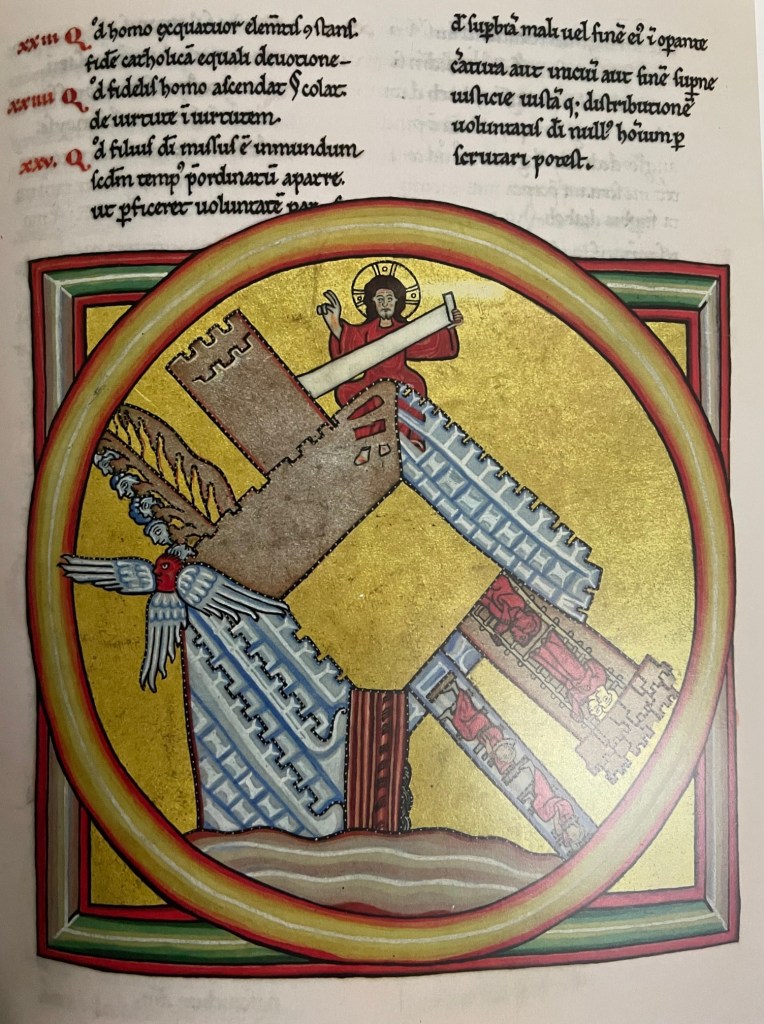
I found Hildegard to be transportive. I didn’t understand all of them, but the images speak to my subconscious mind through their beauty and repetitive patterns. “Look at the mystery of existence,” they seem to say.

I think its fascinating that Hildegard was a female mystic in a tradition where the divine feminine was relegated to a backseat role. (No offense meant to the tradition by the way, just an observation.) It makes me wonder where such mystics are today, if they exist.

And if they do, would we listen and learn from them like Hildegard? Or dismiss their experience as a brain malfunction and put them on medication.

Something to consider. Highly recommended for spiritual seekers.

Thanks for reading!

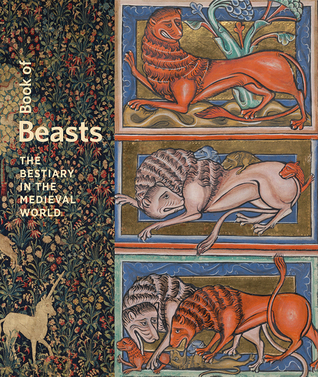
Book of Beasts: The Bestiary in the Medieval World by Elizabeth Morrison

Book of Beasts: The Bestiary in the Medieval World by Elizabeth Morrison

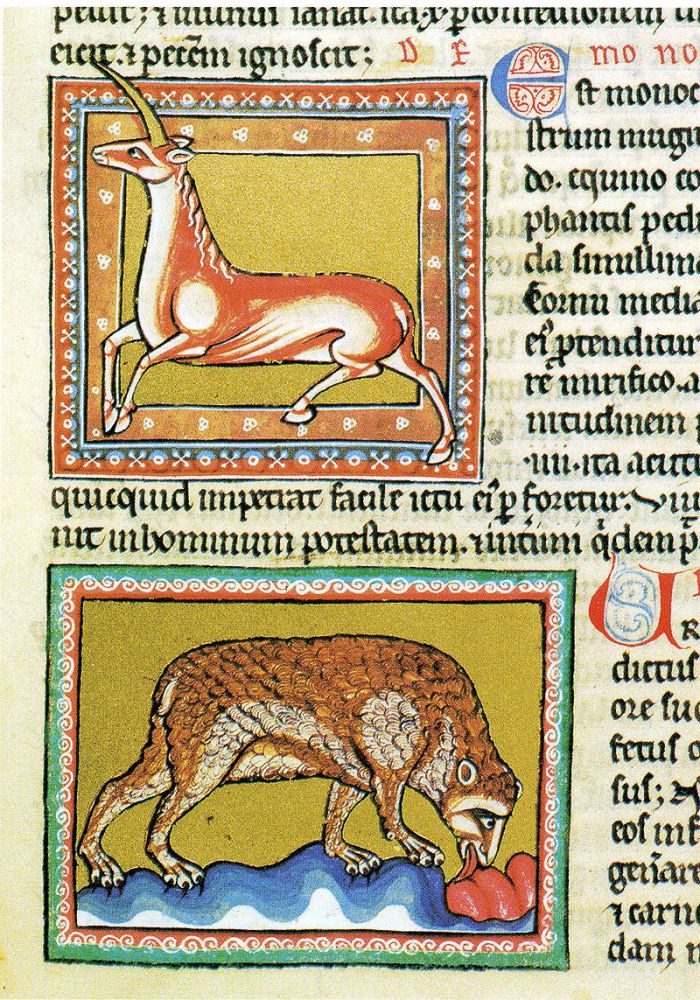
Books of Beasts is a scholarly examination of medieval texts called “bestiaries”. These curious works consisted of lists of animals with accompanying pictures and traditional stories. Sometimes they were printed alongside other works, like the Bible, sometimes not.

Elizabeth Morrison and twenty six other medieval scholars assert that these were the second most popular texts in the medieval world. They weren’t concerned with accuracy or science, part of the purpose of the books were to use creation as a window to contemplate the mysteries of God.

This particular book, Books of Beasts, was made to accompany a ground-breaking exhibition at The J. Paul Getty Museum. You can learn more about the exhibition here: http://www.getty.edu/art/exhibitions/…

I also used the information in this book to write a script for The History Guy YouTube Channel.

“Book of Beasts: The Bestiary in the Medieval World” presents the largest number of medieval bestiaries ever gathered together, representing one third of the known surviving illuminated bestiaries, including some that have never before left their countries of origin.”

The stunning portion of this book are the bestiaries themselves. The colors and the animals in their various tableau are simply beautiful. When you consider how old the artwork is, it’s staggering that something that fragile has survived so long.

“Animals both real and fantastic parade by the dozens, and sometimes hundreds, across the pages of these remarkable works. Their stories were among the most familiar and beloved of the time, and many survive today, though their origins in medieval and earlier times have, sadly, been largely forgotten.”

My favorite part of this book were the stories attached to the animals. Everyone in the medieval world knew them and so, when that animal appeared somewhere else say, for example, on a tapestry or dish, it was a hidden code of sorts, imparting meaning that the modern reader has never learned.

Consider the lion: “The natural philosophers say that the lion has three principal natures. His first nature is that he likes to walk on the mountain heights. And if it should happen that he is sought by hunters, the odor of the hunters reaches to him and with his tail he covers the trail of foot prints he left behind…. And thus our Savior… covered over the foot prints of his love in Heaven, until sent by the Father, he might descend into the womb of the Virgin Mary, and save the human race that was lost.”

The lion was always presented first in the bestiaries and was given the name “the King of Beasts” not only for its position on the food chain but also for its association with Jesus Christ. These associations have bled over to today, and I had no idea that’s where they came from.

Fascinating, isn’t it?

But as interesting as the stories and images were, this book suffers from some serious academia-itis. The various scholars, the only experts on the topic in the world I’m sure, have different writing styles and some are far more palatable than others.

By the time I got to my fifth or sixth explanation why this text was related to that text and may or may not have come first, my brain was glazing over a little bit. Other sections read more like dissertations than material that someone would pick up for fun.

That criticism aside, the topic itself is absolutely worthy of investigation, if for nothing else than these stories that were, as one of the authors said, as popular as a “viral meme” that some of their meanings are still in use today. Isn’t it cool how history haunts us in ways that we may be unaware of?

Thank you to NetGalley and the publisher for a free digital advance reader copy of this book. The projected publication date is in June 2019. The short quotations I cited in my review may change in the final version. 

Thanks for reading! #BookOfBeasts #NetGalley

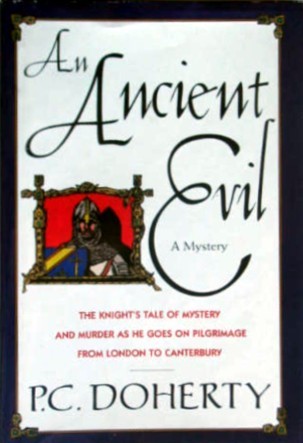
An Ancient Evil (Stories told on Pilgrimage from London to Canterbury, #1) by Paul Doherty

An Ancient Evil (Stories told on Pilgrimage from London to Canterbury, #1) by Paul Doherty
anancientmystery

An Ancient Evil is a charming historical fiction based loosely on the premise of The Canterbury Tales.

In the introduction, a knight tells a story to a group of pilgrims on their way to Canterbury. “My tale begins hundreds of years ago, just after the great Conqueror came here. So, gentles all, your attention as I describe these horrors sprung from the very pit of Hell.” pg 6.

In the story within the story, a menacing prologue introduces the reader to Sir Hugo, who buries alive the leader of a group of evil magic doers and burns the rest of his order. The evil leader who is buried alive doesn’t seem that upset about the whole thing. Which is weird.

Fast forward a couple hundred years into the future.

Sir Godfrey and a clerk, Alexander, are tasked by the king of England to discover the truth behind a series of mysterious and grisly murders in Oxford.

They are assisted in their task by Dame Edith, a blind anchorite who is known for her exorcism talents. ‘Sir Godfrey, whoever the killers are, we are about to enter the Valley of Death, but,’ Alexander couldn’t resist gentle banter, ‘we have your sword, my brains and the prayers of Dame Edith.’ ‘I think we might need more than that.’ pg 64.

I enjoyed this medieval, just a bit too bloody to be called “cozy”, mystery.

Photo by Susanne Jutzeler on Pexels.com

The characters are layered. The author drops enough hints to lead the reader towards the bad guy without giving the game away.

It reads a bit like a Nicholas Cage movie. We’ve got a battle between good and evil with some paranormal stuff and swords thrown in.

“Dame Edith tapped the side of her head. ‘Sir Godfrey, you are a soldier. You, of all people, should realize that a man is what he thinks he is. What causes one man to be a coward and another to be a hero? After all, they may be the same flesh and blood. They may even be brothers from the same womb. It’s what they think.” pg 170.

I also enjoyed the details about medieval life that are sprinkled throughout.

Recommended for readers who enjoyed The Thief Taker by C.S. Quinn or Mistress of the Art of Death by Ariana Franklin.

Thanks for reading!