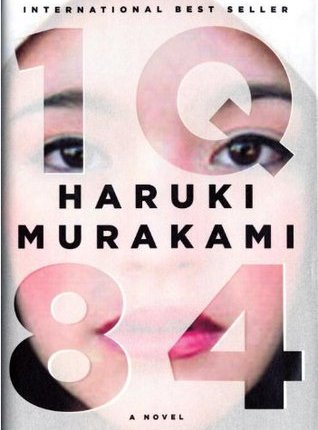
1Q84 by Haruki Murakami

1Q84 by Haruki Murakami

Things are not what they seem, Aomame repeated mentally. “What do you mean by that?” she asked with knitted brows. pg 28, ebook

Yes, what do you mean by that, I found myself asking over and over throughout 1Q84, my first foray into Haruki Murakami’s fictional works.

A few years ago, I read and enjoyed Murakami’s What I Talk About When I Talk About Running, a non-fiction book about the author’s creative process and long distance running habit. The way his mind works is fascinating.

He talks about how writing a novel is like participating in a marathon. It takes effort and discipline to go from page one to the end. In addition, the break throughs that he makes in his writing he attributes, in part, to the flow state he experiences during his physical exertions.

Photo by Samuel Silitonga on Pexels.com

This creates a detail-filled and highly introspective world in his novels that some readers can’t get enough of.

But that approach didn’t appeal to me in this book.

The story develops slowly, so so slowly. We are in the characters’ minds for nearly every thought. We learn their eating and drinking habits, sleeping problems, past history, sexual preferences ad infinitum.

The magical realism portions of the story, my favorite parts by the way, were fleeting and infuriatingly uninformative. This is another draw, or so I have gathered, for some readers who like having major unanswered plot points by the end of the story.

This could lead to some interesting book club meetings, but I’m not one of those readers. If you’re going to tell a story, for heaven’s sake, tell the story.

Photo by JV Buenconcejo on Pexels.com

On one hand, the introspective nature of the storytelling gives deep insight into the characters. By the time you’re through, you feel like you could write what Tengo and Aomame are going to do next. It is introversion to the extreme. On the other hand, it crushed my interest in caring what was going to happen next.

Why? Personal preference, I suppose.

Legions of readers love this book. I’m curious as to why, but it might be as simple as how readers like to experience and absorb stories.

Final note: Trigger warnings for domestic violence and sexual abuse.

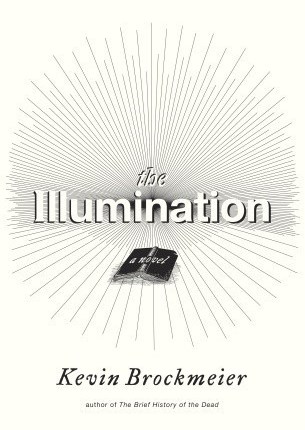
The Illumination by Kevin Brockmeier

The Illumination by Kevin Brockmeier

Humanity suddenly changes as emotional and physical pain begins to shine out of our bodies like light. How would a shift like that change culture? And what does it all mean?

Kevin Brockmeier examines these questions through six different lives that are tied together through a diary filled with love notes from a husband to his wife.

Rarely has a book stuck in my mind like The Illumination. Since putting it down, I’ve found myself thinking about it and asking myself what the author was saying.

Photo by Pixabay on Pexels.com

“Through the haze of drugs, it seemed to her that the light was not falling over her wound or even infusing it from the inside but radiating through it from another world. She thought that she could live there and be happy.” pg 8, ebook

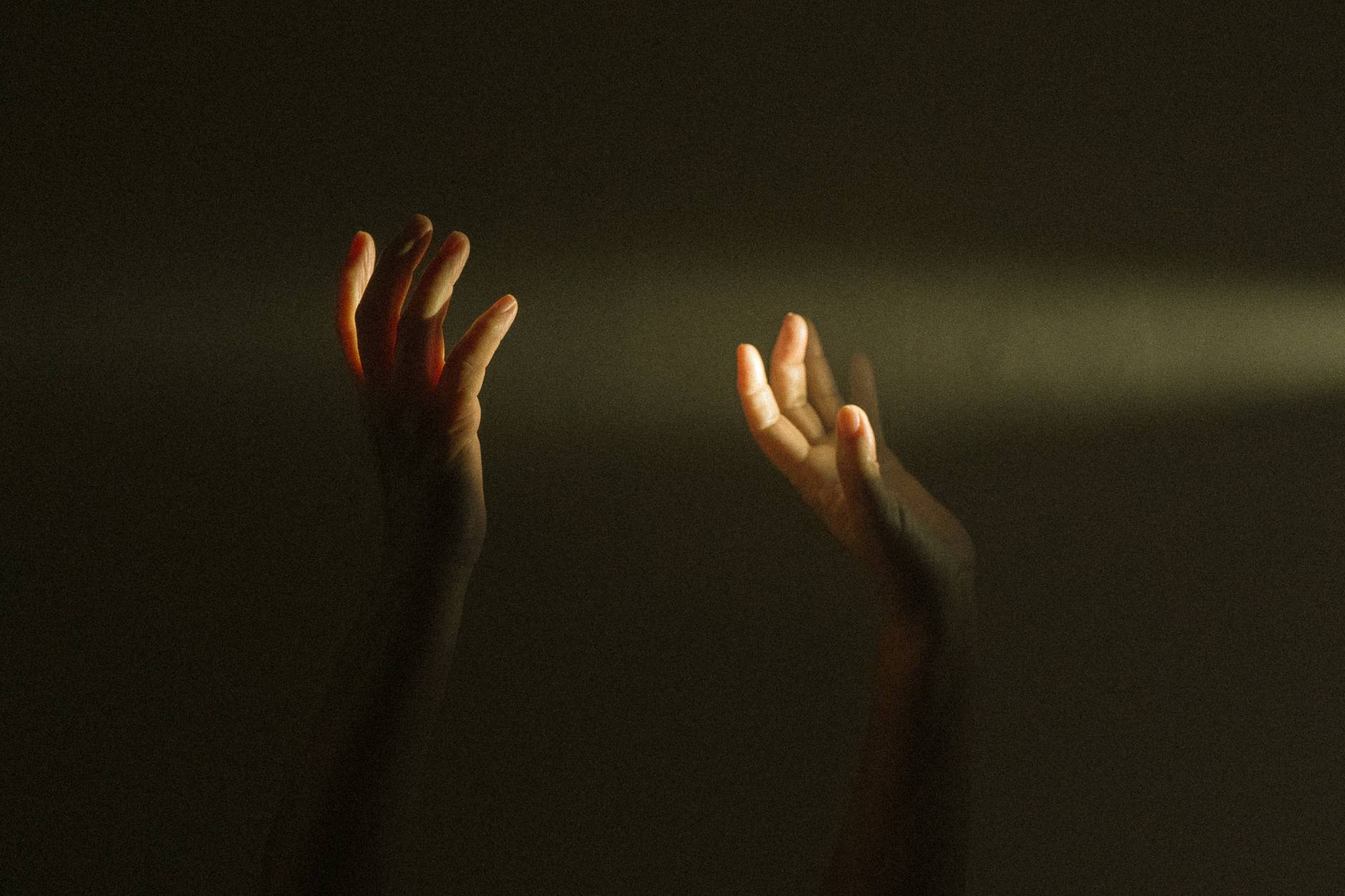
Throughout the centuries, mystics and others considered “holy” or infused with spirit have been depicted with light shining from their bodies and hands. The ineffable connection to God or gods is shown in the artistic shorthand of light, an illumination in the dark.

In the day-to-day business of living, many of us are too busy with our individual lives to stop a second and ask ourselves, what is the purpose of this experience? It feels so random for the most part. Terrible things happen to good people, good things happen to terrible people. It feels arbitrary and, worst of all, meaningless.

So many are in pain and we can’t possibly heal them all. We don’t acknowledge that. But what if it became so obvious that we couldn’t ignore it.

Photo by Luis Dalvan on Pexels.com

“The world had changed in the wake of the Illumination. No one could disguise his pain anymore.” pg 29, ebook

The Illumination illustrates another of humanity’s foibles – the tendency to demote the miraculous to the mundane once it becomes a common place experience. Babies are born every day. People die every day. Life in its beginnings, endings, and everything in the middle, is extraordinary but I don’t think we appreciate the enormousness of it unless something unexpected or earth-shattering happens in our own lives.

“He watched with interest as his body was chafed and torn, thinking, Look what’s here inside me. Who ever would have guessed? pg 164, ebook

Maybe, if we truly tried to let it all in, we would all stand around paralyzed by awe.

“It turned out that the world at the end of time was just like the world at the beginning: a single set of footsteps printing the grass, everything lit with its own newness, a brighter and much, much emptier place.” pg 48, ebook

Photo by Stanislav Kondratiev on Pexels.com

In this world, the past is reexamined in the wake of the new light-filled reality. Historic photos are doctored to make the pain visible through light. Hospitals develop new protocols to address the change in reality. Communication and politeness take on new meaning as private pain becomes public knowledge.

“For a few months, church attendance spiked. Some of the seats at Fellowship Bible were taken by visitors, some by the Christmas-and-Easter set. It didn’t matter – each new face showed the guilt, fright, or confusion of someone confronted by a game whose rules had suddenly changed.” pg 104, ebook

The dystopian worlds of literature present authors’ various views on what the world would look like at the end of all things. Brockmeier’s world is so very much like ours except for one glaring difference. Perhaps that’s the point. The end of the world is much like today – light or no light, we’re all wandering around seeking meaning and bumping into each other and causing pain, intentional and unintentional.

Photo by Rodolfo Clix on Pexels.com

The spiritual and religious beg for illumination, a shining light through the confusion, a removal of a metaphysical blindfold. But what would we do if those prayers were answered in a concrete way? Probably nothing once the initial shock wore off.

Recommended for readers who seek the answers to unanswerable questions. Some trigger warnings for cutting, self mutilation, and violence.

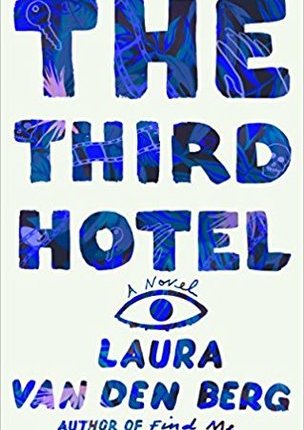
The Third Hotel by Laura van den Berg

The Third Hotel by Laura van den Berg

A strange and confusing ride through a world seen through the eyes of a grieving widow. A short time prior to attending a film festival in Cuba, Clare’s husband Richard was killed. Now, she sees him on the streets of Cuba.

“Clare had never before seen her husband operate a motorbike, but he navigated it like he had been riding one all his life, like he had been riding one in Havana all his life, like he had not been struck by a car and killed in the United States of America some five weeks ago.” pg 13

Photo by Valeriia Miller on Pexels.com

What is going on? The reader isn’t sure what’s real and what’s only in the mind of Clare. Laura van den Berg raises mammoth questions and leaves the interpretation to the reader.

My book club picked a heck of a read for March. Reactions to this book ranged from the disgusted to the mystified to the fascinated. I’d put myself somewhere in between.

I like having complex symbolism to pick apart and magical realism to consider in a story. I like having an open-ended mystery. I don’t need to have all the answers.

But I do like to have more hints at the possible interpretations than van den Berg gives us.

“She might have said, I am not who you think I am. She might have said, I am experiencing a dislocation of reality.” pg 3

Photo by cottonbro on Pexels.com

Or she might have said, I have no idea what’s going on in this story. A character in the novel itself explains this confusion (in the guise of talking about horror films), suggesting it’s purposefully created by the author, and says it is designed to create a sensation of “eels under the skin.” This book definitely had that type of impact on me.

“Besides, he added, raising a finger, the foundation of horror is a dislocation of reality, a dislocation designed to reveal the reality that has been there all along, and such dislocations happen all the time.” pg 9

As I said, it’s weird, but there’s something genius about it too. Van den Berg’s words are beautiful, but they don’t always make sense. I turned the last page and was infuriated at how confused I was.

“She wondered what the eye would see and what she would see in what the eye saw. She imagined the suspension transforming into a warm flood of inevitability as the gate swung open and she stepped into whatever new dislocation of reality lay ahead.” pg 32

Photo by Tobias Bju00f8rkli on Pexels.com

In conclusion, it’s a hard book to read, but perfect for groups who are looking to spur a literary discussion. There’s so much to unpack.

Is she in an alternate reality or having a psychotic break? Or is she just grieving the whole time? What does her life now have to do with her childhood? What is the secret Clare shares with her father? Is there hidden meaning in her trip to the southern part of the island?

That’s just what pops into my head when considering the title of this book. Recommended for readers who don’t mind being totally confused and left with eels under their skin.

Thanks for reading!

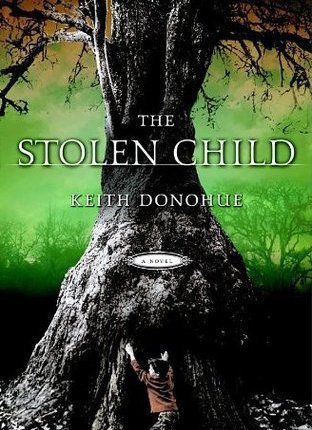
The Stolen Child by Keith Donohue

The Stolen Child by Keith Donohue

If you must give me a name, call me hobgoblin. Or better yet, I am a changeling- a word that describes within its own name what we are bound and intended to do. We kidnap a human child and replace him or her with one of our own.” pg 7, ebook.

The Stolen Child is the story of a changeling and the boy whose place he took, Henry Day.

The chapters alternate between the real Henry Day and the false Henry Day. It is a captivating story about magic, family and belonging.

Photo by Gary Barnes on Pexels.com

“This is my confession, too long delayed, which I have been afraid to make, and only now reveal because of the passing dangers to my own son. We change. I have changed.”

It also addresses the issues of the modern world and how technology and humanity has driven nature into corners.

The changelings are basically immortal children (but they can die through accidents) who live in the woods until their turn comes to rejoin the human world. Years before, they were all ripped from their families and made a part of the same group their replacement just deserted.

Their world is brutal, cold and always on the verge of collapse. One of their only rules is they don’t discuss a new changeling’s prior life during his new one.

Photo by Stijn Dijkstra on Pexels.com

The adjustment period from human to changeling is difficult enough without keeping the memories alive through the long years of their unchanging childhood.

But things aren’t much easier on the changelings who take the child’s place. If they are discovered, in the past, the changelings have been killed or their family members have gone mad from the strain.

They must carry a secret with them for the rest of their lives. It is as a lonely an existence as the changeling group separated from humanity in the forest.

Photo by ArtHouse Studio on Pexels.com

I enjoyed this story. Keith Donohue has a way with making the fantastical seem real and the miraculous into the mundane.

But that ending. It didn’t complete the excellent characters and storyline Donohue had constructed, in my mind.

Recommended for those who like to read modern fairy tales. Just don’t expect a life-changing finale.

Thanks for reading!

The Snow Child by Eowyn Ivey

The Snow Child by Eowyn Ivey

A beautiful, magic-tinged tale of an aging couple, the bleak Alaskan wilderness and a child who appears one day in the wood.

Mabel and Jack always wanted a child, but after suffering a miscarriage, they begin to lose hope of ever conceiving. Mabel suffers in female society without a child of her own.

She begs Jack to take her to Alaska for a fresh start. He agrees. But it doesn’t work.

The weather is dark and freezing. The ground is hard and takes more effort than Jack can give. They aren’t thriving.

“All her life she had believed in something more, in the mystery that shape-shifted at the edge of her senses. It was the flutter of moth wings on glass and the promise of river nymphs in the dappled creek beds. … Mabel could not remember the last time she caught such a flicker.” pg 6, ebook.

Photo by Sara Loeffler on Pexels.com

Then, out of the blue, a child magically appears during a snow storm.

She is so light on her feet and silent, Jack and Mabel don’t at first believe their eyes. The child travels with a fox and barely leaves prints to follow on the snow.

“What did he expect to find? A fairy-tale beast that holds young girls captive in a mountain cave? … Or nothing at all, no child, no tracks, no door, only insanity bared in the untouched snow? That is perhaps what he feared the most, that he would discover he had followed nothing more than an illusion.” pg 72, ebook.

Mabel remembers a Russian fairy tale from her childhood, of a couple who builds a girl out of snow. In the story within the story, the girl becomes real.

Photo by Ramirez Cooper on Pexels.com

Could Jack and Mabel have created the child they have always dreamed of?

“I am sorry to say no matter which version, the story ends badly. The little snow girl comes and goes with winter, but in the end she always melts.” pg 96, ebook.

How will Jack and Mabel’s story end?

Recommended for fans of historical fiction and tales that contain magical realism.

Photo by Gantas Vaiu010diulu0117nas on Pexels.com

“In my old age, I see that life itself is often more fantastic and terrible than the stories we believed as children, and that perhaps there is no harm in finding magic among the trees.” pg 189, ebook.

I thought The Snow Child was beautiful and well-told. Highly recommended.

I don’t think The Snow Child has been made into a film, yet, but it has been staged as a musical play.

Thanks for reading!

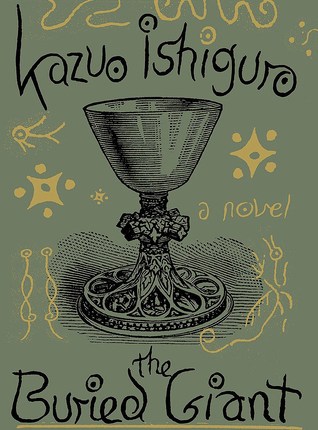
The Buried Giant by Kazuo Ishiguro

The Buried Giant by Kazuo Ishiguro

Axl and Beatrice are an aging married couple in the time of King Arthur. They’re on a quest to visit their son and face otherworldly threats like ogres and pixies as well as more regular dangers like Saxons on the road. They meet a boy named Edwin, who has a secret, and a warrior named Wistan, who is on a quest of his own.

Photo by Jimmy Chan on Pexels.com

Making matters even more difficult, there’s a mind-fogging mist covering the land that makes people forget things that just happened to them moments ago and the past is a puzzling blank. Axl and Beatrice would also like to solve the mystery of this mist, but first, they need to remember where their son lives.

This fantasy novel tackles the themes of love, forgiveness, and war- but, be warned, this is a ‘love it or hate it’ kind of read and will not appeal to everyone.

This is the first book I’ve read by Ishiguro and my feelings about it are complicated.

At first, I hated it because of the plodding pace and the fact that, although the author hinted at plenty of magical creatures and cryptic places, he didn’t do anything with them. But then, Ishiguro layered the themes on each other and brought the novel to a conclusion that I can’t stop thinking about… so I’m torn.

Photo by cottonbro on Pexels.com

Depending on where I was in the book, this was either a one star or a five star- so I’m going to come down right in the middle with three.

The mist is so pervasive throughout this story that it almost a character all of its own: “It’s queer the way the world’s forgetting people and things from only yesterday and the day before that. Like a sickness come over us all.” … She had said this while looking away into the mist-layered distance, but now she looked straight at him and he could see her eyes were filled with sadness and yearning.”pg 21, ebook.

A life lived without memories makes day-to-day living more simple, but remembering and appreciating the good times, almost impossible.

Throughout this story, I was cheering for Axl and Beatrice to remember their shared past. They’re my favorite characters in this tale.

Photo by Vlada Karpovich on Pexels.com

“Yet are you so certain, good mistress, you wish to be free of this mist? Is it not better some things remain hidden from our minds?” “It may be so for some, father, but not for us. Axl and I wish to have again the happy moments we shared together. To be robbed of them is as if a thief came in the night and took what’s most precious from us.” pg 113, ebook

Wistan is a Saxon warrior beyond compare, but he does not love Britons: “It was Britons under Arthur slaughtered our kind. … We’ve a duty to hate every man, woman and child of their blood. So promise me this. Should I fall before I pass to you my skills, promise me you’ll tend well this hatred in your heart. And should it ever flicker or threaten to die, shield it with care till the flame takes hold again.”pg 172, ebook.

Despite his efforts to remain detached, he develops a soft spot for Axl and Beatrice (Britons). Perhaps if he didn’t label people under blanket terms like “Britons” then he’d feel more kindly disposed towards them. Blind hate softens when you get to know someone and understand who they are. I think that is part of Ishiguro’s point… maybe.

Photo by Pixabay on Pexels.com

There were plenty of confusing moments in The Buried Giant for me.

What’s with the old lady slaughtering small animals in that ruin? What’s with the island where people go to live entirely by themselves? (Metaphor for death or a trip to fairyland?) What’s with Edwin’s memories? Or the priests who feed themselves to the vicious birds for things they can’t remember?

Or that ending? (Geez, that ending!)

I can see how this would make an excellent book club choice because there is so much that can be interpreted different ways and discussed.

Picking read alikes for this novel was tricky because the tone, pacing, and complexity of this book is so unique.

The Last Unicorn is a fairy tale with layers, like this read, but for young adults. Mythago Wood might be another solid choice, but it takes place in the modern era rather than the distant past. Or you could try: Suldrun’s Garden. I read that a long time ago and didn’t like it much, but it is a classic fantasy book set close to the same time as The Buried Giant.

Thanks for reading!

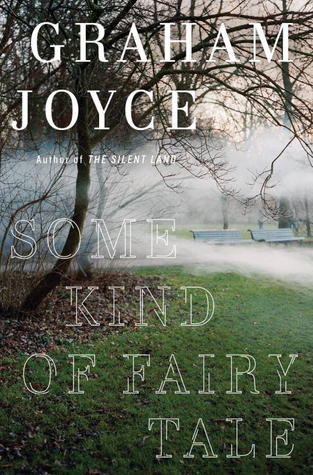
Some Kind of Fairy Tale by Graham Joyce

Some Kind of Fairy Tale by Graham Joyce

somekindoffairytaleSome Kind of Fairy Tale is a fantasy set in modern times. Peter is a farrier (shoes horses and fixes small, metallic things). He has a lovely wife and four beautiful children. He also has a sister whom he hasn’t seen for nearly twenty years, presumed dead. Imagine his surprise, when she shows up at their parent’s home on Christmas Day. Where has she been? Where indeed…

The magic in this book isn’t in your face, it’s hidden in the shadows and rocks of the woods and glens- very much like I imagine magic really is: “The Outwoods was one of the last remaining pockets of ancient forest… It was an eerie place, swinging between sunlight and damp, flaring light and shadow; a venue of twisted trees, its volcanic slopes of ash and granite ruptured by mysterious outcropping crags of the very oldest rocks in Britain.” pg 14, ebook.

I loved the twists and turns of the story and it had me questioning myself the entire time. Is Tara bonkers, injured in some way, or did something outside of her power actually spirit her away? “There is a veil to this world, thin as smoke, and it draws back occasionally and when it does we can see incredible things.” pg 142, ebook.

I also loved how Joyce used quotations from poetry, books, and an actual trial where a man was convicted of killing his wife because he thought she was a changeling (can you imagine?!) to introduce a few of the chapters. It was chilling- the deadly combination of superstition and violence and the trial in question happened, not in the dark ages, but 1895. Here’s Joseph Campbell’s thoughts that preface Chapter Twenty-Six: “Nevertheless- and here is a great key to the understanding of myth and symbol- the two kingdoms are actually one. The realm of the gods is a forgotten dimension of the world we know.” pg 169, ebook.

I did not like the surprising vulgarity of this tale, the few violent moments it contains, or when something terrible happens to a neighborhood cat but, if such things don’t bother you, you really must give Some Kind of Fairy Talea try. If you don’t already, it makes you believe in the possibility of other worlds and every day magic.

Some books with similar themes: Meeting the Other Crowd (non-fiction, but reads like fiction), Fairies: Real Encounters With Little People (non-fiction, again, reads like fiction) or Passport to Magonia: On UFOs, Folklore, and Parallel Worlds (classic work on real people and actual encounters with other worlds).

Thanks for reading!