How to Love (Mindfulness Essentials, #3) by Thich Nhat Hanh

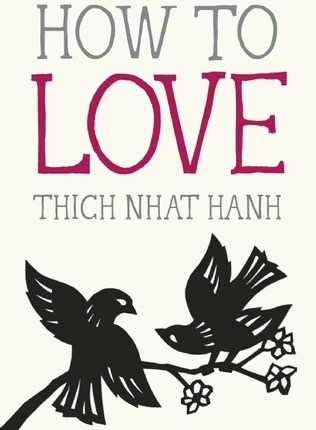
How to Love (Mindfulness Essentials, #3) by Thich Nhat Hanh

Thich Nhat Hanh, monk and spiritual leader, has written a short series of books he calls “Mindfulness Essentials.” This entry is all about love. You might ask yourself, what could a monk possibly know about love? Turns out, plenty.

Hanh applies the mindfulness techniques he’s learned over his lifetime of spiritual practice to the potentially thorny pathways of love, and the result is a gem of a read.

Photo by Asad Photo Maldives on Pexels.com

He counsels lovers to bring happiness to each other through being present in the moment and sharing your appreciation with each other. For example, if someone is distracted or worried, Hanh says you should draw their attention to the physical beauty of the world around them. In this way, you anchor the other in the present moment and ease the suffering of their busy mind.

This type of presence is a gift that you can give to anyone at anytime. And it doesn’t cost anything.

Hahn describes four defining traits of love as loving-kindness, joy, compassion, and equanimity. Then he examines these traits in detail so readers can ponder the mystery of love and see where, potentially, we may be falling short of these ideals.

Photo by Jasmine Carter on Pexels.com

He teaches all love begins with self love and walks hand-in-hand with spiritual practice. Through deep listening and the establishment of intimacy, Hahn believes love heals through empathy and “karuna,” a term that describes suffering with another and then doing what you can to end that suffering.

In addition, don’t take the other person for granted or make assumptions about what they may need. It is only through open communication that, Hahn believes, love lives.

He makes it sound so easy. I wish it was.

Photo by Pixabay on Pexels.com

Recommended for readers looking to learn about the spiritual side of love in a quick and easy read. Hanh doesn’t waste words and I am always in awe of what teachings he has to impart.

Thanks for reading!

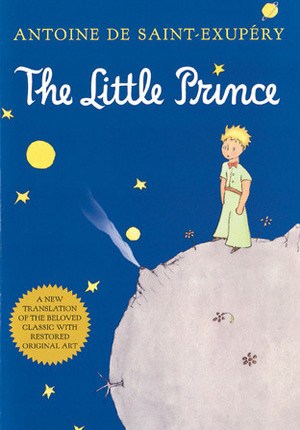
The Little Prince by Antoine de Saint-Exupéry

The Little Prince by Antoine de Saint-Exupéry

Similar to The AlchemistThe Little Prince is a metaphorical tale that people seem to love or not.

“In the face of an overpowering mystery, you don’t dare disobey. Absurd as it seemed, a thousand miles from all inhabited regions and in danger of death, I took a scrap of paper and a pen out of my pocket.” pg 4

Photo by Alex Andrews on Pexels.com

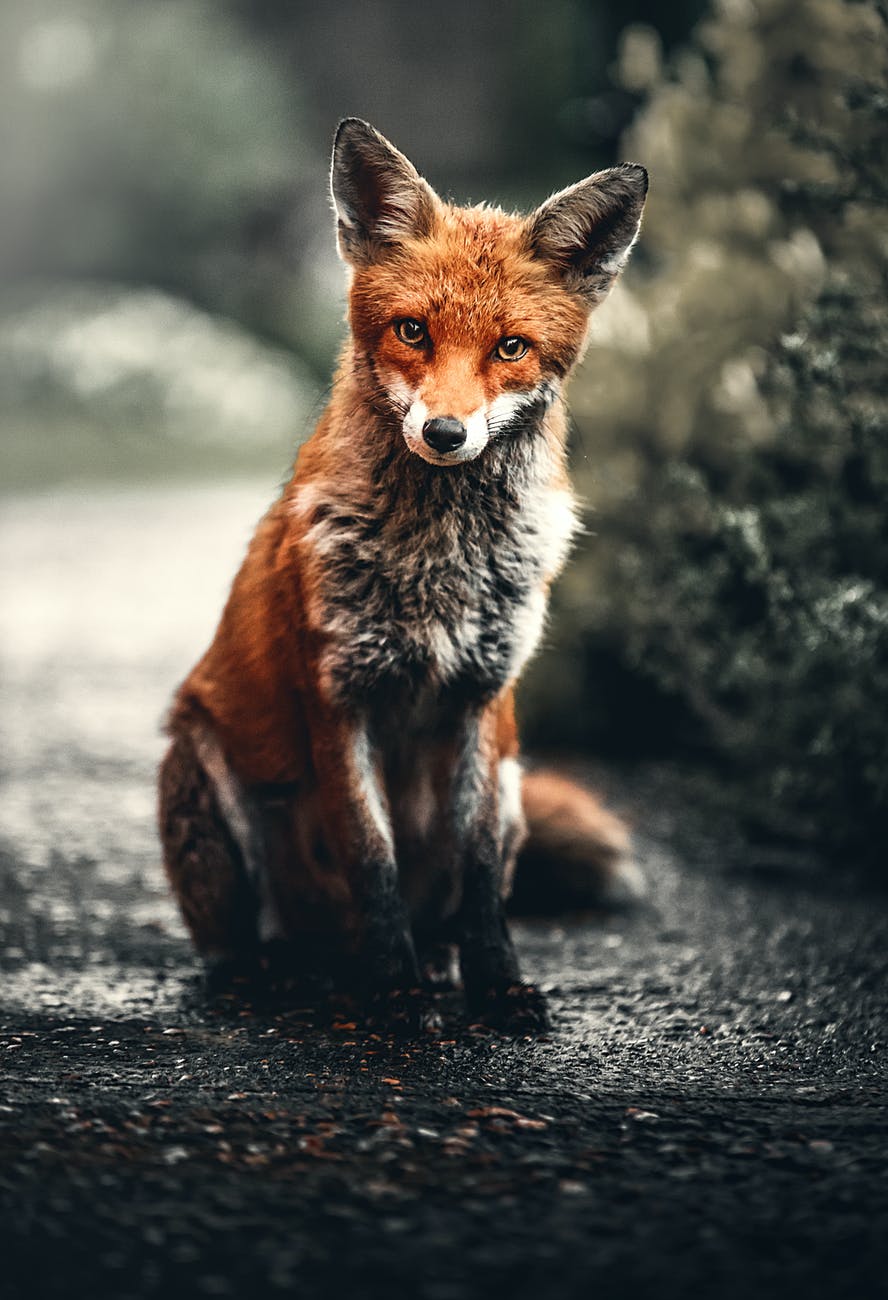
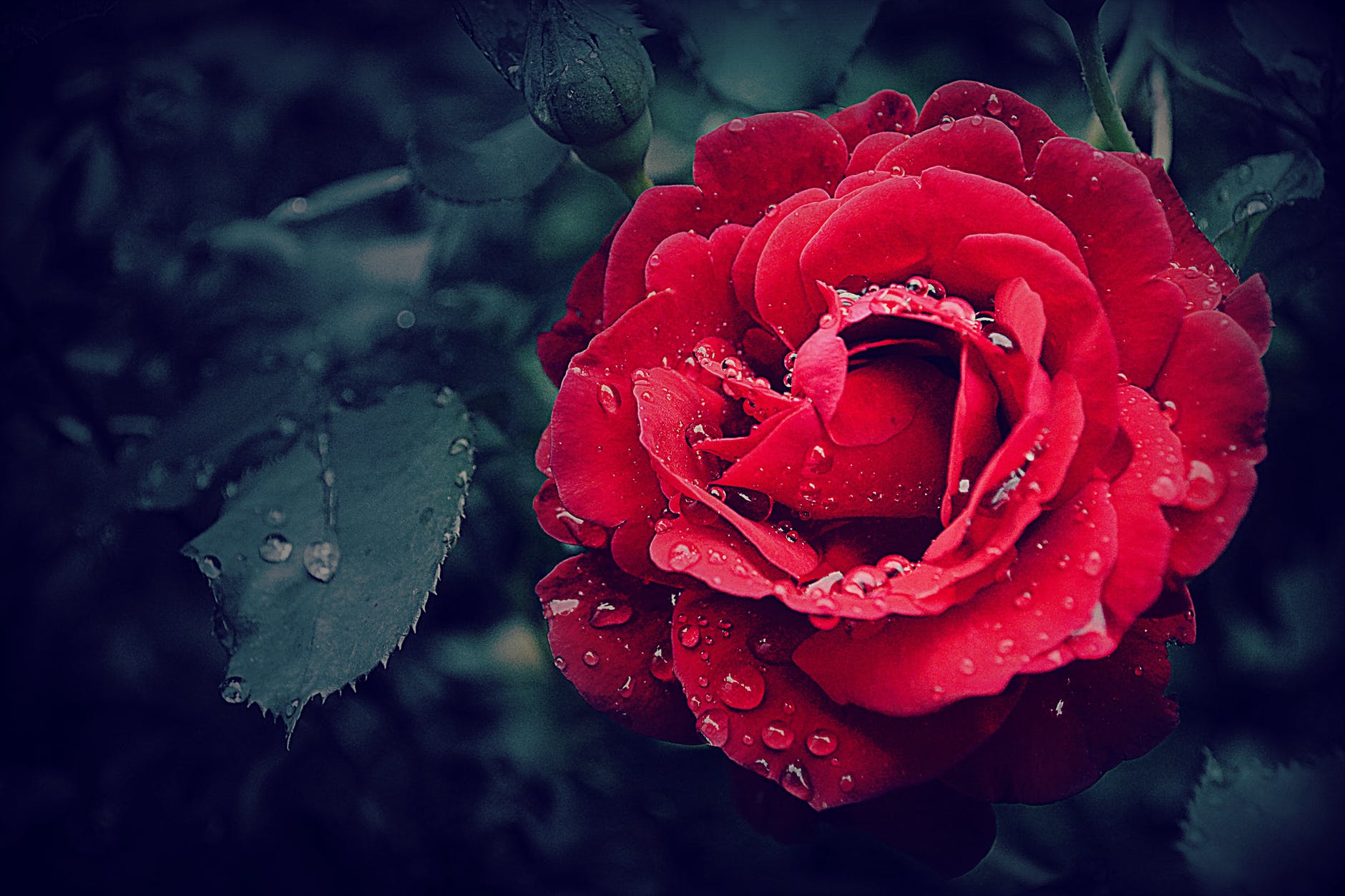
A pilot crashes in the desert and discovers a child wandering around who claims to be from another planet. His planet is so small that the prince can see multiple sunsets by simply moving his chair. And there’s a rose with four thorns that the prince loves. But he left this planet because of a disagreement with the rose. After a series of adventures where he meets dysfunctional adults on other planets, sees that his rose isn’t the only rose in the universe and learns about love from a fox, the prince decides he wants to go back home.

How he’s going to do that is not really clear.

So that’s the literal story.

The allegorical part has to do with how differently children perceive life than adults, what love is or means and how growing up, change or death affects love… among other things.

Here is my secret. It’s quite simple: One sees clearly only with the heart. Anything essential is invisible to the eyes.” pg 63

Photo by Jovana Nesic on Pexels.com

I felt like there were layers to this story that I haven’t grasped yet. I suppose this could also be about a man contemplating his inner child. Then again, I suppose this story could be about a lot of things.

This was the first time I’ve ever read it and, to my amusement, when I checked it out from the library, my 12-year-old said she has already read it. I asked her what she thought of it and she just shrugged her shoulders. I liked it more than a simple shoulder shrug, but, in conclusion, I think there was stuff I was missing.

This book has been adapted for the screen a couple times. One of the latest was in 2015.

Thanks for reading!

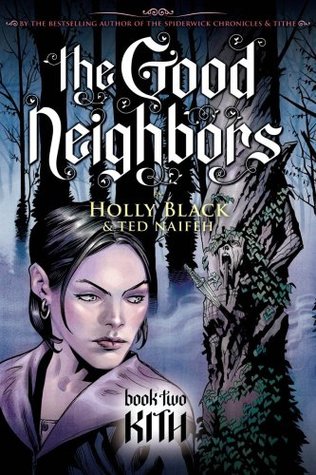
Kith (The Good Neighbors, #2) by Holly Black

Kith (The Good Neighbors, #2) by Holly Black
kith

Rue’s world is getting darker. In the last volume of The Good Neighbors, she discovered that faeries are real and not harmless, glitter-sparkled fantasies like fairy tales have described them.

In this installment, Rue learns about the perils of faerie enchantments and intricate faerie plans. Mixing magic with the every day world, human and faerie, is downright dangerous.

Rue also discovers more about her mother’s (Nia’s) family and not everything she learns is comforting.

“You can’t keep mom here against her will.” “Oh, can’t I?” “Give me a test then. A test like you gave my dad. I’ll win her from you.” “Don’t be silly. Nia, do you want to leave my hill? Does the moral world hold anymore allure for you?” pg 49. Yeah, does it?

Rue’s parents didn’t have a traditional first date. It’s awfully sad just how their two worlds came together.

Rue spends much of this volume trying to walk the line between the faerie and human worlds and feeling guilty about loving and belonging to both.

“Let me propose a toast. To love. In what we love best, our worst selves are revealed.” pg 52.

Love and jealousy play a large part in this story as does control and betrayal.

Sometimes, we ruin the relationships that mean the most to us because we’re careless or confused or bored. Other times, we may not be completely honest with ourselves about whether two people, or in this case human and faerie, even belonged together in the first place.

Rue stumbles her way through these questions in a teenage, angsty sort of way. She’s a flawed heroine, but I rather like her.

I’m looking forward to the last entry in the series.

See my review of the first book in the series: HERE.

Thanks for reading!

Dark Matter by Blake Crouch

Dark Matter by Blake Crouch

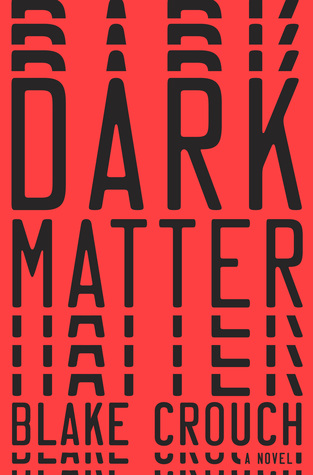
darkmatterDark Matter is a fantastic, sci-fi read about regret, love and quantum mechanics.

My book club picked this wild ride of a book and everybody took something different out of it.

We all enjoyed it, which is weird for us. Usually, we have opinions across the spectrum. This one, though, was universally loved. That’s saying something.

“In the shadow of this moment, my life is achingly beautiful. “I have an amazing family. A fulfilling job. We’re comfortable. Nobody’s sick.” pg 28. And then, something truly surprising happens. No spoilers!

I think that, as time passes, we grow comfortable in our lives, our marriages and relationships. Part of this book is about appreciating what you may take for granted. “He says, “It’s like we get so set in our ways, so entrenched in those grooves, we stop seeing our loved ones for who they are. But tonight, right now, I see you again, like the first time we met, when the sound of your voice and your smell was this new country.” pg 67.

The leader of my book club picked quotations that had to do about self-knowing and quantum mechanics. It was no surprise that mine were all about love. I’m one of the hopeless romantics of the group.

And one of the most open-minded: “We all live day to day completely oblivious to the fact that we’re a part of a much larger and stranger reality that we can possibly imagine.” pg 96. I truly believe that.

A local physics professor joined our circle and gave a short lecture on basic quantum mechanics and wave theory. But, you don’t have to be an expert on the subject to enjoy this story. It’s approachable science, like The Martian.

Recommended for book clubs, especially, but also anyone who wants an unbelievable story will probably love this too.

I heard that this is going to be made into a film- read the book anyway. It’s always better.

Thanks for reading!

The Love Poems of Rumi by Jalaluddin Rumi, Edited by Deepak Chopra

The Love Poems of Rumi by Jalaluddin Rumi, Edited by Deepak Chopra

I think Rumi’s poetry is unsurpassed in its mysticism and beauty.

“In your light I learn how to love.
In your beauty, how to make poems.”

“You dance inside my chest,
where no one sees you,”

“but sometimes I do, and that
sight becomes this art.”
pg 62

Photo by Rahul on Pexels.com

When my husband and I were first dating, we lived in different parts of the country. This was one of the books he sent when he found out that I loved poetry. He bought himself a copy too and we read it together- separately. Then we talked about it on the phone later. This was in the days before Skype or Facetime. It seems so quaint now.

“I desire you
more than food
or drink”

“My body
my senses
my mind
hunger for your taste”

“I can sense your presence
in my heart
although you belong
to all the world”

“I wait
with silent passion
for one gesture
one glance
from you”
pg 34

Photo by Wendy van Zyl on Pexels.com

I’ll be married for 11 years this May.

If you ever meet someone romantically interesting who tells you they like poetry, buy them a book of Rumi. You won’t regret it- at least, my husband says he doesn’t. 🙂

Thanks for reading!

The Buried Giant by Kazuo Ishiguro

The Buried Giant by Kazuo Ishiguro

Axl and Beatrice are an aging married couple in the time of King Arthur. They’re on a quest to visit their son and face otherworldly threats like ogres and pixies as well as more regular dangers like Saxons on the road. They meet a boy named Edwin, who has a secret, and a warrior named Wistan, who is on a quest of his own.

Photo by Jimmy Chan on Pexels.com

Making matters even more difficult, there’s a mind-fogging mist covering the land that makes people forget things that just happened to them moments ago and the past is a puzzling blank. Axl and Beatrice would also like to solve the mystery of this mist, but first, they need to remember where their son lives.

This fantasy novel tackles the themes of love, forgiveness, and war- but, be warned, this is a ‘love it or hate it’ kind of read and will not appeal to everyone.

This is the first book I’ve read by Ishiguro and my feelings about it are complicated.

At first, I hated it because of the plodding pace and the fact that, although the author hinted at plenty of magical creatures and cryptic places, he didn’t do anything with them. But then, Ishiguro layered the themes on each other and brought the novel to a conclusion that I can’t stop thinking about… so I’m torn.

Photo by cottonbro on Pexels.com

Depending on where I was in the book, this was either a one star or a five star- so I’m going to come down right in the middle with three.

The mist is so pervasive throughout this story that it almost a character all of its own: “It’s queer the way the world’s forgetting people and things from only yesterday and the day before that. Like a sickness come over us all.” … She had said this while looking away into the mist-layered distance, but now she looked straight at him and he could see her eyes were filled with sadness and yearning.”pg 21, ebook.

A life lived without memories makes day-to-day living more simple, but remembering and appreciating the good times, almost impossible.

Throughout this story, I was cheering for Axl and Beatrice to remember their shared past. They’re my favorite characters in this tale.

Photo by Vlada Karpovich on Pexels.com

“Yet are you so certain, good mistress, you wish to be free of this mist? Is it not better some things remain hidden from our minds?” “It may be so for some, father, but not for us. Axl and I wish to have again the happy moments we shared together. To be robbed of them is as if a thief came in the night and took what’s most precious from us.” pg 113, ebook

Wistan is a Saxon warrior beyond compare, but he does not love Britons: “It was Britons under Arthur slaughtered our kind. … We’ve a duty to hate every man, woman and child of their blood. So promise me this. Should I fall before I pass to you my skills, promise me you’ll tend well this hatred in your heart. And should it ever flicker or threaten to die, shield it with care till the flame takes hold again.”pg 172, ebook.

Despite his efforts to remain detached, he develops a soft spot for Axl and Beatrice (Britons). Perhaps if he didn’t label people under blanket terms like “Britons” then he’d feel more kindly disposed towards them. Blind hate softens when you get to know someone and understand who they are. I think that is part of Ishiguro’s point… maybe.

Photo by Pixabay on Pexels.com

There were plenty of confusing moments in The Buried Giant for me.

What’s with the old lady slaughtering small animals in that ruin? What’s with the island where people go to live entirely by themselves? (Metaphor for death or a trip to fairyland?) What’s with Edwin’s memories? Or the priests who feed themselves to the vicious birds for things they can’t remember?

Or that ending? (Geez, that ending!)

I can see how this would make an excellent book club choice because there is so much that can be interpreted different ways and discussed.

Picking read alikes for this novel was tricky because the tone, pacing, and complexity of this book is so unique.

The Last Unicorn is a fairy tale with layers, like this read, but for young adults. Mythago Wood might be another solid choice, but it takes place in the modern era rather than the distant past. Or you could try: Suldrun’s Garden. I read that a long time ago and didn’t like it much, but it is a classic fantasy book set close to the same time as The Buried Giant.

Thanks for reading!

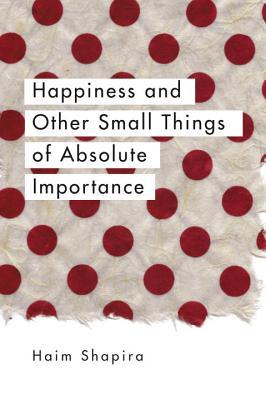
Happiness and Other Small Things of Absolute Importance by Haim Shapira

Happiness and Other Small Things of Absolute Importance by Haim Shapira
haimshapira

Happiness and Other Small Things of Absolute Importance does not resemble a self help book as much as it does a long, meandering lecture by your favorite professor.

Shapira talks about happiness, the passage of time, love, death, money, and so much more by tying it to classic literature and his own musings. I loved it.

There is little that Shapira doesn’t cover in these pages and, when you’re done, you feel as if you’ve just had a long discussion with a very dear friend.

“This little book is meant to change your perspective on almost everything in your life- and primarily the concept of happiness. … As serious and life-changing as the voyage to the land of the Things That Matter may be, it’s no less important to enjoy the ride.” loc 27, ebook. Shapira succeeds with flying colors.

His humor shines through his words. There aren’t any laugh-out-loud moments, but I found myself grinning throughout: “There’s empirical proof that How-To-Be-Happy Books are useless. If just a shred of the promises made in many of those books came true, the world would be knee-deep in incomprehensible quantities of bliss. We all know that this is not the case.” loc 73, ebook. True story.

My favorite parts were about the importance of a positive mind-set and love.

Photo by Sharon McCutcheon on Pexels.com

This passage is about being positive: “Anyone who has lived on this planet long enough knows that pessimism is the natural way to think. It requires no effort, like a rock rolling downhill. It’s much harder to push the rock up the hill, to think positively. Just see the effort it takes to think like (Winnie the) Pooh, to find a bit of magic and grace in everything. That is a mission worthy of the wise.” loc 387 I agree.

I also found the sections on anger and forgiveness to be very meaningful.

Here, Shapira is talking about the futility of being angry and how we can learn to control our tempers, rather than have them control us: “My wife, a chemical engineer by profession, has reached an important understanding. In nature, she told me, each substance has a typical, unique and fixed boiling point. We can artificially change it, however, by using other substances that act as inhibitors, thereby raising the boiling point. For example, anyone who cooks knows that salted water takes longer to boil than water alone. The same applies to people. Their boiling points can be raised. Wisdom can be salt for our water…” loc 610, ebook.

Recommended for spiritual seekers, happiness chasers, and anyone who wants to learn more about themselves. This book is a gem.

Some similar reading, if you liked this: How to Talk About Places You’ve Never Been: On the Importance of Armchair Travel, The End of Self-Help: Discovering Peace and Happiness Right at the Heart of Your Messy, Scary, Brilliant Life, or The Power of the Heart: Finding Your True Purpose in Life.

Thank you to NetGalley and Watkins Publishing for a free digital copy of this book.  And, thank you for reading!