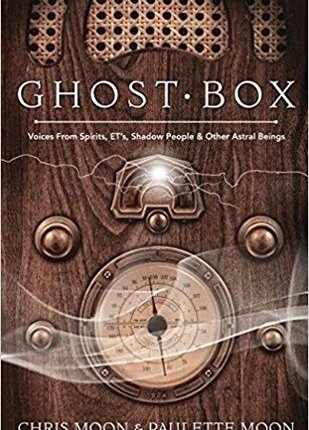
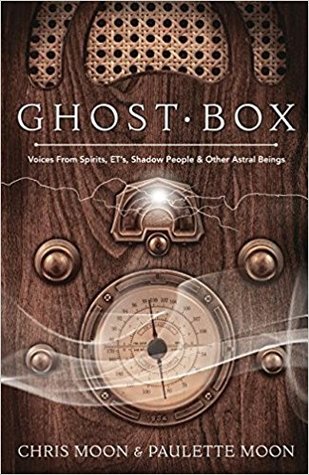
Ghost Box: Voices from Spirits, Ets, Shadow People & Other Astral Beings by Chris Moon, Paulette Moon

Ghost Box: Voices from Spirits, Ets, Shadow People & Other Astral Beings by Chris Moon, Paulette Moon
ghost box

Ghost Box is Chris Moon’s collection of paranormal investigations that he has conducted using electronic voice phenomena (EVP) and his own intuitive skills.

There is little to no science presented in this book so if you’re interested in the tech-side of paranormal investigation, you’ll have to keep looking.

Readers who want concrete information about the afterlife may grow a tad frustrated with this book. The majority of Moon’s investigations are conducted through feelings and feedback from the people he’s interacting with.

That’s not to say that he doesn’t have some solid hits. Occasionally, the information that he receives through his “ghost box” is absolutely spot on. It gave me the chills.

I watched a documentary once about Mario Bacci, an Italian man who has been receiving other worldly voices through an old radio for years. He has a group of devoted followers that gathers around him to hear his sessions with his own “ghost box”. They claim to hear their deceased family members through Bacci’s radio.

That documentary convinced me that this phenomena is real because of how the people reacted when they heard the noises coming through the radio.

Moon had his doubts at first too. When he first receives the box, he doesn’t think it will work. But, through using it and the evidence it provides, he becomes convinced that it is the real deal too.

Photo by Igor Mashkov on Pexels.com

“The machine facilitates real-time two-way communication with the spirit world and, as soon as my dad and I experienced it in action, we knew it would revolutionize the paranormal investigation field.” loc 95, ebook.

He receives this machine from Frank Sumption- an electrical tech who claims to have completed Thomas Edison’s ‘Telephone to the Dead.’

I didn’t even know that was a thing. “Apparently, Edison’s mother was a Spiritualist and he was very close to her. After her death, Edison started to re-examine his views on the afterlife. He realized that since energy could neither be created nor destroyed and that it could only change form, we humans (being energy) had to go somewhere.” loc 224. Fascinating.

The rest of the book, including aliens speaking through the ghost box and sightings of shadow people, I didn’t connect with as much. But, if you’re interested in that type of information, Moon’s book might be something that you’d really enjoy.

Thank you to NetGalley and Llewellyn Publications for a free digital copy of this book. Reminder: the brief quotations that I pulled for this review may change in the final printed version.

Thanks for reading!

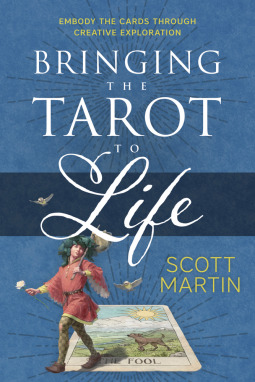
Bringing the Tarot to Life: Embody the Cards Through Creative Exploration by Scott Martin

Bringing the Tarot to Life: Embody the Cards Through Creative Exploration  by Scott Martin
bringingthetarot

Bringing the Tarot to Life is a unique tarot manual that invites the reader to use her own imagination in assimilating and interpreting the cards. I’ve never read anything quite like it.

Scott Martin was an actor and theater teacher for many years. “It struck me that just as an actor delves into his character, so a student of the tarot can explore the archetypes that are represented in the seventy-eight cards in the tarot. He can develop his intuitive abilities by participating in the written and performance exercises an actor uses to hone his talent and to create his role in a play.” loc 112-128, ebook.

He based the first two sections of the book on that idea and created a series of theater-inspired games and exploratory exercises to be played in groups or alone.

The last portion of the book consists of Martin’s interpretations of the cards. I found that section to be the least interesting, but there could be descriptions in those pages that others may not have heard. So, don’t let me deter you.

There was also some trivia included for tarot enthusiasts. Something that I didn’t know was that before Paul Foster Case helped to form The Golden Dawn, he was in theater.

Paul Foster Case became interested in tarot in 1900 when someone asked him where he thought playing cards came from. … Prior to that, he was actively involved in the theater. He was the musical director on a showboat and later worked in musical theater and vaudeville.” loc 128, ebook. But old man river, he just keeps rolling along…

Photo by Mikhail Nilov on Pexels.com

I agreed with Martin’s thoughts on improving your intuition: “How does one develop his intuition? One obvious answer is to expose the mind to more creative and imaginative ways to thinking and looking at the world. Creativity and intuition are inextricably linked.” loc 164. Indeed.

My favorite of the exercises presented in this book is “I Am What I Do” loc 231, ebook. It encourages readers to assign jobs to the different cards.

“Many people in life, as well as characters in plays, define themselves to a great extent in terms of what they do. … the possibilities are virtually limitless: The Ten of Pentacles- a family counselor. The Five of Swords- a crooked hedge fund manager. The Knight of Cups- a poet.” loc 231.

I thought that was hilarious. And, I was looking at the cards in ways that I never had before. Talk about ‘Bringing the Tarot to Life’!

Recommended for beginners or advanced practitioners of tarot cards. Every reader will most likely find an exercise or two to their liking because of the huge variety Martin offers.

Thank you to NetGalley and Llewellyn publishing for a free digital advance reader’s copy of this book. Reminder: the brief quotations that I cited in this review may change slightly in the final published version.

And, thanks for reading!

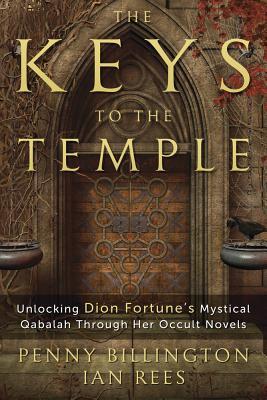
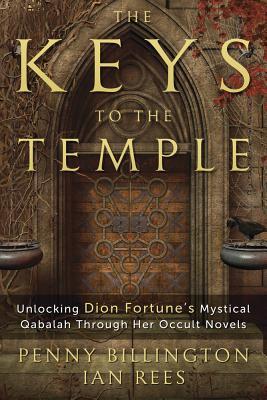
The Keys to the Temple: Unlocking Dion Fortune’s Mystical Qabalah Through Her Occult Novels by Penny Billington, Ian Rees

The Keys to the Temple: Unlocking Dion Fortune’s Mystical Qabalah Through Her Occult Novels by Penny Billington, Ian Rees
keystothetemple

I’d recommend The Keys to the Temple for mid-level to advanced students of the Qabalah. As simple as the authors have made it, they still assume that you know the worlds, paths and general theory. If you haven’t studied The Mystical Qabalah, this won’t make any sense at all.

If you have the background and the interest, The Keys to the Temple may be of great interest to you. This book contains one of the clearest explanations of the path of the spiritual journey that I have ever read.

Let’s start from the top. What is the Qabalah? “The Qabalah is a spiritual system that has been practiced secretly in Europe since at least the 12th century though it draws on deep roots within Judeo Christian tradition. loc 3117.

The Mystical Qabalah and Israel Regardie’s classic A Garden of Pomegranates: Skrying on the Tree of Life were my stepping stones into another way of viewing reality.

I have read criticisms of the books, that they’re too cerebral or dry theory. “However when most people encounter the book they are confronted by a dense-seeming text with long lists of apparently unrelated facts: the idea that this is linked with the vivid imagery and dynamism of the novels can be difficult to understand.” loc 172. I agree that it is “dense” but since it was my introduction to the stuff, I didn’t know any better.

Photo by Matheus Bertelli on Pexels.com

Dion Fortune went a step further and wrote fictional novels to put Qabalistic theory into the real world. The Keys to the Temple takes these books apart by plot, character, theory and then gives practical exercises for personal meditation on the works.

That last part, the practical exercises, is the most important in my mind. It’s like learning to ride a bike. You can read books about it and watch other people riding bikes or talk about riding bikes. But, it’s not until you ride yourself that you get the experience and thrill of it.

With this book, the authors have handed you a bike and shown you the door of the garage. It’s just up to you to ride out there. “Anyone can read this book, but only those who do the work will gain anything from it. The secret of magic is that it is experiential.” loc 2374.

Photo by Pixabay on Pexels.com

Fortune was also deep into Jungian psychology. “She came to significant conclusions when contrasting psychological and magical approaches in prompting change. Fortune was a forward thinker, and the first to acknowledge that ideas and theories could develop for the better. Her stories seem almost to anticipate the direction psychology would travel, into area that might now be described as spiritual psychology.” loc 3117. And this was in the early part of the 19th century. She truly was a woman ahead of her time.

I’m excited about this book and its potential. The Western Mystery tradition never gets its own shelf in the book stores. The new textbooks, what few there are, are mixed in with the New Age/New Thought works. But, that’s not quite right. It’s truly a category all of its own.

I think the time has come for these practices to be re-introduced to the world. The Keys to the Temple is a step in the right direction.

Thank you to NetGalley and Llewellyn Publications for a free digital copy of this book.

Thanks for reading!

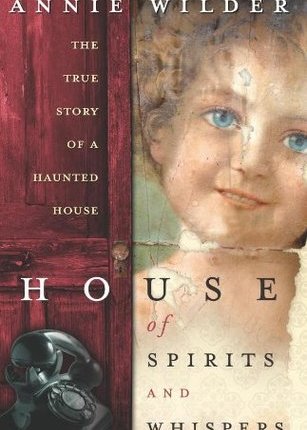
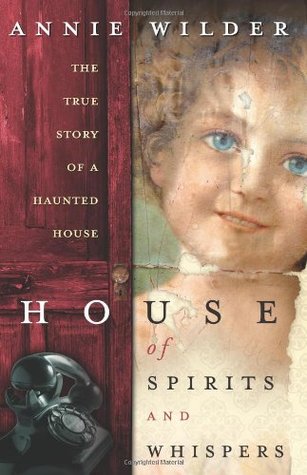
House of Spirits and Whispers: The True Story of a Haunted House by Annie Wilder

House of Spirits and Whispers: The True Story of a Haunted House  by Annie Wilder
houseofspirits

Annie Wilder is a very sensitive person. Almost from the moment she moves into her house, strange things start to happen. More than just creaking doors, Annie experiences full blown apparitions, strange noises in her furnace pipes, and has out-of-body encounters with turn of the century woman in period clothing.

Far from being freaked out by it all, though she is at times, Annie learns how to live with the spirits and takes pride in her haunted house.

From a young age, Annie accepted her other worldly perceptions saying: “.. a strong intuitive ability runs in my family. My mom can see and hear spirits, and both her mother and mother’s mother, who were Irish, was psychic, too.” pg 3.

It seems to me that if you grow up with these sorts of things happening around you, it isn’t too hard to carry them on into your adult life.

Not that things go entirely smoothly. When Annie realizes that something completely out of the ordinary is going on in her new digs, she freaks out a little bit.: “I needed to regain some sense of perspective and power. A weird dichotomy was developing in my relationship with my house. I loved my house in the daytime but felt terrified and powerless in it at night.” pg 27

Ghosts are a large part of her experience, but not the whole enchilada. “The house seemed super conducive to astral activity; besides seeing and hearing spirits, I started seeing lights.” pg 53. Lest you think that Annie is having a break with reality, some of her relatives stay in the house and see the same thing when she’s not even there. I wonder if she’s ever considered running a bed and breakfast.

She also has a scientifically-minded boyfriend who has strange things happen to him too: “It also meant a lot to me that Rex, with his objective, left-brain way of perceiving the world, was seeing and hearing some of the same extraordinary things that I was, and couldn’t explain them with regular science. He brought up the bumblebee as an example of something that defies the known laws of physics. Because of the size and mass of their bodies compared to the size of their wings, bumblebees should not be able to fly. But they do.” pgs 99-100. I didn’t know that.

Recommended for people who are interested in paranormal experiences, ghosts, and other unexplained phenomena, Annie Wilder introduces you to her house of spirits and whispers and it never gets too out of hand or scary. Some further recommended reading: True Tales of Ghostly Encounters or Hunt for the Skinwalker: Science Confronts the Unexplained at a Remote Ranch in Utah.

Thanks for reading!

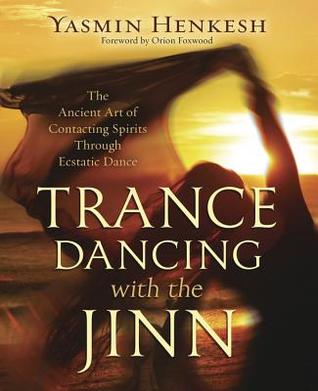
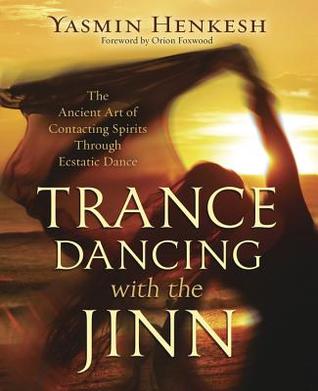
Trance Dancing with the Jinn: The Ancient Art of Contacting Spirits Through Ecstatic Dance by Yasmin Henkesh

Trance Dancing with the Jinn: The Ancient Art of Contacting Spirits Through Ecstatic Dance by Yasmin Henkesh
trancedancing

I read The Golem and the Jinni a few months ago and realized that I knew next to nothing about the mythology of the Jinn. Not that I’m an expert on golems either, but I had at least been exposed to the idea.

Trance Dancing with the Jinn is a book about kinetic meditation (trance dancing) but it also documents the history of the Jinn as written in the Quran and other sources as well as the biological and historical reasons that humans go into trance.

In addition to the mythology and biology, I learned about how trance dancing at meetings called “zars” is an outlet for women who have very little control over any other aspect their lives in Northern Africa.

The author is clearly a believer in the existence of “the Invisibles” but, if you don’t share the same beliefs, this book still has plenty of fascinating information for those interested in cultural, religious, or feminist studies and ritual dance.

The author asks the reader to have an open mind: “Do you believe in Invisibles or do you consider them an outdated tradition from an ignorant past? What if you had a safe, drug-free way to see for yourself? Would you be curious enough to try it- even though the method takes practice and you probably won’t succeed on your first attempt?” loc 200.

Yeah, I’m down for that.

I don’t think it is that difficult to entertain the idea that there may be intelligences that exist that can’t be perceived in normal states of consciousness.

As Henkesh reminds us: “According to NASA’s website, “Everything on Earth, everything ever observed by all our instruments, all normal matter- adds up to less than 5% of the Universe… The rest is a complete mystery, but an important one. Roughly 68% of the Universe is dark energy, while dark matter makes up about 27%.” This energy and matter are called “dark” because they do not reflect light… or interact with electromagnetic forces. We only know they are there by their effects on gravity…” loc 233, ebook.

Photo by Pixabay on Pexels.com

Only 5% has been observed- that leaves a whole lot that we haven’t even looked at yet.

Western researchers are still discovering how and why trance works, but they at least acknowledge that it exists: “Neurologist Oliver Sacks once wrote, “Normal waking consciousness, rational consciousness as we call it, is but one special type of consciousness, whilst all about it, parted from it by the flimsiest of screens, live entirely different potential forms of consciousness.” loc 267.

The most fascinating part of this book was the emotional outlet that trance dancing has allowed women for hundreds of years: “… thousands of women in Egypt still turn to the zar when modern medicine fails them. If doctors cannot find the cause of their physical or mental ailments, they assume supernatural forces are involved. … Diagnostic zars can last anywhere from a day in Egypt to a week in Sudan and Ethiopia.” loc 2530-2548

I had never heard of this and looked up some examples of zar/trance dancing on YouTube. Go ahead, take a look:

I can see how such flowing, uninhibited movements would feel therapeutic now, so I can’t imagine the relief I’d feel if I was not allowed to have a job or leave the house without a male by my side. I’d probably be trance dancing non-stop.

Some further reading/listening for those interested in trance: Ecstatic Body Postures: An Alternate Reality Workbook, Seeking Heaven, or Brainwave Journey.

Thank you to NetGalley and Llewellyn Publications for a free digital copy of this book! And, thank you for reading.