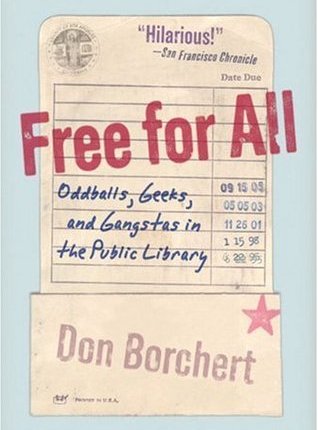
Free for All: Oddballs, Geeks, and Gangstas in the Public Library by Don Borchert

Free for All: Oddballs, Geeks, and Gangstas in the Public Library by Don Borchert

Free for All is an accurate depiction of life as a librarian in a public library.

Sometimes, the job is funny. Other times, it’s incredibly sad. If you’ve never worked in a library system, this book will reveal some of the secrets of a librarian’s day-to-day life.

Photo by Pixabay on Pexels.com

Before I worked at a public library, I thought it was a quiet, organized mecca for students and bookworms. Now, that I’ve spent some time on the librarian-side of the desk, I know better. My idea of a library was far too simple.

It is a study hall, archive, playroom, home for the homeless, kitchen, bank, movie theater, video game store, newspaper kiosk and so much more. I guess the appropriate question is: what doesn’t a library do?

And a public librarian is so much more than just a librarian. She is a counselor, a computer wizard, a curator of excellent and free entertainment.

She talks to the lonely, uplifts the lost and helps the public navigate the dangerous waters of the internet.

Librarians are my heroes.

Photo by Element5 Digital on Pexels.com

If I ever cease writing for a living, look for me at the library. Odds are, I’ll end up back there.

Perhaps some of the policies at Don Borchert’s library have changed, but at the time that he wrote this book, they charged 50 cents to put a hold in for a patron. This policy shocked me, as my library always offered that service for free.

Borchert cheerfully documents the difficulties with summer reading people vs the school year regulars. It’s a real problem.

If Borchert’s book is too edgy for you- he uses rough language and doesn’t hold back on some of his opinions- read Gina Sheridan’s I Work at a Public Library: A Collection of Crazy Stories from the Stacks.

Both are excellent and realistic non-fiction books about the trials, tribulations, and, sometimes, life-enhancing satisfaction of working at the library.

Thanks for reading!

The Book of Speculation by Erika Swyler

The Book of Speculation by Erika Swyler

Simon works in the reference section at a struggling library in Maine, whose biggest draw is a whaling archive. He’s hard up for money and his historic home on the coast is in such disrepair that it’s about to fall into the ocean.

One day, Simon receives a very old book in the mail. Strangely, it has some of his family member’s names in it.

Photo by Suzy Hazelwood on Pexels.com

The text describes a circus, a boy who can’t speak, and a girl who can hold her breath so long that they call her a mermaid.

But, what does this have to do with his family? And why do so many of the people in the book die on the same day?

In addition to the mystery, The Book of Speculation includes one or two love stories: “Redheaded and pretty, Alice has her father’s smile and a way with kids. She’s better with people than I am, which is why she handles programming and I’m in reference.”pg 9, ebook.

Photo by Maycon Marmo on Pexels.com

I did not like how the reference section was stereotypically depicted as the “bad with people” part of the library. I have a soft spot in my heart for those reference types, having been one myself in my previous job. 🙂

Also, for being a librarian, Simon doesn’t act very librarian-y.

Take this part when he receives the mysterious book: “The box contains a good-sized book, carefully wrapped. .. A small shock runs through me. It’s very old, not a book to be handled with naked fingers, but seeing as it’s already ruined, I give in to the quiet thrill of touching something with history.” pg 15.

Photo by cottonbro on Pexels.com

No self-respecting archivist would do that. “Already ruined” so who cares? I don’t think so.

The fantasy/magic portions of this book are subtle and written so that one could almost believe that it was real.

Take Amos’ (one of the characters from the old book) ability to disappear: “People may live for a century without discovering the secret of vanishing. The boy found it because he was free to listen to the ground humming, the subtle moving of soil, and the breathing of water- a whisper barely discernible over the sound of a heartbeat. Water was the key.” pg 18 ebook.

Photo by Jess Vide on Pexels.com

The history recorded in the old book is revealed to the reader through a series of flashbacks. That bothered some of my friends on Goodreads but the circus folk stories are my favorite parts of this book.

The characterizations are ok, nothing extraordinary.

My favorite minor character, Benno, could have used more fleshing out: “After a time Benno climbed down from the wagon. “You are my friend and you are kind,” he said quietly. “More than is good. I was taught to watch for gentle souls, as they’ve not the wit to look after themselves.” pg 124, ebook.

Some similar reads (perhaps a bit more magical than this): The Golem and the JinniMagonia or The Mermaid’s Sister.

Thanks for reading!

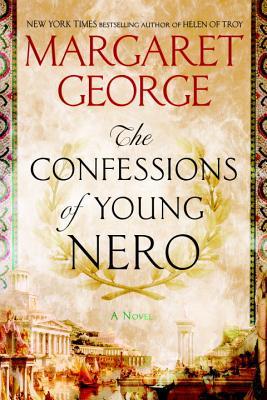
The Confessions of Young Nero (Nero #1) by Margaret George

The Confessions of Young Nero (Nero #1)  by Margaret George

margaretgeorge**Warning: minor spoilers ahead unless you’re familiar with Roman history.**
Margaret George has done it again and produced yet another triumph of historical fiction. This one follows the much maligned Nero from his humble beginnings in a lower branch of the imperial family tree to the prize itself, Roman emperor. Then, it ends on an epic cliff hanger, but I forgive her because it is so awesome. If you can’t handle that kind of wait, you may want to hold off on reading this until the next installment is out.

All I knew about Nero (before this book) was that he “fiddled while Rome burned.” George combines the research of a scientist with the storytelling ability of a master writer to bring this man’s story to life. I have to admit- I actually felt sorry for the guy. Yes, despite the orgies, outlandish expenditures, palatial living, and god-like status, poor Nero, like all of us, just wanted to be loved. At least, so says Margaret George.

“It was hard to keep the family… straight. There was so much intermarrying that everyone seemed related to everyone else.” loc 219. Like British aristocracy, the upper echelons of Roman society were actually quite small and so everyone actually knew each other very well. Their children married, they frequently divorced and remarried each other, and excuses were made for the very close marriages. Nero’s mother, for instance, marries her uncle.  Abhorrent to modern eyes, perhaps, but like royalty from many different ages, somehow the rules were bent and it was allowed.

From his very earliest days, Nero watches others scheme, poison, and claw their way towards power. It really messes him up. “It was my first, and most brutal, lesson in what lengths to which evil people will go, and for what flimsy reasons. I have never forgotten it, nor let down my guard since. Let them call me cruel. Better that than dead.” loc 544, ebook. Just to put it into perspective, Nero’s uncle, the Emperor Caligula, once declared war on the god, Poseidon, and had his soldiers run into the ocean and stab the waves with their swords- totally bonkers. George suggests throughout the story that Nero is not only trying to outshine his relatives because of natural ambition, but also because he believes there is a curse in his blood. With an extended family like that, I can see his point.

George also does a good job bringing Rome and her curious attitudes about everyone not Roman to life. Nero is fond of the Greeks- their music, poetry, and athleticism. But, to the Romans, that sort of cultural appreciation is unmanly and unnatural. I think it was just an extension of the very human attitude of “us vs them” but Romans took it very badly when Nero wanted to perform music in public (gasp), wear a tunic rather than a toga (double gasp), and race a chariot in the Coliseum (passes out on the floor). These things were not done but Nero insisted on doing them. Compared to the things that celebrities get away with today, those behavioral peculiarities seem so tame.

“I learned to live with the knowledge I had; people can get used to anything, even horror, and it begins to feel normal. And the thought that I had inherited the blood of murderers seemed less threatening than that my mother… might kill me. Thus we make peace with ourselves and our weaknesses, for there is always someone worse to focus on.” loc 1732, ebook. Poor, poor Nero. Can you imagine being afraid that you’d die at the hand of your mother? It really makes one feel like her anxieties are rather trivial. Stressed about a dirty house? Yeah, Nero’s mom might kill him today or tomorrow or the next time he’s not paying attention. Get over it!

Highly recommended for fans of historical fiction, ancient Rome, or people who want to get lost in a story. Margaret George is amazing. I own four of her books and, when this is published, I just may have to pick it up too. Coming from a (former) librarian, this is really one of the highest compliments I can give to an author. Do yourself a favor, if you like this genre and haven’t tried her yet, pick up Margaret George.

Thank you to NetGalley and Berkley Publishing for a free advance reader copy of this book.

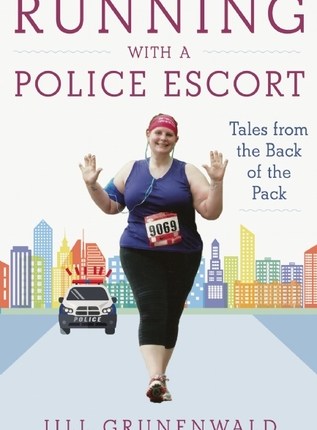
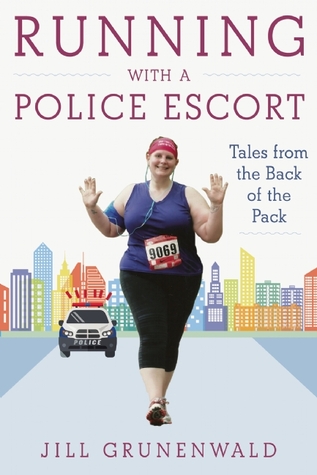
Running with a Police Escort: Tales from the Back of the Pack by Jill Grunenwald

Running with a Police Escort: Tales from the Back of the Pack by Jill Grunenwald
runningwithapoliceescort

A Cleveland librarian chronicles the emergence of her inner road warrior. Jill was very unhealthy- tipping the scales at nearly 300 pounds when an email from her younger sister convinced her that she needs to change her ways.

Self described “slow runner”, Jill often finds herself at the end of races with organizers closing the course behind her. Thus the title of her eventual podcast and this book: Running with a Police Escort.

Jill reminded me of my younger sister, another “slow runner” who took up running for health reasons.

I have a great deal of respect for people who have the courage to make major life changes- be that taking up a sport, counting calories, or giving up meat products.

It is so easy to let life determine who you are becoming instead of taking full responsibility for your choices. Jill’s point in this memoir is that it doesn’t matter how fast or slow you go, you win if you’re making even the smallest steps towards your goals.

In this passage, she’s closing down the race, like usual: “…I happened to see one of the policemen on the street gesture to get my attention and point to the car following me. I pulled out my earbuds and from the sidewalk he called out with a supportive smile, “You must be a very important person to have a police escort!” loc 72, ebook.

Jill relates her unathletic/uncoordinated childhood and I felt a lot of sympathy for her bookworm tendencies: “While (my classmates) ran wild, I’d find a quiet corner along the brick wall of the building and bury myself in a book. My favorites were the Scary Stories to Tell in the Dark series, the macabre illustrations haunting my dreams.” loc 162, ebook.

Photo by Ricardo Esquivel on Pexels.com

That probably would have been one of my favorites too, but my school library’s copy was always checked out. Not that I’m bitter or anything.

Jill reminds the reader that people don’t get to nearly 300 pounds without a reason why- an underlying pain that they’re insulating themselves from. For Jill, it seems that she was chronically lacking in self esteem and self love.

I loved reading about her getting her mojo back: Truthfully, I didn’t even know how much I weighed because the analog scale that I owned didn’t go up that high. … I don’t know if I can verbally express what it means to be so heavy that you literally outweigh your scale’s capabilities. Like, seriously. Just think about that for a second, okay? A scale has a pretty basic function… and I had gotten so big, I put my scale out of work.” loc 312, ebook.

Running with a Police Escort is a great book for those who are struggling with their weight or the decision to become more healthy.

Jill isn’t afraid to laugh at herself and there is quite a lot of wisdom in these pages: “…it’s these simple decisions that compound as we make them every single second of every single moment of every single day. It is not the Friday nights or Saturday evenings that determine who we are and where we go: it is the Thursday afternoons or Monday mornings that mentor and counsel our being into a full-fledged sense of self.” loc 818, ebook.

Beware, there’s a bunch of swearing too. If you don’t appreciate that, you may have to find another book.

I also found it to be repetitive after the first couple of races, but it’s clear that Jill is writing from the heart and has been changed by every single mile that she’s undertaken. Share this book with others who may need encouragement because Jill is a natural cheerleader for the novice runner or athlete of any type.

Some further reading: Confessions of an Unlikely Runner: A Guide to Racing and Obstacle Courses for the Averagely Fit and Halfway Dedicated, Running Like a Girl, and Down Size: 12 Truths for Turning Pants-Splitting Frustration into Pants-Fitting Success.

Thank you to NetGalley and Skyhorse Publishing for a free advance reading copy of this book!

Thanks for reading!

Unshelved Vol. 1 by Bill Barnes and Gene Ambaum

Unshelved Vol. 1 by Bill Barnes and Gene Ambaum

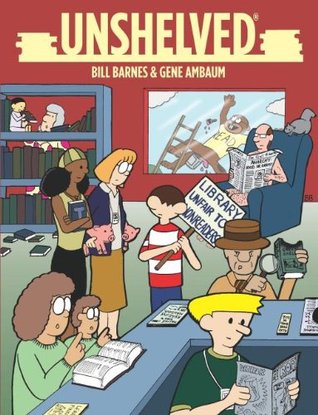
I enjoyed Unshelved, a comic about a public library, its librarians, and the ridiculousness that goes on when the library is open.  But, sometimes the cartoon hit too close to home. I’ve been treated and spoken to like Dewey at the information desk, tons of times. So, librarians beware. Some of these are almost too true to be funny. On the other hand, I like my job, so I’ve never responded like Dewey. It’s cathartic, reading his sarcastic responses to ridiculous questions and situations.

My library has this book classified as young adult and I feel that it is an appropriate categorization.  There’s nothing in here that I would find objectionable for a younger teen to read but some of the interpersonal problems may go over the head of a 12 year old.

Favorite character: Buddy the Book Beaver! Of course.

Favorite cartoons: The one where Merv writes a brochure to get more teens to come to the library pg 33 (My department is responsible for the young adult room, so I really appreciated the humor).

When the patron asks Dewey if he has any pens when he’s standing next to a pile of pens (Happens to me all the time). bottom of pg 41

And finally, when Dewey starts dispensing Eastern philosophy to the library patrons: “Search without searching. Look for nothing and find everything. Read the book but don’t look at the words.” top of pg 103. That’s probably me in about thirty years.

If you enjoyed Unshelved, you may want to pick up Rex Libris, Volume I: I, Librarian (Rex Libris, #1-5) by James Turner (another librarian themed comic) or The Black Belt Librarian: Real-World Safety & Security by Warren Graham (non-fiction book on how to deal with difficult patrons or security risks at the library).  Thank you for reading!

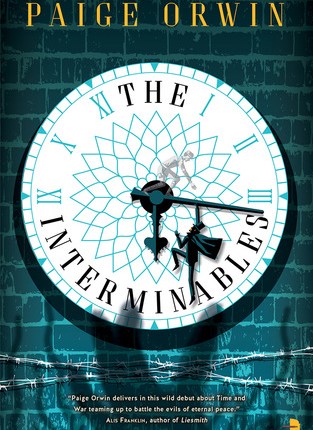
The Interminables by Paige Orwen

The Interminables by Paige Orwen

Interminable adjective. 1. Incapable of being terminated; unending  2. Monotonously or annoying protracted or continued; unceasing; incessant  3.  Having no limits.  (dictionary.com Unabridged.  Retrieved May 22, 2016 from dictionary.com website http://www.dictionary.com/browse/interminable)

The Interminables takes place in a world where magic is real and so are nightmares.  Prior to the events in this tale, an immortal being attacked all the cities on Earth and essentially destroyed civilization as we know it.  She was killed but for an extreme, unspecified magical cost.  Now, the scars left by this insane immortal dot the world and leak magic like radiation, producing strange items and twisted, dangerous creatures.  The Hour Thief, Edmund, and his best friend, an archtypical ghost of World War I named Istvan, struggle to bring order and heal those injured by the remains of this struggle.  Behind the scenes, an even greater evil begins to stir…

The Interminables is a type of science fiction/fantasy that I love.  It doesn’t dwell too much on the how’s of the situation, but jumps head first to the what’s, who’s, and why’s of the story.  And, this is an incredibly ambitious world in the sense that not only are the characters dealing with untamed and uncontrollable magic, but also the dimensions of alternate worlds have collided and merged with our own.  So, there are beings and powers in this place that are far beyond anything that exists in the real world.  It’s an exciting premise and the reader can almost feel the storytelling potential exploding from the very first page.

The Hour Thief is not only immortal, capable of teleportation, and able to move with super human speed through time- he’s also a librarian! : “…the Hour Thief was finally returning to real field duty, after fourteen months missing and then years of sticking to nothing more than librarian work and his usual mysterious excursions by night.”  My favorite kind of super hero.

Who is the Hour Thief? :  “He was, for all intents and purposes, a conman who dealt in stolen moments.  The hours that slipped away when no one was watching.  Lives, plain and simple.  He’d been thirty-five for seventy years and he could say that only because none of the time he’d lived since 1954 was originally his.”

I loved how Orwin described two beings, who are essentially immortal, dealing with technology. : “Edmund… fished the device responsible out of his other jacket pocket.  It was roughly the same size and shape as a pack of cards and combined the services of a clock, a calculator, a telephone, a radio, a camera, a film projector, a phonograph, a library, a dedicated staff of field researchers, an electric facsimile of the Delphic oracle, and a flashlight, but it was easier to call it a telephone.” When put that way, our devices really do seem to be magical.

Istvan, sends a text message, and it comes out more like a telegraph: “Istvan fiddled with the phone a moment longer… “I’ve sent a message to the Magister, I think, but I’m not certain it went through.”… Edmund glanced at it.  Recovered, it said, on our way presently stop.”

My favorite moment in the whole book, an interchange between Edmund and Istvan :  Edmund set the ritual knife down.  “Are we always this interesting?”  Istvan knelt and retrieved his own blade, wiping it on the hem of his uniform before handing it to him.  He was a doctor.  It would be all right.  “Oh yes.”

In the acknowledgments, Orwin says, “The original project grew out of a desire to preserve some of the characters developed by myself and my friends in the MMORPG City of Heroes…”  I also played that game!  The ability to customize and create your hero was so much fun, but the game itself became repetitive very quickly.  Orwin did such a great job taking a one dimensional idea and giving it a time piece, wings, and a limitless world to explore.  The Interminables is a lot of fun and not interminable to read, at all.

If you’re looking for read alikes, I’d recommend Triumff: Her Majesty’s Hero by Dan Abnett, The League of Extraordinary Gentlemen by Alan Moore (graphic novel), or Miss Peregrine’s Home for Peculiar Children by Ransom Riggs (young adult title).

Expected publication date: July 5, 2016.  A big thank you to NetGalley & Angry Robot Publishing for the opportunity to read and review a digital copy of this book.  And, thank you, for reading!

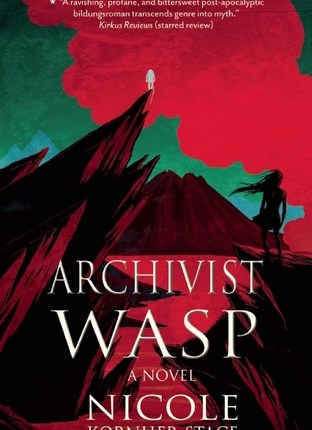
Archivist Wasp by Nicole Kornher-Stace

Archivist Wasp by Nicole Kornher-Stace

Overall, I enjoyed Kornher-Stace’s tale about a girl with claw marks on her face who traps and studies ghosts because she’s a priestess of a goddess who lives in the stars. I felt like Archivist Wasp was a combination of The Last Apprentice/Wardstone Chronicles by Joseph Delaney and What Dreams May Come by Richard Matheson. There’s also some dystopian and survival elements to it. There’s a few moments of rough language in here and some quick, brutal violence, but nothing worse than what a young adult would read in The Hunger Games.

Kornher-Stace throws the reader into an alien world with zero explanation or background info and it’s a lot of fun to pick out the story from the details. Take this passage describing a ritualistic painting in Wasp’s home:“The bones of the painting were nails, hammered straight into the wall to pick out the stars of Catchkeep’s constellation. And around them She had been outlined in thick black paint, all teeth and legs, Her back curved like a rainbow, caught in mid-leap over a shadowy abyss. … Catchkeep Herself was black and red. Stepping close to Her you could make out the outlines of handprints, darker where they overlapped. Wasp’s first day as Archivist, they’d rushed her here before the blood of the fallen Archivist could dry on her palms, and to the painting she had added the shape of her hand, which was the shape of her predecessor’s death.” pgs 14-15 ebook. Dark, eerie, awesome.

Wasp feels trapped in her role as priestess and lacks the confidence in herself to do anything else. Her personal development and stepping into her power is one of the main arcs of this story: “…beneath all her talk, she knew that what she was about to try would fail, as everything else she tried had failed, and then her life would go on as it had always done, pacing out the length of its leash, smashing into empty air at either end like a bird against a window. Take the knife out of the doorframe. Sweep the dust from the little house. Restock its jars with the useless dead.” pg 67 ebook. She’s a very strong, and believable, female main character. Think Buffy the Vampire Slayer… but with ghosts.

Kornher-Stace’s description of the afterlife was just like what is portrayed in What Dreams May Come or Otherwhere by Kurt Leland, the deceased shape their surroundings with the energy from their thoughts and emotions. In the ghost’s world, Wasp sees demon-like dogs that attack her again and again: “Still don’t believe the hunt is real?” Wasp shouted. She was having trouble modulating her voice. Her teeth were chattering too hard. She had never been so tired. “We bring our own monsters with us,” said the ghost. “It looks like these are yours.” pg 123 ebook. Goosebumps!

I liked the author’s description of what a ghost is: “You’re a ghost. You need answers. You need closure. You need them like the living need air to breathe. You think it’s just you, but from what I’ve seen, most of us die without getting either. And maybe that’s all a ghost is, in the end. Regret, grown legs, gone walking.” pg 155, ebook.

My favorite parts of the book are Kornher-Stace’s varied descriptions of the worlds through which Wasp travels with the ghosts. They are beautiful, desolate, bizarre, and, sometimes, scary:“They tromped through the snowfield for ages. They passed things that, to Wasp’s eye, might have been waypoints. A wind-shredded orange plastic tent. A cave hung with icicles that were mottled gray with ash. A distant huddle of dark birds circling and alighting on an unseen mass. A tiny pond, perfectly round, frozen into a mirror upon which no snow settled. The metal skeleton of something that had fallen from the sky and smashed there, its nose plowed deep into the earth. They walked on.” pg 172, ebook.

If you enjoyed Archivist Wasp and are looking for young adult read-alikes, you may want to try Fray by Joss Whedon (a graphic novel) or Revenge of the Witch (The Last Apprentice/Wardstone Chronicles, #1) by Joseph Delaney. If you’re looking for an adult read-alike, try The Library at Mount Char by Scott Hawking.

Thanks for reading!

Welcome to The Help Desk! Book reviews and musings on life by Heidi Wiechert.

Welcome to The Help Desk! Book reviews and musings on life by Heidi Wiechert.

Hello world!  My name is Heidi and I’m a public librarian.  I work at a desk with a huge help sign over it.  Hence, the name of this blog.

I’m going to record my book reviews here.  I may also write some job related posts too, but nothing too serious or scholarly.

I love to read fiction, non-fiction, fantasy, memoirs, historical fiction, business books, and metaphysical or New Age books.  Frankly, if it’s been written, I’d probably read it and, most likely, love it.

I utilize Goodreads and, if you’re on there too, I’d love to connect.  See you there: https://www.goodreads.com/HeidiWiechert

Thanks for reading!