Pathways to Bliss: Mythology and Personal Transformation by Joseph Campbell

Pathways to Bliss: Mythology and Personal Transformation by Joseph Campbell

“Each entered the Forest Adventurous at that point which he himself had chosen, where it was darkest and there was no way or path.” You enter the forest at the darkest point, where there is no path. Where there’s a way or path, it is someone else’s path; each human being is a unique phenomenon. The idea is to find your own pathway to bliss.” pg xxvi

Pathways to Bliss is a collection of Joseph Campbell’s writings and lectures, expanding upon the theory he put together in The Hero With a Thousand Faces. Namely, that myths serve a psychological function to help individuals safely traverse the various stages of his or her life.

Photo by Elina Sazonova on Pexels.com

That statement is over simplifying Campbell’s complex and richly-developed discussions of mythology, but it’s the basic building blocks of the thing.

“If it is a living mythology, one that is actually organically relevant to the life of the people of the time, repeating the myths and enacting the rituals center you. Ritual is simply myth enacted; by participating in a rite, you are participating directly in the myth.” pg xix

Campbell talks about not only the importance of the myths throughout generations of humankind, but the idea that it is a living, breathing system. He believes there is trouble on the horizon if society’s myths don’t change and evolve to keep up with the challenges of the current day.

He also stresses the need for the individual to find their own meanings in the stories and symbols of the mythology. The pathway to that which you are here to live is something that only you can find for yourself.

Though, he does point out, you could experience your unique pathway through ritual and communion with a community of like-minded believers. Campbell applies his mythological lens to the world religions, to life stages, to everything in-between to see what universal truths he can pull out of the stories and the common experience of humanity.

“And my little sermon to the churches of the world is this: you have got the symbols right there on the altar, and you have the lessons as well. Unfortunately, when you have a dogma telling you what kind of effect the symbol is supposed to have upon you, you’re in trouble. It doesn’t affect me that way, so am I a sinner?” pg 43

Photo by Pixabay on Pexels.com

I found this book easier to understand than The Hero With a Thousand Faces, which I read a few months ago. Despite this, I suggest you read Hero first, because it’ll give you a better contextual base to understand what the heck Campbell is going on about.

I had some issues with his concluding chapter of this book, Dialogues. In an open discussion with some female attendees of one of his seminars, Campbell and the women try to define how the woman’s heroic journey is different than a man’s.

I didn’t agree with some of their conclusions. Maybe you had to be there to truly grasp the essence of what he was saying.

“The suffering overtakes women – it is part of the nature of womanhood. Whereas the man has to undertake suffering – it’s a big difference.” pg 153

Photo by João Jesus on Pexels.com

Women’s life is suffering? hmmmm…

Recommended for readers interested in more of the musings of Joseph Campbell or for people interested in mythology and its practical applications. Beware that some of the material may be somewhat dated.

The Hero With a Thousand Faces by Joseph Campbell

The Hero With a Thousand Faces by Joseph Campbell

“Throughout the inhabited world, in all times and under every circumstance, myths of man have flourished; and they have been the living inspiration of whatever else may have appeared out of the activities of the human body and mind.” pg 1

Joseph Campbell presents his, now classic, thesis of comparative mythology and psychology. By examining different myths from all around the world, he outlines the hero’s journey. The journey has many different steps and elements to it, but beneath it all, Campbell believes, through all the many stories, the journey is one.

Photo by Maria Pop on Pexels.com

“Furthermore, we have not even to risk the adventure alone; for the heroes of all time have gone before us; the labyrinth is thoroughly known; we have only to follow the thread of the hero-path.” pg 18

I think in different circumstances I may have enjoyed this book very much. The topic, comparative mythology, is one I find particularly fascinating. I also like to see how humankind incorporates the mythical not just in our stories, but in the way we set up our societies.

“… every failure to cope with a life situation must be laid, in the end, to a restriction of consciousness. Wars and temper tantrums are the makeshifts of ignorance; regrets are illuminations come too late.” pg 101

Photo by Pixabay on Pexels.com

But honestly, I had trouble focusing because of certain current events. Campbell presents the different myths in pieces organized by his heroic stages rather than in one flowing story. Between the trouble focusing and the bouncing around from myth to myth, this was a difficult read for me. Perhaps I’ll try this book again in the future, when my life doesn’t feel so off-kilter.

I think it has plenty of treasures to be discovered for spiritual seekers of every kind. It also demonstrates that though we look different and live very different lifestyles, at our soul level, there are many similarities to humanity. We find these similarities mirrored through our stories, our life stages, how we live and how we dream.

“Those who know, not only that the Everlasting lives in them but that what they, and all things, really are is the Everlasting, dwell in the groves of the wish-fulfilling trees, drink the brew of immortality, and listen everywhere to the unheard music of eternal concord. These are the immortals.” pg 142

Photo by Gabriel Peter on Pexels.com

I sincerely hope you all live and dream sweetly, immortals, wherever on the hero’s journey you may be: sheltering-in-place or braving the world, and that I will live and dream sweetly, too.

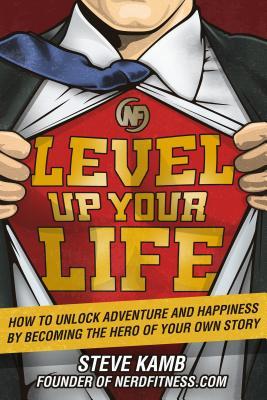
Level Up Your Life: How to Unlock Adventure and Happiness by Becoming the Hero of Your Own Story by Steve Kamb

Level Up Your Life: How to Unlock Adventure and Happiness by Becoming the Hero of Your Own Story by Steve Kamb
levelup

Steve Kamb, the creator of nerdfitness.com, offers behavioral games and community support to assist readers in becoming their best self. It’s the self help genre meets gamification.

Steve was addicted to video games, miserable at his job and disappointed with life. “I still love those games and movies and enjoy the entertainment they provide. They’re a part of who I am as a person. The problem was that they had become a way to avoid the unhappiness in my real life while also allowing me to continue doing nothing about it.” pg xi

The game that had him hopelessly hooked was EverQuest. “What had begun as a fun way to blow off some steam after school or work quickly became an addiction.” pg 5.

So, Steve took what he loved best about the game- the levels, the endless quests, the secrets- and created an online community in which the members support each other to become the best whatever-it-is you want to be through just those things.

Photo by RODNAE Productions on Pexels.com

Essentially, Steve takes the hero’s journey, as described by Joseph Campbell, and crafts a way to implement that into your life through your own preferences. “Life is meant to be lived on your own terms.” pg 23

I picked this up because I recently read a behavioral game book and I wanted to see what the theory would look like in action. Steve has done a solid job making his game completely customizable.

He provides examples between the chapters of people who have used his game to “level up” their lives. The results are impressive.

“The truth is that most people fear change. They, themselves, might want to change but don’t want to put forth the effort and energy to make it happen.”pg 57.

With Level Up Your Life, Steve gives readers the tools to make their lives into a game of their choosing. Recommended for gamers and the young at heart.

Thanks for reading!

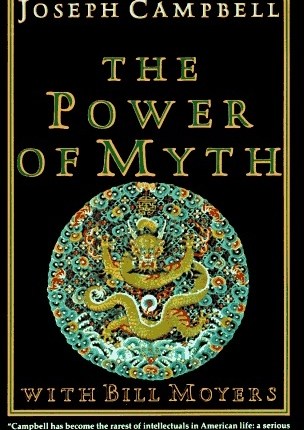
The Power of Myth by Joseph Campbell

The Power of Myth by Joseph Campbell

Though a bit rambling at times, The Power of Myth is a great introductory text on archetypes found within all world mythologies from almost every time period.

Photo by Plato Terentev on Pexels.com

In it, Joseph Campbell explains why the underlying stories are the same from all over the world and what they mean in both cultural, personal, and world contexts.

He breaks down some of the major archetypes like the sacrificed god and resurrection, virgin births, goddesses, trees, snakes, and more. As someone who has studied tarot and The Tree of Life extensively, I found it to be an illumination.

Photo by Alex Conchillos on Pexels.com

I particularly liked learning about the mythology of Star Wars. With the release of the new film, that particular series is back in the top of the pop culture charts. I think that The Power of Myth explains why it has such enduring appeal.

If you liked The Power of Myth, you may want to try Hero with a Thousand Faces or Pathways to Bliss: Mythology and Personal Transformation, both of which are also by Joseph Campbell.

Or pick up any of the many books about mythology from any country you’d like. If you immerse yourself in enough of the stories, you will pick up on the reoccurring patterns yourself.

I believe that one of the many purposes of mythology, beyond its entertainment value, is to teach us about what we have in common with each other, and also, the hidden dimensions of ourselves.

As the doorway to the Delphic Oracle said, “Know Thyself.” And, really, that is the greatest power there is. Mythology helps you do that.

Thanks for reading!