The Sidhe: Wisdom from the Celtic Otherworldby John Matthews

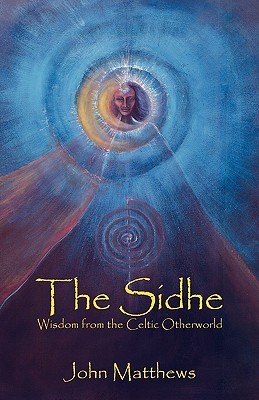
The Sidhe: Wisdom from the Celtic Otherworldby John Matthews

“I knew then that something was going to happen in Ireland. I had no idea then just what an enormous and irrevocable change it was going to make to my life.” pg 5, ebook

John Matthews received a call from a friend whose occupation is archaeology. The friend showed John into a barrow where he first saw the glyph that is on the cover of this book.

John claims that through meditation upon the glyph, he communicated with other beings whom he believes are ‘the Sidhe.’

“To truly know a thing is to become one with it. Just as to become one with it is to truly know it.” pg 27, ebook

Photo by cottonbro on Pexels.com

He shares the communications that he had through the glyph throughout the text. At the end, he includes six exercises that the beings gave him and encourages readers to try the practices for themselves.

Readers could potentially experience the connection John felt.

“Drawn by this feeling, I lay down beneath the branches of the old oak, and, as I had done countless times before, stared up through the branches at the patches of blue sky that showed through. As I did so a sense of stillness and peace descended upon me.” pg 36, ebook

Photo by Magda Ehlers on Pexels.com

The Sidhe: Wisdom from the Celtic Otherworld reminded me of the multiple works of Abraham Hicks or Seth Speaks: The Eternal Validity of the Soul. There’s probably a reason for that.

It could be that the channelers are tapping into a similar place. In this book, John calls it the “great net” of creation. I’ve heard it called, “Indra’s net,” among other names in other sources.

Whatever it may be, I find it interesting that the communications received are similar enough to draw comparisons.

“Among the greatest gifts we have observed in your race is the desire to know and to explore. This hunger has propelled you far along the path of the day and the path of the night. Hence, your journey is indeed one of exploration, not only in time and space, but in the dimensions of Spirit.”

Photo by Stefan Stefancik on Pexels.com

Of course, I had to try John’s method for myself. I’m always so curious about these kind of things.

Unfortunately, I fell asleep rather than having a memorable experience. I expect the fault was on my side, but perhaps I experienced something in my sleep- I just failed to remember it.

I do plan to give the meditation a try again in the future, when I’m not so sleepy.

I was fascinated with the way the glyph looks like a treble clef with multiple circles. When John began to describe the Sidhe’s connection to music, I felt that comparison made sense.

“Much of our time is spent in the making of music- though for us it is more serious than a pleasant pastime, since it is part of our creative process in more than an abstract fashion.” pg 69

Playing music is one of the few activities that put me into a flow state. Perhaps I should try meditating that way.

Anyway, I recommend this book for the curious or spiritual seekers. If you try the exercises within, please do share your results. Maybe some day, the world will have more answers than questions about these ineffable things.

Or, maybe, we’ll open yet another door for endless discoveries. Either way, I’ll be interested to see what comes next.

Thanks for reading!

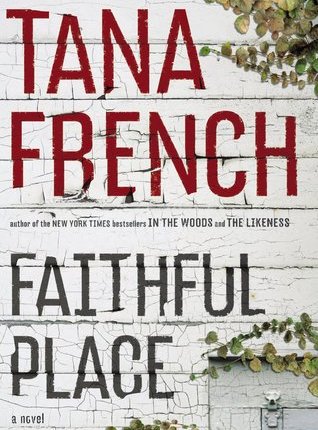
Faithful Place (Dublin Murder Squad #3) by Tana French

Faithful Place (Dublin Murder Squad #3) by Tana French

Faithful Place is a mystery and the backstory of Frank Mackey, the undercover agent readers first met in The Likeness.

Honestly, I didn’t like him, as a character, very much in the last book. This installment gave me understanding about why he’s so gruff and generally unkind. A difficult and abusive childhood has taken its toll on him.

There’s also the small matter of a broken heart over his teenage sweetheart, who never showed up the night they were going to run away together.

Photo by James Wheeler on Pexels.com

“The night faded to a thin sad gray and round the corner a milk cart clattered over cobblestones towards the dairy, and I was still waiting for Rosie Daly at the top of Faithful Place.” pg 13, ebook

But it turns out, Frank’s past isn’t as straight forward as all that. And that’s what he discovers in this book.

“No matter how good you are, this world is always going to be better at this game. It’s more cunning than you are, it’s faster and it’s a whole lot more ruthless. All you can do is try to keep up, know your weak spots and never stop expecting the sucker punch.” pg 14, ebook

The Dublin Murder Squad series continues to surprise me with how much I enjoy it. Tana French is a master at building suspense throughout the stories. Her world doesn’t get stale because you (at least so far) follow a different character in each tale, learning a bit more about them, and then moving on to the next character.

Photo by Javon Swaby on Pexels.com

“I was right to enjoy the normal world while I had it. Deep down, even while I was shaking my fist at the sky and vowing never to darken the cobbles of that hellhole again, I must have known the Place was going to take that as a challenge.” pg 141, ebook

French manages to convey visceral and surprising emotions in her stories, which I love. It makes the hair raise on my arms and gives me goosebumps. I find myself thinking about key plot points when I wake up in the middle of the night, wondering what’s going to happen next. Not many books have that effect on me.

Her characters are complex. They’re not angels, but they’re not demons. They’re something in between, very human, and they feel completely real.

Photo by Pavel Danilyuk on Pexels.com

“If you don’t know this by now, mate, you’d better write it down and learn it by heart: the right thing is not always the same as what’s in your pretty little rule book.” pg 158, ebook

And there’s always a moment in her novels, or sometimes two moments, that flips the story on its head. In this one, when that moment came, I had to read the passage twice and I even said aloud, “You’re kidding, right?”

Now, you don’t know this about me, but I am a completely silent reader. I never talk to the books. French has made me into one of “those” readers — a talking reader. That’s a pretty big deal.

Recommended for readers who like their mysteries to be thrilling and books that draw you in so much that you forget the real world for a time.

Thanks for reading!

Last Ones Left Alive by Sarah Davis-Goff

Last Ones Left Alive by Sarah Davis-Goff

Last Ones Left Alive brings the zombie-genre to Ireland. Orpen, the daughter of Muireann and Maeve, spends her life training, running, and learning to throw knives. The end has come and humanity has, for the most part, been wiped out by zombie-like creatures called “skrake.”

“I’m to put away the stories about the monsters that are not real and to hear about the others. They’ve got worse as I got older; heroes are caught, turned, burned, throttled, they die of hunger and cold. Children same as me.” pg 33

Photo by tom balabaud on Pexels.com

Orpen lives a sheltered existence on an island. But she dreams of going to the mainland, once-Ireland, and finding the fabled “Phoenix City,” which she learned about through flyers rotting in abandoned buildings. Phoenix City is touted as a paradise with women warriors protecting the walls and weak from the encroaching skrake.

Orpen’s mother and Maeve have drilled rules into her head since the day she turned seven. Some of these rules are: Don’t go near tall buildings. Count your ‘Just-in-Cases’. and Beware people.

“Beware people. I can’t stay on my own, though, I can’t. If they’re men, I will run.” pg 71

Photo by Ricardo Esquivel on Pexels.com

But is life worth living without the interaction of other people? Orpen doesn’t think so. She dreams of the day she’ll leave the island… and wanders the land with the skrake.

I enjoyed Last Ones Left Alive but it felt like more of an homage to Ireland than a truly scary horror novel. Much of the gore and scares felt done as readers have been exposed to them all before in such series as The Walking Dead, Book One or Saga, Vol. 1.

The narration is related in two parallel lines with the past woven among the present by alternating chapter. It’s not my favorite way to read a story, but I can see how it could appeal to some readers.

The female characters in this broken world are unapologetically strong. Readers looking for books with self-reliant female characters may really enjoy this read. It may also be a great pick for a book club to pick apart and discuss.

Photo by Khoa Vu00f5 on Pexels.com

Personally, I wanted more details about the dangers this world had to offer rather than focusing on Orpen’s journey, which is the main part of the story. There’s something to be said for unknown horrors… true. But when you peer deeply into the darkness, there’s the feeling that it looks back into you. 

That’s what I felt was missing in this excellent debut novel by Sarah Davis-Goff. I wanted more looking into the shadows.

Thank you to the publisher for an advance reader copy of this book. The short quotations I cited in this review may vary in the final printed version, which I believe is available today (August 27, 2019).

Thanks for reading!

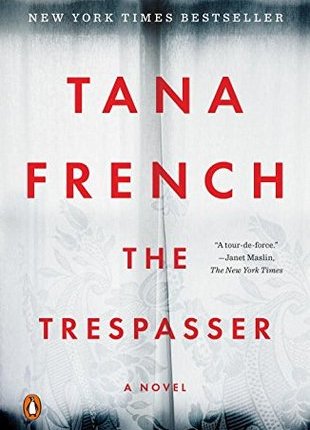
The Trespasser (Dublin Murder Squad #6) by Tana French

The Trespasser (Dublin Murder Squad #6) by Tana French

“The case comes in, or anyway it comes in to us, on a frozen dawn in the kind of closed-down January that makes you think the sun’s never going to drag itself back above the horizon.” pg 1, ebook.

Photo by Alexandr Podvalny on Pexels.com

And so begins the final book (so far) in Tana French’s masterful Dublin Murder Squad series. This entry follows Detectives Antoinette Conway and Steve Moran, the duo readers met in the last book, as they try to solve, what at first appears to be, a simple domestic disturbance. Little do they know, what they discover will challenge all of their assumptions about their roles in the Murder Squad and their own investigative skills.

“Before we check out the rest of the cottage, I squat down by the body and carefully, one-fingered, hook back her hair from her face. Steve moves in beside me. Every Murder D I’ve ever known does it: takes one long look at the victim’s face.” pg 24

The investigation, especially the interrogation scenes, are intense and what I’ve come to expect from this series. It’s a thrilling who-done-it with complex characters and relationships. I really enjoyed it.

Photo by Dmitry Demidov on Pexels.com

“The pressure level means Murder is balanced so finely that it only takes a few new heads to shift the whole feel of the squad: turn that big cat rogue and edgy, set that rifle warping towards its moment to blow up in your face.” pg 23, ebook

Conway, the only woman on the murder squad, feels as if she has been singled out and shut out of the camaraderie of the rest of the group. So, she feels like she has more to prove when the investigation becomes more complex than she expected.

Conway, the narrator this time around (they change in each book), isn’t my favorite character, but she’s someone I’d respect and give plenty of space so I didn’t come into her crosshairs.

“Unless I missed your promotion, we’re on the same squad, and this is my investigation. Which means you’re the cheeky little bollix who’s getting above himself, and you’re the one who needs to bear in mind who’s who here.” pg 138, ebook.

Photo by Martin Lopez on Pexels.com

Frankly, I’m sorry I’ve read the final book French has written for the murder squad. However, in a May 2019 interview, she didn’t dismiss the idea of writing another book for the series at some point in the future. So, readers can rejoice!

It’s just not written yet. Sigh.

Highly recommended for fans of thrillers and mysteries. Thanks for reading!

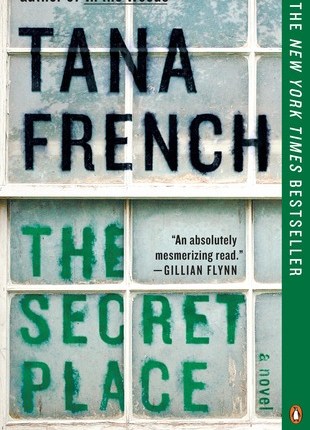
The Secret Place (Dublin Murder Squad #5) by Tana French

The Secret Place (Dublin Murder Squad #5) by Tana French

Tana French writes another suspenseful mystery about a school full of girls, a murder and, of course, the Dublin Murder Squad.

“Detective Moran, there’s someone to see you,” pen pointing at the sofa. “Miss Holly Mackey.” pg 15, ebook.

Photo by cottonbro on Pexels.com

We’re reintroduced to Stephen Moran and Holly Mackey, whom readers of the series will remember from Faithful Place. I highly suggest reading that book before this. The context is part of what makes The Secret Place so powerful.

Like in her previous books, French builds the suspense through in-depth characters and internal monologues. They carry an intensity that I’ve come to expect from her novels. Reading her stories straight through honestly gives me a bit of a headache. They’re so complex and she brings in small details that give you these “aha” moments.

Despite those potential headaches, I love it.

I said, “You came here because there’s something you want me to know. I’m not going to play guessing games I can’t win. If you’re not sure you want to tell me, then go away and have a think till you are. If you’re sure now, then spit it out.” Holly approved of that. Almost smiled again; nodded instead. pg 18, ebook

Photo by tugay aydu0131n on Pexels.com

She’s also a master at building relationships, not just between the investigating detectives, but between the readers and the story. There’s a trust there — that she’s not just leading you down this path to distract you. There’s something important you’re supposed to realize.

In The Secret Place, readers are asked to contemplate the unknowable reality of young adult friendships. We wade right in to passionate, explosive moments that aren’t that big of a deal, if you’re not the right age. The feeling, no the knowing, that magic is real is a large part of this story. Also, that friendships define you somehow and are more real than your grades or your family or your name even.

Friends delineate the boundaries of your world at that age. And, together, you can literally make magic happen, if they’re the right kind of friends and if you do the right mystical things together like, for example, sneaking outside of a locked, private school to sit in a wooded glade and gaze at the stars.

Photo by Francesco Ungaro on Pexels.com

“Girls need a safety valve, Detective Conway. Do you recall, a week or so after the incident” — small snort of laughter from Conway: incident —”a group of students claimed to have seen Christopher Harper’s ghost? pg 59

As much as I loved this book, I understand readers who didn’t. It is self indulgent in the sense that you get to know almost everything about everyone and when you’re dealing with a dozen main characters, that’s a lot.

I got the feeling, when Moran was on his eighth interview, that there had been a lot of talk about editing that section down, but it wasn’t. As I said, this story hinges on the characters, why they feel the way they feel and why they acted the way they did. If you don’t get to know those minutiae, then the story isn’t as intense.

But, admittedly, it does slow the pace waaaaay down.

There’s also the “living in a teenager wasteland” feeling of the story. Who cares about who’s dating who and who’s wearing what. To get through some of it, I put myself into the mindset of the detectives. It was important to understand because murder was on the line. Someone killed someone else and was walking around like nothing happened, while his victim was forever buried in the ground. There’s your motivation.

Photo by Du01b0u01a1ng Nhu00e2n on Pexels.com

I think I could listen to a lot of gum-chewing nonsense to solve something that important.

My favorite character? Detective Stephen Moran. He has so much to lose and so much to prove. All he wants is to do a good job on this case. And that seems so impossible at times. I was cheering for him all the way.

“For the first time, she smiled. Little crunch of a grin, the same one I remembered. It had had something pathetic in it, back then, it had caught at me every time. It did again.” pg 17, ebook.

Recommended for readers who have enjoyed French’s work in the past. This murder-mystery may not appeal to everybody, but it did to me.

Thanks for reading!

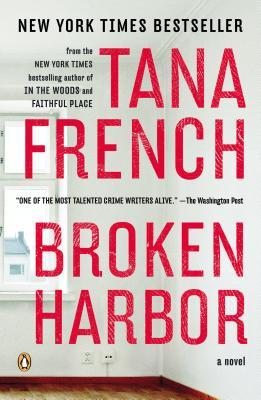
Broken Harbor (Dublin Murder Squad, #4) by Tana French

Broken Harbor (Dublin Murder Squad, #4) by Tana French

When a family is attacked and three of its members die, the Dublin Murder Squad activates Detective Michael “Scorcher” Kennedy to solve the case.

“Here’s what I’m trying to tell you: this case should have gone like clockwork. It should have ended up in the textbooks as a shining example of how to get everything right.” pg 13, ebook

Photo by Rachel Claire on Pexels.com

But things are never that simple in Tana French’s thrilling, mystery series.

I said, “This is a bad one.” O’Kelly laid one heavy palm on the call sheet, like he was holding it down. He said, “Husband, wife and two kids, stabbed in their own home. The wife’s headed for the hospital; it’s touch and go. The rest are dead.” pg 15, ebook.

Readers were introduced to Scorcher in the last book, as the tight-laced and slightly inept officer assigned to investigate the cold case that took place in Faithful Place. I didn’t like him much in that book and this one didn’t change my opinion.

“Probably he was thinking what a boring bollix I was. … Only teenagers think boring is bad. Adults, grown men and women who’ve been around the block a few times, know that boring is a gift straight from God.” pg 22, ebook.

Photo by Dimitry Anikin on Pexels.com

I thought he was kind of boring too.

Unlike the last books which mainly dealt with psychological tension caused by fear, Broken Harbor delves into the murky waters of mental illness.

“I don’t know what word you want me to use, but if this fella’s mental, then nobody has to go asking for trouble. He’s bringing it with him.” pg 81, ebook.

In addition to juggling his case, Scorcher is trying to protect his sister, who is bipolar and refuses to seek help. The family hides her illness from their neighbors because of shame and something that happened in their past.

Photo by Daria Shevtsova on Pexels.com

This plot point seemed outdated to me. Culture has shifted in the past decade so that mental illness is no longer something that is swept under the rug. Maybe this is different in Ireland than the States, but I kept getting hung up on that and it spoiled my enjoyment of what would have otherwise been another thrilling story.

Recommended for readers who enjoy psychological thrillers. Be aware of potential triggers for anyone who struggles with auditory hallucinations, suicidal tendencies and mood swings.

Thanks for reading!

The Likeness (Dublin Murder Squad, #2) by Tana French

The Likeness (Dublin Murder Squad, #2) by Tana French

Tana French’s second book in The Dublin Murder Squad series packs a serious punch. Cassie Maddox, a former murder squad detective, has moved to a different unit because of the stresses of the case called “Vestal Virgin” and personal difficulties with her former partner. She’s dragged back into the murder squad, when a woman’s body is found and she’s carrying identification showing her name is one of Cassie’s former undercover personas.

This is the main thing you need to know about Alexandra Madison: she never existed. Frank Mackey and I invented her, a long time ago, on a bright summer afternoon in his dusty office on Harcourt Street. pg 12, ebook.

Photo by Alex Fu on Pexels.com

The slain woman has a unique living situation. She rooms with four other adults in a stately manor home called Whitethorn House. The group is a tightly-knit bunch of university students who not only live together, but also spend nearly every waking moment in each other’s company.

“Her main associates,” Sam said evenly, “were a bunch of other postgrads: Daniel March, Abigail Stone, Justin Mannering and Raphael Hyland.” pg 71

None of the group had a motive for killing Alexandra, whom they called Lexie. Or did they? Or perhaps it was someone outside the group, someone who had an old reason for hating them and the house. Or maybe it was a crime of opportunity… and who was Lexie Madison anyway?

Cassie’s superiors ask her to use her physical similarity to the dead woman to infiltrate the group in an undercover operation to try to dig up some answers. Can she pull it off? And, if she does, will whoever attacked Lexie come at her again?

Photo by Faisal Rahman on Pexels.com

“This is the part I didn’t tell Sam: bad stuff happens to undercovers. A few of them get killed. Most lose friends, marriages, relationships. A couple turn feral, cross over to the other side so gradually that they never see it happening till it’s too late…” pg 62, ebook.

The tension throughout this entire book is incredible. I noticed the same thing with French’s other book, In the Woods. She really has a way of building the story up through complex layers and then delaying the big reveal to pour on the stress.

The characters are fantastic. The conversations are dances, setting up further plot points.

“She’s fine,” said Abby. “She just said so.” “I’m only asking. The police kept saying—” “Don’t poke at it.” “What?” I asked. “What did the police keep saying?” “I think,” Daniel said, calmly but finally, turning in his chair to look at Justin, “that we should leave it at that.”

Photo by Andrea Piacquadio on Pexels.com

I had to suspend my disbelief at a couple points in the story. The big one was believing that Cassie looked enough like the dead woman to make the undercover part even possible. I suppose I’ve heard stories about doppelgangers, but I’ve never truly believed such a thing actually exists.

Highly recommended for readers who like their mysteries with a heaping side dish of tension.

Thanks for reading!

In the Woods (Dublin Murder Squad, #1) by Tana French

In the Woods (Dublin Murder Squad, #1) by Tana French

“They are running into legend, into sleepover stories and nightmares parents never hear. Down the faint lost paths you would never find alone, skidding round the tumbled stone walls, they stream calls and shoelaces behind them like comet-trails.” pg 14, ebook.

Rob Ryan is a detective in the Dublin Murder Squad. He has a curious past, being the only survivor of a strange afternoon in the woods. Rob and two of his friends went into the woods, but only he emerged. His memories of that time are a blank. It may be that his subconscious prefers it that way.

“Obviously, I have always wished I could remember what happened in that wood. The very few people who know about the whole Knocknaree thing invariably suggest, sooner or later, that I should try hypnotic regression… I worry that I might come out of hypnosis with that sugar-high glaze of self-satisfied enlightenment, like a seventeen-year-old who’s just discovered Kerouac, and start proselytizing strangers in pubs.” pg 35, ebook

Photo by Darius Krause on Pexels.com

Fast forward twenty years, a child’s body is found in the same town, Knocknaree, where Rob lived when he was a child. Could the two cases be related?

“This is what I read in the file, the day after I made detective. I will come back to this story again and again, in any number of different ways. A poor thing, possibly, but mine own: this is the only story in the world that nobody but me will ever be able to tell.” pg 15, ebook

I loved the unfolding of both of these stories. Tana French was able to build tension through the slow reveal and she kept me guessing. Rob was the quintessential unreliable narrator and likable (for the most part). He made some bone-headed decisions that I didn’t agree with, but the reader always knew why he was making them.

Rob’s partner, Cassie, was my favorite character in the story. She’s the only woman on the Dublin Murder Squad and loyal to a fault. Cassie also has some dark secrets in her past. She and Rob complement each other perfectly.

Photo by eberhard grossgasteiger on Pexels.com

“When we went into work the next morning we were friends. It really as simple as that: we planted seeds without thinking, and woke up to our own private beanstalk.” pg 30, ebook

I also loved the layers of this story. There’s the relationship between Cassie and Rob, their relationship to the rest of the squad, Rob’s memories, Cassie’s backstory, the two cases, and the reactions of everyone around them.

“Now death is un-cool, old-fashioned. To my mind the defining characteristic of our era is spin, everything tailored to vanishing point by market research, brands and bands manufactured to precise specifications; we are so used to things transmuting into whatever we would like them to be that it comes as a profound outrage to encounter death, stubbornly unspinnable, only and immutably itself.” pg 57, ebook

Photo by Stephan Mu00fcller on Pexels.com

Recommended for readers who enjoy mysteries and not-so-scary thrillers. I’m definitely picking up the next book in this series.

For any readers who enjoy page to screen viewing, the show adaptation of this book and its sequel called “Dublin Murders” was pretty well done.

Thanks for reading!

The Cooper’s Wife Is Missing: The Trials of Bridget Cleary by Joan Hoff, Marian Yeates

The Cooper’s Wife Is Missing: The Trials of Bridget Cleary by Joan Hoff, Marian Yeates

“Are you a witch, are you a fairy, are you the wife of Michael Cleary?”

In March 1895, after walking the fabled “fairy fort” of Kylnagranagh Hill in Tipperary County Ireland, Michael Cleary’s wife, Bridget Boland Cleary, returned home ill with a fever and headache. Michael Cleary thought she was exhibiting signs of fairy abduction. And he was determined to get her back.

What happened next highlighted the clash of paganism and Catholicism, and the ushering out of old superstitions to make way for the modern era. After days of abuse, he eventually burned Bridget until she died because he believed she had been replaced by a fairy.

Photo by Steven Hylands on Pexels.com

“… they continued to feed her herbs and to shake, slap, and swing her while she ‘screamed horrible’ and they shouted: ‘Away with you. Come back, Bridget Boland, in the name of God.'” pg 191

The Cooper’s Wife is Missing gives nearly complete context of Ireland in this era and the political and social pressures during the time period.

The crime was shocking in its brutality but also the stated motive. The press had a field day. It was 1895, the world was on the brink was technological, social and political change. And yet, they wrote, these rural Irish peasants still believed in fairies or practiced witchcraft. (Depending on which publication you chose to read.)

And it wasn’t just perpetrated by Michael Cleary. Bridget’s own family and neighbors participated in the “fairy trial” that led to her death. Nine people were found guilty at varying levels of culpability for the crime.

“As the police led him away, he shouted, ‘I am innocent.’ Cleary maintained it was not his wife he burned but a fairy.” pg 361

Photo by Gantas Vaiu010diulu0117nas on Pexels.com

The Cooper’s Wife is Missing jumps back and forth, giving the reader the history of Ireland, fairy lore and what historians believe happened to Bridget Cleary. That was my only complaint with this read, some of the story repeats itself, especially during the testimony at the trials.

But, overall, highly recommended for fans of true crime and history. This book has both of those in spades.

Thanks for reading!

Here’s the History Guy episode I wrote about Bridget Cleary: