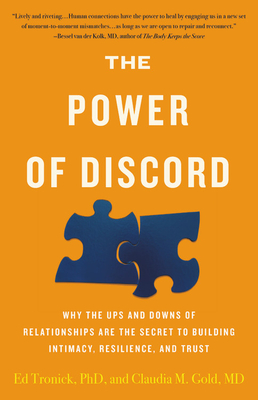
The Power of Discord: Why the Ups and Downs of Relationships Are the Secret to Building Intimacy, Resilience, and Trust by Ed Tronick, Claudia M. Gold

The Power of Discord: Why the Ups and Downs of Relationships Are the Secret to Building Intimacy, Resilience, and Trust by Ed Tronick, Claudia M. Gold

The Power of Discord is a study of human connection and disconnection. The authors, Ed Tronick and Claudia Gold, demonstrate through scientific and therapeutic studies that by working through conflict and the messiness of every day life, our relationships can be stronger than ever before.

Our earliest relationships have a profound affect on the way we interact with others as adults. It is almost scary how fast infants develop the responses that they carry with them into adulthood. In Tronick’s groundbreaking study called the “still-face” experiment, his findings helped researchers discover how infants communicate with their mothers.

Photo by Anna Shvets on Pexels.com

In the experiment, a mother and child are interacting, playing as usual. Then, the mother turns away a moment and when she turns back, her face is still and empty of emotion.

The curious thing about the infants’ reaction to their caregiver presenting them with a face devoid of emotion is that researchers could already see how the relationship between the two was developing. Infants in a healthy relationship kept trying to get a reaction out of the other person until their caregiver “went back to normal.” Infants in a “dysfunctional” relationship, or who were for whatever reason were less connected with their parent, shut down and practiced coping or self soothing mechanisms rather than trying to draw the caregiver out.

Prior to this experiment, it was assumed that infants had little to no communication ability whatsoever.

“When confronted with a stressful situation, (infants) could apply a style of interaction drawn from the everyday exchanges with their caregivers. While they did not yet have the capacity for language or conscious thought, they were able to draw on their countless moment-to-moment interactions to cope with the stress of caregivers’ unfamiliar behavior.”

Photo by Pixabay on Pexels.com

I worried, as I read the study, that the children would somehow be scarred by it. Some of the reactions the researchers described were very intense and painful for everyone involved. But the authors assured readers the level of stress in the experiment wasn’t something beyond what the children would encounter in their daily lives. Still, it seemed rather unfair to them. It wasn’t like researchers could explain what was going on.

Beyond the initial interactions that form the manner in which people craft their relationship styles, Tronick and Gold delve into further issues that may affect how you connect with others like: the pernicious effects of perfectionism and addiction to technology, feeling safe around others, taking responsibility for your connection style, and, the part I liked the most, the surprising way discord makes relationships stronger.

“… it is not simply what happened when we were young that screws us up now. Along the way to growing up and into our adult lives, we continue to create new ways of being screwed up. Only when we have accumulated a whole new set of interactions, when we work through the inevitable moments of disconnection to again find connection, will we grow and change.”

Photo by Josh Willink on Pexels.com

Though we learn how to form connections before we even have language, researchers have found that connection styles can be relearned, relationships can be repaired and are repaired, every day, little by little. In countless “mismatch and repair” moments, we teach ourselves that there is nothing broken that can’t be restored. It builds confidence in the relationship and trust in ourselves and each other – the building blocks of intimacy.

Highly recommended for readers looking to engage in some introspection about their own attachment style or for those who are curious about how relationships are formed and maintained.

Thank you to NetGalley and the publisher for a free advance reader copy of this book.

You’re Not Listening: What You’re Missing and Why It Matters by Kate Murphy

You’re Not Listening: What You’re Missing and Why It Matters by Kate Murphy

You’re Not Listening is a fun and enlightening non-fiction read about, you guessed it, listening. Theoretically, we all have the capability of listening, but, as author Kate Murphy points out, we kind of suck at it.

“This is a book in praise of listening and a lament that as a culture we seem to be losing our listening mojo.” pg 3

From politics to business, scientific studies to families, Murphy illustrates pitfalls on the path of active listening and highlights the fact that rhetoric and conversational skills are taught all over the world. The other half of the equation, listening to the information that’s delivered, is not.

Photo by Andrea Piacquadio on Pexels.com

“Done well and with deliberation, listening can transform your understanding of the people and the world around you, which inevitably enriches and elevates your experience and existence. It is how you develop wisdom and form meaningful relationships.” pg 4

In the modern age of social media and the ability to establish instantaneous connections all around the world, you would think people would be feeling more interconnected than ever. Not so, says Murphy.

“People get lonely for lack of listening. Psychology and sociology researchers have begun warning of an epidemic of loneliness in the United States. Experts are calling it a public health crisis, as loneliness increases the risk of death as much as obesity, alcoholism, and heart disease combined.” pg 9

All of our technology bombards us with information while at the same time diverting our attention from the people in our physical lives. It is not just a matter of deciding who to listen to; it’s also a question of shrinking attention spans and one of the many challenges faced by a technologically advanced society. Meanwhile, we’re blasting out our own thoughts and feelings as quickly as they arise… so who has time for any of that?

Photo by fauxels on Pexels.com

“It takes awareness, focus, and experience to unearth and understand what is really being communicated. Good listeners are not born that way, they become that way.” pg 69

I love books that I learn from and that help me become the type of person whom I aspire to be. You’re Not Listening ticks both those boxes in a big way. I can’t recommend it enough for readers who enjoy non-fiction, learning, and the eternal quest of self improvement.

Thank you to the publisher for a free advance reader’s copy of this book.

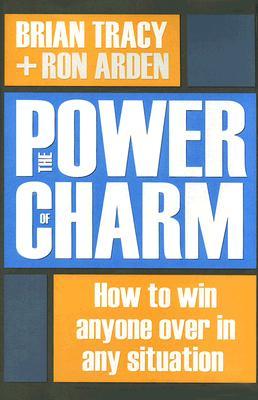
The Power of Charm: How to Win Anyone Over in Any Situation by Brian Tracy and Ron Arden

The Power of Charm: How to Win Anyone Over in Any Situation by Brian Tracy and Ron Arden

The Power of Charm is a book written for business professionals, who want to give themselves a bit of a leg up, by increasing their charm potential.

I found the book to be interesting, but it also flirts with the line between charming and manipulating. I suppose we could ask ourselves if, at the end of the day, there is any difference between the two.

Personally, I think there is.

Photo by Kat Smith on Pexels.com

In my mind, charm is unrehearsed, natural and springs from a genuine interest in others. Manipulation is ego-driven scheming. But, both can get you what you want.

I’m torn as to how this book actually fell on that scale. Some of the exercises feel like charm practices- others, like manipulation strategies.

Essentially, Brian Tracy and Ron Arden give listening and speaking tips to better understand whoever it is you’re interacting with. There’s nothing all that manipulative about polishing your communication skills.

On the other hand, in the chapter entitled: “Do Your Homework” in which the authors say, “Anytime you are getting together with someone, socially or professionally, whom you particularly want to impress, do your homework. Learn what you can about that person before you actually meet. It’s the best way to be charming and interesting to others.” pg 107. It didn’t sit so well with me.

Photo by Eduardo Dutra on Pexels.com

Here’s why- Tracy gives the following story as an example: “I learned of a successful business owner with a crack sales team who was discontented with the company he was representing. … In asking around, I discovered that he was heavily into numerology and made all his decisions based on the numbers of the birth dates of potential business partners… One of his first questions of me was my birthday. I was prepared. I told him that it was a certain day, month, and year that added up to a ‘lucky number’ for business relationships. … The preparation was the key.” pg 108.

That smacks to me of manipulation rather than charm. What do you think?

On the other hand, I seriously appreciated the tips on how to become a better conversationalist. I’ve got some work to do there.

Generally, I let my fast-talking husband take the lead in social conversations because he always has something to say. I see now how that may be a disservice to others who may want to get to know me better.

“The Secret of Charm: The deepest craving of human nature is the need to feel valued and valuable. The secret of charm is therefore simple: make others feel important.” pg 12.

It is as simple and powerful as that. I’d also recommend being kind. The world could use more charm and kindness.

Recommended for readers who understand the difference between charm and manipulation. I’m not sure that includes me, but I’ve already read it so… sorry.

And thanks for reading!

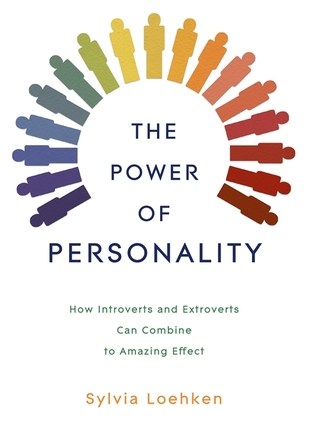
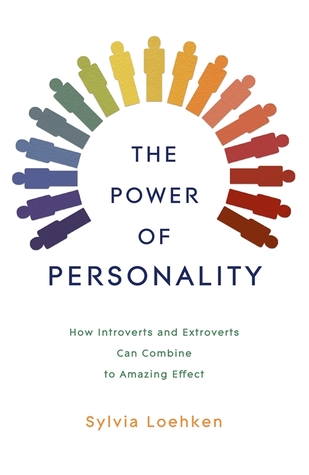
The Power of Personality: How Introverts and Extroverts Can Combine to Amazing Effect by Sylvia Loehken

The Power of Personality: How Introverts and Extroverts Can Combine to Amazing Effect by Sylvia Loehken
powerpersonality

The Power of Personality is more than just another book that picks apart the obvious differences between introverts, centroverts, and extroverts. It delves very deeply into the strengths and possible hurdles that each face in business, social situations, and with each other.

Loehken presents management techniques for the different personality types and how one might leverage innate characteristics for the most positive outcome possible in a variety of ways. I found the book to be very helpful in explaining my own reactions to most perceived conflicts.

I hope to utilize what I’ve learned in the future to harness my strengths while minimizing the others. Some of my more damaging introverted tendencies are that I’m conflict/contact adverse and easily overstimulated in every day life.

I thought when Loehken discusses how the different personality types view each other that her descriptions were spot on. I think I do tend to categorize most extroverts as loud, unthinking buffoons. My mistake.

I suppose that extroverts view me as “boring, lame duck, sensitive flower, unsociable, professional worrier, reader, timid”pg 51. I never considered why.

Photo by Armando Are on Pexels.com

Perhaps now with a more educated mindset, I can embrace personality differences and work more smoothly with extroverts. Rather than, in my previous experience, pushing them away so that I can have some peace and quiet.

The other portion of the book that I enjoyed is Chapter 8: Stressful Encounters: Status Games pg 161. It reminded me of a book on body language, I Can Read You Like a Book: How to Spot the Messages and Emotions People Are Really Sending with Their Body Language. But, instead of just focusing on body language, Loehken goes into all manner of status symbols, interactions, and conversational cues.

She dissects how, particularly introverts, do themselves a disservice in their professional and personal lives because of how they perceive and react to conflict. It blew my mind.

It may be because this is a European book (the price on the back is listed in pounds) but I have never read anything like this in an American business book. Loehken talks about the unwritten rules of polite society and how, in sometimes subconscious ways, we shape our relationships and our status to the people around us.

Photo by fauxels on Pexels.com

One of her tips for dominating or owning space that I’m going to integrate into my life (right now!) is to sit fully on an office chair instead of perching on the edge. “If you take the whole seating area of a chair, this has a higher status effect than someone who only takes up half the seat or sits on the edge.”pg 175. Lesson learned.

The weak part of this book was any of the bits that dealt with centrovists. Basically, Loehken kept saying (paraphrasing in my own words) ‘If you’re a centrovist, you enjoy the benefits from both types of personalities and will therefore be more successful in whatever it is that we’re talking about in this section.’

It got kind of annoying after awhile because Loehken tells us that everyone exists on a scale of personality (we’re rarely entirely one type or another from situation to situation) so the centrovist advice could have been most applicable for every reader. Unfortunately, it felt more like a ‘Captain Obvious’ moment every time it came up rather than a revelation.

If you enjoyed The Power of Personality, I’d suggest reading I Can Read You Like a Book: How to Spot the Messages and Emotions People Are Really Sending with Their Body Language. It deals with body language rather than the driving personality behind the body, but it is still illuminating. It helps readers monitor the involuntary signals that we send out in our day to day interactions, how to leverage your movements and to send the message that you want to send, rather than broadcasting your internal mindset unintentionally.

I received a free copy of this book through Goodreads First Reads. FTC guidelines: check! Thanks for reading!

Hellhole by Gina Damico

Hellhole by Gina Damico
hellhole

Hellhole is a modern Faustian tale about Max Kilgore, his deathly ill mother and the devil.

Though written for a young adult audience, readers need to be aware that there are some bad words in the dialogue and innuendo in some situations. All kids are different, but I’d lean towards 15 and up forHellhole.

Our hero is just a regular guy: “Seventeen-year-old Max Kilgore suffered from the unfortunate curse of having a name that was far cooler than the person it was attached to.” pg 8, ebook.

Max attends high school, holds down a job and cares for his ailing mother in Eastville. “The town of Eastville was known for four things: its renowned hospital, its renowned high school football team, its renowned granite quarry, and its stupid, stupid name. No one could say with authority what Eastville was supposed to be east of…” pg 13, ebook.

One day, after a bad decision on Max’s part, Burgundy Cluttermuck (Burg) walks through his door. “The name is Burgundy Cluttermuck, devil-at-large. I do bachelorette parties and retirement galas, but no more children’s birthday.” He sucked in some air through his teeth. “Too much screaming.” pg 38.

How is Max going to get rid of him? And how long is this devil going to stick around? It’s dangerous to have a devil around the house: “He won’t go after you. He’ll go after the ones you love, and then you’ll have to live with the guilt. That’s your ‘punishment for dealing in devilry’…” pg 107, ebook.

Photo by PhotoMIX Company on Pexels.com

Recommended for young adults, 15 plus. If you enjoy this book, a similar read is The Gentleman by Forrest Leo.

Thanks for reading!

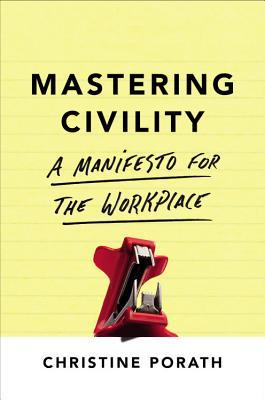
Mastering Civility: A Manifesto for the Workplace by Christine Porath

Mastering Civility: A Manifesto for the Workplace  by Christine Porath

I think we’ve all, at one time or another, worked with one of “those” people- the ones who are rude, who take all the credit, who won’t look up from their phones during meetings, send an email when they should call, or make you do work that they find boring or unimportant.

Before I read Mastering Civility, I assumed that this was behavior I had to endure until the perpetrator got another job or experienced a spontaneous personality overhaul.

Author Christine Porath asserts that tolerating incivility in the workplace is a bad idea because it spreads like a virus. Once rudeness or intolerance enters the scene, it effects everyone it touches and can sink the ship causing everything from profit loss to poor job performance.

Photo by Fox on Pexels.com

Throughout the book, Porath teaches the reader how to recognize incivility in oneself, how to assist coworkers in reforming poor behavior, and how to end working relationships with employees who either can’t or won’t toe the line. Sounding a clarion call for employers and employees alike, Porath rallies readers everywhere to join her in making the workplace civil again.

“Incivility usually arises not from malice but from ignorance. I started my research thinking that jerks out there were intentionally ruining workplaces; I now see that most bad behavior reflects a lack of self-awareness. We don’t want to hurt others, but we do.” pg 12. Until I read this book, I thought that too.

“…incivility has a way of pulling people off track and preventing them from doing their best. I’ve found this to be true in every study I’ve conducted. Even witnesses working around incivility take a hit.” pg 24.

I thought that was especially chilling because Porath ran a bunch of studies. “Many people think of rudeness as a self-contained experience, limited to one person or interaction. In truth, incivility is a virus that spreads, making the lives of everyone exposed to it more difficult. … Left unchecked, incivility can drag down an entire organization, making everyone less kind, less patient, less energetic, less fun- simply less.” pg 39.

Photo by Kate Trifo on Pexels.com

Ewww, you got your incivility all over my desk.

Those are the don’ts. Here are a few do’s: “If you want to connect with your employee or team, lead with warmth. Most of us are in a hurry to prove our competence, but warmth contributes significantly more to other’s evaluations. .. It facilitates trust, information, and idea sharing.” pg 71

“… the single biggest complaint I hear from employees about their bosses is that they fail to tune in. Do yourself and others a favor: When you speak or meet with someone, put away your smartphone. Make others the priority.” pg 114. Amen.

I laughed when Porath suggested eating well, exercising, and getting enough sleep to help foster a civil atmosphere in the workplace. Common sense stuff, yes, but how many of us have lashed out because we’re “hangry”? Change starts with you so: eat breakfast, people.

Recommended for people experiencing or who have experienced incivility in the workplace. Porath gives you some concrete methods to turn it all around. Some further business related reading that I’ve enjoyed: Do the Work, The Happiness Advantage: The Seven Principles of Positive Psychology That Fuel Success and Performance at Work and The Art of Exceptional Living.

Thanks for reading!

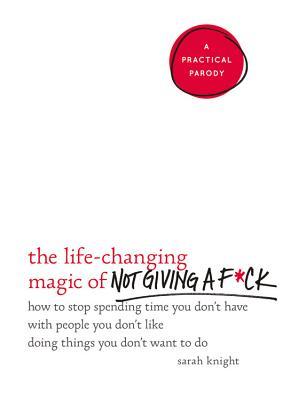
The Life Changing Magic of Not Giving a F*ck: How to Stop Spending Time You Don’t Have with People You Don’t Like Doing Things You Don’t Want to Do by Sarah Knight

The Life Changing Magic of Not Giving a F*ck: How to Stop Spending Time You Don’t Have with People You Don’t Like Doing Things You Don’t Want to Do by Sarah Knight

Since I just posted on Spark Joy, I thought that it was the appropriate time for a review of this one.

Full title, it’s a whopper and very descriptive of the book’s contents: The Life-Changing Magic of Not Giving a F*ck: How to Stop Spending Time You Don’t Have with People You Don’t Like Doing Things You Don’t Want to Do.

F-bombs aplenty in this parody of Marie Kondo’s international best seller about tidying. If you can look past the obvious language thing, Knight gives some fairly solid advice. She counsels readers to not care so much about what others think and give that mental energy to yourself. You’ll be surprised what you can accomplish.

“Please listen when I say that the shame and guilt you feel when you’re trying so hard to not give a f***? It’s usually not because you are wrong to not give that f***. It’s because you’re worried about what other people might think about your decision. And guess what? You have no control over what other people think.”pg 26

See? She reminded me of a more foul-mouthed Byron Katie.

Sometimes she manages to string together two whole sentences without the F-word. Check it out: “You can sidestep the prospect of hurt feelings entirely when you view your conflict through the lens of simple, emotionless opinion. NotSorry (Knight’s method) is all about simple, emotionless opinions.” pg 31.

Beyond managing your own mind, she branches out to give advice to parents: “One mother responded from the perspective of teaching her own kids what to give a f*** about: As someone who grew up in a household full of guilt, I think it’s important for our kids to know that they can make decisions about what to care about, and that they don’t need to pay attention to the approval or condescension of other people in deciding how to live their lives.”pg 92.

I can get behind that idea.

Then we move right along to shades of Eckhart Tolle and The Power of Now: A Guide to Spiritual Enlightenment with contemplating the meaning of existence and its temporariness: “The reality is, unless we’ve been given a ballpark figure by a reputable physician (and sometimes not even then), not a single one of us knows when we’re going to shuffle off this mortal coil. It’s morbid, but it’s true. Tomorrow you could get hit by a bus, or mauled by a pack of wolves, or be scared to death by a clown. When you think about it like that, don’t you want to make every second count? pg 184.

Sarah Knight’s book, in my opinion, doesn’t have the life-changing magic of the other book, but she’s got some interesting thoughts that I believe are true and, sometimes, rather funny. But make sure to bring your sense of humor with you when you pick this one up because the author doesn’t give a … well, you know.

Thanks for reading!

Primates of Park Avenue: a memoir by Wednesday Martin

Primates of Park Avenue: a memoir by Wednesday Martin

Primates of Park Avenue is a glimpse into the life of the privileged mothers of the Upper East Side of Manhattan. It’s weird, otherworldly, and off-putting, at first, but then as Wednesday struggled more and more to fit in and, ultimately, thrive, I found myself cheering for her. I can see how this book isn’t for everyone though. If you don’t like reality television or the details of petty power plays between ridiculously rich socialites, you may want to read another memoir.

As a mother myself, I was thanking my lucky stars as I turned every page that I didn’t happen to end up in New York City. I wouldn’t want that type of pressure on me: to look a certain way, act a certain way, or make my family act a certain way. I can’t imagine that it would ever make me happy and I’m surprised that Wednesday managed as well as she did and emerge, for the most part, unscathed.

The author’s reason for writing: “This book is the stranger-than-fiction story of what I discovered when i made an academic experiment of studying Manhattan motherhood as I lived it. It is the story of a world within a world, a description I do not use lightly.” pg 18, ebook

The “world in a bubble” that is Manhattan: “…many of us live unconstrained by our environment in unprecedented ways. But nowhere, I considered as I walked from here to there every day, foraging for crisp Frette sheets and shiny All-Clad pots and pans and the perfect sconces, are we as radically and comprehensively released as on the Upper East Side of Manhattan. It was the land of gigantic, lusciously red strawberries at Dean & Deluca and snug, tidy Barbour jackets and precious, pristine pastries in exquisite little pastry shops on spotless, sedate side streets. Everything was so honeyed and moneyed and immaculate that it made me dizzy sometimes.” pgs 77-78, ebook

Wednesday forgets to register her child for nursery school and has to scramble and beg to even get applications to the Upper East Side Schools because, if she doesn’t, she isn’t living up to the expectations of her peers: “Thus began my disorienting slide from bystander to total buy-in: with fear. I had been seized by the culturally specific and culturally universal anxiety of not being a good enough mommy, of being a mommy who does less than enough for her children.” pg 90, ebook.

The thing is, in my experience, all mothers deal with that fear. Most of us are just fortunate enough to be in a place that doesn’t put a social magnifying glass on it.

My favorite part- Wednesday decides to get a Hermes Birkin bag to stop women from “charging” (crowding) her on the Manhattan sidewalks: “Like a totem object, I believed, it might protect me from them, these ladies who were everywhere in my adopted habitat and who said so much without a word, using only their eyes and their faces and, always, their handbags. Perhaps, I thought, a nice purse like the ones they had might trick them, mesmerize them into believing that they oughtn’t challenge me to sidewalk duels and all the rest.” pg 132, ebook. Never underestimate the power of a really nice bag…

The most disturbing part, for me, was the reliance of all of these women on their husbands: “…with resources under their control, with wives who are dependent on them caring for their even more dependent offspring, privileged men of the Upper East Side can do as they please. Men may speak the language of partnership in the absence of true economic parity in a marriage, and they may act like true partners. But this arrangement is fragile and contingent and women are still dependent, in this instance, on their men- a husband may simply ignore his commitment at any time.” pg 241, ebook

That really bothered me.

Wednesday ties up the memoir with a heartbreaking chapter from her own life. I won’t spoil it for readers, other than to say, that I found it very difficult to get through. Primates of Park Avenue seems like a frothy and frivolous bit of writing about women who already have so much privilege that their lives didn’t need the examination, but then I realized, that universal problems like gender inequality and becoming a part of the group transcend culture, time, and place.

If you’re looking for more books on these sorts of social questions, you may want to read Lean In: Women, Work, and the Will to Lead by Sheryl Sandberg or Spinster: Making a Life of One’s Own by Kate Bolick.

Thanks for reading!