Dear Girls Above Me: Inspired by a True Story by Charlie McDowell

Dear Girls Above Me: Inspired by a True Story by Charlie McDowell

Dear Girls Above Me is about Charlie McDowell’s time living beneath a loud group of gossiping young women (names have been changed to protect the innocent). He claims to have learned much about love, life and himself through his eavesdropping.

From the description, I thought this book was going to be cute. Instead, I found it very creepy.

“I most definitely did not expect to be the unwilling audience of a twenty-four-hour slumber party between the Winston Churchill and Benjamin Franklin of the 90210 generation.” pg 6, ebook.

Photo by Max Vakhtbovych on Pexels.com

But, shortly after professing his irritation for the girls, he spends an inordinate amount of time wandering around his apartment, looking for the location with the best “reception” of their voices.

“…I’m living underneath a couple of Kardashian wannabes who spend their time gossiping, starving themselves, and throwing noisy parties.” pg 21, ebook.

Instead of ignoring them or moving to a new apartment, Charlie creates a Twitter account where he mercilessly mocks the snippets of conversation he overhears. It seemed very passive-aggressive to me.

“As my Dear Girls Above Me Twitter following grew, so did my guilt and anxiety. Each day, more and more people were discovering my ‘letters’ to the girls, and I felt as if it was only a matter of time before they stumbled across it.” pg 113, ebook.

Photo by Tracy Le Blanc on Pexels.com

But not guilty enough to stop tweeting about it.

Charlie does try to build reader sympathy by sharing some fairly embarrassing stories about his own personal life, but it didn’t really work. I found myself feeling embarrassed for everyone in this book rather than amused.

The low point of this tale was this: Dear Girls Above Me, ‘The psychic said I have a serious stalker in my life!’ I much prefer ‘a friend who always listens,’ thank you very much. pg 194, ebook.

No, stalker is more appropriate. Sorry.

I don’t recommend this book.

Thanks for reading!

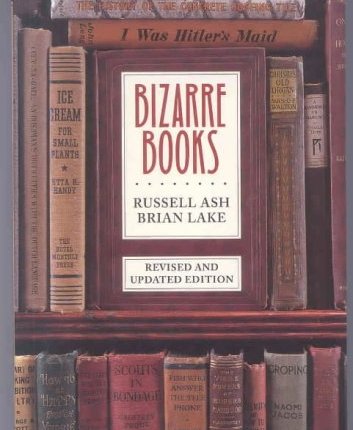
Bizarre Books: a Compendium of Classic Oddities by Russell Ash

Bizarre Books: a Compendium of Classic Oddities by Russell Ash
bizarrebooks

Though it relies too heavily on puns and doubles ententes, Bizarre Books is a humorous look at titles, subjects and author names in published materials. It is a must-read for any book lover or professional who deals with the printed word on a daily basis. *cough* Librarians. *cough*

“All the books recorded are real titles, with real authors. All of them were published with the serious intention of informing, not amusing. In this, they have signally failed.” introduction, pg 7.

I don’t think that ALL of them were meant to be informative. Take this entry from one of my favorite genres, science fiction: Planet of the Knob Heads. Stanton A. Coblentz. Science Fiction, Atlas Publishing, 1939. “Jack and Marjorie are brought to the distant world of their captors. In far Andromeda, they struggle against “favors” of the knob-heads – but hope fades as they face the High Knobule!” pg 40. Almost irresistible, isn’t it?

If science fiction isn’t your thing, how about this (I’m guessing) thriller: What Farrar Saw. James Hanley. Nicholson & Watson, 1946. “No story by Mr. Hanley is without its moral implications; here we have a glimpse of nightmare horror and chaos in a monstrous machine ridden world. It starts simply enough as chaos does. A young couple set off for a holiday in Scotland.” pg 44. Sounds at least as promising as The Girl on the Train, wouldn’t you say?

Photo by Suzy Hazelwood on Pexels.com

Those were some of the fictional books that caught my eye. On to the non-fiction. If it was on a shelf in front of me, I’d pick up Carnivorous Butterflies by Austin Hobart Clark, pg 62.

In the most ineffective category, the prize goes to: Atomic Bombing: How to Protect Yourself. Watson Davis, et al. New York: William H. Wise & Co. 1950. One of its suggestions was: “Curl up in a ball as you hit the ground.” pg 166.

By far, my most favorite selection is: The New Guide of the Conversation in Portuguese and English in Two Parts. Pedro Carolino.

Familiar phrases: Let us go on ours feet. At what o’clock is to get up? At which is this hat. Have him some children? pg 54. And so on. The authors dedicated another three pages to this gem alone.

Highly recommended from this bookworm. It made me laugh a lot and that is not easy to do.

Thanks for reading!

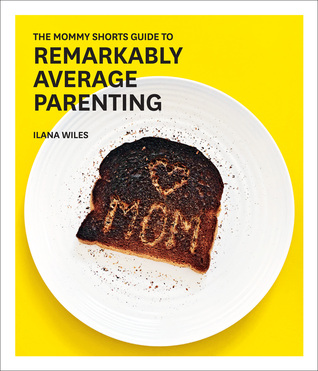
The Mommy Shorts Guide to Remarkably Average Parenting by Ilana Wiles

The Mommy Shorts Guide to Remarkably Average Parenting by Ilana Wiles
remarkably average

The Mommy Shorts Guide to Remarkably Average Parenting is one of the best books about parenthood I’ve ever read. It is an honesty, funny and poignant look at the un-glamorous side of parenting. I loved the pictures. I loved the stories. I wish that this book had been around when I had my baby. Between this read and How Not to Hate Your Husband After Kids, mothers-to-be have all their bases covered.

Ilana warns mothers about the perils of choosing rare names: “… if you want to name your child something odd, I support you. I like odd names. I think odd names make the world a more interesting place. But you should be prepared to hear some criticism when you are at your most vulnerable.” pg 19. I didn’t even pick something that weird for my child (Willow) but I still faced criticism. When I told my grandpa the name I picked for his first female great-grandkid, he told me that it was the stupidest thing he’d ever heard. And there I was, heavily pregnant. Yeah, I cried. Wish someone had warned me.

I empathized with the idea that parents have no clue what they’re doing and we’re all secretly terrified that we’re going to screw up our kids in some irreparable way. Over a decade later and I still feel that: “In hindsight, the newborn phase wouldn’t be that hard if new parents weren’t so worried about messing up in such a way that it would ruin their newborn’s life forever.” pg 33.

The page entitled, My two-year-old’s rules for eating a banana pg 76, had me in stitches. Kids are so weird about food. My daughter is currently on a mac-n-cheese, ramen and ice cream kick. This time last year, all she would eat was homemade pancakes and grilled cheese with the crusts cut off. I’m sure that in another year, we’ll be somewhere else. And it’s not just about the “what”, there’s also the “how.” If you cut the crusts off the grilled cheese, but then don’t cut it diagonally, then no dice. You may as well throw it out because my kid won’t eat it. It’s absurd, but true. Poor Ilana suffers through the same thing but with bananas.

Photo by Aleksandar Pasaric on Pexels.com

The other funniest mini-chapter is: “Totally Butchered Words: Even if you do stop cursing and shield your kids’ ears from swearwords outside the home, your kids will probably still end up saying a few unfortunate things anyway. This is because toddlers might be trying to say one thing, but then it comes out sounding like another word entirely.” pg 116. I can’t even quote what she prints on the next pages because it is too filthy but, in my opinion, it is absolutely hilarious.

Ilana’s parenting philosophy is fantastic: “It’s not a matter of high or low expectations- it’s a matter of no expectations. Discover who your kid is as you go. Your kids will not be who you expect, but the things that amaze us most in life are never the things we expect.” pg 215 Mine amazes me all the time.

Highly recommended to own or give as a gift, The Mommy Shorts Guide to Remarkably Average Parenting is a cut-above average.

Thanks for reading!

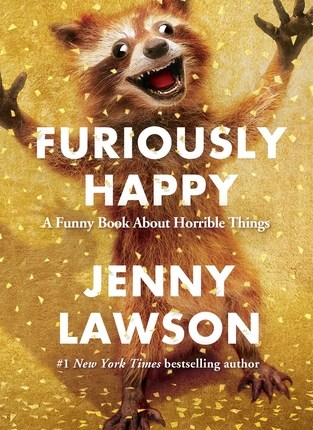
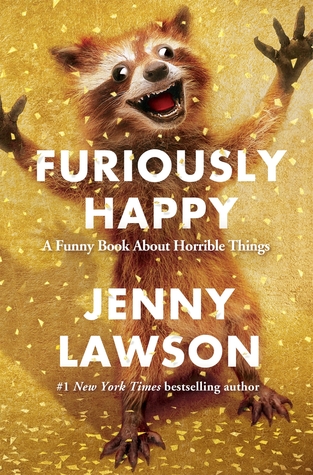
Furiously Happy: A Funny Book About Horrible Things by Jenny Lawson

Furiously Happy: A Funny Book About Horrible Things by Jenny Lawson
furiously happy

Jenny Lawson may not appeal to all readers, but I love her stuff. Her books are like open diaries and sometimes you just have to look away, but I always find myself looking back. I loved her first book and this one was even better.

In addition to being, in my opinion, uproariously funny, Jenny is a poster child for the millions who suffer silently from mental illness and the social stigma that goes along with that. She has more than embraced her condition, she’s transcended it into a weird alternate reality with grinning, taxidermied raccoons and brown (not white) Pegasuses with back herpes.

Though she obviously has her dark moments, Jenny’s world seems a lot more fun than the ordinary world. That in itself is miraculous when you consider the sheer amount of mental anguish that she’s lived through. I think Jenny gives people with debilitating mental illnesses hope- that they too can live a life filled with laughter, quirkiness and fun despite any obstacles.

It’s weird but my favorite part was the bit about Japanese toilets. I googled it and found out that Japanese toilets are a for-real “thing”- those buttons, squirting water and all. So, in addition to being entertaining and inspiring, this book could also be considered educational. 🙂

If you enjoyed Furiously Happy, you may want to try I’m Just a Person by Tig Notaro, Mother. Wife. Sister. Human. Warrior. Falcon. Yardstick. Turban. Cabbage. by Rob Delaney or Sleepwalk With Me and Other Painfully True Stories by Mike Birbiglia.

Thanks for reading!

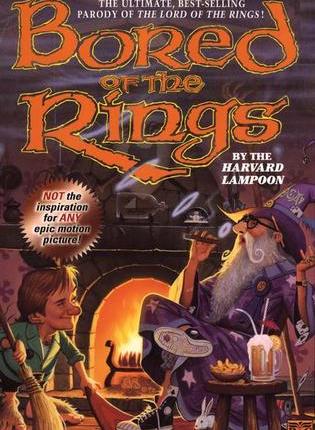
Bored of the Rings: A Parody of J.R.R. Tolkien’s Lord of the Rings by The Harvard Lampoon

Bored of the Rings: A Parody of J.R.R. Tolkien’s Lord of the Rings by The Harvard Lampoon

The clever parts of this so-so parody of The Lord of the Rings trilogy were the character names and the map on the first two pages. The rest was repetitive and silly nonsense, but the map especially was inspired.

Photo by ArtHouse Studio on Pexels.com

At the front of most science fiction or fantasy novels, the author provides a map, usually hand-drawn, of their world, the different countries, the rivers, mountains, dragon hoards, what-have-you from the story. Tolkien’s was particularly detailed and it was clear that he put a lot of time, effort and emotion into the creation of it.

The skewered version in this book of the LoTR map is hysterical. Mordor became Fordor which is, of course, right next to Tudor. Isengard becomes Eisentower and so on. Even Tolkien’s ornate compass receives a makeover with the directions north, south, east, west becoming up, down, left, right. I saw the map and I had high hopes for some big laughs.

Sadly, that never really came about. But oh, the name changes. Sam becomes Spam. Frodo becomes Frito. By far, my favorite was Legolas which was turned into Legolamb.

Photo by Kat Jayne on Pexels.com

Listen to what happens if you bear the Great Ring for too long: “For as surely as the Ring gives power, just as surely it becomes the master! The wearer slowly changes, and never to the good. He grows mistrustful and jealous of his power as his heart hardens. He loves overmuch his strengths and develops stomach ulcers. He becomes logy and irritable, prone to neuritis, neuralgia, nagging backache, and frequent colds. Soon no one invites him to parties anymore.” pg 11. The horror!

This parody also tackles Tolkien’s frequent use of inset song lyrics. Here is one of my favorite characters Tom Bombadil, in this book, Tim Benzedrino singing: “Toke-a-lid! Smoke-a-lid! Pop the mescalino! Stash the hash! Gonna crash! Make mine methedrino! Hop a hill! Pop a pill! For Old Tim Benzedrino!” pg 21.

And actually, making one of the most curious and unexplained characters into a drugged-out hippie was kind of funny. The gag lost its charm though after the first couple lines.

If forced to pick a favorite scene, I’d have to go with when the party was attacked by a “Thesaurus” outside of the Mines of “Andrea Doria”: “The creature was about fifty feet tall, with wide lapels, long dangling participles, and a pronounced gazetteer. “Aiyee!” shouted Legolam. “A Thesaurus!” “Maim!” roared the monster. “Mutilate, mangle, crush. See HARM.” pg 68.

Photo by Skitterphoto on Pexels.com

Anyway, rather than garnering a lot of laughs, this parody succeeded in making me want to re-read the original books. Recommended only for the super fans who must read everything that has to do with the LoTR. Otherwise, I’d give it a pass.

Thanks for reading!

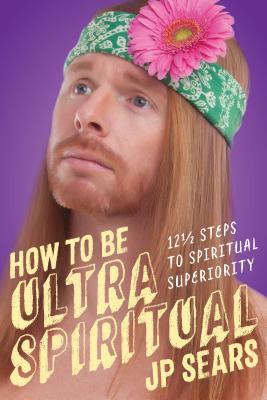
How to Be Ultra Spiritual: 13 1/2 Steps to Spiritual Superiority by Jp Sears

How to Be Ultra Spiritual: 13 1/2 Steps to Spiritual Superiority by Jp Sears

Anything can be a competition- even spirituality. JP Sears in How to Be Ultra Spiritual tackles everything from meditation to existing in the “soon” in a tongue-in-cheek effort to educate the reader on all spiritual matters.

Not for thin-skinned readers, this book uses humor to examine just how ridiculous the whole spiritual thing can be when taken to extremes. Though JP never breaks character, it is clear from the sheer amount of New Age material covered in these pages that if he hasn’t been on the retreats, met the gurus, done the shamanistic plant-fueled trips, then he’s talked to someone who has.

I found the whole thing incredibly funny, but it may not appeal to all seekers.

Photo by Eternal Happiness on Pexels.com

From the introduction: “… if there’s one thing for certain about consciousness, it’s that more is always better. There’s a lot more consciousness in the new level of consciousness that we’re now conscious of, but you’re unconscious to all of this if you’re still wasting your life in the old consciousness that is only spirituality.” loc 17, ebook. And so, the only choice we’re left with, is to become “ultra” spiritual.

What does this mean? “It’s not about being better than other people. It’s about being more spiritual than other people, which is exactly what makes you better than other people.” loc 72. Haha, JP, do go on.

When practicing veganism, he offers a few tips: “Thou shalt not acknowledge the illusionary nature of death in the presence of a thou who casts his stone at animal skulls.” loc 1079. The only vegans I’ve ever met are so not like that- and that’s what makes it so funny.

Photo by Polina Tankilevitch on Pexels.com

I’ve thought about taking a guru when I read a couple of Ram Dass’ books: “In the best circumstances your guru should be dead. … Aside from your guru always being with you like a caring stalker, the other advantage of assigning guru status to someone who’s dead is that it’s much easier for you to idealize his idealized self when he’s not alive. The tragedy of a guru still being alive is that they have their faults too.” loc 1250-1260 ebook.

It may be that I’ve never met my guru or it may be that everyone is meant to find their own way- it seems to me that we’re all just people doing the best we can. Not to pass judgement on anyone who has a guru or wants to find a guru, I’m certainly not a guru.

My favorite part of this book is when JP takes on Eckhart Tolle’s The Power of Now: A Guide to Spiritual Enlightenment with his ultra spiritual “power of soon”: “Conscious people never have hopes and dreams that are based on exactly what’s happening in this present moment of now in their life. Why? Because now isn’t a place- it’s an illusion of time that doesn’t exist. … The enlightened ones know that the only place where their hopes and dreams can live is in the present moment of their future.” loc 1578, ebook. Brilliant.

Recommended for folks who have followed a bunch of different spiritual trends and are ready for a hearty laugh about it all. Some further reading: Be Here Now, Awakening to Zero Point: The Collective Initiation, and Psychosomatic Wellness: Guided Meditations, Affirmations & Music to Heal Your Bodymind.

Thank you to NetGalley and Sounds True Publishing for a free digital copy of this book. And thanks for reading!

Rasputin’s Supernatural Dating Service by David D. Hammons

Rasputin’s Supernatural Dating Service  by David D. Hammons

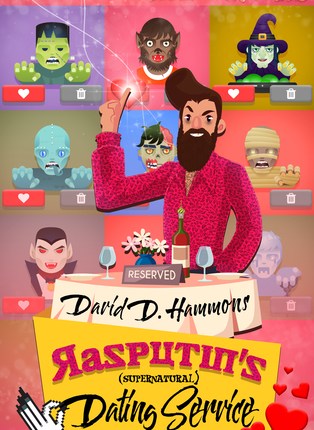
rasputinImagine for a moment that supernatural creatures are real. All of those bloodsucking vampires, toothy werewolves, wandering sasquatch, elves, ghosts, and witches from the stories, they actually exist. Why would all of these beings have notoriously difficult relationships with humans from hauntings to kidnappings to feasts made of human flesh? Rasputin has a theory. He thinks that they’re looking for love in all the wrong places. And the answer to the world’s problems lies through the doors of Rasputin’s Supernatural Dating Service.
Rasputin is THE Rasputin, a seemingly immortal mystic from tsarist Russia who has a way with the ladies, the supernatural, and, sometimes, the men too if he’s in the right mood. This ancient horn dog steers the agency from the golden hot tub in his office and sends his agents throughout the country, certifying legitimate supernatural creatures for dating service access. Eli Kowalski, the narrator, is one of those agents. His troubles begin when a vampires gives him an ancient artifact of unimaginable power and a sinister supernatural creature begins hunting Eli in order to take this power for himself.

Is this story ridiculous? Yes, it is. Did I love it? Surprisingly, yes, I did. David Hammons reminds me of a young Christopher Moore, a silly storyteller with heart. If you can see the humor in an elderly mystic driving a phallic shaped hot rod while demanding that his dating service underlings call him “the Love Machine” then you may enjoy this story too.

Just to give you a taste, here is Eli reading the privacy policy of the Supernatural Dating Service: “Your information will not be shared with any non-Certified member, nor will your home address, dwelling, lair, ethereal plane, or other physical, metaphysical, neo-physical, and existential contact details be divulged to any group outside the RSDS and appropriate government agencies. … Your privacy is important to us, as is your ability to make sweet love to whatever creature you desire.” Lawyers required us to say most of that. Rasputin required us to say the last part.” loc 106, ebook.

Recommended for readers who enjoyed Lamb: The Gospel According to Biff, Christ’s Childhood Pal or almost anything by Tom Holt.

Thank you to NetGalley and Curiosity Quills Press for a free advance reader’s copy of this book. And thank you for reading!

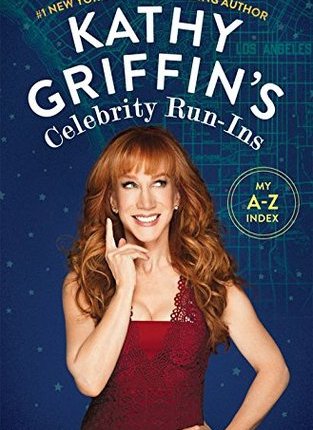
Kathy Griffin’s Celebrity Run-Ins: My A-Z Index by Kathy Griffin

Kathy Griffin’s Celebrity Run-Ins: My A-Z Index by Kathy Griffin

Here’s The Help Desk’s first ever video review!

I hope you enjoy it and here are the links to the books I mentioned at the end of the video.

The Andy Cohen Diaries

Tip It

Thanks for reading.

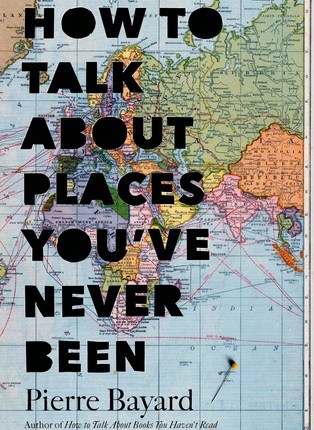
How to Talk About Places You’ve Never Been: On the Importance of Armchair Travel by Pierre Bayard

How to Talk About Places You’ve Never Been: On the Importance of Armchair Travel by Pierre Bayard
armchairtravel

How to Talk About Places You’ve Never Been is a funny little non-fiction book about the skill of conversing about places you’ve never actually been.

At first, I couldn’t figure out what tone the author was wanting to convey because he, quite seriously, discusses why and how to describe places that the reader has never been- a topic that I, before I read this, didn’t take seriously at all.

I eventually settled my inner dialogue’s tone to “slightly grizzled professor who is smiling while lecturing” and that seemed to fit the bill.

There’s a lot to enjoy in here like Marco Polo’s hilarious description of unicorns.

Polo is presented as an armchair traveler because he left out so many important details about the area he was describing (like the Great Wall) and, quite brazenly, made other stuff up: “They have great numbers of elephants and also great numbers of unicorns, which are not smaller than the elephants. Here is what they look like: they have the same hide as a buffalo, feet like an elephant, and they have very thick, black horns in the middle of their foreheads.” pg 9

Photo by mark glancy on Pexels.com

Oddly enough, that sounds rather like the Siberian unicorn, doesn’t it? Only problem is- they became extinct so long ago, that Polo would have never seen one.

The character Phileas Fogg from Around the World in Eighty Days by Jules Verne, goes around the world and never leaves his cabin to see the sights.

Bayard thinks this is an excellent strategy: “The idea of staying in your cabin for the entire journey highlights the importance of the imagination and reflection in our approach to place. These are activities that Fogg is able to commit himself to completely vis-a-vis the places passed through, with all the more energy because he doesn’t waste precious time visiting them.” pg 29

Chateaubriand went beyond simply trying to describe his travels in Ohio, he put an island into the middle of it in his “memoir.”

Photo by Ron Lach on Pexels.com

Bayard applauds his imaginative creation as precise accuracy of physical locations is not what is necessarily important to an armchair traveler:“As Jean-Claude Berchet recalls, (the island) was first situated in what is now Florida at the time of Travels in America. Migrating, it then made a foray into the Mississippi at the time of an 1834 manuscript, before, following its movement northward, it found itself here in Ohio, several thousand kilometers away, clearly justifying the epithet of “a floating island.” pg 57

Bayard’s reasons why the reader may, one day, have to convince someone that they had been somewhere that they actually had not been: “The first is adultery. … The second, murder, is fortunately less common, but any one of us might become confronted with the necessity of having to take this route to ensure our peace and quiet one day. pg 103

How exciting and dramatic! And here I thought this book was just about sitting in your chair and day dreaming. 🙂

Photo by cottonbro on Pexels.com

“It is impossible to hope to speak with any conviction of places you haven’t been to without a vivid imagination. The capacity to dream and to make others dream is essential to anyone wanting to describe an unknown place and hoping to capture the imagination of their readers and listeners.” pg 123

Dream on, readers, dream on!

If you enjoyed How to Talk About Places You’ve Never Been, you may want to pick up The Art of Travel by Alain de Botton or The Art of Non-Conformity: Set Your Own Rules, Live the Life You Want, and Change the World by Chris Guillebeau but, keep in mind, these books recommend that you actually go to the places, not just dream it.

I received this book through the Good Reads First Reads program. Thanks for reading!