I have decided to partner up with another blogger to expand the content of The Help Desk.
I will continue to post the book reviews that The Help Desk is known for, but this blogging partnership will take some of the pressure off of my frantic reading schedule. It takes time to read and review books properly. With my new 40 hour a week job, I don’t have the time to devote to it as I used to.
The History Guy is a dear friend of mine who makes five minute videos about history.
His educational videos are well-researched and fun: a perfect fit for The Help Desk. If you’ve been following my blog, you’ll notice that I love quirky non-fiction. These are right up my alley.
I’ve learned a lot from this YouTuber and I hope that you do too.
My first pick from his lengthy catalog of videos is about Mary Edwards Walker, the only woman to receive the Medal of Honor. She was an abolitionist, surgeon and truly ahead of her time.
Without further ado, I present, “Five Minutes of History: Mary Edwards Walker,” by the History Guy.
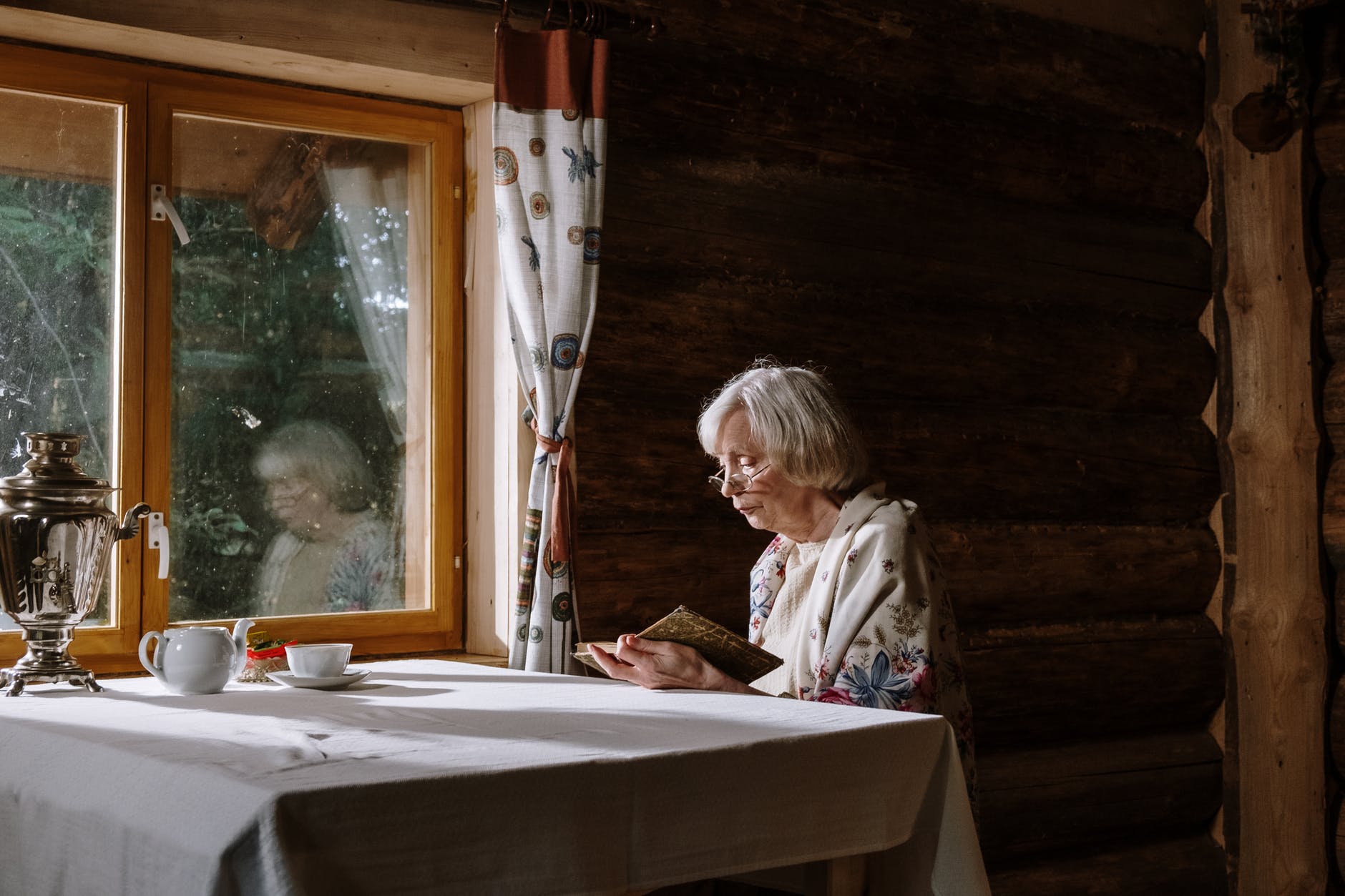
Part art appreciation and part homage to the female reader, Women Who Read Are Dangerous is probably the the most aptly titled book that I’ve ever read.
In addition to the beautiful images (my favorites pages 73 & 89), this book educates the reader about the politics, historical trends, and gender inequality tied to reading. Who knew that simply picking up a book could be such a subversive act?
Women Who Read are Dangerous sums up years of strange thinking about women and books with a dose of humor that I appreciated.
Take these historical opinions for example: “Women are too literal-minded for reading. Women are too sentimental, too empathetic, too distractable for reading. Women are passive, practically somnolent, consumers of popular culture, never realizing how, with the very books they choose, they participate in their own subordination.” pg 16
Or this: “The lack of all physical movement while reading, combined with the forcible alternation of imagination and emotion,” said the teacher Karl G. Bauer in 1791, would lead to “slackness, mucous congestion, flatulence, and constipation of the inner organs, which, as is well known, particularly in the female sex, actually affects the sexual parts”- so anyone who read a great deal and whose powers of imagination were stimulated by reading would also be inclined to masturbation, as indeed we can already observe in Baudouin’s painting. But such moralizing could not hold up the triumphal march of reading, including- and specifically- female reading.” pg 23
Can’t hold us back, right readers? I’m actually feeling pretty well for all the reading that I do.
Reading is power, I’ve always known that: “With the ability to read, however, there developed new patterns of private behavior that were to threaten the legitimacy of both the Church and secular authorities on a permanent basis. Women who learned to read at that time were considered dangerous. For the woman who reads acquires a space to which she and no one else has access, and together with this she develops an independent sense of self-esteem; furthermore, she creates her own view of the world that does not necessarily correspond with that conveyed by tradition, or with that of men.” pg 26
An introvert’s paradise, the keys to your freedom, the way to stick it to the “man”… as if I needed more reasons to read.
I also liked this description of reading: “Reading is an act of friendly isolation. When we are reading, we make ourselves unapproachable in a tactful way.” pg 34 I never really considered it that way before, but it is a method in which you remove yourself from the world for a time, even from those sitting in the same room.
Seems obvious, when I consider it, but I had never taken the time to do so.
Finally, I learned about how “silent reading” is a recent trend. Did you know?: “An illiterate today is not only someone who cannot read (or write), but also anyone who cannot understand a text unless he or she reads it aloud. Yet there must have been a time when the opposite was the case- when reading aloud was the norm, as silent reading is today. … Until well into the Middle Ages and in some cases well into modern times, reading consisted of both thinking and speaking, and was above all an act that took place not in separation from the outside world, but at its center, within the social group and under its surveillance.” pg 25
Ugh. “Under its surveillance”?
That brings to mind the quotation, “Let others praise ancient times; I am glad I was born in these.” -Ovid.
Highly recommended for art enthusiasts and anyone who loves to read, Women Who Read are Dangerous is a lot of fun and a walk on the wild side… if one believes in such things.
If you’re looking for more non-fiction information about reading, try “Wild Things! Acts of Mischief in Children’s Literature” by Betsy Bird. It doesn’t have the beautiful artwork of this book, but it does contain a lot of information about the history and, sometimes scandalous, back story of children’s books and authors.
A big thank you to the Goodreads First Reads Program for a finished copy of this book for review purposes. And, thank you for reading!
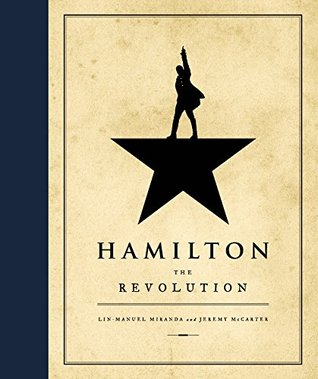
Hamilton: The Revolution is a musical that uses hip-hop to tell the story of Alexander Hamilton, one of the founders of the United States. This book is not just the libretto, but also the story behind the musical.
I have not heard this libretto performed, yet, so the part of Hamilton that stuck out the most for me was not the music (which might change after I hear it live) but the enormous amount of research that Miranda put into the creation of it.
I also enjoyed the copious details of his creative process. Every artist takes a different route to produce a masterpiece. Miranda credits the love for his wife as the foundation of this work, even calling Hamilton: The Revolution a “love letter” to her.
Love seems to be the driving force behind most creative endeavors, doesn’t it?
Back to the history behind Hamilton: I loved that Miranda included photographs of the actual documents and direct quotations from the figures of the period. This isn’t just a fun musical that uses hip hop to tell its story. This is history being retold in a way that appeals to modern sensibilities.
About Hamilton’s ambition that is highlighted in the song My Shot, Miranda says: “A character needs to want something pretty badly to sing about it for two and half hours… Alexander Hamilton lived hard, wrote fast, and hustled his a** off. “For to confess my weakness, Ned,” he wrote to a friend at age 14, “my Ambition is prevalent.” This man was born to perform an “I want” song. pg 21
I don’t know that I knew what the word ‘ambition’ meant at 14… a sign of things to come perhaps.
I loved all of the information about the set construction and having New York itself as the background: “The founders tended to be country boys. Washington, Jefferson, Adams, and many other key figures of the revolution hailed from, and frequently returned to, estates and farms out of town… It’s no wonder that John Adams, who despised Hamilton, also despised the town and its citizens: “They talk very loud, very fast, and all together,” he complained…” pg 38
I didn’t know about Hamilton’s actual love poem to Eliza about which, Miranda says, “(she) wore it in a necklace for the rest of her life”:
“Before no mortal ever knew, A love like mine so tender, true, Completely wretched- you away, And but half blessed e’en while you stay. If present love (illegible) face, Deny you to my fond embrace, No joy unmixed my bosom warms, But when my angel’s in my arms.” pg 69
He wooed her with poetry- smart man.
I enjoyed the introduction to Angelica Schuyler, an incredibly bright woman in a time when she couldn’t really use that intellect in a constructive way.
In this passage, Miranda talks about how difficult her brilliant character is to portray and how hard her lines are to say: “Renee was the first one who came in and made us say, ‘Oh, she thinks exactly that fast,” he recalls. Her whirring brain made Angelica come alive in a new way… Renee acknowledges that she does indeed think pretty fast- “too fast to have good handwriting.”pg 79
I loved the empowering message of Hamilton: “There are plenty of debatable lessons to be drawn from Alexander Hamilton’s life, but that one is clear. The poor bastard orphan from the islands ought to have died a dozen times but somehow lived to help to found the nation…”There are strong minds in every walk of life that will rise superior to the disadvantages of situation and will command the tribute due to their merit,” Hamilton wrote in The Federalist No. 36. Look no further than his own life for proof of that statement.” pg 149
One of the rules of fostering creativity is to not be afraid to make mistakes. They were very brave in the development of Hamilton: “Lin, Tommy, and their collaborators shared an eagerness to try things- to try everything- to find what worked best. “New discoveries, new mistakes” was the daily goal that Tommy had announced for the company at their first rehearsal the previous November.” pg 206
The pages of this book are packed with the stories, anecdotes, and behind-the-scenes hijinks of the creators, actors/actresses, and historical figures behind Hamilton: The Revolution. Pick it up and treat yourself to the newest Broadway sensation- winner of the 2016 Pulitzer Prize for Drama. It’s amazing and well worth the time.








 The Help Desk Book Blog