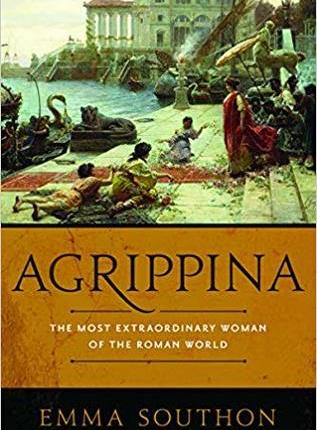
Agrippina: The Most Extraordinary Woman of the Roman World by Emma Southon

Agrippina: The Most Extraordinary Woman of the Roman World by Emma Southon

Emma Southon gives us a fascinating look at a complex woman whom history has perhaps treated unfairly.

She starts by giving the reader reasons why the study of historical women is so difficult.

… we have just three major literary sources that mention Agrippina with any detail, and a total of seven literary sources from the entire corpus of Latin literature that think she was interesting or significant enough to deserve a single line; one of which is a play.”

Photo by Octoptimist on Pexels.com

Like most women from history, Agrippina was mainly written about when she orbited important men. There’s also the difficulty of potential bias in the few sources we have.

“She can be seen only through the distorting lens of her relationship to other people and how well or badly she performed the ideal form of that relationship. It’s mostly badly, which is why we get to see so much of her.”

But what’s left when you take all of that into consideration is extraordinary. As the author points out, Agrippina was “the sister, niece, wife, and mother of emperors.” There are few from history who can claim the same.
Photo by Francesco Ungaro on Pexels.com

Southon uses an informal style and words like “stabby” and “murdery”. I found her delivery rather hilarious and enjoyed it. If you’re turned off by this type of writing, you may want to choose another, more serious author.

She doesn’t neglect to remind readers of the context of every bit of Agrippina’s history or point out when the record is missing or falls silent. Sometimes, the gaps in the record speak even louder than what was written.

“The next year, however, Agrippina came roaring back into historical narratives in the most confusing possible way.”

I liked how Southon took complex concepts from Roman history and gave them to the reader in digestible chunks. For example, we get a glimpse of what portions of Agrippina’s wedding ceremony may have been like:

“First, Agrippina the Younger anointed the doorway with fat and wool. Basically, she smeared some kind of animal fat onto the door frame and then strung wool between the door posts, sticking the ends to the fat. Obviously that sounds both disgusting and bizarre, which it is, but this is very symbolic and serious. Probably as these things were brought out, the party atmosphere would die down and everyone would watch reverently as this little girl covered the door in goo.”
Photo by Mathias P.R. Reding on Pexels.com

She goes on to examine the superstition of carrying the bride across the threshold of her new home which was another important part of the ceremony and nothing like the laughing, fun time it is today. It was interesting to me to juxtapose the modern viewpoint on these ancient traditions and see the glaring differences between the two.

Highly recommended for readers who like their non-fiction to sound like a conversation between friends. Southon makes the past come alive in a delightful read filled with scandals, power struggles and, of course, Rome.

Thank you to NetGalley and the publisher for an advance reader copy of this book, which is slated to go on sale tomorrow, August 6, 2019. The brief quotations I cited in this review may change or be omitted in the final copy.

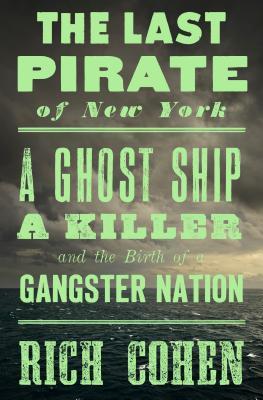
The Last Pirate of New York: A Ghost Ship, a Killer, and the Birth of a Gangster Nation by Rich Cohen

The Last Pirate of New York: A Ghost Ship, a Killer, and the Birth of a Gangster Nation by Rich Cohen

A fantastic and non-fiction account of Albert Hicks, the last man to be publicly executed in New York City and also one of the last to be tried and convicted for piracy. For fans of history, this is a must-read.

“Albert Hicks is the closest thing the New York underworld has to a Cain, the first killer and the first banished man, carrying that dread mark: MURDER. He operated so long ago, in a city so similar to and yet so different from our own, the word gangster had not yet been coined. He was called a pirate.”

Photo by Pixabay on Pexels.com

Beyond the fascinating true crime story about Hicks, Rich Cohen, the author, has brought New York City, mere years before the Civil War, to life. You get to learn about the streets, the notable people, the attitudes, the newspapers and more. It is a fun and, occasionally serious, romp through the past.

“New York Harbor is a network of islands and coves, seabirds and arsenical green marshland, the sort that looks solid until you step on it. … In the old days, every road on the island ended at the water, the sun rose at the foot of every street. Even now, when the fog rolls in, the waterfront is a sailor’s dream.”

Cohen doesn’t tell his story through the dry recitation of facts and figures. He has a storyteller’s way of weaving the details into the larger narrative. This is history as it was meant to be told.

“An 1850 police report estimated the presence of between four hundred and five hundred pirates in New York City. To the police, a pirate was any criminal who made his living on the water, attacking and robbing ships beyond the jurisdiction of the landlocked coppers…”

Photo by Chris Schippers on Pexels.com

Four and five hundred pirates! In New York City! This book changed my view of “The City So Nice They Named It Twice.” I suppose everybody and everything comes from somewhere. The early years of the city had more story to it than I imagined it could.

“Why had he killed everyone on the ship if money was his object? Because, he later explained, “Dead men tell no tales.”

Part of the reason why Albert Hicks may have been so forgotten is because of the extraordinary events that occurred just a short time later, the Civil War. It overshadowed everything that came before it, and, also, time moves on. I think about what was in the news last week and how our attention will already have moved on by next week.

As much as Cohen was able to discover about Hicks, his trial and what came next, I wish more had existed in the historical record about Hicks’ wife. I get that, beyond a few details, she basically disappeared from the record and that’s such a shame.

It made me wonder if Hicks has any descendants out there and if they know the story of one of their most notorious ancestors… I have relatives a few generations back who were adopted in New York City. Hicks’ history could belong to any of us who have question marks in our family tree.

As Cohen points out in his book, Hicks’ history, as shocking as it is, is also the early history of our country. Any shining point of light casts a shadow. This is one of those stories that took place in the shadows — a nightmarish memory from early New York City.

Photo by TheUknownPhotographer on Pexels.com

Recommended for readers of history and true crime. The Last Pirate of New York is brilliant.

Thank you to NetGalley and the publisher for a free digital, advance reader copy of this book. Please note that the brief quotations I cited in this review may change in the final printed version. The estimated date for publication is June 2019.

Thanks for reading! #TheLastPirateOfNewYork #NetGalley

Update June 21, 2019: The Last Pirate of New York is on sale now. The History Guy made an episode about Albert Hicks, the subject of this book. You can see the short documentary-style YouTube video here:

Who Put the Rainbow in The Wizard of Oz?: Yip Harburg, Lyricist by Harold Meyerson

Who Put the Rainbow in The Wizard of Oz?: Yip Harburg, Lyricist by Harold Meyerson

An informative non-fiction biography about Yip Harburg, the little-remembered lyricist, who is responsible for, among other notable works, writing the lyrics to “Somewhere Over the Rainbow”.

Similar to Malcolm Gladwell’s “successful hockey players who were born in January” thesis, Yip was among an extraordinary group of lyricists, all born within a short time of each other, who wrote for Broadway and Hollywood. It wasn’t just talent, of which Yip had a great deal, it was also opportunity.

Photo by Pixabay on Pexels.com

A myriad of different factors came into play in just the right way at the perfect time to create musical theater and a chance for lyricists to make a huge impact on the national consciousness. Prior to this time period, that type of entertainment, musical theater, didn’t even exist.

Yip grew up in poverty but claimed that didn’t affect him all that much. Children are surprisingly resilient.

“You lived from month to month. But youngsters didn’t feel the sting of it because everyone else was poor, too. We knew no other way of life, and it didn’t mean much to a kid who turned the street into an exciting playground.” pg 9

The Great Depression hit Yip hard and he lost everything. He decided, when the chips were down, to try his hand at a new career. And so, he began writing lyrics for composers. It’s a curiously difficult profession.

Photo by Joshua Woroniecki on Pexels.com

“The challenge of becoming a lyricist involves not only perfecting individual writing skills but also learning to be an effective collaborator, one of the most demanding of human relationships. … The theater lyricist must also be collaborating with the book writer of a musical, as well as directors, actors, designers, and producers who impact the lyric-writing process.” pg 32

Beyond the life of Yip Harburg, this book gives the ins-and-outs of the lyric writing business. It is a tricky art, limited by not only the written music but also the demands of the show or song in which the words are appearing.

“The word rainbow never appears in L. Frank Baum’s book, “The Wizard of Oz”. It was lyricist Yip Harburg who put it in the film.”From the introduction.

“Somewhere Over the Rainbow” is arguably one of the most recognizable Hollywood songs of all time and most people don’t remember the man who made it possible. Yip was also responsible for the almost “operatic” flow of the music during Dorothy’s time in Oz. In fact, Judy Garland wanted Yip to write the lyrics for her turn in “A Star is Born” but her husband, the producer, was unable to get Yip under contract because of his blacklisting during the McCarthy-era.

Photo by Evgeny Tchebotarev on Pexels.com

But Yip didn’t let it get him down. He kept writing even though some of his friends completely fell apart when they couldn’t get a contract.

I enjoyed learning about not just the difficulties of lyric writing, including the plot lines and back stories of some of Yip Harburg’s most popular works, but also learning about the life of this man who affected so many people by putting thoughts into words. He encapsulated dreams. And that’s not an easy thing.

“I think everybody, not only every artist, but every person who thinks, is confronted with… — his drive to be related to the universe, but that’s a hard thing because there are so many stars and it’s very hard to grasp that relationship. … But, if he can identify himself, and relate really with one other person, he will relate with all of humanity and he will relate with all the universe.” pg 69

Thank you, Yip, for giving Dorothy rainbows. The world would have been a darker place without you.

Recommended for fans of Broadway shows and musicals, but also for readers who enjoy learning forgotten history about people who deserve to be remembered.

Thanks for reading!

Here’s The History Guy episode about Yip Harburg:

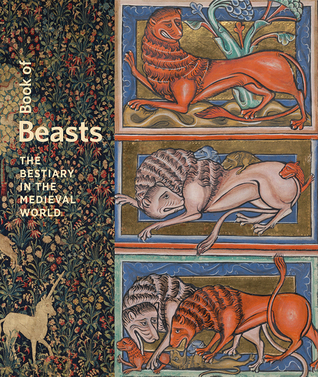
Book of Beasts: The Bestiary in the Medieval World by Elizabeth Morrison

Book of Beasts: The Bestiary in the Medieval World by Elizabeth Morrison

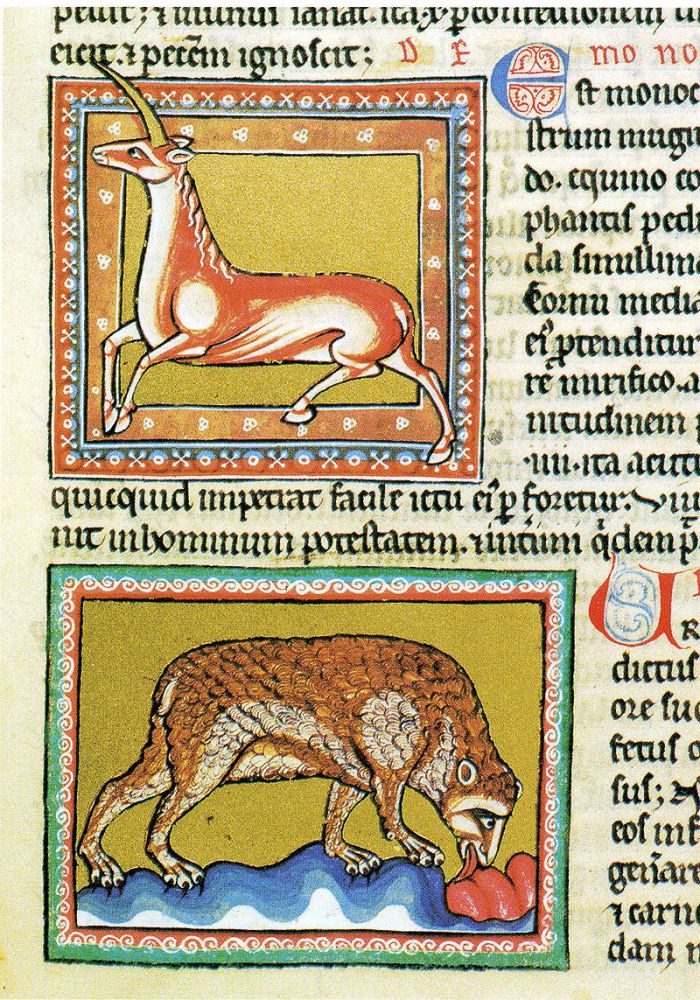
Books of Beasts is a scholarly examination of medieval texts called “bestiaries”. These curious works consisted of lists of animals with accompanying pictures and traditional stories. Sometimes they were printed alongside other works, like the Bible, sometimes not.

Elizabeth Morrison and twenty six other medieval scholars assert that these were the second most popular texts in the medieval world. They weren’t concerned with accuracy or science, part of the purpose of the books were to use creation as a window to contemplate the mysteries of God.

This particular book, Books of Beasts, was made to accompany a ground-breaking exhibition at The J. Paul Getty Museum. You can learn more about the exhibition here: http://www.getty.edu/art/exhibitions/…

I also used the information in this book to write a script for The History Guy YouTube Channel.

“Book of Beasts: The Bestiary in the Medieval World” presents the largest number of medieval bestiaries ever gathered together, representing one third of the known surviving illuminated bestiaries, including some that have never before left their countries of origin.”

The stunning portion of this book are the bestiaries themselves. The colors and the animals in their various tableau are simply beautiful. When you consider how old the artwork is, it’s staggering that something that fragile has survived so long.

“Animals both real and fantastic parade by the dozens, and sometimes hundreds, across the pages of these remarkable works. Their stories were among the most familiar and beloved of the time, and many survive today, though their origins in medieval and earlier times have, sadly, been largely forgotten.”

My favorite part of this book were the stories attached to the animals. Everyone in the medieval world knew them and so, when that animal appeared somewhere else say, for example, on a tapestry or dish, it was a hidden code of sorts, imparting meaning that the modern reader has never learned.

Consider the lion: “The natural philosophers say that the lion has three principal natures. His first nature is that he likes to walk on the mountain heights. And if it should happen that he is sought by hunters, the odor of the hunters reaches to him and with his tail he covers the trail of foot prints he left behind…. And thus our Savior… covered over the foot prints of his love in Heaven, until sent by the Father, he might descend into the womb of the Virgin Mary, and save the human race that was lost.”

The lion was always presented first in the bestiaries and was given the name “the King of Beasts” not only for its position on the food chain but also for its association with Jesus Christ. These associations have bled over to today, and I had no idea that’s where they came from.

Fascinating, isn’t it?

But as interesting as the stories and images were, this book suffers from some serious academia-itis. The various scholars, the only experts on the topic in the world I’m sure, have different writing styles and some are far more palatable than others.

By the time I got to my fifth or sixth explanation why this text was related to that text and may or may not have come first, my brain was glazing over a little bit. Other sections read more like dissertations than material that someone would pick up for fun.

That criticism aside, the topic itself is absolutely worthy of investigation, if for nothing else than these stories that were, as one of the authors said, as popular as a “viral meme” that some of their meanings are still in use today. Isn’t it cool how history haunts us in ways that we may be unaware of?

Thank you to NetGalley and the publisher for a free digital advance reader copy of this book. The projected publication date is in June 2019. The short quotations I cited in my review may change in the final version. 

Thanks for reading! #BookOfBeasts #NetGalley

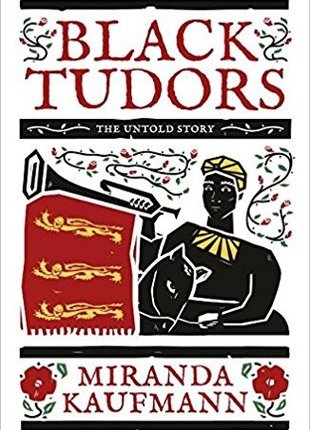
Black Tudors: The Untold Story by Miranda Kaufmann

Black Tudors: The Untold Story by Miranda Kaufmann

Scholar and historian Miranda Kaufmann has written vignettes of half a dozen or so Africans who lived and worked in England during the Tudor Era.

The trouble with this collection is that so little information exists, Kaufmann has to parcel it out among other more well-known history. I still found it interesting, but for readers looking for Black History only, it feels rather disappointing.

The answers are complex, but the questions that most commonly spring to mind about the Black Tudors are simple: why and how did they come to England? How were they treated? What were their lives like?” pg 3

Photo by Chris Carter on Pexels.com

The answers, in addition to complex, are brief. But this book did clear up some misconceptions I held about the time period.

For example: “Tudors were far more likely to judge a new acquaintance by his or her religion and social class than by where they were born or the colour of their skin, though these categories did on occasion intersect.” pg 4

Many of the records Kaufmann produces were held by the church — baptisms, marriages and so forth.

As an American, it is a different perspective to learn about a country’s history that was affected so little by slavery. People could move in and out of England with their slaves, but these unfortunate persons could also be freed or claim their freedom.

Henry VII set a precedent when he freed an African man named Pero Alvarez who was from Portugal, a country with slavery at that time. And it was backed up by the courts.

Photo by Mike on Pexels.com

In author William Harrison’s “Description of England”, he wrote: “As for slaves and bondmen, we have none; nay such is the privilege of our country by the especial grace of God and bounty of our princes, that if any come hither from other realms, so soon as they set food on land they become as free in condition as their masters, whereby all note of servile bondage is utterly removed from them.” pg 16

I wish America had been more like that.

Readers get to learn about musicians, African princes, ship wreck divers, explorers and more in this book. Recommended for fans of history and non-fiction.

Thanks for reading!

Here’s the History Guy episode that I wrote after reading some of the historical happenings in this book:

Cadillac, Knight Errant of the Wilderness by Agnes C. Laut

Cadillac, Knight Errant of the Wilderness by Agnes C. Laut

A highly detailed, but dated, biography of Antoine de la Mothe Cadillac, the founder of Detroit.

“Antoine had so many Spanish characteristics, the laughing irony, the quenchless ardor, the chivalry; he was so much the fierce fighter, the devout Catholic yet independent of priestly control, that we suspect he must have had Spanish blood of the Pyrenees from his mother’s side of the house.” pg 45

Photo by Chris Smith on Pexels.com

You would not believe how difficult it was to find information about this man. So many sources I examined contradicted each other or cast him as a villain or hero to the point where the actual history was obscured behind opinion.

Agnes Laut falls more into the hero-worship category, but I found her citations of historical documents to be more of use than most of the online articles I could find, which didn’t cite any.

That being said, like every other human in history, Cadillac was a complicated figure and I don’t think Laut does readers any favors by painting him as an unassailable hero. He would engage in illegal trade because everyone else was doing it. He believed Europeans were superior to the Native American population.

He was a man of his times and yet, he was the visionary and founder of Detroit and, for a time, the governor of the Louisiana Territory. He did great things and not-so-great things.

“The stockades of the new fort at Detroit enclosed sixty square yards. The post lay about forty steps back from the water-front. Such was the germ of a city that in little more than two centuries was to number with its suburbs nearly a million and a half in population. pg 140

Photo by Anon on Pexels.com

Goodness of the man aside, I had much to learn about Cadillac.

“Cadillac would never tolerate a man in his company not dressed spick and span as a naval man in spotless white. He, himself, set the example in costume faultless from hat to high boots.” pg 63

The history of Cadillac also shows a curious side of the court of Louis XIV of France, otherwise known as the Sun King. The politics of the court caused Cadillac to be imprisoned for a time, but the king kept releasing him and giving him more authority. He was thrown in the Bastille for six months and then given the Order of St. Louis.

“(Louis XIV) would grant favors only with the condescending generosity and pomp of a Grand Monarch; so the Court was duly assembled to witness the presentation of the commission at a morning audience. Cadillac had to kiss His Majesty’s hand and back away as from the presence of a god.” pg 121

Photo by Pixabay on Pexels.com

As an outsider looking in, it’s confusing how quickly a man’s stars can change. But at the same time, the shifting sands of court favor and intrigue emerge in the ups and downs of Cadillac’s life as well. All in all, it makes for a fascinating history.

“Let his (Cadillac’s) name stand and take its place as time goes on.” pg 286

Recommended for history readers with some reservations. Keep in mind this was published in 1931.

Thanks for reading!

Here’s the History Guy episode I wrote about Antoine de la Mothe Cadillac:

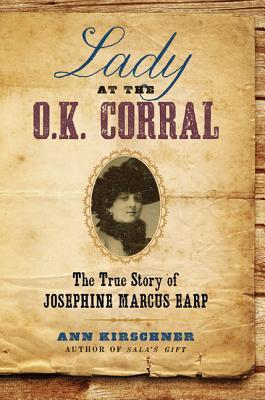
Lady at the O.K. Corral: The True Story of Josephine Marcus Earp by Ann Kirschner

Lady at the O.K. Corral: The True Story of Josephine Marcus Earp by Ann Kirschner

Josephine Marcus Earp made it difficult for biographers to accurately portray her life. Later, she would tell her history how she wished it had been or cover up the parts she didn’t want people to remember. It makes it hard for historians to paint an accurate picture of who this complicated woman actually was.

But I think Ann Kirschner, in this biography, does as good of a job as anyone could be expected to considering how convoluted the history is surrounding Josephine.

“The gunfight at the O.K. Corral was a love story, fought over Josephine Marcus, a woman of beauty and spunk barely out of her teens, escaping the restrictions of birth and seeking adventure, independence, and romance.” pg 3

Photo by Laura Stanley on Pexels.com

It’s a shame really. We know so much about Wyatt Earp and his friends. But the women around them have been almost swept into obscurity.

“A sizable group of authenticated photographs testified to Wyatt Earp’s undeniable good looks at any age, while there was not a single undisputed photograph of young Josephine, only ones in which she looked more like Sophie Tucker than Penelope Cruz.” pg 5

The fragments that are left reveal a woman who was brave and craved adventure. She seemed to have loved deeply and enjoyed gambling. Through extraordinary highs and lows, multiple states, and even the unbelievable gold rush of Nome, Alaska, Josephine lived life to the fullest.

“There was far too much excitement in the air for one to remain long a child,” Josephine recalled.” pg 22

Photo by NaMaKuKi on Pexels.com

Josephine’s Jewish family seemed rather conservative when compared to her wandering existence. She had siblings who married and raised families, like ordinary folk. One imagines that holiday gatherings were rather interesting.

“The most common occupation for a woman in Tombstone was prostitute or performer. Or both: many of the more attractive prostitutes also performed at the theaters and dance halls in town.” pg 47

The end of Josephine’s life was devastating compared to the decades of adventure that proceeded it. Penniless and perhaps suffering from dementia, one of the writers she worked with trying to create a definitive history of her life wouldn’t answer the door when she came calling. Instead, he’d record the abuse she wrote on notes that she slid under the door.

Her aggressiveness frightened him, and he began to keep track of her visits with handwritten notations on the back of calendar pages, with quotes from her: “I’ll get back at you — good and hard.” … Once she stuck her arm through the screen door to reach the doorknob.” pgs 217-218

Photo by Pixabay on Pexels.com

How could that happen? A woman who had once captivated two of the most legendary men in the West reduced to delivering threats when an acquaintance wouldn’t let her in the door. Lady at the O.K. Corral helps the reader understand some of the complicated twists and turns in the life of Josephine Marcus Earp, but I’m not sure that historians will ever be able to completely untangle the mixed-up threads of this woman’s life.

“As Wyatt’s biographer Stuart Lake put it: ‘In back of all the fighting, the killing and even Wyatt’s duty as a peace officer, the impelling force of his destiny was the nature and acquisition and association in the case of Johnny Behan’s girl. That relationship is the key to the whole yarn of Tombstone.’ pg 49

I wish there were more historical records to remember this extraordinary woman. It’s just sad.

Also, it makes me consider the type of documentation and oral record I’m leaving behind. How history will remember me? Will I be someone with a legacy to remember or just another shadow clinging to the arm of a more successful man? Stay tuned.

Thanks for reading!

Here’s the History Guy episode I wrote about Josephine Sarah Marcus Earp:

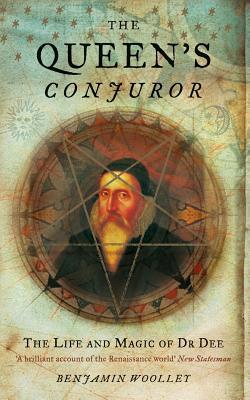
The Queen’s Conjuror: The Science and Magic of Dr. John Dee by Benjamin Woolley

The Queen’s Conjuror: The Science and Magic of Dr. John Dee by Benjamin Woolley

The Queen’s Conjuror is a biography of Dr. John Dee, a fascinating and much-maligned Renaissance man who was, among other things, Queen Elizabeth I’s personal astrologer.

“And for these and such like marvellous acts and feats, naturally, mathematically, and mechanically wrought and contrived: ought any honest student and modest Christian philosopher be counted and called a conjuror?” pg 15

He had interests in astrology, science, mathematics and the occult, which, to modern eyes, may seem strange. But Dee viewed the inner workings of nature and the universe as a type of magic and his studies of it, through the use of science, was another way that Dee worshiped God.

Photo by Tima Miroshnichenko on Pexels.com

“Queen Elizabeth, a symbol of Protestant sovereignty, told the French Ambassador Andre Hurault: ‘There is only one Jesus Christ… the rest is dispute over trifles.’ This, it seems, was Dee’s view as well.” pg 45

Part of Dee’s study of nature was an attempt to find a “universal language.” This universal language, Dee believed, was told to the Biblical Adam by God in the fabled Garden of Eden before the fall from grace. Dee hypothesized if a scientist could find this universal language, giving the secret name of beasts, plants and everything in creation, that it would unlock the secrets of the universe itself.

“In other words, Dee thought that the ‘astronomical’ symbols appeared to be the relics of a long lost universal language that transcended national and, by implication, religious barriers.” pg 75

Photo by cottonbro on Pexels.com

In addition to his legacy of mysticism and the Enochian alphabet, Dee is credited as the first man to formulate the idea of a ‘British Empire’ and he suggested that England develop its navy as a key to upholding that empire.

“The navy would become the ‘master key’ of English military strength, England would challenge the Spanish — to spectacular effect in its defeat of the Armada in 1588 — North America would be colonized, a British Empire would emerge, and the expeditions that Dee had in the last few years been helping to plan would lay its foundations.” pg 123

Another reason I admire Dee — he amassed one of the largest libraries in Europe. Unfortunately, his home was looted during a long sojourn on the Continent.

Photo by Ekrulila on Pexels.com

“In short, Dee’s house had been ransacked not by an ignorant peasant mob, but by pupils and associates. Their motives remain unclear. They may have seized the books to settle outstanding debts, or to discover the secrets they contained, or to hide them from others.” pg 278

Although he died in poverty and obscurity, he affected society then and today, and represented an era where science, religion, and mysticism were intimately entwined.

Highly recommended for readers who enjoy history, mysticism, and a curious combination of the two.

Here’s the History Guy episode I wrote about Dr. John Dee:

The History Guy remembers Dr. John Dee

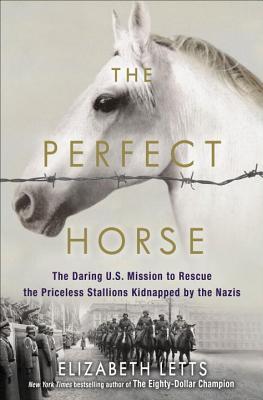
The Perfect Horse: the Daring U.S. Mission to Rescue the Priceless Stallions Kidnapped by the Nazis by Elizabeth Letts

The Perfect Horse: the Daring U.S. Mission to Rescue the Priceless Stallions Kidnapped by the Nazis by Elizabeth Letts

Author Elizabeth Letts‘ non-fiction book is about Operation Cowboy, the American protection of the Spanish Riding School and the plight of the Lipizzaner horses during World War II.

As priceless as any of the masterpieces that hung in Vienna’s museum, from their snow-white coats to their large aristocratic heads and deep brown eyes, the horses were unlike any others in the world.” prologue xvii

There was a precedent for saving irreplaceable works of art during the war, but Colonel Hank Reed‘s effort to save horses was something different. Reed, the most decorated American cavalry officer during WWII, recognized that there was something special about the horses at the Nazi stud farm at Hostau.

Photo by Helena Lopes on Pexels.com

Gustave Rau, the Nazi’s master of horse, was attempting to apply eugenics to his horse breeding program to create “the best warhorse”. He focused on gathering Lipizzaners from all over Europe.

Rau, in his next official report to Berlin, would declare, “There are no high-legged Lipizzaner, there are no flat-ribbed Lipizzaner, there are no bad-tempered Lipizzaner…” Clearly, he was impressed with what he had witnessed in Vienna. pg 87

But it wasn’t just about the breeding program, the Germans needed horses to feed the engines of war.

“The Germans were churning through horses at an astonishing rate — the army demanded six thousand fresh ones per month to replace those killed or lost to disease.” pg 37

I didn’t realize horses had such a large role in WWII. I assumed machines had taken over most of the vital functions horses used to perform like transportation and moving men into battle. I was wrong.

The Perfect Horse doesn’t cover the technical aspects of WWII or talk about the American defense of Hostau. It focuses on the horses though Letts does provide some context and information about the backgrounds of the men involved on both sides of the conflict.

Photo by Dids on Pexels.com

“Politics, prejudice, avarice, and intolerance had riven a brutal divide between the countries of these men; the grace of these horses had already started to knit them back together. The former enemies parted as friends.” pg 149

She follows the horses from their eventual relocation from the war front to the United States and what happened next.

The Perfect Horse is a difficult book to read in that it contains a lot of information and not as much “story,” but for readers interested in history, it may be a good fit.

Thanks for reading!

Here’s the History Guy episode I wrote about Operation Cowboy: