The Queen of the Night by Alexander Chee

The Queen of the Night by Alexander Chee

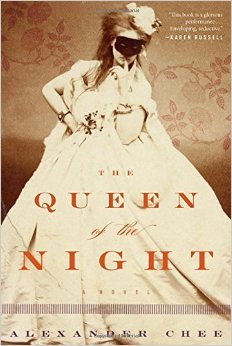
Lilliet Berne has secrets, many secrets hidden in her past and layered upon each other through time and circumstance. Now, she is a successful opera singer but, during a ball one night, a man brings a libretto to her attention that seems to be based on her life. Only a few people know the truth behind the secrets, which one would have made that truth public? Lilliet is going to find out and, along the way, the reader gets to experience the 18th century world from the American Midwest to the Paris Opera to Napoleon’s Imperial Court and beyond.

The Queen of the Night is a glittering, epic historical fiction, reminiscent of Margaret George’s style in that Chee weaves actual historical figures throughout his story. So, you’re learning as you’re entertaining yourself- two birds with one stone. I absolutely loved it.

Who is Lilliet? According to rumor: “I was innocent or I was the devil unleashed, I had nearly caused wars, I had kept them from happening. I was never in love, I had never loved, I was always in love. Each performance could be my last, each performance had been my last, the voice was true, the voice was a fraud. The voice, at least, was true.” pg 7, ebook.

Though true, the voice was not free from rumor either: “There’s a story told of my voice that says it was bought from a witch, the result of an occult surgery. … I never corrected this. … The real answer to where my voice came from is as ordinary as all of life. … I wanted to eat so I learned to sing.” pgs 65-66, ebook. But, as a public figure, Lilliet profited from being a spectacle on and off the stage. She encourages the stories because her notoriety brought her opera parts, connections, and money. Her true background, on the other hand, could ruin her.

The complexity of life in Paris: “Paris, which, when I looked close, was a vast 0péra-bouffe-féerie (opera with elements of comedy and magic in it)- and you did not know your role, I think, until it was too late, and the crowd was laughing at the joke you had uttered in all innocence.” pg 99, ebook. Chee explores many closed societies and the unwritten rules that are followed by them in The Queen of the Night. Among the many scenes examined are: the circus tent, the courtesan’s house, the opera, the French court, the Bohemian music culture, and the couture dressmaker. My favorite parts of this story were the glimpses into these forbidden or, in some cases, defunct cultures and learning the expected behaviors, way of dress, even the preferred perfumes. The fun is in the details.

The Queen of the Night is also a love story: “When love comes this way, the first dream of it feels like a prophecy that has come true. I had never known this feeling until now- he was my first. And so I let myself dream of him again and believe it could be the future.” pg 186, ebook. Swoon… “My theme here is love. Love and the gifts of love, love kept secret, love lost, love become hatred, war, a curse. Love become music. Love and those who died for love. Love- and, especially, first love. My first love, the one I could not keep and could never, will never, lose.” pg 215, ebook. Do you think he could have fit more “love” in there? 🙂

At one point, Lilliet says she feels like she has gotten “Fate’s attention”: “It is a peculiar thing to reach this conclusion, that a god has taken your life in hand. The sensation is not what people might imagine; it is not magic, nor is it a haunting, nor is it a miracle- there’s no storm of roses, no whistle that can put a raging ocean to sleep, no figure in the mirror besides your own.” pg 240, ebook. When I read that, I thought that Chee was going to break down the fourth wall. But, he didn’t. He kept the story flowing but I felt like he winked at me. “Where am I going to take Lilliet now?”, he seemed to say. I didn’t have any idea, but I was definitely along for the ride.

Recommended for readers who want a detailed, slightly (sometimes very) scandalous romp and mystery throughout the 18th century. If you’re into classical music, then it will be an even better fit. Some reads that you may want to explore after this one: The Dream Lover: A Novel of George Sand by Elizabeth Berg (same time period, same country), In the Company of the Courtesan by Sarah Dunant (different time period and country, some similar themes), The Night Circus by Erin Morgenstern (for the circus parts), and Before Versailles: A Novel of Louis XIV by Karleen Koen (different time period, French court).

Thanks for reading!

Margaret the First by Danielle Dutton

Margaret the First by Danielle Dutton

This book is life story of Margaret Cavendish, a duchess and one of the first popular female writers in England.

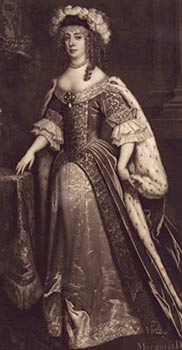
cavendish

Nice hat, right?  Digital image from nottingham.ac.uk

Margaret the First is written like a dream- the scenes come and go with little or no explanation in them and years pass in the blink or an eye or turning of the page.

Usually, I read historical fiction to immerse myself in the details of a time period, but this book doesn’t really cater to that. It’s a bubble in the wind or a glimpse from the windows of a fast moving car. It hints at depth more than delivers it.

Photo by Lucas F. on Pexels.com

But still, despite this strangeness, I was mainly captivated.

Margaret describing her mother: “As for our mother, she was beautiful beyond the ruins of time. None of her children would be crooked, of course, nor in any ways deformed. Neither were we dwarfish, or of a giantlike stature, but proportional, with brown hair, sound teeth, sweet breath, and tunable voices- not given to wharling in the throat, I mean, or speaking through the nose, unless we had a cold- yet we were none so prone to beauty as she, and I perhaps the least of them all.” pg 14, ebook. Beautiful.

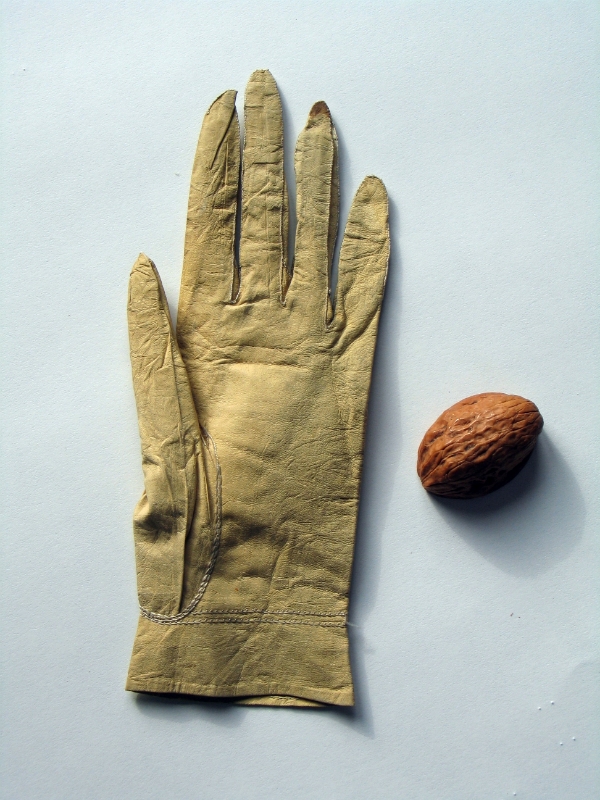
Margaret describing the difference between her childhood education and her brother’s: “You must wear chicken-skin gloves on your hands all night,” my mother began… “When inside the house,” my mother went on, “you must not spend all your time writing little books.” Yet out the window, as she spoke, under a net of branches, my youngest brother, Charlie, arrived on the lawn with a hawk. … It is nobler to be a boy, I thought- and looked back with nostalgia, as if I just had been.” pg 18, ebook

chicken-skin-gloves-0031

Actual chicken skin glove. Image from www.museumofleathercraft.org

The first time Margaret speaks out in a group of intellectuals: “A second man then sportingly suggested they debate the nature of woman. “You will find, sir,” I abruptly spoke, “women as difficult to be known and understood as the universe.” The room fell silent. I was surprised as any man.” pg 43, ebook.

This may be a work of fiction, but I feel like that’s something that Margaret would have actually said. Don’t you?

theblazingworld

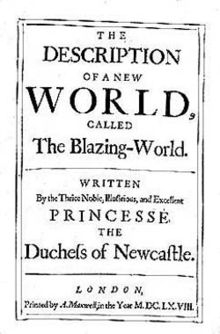
Cover of one of Margaret’s books.  Photo from wikipedia.org.

The attitudes of that time period were astonishing: “Unlike Mr. Hobbes in his Leviathan, then under production in Paris, William thought that common man should be kept illiterate and happy, with sport and common prayer. “Too much reading,” he said, “has made the mob defiant.” I chewed my mutton and considered.” pg 56 (ebook)

Margaret undergoes a lot of unfortunate medical treatment in this book.

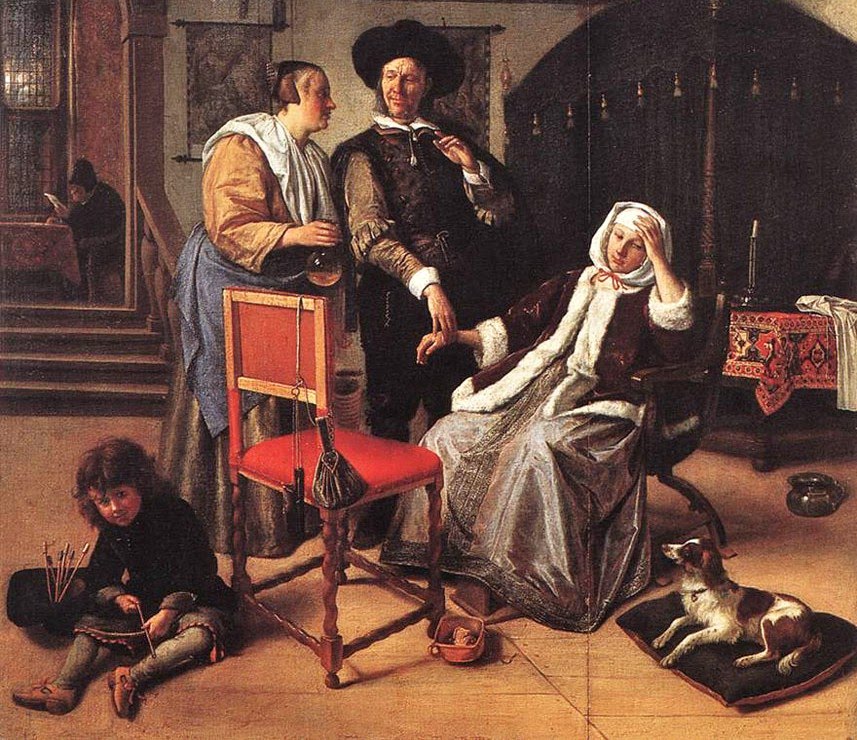
I thought that this passage was charming and really showed the time period rather than purely grotesque, bodily manipulations like some of the other doctor visits: “He (the doctor) tapped and patted, then scribbled in a book: how clear, how pale, how pink. I looked, he assured me, ten years younger than my age, in blossom, in perfect health, and prescribed only a new herb from China called tea. “The decoction of it drunk warm doth marvels,” he told Charles. “Very comforting, abates fumes.” To me he spoke nonsense, as he would to any child, suggesting candy or gossip, or candy with gossip, to lift my mood.” pg 64 (ebook)

thedoctorsvisit

Painting: The Doctor’s Visit by Jan Steen.

Digital image from b-womeninamericanhistory17.blogspot.com

The science of the 1600’s was so off from reality as to seem absurd now in retrospect.

Take this scene where Margaret and an intellectual friend are viewing a map of the North Pole:“Here,” he said, “lies the very pole of the pole of the Earth, where all the oceans’ waters circle round and fall, just as if you’d poured them down a funnel in your head, only to see them come back out the southern end. And in the middle of the middle sits a large black rock, the very pole of the pole of the pole of the Earth, wholly magnetic, possibly magic, and thirty-three miles across!” “Where is the ice?” she wanted to know.” pg 100, ebook.

Photo by Ylanite Koppens on Pexels.com

In this passage, Margaret’s husband asks her what she wants in life and I thought that Dutton captured the (occasionally) unsettled attitude of every woman who has ever lived nearly perfectly:“But Margaret wanted the whole house to move three feet to the left. It was indescribable what she wanted. She was restless. She wanted to work. She wanted to be thirty people. She wanted to wear a cap of pearls and a coat of bright blue diamonds. To live as nature does, in many ages, in many brains.” pg 102, ebook. I’ve been there.

If the reader is looking for a historical fiction with more umph to it, she may want to consider The Dream Lover: A Novel of George Sand by Elizabeth Berg.

But, if she wants a frothy, fun, and fantastical journey into what might have been, look no further than Margaret the First.

Thanks for reading!

This review also appeared on O’Fallon Public Library’s blog.

The Golem and the Jinni by Helene Wecker

The Golem and the Jinni by Helene Wecker

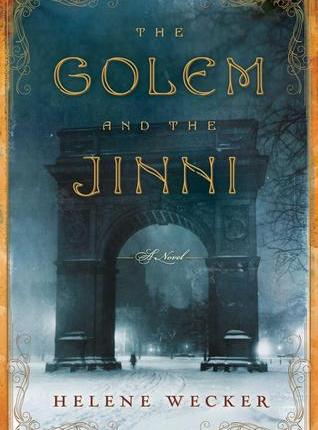
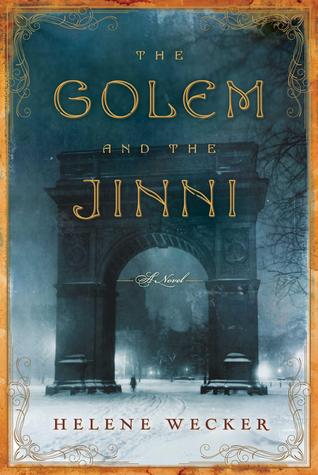
golemandjinniThis is the story of a golem and a jinni, how they discover who they are, their strengths, their weaknesses, and how, even though they’re composed of completely different elements, they may just be the best friend for each other in a human world where they will never truly belong.
As I was reading The Golem and the Jinni, enjoying their adventures and waiting to see how they would discover their origins, I didn’t consider for a moment the idea that the tale could be a metaphor for something else.

When I read the Q&A with the author at the end of the book, I was really kicking myself. Of course, it made total sense as a metaphor for cultural differences. And, when I thought about it that way, I liked the story even more.

On the other hand, this tale can be completely enjoyed and interpreted as a historical fiction/fairytale and, if you’re not in the mood to think any deeper than that, it doesn’t matter, because it’s still awesome. So, it’s a win/win book for the deep thinkers and the no-thinkers.

The Golem and the Jinni is not a fast read. Wecker really builds the characters and gives the back story for everybody who comes across the page.

At first I was like, “Do we really need to know the ice cream guy’s life story?” and I was getting frustrated with the pacing of it. But, as her characters came together and their lives began to intertwine, I began to appreciate the true artistry of the novel.

It is like an orchestral fugue in which the instruments play their themes one by one at the beginning, which is beautiful, but when the tones combine, it lifts the piece to a whole other place. That is The Golem and the Jinni. Give it the time and space to build the characters and you will be blown away by the ending. At least, I was.

Wecker has a talent for creating multi-layered characters. Though the golem is only a few hours old, the author manages to instill in her a childlike curiosity mixed with the timelessness of a magical creature.

In this passage, the golem is seeing the Statue of Liberty for the first time: “The deck was crowded with people, and at first the Golem didn’t see what they were waving at. But then, there she was: a gray-green woman standing in the middle of the water, holding a tablet and bearing aloft a torch. Her gaze was unblinking, and she stood so still: was it another golem? … And those on deck were waving and shouting at her with jubilation, crying even as they smiled. This, too, the Golem thought, was a constructed woman. Whatever she meant to the others, she was loved and respected for it. For the first time… the Golem felt something like hope. pg 17 ebook.

She also describes scenes just beautifully. In this passage, the Jinni sees New York harbor: “The Jinni leaned against the railing, transfixed by the view. He was a creature of the desert, and never in his life had he come so close to this much water. It lapped at the stone below his feet, reaching now higher, now lower. Muted colors floated on its surface, and afternoon sunlight reflecting in the ever-changing dips of the waves. Still it was hard to believe that this was not some expert illusion, intended to befuddle him. At any moment he expected the city and water to dissolve, to be replaced by the familiar steppes and plateaus of the Syrian Desert, his home for close to two hundred years.” pg 23 ebook

I loved the little, let’s call them “wisdom nuggets,” that Wecker sprinkled throughout the story. Like: “A man might desire something for a moment, while a larger part of him rejects it. You’ll need to learn to judge people by their actions, not their thoughts.” pg 40 ebook. Or: “Men need no reason to cause mischief, only an excuse!” pg 172 ebook.

I also connected with this passage where the Jinni is thinking about the power of names: “To him the new name suggested that the changes he’d undergone were so drastic, so pervasive, that he was no longer the same being at all. He tried not to dwell on such dark thoughts, and instead concentrated on speaking politely, and maintaining his story- but every so often, as he listened to the chatter of yet more visitors, he spoke his true name to himself in the back of his mind, and took comfort in the sound.” pg 68 ebook.

I recommend The Golem and the Jinni for folks who enjoy historical fiction blended with fantasy, folks who love deep characters, and for anyone who loves to read beautiful prose. This book has all of that.

Thanks for reading!

Miss Jane by Brad Watson

Miss Jane by Brad Watson

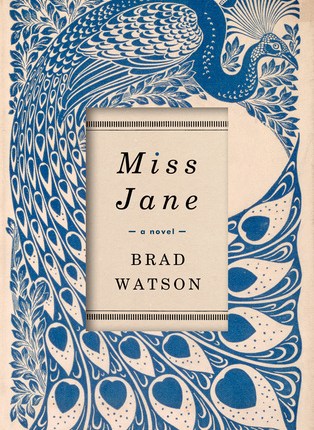
Confession time: I picked this one up because of the cover. I do that sometimes. Who could resist that peacock? It’s an exciting method of book selection because I read novels I would have never considered otherwise and occasionally discover a gem. Miss Jane is, fortunately, one of those gems.

Miss Jane is about Jane Chisolm- an extraordinary girl born in the deep South in the early 19th century with a physical deformity so extreme that she can never have children or even control her bowels. Though Jane struggles with her handicap, it doesn’t define her and she manages to have a beautiful and meaningful life in an otherwise hardscrabble, country existence. Jane’s father is an alcoholic, brewing his own stuff during prohibition, and her mother is deeply unhappy with their relationship, her life, and the world. Jane’s sister, Grace, just wants out of her childhood home and will do anything to achieve that goal. Jane’s doctor, Dr. Thompson, delivers Jane into the world and then spends the rest of his life trying to help her improve the quality of her existence and to also educate the medical community about her condition (there was very little information on it at the time). Miss Jane is based on one of Brad Watson’s actual relatives and I found it to be a fascinating study of not only the South at the turn of the century, but also how poor farming communities handled day-to-day drudgery, poor prospects, and major differences of mind and body.

The farm and nature portions of the story read a lot like a southern, more adult version of Laura Ingalls Wilder’s books, which I’ve always loved, so I guess it’s no huge surprise that I enjoyed this as well. I also loved the way that he wrote about dogs on the farm. Here’s Mr. Chisolm and his hound:“You got the face of bored sadness,” he said to the dog. The dog didn’t take umbrage. Came over beside his left foot and plopped down with a heavy sigh as if he were the one going through all the trouble on this evening.” pg 16 ebook. The peacock from the cover makes an appearance in the story as well, but that has a lot to do with Jane’s condition and I’ll let Watson tell you that detail in his own, lovely way.

Here’s Dr. Thompson, trying to understand the attitudes of the country folk he treats: “Sometimes he was astonished how often he forgot people’s cruel ignorance, people who’d never been anywhere but the little hamlets where they were born, raised, and would die. Not that he hadn’t known plenty of so-called sophisticated people with the same attitude.” pg 39 ebook. Dr. Thompson is a complicated character. He’s highly educated and open minded, but prone to indulging in vices like Mr. Chisolm’s homemade alcohol and prostitutes. Dr. Thompson sees the worst of those he treats- the abuse and neglect- but also their sacrifices and loves. At first, it seems that he only cares for Jane as a medical oddity, but as the story progresses, he comes to love her as a father figure.

In some ways, the isolated world that Jane grew up in was perfect for her. Take the description of her grade school: “It was a small school that took the community children all the way from first grade to high school graduation, and there were not many enrolled, so the environment was relatively intimate, like some great, overgrown family, in a way. The children seemed to know and understand one another like siblings, whether lovingly, or with hostility, or with the purposeful ignoring of this one or that.” pg 58 ebook. That’s the positive and negative of growing up in a small town- that everyone knows everyone else’s business.

Jane’s struggle to fit in is written very beautifully by Watson: “She’d never put a word to the sadness she could sometimes feel, especially in the last couple of years, that would linger at the edge of her thoughts like the invisible ghost of someone she thought she recognized but didn’t know who it was, some kind of familiar she couldn’t quite grasp.” pg 127 ebook

Or this: “She stayed so busy and tired that it seemed like time didn’t matter anymore. Didn’t so much pass as disappear, like memories neglected and forgotten. Years can slip away in such a manner, in such a life.” pg 156 ebook.

A read-alike for Miss Jane: Bull Mountain by Brian Panowich, a story about a family in the deep south but much more violent and with drugs.

Thanks for reading!

Girl in the Blue Coat by Monica Hesse

Girl in the Blue Coat by Monica Hesse

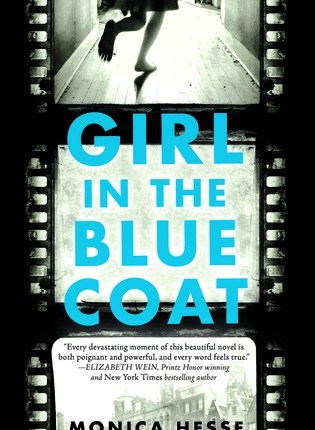
Girl in the Blue Coat is a beautifully written, young adult book about a terrible moment in history- the German occupation of the Netherlands. Hanneke is a young woman who runs black market goods to people in her town not only so that her family can eat, but also to thumb her nose at the Nazis who have taken so much from her and her people. The mystery portion of the book begins when one of Hanneke’s clients asks her to find a Jewish girl who disappeared from the safe house where she had been hiding.

I found myself drawn into this story for many reasons. First, Hanneke is a strong, female protagonist who doesn’t wait for other people to solve her problems- I liked that. Also, Girl in the Blue Coat does an excellent job of keeping the reader guessing. Just when I thought I had things figured out, Hesse changed it up. In addition, I cared about the characters in the story and I wanted them to succeed. It reminded me a lot of The Book Thief by Markus Zusak- same time period, different country.

The strength of Hanneke: “I can feel myself getting sucked into this mystery… Maybe because it’s another way to flout the rules. But maybe because, in a country that has come to make no sense, in a world I cannot solve, this is a small piece that I can. pg 45-46

The complexity of Hanneke’s emotions in a world divided by war: “Here is the thing about my grief: It’s like a very messy room in a house where the electricity has gone out. My grief over Bas (young man she lost to the war) is the darkness. It’s the thing that’s most immediately wrong in the house. It’s the thing that you notice straight off. It covers everything else up. But if you could turn the lights back on, you would see there are lots of other things still wrong in the room. The dishes are dirty. There is mold in the sink. The rug is askew. Elsbeth (former best friend) is my askew rug. Elsbeth is my messy room. Elsbeth is the grief I would allow myself to feel, if my emotions weren’t so covered in darkness.” pg 104

Hanneke’s growing self awareness because of her struggles: “I watched a whole afternoon unfold under my nose, and I misread everything that was happening, from start to finish. All the clues were in front of me, but I still didn’t see them.” pg 125

How Hanneke’s country has changed because of the occupation: “The prisoners follow, carrying suitcases, disheveled and tired like they haven’t slept in days. The crowd is big, maybe seventy people, and the soldiers march them down the middle of the street. It’s a lovely winter day in Amsterdam, and though there are other people on the street, couples like me and Willem, nobody acts like the forced parade of people is out of the ordinary. Our sense of ordinary has become horrifying.” pg 212

If you enjoyed Girl in the Blue Coat, you may want to pick up The Book Thief by Markus Zusak or The Bishop’s Wife (Linda Wallheim Mystery, #1) by Mette Ivie Harrison.  Thanks to Little, Brown Books for Young Readers for the advance reader copy of this book.  And, thank you for reading!

The Abominable: a Novel by Dan Simmons

The Abominable: a Novel by Dan Simmons

The Abominable by Dan Simmons is a historical fiction novel about mountain climbing and a mystery that is set, for the most part, during the early years of World War II.

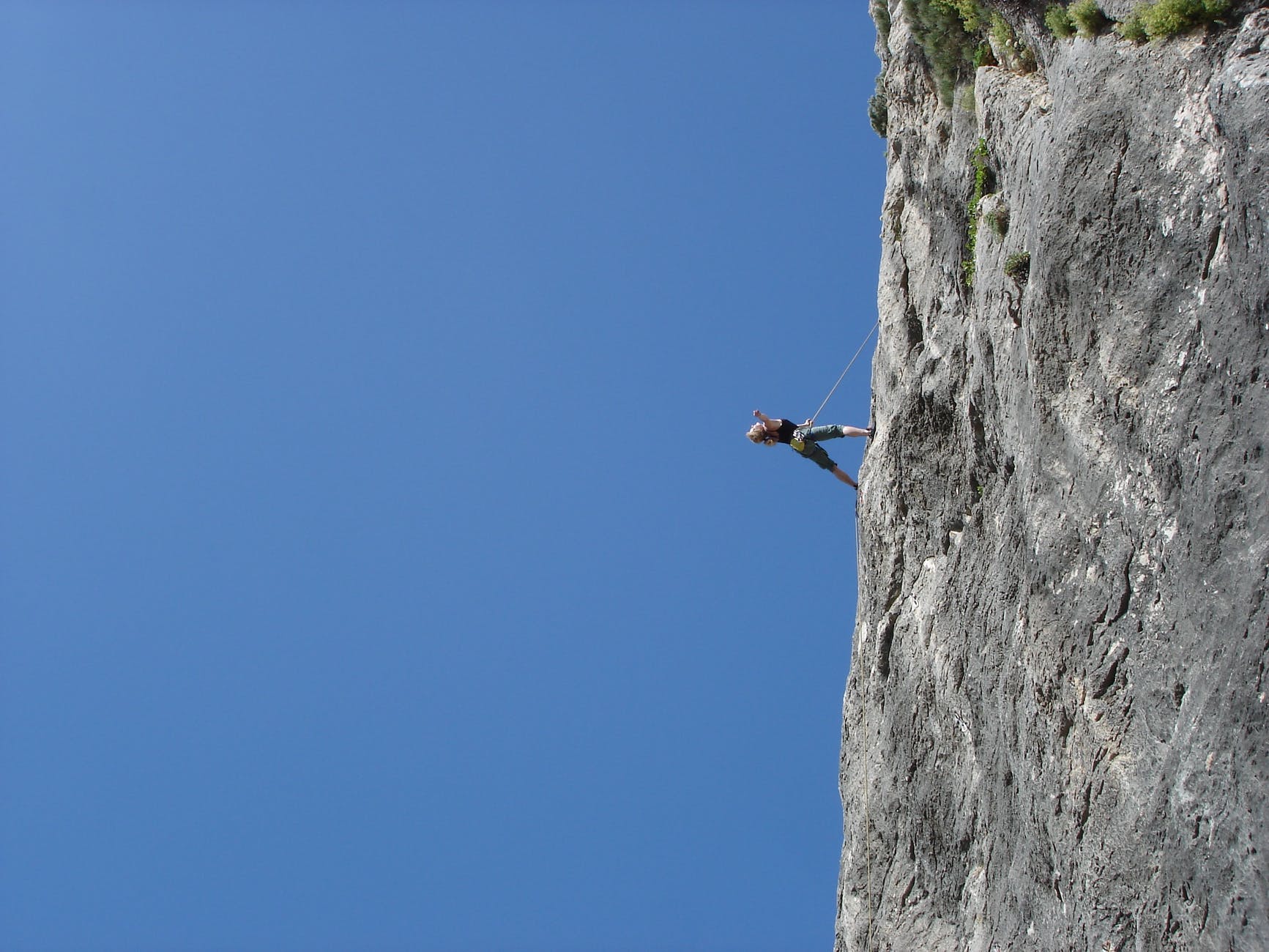
The story reads like less of an adventure novel and more like an homage to the sport of mountaineering.

Photo by Pixabay on Pexels.com

Dan Simmons takes his time building the tension of the tale with back stories and detours until I nearly lost interest in the whole thing. But, to be fair, I have never been a serious mountain climber, having injured myself the first and only time I tried it.

I do enjoy long hikes in beautiful spaces. I don’t like risking my life or the lives of my companions in the process. So, not my thing, but maybe it’s somebody else’s.

Photo by Sagui Andrea on Pexels.com

If hiking is your jam, the long and technical descriptions of climbing techniques, knots, and methods in The Abominable might be just the read you’ve been looking for.

Here’s a pretty passage about viewing the night sky, high up in the mountains: “When you look at the stars near the horizon…especially when it’s really cold.. they tend to jitter around. Jumping left, then right… all while they jiggle up and down at the same time. I think it has something to do with masses of super-cold air lying over the land or frozen sea acting like a lens that’s being moved…” pg 18

One of the many passages that literally made my hands sweat in fear for the characters: “It’s tricky playing out the rope to Jean-Claude as I crab-shuffle to the left. Most of it is in my rucksack, which keeps trying to pull me back and off the face with just the weight of the extra rope and a few other small things in it, but some I’ve had to loop over my right shoulder to keep playing out to J.C. …

I’ve made it a little more than halfway to the pipe ledge when I slip…” pg 111

There are hundreds of pages with writing like that. I found it stressful, but again, I’m not a mountain climber.

Photo by eberhard grossgasteiger on Pexels.com

There’s a lot of wry humor in this read too: “…why are they so eager to get this blessing from the monastery’s holy man, Dzatrul Rinpoche? If everything’s predestined for them anyway, what difference will the abbot’s blessing make?” Pasang smiles his small smile. “Do not ask me, Mr. Perry, to make sense of the internal contradictions that are common in all religions.” pg 341

More love for mountain climbing: “Machig Labdron once wrote, Unless all reality is made worse, one cannot attain liberation… So wander in grisly places and mountain retreats… do not get distracted by doctrines and books… just get real experiences… in the horrid and desolate.” “In other words,” I say, “face your demons.” “Exactly,” says Reggie. “Make a gift of your body to the demons of the mountains and wilderness. It’s the best way to destroy the last vestiges of one’s vanity and pride.” pg 346

This book in two lines: “We were metaphorical inches from hypothermia-which has a wider range of terrible symptoms than merely going to sleep and freezing to death, not the least of which would be intemperate belligerence and a need to rip our clothes off as we froze-and literal inches from a 9,000-foot drop to our south side and a 10,000-foot drop a few more feet away to the north side. But for the moment, we were very happy.” pg 554

Photo by Aleksandr Slobodianyk on Pexels.com

And some people call that fun.

So, beyond being terrified during the climbing portions and bored by the never ending, rambling style of story-telling, I wanted much more of the fantastical in this tale, for example: the abominable snowman!

I’m not going to say anymore about yetis because I don’t want to spoil the surprising twists and turns of this tale for those who do choose to pick it up. Prepare yourself for one hell of a climb though- because it’s a long and meandering one.

Thanks for reading!