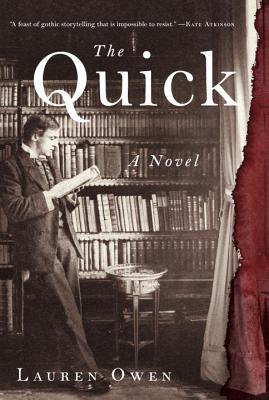
The Quick is a love-it or hate-it book. I fell into the “I loved this” camp. But, when I pushed it onto my mother and sisters, they didn’t like it. They all wondered why I had insisted that they read it and waxed poetic about its story. I was truly surprised.
At first, it reads like a classic English, historical fiction novel. Think along the lines of Dickens or Austen. And then… it changes very quickly into something else, something more like urban fantasy. I can’t say enough how masterful the first part of this novel is without giving too much away. It hooked me quickly and I was enthralled.
I loved how multiple genres collide in the story. I also adored the understated, “British” narrative style.
For a novel of over 500 pages, I went through this very quickly. It’s a wonderful book to lose hours reading in, what feels like, a few minutes. This would be a great book to carry on the subway or train. You’d be entertained for almost the entire trip.
I would have given The Quick five stars but the end bit dragged. Also, I disliked the way that the author developed a couple of the main characters. What can I say- I’m picky when it comes to handing out those five-star reviews.
I also think that book clubs will lose their minds over The Quick. As I mentioned before, there was disagreement within my own family if this was an enjoyable read or not. My mother thought that the writing style showed the author’s inexperience. I thought it was unique and captivating. We could have gone back and forth about it for hours, but who has time for that with all of the books that are waiting to be read.
I’d be interested to know your opinion on it.
As for me, I think this was an amazing debut novel. I look forward to more from Lauren Owen in, hopefully, the near-future.
I received a free advance reader copy of this book through the Goodreads First Reads program. Thanks for reading!
When I picked up The Collector of Lost Things, I expected an adventure-filled historical fiction. The audiobook delivered a heavy-handed treatment of man vs. nature with some truly disturbing scenes of mass animal slaughter. Not for the faint of heart or stomach.
The story beyond these stomach churning scenes was nothing to write home about. I was very disappointed.
I found myself drawing parallels between The Collector of Lost Things and James Fenimore Cooper’s Leatherstocking Tales, particularly the book, The Pioneers.
In The Pioneers, Chapter 3 depicts settlers shooting a cloud of pigeons so vast that it nearly blocks out the sky. They fire repeatedly into the flock, killing far beyond what they’ll need or consume. The mindless slaughter is categorized as sport.
The hero of the story, Natty Bumppo, expresses disgust at the behavior. The reader understands the author’s point and the story moves on.
In this book, not only is there an homage to the pigeon scene, but the reader has to endure the repeated abuse of whales, walruses (walrii?), seals, and the possible extinction of an entire species of bird. I felt like the point wasn’t just driven home- it smashed me in the face.
My stomach was so turned by the slaughter that I couldn’t enjoy the book anymore. It was a shame because the prose used to describe the arctic scenery was some of the most expressive and beautiful that I have ever read. It puts you there, but then it drowns you in seas of blood.
If you enjoyed this book, you should read James Fenimore Cooper. The topic is the same, but the treatment in Cooper’s novels is far superior.
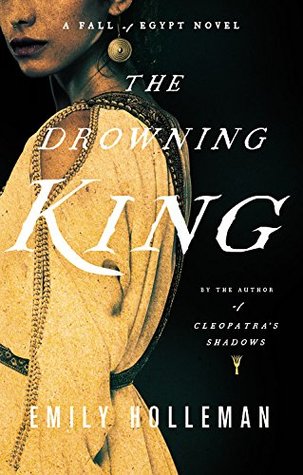
A well-researched historical fiction written from the point of view of Arsinoe and Ptolemy, Cleopatra’s ill-starred siblings. I didn’t even know that Cleopatra had a sister. And, I only knew Cleopatra had a brother because of his infamous gaffe when he presented Caesar with Pompey’s head.
The Ptolemys were a storied dynasty. Descended from one of Alexander the Great’s generals, they had the charming tradition of marrying their siblings. This politically motivated inbreeding kept all of the power in the family. There’s a lot of weird brother/sister vibes in this book, but it’s historically accurate. If that kind of thing freaks you out, you’d be better off avoiding this read.
The Drowning King takes advantage of these unknown characters to spin the history in a different way. I can’t say that I was a fan of all of the changes.
Holleman depicts Cleopatra as a manipulative hysteric who sat idly by while her libraries burned because she trusted that Caesar’s men would protect them. Blinded by love, perhaps? I couldn’t swallow that interpretation.
But, the Roman attitude towards women is portrayed accurately: “The soldiers distrusted her sister for what she was: an Eastern woman with an eye for rule. Hadn’t they already deposed one of those? In Rome, Cleopatra had told her once, slack-jawed with shock, women are chattel, no more and often less. Or as Arsinoe had heard more than one centurion sneer after Berenice’s death, In Rome, women know their place.” loc 96, ebook. How extraordinary then that Cleopatra managed to rise to the heights that she ultimately obtained. I suppose that also helps explain her extraordinary fall.
I liked how Holleman incorporates the size and diversity of Egypt in her tale: “Alexandria was full of Upper Landers, but they bore no more relation to these creatures than a tomcat did to a lion. The men who busied themselves along the palace courtyards wore tunics and mantles and bantered in flawless Greek. … But here men of the same blood looked different, foreign to her eyes, ghosts of some forgotten land. She doubted whether they could even speak her tongue, and she wondered how so many members of her family had ruled without bothering to learn theirs.” loc 871. That’s because the descendants of Alexander’s general spoke Greek and the common people spoke Egyptian. It reminds me of how the nobility in England spoke French while everybody else spoke English.
I also enjoyed the conversation between Ptolemy’s counselors and the young ruler about whether or not they should kill Pompey: “Pompey was once wed to Caesar’s beloved daughter, Julia. And if you kill him, you’ll be slaying Caesar’s former son-in-law.” loc 2472. Beyond the fact that Pompey was Caesar’s son-in-law, he was still a Roman. Ptolemy was not. Romans divided the world into two groups- those that were Roman and those that were not. The counselors didn’t understand that, advised the boy poorly and sowed the seeds for his destruction from that very first meeting with Caesar.
I felt badly for Ptolemy. He was surrounded by either incompetent or power hungry people. There were none who loved him for just who he was rather than what he could bring them. “Nothing he’d done- nothing he’d ever done- had made a dent. With one nauseating exception: the murder of Pompey. And for all he knew, that would be his sole legacy: the ignoble assassination of his father’s alley. Dark thoughts consumed him too frequently now; he had to stay strong and drive them from his mind.” loc 4532, ebook. “The drowning king,” indeed.
I enjoyed this book, I did, but it was no Margaret George’s The Memoirs of Cleopatra. I found myself comparing the two in my mind and this one came up wanting. Unfair, perhaps, but there it is.
Thank you to NetGalley and Little, Brown and Company publishing for a free digital copy of this book.
Imagine, for a moment, that you’re unhappily married and you meet the Devil, who isn’t a hoofed, fiery horror but a “gentleman”. You strike up a conversation with him in which you mention that you’re absolutely depressed and unable to continue on because of your martial situation. The Devil sympathizes with you for a time, then when he’s gone, you discover that your wife has disappeared as well. Time to freak out… or celebrate? This happens to Lionel at the beginning of this tale and it just gets better from there.
The Gentleman is written in Victorian England but with a slightly steampunk twist. The style is very silly- as if Terry Pratchett had written a historical fiction in our world instead of Discworld. The author utilizes footnotes, just like Pratchett, to add layers to the tale and an outside narrative. I enjoyed it a lot.
First of all, Lionel spent a great deal of his fortune on books. Who could fault a hero for that? “I don’t buy anything except books. You cannot possibly tell me I’ve squandered my fortune upon books.” “Squander is not the word I would have used, sir. But it was the books that did it, I believe.” Well, there it was. We were paupers.” pg 2. So, like any self-respecting Victorian gentleman, Lionel sets about to find a rich wife.
Though successful, then he finds that he can’t write a word worth reading. “…I’m a poet, and poets aren’t meant to marry! Poets are meant to dream and dance in the moonlight and love hopelessly!” pg 57.
Simmons, the long suffering butler, is my favorite character. Throughout the madness and hijinks of the main characters, he is a voice of reason and calm. Take this moment, after Lionel’s initial meeting with the Gentleman: “Do you consider me morally reprehensible for inadvertently selling my wife to the devil?” ‘I do, sir,’ (Simmons) says. I had feared as much. I was feeling morally deficient, but wondered if that was only because of my weariness.” pg 91.
The dialogue is snappy, the characters are great, and the whole thing is just silly fun. The Gentleman would be a great book to read if you’ve been into a bunch of serious novels lately or just need an escape from daily woes.
If you enjoyed this book, you may also like Terry Pratchett’s hugely popular series of books or Triumff: Her Majesty’s Hero.
**Warning: minor spoilers ahead unless you’re familiar with Roman history.**
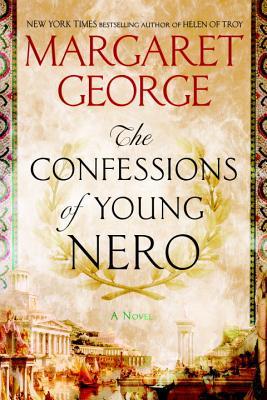
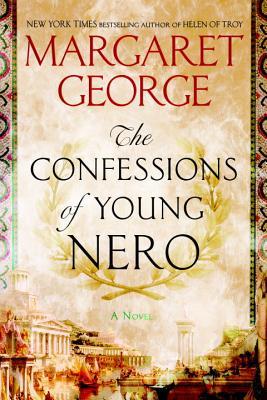
Margaret George has done it again and produced yet another triumph of historical fiction. This one follows the much maligned Nero from his humble beginnings in a lower branch of the imperial family tree to the prize itself, Roman emperor. Then, it ends on an epic cliff hanger, but I forgive her because it is so awesome. If you can’t handle that kind of wait, you may want to hold off on reading this until the next installment is out.
All I knew about Nero (before this book) was that he “fiddled while Rome burned.” George combines the research of a scientist with the storytelling ability of a master writer to bring this man’s story to life. I have to admit- I actually felt sorry for the guy. Yes, despite the orgies, outlandish expenditures, palatial living, and god-like status, poor Nero, like all of us, just wanted to be loved. At least, so says Margaret George.
“It was hard to keep the family… straight. There was so much intermarrying that everyone seemed related to everyone else.” loc 219. Like British aristocracy, the upper echelons of Roman society were actually quite small and so everyone actually knew each other very well. Their children married, they frequently divorced and remarried each other, and excuses were made for the very close marriages. Nero’s mother, for instance, marries her uncle. Abhorrent to modern eyes, perhaps, but like royalty from many different ages, somehow the rules were bent and it was allowed.
From his very earliest days, Nero watches others scheme, poison, and claw their way towards power. It really messes him up. “It was my first, and most brutal, lesson in what lengths to which evil people will go, and for what flimsy reasons. I have never forgotten it, nor let down my guard since. Let them call me cruel. Better that than dead.” loc 544, ebook. Just to put it into perspective, Nero’s uncle, the Emperor Caligula, once declared war on the god, Poseidon, and had his soldiers run into the ocean and stab the waves with their swords- totally bonkers. George suggests throughout the story that Nero is not only trying to outshine his relatives because of natural ambition, but also because he believes there is a curse in his blood. With an extended family like that, I can see his point.
George also does a good job bringing Rome and her curious attitudes about everyone not Roman to life. Nero is fond of the Greeks- their music, poetry, and athleticism. But, to the Romans, that sort of cultural appreciation is unmanly and unnatural. I think it was just an extension of the very human attitude of “us vs them” but Romans took it very badly when Nero wanted to perform music in public (gasp), wear a tunic rather than a toga (double gasp), and race a chariot in the Coliseum (passes out on the floor). These things were not done but Nero insisted on doing them. Compared to the things that celebrities get away with today, those behavioral peculiarities seem so tame.
“I learned to live with the knowledge I had; people can get used to anything, even horror, and it begins to feel normal. And the thought that I had inherited the blood of murderers seemed less threatening than that my mother… might kill me. Thus we make peace with ourselves and our weaknesses, for there is always someone worse to focus on.” loc 1732, ebook. Poor, poor Nero. Can you imagine being afraid that you’d die at the hand of your mother? It really makes one feel like her anxieties are rather trivial. Stressed about a dirty house? Yeah, Nero’s mom might kill him today or tomorrow or the next time he’s not paying attention. Get over it!
Highly recommended for fans of historical fiction, ancient Rome, or people who want to get lost in a story. Margaret George is amazing. I own four of her books and, when this is published, I just may have to pick it up too. Coming from a (former) librarian, this is really one of the highest compliments I can give to an author. Do yourself a favor, if you like this genre and haven’t tried her yet, pick up Margaret George.
Thank you to NetGalley and Berkley Publishing for a free advance reader copy of this book.
Well, that was different. A Good American is, at its heart, a story about a family who immigrates to America before World War I and how successive generations handle life, love, and what comes after. It strongly reminded me of the film, Fried Green Tomatoes, because of the family drama and some of the subject matter. This is an epic tale. Parts of it, I loved. Other parts… I could have lived my life without reading.
I loved Frederick’s attitude towards his new country. It’s exactly what I imagine my great-great grandfather was like when he came over from Poland. “…Frederick loved America. He loved its big open spaces, the sunsets that drenched the evening sky in blistering color. He loved the warmth of the people. Above all, he loved smell of promise that hung in the air. Europe, he could see now, was slowly suffocating under the weight of its own history. In America the future was the only thing that mattered.” pg 57. Frederick throws himself into the American Dream- earning money and providing for his family to the detriment of his relationship with his wife, Jette.
I also loved the parts about music. In this portion, Joseph, Frederick’s son, is taking voice lessons from a rather conservative side character named Frau Bloomberg: “…Bloomberg did not approve of most of opera’s greatest female characters, who were (in her opinion) either hysterical hotheads or dissolute fornicators. She was determined to protect Joseph from all that depravity. Whenever he asked the meaning of a particular foreign word, Frau Bloomberg said the first thing that came into her head. As a result, when Joseph wistfully sang about the imminent return of a long-lost lover from overseas, he believed that he was telling a touching story about penguins.” pg 70
We don’t really get to meet the narrator of the story until much later in the book and, I think, that’s where the story line became unfocused. A couple chapters deal mostly with young men’s coming-of-age and burgeoning sexuality, so there’s a lot about masturbation. Everyone does it, I get that, but really, did it have to be such a theme? As I read it, I was wondering what some of the more elderly members of my book club are going to say about it.
In my mind, the first part of the book was the strongest- the origin story of Jette and Frederick. “My grandmother’s life had been one long opera. There had been drama, heroes, villains, improbable plot twists, all that. But most of all there had been love, great big waves of it, crashing ceaselessly against the rocks of life, bearing us all back to grace.” pg 329. There is a sweetness to their story that the rest of the book is missing.
It may be that this story simply goes on too long, but the author was clearly caught up in his own tale. “Telling stories was still a means of escape. And so I put a fresh sheet of paper into the machine, ready to flee once again. This time I no longer thought about getting published, but just wrote for my own amusement. The journey, not the destination, became the thing, and I rediscovered the simple satisfaction of seeing my ideas materialize before me, sentence after sentence.” pg 344 Even though he was speaking through his character, I’m convinced that that bit right there was all Alex George- a manifesto of sorts, written right into the story.
A Good American is also about race, religion, brotherhood, honesty, marriage, fidelity and more. Plenty for a book club to take part and chew over. Recommended for folks who like their historical fiction long and meandering with, sometimes shocking, turns in the road. Thanks for reading!
A historical fiction about Alexander the Great from the viewpoint of the women in his life.
I have mixed feelings about this one. I read it, well devoured it really, in just a few sittings. It falls right into the type of historical fiction that I love: pre-1700’s time period about mythological/royal persons. The Conqueror’s Wife is very readable.
The thing is, and the author wrote this too in her afterword, Alexander’s personal life, outside of his military conquests, generals, and favorite horse, is so shadowy that Thornton could have written this book really however she wanted. I loved that she focused on the females in Alexander’s life because, of all of the people from that time period, they received the least attention from historians. However, I feel that she did some of them, Roxana and Olympias in particular, a great disservice in her interpretation.
Remember, women had no rights at this time. Marriage was either a matter of wealth or position. Love didn’t enter the equation until the medieval troubadour tales of the 1200’s.
After his many, many successes on the battlefield, somewhere very far from home, Alexander takes a wife from among the ‘barbarians’ that he and his friends were working very hard to conquer. All that we know about this woman (Roxana) was written down or remembered by the very people who killed her after Alexander’s untimely demise. Why earth would he have married a woman with no connections or a ‘whore’? He wouldn’t have.
Let’s just take the facts: Alexander dies and then most of his wives are dead soon thereafter. From that, I would say that Roxana is one of the least likely people to have committed either of those crimes because all of her power stemmed from Alexander. I suspect strongly that Alexander’s Companions, the ones who were left after years of campaigning had taken its toll, were the culprits. How easy would it have been for them to spread the rumors about Olympias and Roxana as Dionysian witches and whores to explain to posterity why they were slaughtered. Alexander’s generals had the most to gain, an entire empire, by discrediting these women.
And, if Olympias was the master manipulator that she is portrayed as in this, then why wasn’t she able to protect herself or her grandson after Alexander’s death? I think it is because she had neither the resources nor the ability to do so, which means, that she wasn’t what history recorded her to be at all. She was a victim of the fallout after her son’s death just like Alexander’s wives.
Anyway, if I had been Thornton and written this book, I would have made each and every female character a hero. History is recorded by the victors and the powerful. The women deserved, if not a happy, then at least an honorable ending.
If you enjoyed this book, you may want to read The Red Tent by Anita Diamant or anything by Kate Quinn or Margaret George.
I received this book through the Good Reads First Reads program. Thanks for reading!
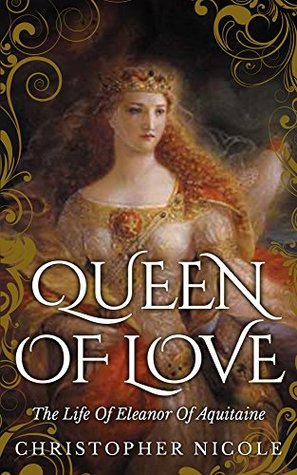
So, this lovely lady lived in the 1100’s, when women were property, but somehow, she managed to become one of the most powerful people of her time.
Granted, she was born into a privileged position, was one of the largest landholders in France, and, by all accounts, was absolutely gorgeous. I’m sure that helped.
But, imagine the social and political acumen she had to possess to make it all work.
This historical fiction is written as a first-person memoir of the time period after her marriage to the King of France was annulled and she was forced into marriage with Henry, the soon to be, King of England and the narrative continues until her death.
I understand that the first person point-of-view doesn’t work for everyone, but I loved it. Then again, there are few historical fictions that I don’t enjoy, so take my review with a grain of salt.
Historical fiction is literary candy for me. When I need to escape reality, I jump into the past, usually with royalty because, let’s face it, the life of a peasant was probably nothing to write home about.
The manner in which Henry acquired the most eligible woman in Europe for his bride was rather questionable. In essence, he kidnapped her, raped her, and then insisted on the match.
She forgave him because, frankly, she could have made worse matches and wasn’t really in a position to bargain.
Here are her thoughts about the man: “… the aspect of Henry which most strikes one is his energy. It was such as almost to make one believe the tales of a devilish ancestor. From the moment my new husband rose in the morning until the moment he collapsed exhausted in bed at night, he never rested either his body or his brain for a moment.” loc 81, ebook.
Henry was known for his energy and fiery temper. I didn’t mark the passage, but Eleanor relates how, when the King became angry, he would throw himself to the floor and eat the rushes.
For modern folks who may not know what rushes are- these are essentially plants that were used to keep the floor clean, sort of like throw away rugs. Remember, floors were pretty disgusting back then as transportation was done mainly by horse and certain things were tracked in on people’s boots.
The King of England would get so mad that he ate poop-covered rushes! In the modern age, that would so not fly. I can just see the covers of the tabloid mags.
I completely forgot that it was Eleanor’s husband who had the infamous disagreement with Thomas Becket. “The quarrel thus commenced dragged on for some time. It was fairly well known, and i do not propose to go into details about it- during this period I had a fair number of problems of my own, and while I felt sorry for Thomas, placed in such a dilemma as having to choose between King and Church, I am bound to admit that he made life unnecessarily difficult for himself.” loc 880, ebook.
That seemed to be Eleanor’s way- go with the flow of what happens, but don’t forget what happened and strike back when you’re in a place of power.
In this passage, Eleanor is fretting over turning 40, which, had she only known it, wasn’t even halfway through her life: “I should point out that in the summer of 1162 I reached my fortieth birthday. This is a most depressing milestone, for anyone, but more I think for a woman than a man, and most of all for a woman once accounted the most beautiful of her time. At forty there could be no disguising the fact that I was growing old, and that even my beauty was fading. In addition, forty brings with it the approach of the dreaded end of fertility, and what has a woman got left?” pg 915.
She had ten kids, how many more does a woman need? And, although much of her power was based in her beauty and fertility, she was still a formidable spirit. I mean, the lady was locked up by her husband for over a decade and yet, she manages to come back from it! Talk about aging gracefully…
Here, Eleanor is holding her own after being defeated in battle with the King of England, her husband. (She went to war against him for her sons- how hardcore is that!): “I would say that it is fairly well established that you have recently been in arms against your king.” “I acted as Duchess of Aquitaine,” I pointed out. “As we are now in Aquitaine, you are an invader, and I am a prisoner-of-war.” “I am the ruler of Aquitaine,” he argued. “In my name,” I riposted. “I have now withdrawn that privilege from you.” “Madame, your effrontery is startling.” “I am Eleanor of Aquitaine.” loc 1988. Boom.
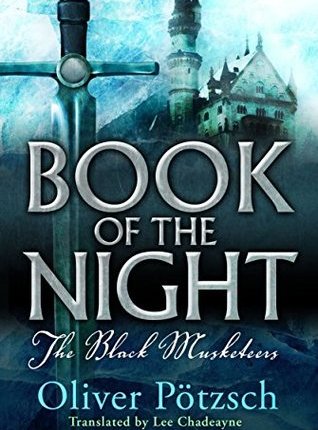
Who are the Black Musketeers of the title?: “The Black Musketeers were the best fighters in the Reich,” he began, “trained in the use of all sorts of weapons and fear by everyone. They served as bodyguards to the Imperial General Wallenstein … We fought and shot like the devil, with swords, pikes, daggers, muskets, and pistols, and drove the Danes and their allies back across the Elbe River.” loc 129, ebook.
Lukas is forced to grow up quickly, not only because of what happens to his family, but also because of the unending war: “Lukas thought of the dreadful stories he’d heard about the war. Last year in Magedeburg, twenty thousand citizens had been slaughtered by mercenaries, who then completely destroyed the city.
Similar things had happened in other parts of the Reich. Whenever the troops passed by, no matter which side they were on, they left behind death, destruction, hunger, and disease. When he was young, Lukas had always imagined war as something heroic. … but for some time now, he had understood that war was not an adventure, but left horror and misery in its wake.” loc 1112, ebook.
“If you have something to tell me or the others,” Gionvanni said softly, in order not to waken the other sleeping boys, “please don’t hesitate. We’re always here for you, do you understand?” He smiled. “One for all and all for one. I heard those words somewhere before, and they apply to us as well.” loc 1148, ebook.
I liked how Lukas and his friends were never entirely certain about the existence of magic until it entered their lives in a very real way: “Nonsense,” Paulus muttered. “Magic is humbug! I only believe things I can see and fight with my sword.” “It’s said there are certain vapors and gases that make people sick and can even cause the plague,” Giovanni replied matter-of-factly. “Can you see them, Paulus?
No. But still they’re there, invisible, all around us. Perhaps there’s lots more out there that we simpleminded little men can’t even imagine.” loc 1428, ebook.
When I saw the name, Oliver Pötzsch, and snapped up this book from NetGalley, not realizing that Book of the Night is intended for a young adult audience.
As I wrote earlier, it is very well-written and I had a lot of fun reading it. That being said, the Book of the Night isn’t very sophisticated nor are there any true surprises within its pages.
Book trailer for ‘Book of the Night’ in German.
However, it is a perfect pick for anyone in the 12 to 16 age group, or anyone who enjoys an adventure with some magical undertones.
 When I picked up The Collector of Lost Things, I expected an adventure-filled historical fiction. The audiobook delivered a heavy-handed treatment of man vs. nature with some truly disturbing scenes of mass animal slaughter. Not for the faint of heart or stomach.
 A well-researched historical fiction written from the point of view of Arsinoe and Ptolemy, Cleopatra’s ill-starred siblings. I didn’t even know that Cleopatra had a sister. And, I only knew Cleopatra had a brother because of his infamous gaffe when he presented Caesar with Pompey’s head.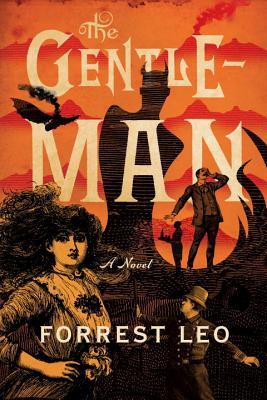
 **Warning: minor spoilers ahead unless you’re familiar with Roman history.**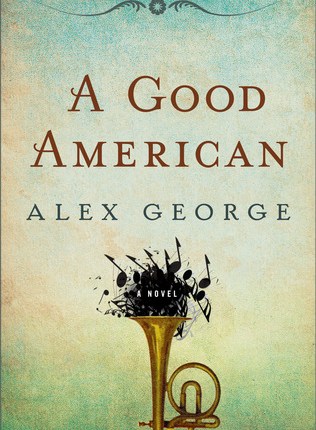
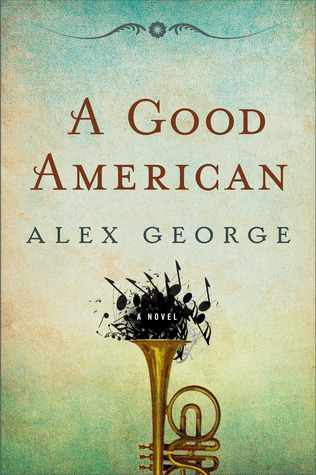 Well, that was different. A Good American is, at its heart, a story about a family who immigrates to America before World War I and how successive generations handle life, love, and what comes after. It strongly reminded me of the film, Fried Green Tomatoes, because of the family drama and some of the subject matter. This is an epic tale. Parts of it, I loved. Other parts… I could have lived my life without reading.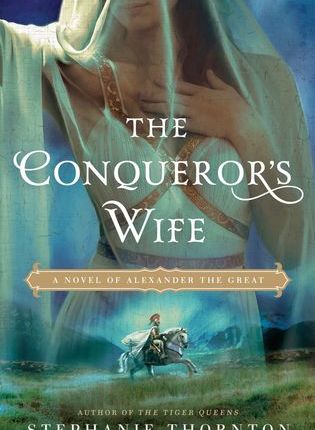
 A historical fiction about Alexander the Great from the viewpoint of the women in his life.






 The Help Desk Book Blog