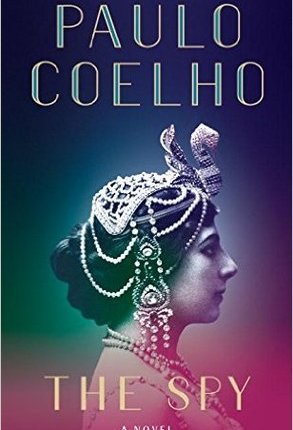
He prefers and excels at metaphorical stories. For example, in this tale, Coelho has Mata Hari comparing herself to the nightingale that impaled itself on a thorn to grow a bright red rose for a young man in love.
I get what he was reaching for- but I think this tale would have been told better through details rather than metaphors.
Also, it’s so short. The audiobook was only a couple hours long.
It wasn’t nearly long enough to do Mata Hari’s life justice.
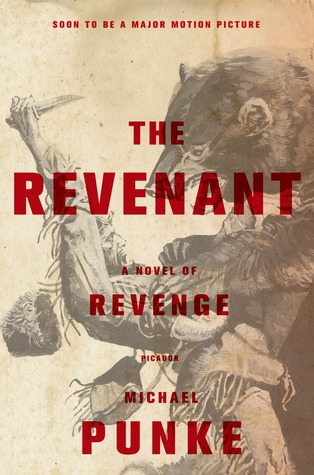
The Revenant is a fictional tale based on the real life account of Hugh Glass, a trapper who was attacked by a grizzly bear and then left for dead by the men who had been left to care for him.
This story is so gripping. From the explosive opening moments until the very last page, the reader is practically swept up into the action.
Not only are the men in The Revenant struggling with each other, but Nature herself has a huge role in this survival tale. If the characters aren’t freezing, they’re starving or looking for a safe place to sleep.
This is a particularly excellent read for a cold winter night with a cup of something hot to drink near your elbow.
This would have been a five star read except for the ridiculously unsatisfying conclusion.
It felt like The Revenant suddenly turned from a survival/adventure/revenge story into a tame morality play.
I realize that it is a morality play the whole time, but with all the action and nail-biting tension, it doesn’t “feel” like one until the ending- which I won’t ruin for you, except to say that it was very lame.
My husband read a version of this story called Lord Grizzly when he was in college so, while I was into this one, we were comparing notes on the differences between the two works.
Although varying in small details, the major arcs were the same. I felt as if The Revenant did a better job of building the tension than Lord Grizzly but we both agreed that the ending to the story (in both books) was a let-down.
If you enjoyed reading The Revenant, you may enjoy The Knife of Never Letting Go. Though not based on a true story, it shares the traveling-through-the-wilderness feel and tension of this book.
I received a free copy of this book through Goodreads First Reads. FTC guidelines: check!
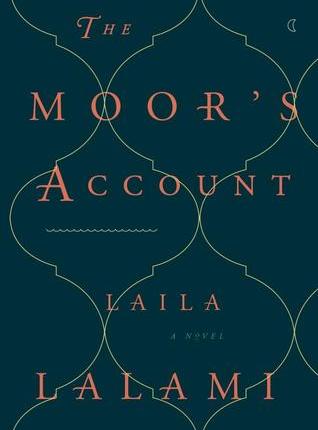
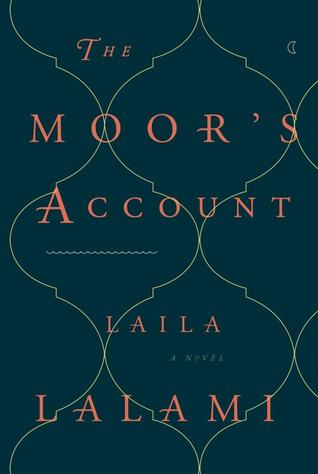
The Moor’s Account is a historical fiction novel about Pánfilo de Narváez’s expedition into the land that would eventually be called Florida.
This tale is told from the point of view of a slave named Mustafa al-Zamori, called Estebanico by the Spanish man who owned him.
“This book is the humble work of Mustafa ibn Muhammad ibn Abdussalam al-Zamori, being a true account of his life and travels from the city of Azemmur to the Land of the Indians, where he arrived as a slave and, in his attempt to return to freedom, was shipwrecked and lost for many years. pg 9, ebook.
Though the historical figure of Estebanico actually existed, Laila Lalami writes that she invented the majority of this story. The real Estebanico was only granted one line or so in the written history of the failed expedition.
“I was also curious about this land because I had heard, or overheard, from my master and his friends, so many stories about the Indians. The Indians, they said, had red skin and no eyelids; they were heathens who made human sacrifices and worshipped evil-looking gods; they drank mysterious concoctions that gave them visions; they walked about in their natural state, even the women- a claim I found so hard to believe that I had dismissed it out of hand.” pg 12, ebook.
Imagine the culture shock of the two different civilizations coming together- the European and the New World. The Moor’s Account explores that through Mustafa’s unique personal experience.
Mustafa’s early life is told in flashbacks throughout the beginning of the book. His mother likes to instruct him about the realities of life through stories. “Nothing new has ever happened to a son of Adam, she said. Everything has already been lived and everything has already been told. If only we listened to stories.” pg 58, ebook. If only we listened to stories… right, readers?
“I thought of what the elders teach us: love is like a camel’s hump, for it cannot be disguised.” pg 180, ebook. Though dismissive of his mother’s methods, much of the way Mustafa interprets reality is told through metaphors or stories.
“Maybe there is no true story, only imagined stories, vague reflections of what we saw and what we heard, what we felt and what we thought. Maybe if our experiences, in all of their glorious, magnificent colors, were somehow added up, they would lead us to the blinding light of truth.” pg 323, ebook.
It is easy to see why The Moor’s Account was a Pulitzer Prize finalist. It is unique, layered and beautiful. Recommended for readers who enjoy historical fiction and memoirs. Though fiction, it reads as if it really happened. And, who knows, maybe in some form or another, it actually did.
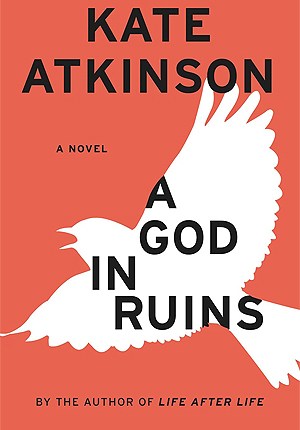
Even though Kate Atkinson took readers back into the beautiful world that she created for the Todd family, this story wasn’t nearly as enjoyable as Life After Life.
This time, the story focused on Teddy. It is told through the mixed up timeline that I’ve come to expect from Atkinson. We get to see Teddy’s relationships, family and inner thoughts.
It didn’t have the magic of Ursula’s story, in my opinion. In Life After Life, I was enthralled. For the majority of A God in Ruins, I was not.
I was surprised that I liked very few of the characters. Viola, in particular, was awful. I realize that that is partially the point, but still- it’s hard to appreciate the story when you don’t like most of the major characters.
The writing was still lovely, but I didn’t connect to this book the way that I did with the other one. I’m rather disappointed actually.
A lovely and unusual book about reincarnation, free will and destiny.
Ursula Todd was born on a snowy day in February with the umbilical cord wrapped around her neck. That was the first time she died…
I loved how Kate Atkinson built this story through seemingly insignificant details. As the reincarnations progress, layers are added upon layers, so that by the end of this tale, it is a rich tapestry of events, emotions and possibilities.
I was surprised by the open-endedness of this story. I feel like Atkinson wrote a tale that reads like real life- it has the meanings that we assign it. Nothing more, nothing less.
I listened to the audiobook of Life After Life and it was very good. A few times, I wished that I had the physical book in front of me so that I could double check a date or detail. Other than that, the narration was excellent.
This story has me wondering about life, reincarnation and all of it. If, as so many world religions say, there are parts of us that are immortal, wouldn’t we all go a bit bonkers after millennia of existence? Would we get bored of it? Would we ever choose to not come back? What’s the bigger picture?
Anyway, this book will make you wonder, question and dream about existence. Which, in my mind, is one of the highest functions of a book.
Recommended for fans of historical fiction, spirituality and life itself. I think Atkinson has written a masterpiece.
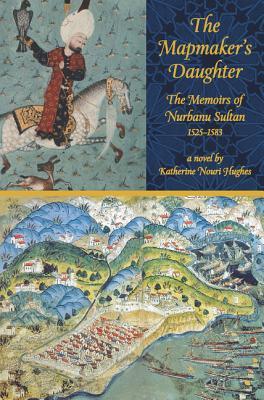
A fascinating peek into the 16th century world of the Ottoman Empire. The story is told through the memories of a woman who is dying and recalling the circumstances that brought her to where she is now. Her extraordinary life included being kidnapped by pirates, educated with a prince and joining the royal family of Suleiman “the Magnificent.”
All of this as a female in the 1500s! Katherine Nouri Hughes, the author, admits that there are so few records of her life that Cecilia Baffo Veniero, called Nurbanu, was a blank slate.
But, Nurbanu actually existed. Hughes gives her a life of mystery, dizzying highs, lows, and riches beyond imagining. I loved it.
And, I learned so much from this story. Admittedly, my historical fiction preferences seem to run towards the Roman Empire or Tudor England. Perhaps it was time I branched out.
For example, did you know that there was a law for when the heir to the Sultan took the throne, that all of his brothers were killed? This was to protect the dynasty from civil war. “And to whomsoever of my sons the Sultanate shall pass, it is fitting that for the order of the world he shall kill his brothers. That law has held us together; secured our Empire; made us who we are…” loc 127, ebook.
Beyond the obvious reasons, this was particularly awful because the Sultan tended to have scores of kids. There were the usual threats of illness and the plague to consider.
Suleiman himself was a legend in his own time. “A man like no other. His titles alone told the story. … Sultan of the Two Continents, Servitor of the Two Sanctuaries, Warden of the Horizons. Suleiman the Magnificent- man and legend combined. … Imperial, mirthless, deadly pale.” loc 463, ebook.
He ruled an empire and his children. According to Hughes, he was heavily influenced by his favorite wife, Hurrem, who is a colorful character in this story.
Nurbanu is fortunate because, when she is captured, she was already well-educated. “I’d been assigned to the Head Scribe herself without question because I was educated. That was what Barbarossa had said at the presentation. ‘She can read.'” loc 482. That saves her from more gruesome fates within the harem.
But it doesn’t make her life easy. After all, she’s still a slave in the palace of Suleiman.
“I know how awful the end of fantasy is- for it steals into parts of the heart and mind where nothing should be able to go. It is driven by the heat of what we long for, and it melts all that is in its path until it comes out into the open and is exposed for what it is: something that was never true.” locs 3250-3268.
Recommended for readers who like historical fiction with a large cast of character, an exotic locale and a heroine with a quick mind.
Thank you to NetGalley and Open Road Integrated Media for a free advance reader copy of this book. Reminder- the short quotations that I used in this review may differ in the final printed version.
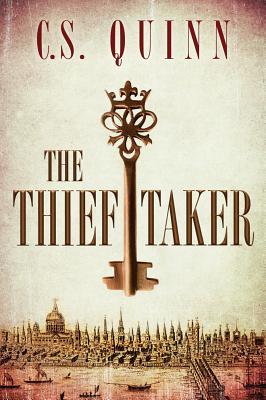
In the 1660s, thief takers solved the cases that were beneath the dignity of the typical London watchmen.
The poorer sort of people, who had experienced a crime or theft, would come to men like the title character in this story for justice. He would attempt to track down the perpetrator by finding the property that they took and fenced.
Usually, the thief taker could either get the property back for his client or turn the thief in to the higher authorities. But, the punishments back then were so barbaric- chopping off a hand, splitting noses- that the thief taker would usually just let the criminal go with a warning to not steal again or advise him to find a different clientele.
Charlie Tuesday is a thief taker in London. One day, a beautiful young woman comes to him for help in solving her sister’s murder. Normally, he doesn’t work on any cases larger than theft but the money that is offered is more than he can refuse.
From the strange mutilation of the body, he determines that there’s more to this crime than meets the eye. As the plague descends on London, he and Anna-Maria race to stop the murderer from striking again and, perhaps, even threatening the throne of England itself.
The Thief Taker‘s scenery is lush. The customs, clothing, and food from 1665 are so different from what we have now. The reader is whisked away to a world that is the same in some ways (human behavior and emotions) and so different in other ways (social structures and occupations). I didn’t even know what a thief taker was until I read this book.
The story is an intricate mystery with the murders, possible witchcraft, and treason. I didn’t see the ending coming at all. It could be that I don’t read that many mysteries, but I thought that it was really well done.
Another fascinating piece to this story are the plague victims. The horrific conditions that the author describes, like bodies rotting in the streets and the Thames becoming clogged with corpses around London Bridge, actually took place.
Because of these icky details, The Thief Taker occasionally veers towards the horror genre but never really crosses that line.
I kept picturing the rotting plague victims as zombies. In some ways, they’re similar. Contact with a plague victim could bring infection. Sometimes, the main character would come across a body that would appear dead, but wasn’t dead.
At one point in the story, a character describes the plague victims who are wandering the streets in search of mercy as the “walking dead.” It was very creepy.
Also, the societal breakdown that accompanied the plague was so quick. Every moment the characters were in the London streets was filled with tension. The reader didn’t know if a plague victim was going to pop out of a quarantined house or if a thug was going to try to commit a robbery in a dark alley.
Readers who like the historical fiction of Philippa Gregory, Judith Merkle Riley, and Sarah Dunant may enjoy this.
I received a free copy of this book through Goodreads First Reads program.
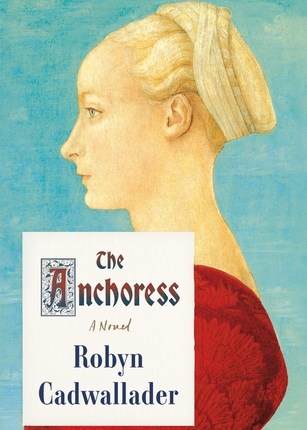
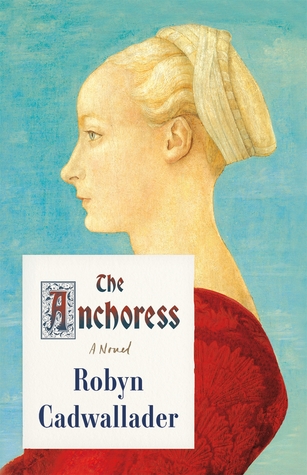
England, 1255. What could drive a girl on the cusp of womanhood to lock herself away from the world forever? -from Goodreads
The 1200’s was an exciting time in many ways. But, not if you were a woman.
In The Anchoress, I learned about yet another way in which women were treated poorly by the male dominated church. Apparently, the anchoress was an actual calling where the woman chose to be walled up near or in a church in order to move closer to God.
The people who walled up the woman left a small window for food and waste to pass through. That was the extent of her interaction with the outside world. How messed up was that.
Sarah, the anchoress in this story, chooses the position for a variety of reasons, but they’re not all that mysterious. The description of the book plays it up as a mystery which the reader will figure out in probably five pages or so.
I enjoyed this book more for the historical details of the period.
The interesting part is when Sarah starts to go bonkers (no big surprise there) and her confessor tries to keep her straight. That particular drama was gripping even though most of the action took place in one room.
If you enjoyed The Anchoress, you may want to read A Triple Knot by Emma Campion or Pope Joan by Donna Woolfolk Cross.
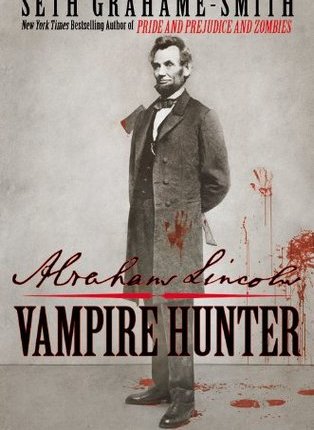
Take Abraham Lincoln and his famous rail-splitting ax, add a dash of vampires and voila: Abraham Lincoln: Vampire Hunter.
Fans of horror may enjoy this creative re-mix of history more than I did. Though I enjoyed learning about Lincoln, the moments of gore inbetween weren’t for me.
I listened to the audiobook and my favorite parts were the Americana inspired musical interludes between some of the chapters. Banjos or plaintive violins shepherded readers into the next section. It was beautiful.
As for the story itself, I suppose I didn’t realize how easy it was to introduce vampires into every moment of a person’s life.
Example: Last night I had trouble sleeping. I opened my eyes at 3:45 a.m. and whispered to myself, “The vampires must be closer than I thought.”
Or, another real example, there was a terrible accident yesterday in which one of the bar owners in my small hometown was killed riding her motorcycle. I turned to my coworker with a grim look and said, “Vampires.”
See? You can vampire-ize anything!
Food goes bad in the refrigerator? Vampires. Cat pukes behind the bed? Vampires. Traffic is bad? Vampires.
Though it was fun at first, it became ridiculous.
But don’t let me deter you- if you like horror, you may love this. I enjoyed it but, I confess, I’ve had enough vampires to last me for the foreseeable future.



 Even though Kate Atkinson took readers back into the beautiful world that she created for the Todd family, this story wasn’t nearly as enjoyable as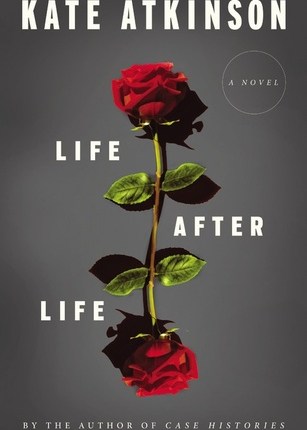
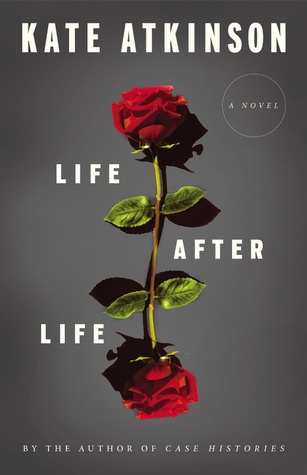 A lovely and unusual book about reincarnation, free will and destiny.



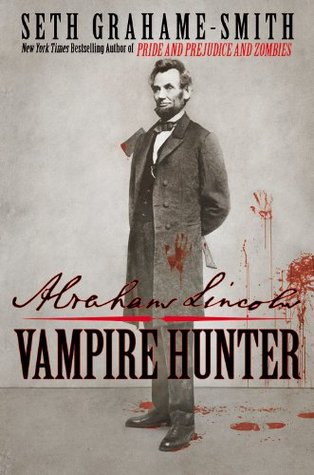 Take Abraham Lincoln and his famous rail-splitting ax, add a dash of vampires and voila: Abraham Lincoln: Vampire Hunter.
 The Help Desk Book Blog