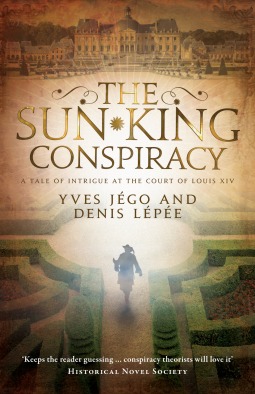
A historical fiction about a French King, his mistress, his minister, his mother, an aspiring actor with a secret past and a secret society with hidden knowledge that could change the world.
“A chief minister is dying, yet people are interested only in counting the supporters and detractors of an entertainer…” pg 9, ebook.
Unfortunately, I didn’t really care for The Sun King Conspiracy.
I felt like it was trying to be a mystery like The Da Vinci Code with the complexity of an epic historical fiction. It didn’t quite reach either pinnacle.
“According to Colbert’s report, the murderers took nothing else of any worth from my apartments. From this, I deduce that their only concern was to seize those papers.” pg 36, ebook.
It was probably just me, but I kept getting the ministers and their roles confused. Also, their alliances and reasons why they hated each other never really made sense to me.
“The truth is,” said the scholar with a sad smile, “that this question of succession seems to be the only matter that interests anyone in Paris, when the real subject that ought to occupy us, the only one worthy of any interest, is entirely different: it concerns the stability of the Kingdom.” pg 142, ebook.
It felt like there were nuances to the court relationships that were never explicitly stated.
Maybe the author assumed a familiarity with the court of the Sun King that I don’t possess.
The whole secret society part of this story was just flat. I felt like I’d read the same conspiracy in half a dozen other books.
“I am more aware of this than anyone else. I have paid so dearly for it that my belief in its ultimate success is perhaps the only thing that still keeps me alive…” pg 229, ebook.
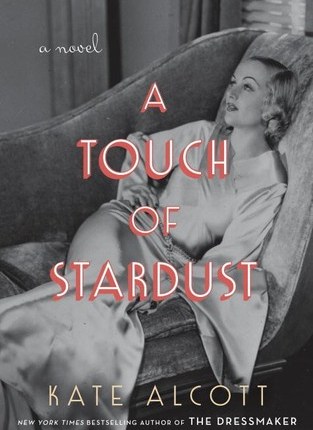
A girl from Indiana goes to Hollywood and ends up taking care of Hollywood royalty in A Touch of Stardust.
The reader gets a behind the scenes look at the making of Gone With the Wind and the private, slightly dysfunctional lives of Carol Lombard and Clarke Gable.
It was fun learning about what went into the creation of Gone With the Wind. Those parts of the book sort of read like a Hollywood-fan magazine, but better written.
The dialogue in this book is snappy and smart, like a Bogie and Bacall film.
I loved the heroine and how she pulled herself up by the bootstraps to make it in Hollywood at a time when very few women did.
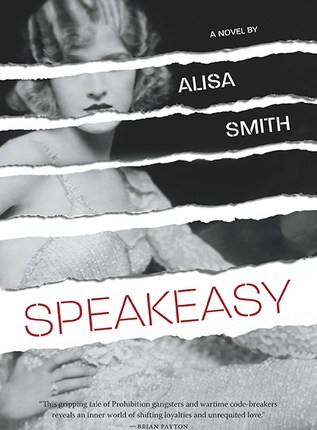
Speakeasy had some interesting elements, but the story suffered from a back and forth narrative and flat characters.
“I spread my papers out in front of me, and at first they all looked the same: a random mix of roman letters divided always into five characters with a space between each set, so no word lengths were revealed. I was searching for any repetitions.” loc 15, ebook.
The story is told from Lena’s perspective and diary entries of one of the members of her old gang.
“Bill Bagley was being punished because he had failed at something for which he possessed genius.” loc 80, ebook.
The back-and-forth storytelling was jarring. I liked the stories separately, but together, it didn’t really work.
They interrupted the flow of each other. I think it might have fit together more smoothly in a Part I/Part II presentation rather than interspersed.
I think Bill Bagley, one of the central characters, didn’t have the depth required to pull off this story.
He’s supposed to be this charismatic, brilliant criminal who inspires the men to risk their lives again and again, and also captures Lena’s heart.
Bagley has some failings, but, initially, there must have been something to him to draw the gang together.
Instead, from the start, he comes off as a volatile jerk.
We meet Bagley as he’s denying the parentage of a child who looks just like him: “This un ain’t mine and don’t tell me again that it is,” he said, thrusting the baby back to a lady with burning red cheeks.” loc 80, ebook.
“I returned from a visit with Bill, received a threatening note from him, and now this. He must have a copy of it and wanted to hold it over my head.” loc 741, ebook.
I guess I just never understood what Lena saw in him.
Also, for a genius code breaker, she doesn’t seem to be able to puzzle out the people around her very well.
“My morals were just not like other people’s, because unlike the somnolent majority I saw society’s problems. In my youth I had been misguided, and picked the wrong way of lashing out against an unfair system. But I had left the gang behind, and found a greater ease in my soul.” loc 1781, ebook.
A beautiful, magic-tinged tale of an aging couple, the bleak Alaskan wilderness and a child who appears one day in the wood.
Mabel and Jack always wanted a child, but after suffering a miscarriage, they begin to lose hope of ever conceiving. Mabel suffers in female society without a child of her own.
She begs Jack to take her to Alaska for a fresh start. He agrees. But it doesn’t work.
The weather is dark and freezing. The ground is hard and takes more effort than Jack can give. They aren’t thriving.
“All her life she had believed in something more, in the mystery that shape-shifted at the edge of her senses. It was the flutter of moth wings on glass and the promise of river nymphs in the dappled creek beds. … Mabel could not remember the last time she caught such a flicker.” pg 6, ebook.
Then, out of the blue, a child magically appears during a snow storm.
She is so light on her feet and silent, Jack and Mabel don’t at first believe their eyes. The child travels with a fox and barely leaves prints to follow on the snow.
“What did he expect to find? A fairy-tale beast that holds young girls captive in a mountain cave? … Or nothing at all, no child, no tracks, no door, only insanity bared in the untouched snow? That is perhaps what he feared the most, that he would discover he had followed nothing more than an illusion.” pg 72, ebook.
Mabel remembers a Russian fairy tale from her childhood, of a couple who builds a girl out of snow. In the story within the story, the girl becomes real.
Could Jack and Mabel have created the child they have always dreamed of?
“I am sorry to say no matter which version, the story ends badly. The little snow girl comes and goes with winter, but in the end she always melts.” pg 96, ebook.
How will Jack and Mabel’s story end?
Recommended for fans of historical fiction and tales that contain magical realism.
“In my old age, I see that life itself is often more fantastic and terrible than the stories we believed as children, and that perhaps there is no harm in finding magic among the trees.” pg 189, ebook.
I thought The Snow Child was beautiful and well-told. Highly recommended.
I don’t think The Snow Child has been made into a film, yet, but it has been staged as a musical play.
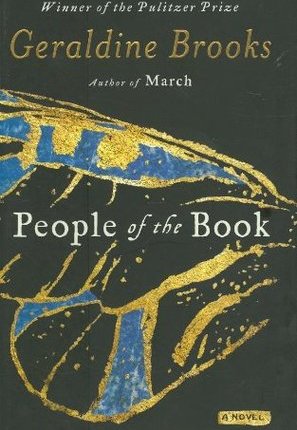
I think the problem is fairly simple- never connected with the main character. I loved Anna from Year of Wonders. I couldn’t stand Hanna.
The small details of her work that she found so absorbing, I didn’t enjoy.
I didn’t like how she treated people sometimes. I thought she seemed rather arrogant.
I also didn’t like how the timelines bounced around from character to character. I was listening to People of the Book as an audiobook. Without being able to look back and check, I found myself getting confused when I stopped in the middle of a passage and picked it up again after a work day.
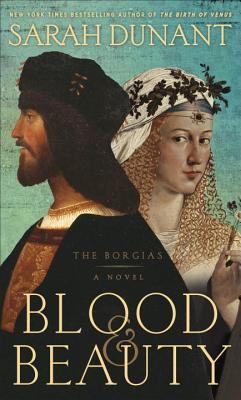
A historical fiction novel about one of the most politically savvy families of all time.
Oh, the Borgias. What an extraordinary family and what a story.
Painting by John Collier, “A glass of wine with Caesar Borgia”
Just when you think that things couldn’t become more scandalous, they do.
A Pope with a family? Check. Forbidden attraction between siblings? Check. Poisonings and intrigue and, dare I say, murder?
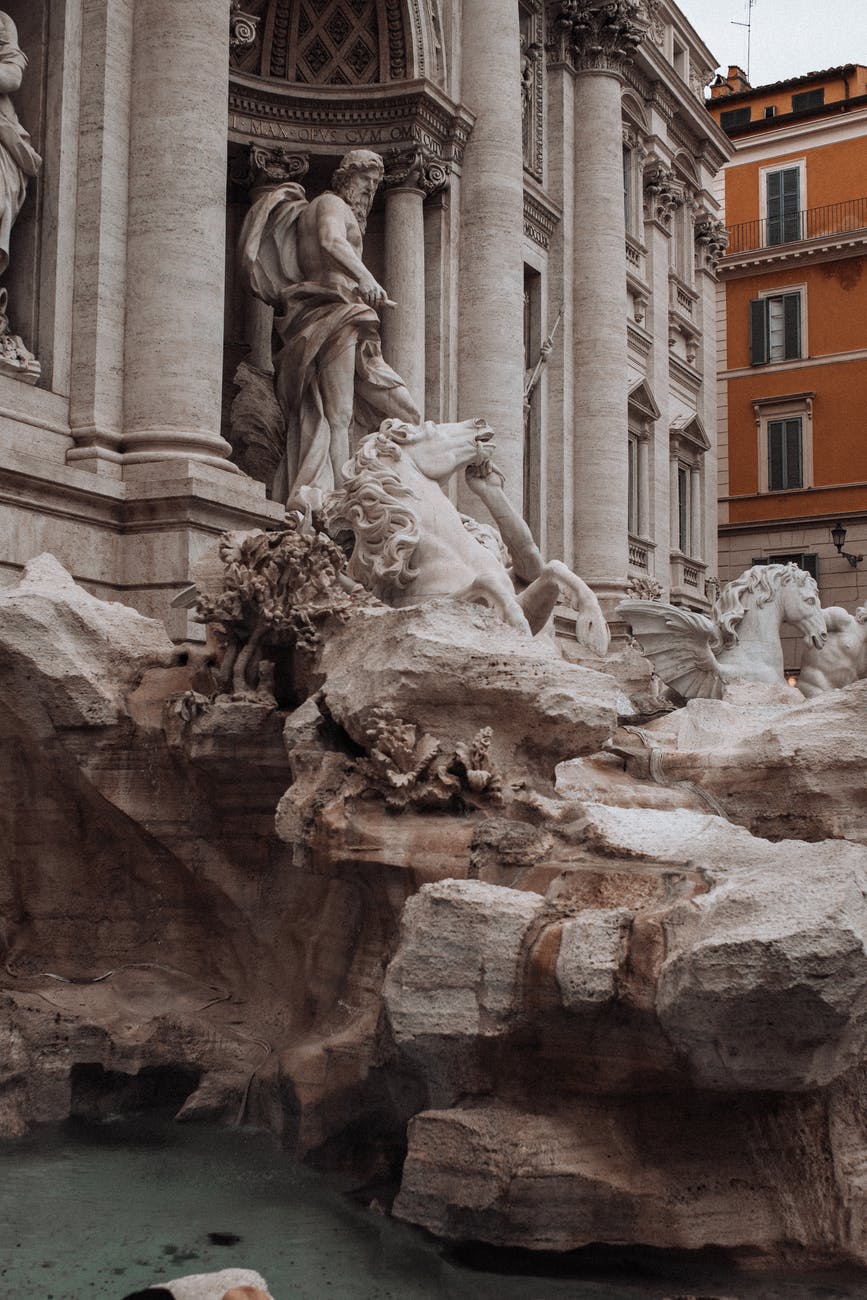
The attraction of this story is not just the crazy Borgias, it’s also Rome itself.
All roads lead to it, the center of power in Europe for centuries. One never really “rules” Rome, you just ride your wave of popularity until it crashes.
This city was the perfect backdrop to showcase the political acumen of Alexander VI, Cesare Borgias, and, eventually, Lucrezia Borgias.
Blood & Beauty contains political as well as personal drama, the shifting alliances of kings, queens, and city-states, and some very unique family dynamics.
Sarah Dunant ranks among my favorite historical fiction authors. Her stories are well-researched and never dull.
Warning: minor spoilers ahead if you don’t know the history of the Brontë family. Read with caution.
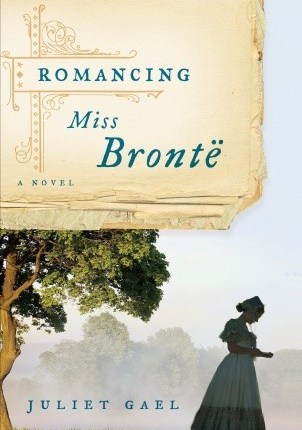
Romancing Miss Bronte is a disappointing historical fiction about Charlotte Brontë, her sisters Emily and Ann, and how they came from obscurity to write some of the most enduring fiction the West has known.
The first part of this story was the best. The reader gets a unique glimpse into the minds of the Brontës, what their lives were probably like and how unfortunate their brother’s existence turned out to be.
I loved hearing Juliet Gael’s vision of their character and personality quirks.
The second half of the book, focused primarily on Charlotte and her relationship with Arthur, was a drag.
Up until that point, the women were surprisingly self sufficient, considering the times in which they lived. Yes, they coddled their alcoholic and opium-addicted brother. Yes, they indulged the whims of their ailing father, but for the most part, they acted how they pleased.
Once Arthur enters her life, Charlotte centers every action around him. He tells her who she can write. He controls their social schedule.
The book enters a repetitive loop: Charlotte does something Arthur doesn’t like, he reprimands her, she writes her friend a letter about how annoying it is but she simply adores her husband so it’s ok… and repeat.
This was probably the reality of her situation but it sucked. I can’t imagine that I would have been happy living like that. I don’t believe she was either.
The cringe-inducing letters Gael describes in the story actually exist. I also think that if I was a sensitive and reclusive person like Charlotte Brontë, having my personal letters published after my death would be a nightmare situation.
Charlotte and her sisters were forced to live a sub-par existence because they were women.
Traditional roles for women left so little room for living. It’s astonishing that the Brontës were able to write anything at all, when you consider when they lived and the disadvantages to their station.
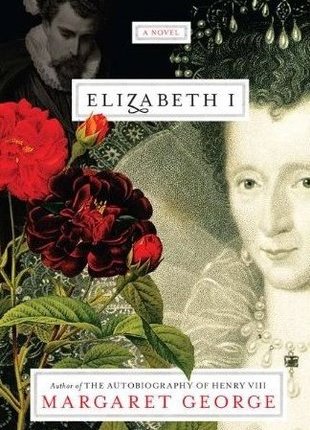
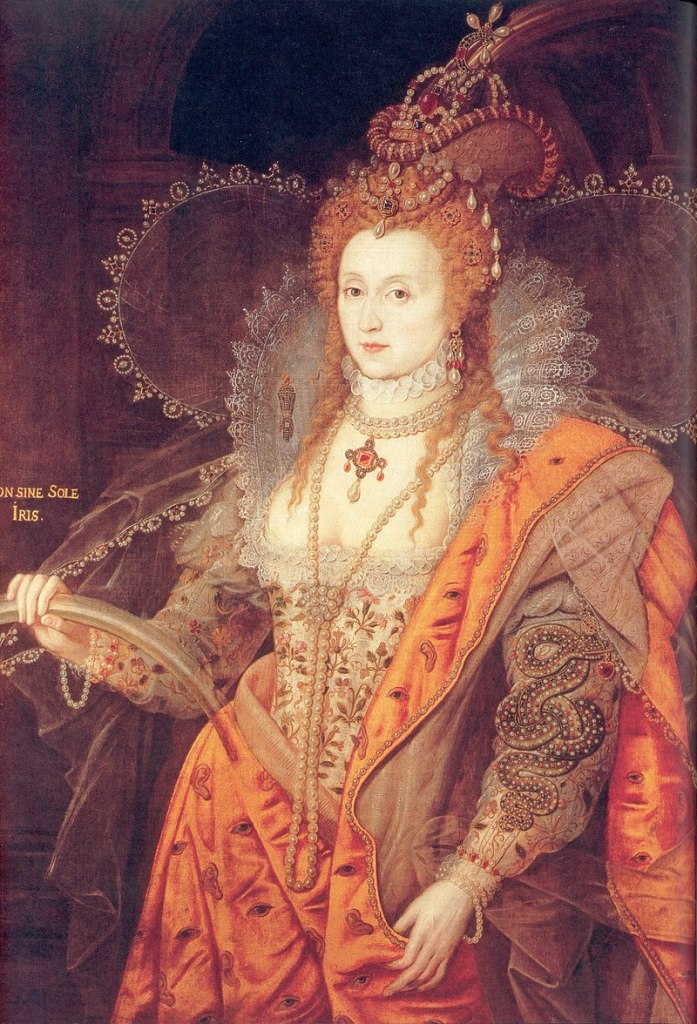
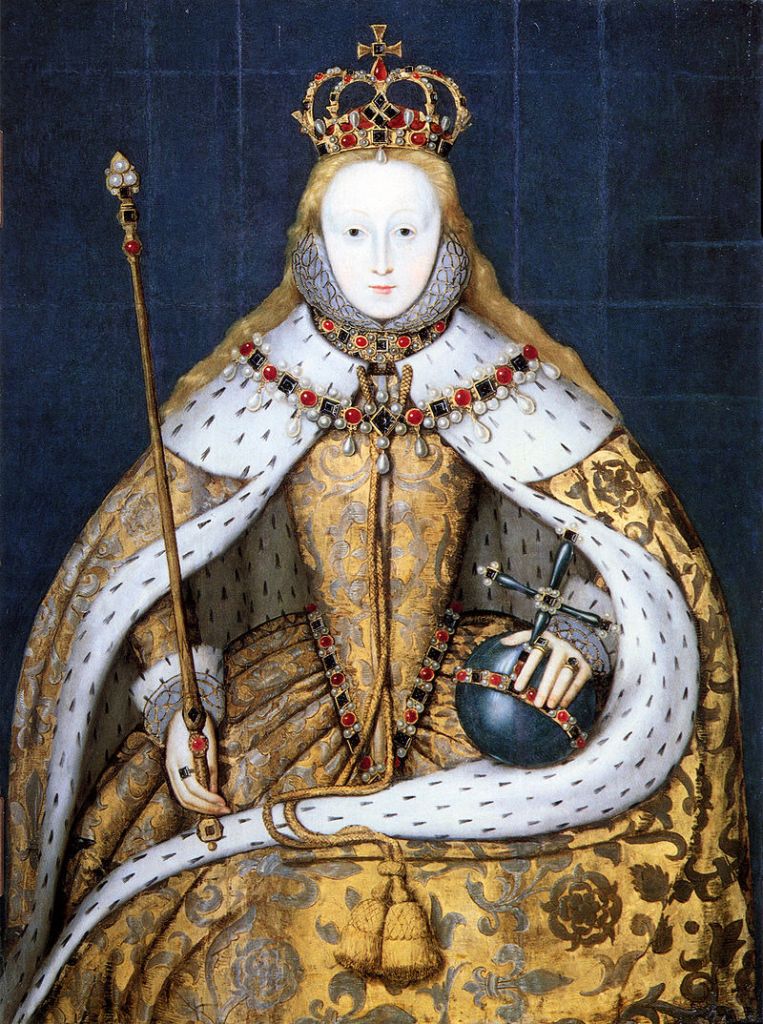
Margaret George writes about Queen Elizabeth I of England and the last years of her reign.
I think most people are aware that Elizabeth’s father was Henry VIII and the tumultuous going’s on that preceded and then ushered in her reign. But fewer are aware of what happened during the later years of her life.
The last years were still exciting and dangerous, filled with invading Spanish armadas (more than one) and power hungry lords. That’s what this book is all about.
I confess: I am a major fan of both Elizabeth I and Margaret George.
“I know I have the body but of a weak and feeble women, but I have the heart and stomach of a king and of a king of England, too- and think it foul scorn that Parma or any prince of Europe should dare to invade the borders of my realm.” pg 41.
A few years ago, I had the privilege of visiting Westminster Abbey and seeing the tomb of Elizabeth I. The crowds were such that I couldn’t linger by the effigy but was forced into constant motion, rushed past.
I burst into tears as I exited the area of the church that contained her tomb and I was completely overcome with emotion. My husband led me through the throng again, just so I could spend a moment more near one of my favorite historical figures.
What do I love about Elizabeth I? Let me count the ways!
First of all, she insisted that she was a ruler in her own right, not because she was married to a royal. Elizabeth used the game of courtship to increase her power. That’s hard core.
“Francois had been my last, and in many ways my only, serious marriage possibility. I had been wooed by twenty-five foreign suitors over the years. I never intended to marry any of them, but it was my best tool of diplomacy.” pg 72.
Second, she smart with her power rather than greedy. She navigated a world in which she had few allies because of her religion. And she never accepted defeat. “For my own part, I swear that my heart has never known what fear is. In ambition of glory I never sought to enlarge the territories of my land. If I have used my forces to keep the enemy from you, I have thereby done it for your safety, and to keep dangers at bay.” pg 145.
She was well-learned, charismatic and always knew what to say in public situations.
“It is not possible to see a woman of so fine and vigorous a disposition both in mind and in body. One cay say nothing to her on which she will not make an apt comment. She is a great princess who knows everything.” pg 363.
And finally, she was honest and true to the end of her life to the responsibility of leading her country. Elizabeth I loved her people.
“There will never queen sit in my seat with more zeal to my country, care to my subjects, and that will sooner with willingness venture her life for your good and safety, than myself. … And though you have had and may have many princes more mighty and wise sitting in this seat, yet you never had or shall have any that will love you better.” pg 608.
My quibble with this book was not with the research or the story, which were both fine in my opinion. It was the fact that George split the narrative- most of the chapters are told from Elizabeth’s point of view, but some are from Lettice’s point of view, the mother of Robert Devereux.
I understand Lettice’s narrative was used to explain Devereux’s motivations and unexplained behavior, but I felt as if it slowed the story down. Coming in at 662 pages, this was a book that needed to stay at a fast clip. I didn’t feel as if it achieved that.
That being said, George provides an amazing escape from the world and unparalleled historical fiction, with this story.
The weekend I started this book, my mother had an unexpected heart attack and nearly died. She was in good health and relatively young. It was quite a shock.
Some people spend hours worrying, others in conversation or watching TV to wile away stressful hours.
I picked up Elizabeth I by Margaret George and transported myself to Elizabethan England. There was worry, danger, intrigue… and when I needed to put down the book and attend to family concerns, I could. By the time the weekend was over, I had completed this book and my mother was discharged from the hospital.
It looks as if she will make a full recovery. And I learned quite a bit more about Elizabeth I.
If you are looking for distraction from every day life, this epic tale could fit the bill. Recommended for historical fiction lovers, of course, but also for anyone who desperately needs a way to pass the time.
Thank you, Margaret George, for providing that for me, just when I needed it most.
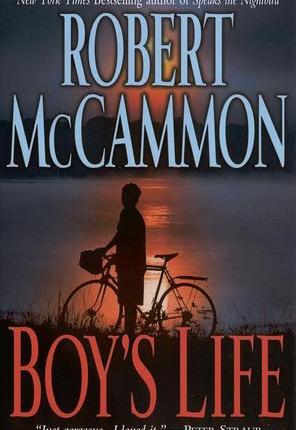
Boy’s Life is about Cory Mackenson, the southern town of Zephyr and the magic of every day life.
We had a monster in the river, and a secret in the lake. We had a ghost that haunted the road behind the wheel of a black dragster with flames on the hood. We had a Gabriel and a Lucifer, and a rebel that rose from the dead. We had an alien invader, a boy with a perfect arm, and we had a dinosaur loose on Merchants Street. It was a magic place.” pg 10, ebook.
“On that morning before the sun, as I sat eating my breakfast with my dad and mom in our house on Hilltop Street, the year was 1964. There were great changes in the winds of earth, things of which I was unaware.” pg 15.
After witnessing something terrible sinking into the lake, Cory sets about discovering what or who put it there.
The trauma is almost too much for Cory’s father to bear.
“Whoever did it had to be a local. Had to be. … It might be somebody who sits on our pew at church. Somebody we buy groceries or clothes from. Somebody we’ve known all our lives… or thought we knew. That scares me like I’ve never been scared before.” pg 35, ebook.
But this book is about more than just the central mystery. It is also about the community of Zephyr and the relationships between the people who live there.
There is a racial divide in the town. When the river overflows its banks, the white and black communities come together to prevent disaster.
“There is something about nature out of control that touches a primal terror. We are used to believing that we’re the masters of our domain, and that God has given us this earth to rule over. … The truth is more fearsome: we are as frail as young trees in tornadoes, and our beloved homes are one flood away from driftwood.” pg 97, ebook.
Boy’s Life also examines coming-of-age issues like bullies, over-bearing parents, and accepting the realities of old age and death.
“But I’ll tell you a secret, Cory. Want to hear it?” I nodded. “No one,” Mrs. Neville whispered, “ever grows up. … They may look grown-up but it’s a disguise. It’s just the clay of time. Men and women are still children deep in their hearts.” pg 221, ebook.
I loved this book. It is a far-reaching tale made for winter nights, to be read with a hot drink in your hand and a warm blanket on your lap.
It vaguely reminded me of The Help because of its southern location, the racial issues and some of the mystery elements. But really, Boy’s Life stands on its own.
Recommended for readers who enjoy historical fiction with a touch of magic and mystery.





















 The Help Desk Book Blog