All the Forgivenesses by Elizabeth Hardinger

All the Forgivenesses by Elizabeth Hardinger

From the front of the book: “As we know, forgiveness of oneself is the hardest of all the forgivenesses.” – Joan Baez

Bertie, the heroine of our tale, was the eldest girl born in a family of nine in rural Kentucky in the early 19th century. Because of her gender, her mother taught Bertie everything about keeping house and how to care for children, which Bertie ended up doing all the time to the detriment of everything else, including her education.

Photo by Lukas Kloeppel on Pexels.com

“We was living in the Appalachian hills in southeast Kentucky, but I didn’t know that then. It was just the place where we lived at. For all I knowed, it was the whole world.” pg 5

An early childhood tragedy cements in Bertie’s mind that she is unworthy of the trust and scant love her mother gives to her. She carries that burden in her subconscious mind throughout the tragedies that follow and it shapes everything in her life.

Elizabeth Hardinger has penned a beautiful historical fiction novel about family, secrets, struggles and the life-saving power of forgiveness, not just for yourself but for everyone around you. The characters in this book are complex and so flawed that sometimes I wanted to reach into the pages and hug them until they came to their senses.

That’s how you recognize an extraordinary author, they make you care.

“If you was a bawl-baby, you got shamed, you got teased, or people just ignored you like you’d embarrassed yourself, which I reckon bothered me the most of all. … So you learned to hide your feelings or wait till you was out behind the barn and nobody could hear you.” pg 8

Photo by Kristina Paukshtite on Pexels.com

The culture examined in All the Forgivenesses is rural, impoverished and male-dominated, mainly because of the time period. The reader is able to juxtapose Bertie’s tragic situation with her best friend Alta Bea, the daughter of a wealthy banker.

“For sure I hadn’t never met nobody like Alta Bea. I never knowed nobody that had that look in their eyes like she could see into you. It made a person tired and jangled, like somebody was shining an oil lamp in your eyes, but it also give you a feeling of glittering, fluttery things you couldn’t hardly not look at.” pg 52

The girls’ friendship is strained at times and built upon a foundation of mutual loneliness, though Bertie has little to no time in her day-to-day routine to just be a person. It’s fascinating to watch the two characters develop from children to adults and the character traits they drag along with them as well as the ones they leave behind.

The vernacular of All the Forgivenesses was distracting for a page or two, but it started to flow for me after that. I appreciated Hardinger’s skill in making Bertie’s rough-edges part of the story. She’s such a relatable character. You know she wants to live her own life, but with her family’s situation, she just can’t. And yet, for the most part, she loves them anyway.

“Read it, Bertie, you’ll like it,” she said. Hearing somebody use my name – and not to curse me out or ask me for something – I confess that made me glow a little bit.” pg 67

Photo by Andrea Piacquadio on Pexels.com

Highly recommended for readers who enjoy historical fiction or as a book club pick. My book club chose this and we had plenty to talk about – from gender roles to romance to families. Not everyone liked it as much as I did, but I absolutely loved the characters, Bertie being the top of my list.

And I do agree with the opening quotation of this book, “to forgive yourself can be the hardest of all the forgivenesses.” Funny that we, like Bertie, find it easier to extend that to others than to ourselves. I wonder what that ultimately says about us.

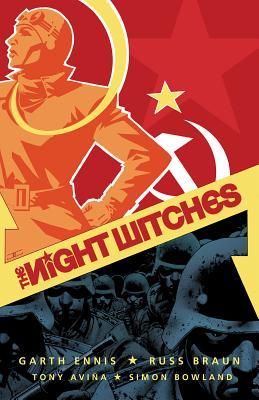
The Night Witches by Garth Ennis

The Night Witches by Garth Ennis

Though the main characters in The Night Witches are a work of fiction, Garth Ennis based them on real-life women, the female-Russian aviators who flew for their country during WWII. Their older airplane engines were too loud and alerted the Germans before their aerial night attacks, so the aviators developed a technique of cutting the engines and gliding over their targets before dropping their bombs.

“You know what it’s like when a P.O.-2 comes along, if you’re on the ground you can hear it for miles, that pop-pop-popping the engine makes… Two more missions like that and we’ll all be done with, unless we can magically stop them from hearing us coming.”

Photo by Pixabay on Pexels.com

Their method of attack was unique and terrifyingly effective at robbing the invading troops of sleep and peace of mind. The Germans called these pilots, because they were women and attacked at night, “Nacht Hexen” or the “Night Witches”.

This graphic novel is filled with violent warfare, rape, loss, heartache and other dangers the women faced during their service, including male counterparts who didn’t want their help. But Russians were so hard-pressed in their fight against the Nazis, that they had no choice.

“I think the notion of women aircrew is a joke; I think women combat fliers are a worse joke; I think women assigned to this base alongside my fighter squadron are the worst joke of all.”

It is a sad but true chapter of history. The Russians lost more troops than any other country in the conflict, a staggering twenty seven million dead.

Photo by Gladson Xavier on Pexels.com

They didn’t have time to properly train or equip the people they were throwing at the Germans. It was a bloodbath. But the women flew and fought all the same. They were the most decorated female combat unit of WWII and their service is worth being remembered.

Recommended for adult readers who enjoy military history and aviation. 

Thank you to the publisher for a free copy of this book for review purposes.

If you’re interested in more non-fiction information about the Night Witches, check out The History Guy’s video “The Night Witches and World War II”:

The History Guy remembers the service and courage of the Night Witches.

And thanks for reading!

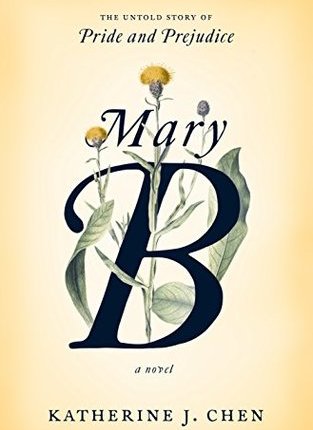
Mary B: An Untold Story of Pride and Prejudice by Katherine J. Chen

Mary B: An Untold Story of Pride and Prejudice by Katherine J. Chen

Mary B is a retelling of Pride and Prejudice (before and after the original story) from Mary Bennet’s point of view. It is well written and unique… and probably will be hated by any serious “Austenites”.

Katherine Chen takes major characters and adds to their stories in ways that were difficult to swallow. In that way, it reminded me of Longbourn. And I’m not even what you would call an Austenite.

“It was therefore acknowledged, long before my younger sisters and I had any say in the matter, that beauty, goodness, and intelligence had disproportionately concentrated themselves in the two eldest and gone woefully amiss the three following; namely, that I had been touched with a plainness in appearance unrivaled throughout the whole country…” pgs 3-4

Photo by Anete Lusina on Pexels.com

Mary Bennet is the forgotten middle child of the Bennet family. Her two older sisters, Jane and Elizabeth, are the main focus of Pride and Prejudice and her younger two sisters, Kitty and Lydia, create scandal and mayhem almost wherever they go.

Mary just wants to play piano and relax quietly with her own thoughts. She doesn’t get to do that often between her sisters and her ever-worrying mother.

“I wonder sometimes that Mary is so plain and what, in consequence, will become of her!” pg 12

Readers can empathize with her love of books and writing. But Mary has also weaponized these things, using them to keep the world that has rejected her at arm’s length, so that it cannot hurt her even more. Or so she thinks.

… the act of reading is a silent rebellion. To read in the presence of company is a most convenient excuse for not partaking in conversation. The book is a better tool than the piano in this regard. pg 21

Photo by Daria Shevtsova on Pexels.com

In addition to an excuse not to mingle, Mary uses reading to escape her carefully restricted world and its expectations of beauty, wit and submissiveness.

“But there is pleasure, is there not, Mr. Collins, unrivaled by any other feeling in the world, to reach the last page of a book and know that you have lived in it, that you have stood witness to the performance of momentous deeds at the hands of extraordinary personalities?” pg 33

Most of Mary B is actually rather sad. Because of her looks and circumstances, Mary has very little say in what happens to her or what goes on around her. In small ways, she pushes back. This book has made me appreciate, as a modern woman, how much gender equality has advanced.

Not that everything is perfect. But at least I can own property now, hold a job and make decisions that affect my own life.

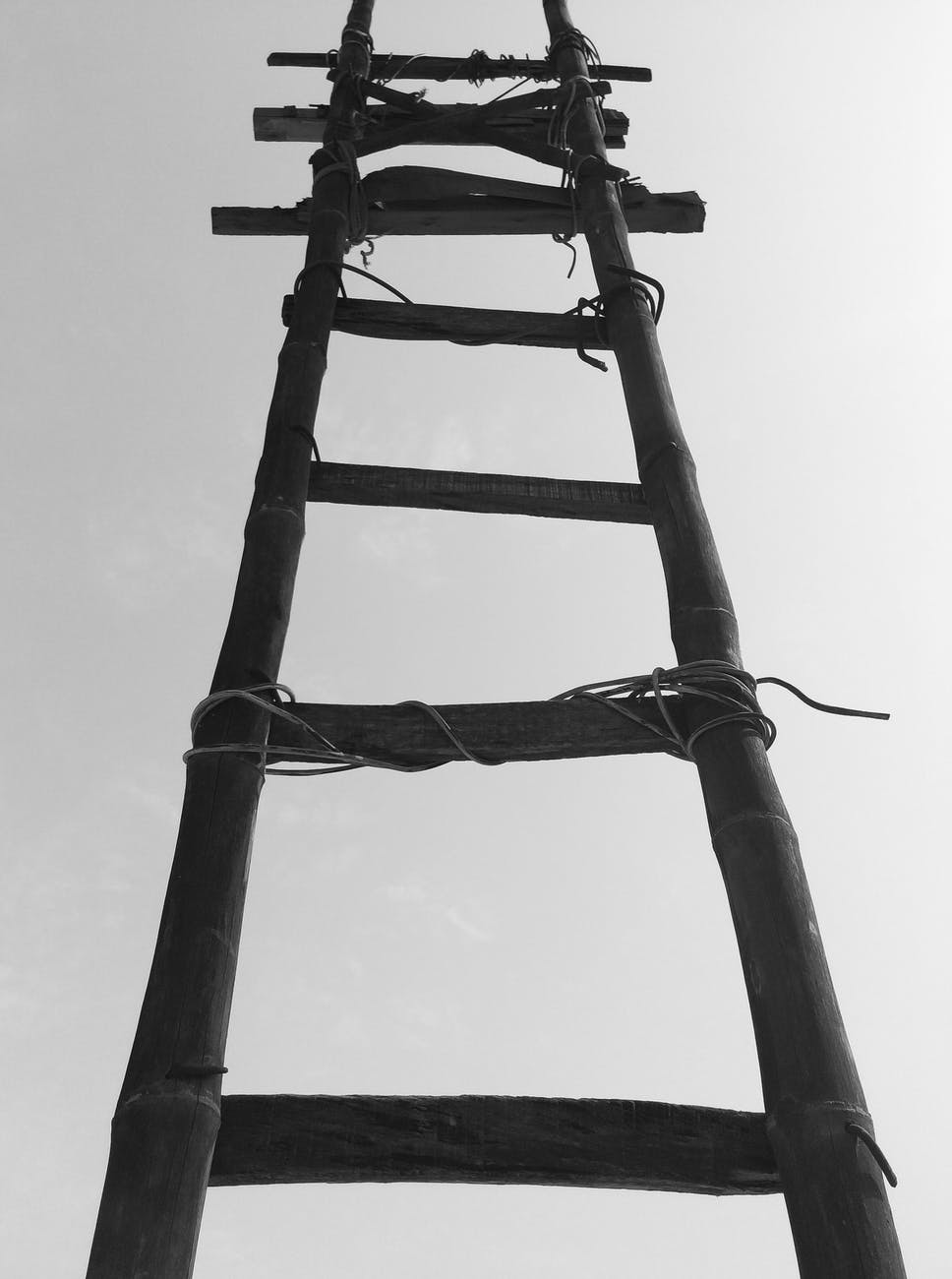
“So you see, dear cousin, the lesson to be learned from this is that one should never settle in life for what others may think is best and right for you. There is always the larger and more delicious fruit hanging from a higher branch, just out of your grasp, and which might easily be yours, if someone would only lend you the ladder to reach it.” pgs 66-67

Photo by Khimish Sharma on Pexels.com

Surprisingly, I found myself feeling some pity for the generally despised Mr. Collins. But the way Chen alters the fate of Mr. Darcy was not my favorite change. The ending of this book, in fact, was what lessened my enjoyment of it.

Prior to the ending, I was thinking highly of the book. It finally gives Mary Bennet a story and a moment in the limelight. I think she deserves that considering the way she was treated, or almost completely ignored, in the other story.

“The fewer Mary Bennets there are in the world, the better. They add no beauty to their surroundings and will all grow up to be ugly old maids, living on the charity of their families.” pg 71

Recommended for readers who like books that are written in the style of Jane Austen and who can also bear new major story arcs to beloved characters. They may not be so beloved after this book.

Thanks for reading!

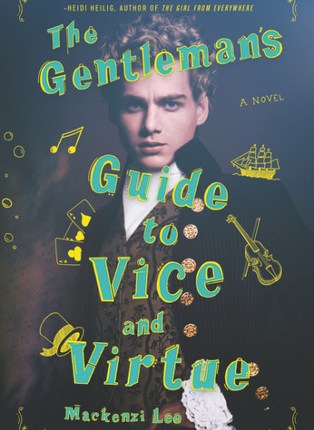
The Gentleman’s Guide to Vice and Virtue by Mackenzi Lee

The Gentleman’s Guide to Vice and Virtue by Mackenzi Lee

The Gentleman’s Guide to Vice and Virtue is an enjoyable coming-of-age tale about a young gentleman who loves his best friend and how the two of them, with his annoyingly competent sister, manage to have an extraordinary adventure on their Grand Tour.

Henry “Monty” Montague is easy to love and flashes his dimples at men and women, indiscriminately. He is also fond of heavy drinking and gambling, neither of which makes his father proud of him.

We must have drunk an extraordinary amount last night if it’s hanging this heavily over me. And here I was starting to feel rather smug about my ability to get foxed out of my mind most nights and then be a functioning human by the next afternoon, provided that the afternoon in question is a late one. pg 13, ebook.

Photo by cottonbro on Pexels.com

But, secretly, Monty has loved Percy Newton, his closest friend, for years. That’s troublesome because Monty’s father expects him to knuckle down, get married (to a woman) and run the estate after his Grand Tour. Plus, Monty’s not at all certain that Percy reciprocates the feeling.

“When you and I next see each other,” he continues, “I expect you to be sober and stable and… discreet, at the very least.” pg 26, ebook.

It all leads to some of the cutest relationship moments I’ve ever read in a young adult book. I kept saying “awwwww” as I read, which was rather out of character for me to the point where my husband became amused and was teasing me about it. But seriously. I bet if you read it, you’ll have the same reaction.

Please do keep in mind that this is a young adult historical fiction, meant for that audience. I get that the plot is ridiculous and meandering, but I loved it anyway. I think the character of Monty, the narrator, is what made this book so appealing. He’s a hot mess, who knows he’s a hot mess, and I was cheering for him to get his act together the whole book.

Photo by Denise Duplinski on Pexels.com

“Aren’t you tired of this— aren’t you tired of being this person? You look like a drunken ass all the time, all the bloody time, and it’s getting…” “It’s getting what, Percy?” He’s not going to say it, so I offer the word up for him. “Embarrassing? Are you embarrassed of me?” pg 87, ebook.

He’s funny, borderline alcoholic and hopeless at sharing his feelings. Plus, he has some great internal monologue.

I understand less than half the words in that sentence, but God bless the book people for their boundless knowledge absorbed from having words instead of friends. pg 219, ebook.

That’s right, God bless the book people. And may we all have the courage to tell the people we love that we love them. No matter their gender or our abysmal timing or our level of inebriation.

Recommended for young adult readers and fans of meandering historical fiction.

If you’re looking for more young adult fiction with LGBTQ characters or themes, you may want to pick up Every Heart a Doorway (Wayward Children #1) by Seanan McGuire

Thanks for reading!

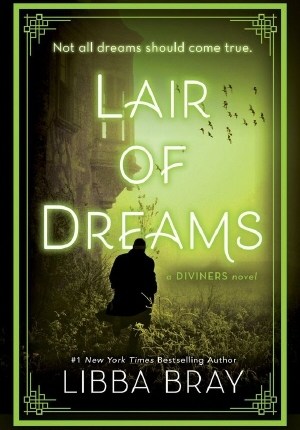
Lair of Dreams (The Diviners, #2) by Libba Bray

Lair of Dreams (The Diviners, #2) by Libba Bray

Something is attacking sleepers during their dreams. They enter another realm, tempted by their deepest desires and then become haunted by their greatest fears, and never wake up.

“For dreams, too, are ghosts, desires chased in sleep, gone by morning. The longing of dreams draws the dead, and this city holds many dreams.” pg 9, ebook.

Photo by Francesca Zama on Pexels.com

All of your favorite characters from The Diviners are back on the case while dealing with drama in their personal lives. And readers are introduced to a new diviner, a talented dream walker named Ling.

“Ling often spoke to the dead in dreams, but these men weren’t like any dead she had known. ‘What do you want?’ she’d asked them, afraid. ‘Help us,’ they said, and then the sky exploded with light.” pg 19, ebook

Even as the characters face the menace in their dreams, something even bigger and darker is on the horizon, threatening the future of the entire country.

Lair of Dreams is a story by itself, but it leads to a bigger story arc and the third book in the series.

Libby Bray has created a richly detailed world of Prohibition-era New York with flappers, flasks and speak-easys. She effortlessly transports the reader from Harlem to Chinatown and back again.

Photo by Guilherme Rossi on Pexels.com

Evie O’Neill, now “America’s Sweetheart Seer”, is just as sassy as she’s always been. But she’s come a long way since the last book and stepping into her power has given her a smidgen of gravitas.

“Evie only told the object holder what he or she wanted to hear. People wanted entertainment, yes, but mostly they wanted hope.”pg 23, ebook

Fans of Henry get to learn more of his backstory. Theta and Memphis continue to develop their relationship, while Memphis’ brother, Isaiah, faces a shadowy menace of his own. Mabel and Jericho receive less attention in this installment, but they do have some development too.

My complaint with Lair of Dreams is that I found the dream sequences repetitive. It slowed the forward motion of the plot to a plodding pace. Other than that, the characters are fantastic and the dialogue is snappy.

Photo by Ena Marinkovic on Pexels.com

It is a fun historical fiction and fantasy novel for young adults, but readers have to practice some patience during its reveal.

Check out my review of the first book in the series: The Diviners (The Diviners, #1) by Libba Bray

And thanks for reading!

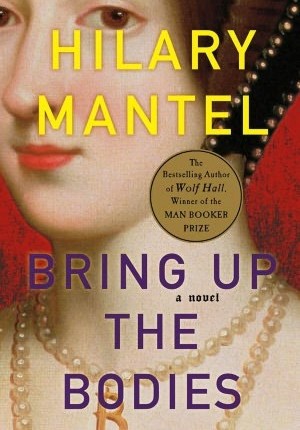
Bring Up the Bodies by Hilary Mantel

Bring Up the Bodies by Hilary Mantel

Hilary Mantel’s brilliant and Man Booker Prize-winning books about Thomas Cromwell continue with Bring Up the Bodies.

Cromwell is the right-hand man of Henry the VIII. His masterful manipulation of people and circumstances to make the world as Henry wants it has brought Cromwell wealth and power.

Getting Anne Boleyn on the throne was a struggle. Now he has to get her off of it without losing his own head in the process.

Mantel doesn’t just tell history, she makes it come alive.

Photo by Daria Shevtsova on Pexels.com

In one scene I can’t get out of my head: Henry has a temper tantrum because of the Spanish ambassador’s continued disrespect towards his new wife, Anne, and the repeated requests from the Spanish crown for money owed. The king blows his top at Cromwell and screams in his face.

He says he believes Cromwell has always manipulated him and laughed at him. But he is king and he will not be steered.

And, even though I knew the history, I thought for a moment Cromwell was going to be taken to the Tower in that instant.

Instead, he quietly apologizes to the king and dismisses himself, then goes to a different room to take a drink. With shaking hands, Cromwell spills a drop of the wine on himself and sits there, contemplating the small stain on his shirt.

Photo by Polina Tankilevitch on Pexels.com

And I said to myself, “Mantel is a genius.”

In that passage, it was as if I was in that room, living the moment. She makes you forget you’re reading a book. It’s so immersive. It’s almost magical.

Cromwell’s efforts to collect evidence against Queen Anne fills much of this book. As he tightens his net around her, you can almost feel it tighten around yourself.

Cromwell jokes with his sworn men to ease some of the tension, but it is always there, buzzing beneath the surface.

Highly recommended for historical fiction readers. Bring Up the Bodies is one of the best books I’ve read this year.

Photo by Rachel Claire on Pexels.com

To see my review of Mantel’s Wolf Hall, click here.

If you enjoyed Wolf Hall or Bring Up The Bodies, you may also enjoy Elizabeth I by Margaret George.

Thanks for reading!

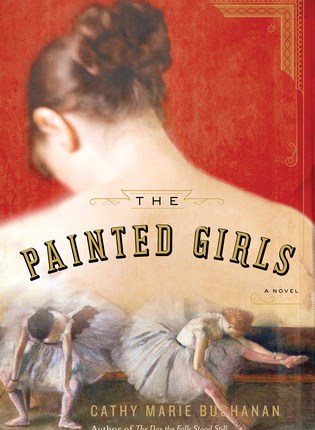
The Painted Girls by Cathy Marie Buchanan

The Painted Girls by Cathy Marie Buchanan

Three sisters live in poverty. Their father is dead and their mother is addicted to absinthe.

They have to find a way to feed themselves. The Paris Opera is an option, but ballet is expensive. There’s lessons and clothing to buy.

And whatever money they do manage to scrape together, there’s no guarantee their mother won’t use it to buy another bottle to feed her addiction.

Photo by Mizzu Cho on Pexels.com

The Painted Girls is about the haunting specter of abject poverty and addiction, but it is also about phrenology, a now-defunct science wherein experts believed they could judge the character of a person based on the shape of their head and face.

Marie, one of the girls in this story, frets because she has a low forehead and a jutting jaw. In her early religiously-based education, she was taught that outer beauty is a reflection of the soul. She fears her destiny is predetermined as hell bound because of her face.

Antoinette, the eldest of the sisters, wants to be adored and appreciated for how she holds her family together while her mother drugs herself into oblivion. But, she’s too aggressive and out-spoken to hold onto jobs for long and men can’t see past her outer shell to the aching heart within.

Plus, she sees herself as a hard worker, not a whore. Until she meets Émile Abadie and he takes her out for an evening of wine and oysters…

Photo by Elle Hughes on Pexels.com

The Painted Girls is about art, power and the blindness of love. It is also about sisters and the love family members hold for each other.

It is a work of historical fiction for girls who actually existed. Cathy Marie Buchanan takes the time to sort the real from the fictional at the end of the story.

I felt despair for the family in this book but also hope; that they could rise out of poverty despite everything holding them back.

Photo by Gustavo Tabosa on Pexels.com

Because, as society now knows, it doesn’t matter what you look like on the outside. What matters most is who you love and what you chose to do each day, each moment and for what reason.

This story has possible triggers for anyone who was sexually or physically abused as a child.

Thank you for reading.

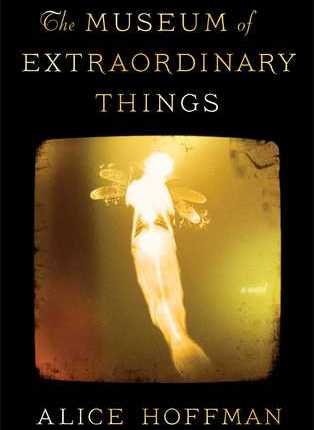
The Museum of Extraordinary Things by Alice Hoffman

The Museum of Extraordinary Things by Alice Hoffman

The Museum of Extraordinary Things is a beautifully written book about belonging, love and beauty, among other things.

It is the story of Coralie, a girl with webbing between her fingers who lives with her father and his collection of extraordinary things and people.

“My father was both a scientist and magician, but he declared that it was in literature wherein we discovered our truest natures.” pg 2

Photo by Ekrulila on Pexels.com

It is also the story of Eddie, a Jewish boy who flees with his father from a village in Russia after his mother is murdered.

Eddie is a photographer and Coralie is one of her father’s “extraordinary things.”

“Eddie had come to understand that what a man saw and what actually existed in the natural world were often contradictory.” pg 57

Both Eddie and Coralie have known hard times, poverty and hunger. They have been beaten down, overworked and abused.

“People will disappoint you with their cruelty every time.” pg 5

Photo by Noelle Otto on Pexels.com

They both carry secrets. Coralie has discovered a diary in a locked drawer in the basement. Eddie has a stolen watch in his pocket.

“The Museum of Extraordinary Things was a true museum, a place of edification, wherein natural curiosities were displayed along with human marvels. Now, however, they needed more, and, when more could not be found, it must be invented.” pg 28

Beyond the personal lives of the two protagonists, this is also a story about New York and how it was developing outwards, consuming the woods and running pavement over grass.

It is also about the development of labor laws, the rights of the worker and unions.

Two actual catastrophic fires are recorded in this historical fiction. They highlight the horrific losses humanity has sometimes endured in the name of progress and, especially in the case of the factory fire, greed.

Photo by Cole Keister on Pexels.com

Those pages are hard to read. But Hoffman has written them beautifully and they feel true, as if the reader is standing there, watching the disasters unfold, and questioning what horrific things sometimes happen.

“It’s dangerous to look into things you don’t understand,” Coralie advised. “You haven’t seen the half of what there is in this world.” “Perhaps you’re one of the extraordinary things I don’t understand.” pg 241

Recommended for adult readers because of disturbing content and abuse, both physical and emotional. The Museum of Extraordinary Things is haunting, but beautiful; dark with moments of light in the shadow; and truly, filled with extraordinary people and things.

Thanks for reading!

The Last to See Me by M. Dressler

The Last to See Me by M. Dressler

The Last to See Me is a fascinating story set in a world where ghosts are real and if they’re hanging around, they can bring down property values.

So, if you find you have an unruly poltergeist in your closet, you call a hunter to put them into the “eternal sleep.”

The tale is told from Emma, a ghost’s, point of view.

“My hearing is so much finer than when I walked alive and with a heartbeat. It’s something I’ve had a century to ponder: how much does the beating heart of one creature drown out the heart of another?” pg 6

Photo by cottonbro on Pexels.com

I found this story to be absolutely captivating.

“At the turn of the millennium, when the hunts began, I was as scared as any ghost could be. But fear, in the end, does a body no good. If you let yourself be afraid of what can kill you, it weakens you. So you can’t let yourself be afraid.” pg 21.

Inbetween Emma’s fight to remain alive, in a manner of speaking, we get to learn about her life before her death. So, there’s a bit of historical fiction thrown in the mix.

I think M. Dressler has written a fantastic ghost story.

“But I can tell you that the reason you felt something was hiding under your bed, all those years ago, is precisely because it was. It just knew better than to show itself to you.” pg 102

Photo by Diogo Cacito on Pexels.com

I found myself cheering for Emma, even when the story takes a few surprisingly dark turns.

“But understand and hear me, my friend. Nothing dead, no matter how interesting or difficult, is worth keeping.” pg 129.

Also, I was amazed at how Dressler managed to weave various elements of the story into its conclusion.

Take your time and read carefully, I think you’ll be as delighted with this tale as I was.

Highly recommended for those who like not-so-scary stories or slightly spooky historical fiction.

Thanks for reading!