Clementine Churchill: A Life in Pictures by Sonia Purnell

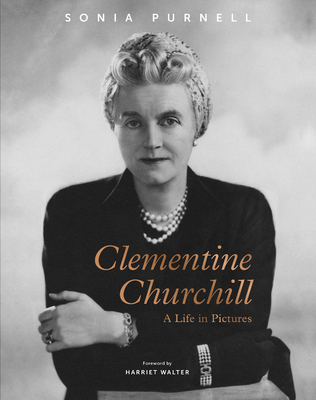
Clementine Churchill: A Life in Pictures by Sonia Purnell

Clementine Churchill: A Life in Pictures is a sparkling biography about Mrs. Winston Churchill. The biographer credits Clementine with supporting and providing the confidence necessary to her famous husband so that he could live the extraordinary life of service that he did.

In the meantime, she also devoted herself to her country as well as raised a family. Her role in Churchill’s life has gone largely unnoticed, but it seems she is finally taking her place in history.

Photo by vectors icon on Pexels.com

Not only did they weather repeated public and personal humiliation together, they overcame the bitterest of personal tragedies, and survived the all but intolerable strains of being at the center of two world wars. … The question is not simply what did she do for him, but also what could he have done without her? pg 9

I knew, in a general way about Winston Churchill’s life, but this biography about Clementine fills in many of the gaps in my knowledge. And actually, it was quite interesting reading. The personal life of the Churchills was filled with a surprising amount of drama and scandal.

In addition, they worked with and knew so many powerful people from the time period. I particularly liked the chapters about Clementine’s acquaintance with Eleanor Roosevelt.

The case can be made that no other premier’s wife, in a democratic country at least, has played such a pivotal role in her husband’s government — arguably greater during the Second World War than the greatest of American First Ladies, Clementine’s direct contemporary, Eleanor Roosevelt. pg 18
Photo by Sid Ali on Pexels.com

The pictures bring this incredible woman, and the trying times she lived in, to life. Many of the photos are un-posed and Clementine is looking off camera, smiling at other people. Even in photos, one gets the sense of how much of this woman’s life was lived in the public eye.

Though her contributions were perhaps unrecognized during her lifetime, Clementine was appreciated by her husband. Take this note he wrote to her on their fortieth wedding anniversary:

“I send this token, but how little can it express my gratitude to you for making my life & any work I have done possible.”

She is certainly a woman who deserves to be remembered.

Thank you to NetGalley and the publisher for a free advance reader copy of this book. It is slated to be on sale in October 2019. Please note, the brief quotations I cited in this review may change or be omitted in the final print edition.

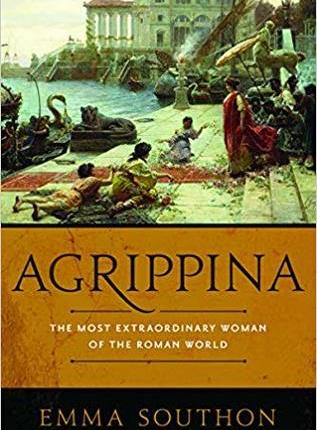
Agrippina: The Most Extraordinary Woman of the Roman World by Emma Southon

Agrippina: The Most Extraordinary Woman of the Roman World by Emma Southon

Emma Southon gives us a fascinating look at a complex woman whom history has perhaps treated unfairly.

She starts by giving the reader reasons why the study of historical women is so difficult.

… we have just three major literary sources that mention Agrippina with any detail, and a total of seven literary sources from the entire corpus of Latin literature that think she was interesting or significant enough to deserve a single line; one of which is a play.”

Photo by Octoptimist on Pexels.com

Like most women from history, Agrippina was mainly written about when she orbited important men. There’s also the difficulty of potential bias in the few sources we have.

“She can be seen only through the distorting lens of her relationship to other people and how well or badly she performed the ideal form of that relationship. It’s mostly badly, which is why we get to see so much of her.”

But what’s left when you take all of that into consideration is extraordinary. As the author points out, Agrippina was “the sister, niece, wife, and mother of emperors.” There are few from history who can claim the same.

Photo by Francesco Ungaro on Pexels.com

Southon uses an informal style and words like “stabby” and “murdery”. I found her delivery rather hilarious and enjoyed it. If you’re turned off by this type of writing, you may want to choose another, more serious author.

She doesn’t neglect to remind readers of the context of every bit of Agrippina’s history or point out when the record is missing or falls silent. Sometimes, the gaps in the record speak even louder than what was written.

“The next year, however, Agrippina came roaring back into historical narratives in the most confusing possible way.”

I liked how Southon took complex concepts from Roman history and gave them to the reader in digestible chunks. For example, we get a glimpse of what portions of Agrippina’s wedding ceremony may have been like:

“First, Agrippina the Younger anointed the doorway with fat and wool. Basically, she smeared some kind of animal fat onto the door frame and then strung wool between the door posts, sticking the ends to the fat. Obviously that sounds both disgusting and bizarre, which it is, but this is very symbolic and serious. Probably as these things were brought out, the party atmosphere would die down and everyone would watch reverently as this little girl covered the door in goo.”

Photo by Mathias P.R. Reding on Pexels.com

She goes on to examine the superstition of carrying the bride across the threshold of her new home which was another important part of the ceremony and nothing like the laughing, fun time it is today. It was interesting to me to juxtapose the modern viewpoint on these ancient traditions and see the glaring differences between the two.

Highly recommended for readers who like their non-fiction to sound like a conversation between friends. Southon makes the past come alive in a delightful read filled with scandals, power struggles and, of course, Rome.

Thank you to NetGalley and the publisher for an advance reader copy of this book, which is slated to go on sale tomorrow, August 6, 2019. The brief quotations I cited in this review may change or be omitted in the final copy.

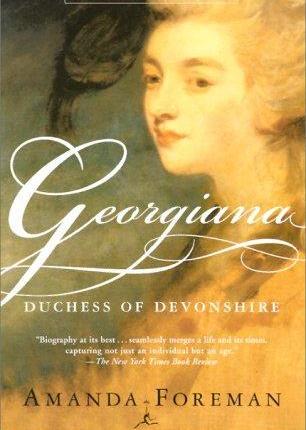
Georgiana: Duchess of Devonshire by Amanda Foreman

Georgiana: Duchess of Devonshire by Amanda Foreman

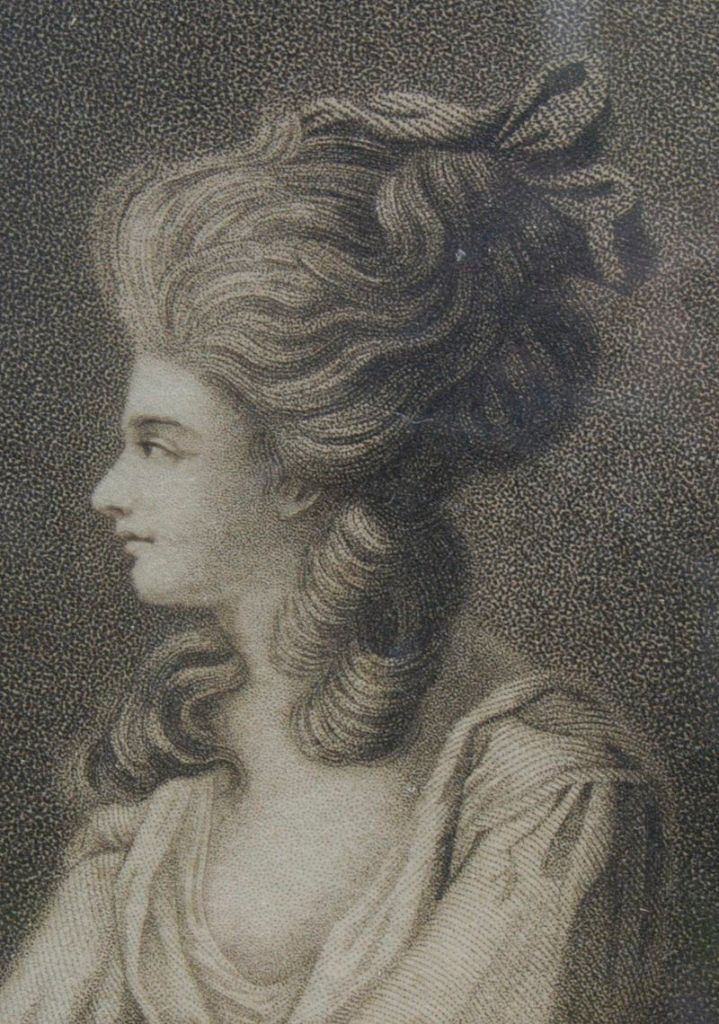
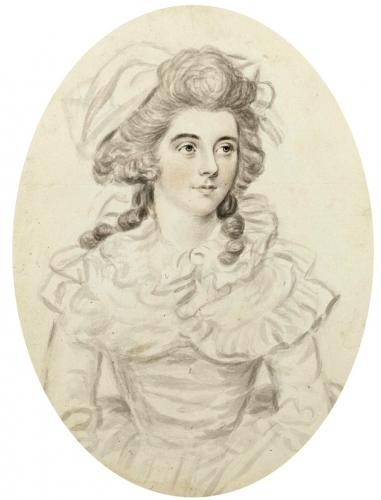
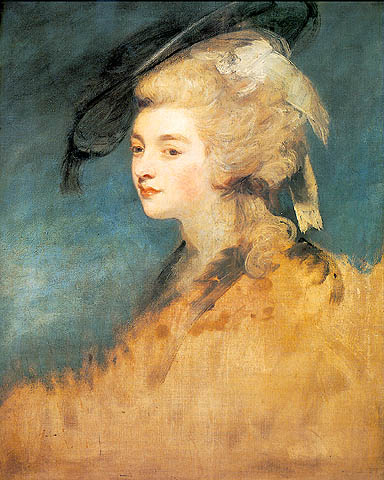
Georgiana, the Duchess of Devonshire, was a complicated lady. She was politically active, a progressive thinker, had an atrocious gambling habit that kept her perpetually in debt and suffered from an unfortunate, sometimes unhappy, marriage.

Did I mention she lived in the late 1700 and early 1800s?

“There was enough popular participation to make politics as big a national obsession as sport, if not bigger. The emergence of national newspapers turned politicians into celebrities.” pg 18 ebook.

And one of the brightest stars among them, was the Duchess of Devonshire.

“This was the age of oligarch politics, when the great landowning families enjoyed unchallenged pre-eminence in government. While the Lords sat in the chamber known as the Upper House, or the House of Lords, their younger brothers, sons, and nephews filled up most of the Lower House, known as the House of Commons.” pgs 22-23.

It wasn’t a particularly great age for democracy or for modern thought.

“Georgiana’s methods were too modern for eighteenth-century society. She was never allowed to canvass openly in London again, nor did other aristocratic women imitate her example. It would be another hundred years before women once more ventured boldly into street politics as Georgiana had not been afraid to do in 1784.”pgs 178-179, ebook

1784!

“She felt that she had the same qualities as a man; it was simply her sex, not her capability, which barred her from taking part in politics.” pg 346.

Imagine that. 🙂

The leaders of the Whig party, Georgiana’s political friends, were brilliant but flawed.

Eighteenth-century England was full of wits, connoisseurs, orators, historians, drinkers, gamblers, rakes, and pranksters, but only (Charles James) Fox embodied all these things.” pg 75, ebook.

I confess, though this book has extraordinary detail and research about Georgiana’s political activities, I found her personal life far more fascinating.

Her marriage may have been doomed from the start: “The Duke did not know how to be romantic; never having experienced tenderness himself he was incapable of showing it to Georgiana. He did not mean to hurt her, but there was a nine-year age difference between them and a gulf of misunderstanding and misplaced expectations.” pg 49, ebook.

There was another woman, who may or may not have been both Georgiana and the Duke of Devonshire’s lover. There were multiple handsome men who entered and exited Georgiana’s life.

She even had an illegitimate child with one of them.

A fascinating biography of an extraordinary lady – highly recommended.

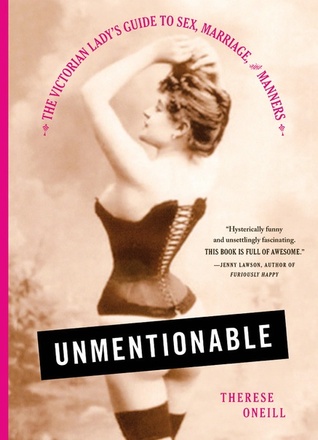
Unmentionable: The Victorian Lady’s Guide to Sex, Marriage, and Manners by Therese Oneill

Unmentionable: The Victorian Lady’s Guide to Sex, Marriage, and Manners by Therese Oneill
unmentionable

Unmentionable made me truly appreciate how good I have it compared to my female ancestors.

This clever little book examines the gross, disturbing, and, at times, hilarious “unmentionable” facets of a Victorian woman’s life and also, their powerlessness in society when compared to their male counterparts.

The women’s rights portion sounds grim, but Oneill’s writing keeps it light. I learned so much and was entertained too.

For example, I don’t consider modern cities to be very clean, but Oneill explains in her book, that they are shining examples of cleanliness compared to what came before: Some would argue that the nineteenth century was one of the filthiest times in all of Western history, particularly in any urban, developed area. … Ankle deep in filth, I said, but forgive me, I was inaccurate. You will wish the filth terminated at your ankles. Foulness is everywhere. Grime and rot cling to the very air, the buildings, the people; even the soap is made out of lard and poison.” pg 20, ebook.

All that dirt, but bathing was considered bad for your health and even, depending upon your religious upbringing, immoral! I’ve never read a historical fiction that describes the foul stench of the streets or the crowd upon it… now, I know better. Thanks Unmentionable!

Make up and other personal care products used to be either oily goop or filled with poisonous substances that could kill you or permanently wreck your face.

Photo by Rita Rebeca on Pexels.com

With this in mind, Oneill gives us a new take on the story of Jezebel: “She painted her face, and tired her head [fixed her hair], and looked out at a window.” “Some think this means Jezebel planned to seduce her way out of this problem; others think she was facing death with composure and dignity. At any rate, her eunuchs saw that they were on the wrong team and shoved her out the aforementioned window, and dogs ate her face. Which reinforces the assumption that her face was coated in sinfully delicious animal fat.” pgs 67-68, ebook.

Because women really had no other choice, being the ideal wife and mother was no laughing matter: “Your only job now that you are a nineteenth-century wife is to do everything within your power during every waking moment to make his life so sweet and full that he will literally dread the glory of Christ’s return, if only because it will mean parting from your secret strudel recipe and the unmatched craftsmanship of your trouser hemstitch.” pg 130, ebook.

So, unreasonable expectations of perfection abounded at home.

Photo by Pixabay on Pexels.com

Women, especially single, unmarried ones, weren’t supposed to go anywhere alone: “Etiquette for Ladies reminds us that no woman has any business being alone in a museum, a library, or any other such den of unwholesomeness. Wherever you are going, your behavior once you arrive should remain every bit as self-aware-but-pretending-not-to-be as when you were in transit.”pg 165, ebook.

The library is a “den of unwholesomeness”… ha!

But the worst of the era, in my opinion, was the medical community’s attitude towards women. At that time, we hadn’t figured out how the female body worked and didn’t connect the idea that people need intellectual stimulation and purpose for a life well lived.

That lead to the lumping of every female complaint under the title, “Hysteria”: “First I would like to tell you what hysteria actually was. Which is incredibly difficult. Because the only honest definition I can give you is “a misdiagnosis.” Epilepsy, diabetic shock, neural disorders, post-traumatic stress disorder, postpartum depression, and bipolar disorders do not necessarily cause similar symptoms, but they were all commonly diagnosed as hysteria.” pg 173, ebook. So, pretty much, everything then.

Photo by Vie Studio on Pexels.com

Oneill reminds the reader that many of the rights, and indoor plumbing, and personal care products that we enjoy today are because of the demands for a better life by women who lived during the Victorian era.

I am so very grateful and humbled for their contributions to society and the sufferings that they endured so that their children’s children’s children would have it better. Some further (non-humorous) reading: Spinster: Making a Life of One’s Own or Artemis: The Indomitable Spirit in Everywoman.

Thank you to Netgalley and Little, Brown and Company for a digital copy of this book & thanks for reading!

Women Who Read Are Dangerous by Stefan Bollmann, Foreword by Karen Joy Fowler

Women Who Read Are Dangerous by Stefan Bollmann, Foreword by Karen Joy Fowler
womenwhoread

Part art appreciation and part homage to the female reader, Women Who Read Are Dangerous is probably the the most aptly titled book that I’ve ever read.

In addition to the beautiful images (my favorites pages 73 & 89), this book educates the reader about the politics, historical trends, and gender inequality tied to reading. Who knew that simply picking up a book could be such a subversive act?

Women Who Read are Dangerous sums up years of strange thinking about women and books with a dose of humor that I appreciated.

Take these historical opinions for example: “Women are too literal-minded for reading. Women are too sentimental, too empathetic, too distractable for reading. Women are passive, practically somnolent, consumers of popular culture, never realizing how, with the very books they choose, they participate in their own subordination.” pg 16

Photo by Los Muertos Crew on Pexels.com

Or this: “The lack of all physical movement while reading, combined with the forcible alternation of imagination and emotion,” said the teacher Karl G. Bauer in 1791, would lead to “slackness, mucous congestion, flatulence, and constipation of the inner organs, which, as is well known, particularly in the female sex, actually affects the sexual parts”- so anyone who read a great deal and whose powers of imagination were stimulated by reading would also be inclined to masturbation, as indeed we can already observe in Baudouin’s painting. But such moralizing could not hold up the triumphal march of reading, including- and specifically- female reading.” pg 23

Can’t hold us back, right readers? I’m actually feeling pretty well for all the reading that I do.

Photo by cottonbro on Pexels.com

Reading is power, I’ve always known that: “With the ability to read, however, there developed new patterns of private behavior that were to threaten the legitimacy of both the Church and secular authorities on a permanent basis. Women who learned to read at that time were considered dangerous. For the woman who reads acquires a space to which she and no one else has access, and together with this she develops an independent sense of self-esteem; furthermore, she creates her own view of the world that does not necessarily correspond with that conveyed by tradition, or with that of men.” pg 26

An introvert’s paradise, the keys to your freedom, the way to stick it to the “man”… as if I needed more reasons to read.

I also liked this description of reading: “Reading is an act of friendly isolation. When we are reading, we make ourselves unapproachable in a tactful way.” pg 34 I never really considered it that way before, but it is a method in which you remove yourself from the world for a time, even from those sitting in the same room.

Photo by Karolina Grabowska on Pexels.com

Seems obvious, when I consider it, but I had never taken the time to do so.

Finally, I learned about how “silent reading” is a recent trend. Did you know?: “An illiterate today is not only someone who cannot read (or write), but also anyone who cannot understand a text unless he or she reads it aloud. Yet there must have been a time when the opposite was the case- when reading aloud was the norm, as silent reading is today. … Until well into the Middle Ages and in some cases well into modern times, reading consisted of both thinking and speaking, and was above all an act that took place not in separation from the outside world, but at its center, within the social group and under its surveillance.” pg 25

Ugh. “Under its surveillance”?

That brings to mind the quotation, “Let others praise ancient times; I am glad I was born in these.” -Ovid.

Highly recommended for art enthusiasts and anyone who loves to read, Women Who Read are Dangerous is a lot of fun and a walk on the wild side… if one believes in such things.

If you’re looking for more non-fiction information about reading, try “Wild Things! Acts of Mischief in Children’s Literature” by Betsy Bird. It doesn’t have the beautiful artwork of this book, but it does contain a lot of information about the history and, sometimes scandalous, back story of children’s books and authors.

A big thank you to the Goodreads First Reads Program for a finished copy of this book for review purposes.  And, thank you for reading!