Money, and the Law of Attraction: Learning to Attract Wealth, Health, and Happiness by Esther Hicks

Money, and the Law of Attraction: Learning to Attract Wealth, Health, and Happiness by Esther Hicks

Esther Hicks channels the wisdom of her inner being, called Abraham, to write these books. It sounds kind of far out there if you’ve never been exposed to that type of teaching before, but I have to say, I like it. If you’re in to self help and new age books, you may want to give them a try.

The majority of her (their) message seems to be to find joy. They teach that the purpose of life is to do what makes you happy as often as you can. Interestingly enough, that was the same lesson my grandfather taught me before he passed on. “Whatever you do in life, Heidi, be happy. The most important thing is to be happy.”

Photo by Sam Lion on Pexels.com

Maybe it is in memory of him that I connect so easily with these teachings. I don’t know.

I’ve really taken to heart her encouragement to start out your day in the proper mindset. Lately, I’ve been chilling in bed for a few minutes rather than jumping right into my day. I don’t really have the words to explain why this is making a difference, but it is. I take a second to think about something awesome, even if its as banal as, “My pillow is so soft.” Try it and let me know how it works out for you.

“So as you awaken, open your eyes and say Today I will look for reasons to feel good. Nothing is more important than that I feel good.” pg 37

Also, she’s a big proponent for imaging and living your own life to its fullest and not comparing yourself to others. In the new age of social media and twitter where it seems like everybody is into everybody else’s business, it’s refreshing.

Photo by Tim Samuel on Pexels.com

Do not write your story like a factual documentary, weighing all the pros and cons of your experience, but instead tell the uplifting, fanciful, magical story of the wonder of your own life and watch what happens. pg 81

Overall, these teachings have changed my life. I can’t really say enough positive things about her books, of which there are several best sellers. She also does a bustling business of hosting workshops, which she does across the United States and on a few different cruises.

Last month, I went to an Abraham Hicks workshop for the first time. I’ve enjoyed her videos on YouTube for a long time and thought I might shake things up and see what she’s like in person. This was kind of a production because Esther doesn’t come to the St. Louis area. So, I went out west and heard her speak in Phoenix.

The papers for the workshop registration encourage attendees to write down questions about life, whatever comes into your mind that you’re curious about. I brainstormed with my husband and came up with about a dozen different things I’d talk about if I got to the “hot seat”. (That’s what she calls the chair up front.)

I arrived about 15 minutes before the whole thing started, which seemed like ample time to me, only to discover the auditorium was nearly filled! That was fine because I wanted a seat towards the outside anyway. If things gave me a weird vibe, I wanted to be able to get the heck out as fast as possible.

Photo by Paula Schmidt on Pexels.com

In the moments before Esther emerged, this music started up about “Joy, joy, joy. Joy is the key” and almost half the crowd got up and started dancing. I nearly bolted. It felt rather cultist in those moments.

But then the music cut and there she was and things settled down somewhat. What followed was a lot of laughs and learning about topics ranging from relationships to illness to someone’s dog. The whole day ended with a marriage proposal from one of the attendees to another. In fact, I enjoyed it so much, I’m kicking around the idea of going again next year.

I never made it to the hot seat and felt rather disappointed. But, later, as I was reading over the questions I took to the workshop, I found, to my surprise, that she had directly addressed every single one of them in other people’s questions. And then, that night, I dreamed I was back at the workshop. I was sitting in the chair and asking any question that came to my mind.

So, that’s my personal experience with this author and the “magic” of Abraham. I know these teachings aren’t for everyone. But they’re for me. And that’s pretty cool.

Thanks for reading!

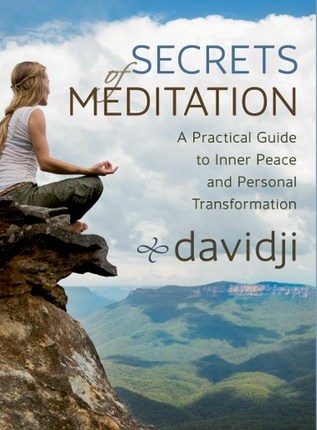
Secrets of Meditation: A Practical Guide to Inner Peace and Personal Transformation by Davidji

Secrets of Meditation: A Practical Guide to Inner Peace and Personal Transformation by Davidji

Secrets of Meditation is one of the clearest and beginner friendly meditation manuals that I’ve ever read.

Davidji breaks practices down not only into type and step-by-step instructions with examples, but also by lineage and development over time and place.

Davidji provides enough background on himself to establish his bona fides but not so much as to overpower the instruction with meaningless chatter about himself.

Photo by Spencer Selover on Pexels.com

He intersperses the text with helpful advice, additional authors to explore, and a myriad of ways to connect with him online for some meditation freebies.

Though it’s clear that he’s immersed himself in Eastern culture and practices (having traveled extensively in the East and studied under various gurus), Davidji hasn’t adopted an insider’s way of talking about meditation.

Sometimes, and maybe this is just me, it feels like meditation instructors go so far out into the “oneness” that they never come back fully into the real world. That’s not Davidji at all. I loved this text mainly because of how he could keep one foot “over there” and the other firmly planted “back here”.

Admittedly, my daily meditation practice has lately fallen somewhat on my priority list. This book makes me want to head back to the mat.

If you enjoyed Secrets of Meditation, you may want to read 10% Happier: How I Tamed the Voice in My Head, Reduced Stress Without Losing My Edge, and Found Self-Help That Actually Works which is not so much meditation instruction as a memoir from someone beginning meditation. I recommend it a lot because Dan Harris seemed so relatable to me.

And also,Β Seeking Heaven.Β Eben Alexander is a neurosurgeon who had a near death experience turned it into guided meditations. I think they’re easy enough for beginners to use.

Thanks for reading!

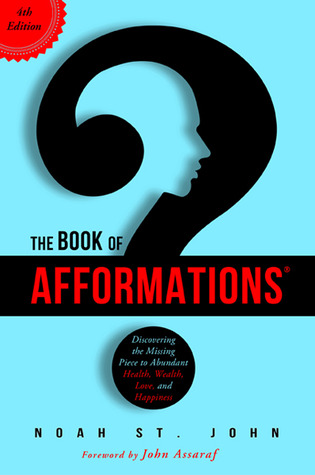
The Book of Afformations: Discovering the Missing Piece to Abundant Health, Wealth, Love, and Happiness by Noah St. John

The Book of Afformations: Discovering the Missing Piece to Abundant Health, Wealth, Love, and Happiness by Noah St. John
afformations

The Book of Afformations isn’t just another self help book putting forth the same old ideas of positive thinking, visualizations, and affirmations. Noah St. John has created a four part system to literally change the way you think, then act, and as a result, your life.

Step One: Ask yourself what you want, in all areas of your life. (A part of this stage is writing down all of the negative questions that you ask yourself like “Why am I never enough?”. That section was difficult to get through but eye opening.)

Step Two: Form empowering questions to help you achieve the priorities that you wrote down in Step One.

Step Three: Accept. Accept these new ways of looking at your life situation. Repeat the afformations. Create new beliefs and internal dialogue. Repetition is key here.

Step Four: Act. Here is where St. John steps away from other New Age authors that I’ve read. He suggests writing down three actions to take for each Afformation that you want to incorporate into your life. Do one a day. Keep going.

It seems really simple and the author peppers the text with success stories of people who have created amazing change in their life with this system. Another part of his book is a short biographical section about the author, how he came up with the system, and the extraordinary changes that he has made in his own life using it. The last couple pages are ads selling St. John’s other books, success workshops, online audio programs, and applications. They all seem to be quite popular, so it seems that at least some folks are having success with this.

I enjoyed the read and the author gave me some really interesting new techniques to try in my own life. I’d suggest this book to anyone who has tried affirmations and failed or is just looking to try something new for their negative thought patterns.

I received a free copy of this book through the Goodreads First Reads program. Thanks for reading!

Don’t Let Anything Dull Your Sparkle: How to Break Free of Negativity and Drama by Doreen Virtue

Don’t Let Anything Dull Your Sparkle: How to Break Free of Negativity and Drama by Doreen Virtue

This book wasn’t for me.

Don’t get me wrong, I love sparkling.

Photo by Hope Aye on Pexels.com

But, what dulls my sparkle is considering all of the ways in which the world raises my histamine levels, which seems to be Doreen Virtue’s thesis for this book: “…the next day as I was walking along Post Street in Union Square, I heard the inner message that is the basis of this book. … “The reason why you and so many people are experiencing life drama is because you’re addicted to histamine.” loc 81, ebook.

She goes on to list various ways that one may lower this including: major dietary changes, laundry detergent, cleaning supplies, certain types of exercise, therapy, dry cleaning chemicals, what types of plastic bottles to drink from, what types of television programs to expose yourself to, what types of make up to wear and much, much more.

I hope that the readers who are looking for this type of information find Don’t Let Anything Dull Your Sparkle because it is one of the most complete types of books of this kind that I’ve ever read.

Photo by Matheus Bertelli on Pexels.com

The thing is, I could make myself crazy if I tried to control all of that stuff.

I’ve discovered, through my own life, that if I do the inner work of feeling better then external circumstances sort of fall into place on their own without me dancing around trying to make it so.

Don’t get me wrong- I am all for self care. Regular massages, aromatherapy, professional therapy, organic foods, support groups, whatever you need to make yourself feel better, do it.

I just don’t need to adjust those things to sparkle. I feel innately sparkly. I am a veritable disco ball of sparkles.

Photo by NEOSiAM 2020 on Pexels.com

Beyond the histamine issue, it is clear that Dr. Doreen Virtue had another career in psychotherapy. If you’ve experienced drama of any kind, trouble finding that special someone or encountered difficult personalities, she will help you get past that in this book.

There again, my significant other and friends are all quite normal and low drama- sparkling, if you will.

But, if you’ve had relationship troubles, this could be the book that you’re looking for. So, seriously, don’t let me deter you if you feel you need to read it.

“Remember, it’s not about how many friends you have; it’s the quality of the friendships that matter. Even one good friendship, built upon mutual respect and other healthy qualities, will help you sparkle throughout the day.” loc 2034, ebook.

Photo by fauxels on Pexels.com

Meditation and yoga, two of my favorite things, are highlighted in this book as ways to improve your life. I couldn’t agree more!

In this passage, Doreen is talking about dealing with potential drama in your family or with in-laws: “…any way you slice it, the situation will bring up stress hormones in your brain and body, and part of being responsible is taking care of yourself. So, go do yoga as soon as you can. Play gentle music, meditate, eat a low-histamine diet, and avoid chemicals.” loc 1961, ebook.

The trouble is: brownies are not low-histamine. That’s a deal breaker for me.

Photo by Jhon Marquez on Pexels.com

I recommend this book if you’re sick and fed up with the way life is going and you want to try something drastic to turn it all around. Otherwise, I’d have to suggest borrowing this one from the library.

I’ve heard that high library usage lowers histamine levels and makes you sparkle too. Kidding.

Thank you to NetGalley and Hay House publishing for a free digital copy of this book. And, thank you for reading!

The Space Within: Finding Your Way Back Home by Michael Neill

The Space Within: Finding Your Way Back Home by Michael Neill
thespacewithin

No matter how many books I read on meditation, I always seem to learn something new when I pick another one up.

The Space Within is one of the more excellent books that I’ve discovered- not pushing any particular way of being, just quietly encouraging the reader to go within and embrace what’s there.

On separating our consciousness from the universal energy that surrounds it, Neill compares the mind to a book and I’m sure most Goodreads users, like me, could easily connect with the metaphor:“Think of ‘quiet’ not as an absence of thought but as the space inside which the noise of your thinking arises. What makes this tricky, at least to begin with, is that at first glimpse the noise is more interesting than the quiet …look at the white background of this page. Chances are you can still see the words, and even read them, but without noticing it, at some point you will once again become absorbed in the words and stop seeing the white of the page.” loc 192, ebook.

Why bother to meditate? : “There is a space within you where you are already perfect, whole, and complete. It is a space of pure Consciousness- the space inside which all thoughts come and go. When you rest in the feeling of this space, the warmth of it heals your mind and body. When you operate from the infinite creative potential of this space, you produce high levels of performance and creative flow.” loc 207

And more, promises Neill. I’ve meditated for many years and I’ve experienced some extraordinary things. It wasn’t always easy and it didn’t happen all at once, but I can say, from personal experience, that this particular claim is absolutely true.

Photo by Samuel Theo Manat Silitonga on Pexels.com

Thoughts are incredibly powerful things. I think we forget just how life changing your personal perspective can be: “… we live in a world of unrecognized thought. Thought is the architect of both hope and despair, the source of every color in the emotional rainbow. … But unrecognized thought demands our attention and fills our consciousness. And when we get caught up in thought, we lose our way.” loc 324, ebook.

And also: “We live in a world of thought, but we think we live in a world of external experience. The mind is not a camera, it’s a projector. We can’t tell the difference between an imagined experience ‘in here’ and what’s going on ‘out there’- and that confusion creates a lot of confusion.” loc 375, ebook.

You create your own reality- but it’s easy to forget that and blame other people for your circumstances.

When I read this next passage, I thought of How The Secret Changed My Life and the incredible importance that people placed on feeling good.

Neill points out that it isn’t anything to get wound up about: “There’s no such thing as a solution to a feeling. Because we don’t recognize this fact, we spend huge chunks of our time and energy trying to ‘solve’ our feelings by changing them to ‘better’ ones or eliminating them altogether. … When it’s okay to feel good when you feel good and bad when you feel bad, recognizing that as thoughts change, the feelings change with them, there’s no need to prefer one feeling over another, let alone attempt to fix it. And when you really see that for yourself, you being to experience more of the deeper feelings that make life worth living.” loc 457, ebook.

This is a great place to start if you’re just learning about meditation/mindfulness but it’s also appropriate for more experienced practitioners- if you breathe or think, you could probably learn something from this book. Some suggestions for further reading: Buddha’s Brain: The Practical Neuroscience of Happiness, Love, and Wisdom, Meditations for Breaking the Habit of Being Yourself, or Happiness: A Guide to Developing Life’s Most Important Skill.

Thank you to NetGalley and Hay House Publishing for a digital copy of this book! And, thank you for reading.

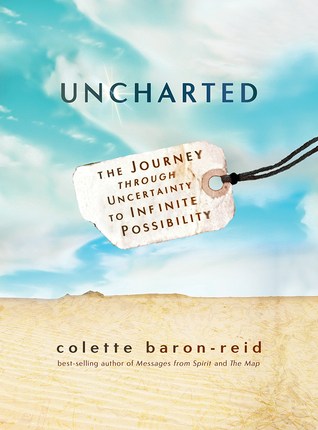
Uncharted: The Journey through Uncertainty to Infinite Possibility by Colette Baron-Reid

Uncharted: The Journey through Uncertainty to Infinite Possibility by Colette Baron-Reid
uncharted

In Uncharted, Colette Baron-Reid guides the reader with journaling, visualization, personal stories, and meditation exercises through unexplored realms of the spirit as a method for greater self knowing and actualization.

I enjoyed this book, but it felt a bit all over the place. Let me explain what I mean by examining some of the many subjects discussed:

In the introduction, Colette begins by giving some background information into what’s been going on with her for the past couple of years.

One of those big changes is that she is now channeling an group of beings, whereas, prior to this, she wasn’t.

In this passage, she’s talking about the entity helping her to write Uncharted: “It’s like “they” had the puzzle pieces, and when I was ready for them, they dropped them down on the page for me to discover. I’m not realizing that this is, in essence, what channeling an “entity” is. It’s something I never quite understood, and I’m afraid I didn’t respect its power as I should have. So I hereby surrender my inner critical cynic who doubted others when they shared their channeling stories. I get it now.” loc 55, ebook.

She calls this/these entities, Fred. Throughout the book, Fred pops up and shares a message or clarifies something. I felt as if the channeled messages could have composed a whole other book in addition to this one.

Plus, it’s clear that she’s still honing her ability to talk and understand to this inner knowing. Anyway, it “muddied the waters,” so to speak, of Uncharted from nearly the first page.

Colette doesn’t think much of the ego or what she calls the “small self”:“When you view the world through the limits of your small self, you see only the separated parts of the material world. You are guided by your personal narratives that tell you who you are based on your past experience, ambitions, and goals that were set within the Realm of Form. You’re oblivious to being part of one big matrix of interconnectedness. You forget where home is, and you feel lost.” loc 634, ebook.

Photo by Sachin C Nair on Pexels.com

I’ve read all sorts of different teachings about the ego, but I’ve started to lean towards Abraham Hick’s thoughts on the matter. They teach that the ego is the lens through which the divine within you perceives reality and that our desires are breadcrumbs along the path to eternal joy if we allow ourselves to realize them.

Hicks also says that (paraphrasing): “If you only remembered how much you wanted to be in these bodies, you wouldn’t be so quick to fault yourself and your desires. You are the leading edge of thought- you take spirit beyond which it has ever been before.”

In my mind, that is the function of ego: to express our unique personality. Isn’t the desire to be free of ego also a desire driven by the ego?

I did like Colette’s definition of co-creation, which is one I’d never heard before: “Here’s how it works between you and Spirit. You, as an individual, are always cocreating. The divine creative force is always there with you, along with spirits and allies who enthusiastically join in as you co-create reality. And you are never alone.” loc 712, ebook. Encouraging, I think.

Photo by Mayu on Pexels.com

I also liked the lesson on fate, our internal “stories” and the subconscious mind: “Listen, it’s not fun to admit that while your story about yourself has been influenced by other people and things that just seemed to happen “to” you, it was also co-written by you personally to a large degree. Fate played a role, to be sure, but you can take much greater control over your “fate.” As Carl Jung is supposed to have said, “Whatever is not brought from the unconscious into the awareness seemingly comes to us as fate.” loc 1568, ebook.

The fact that shadow dwells hand in hand with light is something that I’ve learned through my own meditation practice.

Here’s what Colette has to say about it: “In the Realm of Light, we recognize that light always exists in duality with a shadow- there’s no avoiding it. There is always a dark side to everything, a contrast between what is nourishing and loving and what is draining and entangled in fear, anger, or hatred. Those emotions will always exist, but they don’t have to overwhelm you or scare you away from the process of co-creation and transformation.” loc 1892, ebook. I believe that is true.

As for the movement through Colette’s “realms”, it reminded me of shamanistic work by Robert Moss. I’m not sure about the order in which she explores things (seems like every teacher has a different way to do it), but I think that, if your intention is greater self knowledge and if you practice what Colette teaches, you will find it.

In fact, if you try just a fraction of what she suggests in Uncharted, you will learn something about yourself. She gives plenty of exercises to attempt in here if one particular method doesn’t speak to you.

Recommended mainly for the New Age enthusiasts because of the subject matter, methods, and channeled material, but also for anyone who is curious about finding and embodying one’s authentic power.

Some similar reads: Thank & Grow Rich: A 30-Day Experiment in Shameless Gratitude and Unabashed Joy by Pam Grout, Ask and It Is Given: Learning to Manifest Your Desires by Esther Hicks, and Active Dreaming: Journeying Beyond Self-Limitation to a Life of Wild Freedom by Robert Moss.

A big thank you to Hay House and NetGalley for a free digital copy of this book! Β And thank you for reading.

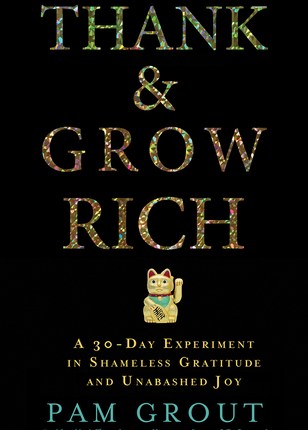
Thank & Grow Rich: A 30-Day Experiment in Shameless Gratitude and Unabashed Joy by Pam Grout

Thank & Grow Rich: A 30-Day Experiment in Shameless Gratitude and Unabashed Joy by Pam Grout

There is a disclaimer written in the description of this book on Goodreads that states it is not for everyone, but it was awesome in my opinion. I am going to admit that I am incredibly biased.

Photo by cottonbro on Pexels.com

I absolutely adored Pam’s other books on New Age thought and had some unbelievable experiences with the experiments recommended in them: E-Squared: Nine Do-It-Yourself Energy Experiments That Prove Your Thoughts Create Your Reality and E-Cubed: Nine More Energy Experiments That Prove Manifesting Magic and Miracles Is Your Full-Time Gig.

However, I couldn’t convince my public library to buy them because, I was told, they are “too fringe”.

Perhaps this book, which focuses on adopting an attitude of gratitude to improve your life, will be mainstream enough to make the cut.

Pam addresses the metaphorical elephant contained in her title early in the book: “No offense to Napoleon Hill, the author of the self help classic on which my title riffs, but the real power is in not thinking. If you want to override your brain’s unfortunate habit of leafing through your past and creating a present hologram to match, forget thinking. And start thanking.” Loc 108, ebook.

I read Think and Grow Rich last year and I could see how other people have beef with the classic. Napoleon Hill focuses on money, making connections, and doing the internal work to shoot yourself into the stratosphere of life success.

There’s very little in there about feeling your way to the same place.

Photo by fauxels on Pexels.com

Pam takes a different approach: “I should get this out on the table right now. This book won’t do a thing for your 401(k) or help you secure the McMansion you pasted onto your vision board. It’s not about getting rich in the traditional sense. … There’s nothing wrong with financial capital, but let me be very clear. It’s incapable of bringing any measure of real happiness.” Locs 324-337 ebook.

She gets to the heart of why seekers chase anything- because we believe that it will bring happiness. Pam suggests getting happy and then the success will come.

And, how does she say that we should “get happy”? By being thankful for what we already have.

“Be astonished by useless things. It’s easy to be thankful for the obvious- healthy kids, public libraries, strong marriages. But in this game we’re going to take it a step further. We’re going to build our gratitude muscle by also appreciating the insignificant and impractical…” Loc 856 ebook.

I had to include that passage for the library mention. Yay libraries!

Photo by Janko Ferlic on Pexels.com

Pam backs up her claims with scientific studies such as: “According to Richard Wiseman, psychology professor at the University of Hertfordshire in England and creator of Luck School, people who think they’re lucky actually are. After eight years of studying hundreds of self-identified exceptionally lucky and exceptionally unlucky people, he concluded that getting good breaks has nothing to do with karma or kismet and everything to do with how we see ourselves.” Loc 991 ebook.

I would like to state for the record that I am one of the luckiest people that I know. πŸ™‚

She also includes a bunch of information from happiness researchers: “When it comes to success, research shows that while IQ, education, and training play cameo roles, the starring role, the headliner on the success stage, is “Do you have a vision? Do you believe it’s possible?” Shawn Achor, author of The Happiness Advantage: The Seven Principles of Positive Psychology That Fuel Success and Performance at Work… claims that predicting success using any other factor (say, your IQ or number of degrees) is about as effective as flipping a coin. What is effective, Achor and Frederickson and other happiness researchers have proven, is creating a happy brain that anticipates accomplishment, that knows success is just a matter of time.” Loc 1876 ebook.

I know that I have a pretty open mind when it comes to these types of books, but my thought is, what’s the harm in it? If it works for you, great! You’ve just discovered a new tool to use for living the best life for you.

If it doesn’t work, no harm done. At the very least, you would know for yourself.

Photo by Belle Co on Pexels.com

I recommend this book for readers of the Abraham Hicks materials because there are quite a few similarities in the philosophies contained within.

Some additional read-alikes for seekers like me who can’t get enough information about the law of attraction: The Power of the Heart: Finding Your True Purpose in Life, Happiness: A Guide to Developing Life’s Most Important Skill, or Dr. Quantum Presents: Meet the Real Creator–You!.

The opinions contained within this review are entirely my own. Thank you to NetGalley and Hay House for a free advance reader’s copy of this book for review purposes!  And, thank you for reading.

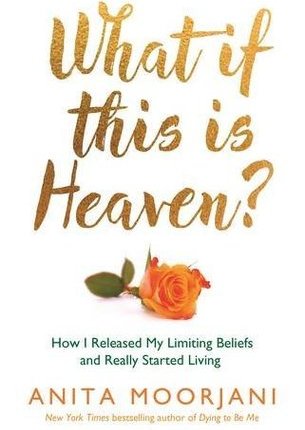
What if This is Heaven?: How I Released My Limiting Beliefs and Really Started Living by Anita Moorjani

What if This is Heaven?: How I Released My Limiting Beliefs and Really Started Living by Anita Moorjani

I was so excited to read What If This Is Heaven?: How I Released My Limiting Beliefs and Really Started Living. Moorjani’s first book, Dying to Be Me, was one of the first accounts of near death experience that I read. In it, she details how she was on her death bed, experienced the world beyond, and then came back to fulfill her life’s purpose.

When she came back, the tumors in her body disappeared and she’s been fine ever since.

It’s an astonishing and uplifting reminder of who we are as eternal beings and why we’re all here. What If This is Heaven is a continuation of this message in that, now, Moorjani is a teacher and lecturer on the topics of spirituality, healing, and self actualization. It’s wonderful.

And, it’s different enough from the first book that readers don’t feel like they’re re-reading the same messages. Moorjani has evolved and I’m very interested to see where life takes her from here.

Here are some passages that I loved:
“A major reason why I chose to return to this life during my NDE (near death experience) was because I understood that heaven is a state and not a place, and I wanted to experience, firsthand, the heaven that this life could actually be.”

“Remember, your only work is to love yourself, value yourself, and embody this truth of self-worth and self-love so that you can be love in action. That is true service, to yourself and those who surround you.”

“On the physical plane, we see love as an emotion, something we have for some people and not others. But the truth is that unconditional love is a state of being, and it’s our birthright. Once we begin to tap into that, we realize is has the power to transform all of our relationships simultaneously- including our relationship with ourselves- for the better.”

“… illness is our body’s way of communicating with us and showing us a better path. Yes, we may die from cancer- or from countless other things- and each of us will die from something at some point. But death is not the enemy. What often is the enemy is the way we view illness…”

Some fascinating teachings about the positive aspects of the ego are included in here: “The ego gives us our sense of identity, our individuality. It’s what allows us to know who we are as individuals and to express our uniqueness. If our ego weren’t necessary, we wouldn’t have been born with it.”

There’s so much more to enjoy in What if This is Heaven beyond these small bits. I highly recommend this read for spiritual seekers and those who are interested in self actualization.  If you enjoyed this book, you may want to read Moorjani’s other book, Dying to Be Me or Co-creating at Its Best: A Conversation Between Master Teachers by Wayne Dyer and Abraham Hicks.

A big thank you to NetGalley and Hay House for the opportunity to review this book! Β They sent me a free digital ARC for review purposes. And thank you for reading!