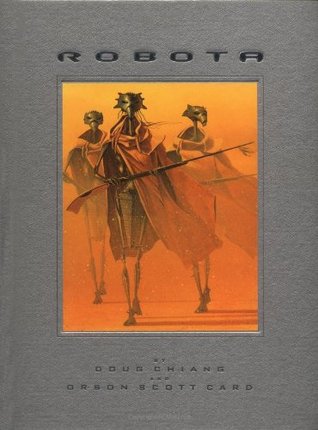
 Robota, like The Sleeper and the Spindle, is a story with extraordinary artwork accompanying the narrative. The prologue introduces the reader to a world that has been conquered by robots from the stars. Humankind had developed tools and machines, but nothing that equaled the alien invaders. Subdued and forced into hiding, humans fight a losing battle against an unstoppable robotic force. In the first chapter, a man awakens in an alien ship- he can’t remember his name or his past. He is encouraged out of the ship and deeper into the forest by a talking monkey named Rend. Together, they go to recover not only his memory but also his forgotten past, which may be more extraordinary than he ever imagined.
The story by Orson Scott Card is good but the artwork by Doug Chiang is astonishing. This book was originally published in 2003, but the edition I read is a 2016 re-print with a new foreword and additional concept art wasn’t released the first time around. Doug Chiang worked at LucasFilm on Star Wars: Episodes 1 & 2 and, more recently, The Force Awakens. You can really see those efforts in his art- the robot army from Episode 1 is all over this book.
My one (kind of silly) beef with Robota is the title. The story says that the robots took over Earth and renamed it “Robota” but what sort of robots would do that? I think they’d be far more likely to call it 1010010011111 or something in binary code. But, maybe I’m just biased against robots.
There was also an interesting side plot about magical jewels that gave animals on Earth the ability to talk and reason: “Once it changes an animal, it breeds true- all its offspring have speech as well. It brought a golden age to the world. It made the robots jealous, and the king of the robots, Font Prime, sent out Kaantur-Set and his hunters to destroy all the jewels. They think when the jewels are gone, we’ll all become dumb beasts again.” pg 45, ebook. The over-arching plot is nature vs machine, but Robota also asks the question: what makes life worth living?
Or what really makes a machine live?: “When there’s a living mind telling the machine what to do, it’s not a robot,” said Juomes. “Where there’s life, then the machine remains a tool.” “So a fungus with a stick is better than Font Prime,” asked Elyseo. “Probably not better at mathematics,” said Caps. No one was amused.” pg 68
Recommended for ages 14+: Robota is a feast for the eyes and may be a science fiction/fantasy that appeals to more reluctant readers. Some further reading: The Sleeper and the Spindle, Peter & Max, or Descender, Volume 1: Tin Stars (for 16+ for some disturbing images).
Thank you to NetGalley and Dover Publications for a free digital copy of this book! And, thank you for reading.
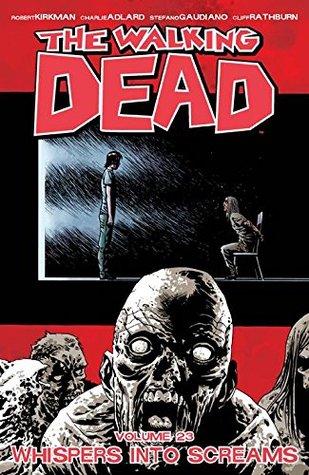 I forgot that I was reading this series and only remembered when there was that huge kerfluffle a couple weeks ago by the people who only watch the television show… something to do with a barbed wire covered bat. Those of us who read the comic had already mourned and moved on. Frankly, I think I put the books aside because I was getting a little tired of this series. But, to be fair, after 22 books… it’s natural for enthusiasms to slow down. Whispers into Screams was a great re-introduction for me into the perpetually dark world of The Walking Dead.
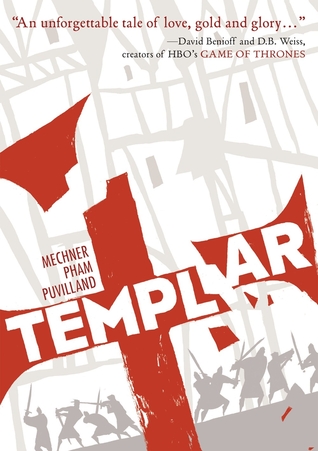 Templar: a graphic novel about the dissolution of that famous order and the struggle for the legendary treasure that they left behind. A couple of weeks ago, I read the first book in this series and I enjoyed it more than this complete volume. It was the ending that diminished my enjoyment of it the most, which I won’t get into because I don’t want to ruin it for anyone, but that was really my issue. Mechner ties up the major plot points, but I didn’t like how he did it- at all.

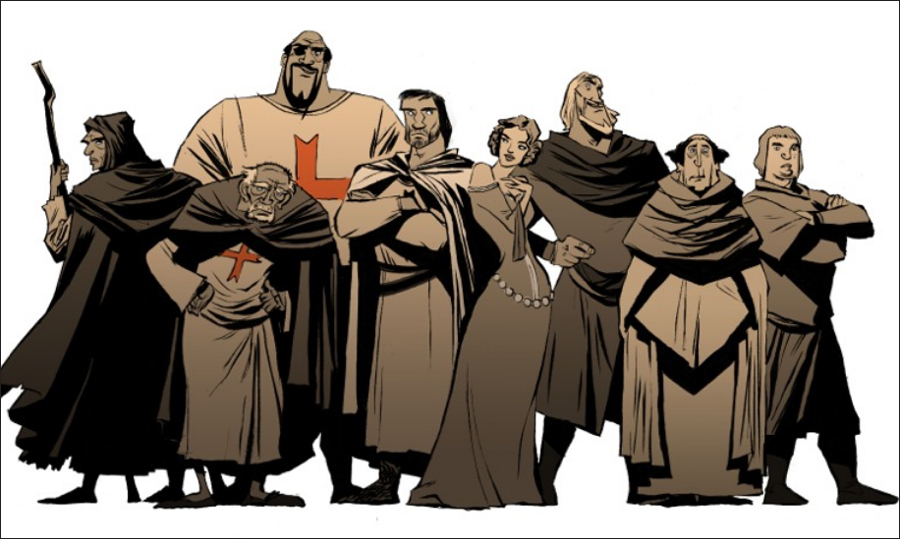 From the introduction: “From humble beginnings the Knights Templar rose to become the most powerful military monastic order of the medieval world. Pledged to protect pilgrims during the Crusades, the Templars become heroes to Christians everywhere. Their fighting prowess was legendary. … But the Crusades were an expensive, blood-soaked failure. In 1291, after two centuries of warfare, the Muslims drove the Christian armies from the Holy Land once and for all. For the Templars, it was the beginning of the end…” Goosebumps!


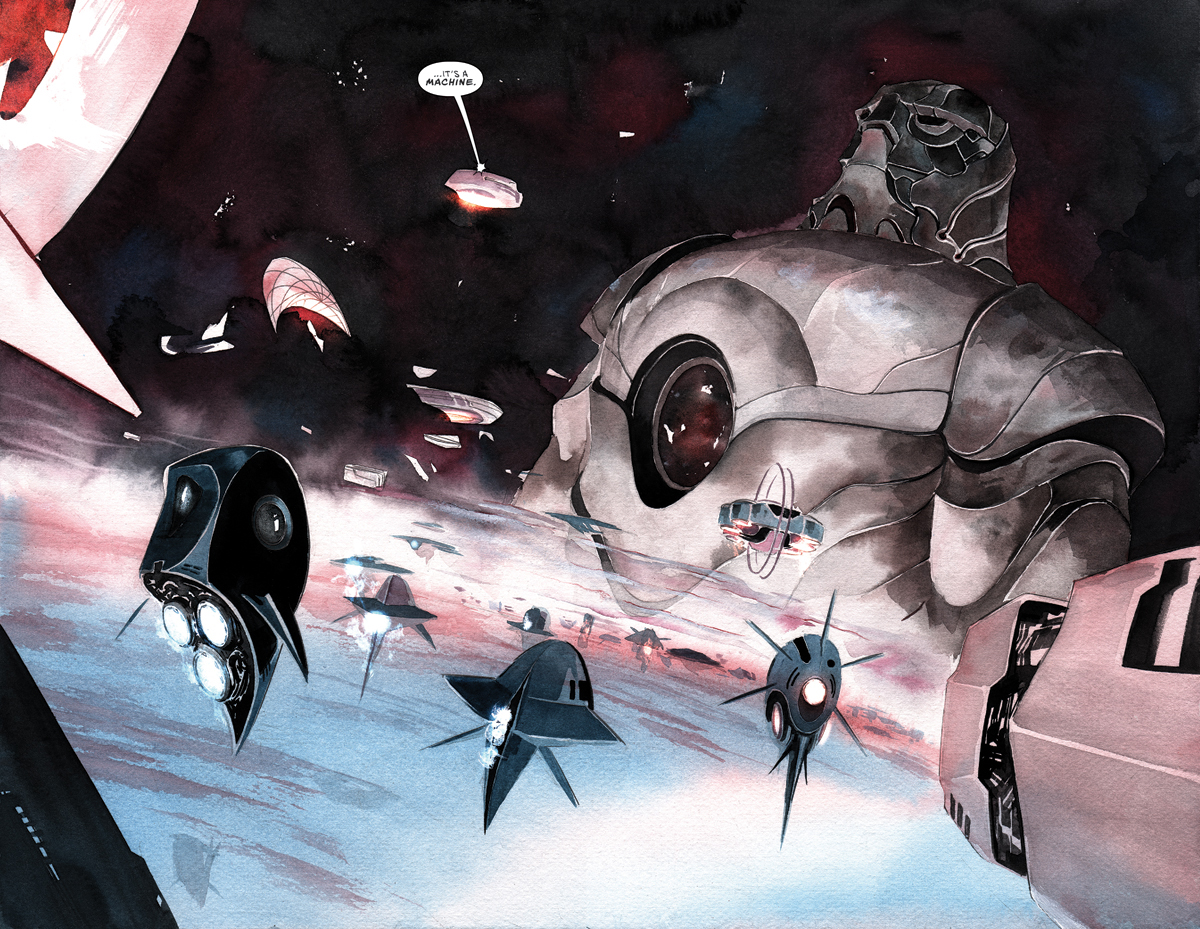
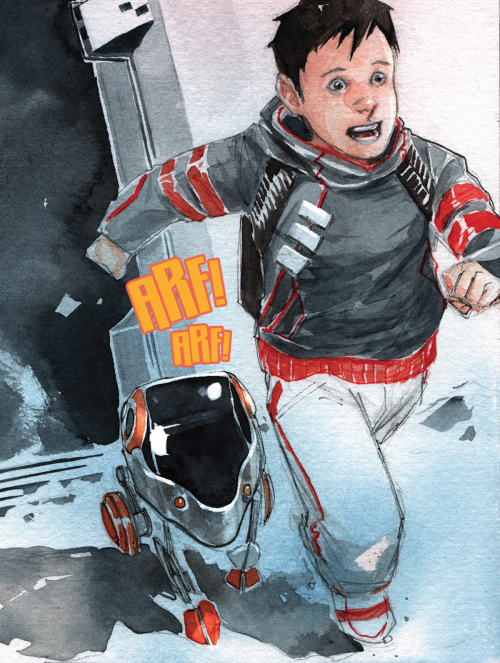
 I’ve heard a lot of good buzz about Descender and I’m pleased to say that it lived up to all of it. It isn’t easy writing the first entries in a series without descending into character listing and lengthy explanations on setting.Descender manages to introduce itself completely without any of that boring stuff.